You probably grew up thinking you knew dinosaurs. You’ve seen the movies, read the picture books, maybe even built the plastic model kits as a kid. T. rex was a thundering, roaring monster. Cavemen fought off giant lizards with clubs. Velociraptors hunted in cunning wolf-like packs. It all seemed so settled – so real.
Here’s the thing though: almost everything popular culture has told you about prehistoric life is either outdated, wildly exaggerated, or just plain wrong. Modern paleontology has been quietly revolutionizing our understanding of the ancient world, one fossil at a time. The prehistoric past is far weirder, more colorful, and more surprising than any Hollywood blockbuster dared to imagine. Buckle up, because several cherished prehistoric “facts” are about to be sent straight to the extinction pile. Let’s dive in.
Myth 1: T. Rex Was the Sole Tyrant – and a Teen at That
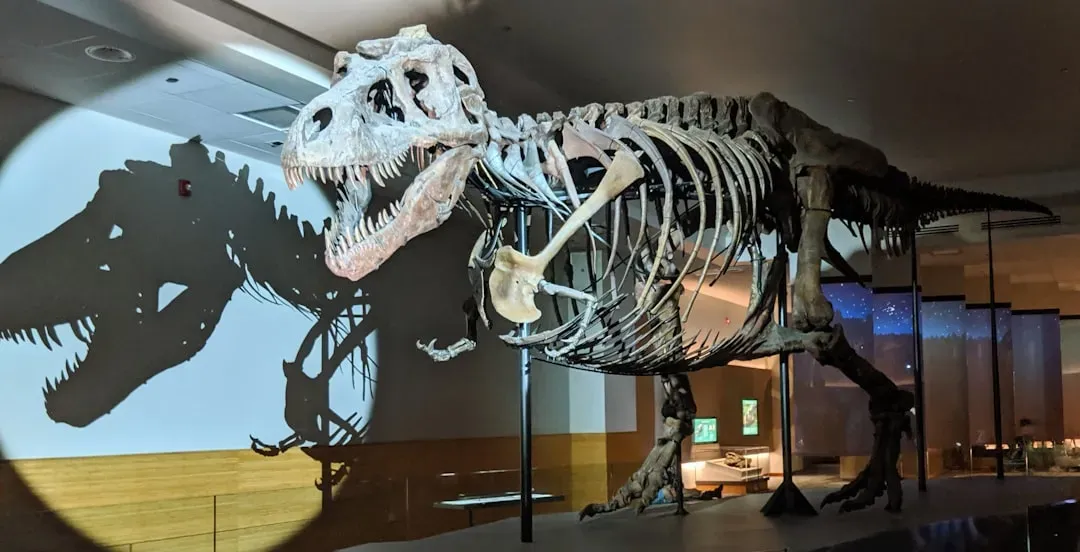
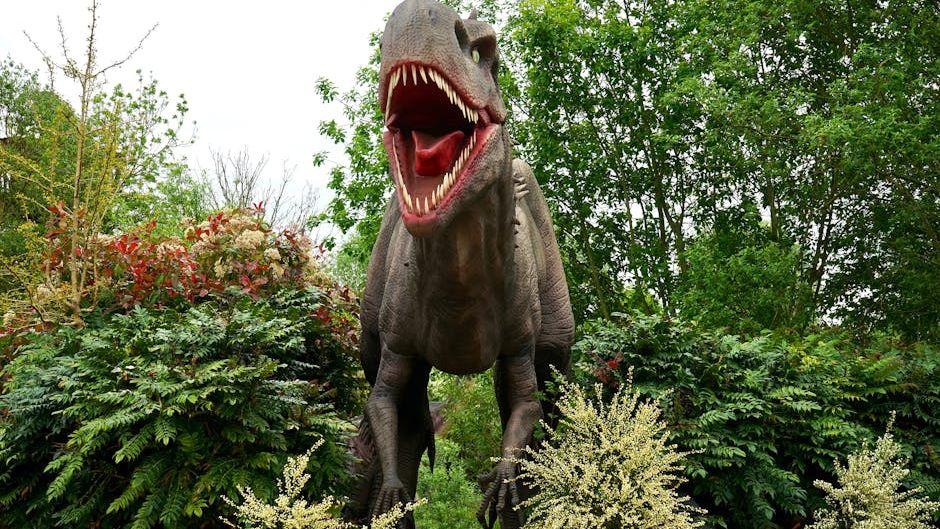
Picture the last days of the dinosaurs, and you almost certainly picture one king ruling with unchallenged authority: Tyrannosaurus rex. For decades, fossil hunters kept finding smaller tyrannosaur skeletons alongside T. rex and simply assumed they were juvenile versions of the same animal. It seemed logical, tidy, and it stuck.
For years, paleontologists believed that the dinosaur discovered in the 1940s, Nanotyrannus, was a juvenile or “teenaged” Tyrannosaurus rex. Now, groundbreaking research published in Nature has revealed this dinosaur was its own species, not a young T. rex – a finding that rewrites what scientists suspected about T. rex’s growth and development. The skeleton’s fusing spinal sutures and growth rings show it was fully grown when it died at approximately 20 years of age. Its anatomy reveals traits that form early in development and don’t change with age, including fewer tail vertebrae, more teeth, larger hands, and different skull nerve and sinus patterns.
This discovery completely reframes the idea that T. rex was the lone predator of its time, challenging long-held assumptions about late Cretaceous ecosystem dynamics. For years, paleontologists had misidentified Nanotyrannus fossils as juvenile T. rex specimens and used the morphological features of the remains to model T. rex growth and behavior. Honestly, it’s a little humbling – hundreds of published studies may need serious revision based on a case of prehistoric mistaken identity.
Myth 2: Velociraptor Was a Human-Sized, Scale-Covered Killer
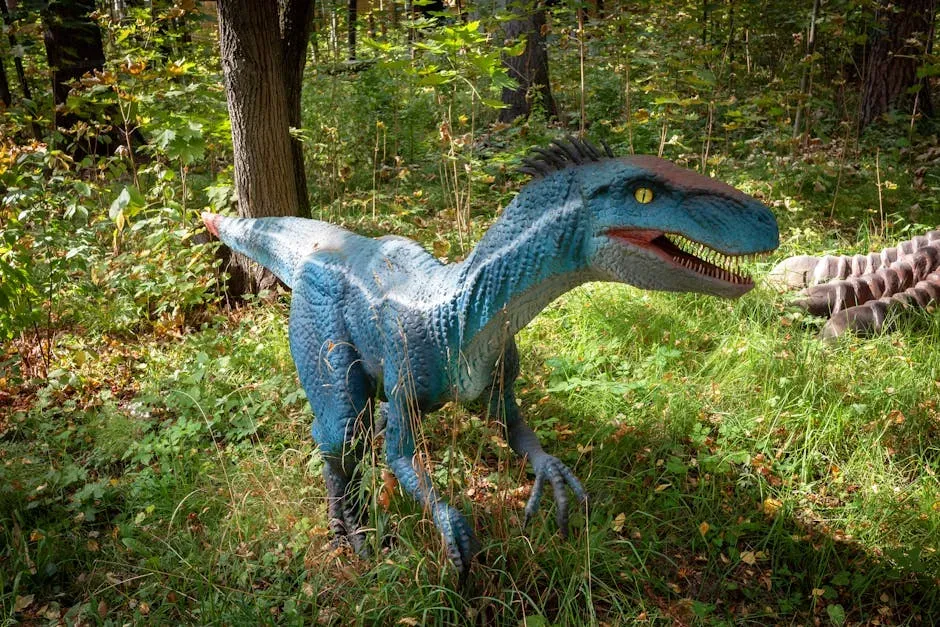
If you’ve ever watched Jurassic Park, you know the raptor. Tall as a person, leathery green skin, terrifyingly clever – the stuff of nightmares. It’s one of the most iconic prehistoric portrayals in cinema history. It is also, to put it gently, almost entirely fiction.
In the films, Velociraptor is depicted as a human-sized, scaly, hyper-intelligent predator, but in reality, Velociraptors were much smaller – about the size of a turkey – and covered in feathers. The raptors that terrorized Jurassic Park were based on a Velociraptor relative: Deinonychus antirrhopus, a much larger dinosaur that inhabited North America in the early Cretaceous period. So the movie got the name right and almost everything else wrong.
In 2007, a study published in the journal Science found that a Velociraptor mongoliensis fossil had quill knobs – bumps along its forearm that anchor feather quills to the bone and are common in modern birds. Velociraptor almost certainly couldn’t fly, so its feathers and wings were used for other purposes – to keep its body warm, and as display structures to intimidate rivals or attract mates. Think less “scaly death machine” and more “terrifying feathered land eagle.” Still scary – just not in the way you imagined.
Myth 3: All Dinosaurs Were Either Scaly or Fully Feathered
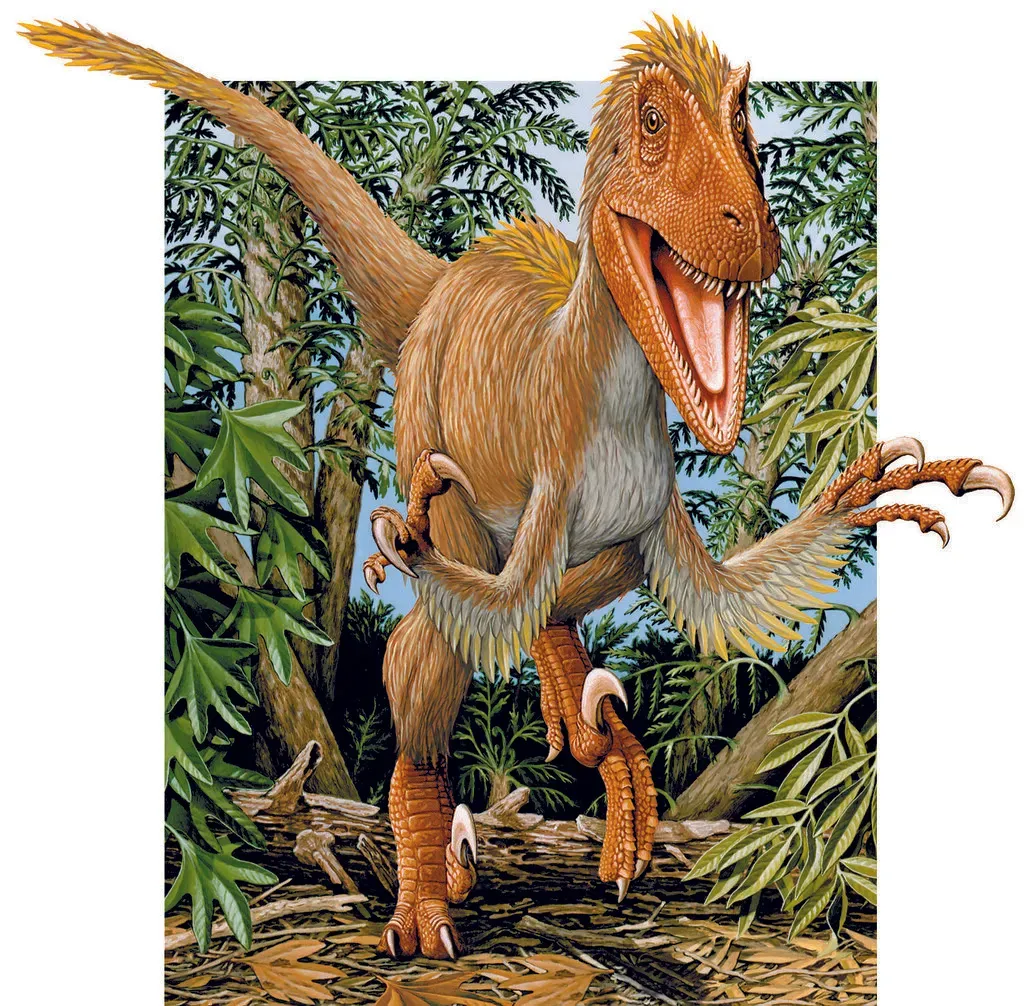
The dinosaur-feather debate has been one of the great scientific soap operas of the last thirty years. First, everyone thought dinosaurs were scaly like modern reptiles. Then a wave of feathered dinosaur discoveries in China in the 1990s flipped the narrative entirely, and suddenly the internet wanted feathers on everything – including stegosaurs and sauropods. Neither extreme tells the full story.
A 2015 study repeated in 2020 used statistics and a large data set of known dinosaur skin fossils to determine that most dinosaurs grew scales, with what we might term “true feathers” in the modern sense limited to derived coelurosaurs – ornithomimosaurs and dinosaurs more birdlike than they – and with the earliest dinosaurs most likely bearing scales. If most dinosaurs were indeed scaly, it explains how the history of dinosaur paleontology would draw preliminary conclusions they all bore scales, but recent discoveries prevent us from saying so anymore.
The real picture is a mosaic. Some dinosaurs were fully feathered. Others were entirely scaly. Some had both, depending on body region. When paleontologists say raptors were feathered, they don’t mean a lizard-like animal with a few scruffy feathers. Dromaeosaurids were fully feathered, more like modern birds such as falcons, with long wing feathers and elaborate tail plumage. Prehistoric life, it turns out, was every bit as varied and complex as the living world you see today.
Myth 4: T. Rex Was a Lightning-Fast Pursuit Predator
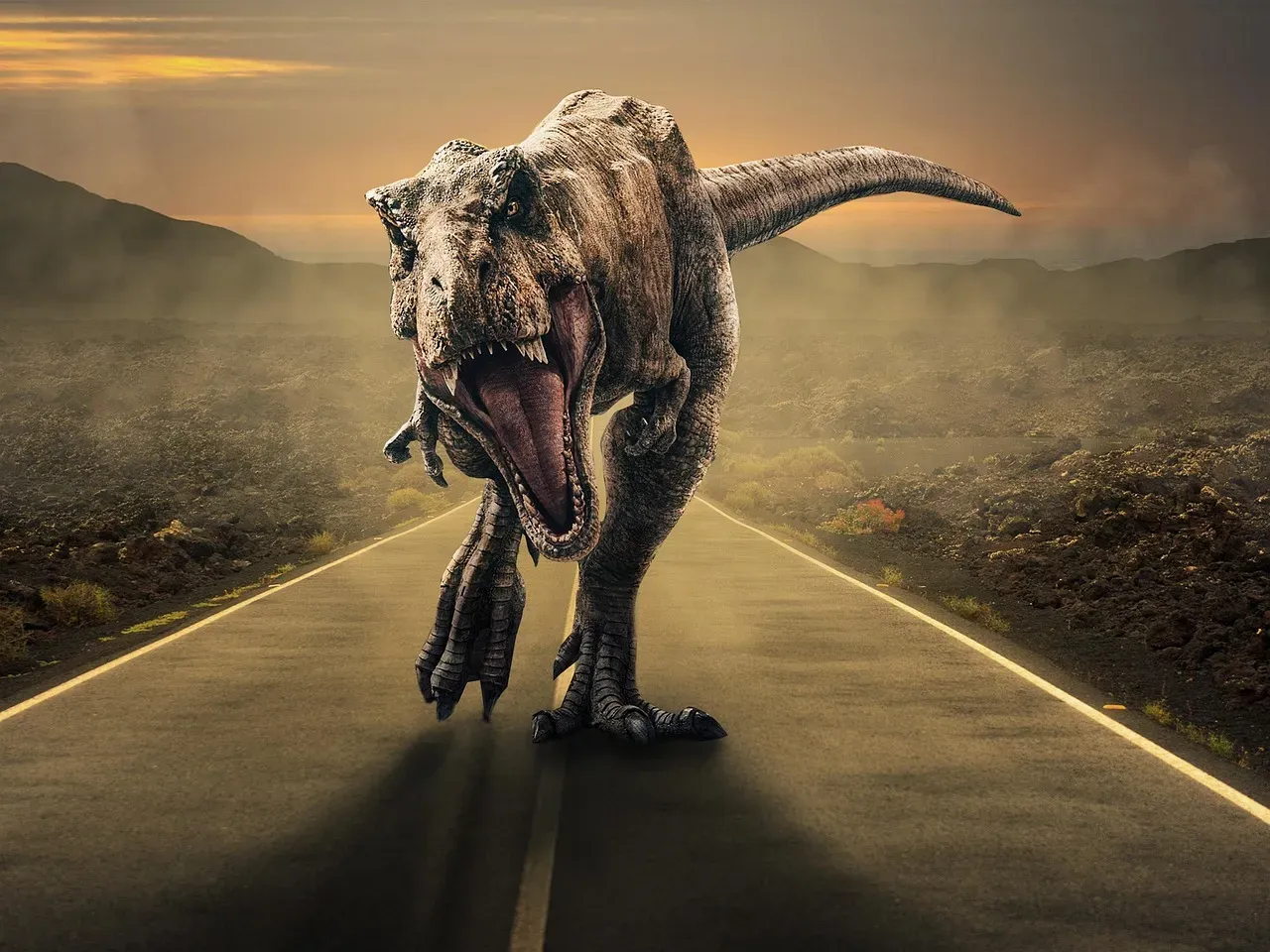
The most iconic scene in Jurassic Park is arguably a Jeep being chased down by a T. rex at terrifying speed. It’s viscerally thrilling. It’s also a movie lie. Real biomechanical research has deflated that particular fantasy rather thoroughly, and honestly – the truth is still pretty frightening.
People have looked at running speeds of dinosaurs and the most recent research suggests that T. rex could barely run faster than a human. T. rex probably had a top speed of only around 16 kilometres per hour, but the dinosaurs it preyed on wouldn’t have been moving much faster either. Slow-moving Triceratops would have been one of the dinosaurs that Tyrannosaurus hunted during the Late Cretaceous. “So if Tyrannosaurus was a pursuit predator, everything in the Mesozoic was happening a lot slower than on the Serengeti today.”
Think of it less like a cheetah hunt and more like two enormous, slow-burning rivals sizing each other up over a scrubby patch of ancient floodplain. Recent studies show that T. rex may have had a bite force of over 6 tons, which is roughly equivalent to the force of a medium-size elephant sitting down. Speed wasn’t the point. That jaw was the weapon. You didn’t need to run fast when your bite could crush bone like a tin can.
Myth 5: Dinosaurs Were Cold-Blooded, Sluggish Reptiles
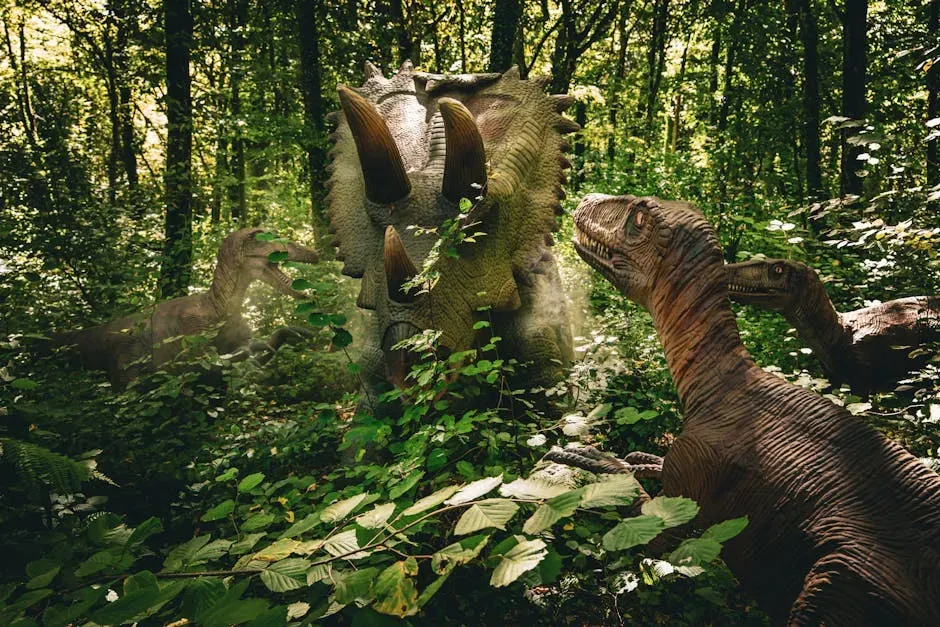
For much of the 19th and early 20th century, scientists pictured dinosaurs as enormous, lumbering cold-blooded reptiles – basically overgrown crocodiles dragging themselves across swamps. It seemed to make sense. They were reptiles, after all. But the evidence from modern paleontology tells a dramatically different story, and it changes how you picture these animals entirely.
When the biology of dinosaurs was first discussed in the 1840s, they were compared to living lizards. This led to the assumption that they were all cold-blooded, and so would have been slow-moving animals lumbering around during the Mesozoic. From the 1960s, however, scientists began to reassess this view. Dinosaurs are now universally considered to have been highly active animals, which has been used as evidence they were warm-blooded.
The work stakes out a rare middle ground in the long-running debate over whether dinosaurs were cold-blooded ectotherms, which use the environment to adjust their internal temperature, or warm-blooded endotherms, which regulate their body temperature from within. One new hypothesis is that dinosaurs were “mesotherms”: they had some control of their body temperatures, but not precise control, and many species were able to passively keep themselves warm through their enormous bulk. It’s hard to say for sure, but one thing is certain – the slow, dopey reptile model is long gone.
Myth 6: Cavemen and Dinosaurs Lived at the Same Time
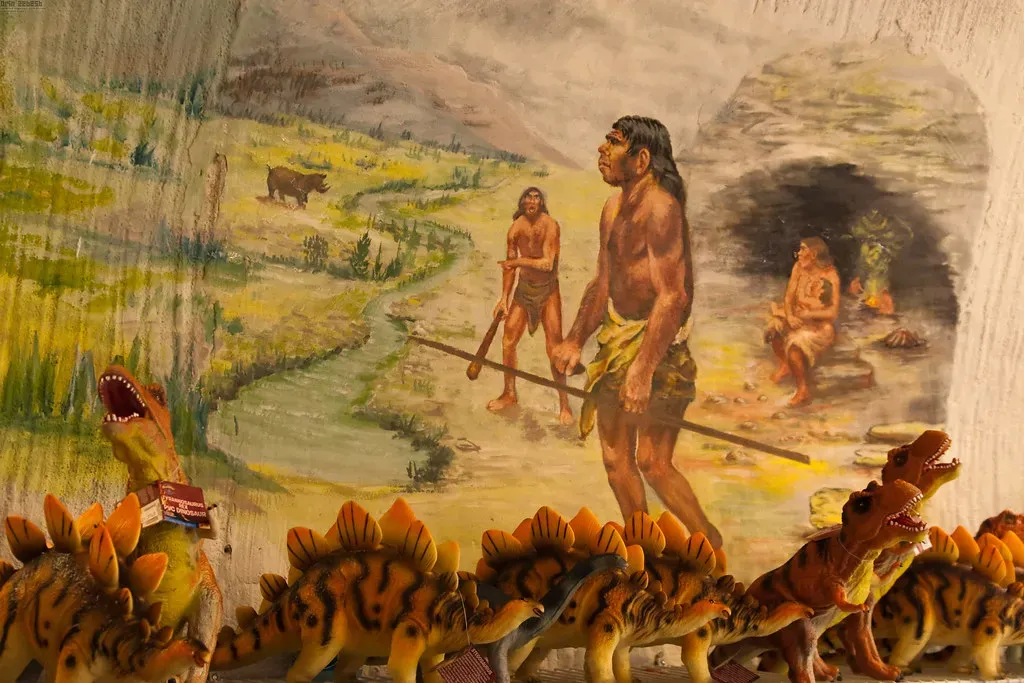
Let’s be real – this one lives rent-free in human imagination. The image of a bearskin-wearing caveman fleeing a roaring T. rex is practically a cultural institution at this point. It shows up in cartoons, comedy sketches, and even some surprisingly recent films. It is, without question, one of the most spectacularly wrong prehistoric myths in existence.
In reality, tens of millions of years separate the dinosaurs – at least the classic concept of them, which excludes birds – and humankind. This myth may have taken hold partly because as dinosaurs gained popularity and more storytellers began to write about them, they couldn’t write a complete and compelling story without human characters. Early classics of dinosaur literature such as The Land That Time Forgot juxtaposed the people of their day with dinosaurs, and as the paleontology of our own genus started to kick into high gear, authors began to inject the stereotypical caveman into dinosaur stories.
The gap between the last non-avian dinosaurs and the earliest humans is not just big – it’s almost incomprehensibly vast. If you compressed all of Earth’s history into a single 24-hour day, non-avian dinosaurs would go extinct several hours before the first human even existed. Fiction made it seem cozy. The fossil record does not agree.
Myth 7: Spinosaurus Was Just Another Land-Based Giant Predator
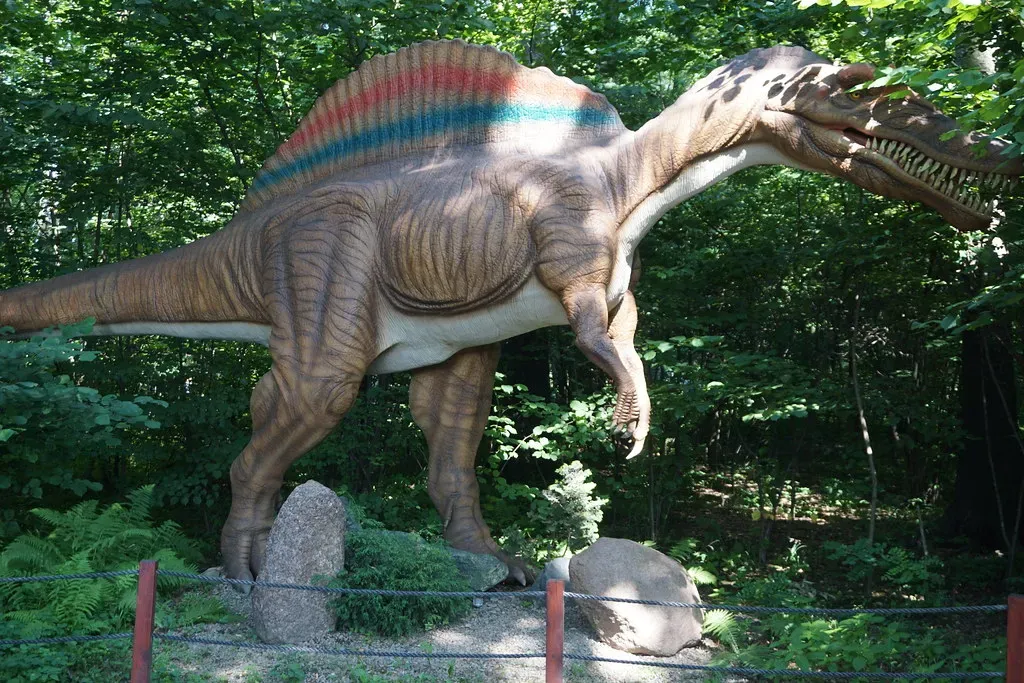
For much of the 20th century, Spinosaurus was simply filed away as “another large carnivore” – impressive spine sail, big teeth, probably terrorizing the landscape like every other apex predator of its day. Then newer discoveries started reshaping that picture almost completely, turning Spinosaurus into something far more unusual.
Spinosaurus was the largest meat-eater ever to live. Although it is a challenge to study this dinosaur due to the lack of fossils, scientists believe that it carved a niche for itself by primarily eating fish and spending most of its time in water. Debates persist among paleontologists regarding the extent of Spinosaurus’s aquatic adaptations and its behavior in different environments. Some researchers argue for a primarily terrestrial existence punctuated by periods of fish-eating, while others propose a more fully aquatic lifestyle.
Spinosaurids are among the most charismatic dinosaurs, but their global distribution and ecological range remain poorly sampled. A 2025 discovery fills a major biogeographic gap, showing that extreme body size and semi-aquatic specialization evolved repeatedly across continents. The image of Spinosaurus wading through ancient rivers chasing fish is about as far from a land-charging monster as you can get. Strange? Absolutely. But real science is stranger than any movie.
Myth 8: Archaeopteryx Was Basically a Modern Bird
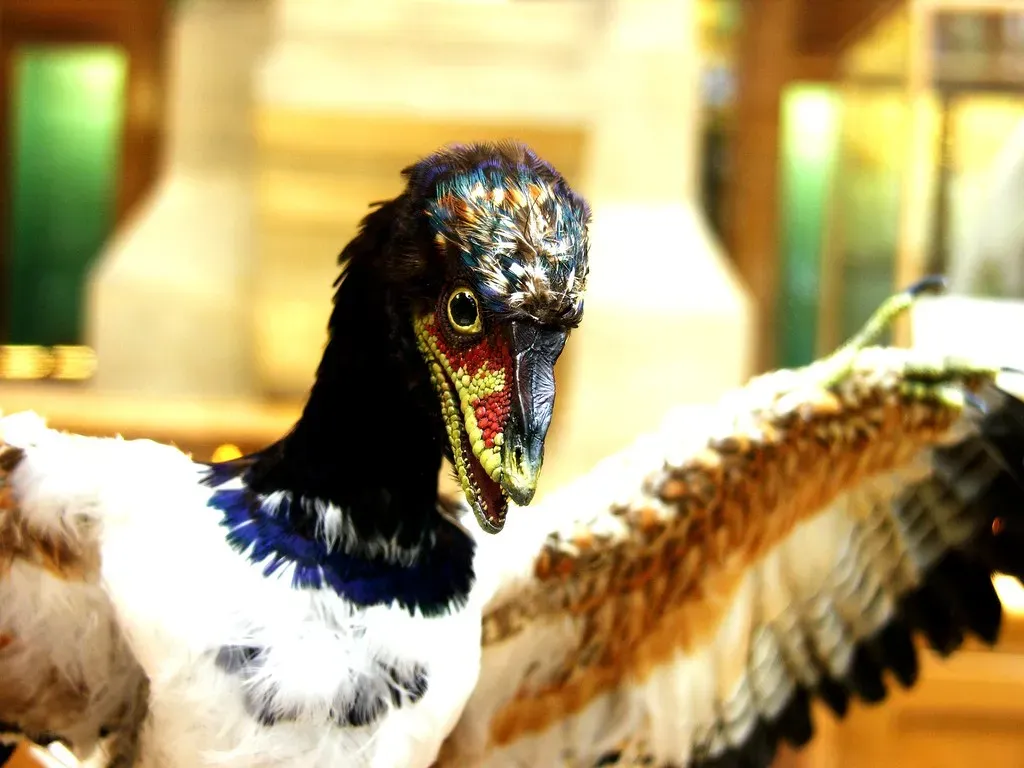
Archaeopteryx holds an almost mythical status in the history of paleontology. Discovered in the 19th century, it arrived like a telegram from evolution itself – an animal with both dinosaur features and bird-like feathers. For a long time, it was treated as the first true bird and a clean starting point for avian evolution. Modern science has complicated that picture considerably.
Initially, Archaeopteryx was depicted as a creature resembling a modern bird, complete with feathers and wings. However, recent research has led paleontologists to reevaluate its appearance. Studies of fossilized feathers have revealed intriguing details about their structure and pigmentation, suggesting that Archaeopteryx may have sported a plumage quite distinct from modern birds. Advances in biomechanical modeling have provided insights into Archaeopteryx’s flight capabilities. Contrary to earlier assumptions, it is now believed that this ancient avian might have possessed limited aerial prowess, more akin to gliding than sustained powered flight.
The discovery of additional Archaeopteryx specimens has further enriched our understanding. Each new find offers fresh perspectives on its anatomy and behavior, painting a complex portrait of this enigmatic creature. Honestly, Archaeopteryx was probably closer to a feathered climbing dinosaur with gliding ambitions than the soaring ancestor of eagles we once imagined. It’s a beautiful example of how one fossil can hold multiple surprises.
Myth 9: Ankylosaurus Was Just a Passive, Armored Tank
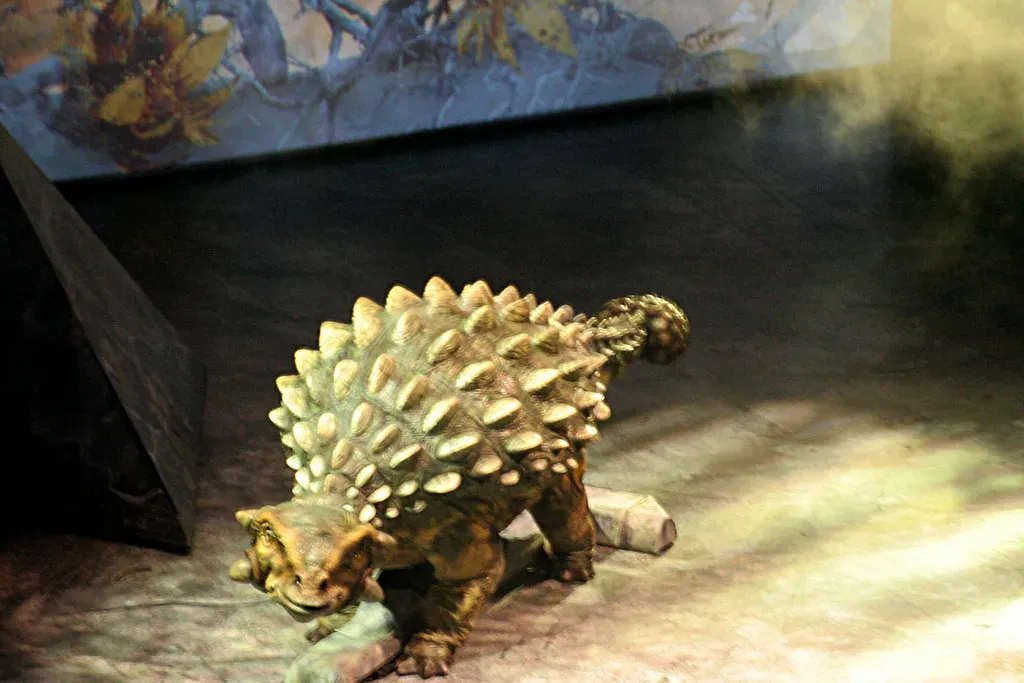
Mention Ankylosaurus and most people picture a heavily armored living boulder that simply absorbed punishment and shuffled away from danger. The classic image is of a prehistoric defensive wallflower, all shield and no sword. Recent biomechanical research, however, paints a far more dynamic and frankly intimidating picture of this remarkable dinosaur.
Initially, Ankylosaurus was portrayed with a low-slung body and a tail held rigidly behind it, suggesting a primarily defensive posture. However, studies of its skeletal structure and biomechanics have led paleontologists to reconsider this interpretation. Analyses of fossilized footprints indicate that Ankylosaurus may have walked with a more elevated posture, similar to modern mammals, rather than dragging its tail along the ground.
Furthermore, investigations into the function of its clubbed tail have yielded intriguing insights. Contrary to the notion of a purely defensive weapon, recent biomechanical studies suggest that the tail of Ankylosaurus may have been optimized for delivering powerful blows to adversaries or rivals. By swinging its tail with considerable force, Ankylosaurus could have inflicted serious injuries on potential threats, making it a formidable opponent in confrontations. Think less “slow doormat” and more “living armored bulldozer with a bone-shattering wrecking ball attached.”
Myth 10: Dinosaurs Were Wiped Out Suddenly and Were Already Declining
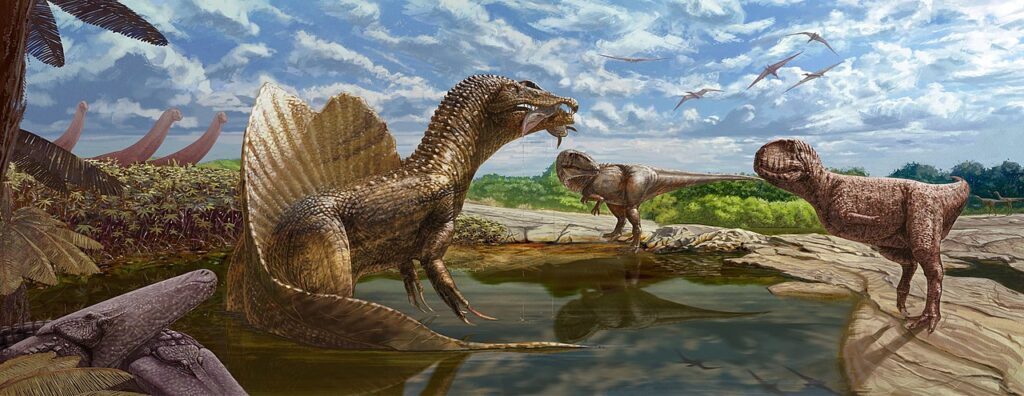
Pop science has long told you that the dinosaurs had already started fading by the time the asteroid hit – that they were limping toward extinction on their own, and the impact just finished the job. It’s a tidy narrative. It also appears to be incorrect, at least according to some of the most important recent fossil evidence uncovered in North America.
Dinosaurs weren’t dying out before the asteroid hit – they were thriving in vibrant, diverse habitats across North America. Fossil evidence from New Mexico shows that distinct “bioprovinces” of dinosaurs existed until the very end. Paleontology in 2025 proved once again that Earth still holds extraordinary stories in stone, amber, and microscopic cellular archives. Over the past year, fossil finds and scientific breakthroughs reshaped evolutionary family trees, revealed ancient behavior, and pushed the boundaries of molecular preservation – from predatory dinosaurs to Cambrian larvae with internal organs intact.
The picture that emerges is not one of a slow fade. It is more like a thriving world that simply didn’t see what was coming. Researchers have uncovered thousands of preserved metabolic molecules inside fossilized bones millions of years old, offering a surprising new window into prehistoric life. That window keeps getting clearer as new tools and new discoveries continue to rewrite the story of the ancient world one bone at a time.
Conclusion: The Prehistoric Past Is Still Being Written
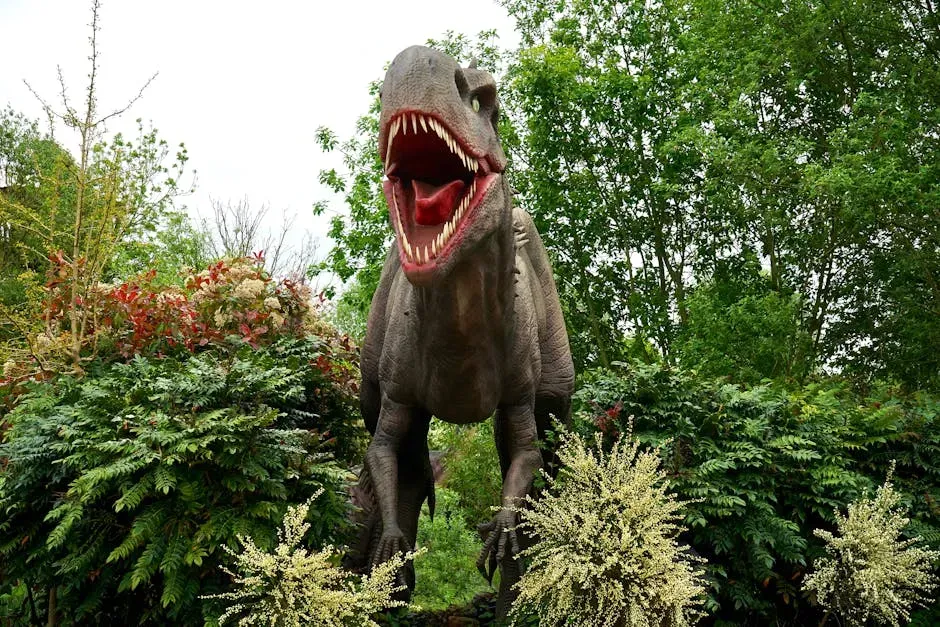
Here’s what modern paleontology keeps reminding us, loudly and repeatedly: the story of prehistoric life is nowhere near finished. Every single myth on this list was once considered scientific consensus, taught in classrooms, illustrated in textbooks, and depicted in films. Then new fossils appeared. New tools emerged. And the picture shifted – sometimes dramatically.
The prehistoric world was stranger, more colorful, more varied, and far more alive than the chunky, grey, cold-blooded monsters of old pop-science imagination. Dinosaurs were vibrant animals with feathers, complex behaviors, and metabolisms we are still arguing over. They shared their ecosystems with diverse competitors, not just one tyrannical king. They did not lumber. They did not simply wait to die.
I think the most exciting thing about all of this is not what we now know – it’s how much we still don’t. New species are discovered every single year. New techniques are unlocking biological secrets locked inside ancient bone. The next fossil pulled from the ground might rewrite another chapter entirely. Which of today’s “settled facts” do you think will be the next myth to fall?