Imagine you’re standing on a rocky shoreline, watching a fish drag itself through the shallows. It sounds absurd, even laughable. Yet that is, in essence, how the ancestors of every land-living vertebrate on Earth first began their journey. Every dog, bird, lizard, and human being alive today owes its existence to a slow, staggering chain of evolutionary events that began hundreds of millions of years ago in warm, oxygen-starved ancient waters.
The story of how life crawled from fins to feet is one of the most dramatic chapters in the entire history of our planet. It is packed with bizarre creatures, surprising fossil finds, and jaw-dropping biological engineering. If you think you know this story, I promise there are chapters here that will genuinely surprise you. Let’s dive in.
The Age of Fishes: Where It All Began
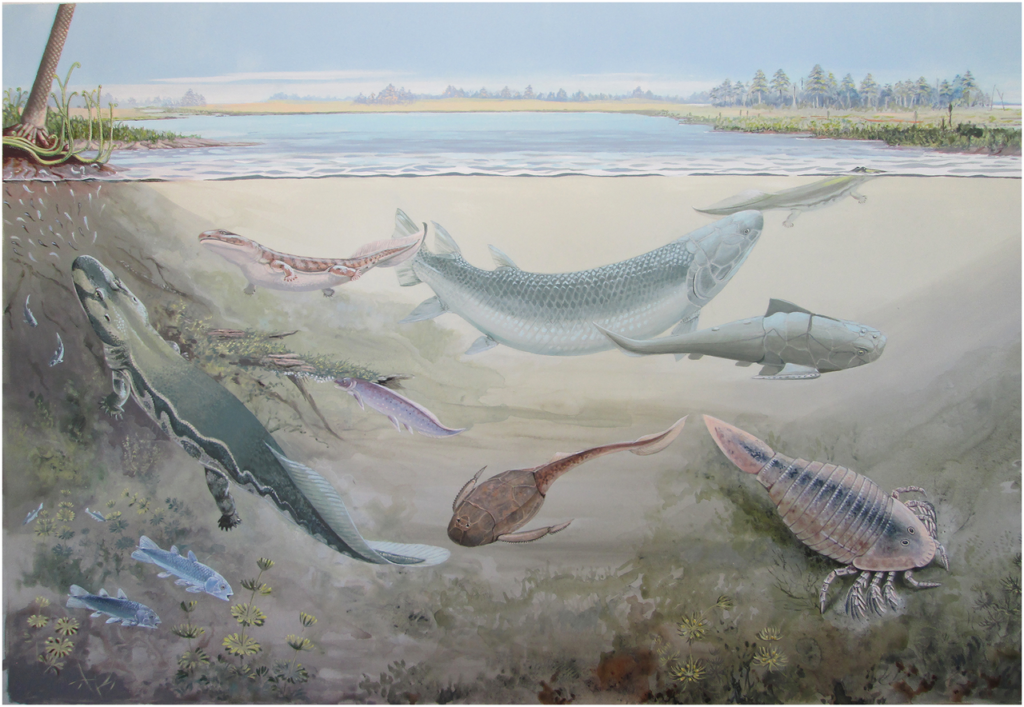
Picture a world roughly 400 million years ago. The Devonian period is believed to have been a warm period in Earth’s history, with average temperatures of around 30 to 33 degrees Celsius, and water levels were correspondingly higher, encouraging the development of fish species in rich shallow waters. It was, in every sense, a fish’s paradise. The oceans and freshwater systems were absolutely teeming with life.
The Devonian period is accordingly known as the “Age of Fishes” and is marked by the dominance of the placoderms, the first appearances of ray-finned and lobe-finned fishes, and the proliferation of primitive shark species. There were so many different kinds of fish competing for space and food that it created an evolutionary pressure cooker. Sooner or later, something had to give.
In freshwater lakes, ponds, and swamps, oxygen often gets used up, so fish evolved a lung to gulp air. Various types of modern fish, including a group called “lungfish,” still use these lungs to gulp air to breathe; in others, it has evolved into a swim bladder. It sounds counterintuitive, but the lung is actually ancient. It did not evolve for land. It evolved in water, simply to survive.
Lobe Fins and the Blueprint for Limbs
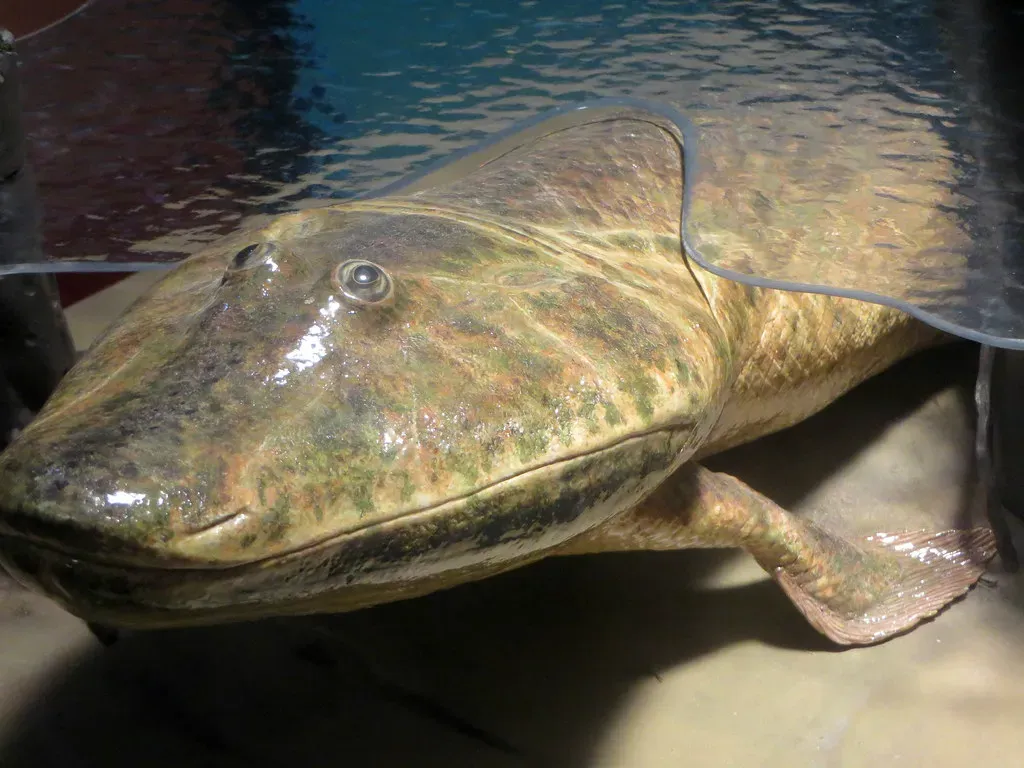
Here is the thing most people overlook: not all fins are created equal. Freshwater systems can often get choked with logs, weeds, and so forth, so one group of fish, the Sarcopterygii or lobefins, evolved a series of bones down their fins to give them strength to push along, dig, and navigate their environments. Those bony, muscular fins are the direct ancestors of the arms and legs you are using right now.
It is now clear that the common ancestor of the bony fishes had a primitive air-breathing lung, and this suggests that crossopterygians evolved in warm shallow waters, using their simple lung when the oxygen level in the water became too low. Think of it like this: lobe-finned fish were doing push-ups in the shallows long before any creature ever set foot on dry ground. The body blueprint for walking was forged underwater.
Lobe fins are rare among living fish and are only possessed by the coelacanth and lungfish. However, lobe limbs are possessed by many living organisms, including humans, because we and all tetrapods share a more recent common ancestor with the coelacanth and lungfish than we do with ray-finned fishes. When you raise your arm to wave hello, you are moving a structure that traces back to those ancient, fleshy fins. Honestly, that never gets old.
Tiktaalik: The Creature That Changed Everything
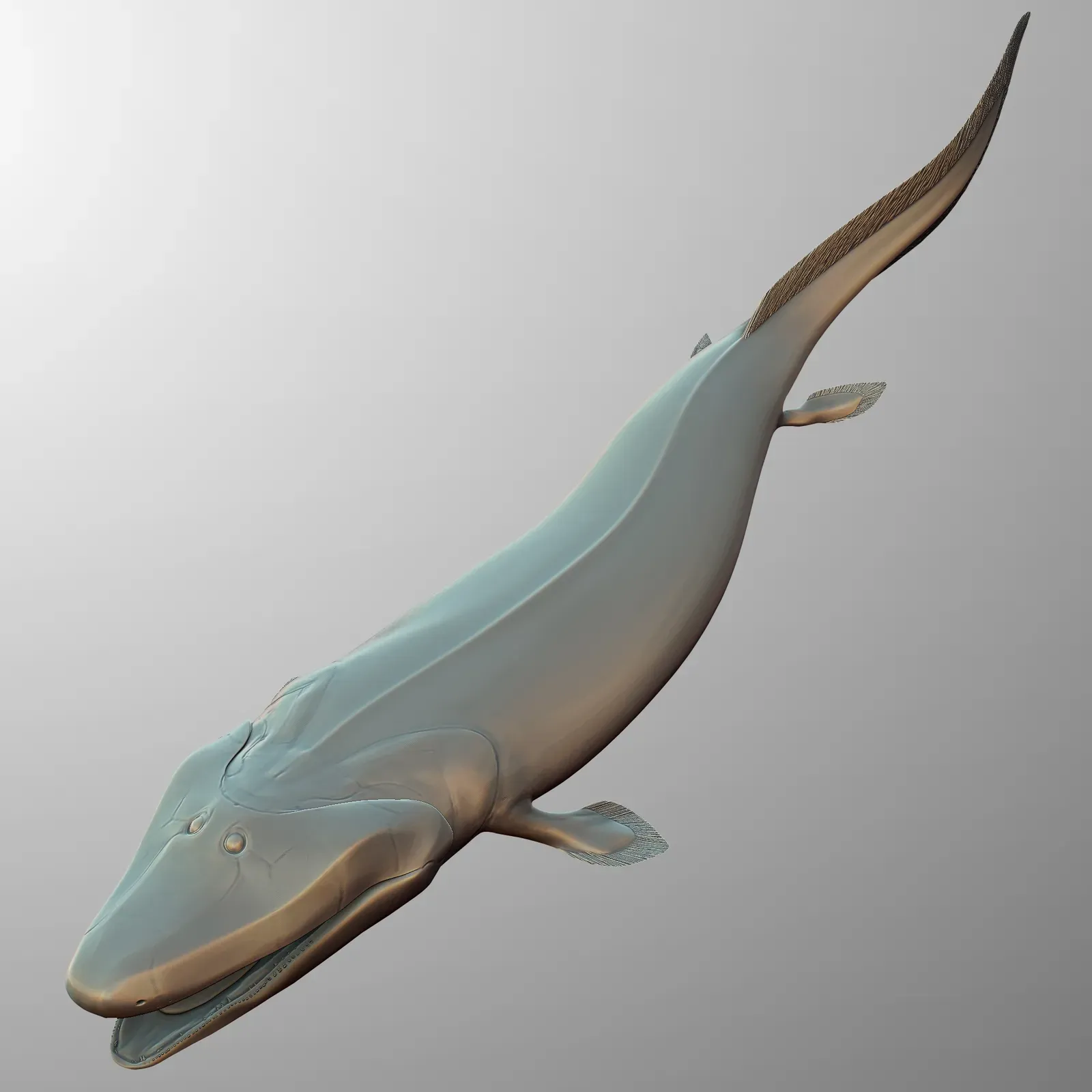
In 2004, a research team led by Dr. Neil Shubin of the University of Chicago traveled to Ellesmere Island in the Canadian Arctic, armed with a geological prediction: rocks of the right age and environment should be hiding something extraordinary. The first Tiktaalik fossils were found in 2004 on Ellesmere Island in Nunavut, Canada, by Edward B. Daeschler of the Academy of Natural Sciences, Neil H. Shubin from the University of Chicago, and Harvard University Professor Farish A. Jenkins. What they found would shake paleontology to its core.
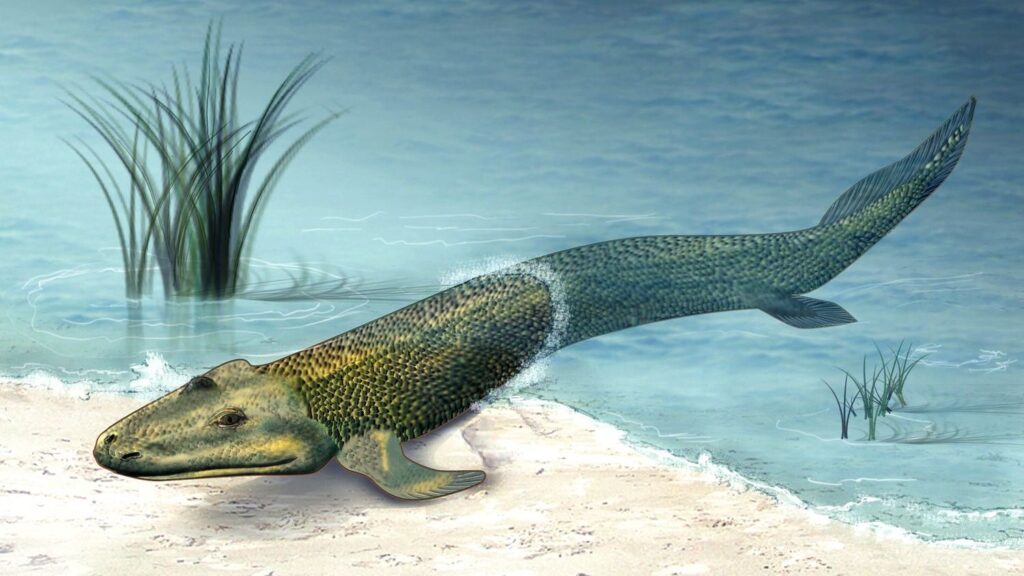
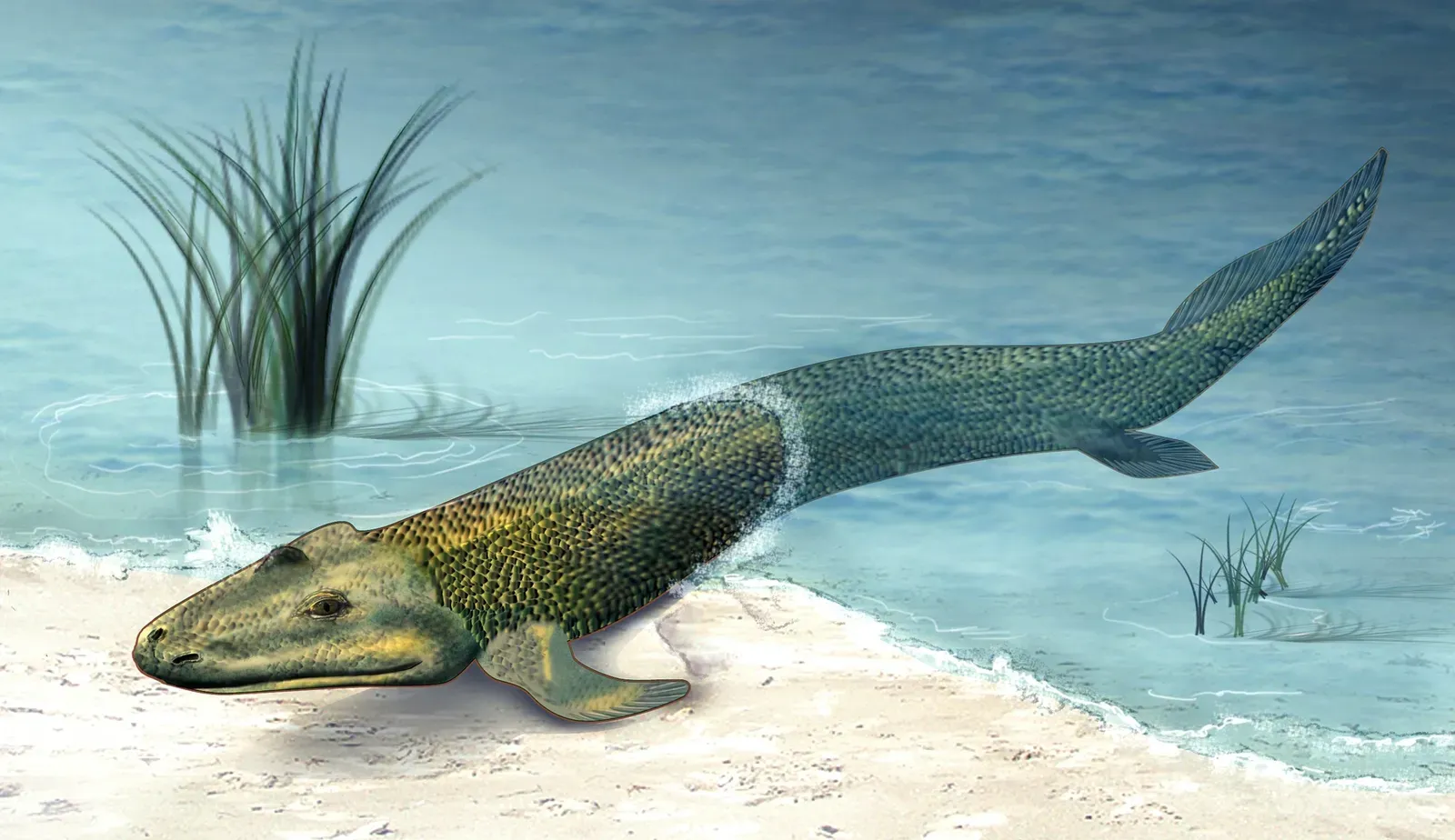
The newly found species, Tiktaalik roseae, has a skull, a neck, ribs and parts of the limbs that are similar to four-legged animals known as tetrapods, as well as fish-like features such as a primitive jaw, fins, and scales. It was neither fully fish nor fully tetrapod. Unearthed in Arctic Canada, Tiktaalik is a non-tetrapod member of bony fishes, complete with scales and gills, but it has a triangular, flattened head and unusual, cleaver-shaped fins with sturdy interior bones that would have allowed Tiktaalik to prop itself up in shallow water.
Embedded in the fin of Tiktaalik are bones that compare to the upper arm, forearm and primitive parts of the hand of land-living animals. Let that sink in for a moment. Hundreds of millions of years before you ever typed on a keyboard, the bones of the human hand were already taking shape inside the fin of a fish. Tiktaalik is a transitional fossil; it is to tetrapods what Archaeopteryx is to birds.
Acanthostega and Ichthyostega: The First Walkers (Who Mostly Stayed in the Water)
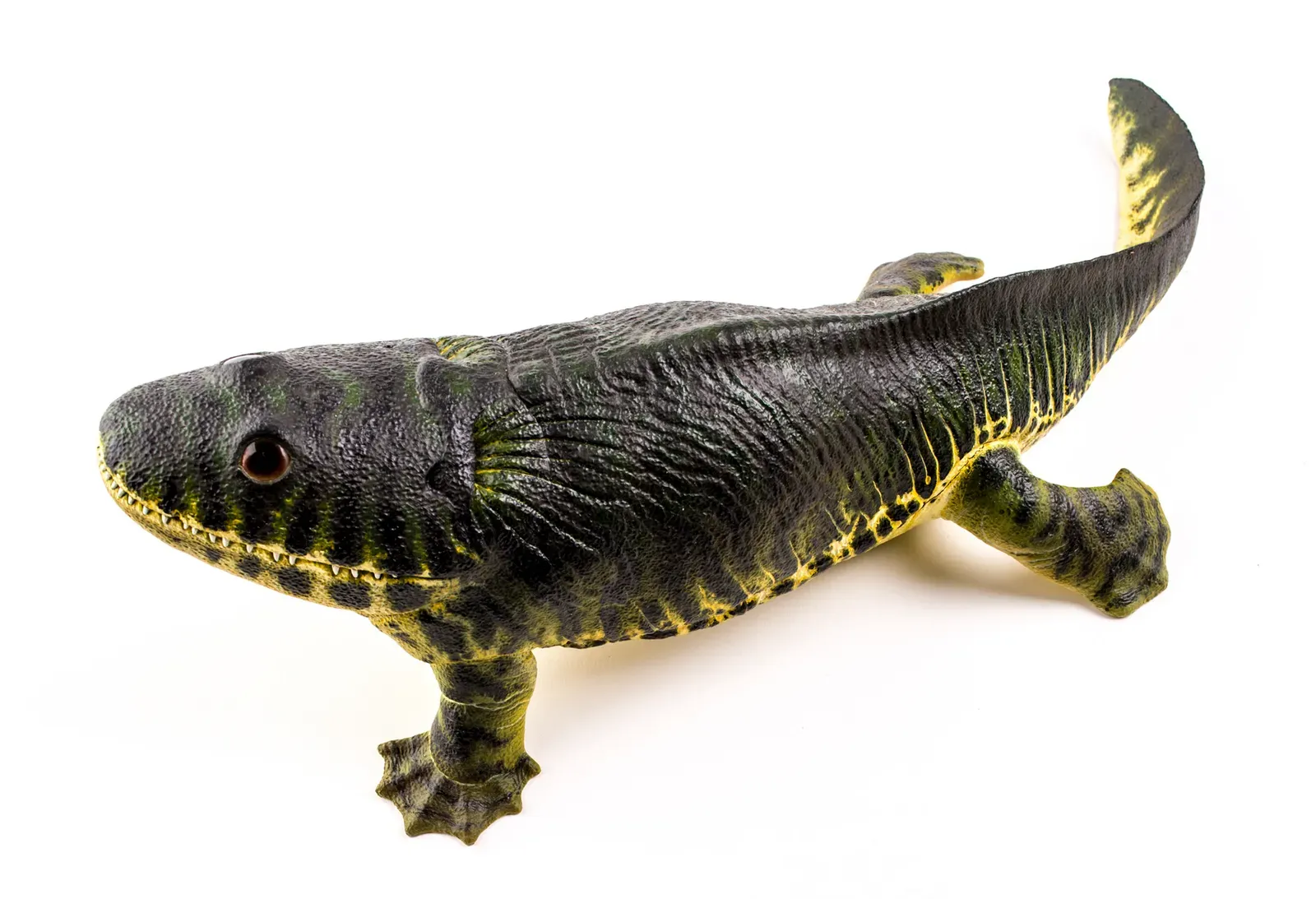
This file was uploaded by MUSE – Science Museum of Trento in cooperation with Wikimedia Italia., CC BY-SA 3.0)
You might assume that once limbs appeared, land conquest was swift and inevitable. Nature, as it turns out, is much messier than that. Newly discovered specimens suggested that the first tetrapods retained many aquatic features, like gills and a tail fin, and that limbs may have evolved in the water before tetrapods adapted to life on land. Limbs, in other words, were not invented for land. They just happened to work there too.
Ichthyostega is about one metre long with a broad, flat head, short barrel-shaped body, stocky legs, large pelvic and pectoral girdles, and a rib cage with broad, overlapping ribs. It is very evidently a tetrapod, with limbs rather than fins. Nevertheless, Ichthyostega has some fish-like characteristics, including a lateral line system and a tail with bony fin rays. Think of it as a creature with one foot in the water and four stubby legs straddling the riverbank.
Many of these Late Devonian stegocephalians still lived their lives essentially only in the water, while others such as Ichthyostega may have gotten most of their food from land. It was from these latter sorts that the more fully terrestrial vertebrates, the Tetrapoda, would eventually evolve. This was not a single dramatic leap from ocean to shore. It was more like a long, slow negotiation between two worlds.
The Spine and the Neck: Engineering a Body for Land
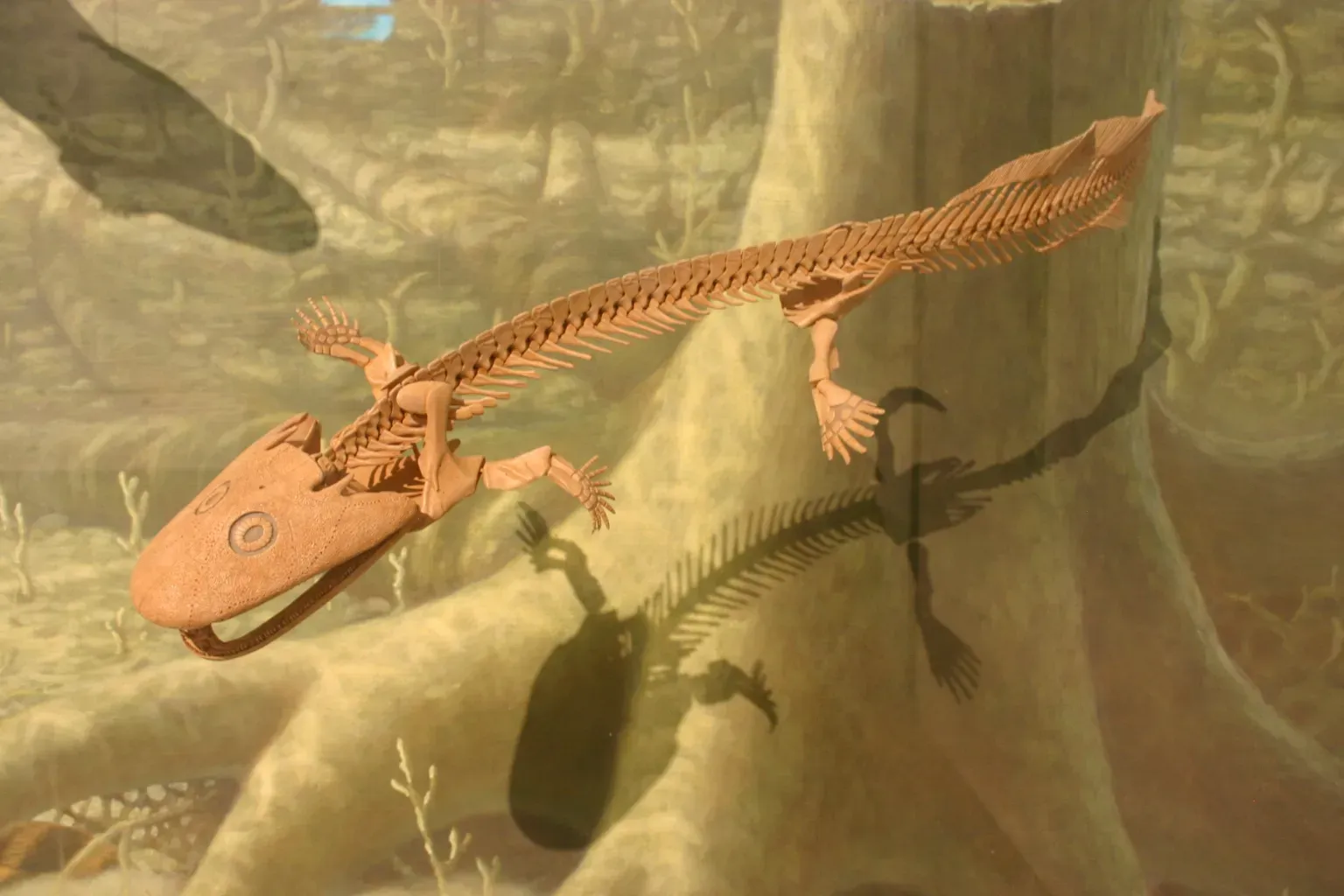
To truly understand how remarkable the transition to land was, you have to think about physics. Because fish live in the water, gravity is not a big problem for them. On land, however, a quadruped with a backbone between forelimbs and hindlimbs faces the same problems as a bridge designer: sag. As fleshy-finned organisms began to venture onto land, they evolved a series of interlocking articulations on each vertebra, which helped them overcome sag and hold the backbone straight with minimal muscular effort.
You may have noticed that fishes have no necks. Their heads are simply connected to their shoulders, and their individual vertebrae look quite similar to one another all the way down the body. Mobile necks, however, allow land animals to look down to see the things on the ground that they might want to eat. Once you develop a neck, your whole relationship with the environment changes. Suddenly you can look around. You can hunt. You can explore.
The ankle was originally composed of many small bones arranged in two rows, but gradually many of these small bones were lost. The first animals to get close to walking on land had eight digits on each limb. Over time, some of these digits were lost, leading to animals with seven digits, then six, and then five, which is the common condition now seen in living tetrapods. Five fingers on each hand. It feels so normal. It was anything but.
Romer’s Gap: The Missing 15 Million Years
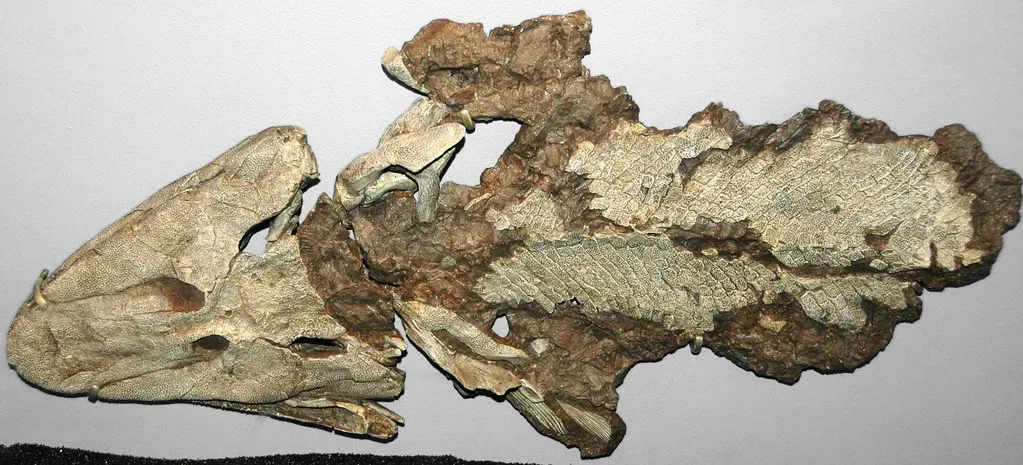
Just when the story seems to be flowing nicely, it hits a wall. Until the 1990s, there was a 30 million year gap in the fossil record between the late Devonian tetrapods and the reappearance of tetrapod fossils in recognizable mid-Carboniferous amphibian lineages. It was referred to as “Romer’s Gap,” which covers the period from about 360 to 345 million years ago, after the palaeontologist who recognized it. For a long time, scientists simply had no idea what happened during this critical stretch of time.
The Devonian tetrapods went through two major bottlenecks during what is known as the Late Devonian extinction. These events led to the disappearance of primitive tetrapods with fish-like features like Ichthyostega and their primary more aquatic relatives. When tetrapods reappear in the fossil record after the Devonian extinctions, the adult forms are all fully adapted to a terrestrial existence. It is as if someone pressed fast-forward and skipped a huge chunk of the film. The mystery still isn’t entirely solved.
The fast rates of anatomical evolution in the tetrapod lineage were not associated with fast rates of species diversification. In fact, there were very few species around, so few they had a very low probability of being preserved in the fossil record. That is likely why Romer’s Gap exists at all. It is not that nothing happened. It is that very few creatures were around to leave fossils behind. It’s a haunting silence in an otherwise loud story.
The Amniotic Egg: The Final Key to Conquering the Land
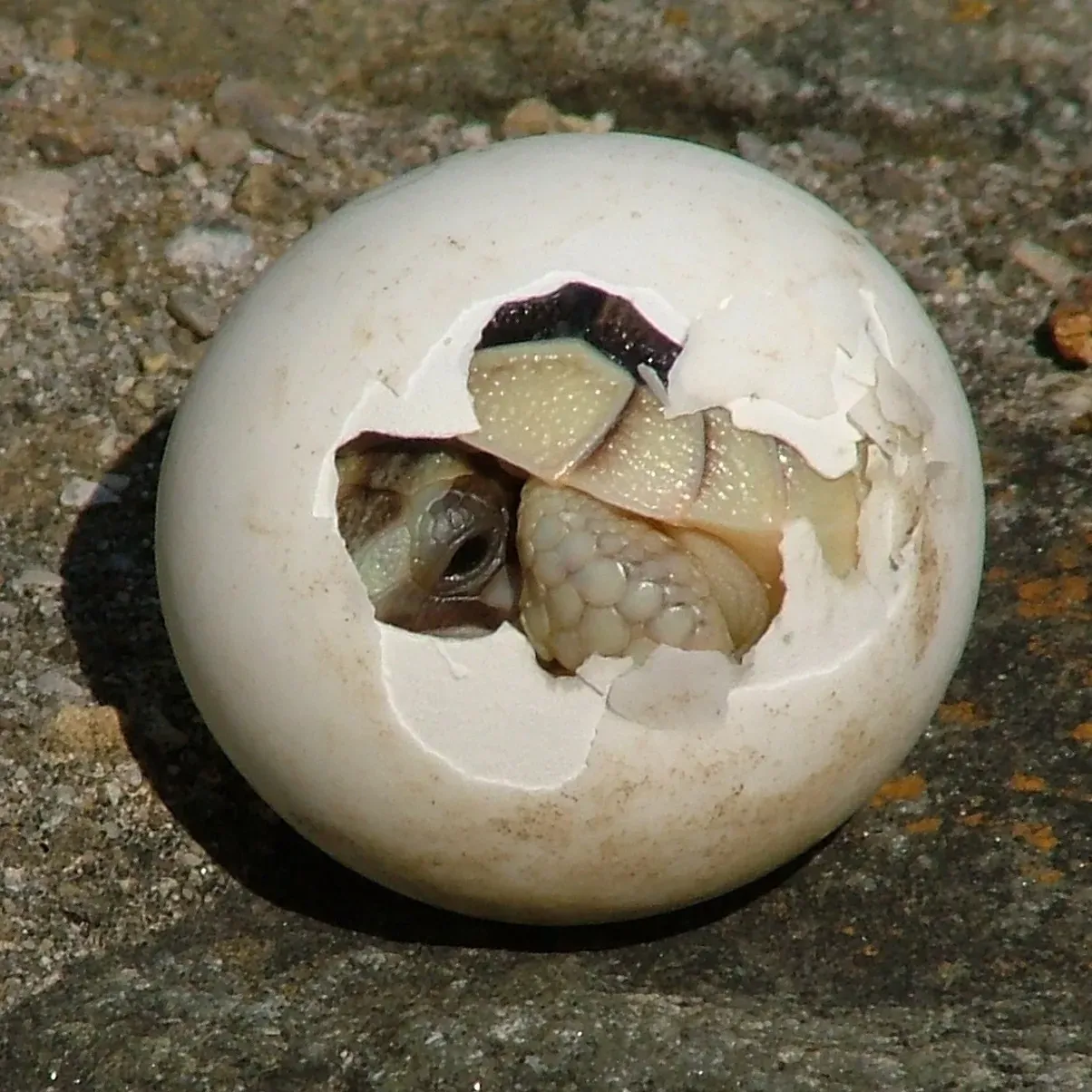
Even after tetrapods developed working limbs, necks, and functional lungs, one massive problem remained: reproduction. Early amphibians still had to return to water to lay their eggs. During the Carboniferous, one group of tetrapods evolved an adaptation that allowed them to break free of the pond: the amniotic egg. Instead of being a “naked” egg laid in a pond or stream, the amniotic egg had a shell to prevent desiccation and a self-contained internal “pond” in which the embryo grew. It was, in a very real sense, a portable ocean.
With the amniotic egg, tetrapods were now freed from the water. As such, the tetrapods with an amniotic egg did not have a larval or “tadpole” stage, and so they were terrestrial for their entire life cycle. This single innovation unlocked an entire planet. Deserts, mountains, forests, grasslands all became available to vertebrates for the very first time. No more depending on a nearby pond.
The transition from amphibians to reptiles marked a significant leap forward, as reptiles developed the self-contained amniote egg, allowing them to thrive completely on land without dependence on water for reproduction. The amniotes had also evolved keratinized skin and claws, among other traits, which allowed them to be successful at living on land. Different groups of amniotes radiated at different times: the first group were the basal members of the Synapsida, the lineage that contains mammals, in the Carboniferous and Early Permian. From there, the age of reptiles, dinosaurs, and eventually mammals would follow.
Conclusion: You Are the Heir to 400 Million Years of Boldness
http://nsf.gov/news/mmg/mmg_disp.cfm?med_id=58310
http://nsf.gov/news/news_summ.jsp?cntn_id=106807
https://flickr.com/photos/nsf_beta/3705198718, Public domain)
The journey from fins to feet is not just a chapter in a biology textbook. It is the reason you exist. It’s hard to overstate how much of a game-changer it was when vertebrates first rose up from the waters and moved onshore about 390 million years ago. That transition led to the rise of the dinosaurs and all the land animals that exist today. Every step you take, every breath you draw is a living echo of that ancient crossing.
What makes this story even more incredible is that it was not driven by bold ambition or grand purpose. It was driven by hunger, competition, and the quiet pressure of survival. The change from a body plan for breathing and navigating in water to a body plan enabling the animal to move on land is one of the most profound evolutionary changes known, and it is also one of the best understood, largely thanks to a number of significant transitional fossil finds in the late 20th century combined with improved phylogenetic analysis.
When you look at your own hand today, with its five fingers and its intricate little wrist bones, you are looking at a design that was first sketched inside the fin of a fish that never saw a forest. The next time you walk across a room, consider what it took to get here. Four hundred million years of biology moved you across that floor. What do you think about that? Let us know in the comments.