
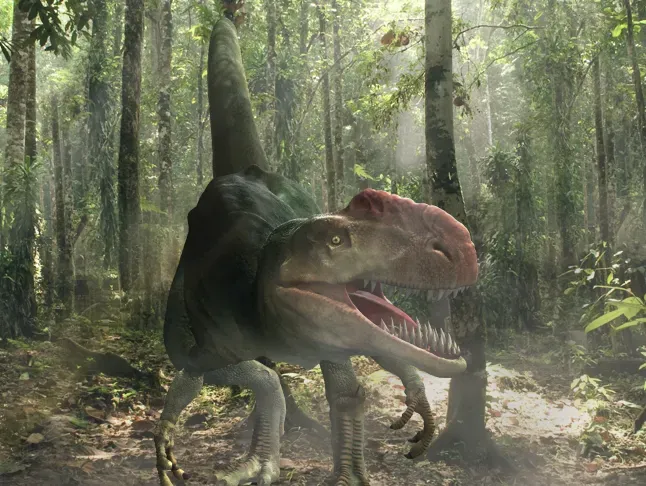
When most people hear “Jurassic Period,” their minds immediately snap to the thundering footsteps of T. rex or the razor grin of a Velociraptor. Here’s the thing though – both of those iconic predators actually lived in the Cretaceous, not the Jurassic. The real stars of the Jurassic are a far more fascinating, and far less celebrated, cast of characters.
The Jurassic is a geologic period that took place about 201.3 million years to 145 million years ago, and within that vast stretch of prehistoric time, evolution ran wild. Bizarre crests, armored tails, bat-like wings, and necks so long they defy belief – the Jurassic had it all. You just might not have heard about most of it. Let’s dive in.
1. Guanlong: The Crown Dragon That Predated T. Rex
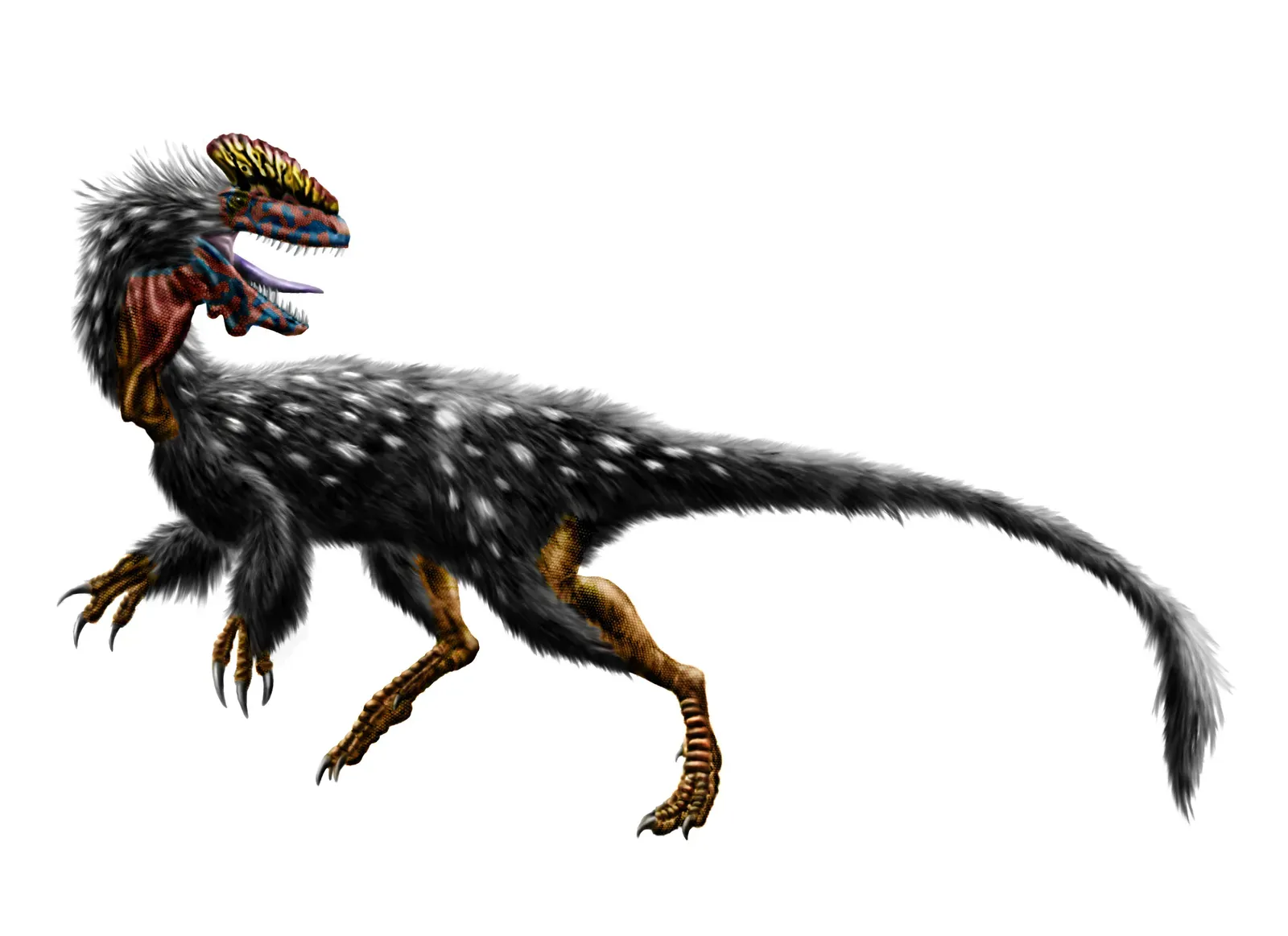
Imagine discovering that the terrifying Tyrannosaurus rex had a much smaller, rather glamorous ancestor strutting around China roughly 160 million years ago. Guanlong, literally meaning “crown dragon,” is an extinct genus of proceratosaurid tyrannosauroid dinosaur from the Late Jurassic Shishugou Formation of China, first described in 2006 by Xu Xing and colleagues. It might not have the same ferocious reputation, but its place in the family tree is absolutely jaw-dropping.
Guanlong’s most striking feature is its cranial crest, a bony structure that extended along the top of its skull, and despite being a predator, this crest was thin and delicate, suggesting it was not used in combat but rather for display purposes. Like other early theropods, Guanlong was relatively small and only a fraction as large as later tyrannosaurids such as T. rex, and the skeletal differences between earlier and later tyrannosaurs suggest that Guanlong was an intermediate step in evolution between early primitive coelurosaurs and later, larger tyrannosaurids. Talk about a long-lost ancestor with serious style.
2. Monolophosaurus: The Single-Crested Hunter of China
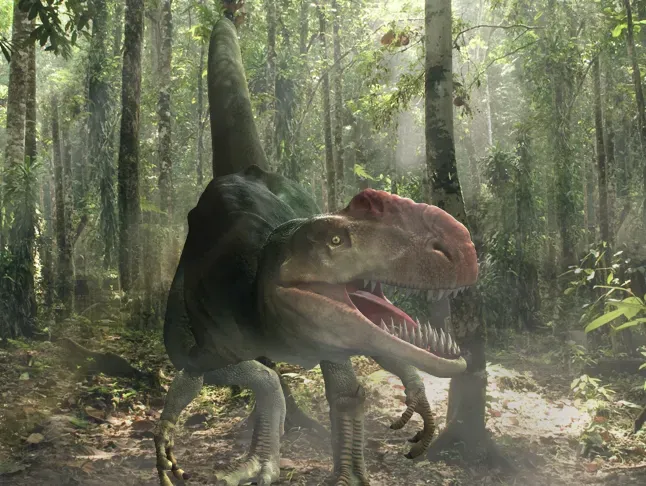
If you think Guanlong had an interesting head, wait until you meet Monolophosaurus. Monolophosaurus was a medium-sized theropod dinosaur from the Middle Jurassic period, named for the single crest on top of its skull, with the only known species measuring 7.5 metres in length and weighing around 1,565 pounds. One crest. Centered. Right on top. Honestly, it looks like something a movie designer would dream up, not a real animal.
Monolophosaurus lived in an area with a warm, semi-arid and highly seasonal climate, alongside many wetlands and well-drained distal floodplains, in a region of China home to many types of conifers, ginkgos and ferns. It coexisted with smaller dinosaurs such as Hualianceratops, Yinlong, and Guanlong, as well as much larger neighbors like Sinraptor, Mamenchisaurus, and Klamelisaurus. It was effectively the mid-level predator in a neighborhood where the rules of survival changed daily.
3. Huayangosaurus: Stegosaurus’s Older, Smaller Cousin
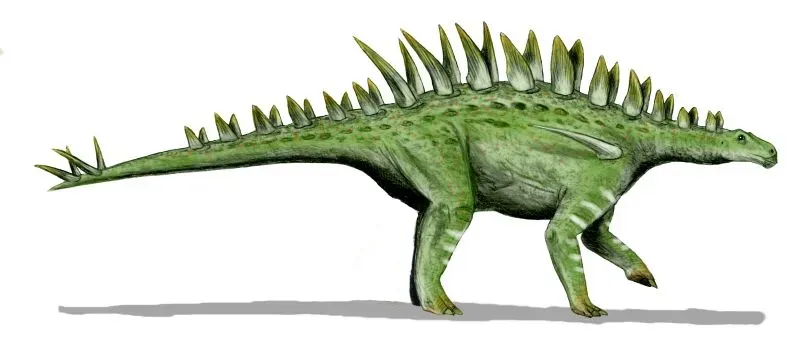
You have probably heard of Stegosaurus with its iconic plated back. But what if you learned there was an earlier, smaller, and in many ways more interesting relative that roamed China long before Stegosaurus ever appeared? Huayangosaurus lived during the Bathonian to Callovian stages, around 165 million years ago, some 20 million years before its famous relative Stegosaurus appeared in North America, and at only approximately 4 metres long, it was also much smaller than its famous cousin.
As with other stegosaurians, Huayangosaurus was a quadrupedal herbivore with a small skull and a spiked tail, and like Stegosaurus, it bore the distinctive double row of plates that characterize all stegosaurians. Huayangosaurus inhabited south-west China during the Middle Jurassic period around 170 to 160 million years ago, in an environment that featured many rivers and lakes, providing plenty of vegetation for herbivores like itself. I think of it like the prototype model before the engineers perfected the design.
4. Mamenchisaurus: The Neck That Broke All Records
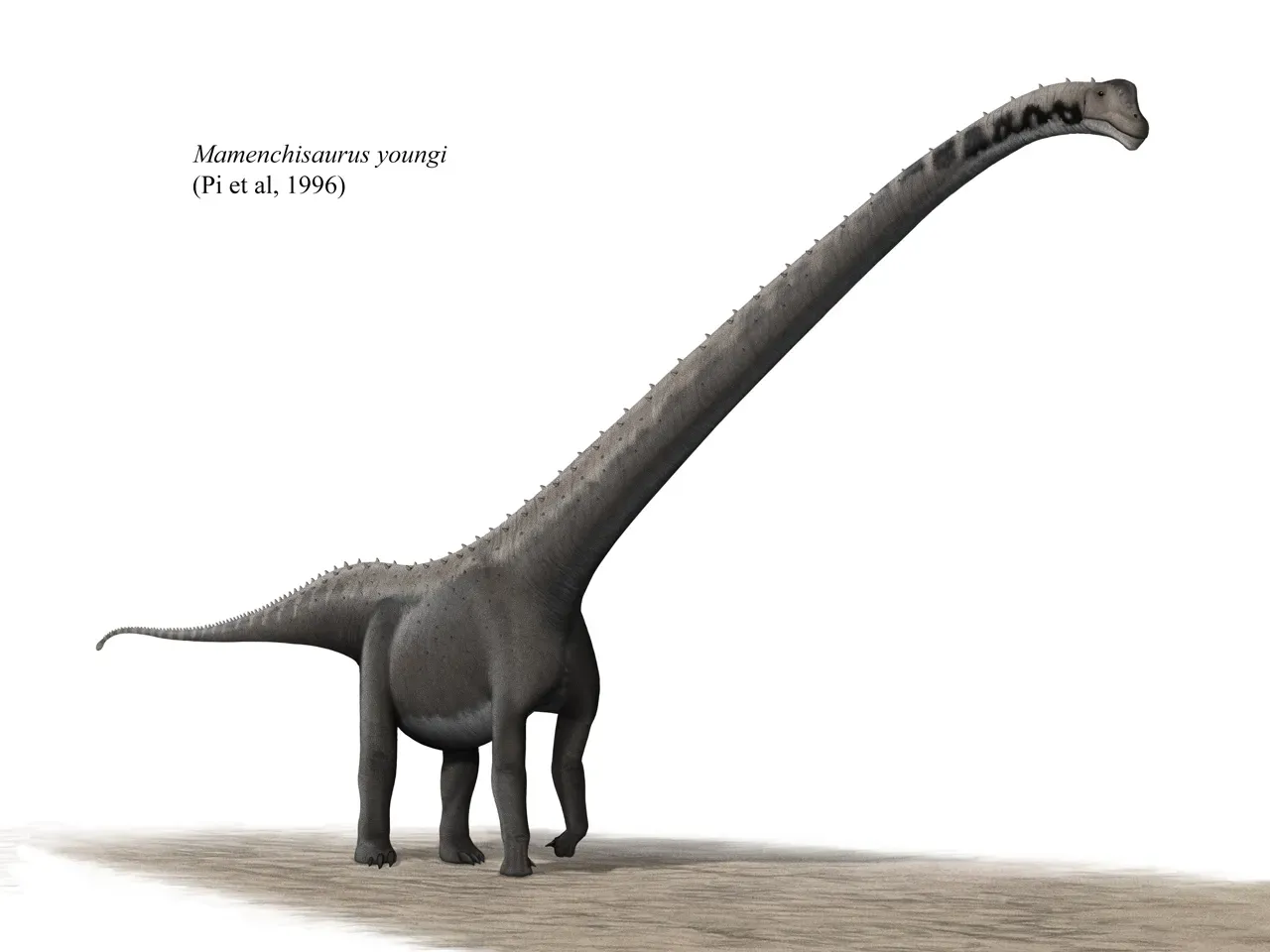
Let’s be real – when you think of a long neck on a dinosaur, you probably picture something mildly impressive. Mamenchisaurus was not mildly anything. Mamenchisaurus stood out among Late Jurassic sauropods primarily for its extraordinary neck, which was nearly half its total body length. Half. The neck alone was half the animal. That is like walking around with your torso extended ten feet in front of your feet.
Mamenchisaurus is considered one of the weirdest-looking dinosaurs discovered to date, with a very long neck that far exceeds its small torso, and it survived through the Late Jurassic with some species growing up to 115 feet long. Mamenchisaurus jingyanensis was a gigantic herbivore that lived around 150 million years ago and had one of the longest necks of all known dinosaurs. Scientists are still debating exactly how it held and moved that extraordinary neck, and honestly, that debate alone makes this dinosaur worth knowing.
5. Cryolophosaurus: The “Elvis Dinosaur” of Antarctica
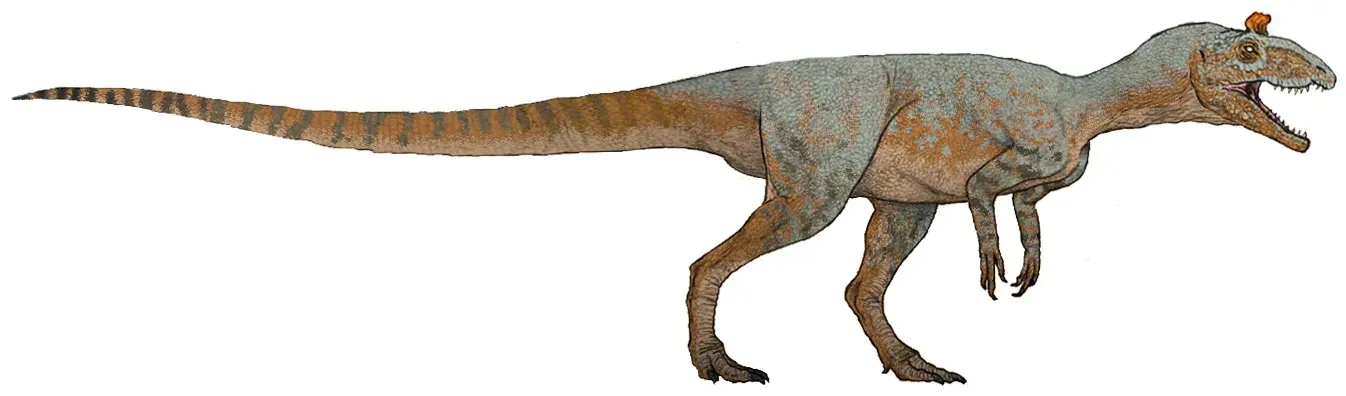
Here is something that might genuinely surprise you. Discovered in Antarctica, Cryolophosaurus sported a flamboyant crest on its head resembling an Elvis Presley hairstyle, and it lived in the Early Jurassic when Antarctica had forests and a milder climate, with the crest possibly used for display or attracting mates. Yes – Antarctica. Forests. Dinosaurs with Elvis hair. The Jurassic truly had no limits.
Cryolophosaurus is the only known dinosaur from Antarctica with a flamboyant head crest. It was a large, bipedal predator, believed to have reached roughly six metres in length. The fact that it lived in what is now one of the most inhospitable places on Earth – when that region was warm enough to support forests and wildlife – is a vivid reminder of just how dramatically our planet has changed. It’s hard to say for sure, but this might be the single most surprising location any Jurassic theropod has ever been found.
6. Shunosaurus: The Club-Tailed Sauropod You’ve Never Heard Of
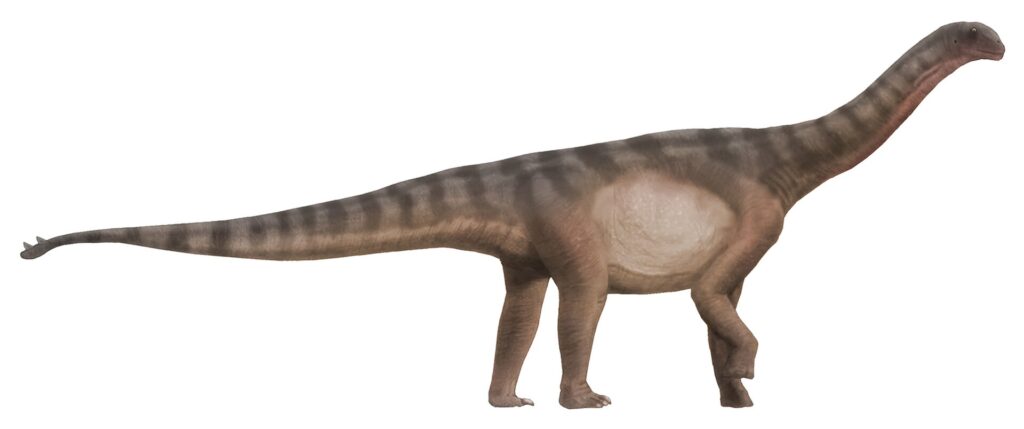
When people imagine sauropods, they picture gentle, long-necked giants with no real defensive weaponry. Shunosaurus challenges that assumption in a spectacular way. Unlike most sauropods, this Chinese dinosaur possessed a bony club at the end of its tail, a weapon it could have swung at approaching predators much like an ankylosaur. Shunosaurus accounts for roughly nine-tenths of the fossils found in the Dashanpu fauna, showing it was a dominant and very common member of its habitat and environment.
Shunosaurus shared the local Middle Jurassic landscape with other sauropods including Datousaurus, Omeisaurus, and Protognathosaurus, the possible ornithopod Xiaosaurus, the early stegosaur Huayangosaurus, as well as the carnivorous theropod Gasosaurus. Think of it as a whole neighborhood of fascinating, underappreciated dinosaurs all living together in one part of ancient China. The sheer density of remarkable species in that one formation alone is staggering, and Shunosaurus stood at the center of it all.
7. Guanlong’s Neighbor: Xiaosaurus, the Dawn Lizard
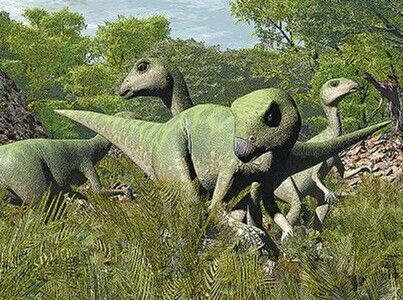
Xiaosaurus, meaning “dawn lizard,” is an extinct genus of small herbivorous dinosaur that lived in China during the Middle Jurassic period around 169 to 163 million years ago. Small, swift, and almost completely overlooked in popular culture, Xiaosaurus is one of those dinosaurs that specialists find fascinating precisely because so little is known about it. Two specimens of this dinosaur were discovered during excavations near Dashanpu in Sichuan, China.
It is unknown as to which family Xiaosaurus belonged to, and among the many known dinosaurs that lived alongside it were Agilisaurus, Omeisaurus, Datousaurus, Huayangosaurus, Gasosaurus, Shunosaurus, and Xuanhanosaurus. The mystery surrounding its classification is exactly what makes Xiaosaurus compelling. When paleontologists cannot easily slot a species into a known group, it usually means the animal was doing something evolutionarily unique. The dawn lizard may be small, but its scientific significance is anything but.
8. Elaphrosaurus: The Lightweight Ghost of Tanzania
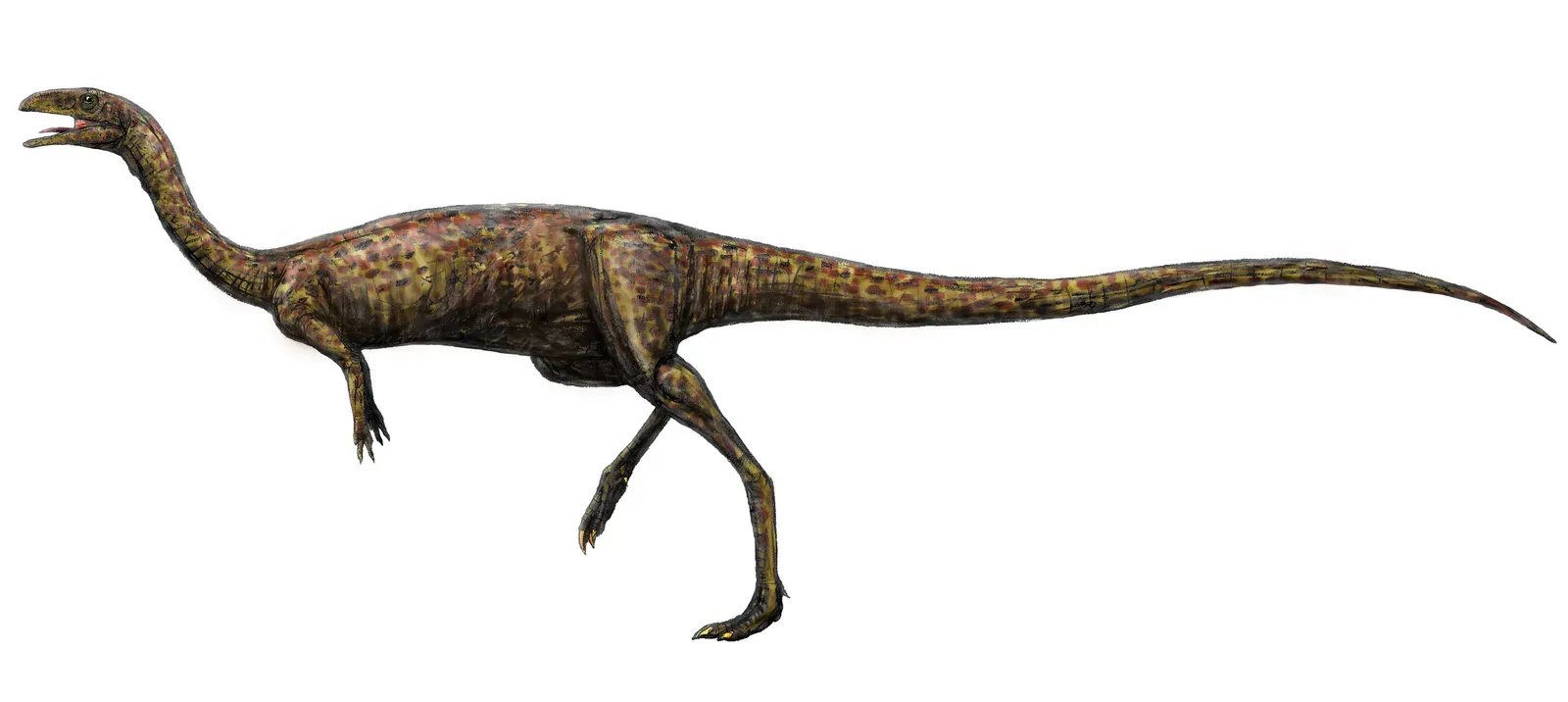
Not every Jurassic dinosaur was built like an armored tank or a towering giant. Some were built for pure, lean speed. Elaphrosaurus was a medium-sized reptile from the Late Jurassic period, living roughly 154 to 150 million years ago in Tanzania, Africa, with a light build, a relatively long body, and notably short hindlimbs for its size, a close relative of Limusaurus. The origin of its name comes from the Greek word elaphros, meaning “light to bear.”
What makes Elaphrosaurus genuinely puzzling is the debate around its diet. Its relatives included species that appear to have transitioned from carnivory toward herbivory, and scientists are still working out where exactly Elaphrosaurus sat on that spectrum. It was one of the more lightly built theropods of its era, built more like a long-distance runner than a bruiser. Dinosaurs experienced a major increase in diversity and abundance during the Early Jurassic, becoming the dominant vertebrates in terrestrial ecosystems, and Elaphrosaurus represents how wide and unpredictable that evolutionary diversity could be.
9. Epidexipteryx: The Feathered Showoff With Ribbon Tail Plumes
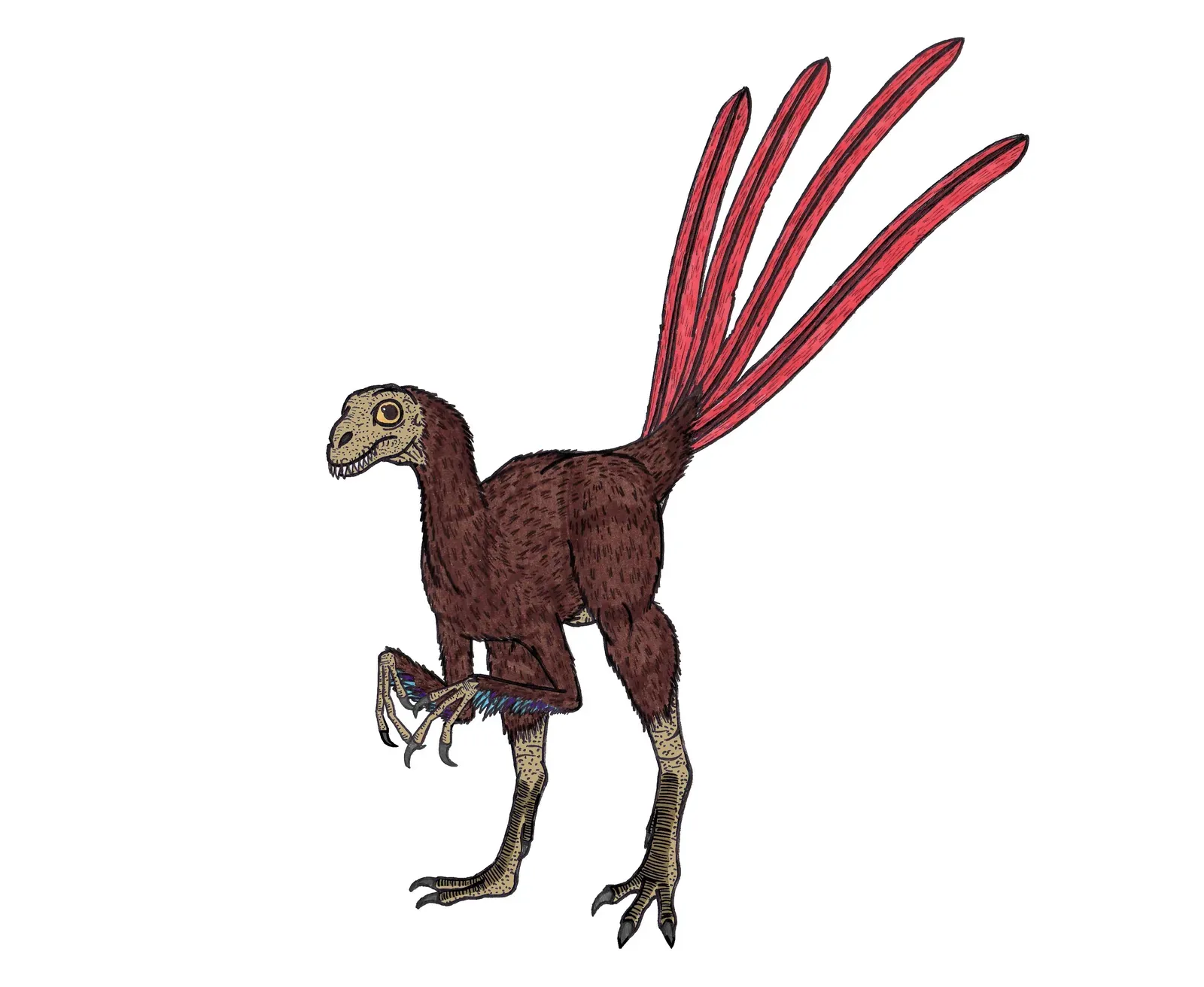
This one genuinely sounds like something out of a fantasy novel. Epidexipteryx was a tiny, tree-dwelling dinosaur from the Late Jurassic of China, and it possessed something no other known dinosaur had: four elongated ribbon-like tail feathers used purely for display. Not for flight. Not for insulation. Just for showing off. Yi qi, a closely related small feathered dinosaur from China, had bat-like wing structures, and this rare adaptation shows how experimental evolution could be among early flying dinosaurs.
Epidexipteryx measured only around 25 centimeters in body length, making it one of the smallest non-avian dinosaurs ever found. Its teeth were bizarre too, with long projecting front teeth suited for extracting insects from bark. Together with its display plumes, this tiny creature looked more like an eccentric tropical bird than anything resembling the dinosaurs in popular movies. It is a perfect reminder that evolution was never working from a single blueprint. The first stem-group birds appeared during the Jurassic, evolving from a branch of theropod dinosaurs, and Epidexipteryx shows just how blurry the line between dinosaur and bird could be.
10. Pegomastax: The Tiny Jurassic Porcupine With Fangs
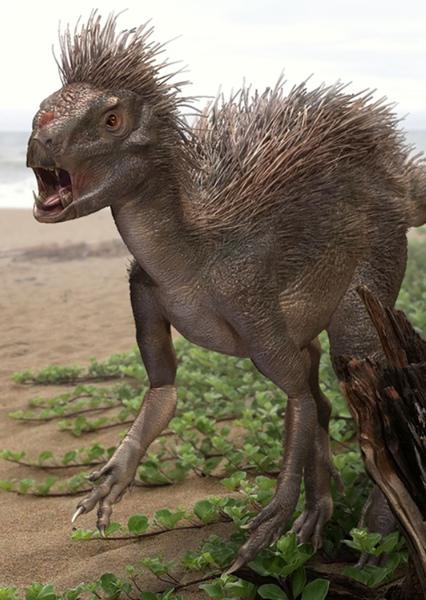
Pegomastax is a small Early Jurassic heterodontid that inhabited what is now South Africa around 200 to 190 million years ago, measuring only 60 centimeters in length and weighing less than a housecat. Let that sink in for a moment. A dinosaur smaller than your average tabby cat, running around the Jurassic landscape with fangs and a body covered in bristle-like structures. Nature really had a sense of humor in this period.
Despite its plant-based diet, Pegomastax sported a parrot-like beak with unusual fangs, a rare combination in herbivores that may have been used for defense or social interactions, with a robust jaw and tall teeth adapted for slicing through vegetation, and a body that may have been covered with bristle-like structures, suggesting it was a specialist navigating the dense forests of its time. Its quilled body covering and unusual dentition make it one of the oddest herbivores from the Jurassic, with quills that may have been brightly colored to warn predators to stay away. For something so small, Pegomastax carried an enormous amount of personality.
Conclusion: The Jurassic Was Far Stranger Than You Think
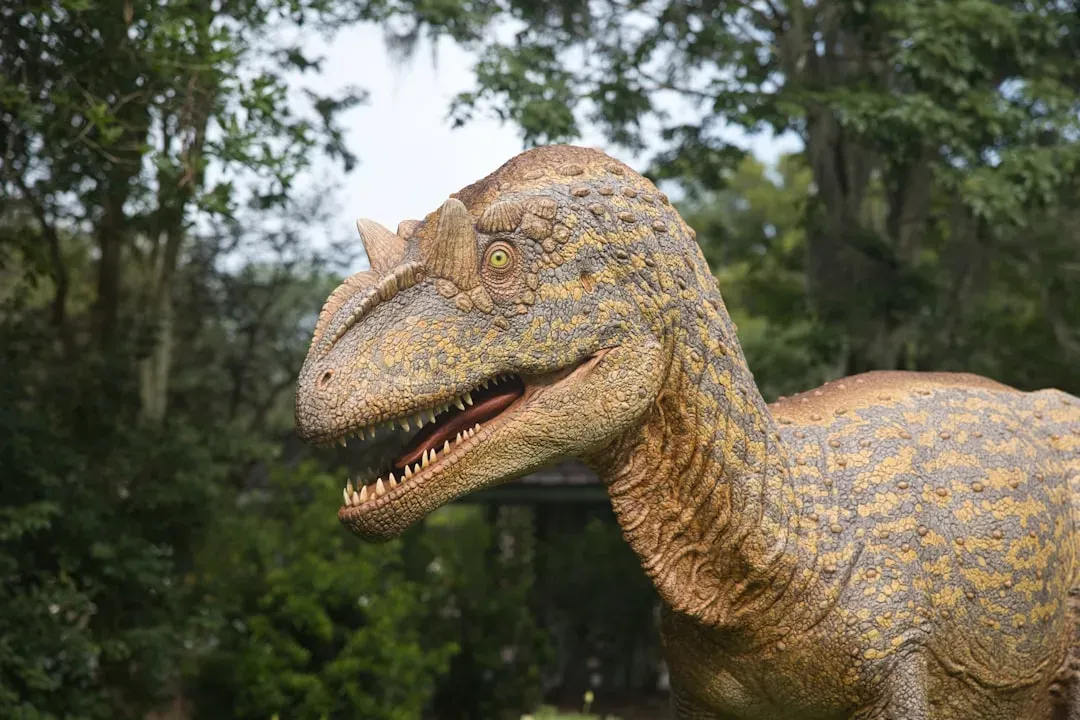
The Jurassic Period was not just the age of giant, lumbering behemoths and simple predators chasing them down. Dinosaurs experienced a major increase in diversity and abundance during the Early Jurassic, becoming the dominant vertebrates in terrestrial ecosystems, and that diversity produced creatures that challenge every preconception you might carry about prehistoric life. Crown-headed ancestors of T. rex, ribbon-tailed showoffs the size of pigeons, porcupine-like herbivores with fangs – the Jurassic had them all.
The famous names get all the attention, but it is the lesser-known species like these ten that tell the real story of the age of reptiles. Evolution does not work in straight lines. It experiments. It surprises. It occasionally creates a dinosaur with an Elvis haircut living in ancient Antarctica. Despite all the research, dinosaurs are still mysterious creatures, and it is always exciting when researchers and paleontologists uncover a new species, which means what we consider the rarest or strangest dinosaur today could change in the future. Which of these ten surprised you the most? Drop your answer in the comments below – because honestly, every single one of them deserves far more attention than they get.