Chongqing, China – Paleontologists announced the discovery of the world’s oldest complete bony fish fossils from early Silurian rock layers, dating back 436 million years. These remarkable finds from southern China fill critical gaps in the vertebrate fossil record and highlight an earlier diversification of bony fishes than previously known. The specimens offer unprecedented views of early anatomical features that set the stage for the evolution of modern fish and, ultimately, land-dwelling tetrapods including humans.
A 3-Centimeter Marvel Rewrites Pre-Devonian History
A 3-Centimeter Marvel Rewrites Pre-Devonian History (Image Credits: Flickr)
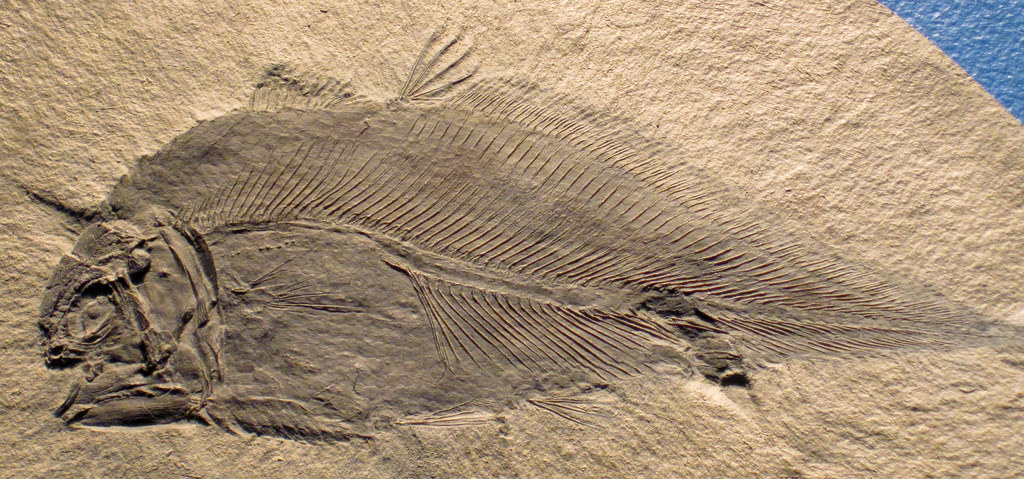
The standout specimen, named Eosteus chongqingensis, measures just three centimeters in length yet represents a monumental leap in our understanding of early life. Unearthed from the Huixingshao Formation in Xiushan, this articulated fossil preserves nearly the entire body, making it the oldest such example globally. Researchers from the Institute of Vertebrate Paleontology and Paleoanthropology (IVPP) in Beijing identified it as a stem osteichthyan, a primitive bony fish on the lineage leading to all later forms.
Prior to this find, complete bony fish fossils appeared only in late Silurian or Devonian deposits, around 423 million years ago or younger. Eosteus pushes that boundary back by over a dozen million years into the early Silurian, suggesting bony fishes radiated much sooner amid the period’s marine environments. This small creature swam in ancient seas teeming with jawless fish and early jawed forms, marking a pivotal shift toward more complex vertebrates.
Reconstructing the Giant Silurian Predator
Complementing Eosteus, scientists revisited Megamastax amblyodus, the largest known vertebrate from the Silurian at about 423 million years old. Found in the Kuanti Formation near Qujing in Yunnan Province, this predatory fish featured massive tooth plates that puzzled experts for decades. Advanced imaging techniques finally unlocked its cranial structure, jaws, teeth, and braincase.
High-resolution computed tomography (HRCT) allowed the team to create detailed 3D models without damaging the fossils. These reconstructions confirmed Megamastax as a basal osteichthyan with traits bridging primitive fishes and later groups. Its robust dentition points to a durophagous diet, crushing shelled prey in Silurian reefs.
Timeline of Early Bony Fish Milestones
The new fossils anchor a revised timeline for osteichthyan emergence. Below is a comparison of key pre-Devonian specimens:
| Fossil Name | Age (million years ago) | Location | Significance |
|---|---|---|---|
| Eosteus chongqingensis | 436 | Xiushan, Chongqing | Oldest complete articulated bony fish |
| Megamastax amblyodus | 423 | Qujing, Yunnan | Largest Silurian vertebrate; full cranial reconstruction |
This table underscores how southern China’s Lagerstätten preserve exceptional soft-tissue details, rivaling famous sites like Burgess Shale. The Chongqing Lagerstätte, in particular, yielded microfossils alongside Eosteus, enriching the early Silurian record.
Bridging Oceans to Land: Evolutionary Insights
Osteichthyans split into two major lineages: ray-finned fishes (actinopterygians) dominant in oceans today, and lobe-finned fishes (sarcopterygians) whose descendants colonized land as tetrapods. The new fossils populate the stem group before this divergence, showing a mosaic of primitive and derived traits.
- Robust jaws and specialized teeth for diverse feeding strategies.
- Bony braincases hinting at advanced sensory systems.
- Scales and fin structures foreshadowing Devonian radiations.
- Evidence of greater morphological disparity in Silurian seas.
These features indicate bony fishes thrived alongside placoderms and acanthodians, outcompeting them in the long run. One sarcopterygian branch ventured onto Devonian shores, evolving limbs from fins and lungs from swim bladders. Southern China emerges as a hotspot for this “fish-to-human” transition, with fossils predating the Silurian-Devonian boundary.
Key Takeaways from the Discovery
- The 436-million-year-old Eosteus chongqingensis is the earliest fully articulated osteichthyan, extending the bony fish record into early Silurian times.
- HRCT reconstructions of Megamastax resolve long-standing anatomical questions, affirming its basal position.
- These finds document a rapid Silurian diversification, setting the foundation for tetrapod evolution and modern vertebrate biodiversity.
This breakthrough, detailed in Nature, stemmed from over a decade of fieldwork and lab analysis by IVPP teams led by Min Zhu. It challenges assumptions of a Devonian-dominated “Age of Fishes” and spotlights Asia’s role in vertebrate origins.
As these tiny ancient swimmers reveal, the roots of our own lineage lie deeper in time than once thought. The story of life from sea to shore gains vivid new chapters. What do you think about these evolutionary revelations? Share your thoughts in the comments.