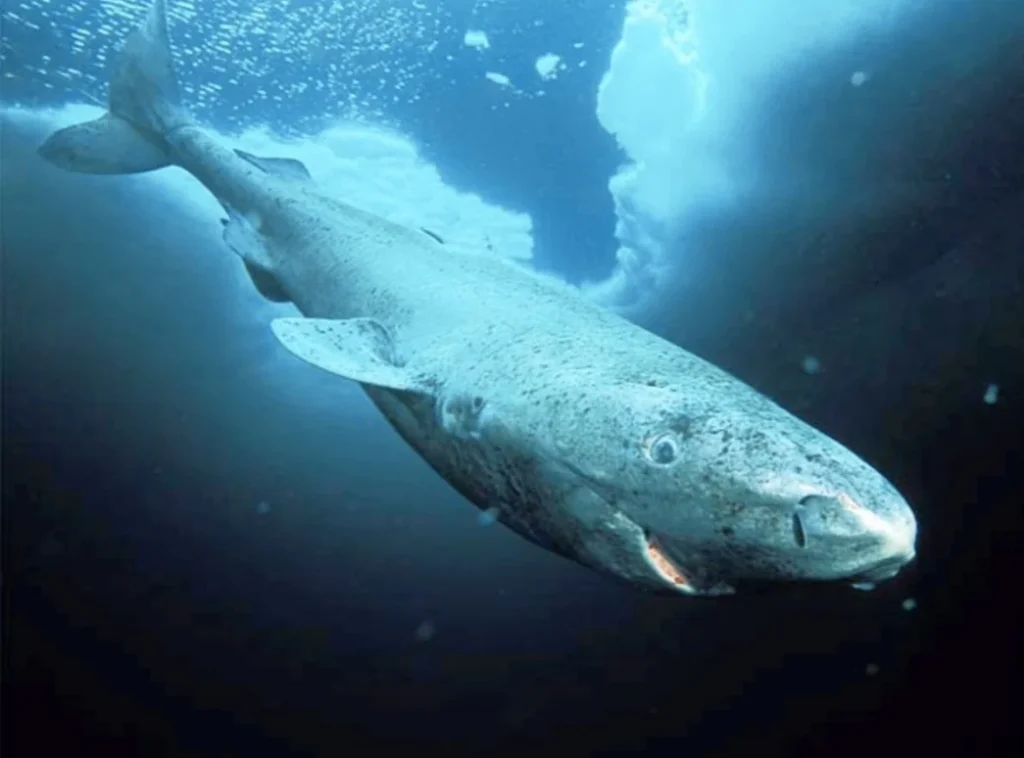
There is a creature swimming in the frozen depths of the Arctic right now that was likely alive before Shakespeare wrote his first play. It did not witness history from a seat in a theater or a library. It drifted silently, slowly, beneath thousands of feet of cold black water, completely indifferent to everything happening above the surface. No heartbeat quickened. No wrinkle formed. It just kept going.
The Greenland shark is one of the most extraordinary animals ever discovered, and honestly, the deeper you look into what science has learned about it, the more your mind bends. From its almost absurd lifespan to its toxic flesh and its relationship with a parasite that eats its eyeballs, this is not your typical ocean predator. So let’s dive in.
Fact 1: You Are Looking at the Longest-Lived Vertebrate on Earth
Let’s be real, when most people think of ancient animals, they picture giant tortoises or maybe a bowhead whale. But both of those creatures are left in the dust by a single, sluggish, grey-bodied shark that most people have never seen. The Greenland shark holds the longest known lifespan of all vertebrates, with an estimated lifespan of at least 272 years, and the oldest individual estimated to be around 392 years of age, give or take 120 years.
It can live for 400 years, which is roughly twice the age of the longest-living land animal, the giant tortoise. Think about that. While the tortoise gets celebrated as nature’s ancient wonder, the Greenland shark is out there essentially doubling the record. That makes Greenland sharks the longest-lived vertebrates on record by a huge margin, with the next oldest being the bowhead whale, at just 211 years old.
Fact 2: Aging This Shark Was a Scientific Puzzle for Decades
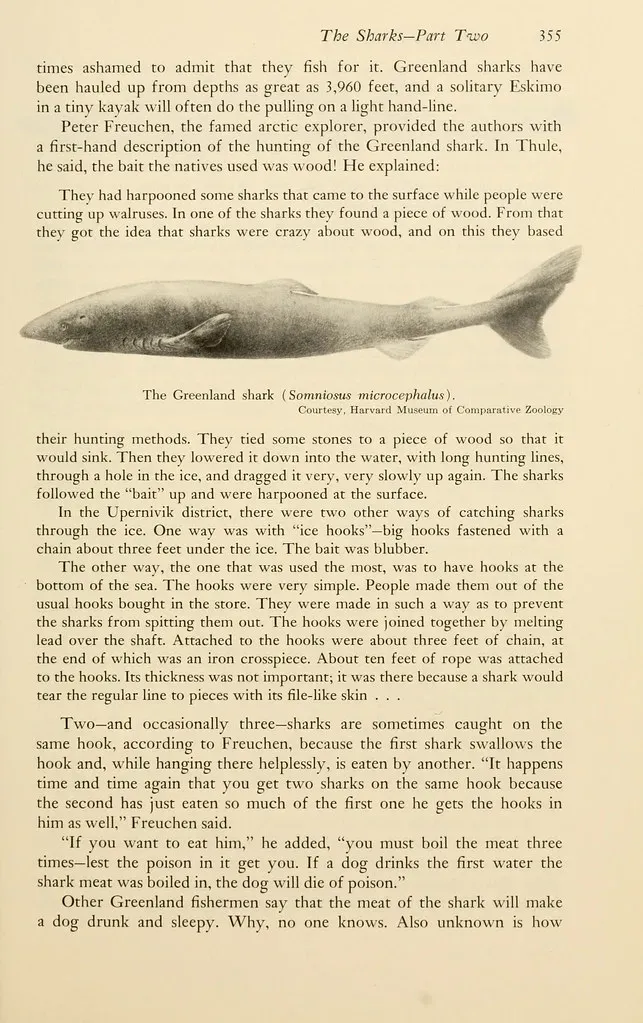
Here is the thing about aging most sharks. The age of other shark species can be estimated by counting growth bands on fin spines or on the shark’s vertebrae, much like rings on a tree. Simple enough, right? Not for this one. Greenland sharks have no fin spines and no hard tissues in their bodies, and their vertebrae are too soft to form the growth bands seen in other sharks.
Scientists had to think creatively. Instead, age is now determined by removing the layers of the lens of the eye, which continues growing throughout its lifetime, and radiocarbon dating the tissue in the center. Using this method, scientists discovered Greenland sharks have a life expectancy of at least 272 years and could reach 392, give or take about 120 years. It is a bit like reading a fossilized diary one layer at a time. Inside the shark’s eyes, there are proteins that are formed before birth and do not degrade with age, like a fossil preserved in amber.
Fact 3: Your Body Ages. Theirs Barely Seems To.
One of the most jaw-dropping recent findings involves how Greenland sharks age at the metabolic level. The stable metabolism across Greenland sharks’ ages suggests they do not degenerate like other animals do, which is likely the reason for their long lifespans. Most animals, including us, experience a steady decline in cellular efficiency as time passes. Enzymes slow, tissues deteriorate, systems fail. Not so for this animal.
One theory to explain this long lifespan is that the Greenland shark has a very slow metabolism, an adaptation to the deep, cold waters it inhabits. Cold water essentially puts the brakes on the entire biological clock. He and others think cold water helps lengthen the animals’ lives by slowing down their growth and biochemical activity. Imagine if your own biological clock ran at a fraction of its normal speed. A year of your life might feel like a long afternoon. That is probably the closest analogy to what this shark experiences.
Fact 4: Its Genome Is Twice the Size of a Human’s
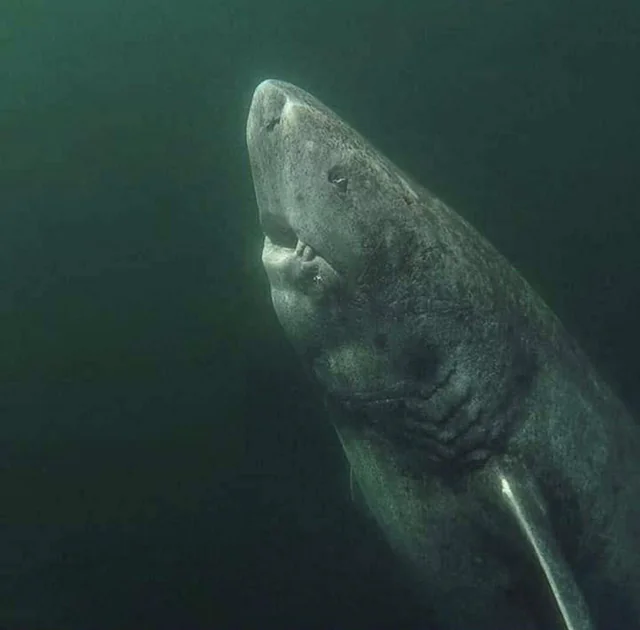
If you think of a genome as a book of instructions for building and running a living body, then the Greenland shark is working from a truly enormous manual. For the first time, researchers compiled the Greenland shark’s entire chromosomal genome, and found it to be about twice as thick as a human’s, containing around 22,634 genes and roughly 6.45 billion base pairs. That is a staggering amount of genetic information packed into one animal.
So far, data suggest that the Greenland shark’s toolbox for repairing its DNA may be one of the keys to its extreme longevity. The shark’s genome size posed one of the project’s early challenges. With 6.5 billion base pairs, the Greenland shark’s genetic code is twice as long as that of a human, and it is the largest among shark genome sequences to date. Scientists found that surprisingly, many duplicated genes are involved in repairing DNA damage. It is as if evolution handed this shark a toolbox overflowing with repair kits, and it has been using them continuously for centuries.
Fact 5: Sexual Maturity at 150 Years Old
If you thought it took humans a long time to grow up, the Greenland shark would find that observation almost charming. Greenland sharks are estimated to reach sexual maturity around 150 years of age, when females measure around 4.19 meters and males around 2.84 meters. That means a shark born today in 2026 would not be biologically ready to reproduce until roughly the year 2176. Let that land for a moment.
Because the sharks grow so slowly, they are not thought to reach sexual maturity until they are over a century old. That means removing mature Greenland sharks from the ocean affects the species and the ecosystem for many decades. This is not just a fascinating biological quirk. It has enormous consequences for how the species recovers from any kind of pressure. Greenland sharks are born alive after an estimated gestation period of 8 to 18 years, and this extremely long gestation rate is crucial to understanding effective conservation strategies.
Fact 6: They Grow at a Crawl, and They Never Really Stop
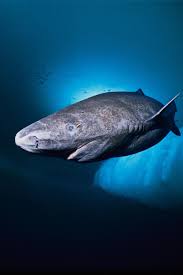
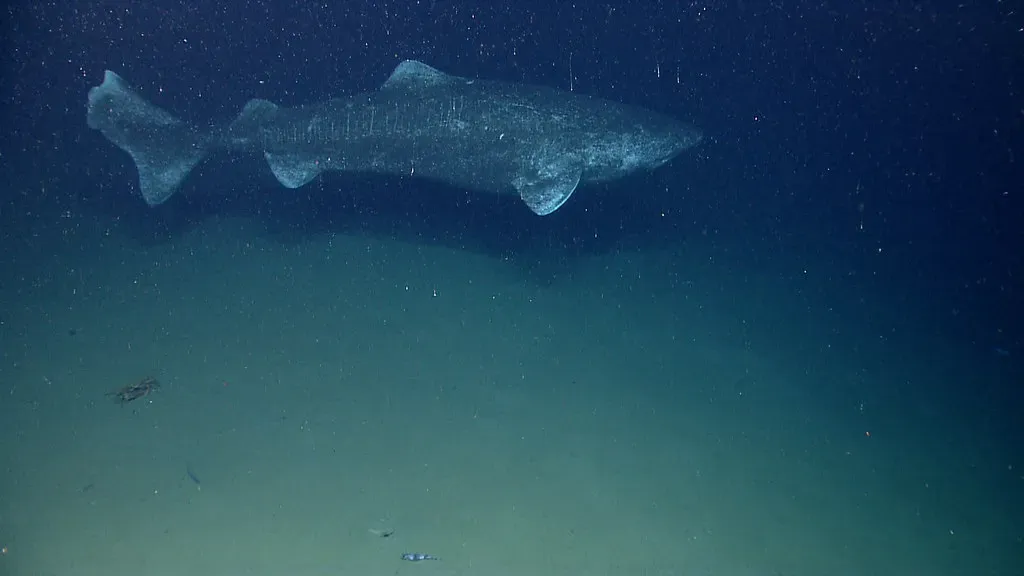
Speed, in every sense of the word, is not something the Greenland shark concerns itself with. Scientists could only guess that the sharks lived a long time based on what they knew, as the sharks grow at a very slow rate of less than 1 centimeter per year, and they can reach over 6 meters in size. To put that in perspective, your fingernails probably grow faster than this shark.
Measuring the Greenland shark’s growth rate is challenging because individuals are rarely recaptured. However, one shark tagged in 1936 had only grown 2.3 inches when it reappeared 16 years later. Sixteen years and barely more than two inches of growth. Greenland sharks are thought to continue growing through their lives, so there is no average adult size as for other animals that stop growing after a while. It is like a very, very patient tree. The older and larger the shark, the more centuries it has quietly been adding fraction by fraction.
Fact 7: Their Flesh Is Toxic, but People Still Eat It
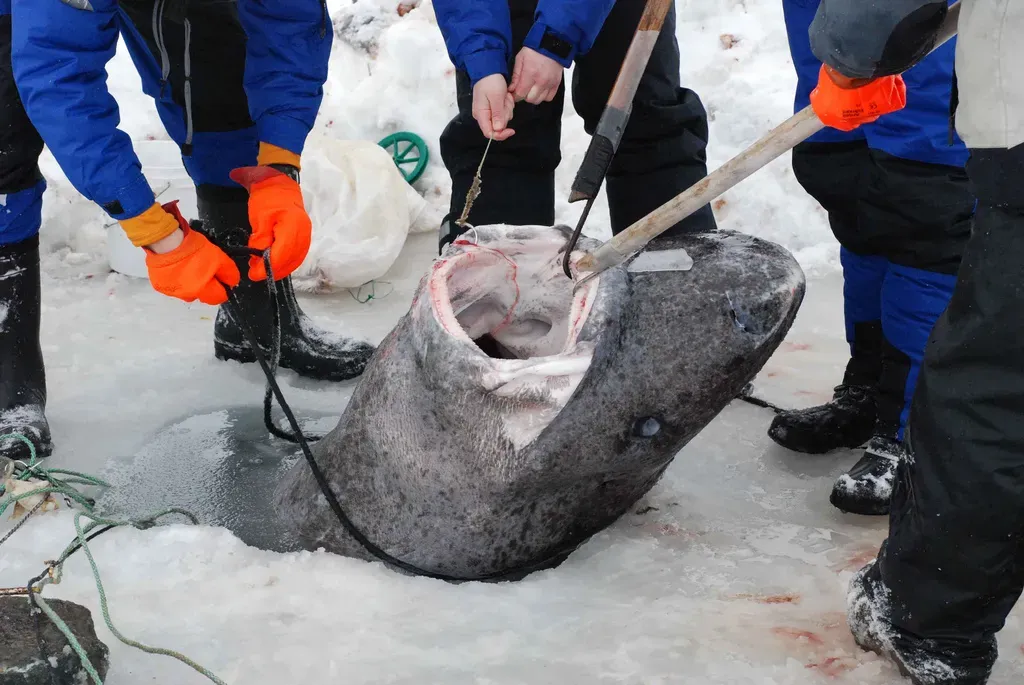
Here is a fun dinner party fact that will likely kill the conversation entirely. The flesh of the Greenland shark is toxic because of the presence of high concentrations of urea and trimethylamine oxide, known as TMAO. Fresh Greenland shark meat is essentially a neurotoxin delivery system. These chemicals accumulate in the shark’s muscle tissue as a survival adaptation to deep, cold Arctic waters. When eaten fresh, the meat causes symptoms similar to severe drunkenness, including nausea, vomiting, and neurological effects sometimes described as being “shark drunk.”
Remarkably, people have worked around this for centuries. Greenland shark meat is produced and eaten in Iceland, where today it is known as a delicacy called hákarl. To make the shark safe for human consumption, it is first fermented and then dried in a process that can take several months. Hákarl is a national dish of Iceland consisting of Greenland shark that has been cured with a particular fermentation process and hung to dry for four to five months. It has a strong ammonia-rich smell and fishy taste, making hákarl an acquired taste. Honestly, I admire the persistence of whoever first figured this out.
Fact 8: A Parasite Latches Onto Its Eyes and Slowly Blinds It
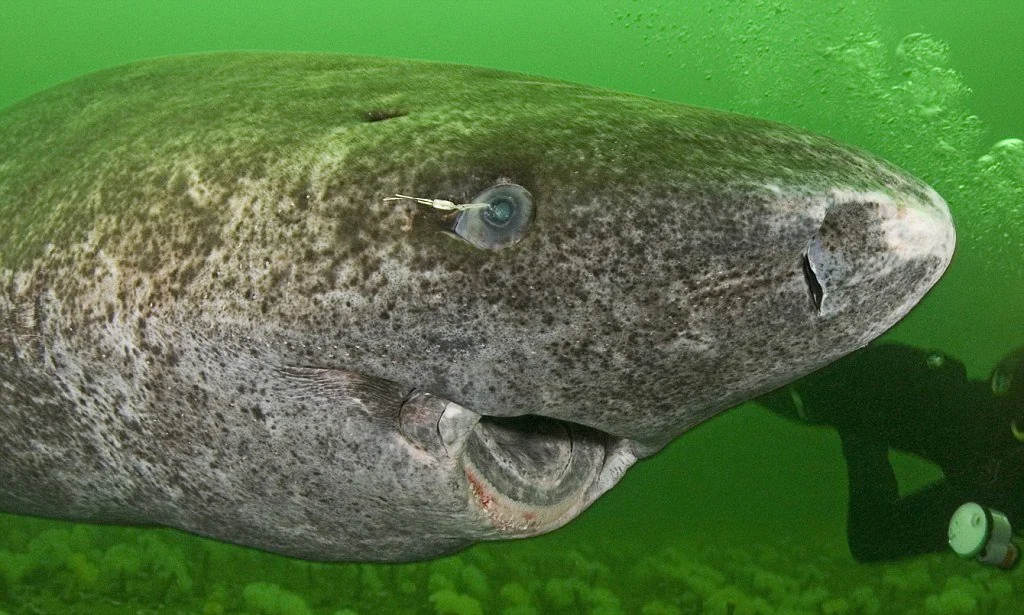
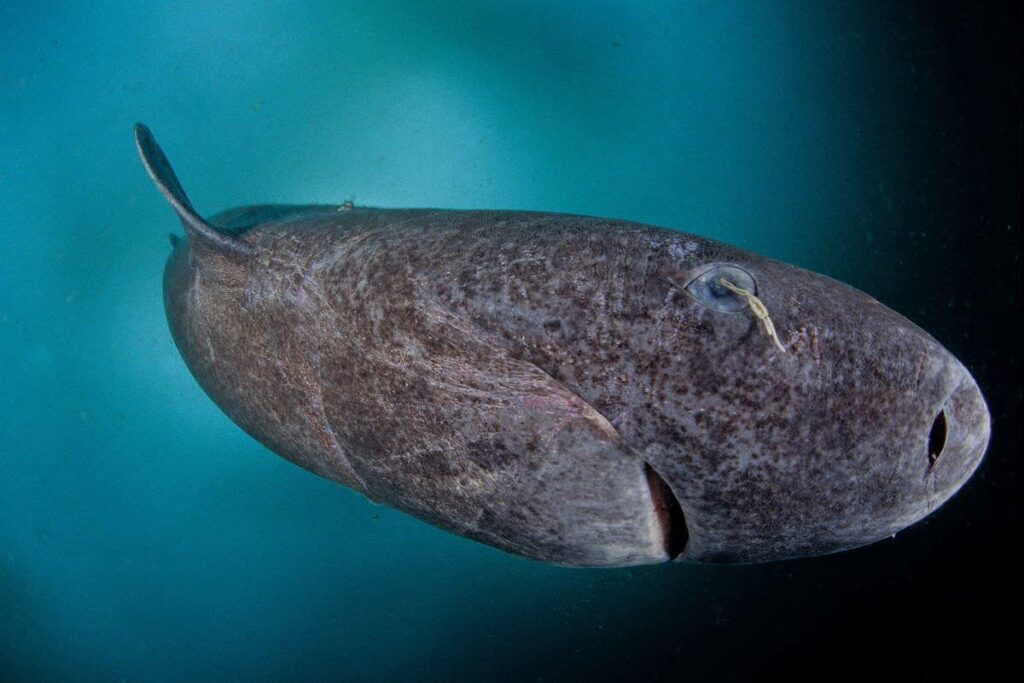
If the lifespan and toxic flesh were not enough to make this creature feel like something from a horror novel, consider what lives on its eyes. Arctic Greenland sharks often have poor vision because of a parasite called Ommatokoita elongata. This tiny crustacean latches onto the shark’s eye, damaging the cornea and leaving scar tissue with each infection. It is a slow, relentless invasion of the shark’s most delicate sensory equipment.
Yet in a remarkable twist, a 2026 study published in Nature Communications found that despite this widespread parasitization, all is not lost visually. The Greenland shark, the longest-living vertebrate, inhabits the dim, frigid depths of the Arctic Ocean. Despite its extreme lifespan, this study finds that its vision remains intact and well-adapted for life in dim light, revealing remarkable preservation of sensory function across centuries. The shark is not debilitated by its blindness as it relies heavily on other senses in its dark habitat far beneath the ice. Think of it as nature’s version of echolocation, just colder and considerably more ancient.
Fact 9: It Is a Surprisingly Ferocious and Opportunistic Feeder
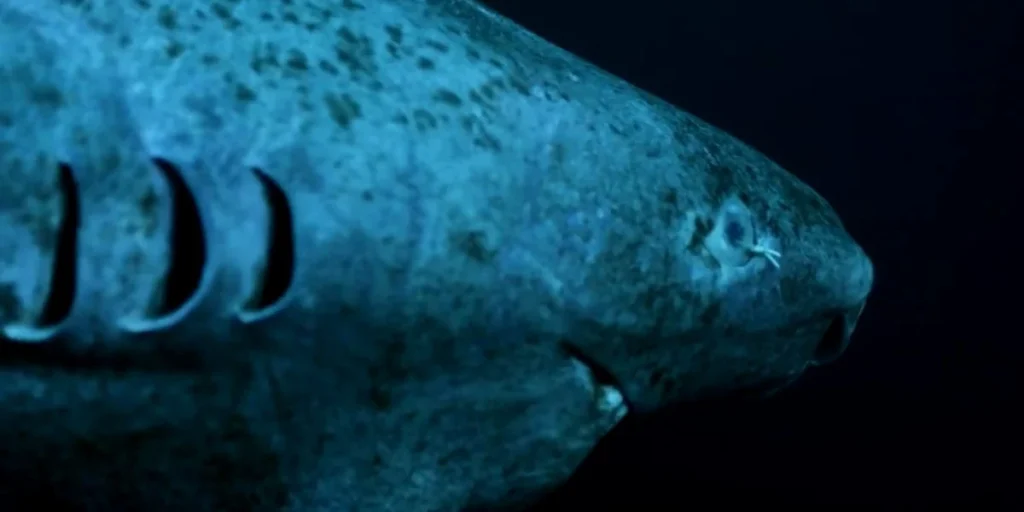
You might picture the Greenland shark as a docile, drifting creature, given how slowly it moves. Their average pace of 0.3 meters per second is so slow that they are also known as “sleeper sharks,” and they can only increase their speed for short bursts. That nickname is well-earned. Vultures have earned a reputation for being nature’s garbage disposals, and the same can be said of Greenland sharks. Although these fish can be found eating seals and fish, Greenland sharks are believed to be primarily scavengers, nourishing themselves on any flesh they can find.
Still, do not let the sluggish reputation fool you completely. Evidence suggests they may be opportunistic hunters capable of ambushing seals in stealth attacks. They have been linked to the discovery of nearly 5,000 mutilated seal corpses in Nova Scotia between 1993 and 2001, with victims’ pelts ripped off in a spiral shape, giving the shark a gruesome nickname. Individual stomachs have been found to contain an entire reindeer, parts of a horse, and even a polar bear, which is the largest land predator. Slow swimmer. Extraordinary appetite. Nature, as always, does not play by the rules you expect.
Fact 10: It Is Vulnerable to Extinction, and That Should Alarm You
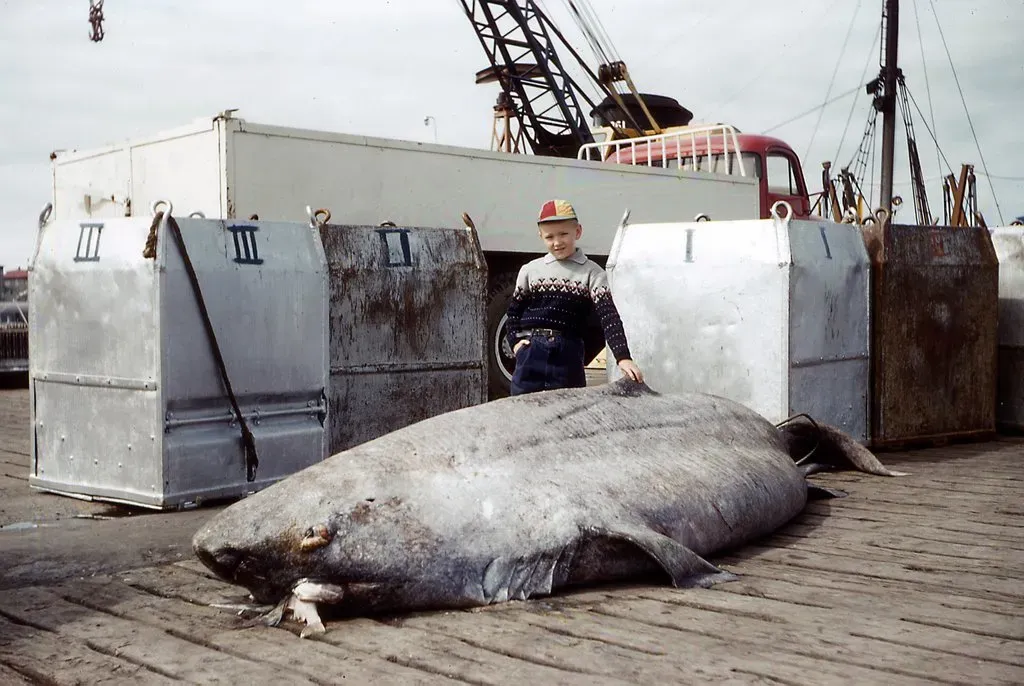
For a creature that has survived for potentially half a millennium, the Greenland shark faces a very modern and very human-made problem. The Greenland shark’s conservation status is classified as “Vulnerable” by the International Union for Conservation of Nature IUCN Red List, indicating the species faces a high risk of extinction in the wild. It was suggested that Greenland shark abundance has declined significantly over the past 450 years, causing the IUCN to move Greenland sharks from “Near Threatened” to “Vulnerable,” which reflects a higher level of risk.
Historically, Greenland sharks were intensely hunted for their liver oil, with annual catches reaching tens of thousands until the 1960s. Although targeted fishing has largely ceased, the ongoing incidental mortality from bycatch continues to pose a considerable threat. The slow reproductive rate and late maturity of these sharks mean that even small increases in mortality can have lasting impacts on their numbers, hindering population recovery. Climate change presents another significant challenge. Warming ocean temperatures and melting Arctic sea ice are altering their habitat, disrupting traditional hunting grounds and potentially reducing prey availability.
Conclusion: The Silent Ancient at the Bottom of the World
There is something quietly humbling about the Greenland shark. While human civilizations rose, fell, and transformed beyond recognition over the past four centuries, this creature simply kept swimming, kept growing, kept drifting through the cold dark. No fanfare. No record-keeping. Just an astonishing, almost serene endurance.
What makes it even more remarkable is how much we still do not know. Its mating grounds remain a mystery. Its exact maximum lifespan is still debated. Its full ecological role in the Arctic is only just beginning to be understood. Science has cracked open the door, but the room beyond is still largely dark. I think that mystery is part of what makes this animal so captivating.
It survived everything nature could throw at it for potentially 500 years. The question now is whether it can survive us. What do you think, should we be doing more to protect the oldest animal alive? Drop your thoughts in the comments.