Paleontologists uncovered a macabre snapshot from the Early Cretaceous when a sparrow-sized bird met its end with over 800 tiny stones lodged in its throat. The fossil, housed at China’s Shandong Tianyu Museum of Nature, captured the moment this ancient creature likely choked during an attempt to regurgitate the mass. Researchers led by Jingmai O’Connor of Chicago’s Field Museum detailed the find, which challenges understandings of early bird physiology and behavior.
A Bizarre Anomaly Emerges from Museum Shelves
A Bizarre Anomaly Emerges from Museum Shelves (Image Credits: Wikimedia)
Jingmai O’Connor first noticed something odd while sifting through fossils at the Shandong Tianyu Museum. The specimen stood out due to a dense gray mass pressed against its neck bones. Closer inspection via CT scans confirmed the presence of more than 800 minuscule stones and clay-like pellets crammed into the esophagus.
O’Connor recalled the moment of discovery: “I noticed that it had this really weird mass of stones in its esophagus, right up against the neck bones.” The stones varied in composition, differing from surrounding sediment, which ruled out post-mortem accumulation. This marked the first time scientists documented such a concentration in any fossil animal’s throat.
Unpacking the Bird’s Fatal Burden
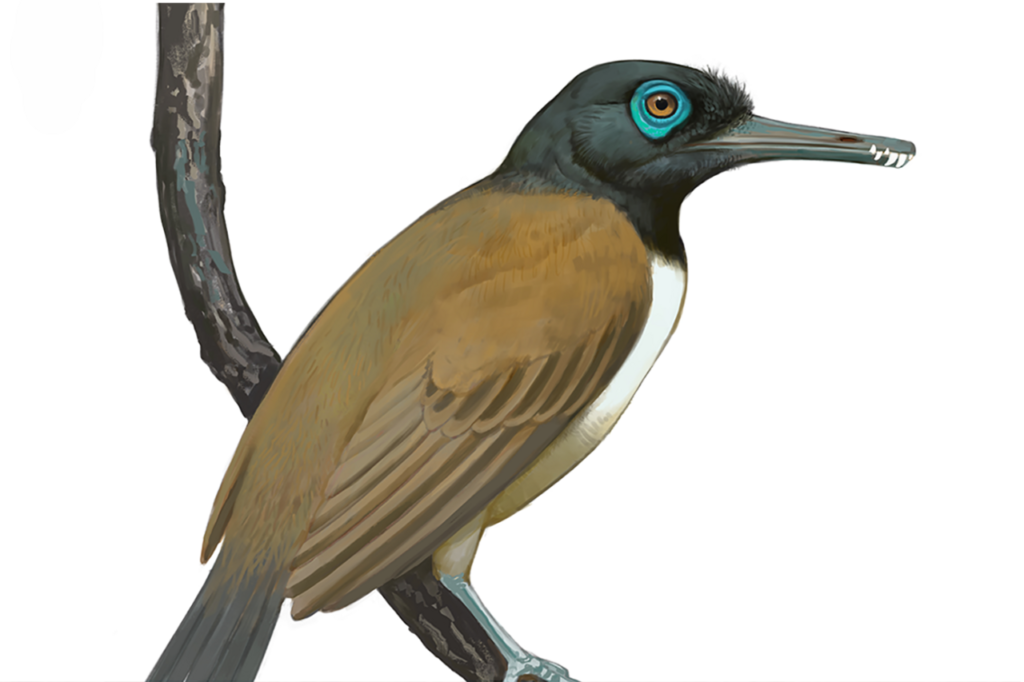
Chromeornis funkyi, the newly named species, measured about the size of a modern sparrow and weighed roughly 33 grams. It belonged to the Longipterygidae family within the extinct Enantiornithes group, known for long snouts and teeth at the beak’s tip. Exquisite preservation revealed feathers, skin outlines, muscle traces, and even eye pigments.
The stones occupied a position far too high for typical gastroliths used in digestion. O’Connor explained, “We found over 800 tiny stones in this bird’s throat – way more than we would have expected in other birds with gizzards.” Their volume and location indicated the bird tried to expel them as a single clump, but the mass blocked its airway, leading to asphyxiation.
- Sparrow-sized body with long, toothy beak
- Preserved soft tissues including feathers and skin
- Over 800 stones, some clay balls, in esophagus
- No prior gastroliths known in Enantiornithes fossils
- CT-confirmed swallowed origin
Why Did It Swallow So Many Stones?
Modern birds ingest grit to aid grinding in their gizzards, regurgitating worn stones for fresh ones. Yet Chromeornis deviated dramatically, with stones unsuited for digestion and absent from its presumed gizzard area. No other Enantiornithes fossils show similar evidence, amplifying the puzzle.
Researchers proposed illness as a trigger. “When birds are sick, they start doing weird things,” O’Connor noted. The bird might have engaged in pica-like behavior to combat parasites or nutrient shortages, overconsuming stones before attempting mass regurgitation. The resulting blockage proved fatal, a rare forensic clue in paleontology.
Chromeornis funkyi’s Place in Bird Evolution
Dating to 120 million years ago in the Jiufotang Formation, Chromeornis lived among dinosaurs before the Cretaceous-Paleogene extinction. Enantiornithines dominated avian diversity then but vanished 66 million years ago, unlike the lineage leading to today’s birds. This fossil highlights potential vulnerabilities in their physiology or habits.
The species name honors the electro-funk band Chromeo, reflecting birds’ musical calls and O’Connor’s tastes. Findings appeared in a Palaeontologia Electronica paper on December 4, 2025. Studying such quirks could inform modern conservation amid ongoing extinctions.
Key Takeaways
- Chromeornis funkyi choked on regurgitated stones, a first in fossil records.
- Over 800 stones suggest abnormal, possibly illness-driven ingestion.
- Enantiornithines’ extinction may tie to such physiological limits.
This tiny fossil preserves not just bones but a poignant individual tragedy, underscoring how illness amplified a routine behavior into doom. It prompts reflection on avian resilience across eons. What other secrets might ancient birds reveal about survival? Tell us in the comments.