The Earth has been telling its story for billions of years. It writes in layers of sandstone, volcanic rock, carved canyons, and crystalline caves. You just have to know where to look. The United States happens to be one of the best places on the planet to read those ancient pages, because its national parks serve as living, open-air libraries of geological history that most people walk through without fully realizing what’s beneath their feet.
From stone arches that took millions of years to carve themselves out of desert rock, to underground chambers so vast they could swallow city blocks whole, these parks are genuinely hard to believe. Some of the formations you’ll encounter here are older than complex life itself. Ready to feel wonderfully small? Let’s dive in.
1. Grand Canyon National Park, Arizona – The World’s Greatest Geological Timeline
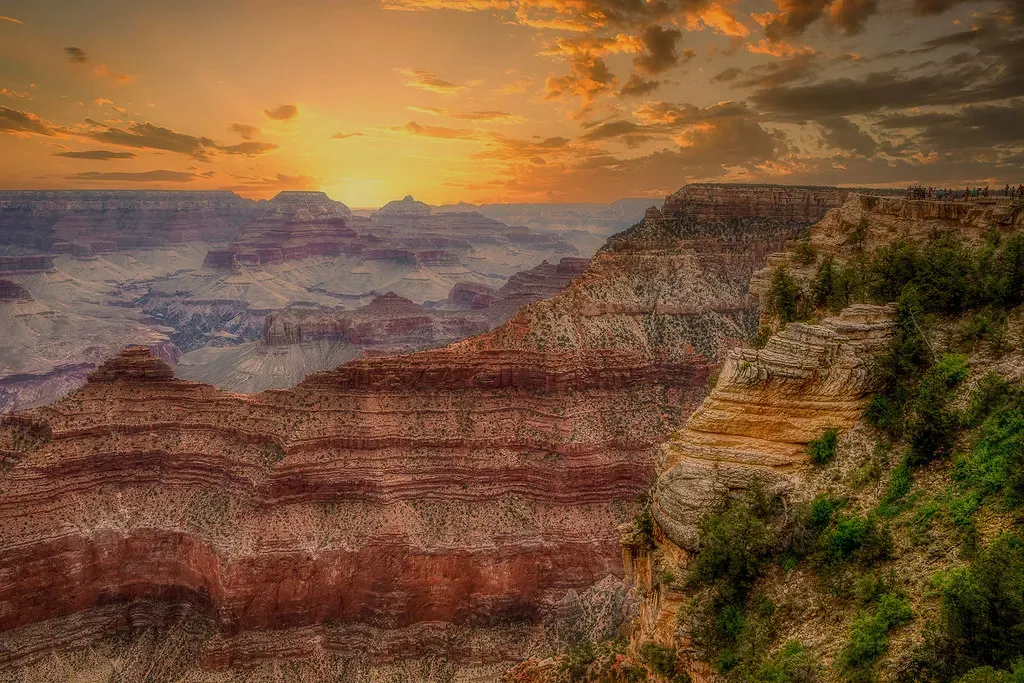
Let’s be real: no list about ancient geology belongs anywhere without starting here. The exposed rock layers of the Grand Canyon provide a remarkable glimpse into Earth’s geologic history, with rocks dating back billions of years. The colorful and diverse rock formations, including the reds of the Supai Group, the browns of the Hermit Shale, and the whites of the Kaibab Limestone, create a breathtaking tapestry of colors. Think of it like reading a book where each page is a million years old. You start at the rim in the present day and descend into deeper and deeper time.
The oldest rocks in the Grand Canyon, found at the bottom of the canyon, are primarily metamorphic, with igneous intrusions. In the Grand Canyon, there are clear horizontal layers of different rocks that provide information about where, when, and how they were deposited, long before the canyon was even carved. The Law of Superposition states that sediment is deposited in layers in a sequence, with the oldest rocks on the bottom and the youngest on top. The sheer scale of it is almost too much for the human mind to process.
2. Yellowstone National Park, Wyoming – A Living Supervolcano
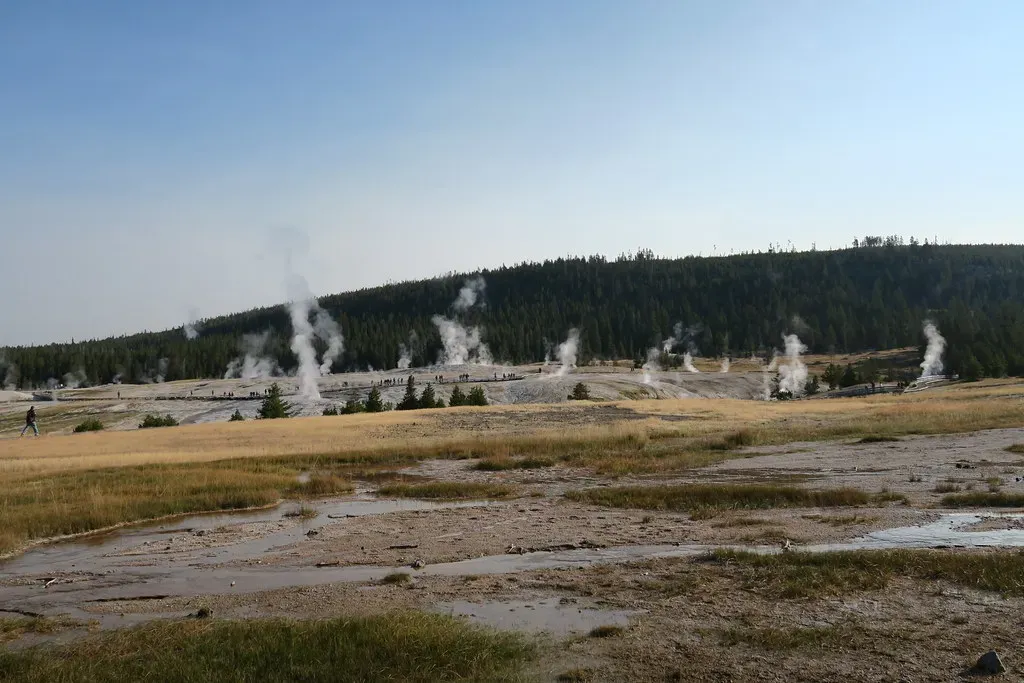
Yellowstone isn’t just a park. It’s a geological pressure cooker sitting on top of one of the most powerful volcanic systems on Earth. Yellowstone National Park sits inside an ancient volcanic caldera with magma, in some places only a few miles underground, powering the park’s famous geysers, hot springs, fumaroles, and mud pots. That’s not a metaphor. You are literally walking over a supervolcano.
Yellowstone sits atop vast, ancient, and still-active volcanic plumbing. Heat radiates off of an underground magma chamber, fueling Yellowstone’s ten thousand hot springs, mud pots, terraces, and geysers. The park contains over half of the roughly one thousand known geysers in the world, including Steamboat, the world’s tallest geyser. Honestly, you could spend weeks here and still feel like you’ve only scratched the surface.
3. Arches National Park, Utah – Over 2,000 Natural Stone Arches
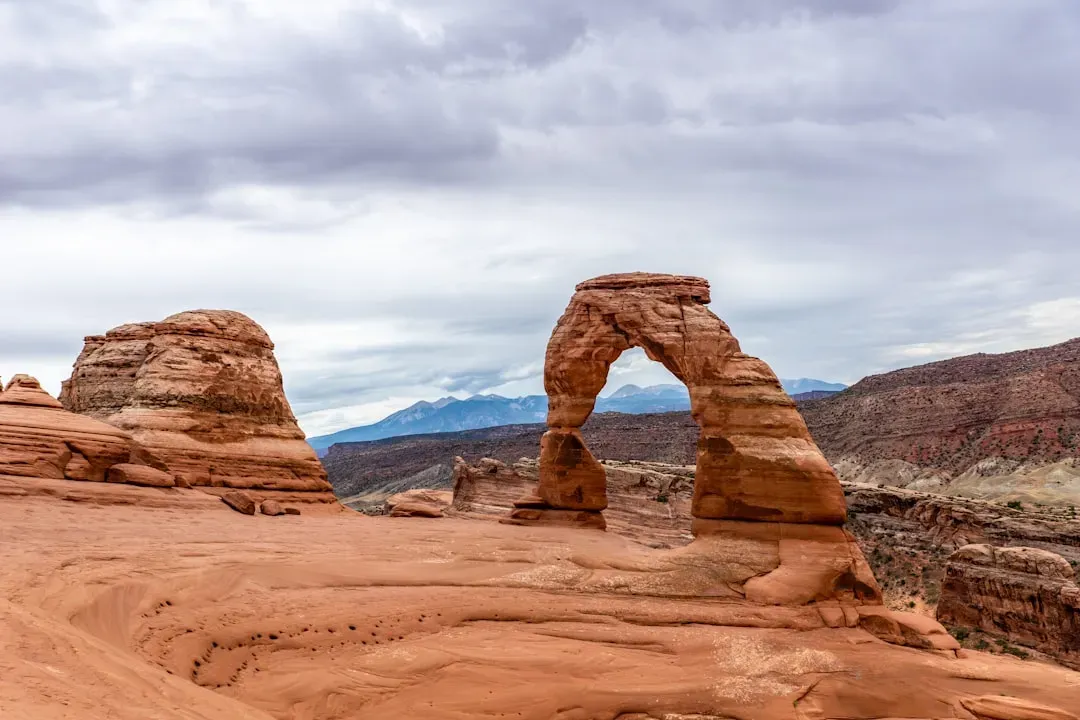
Imagine a landscape where gravity seems to have lost an argument with sandstone. There is nowhere else on Earth where you can find in one location so many rock arches, bridges, and windows. Arches National Park in Utah holds well over two thousand natural arches, which sounds impossible until you’re standing in front of one. In the rugged desert landscape of southeastern Utah, Arches National Park stands as a testament to the remarkable power of erosion and the stunning beauty it can create.
Approximately 70 to 35 million years ago, the Laramide Orogeny, an event in which oceanic crust slipped under the North American Plate, deformed rocks throughout Utah. The tectonic forces warped the entire geologic column in the area of Arches National Park, creating anticlines and synclines. Above the Kayenta Formation is the Navajo Sandstone, a thick unit containing abundant groups of inclined layers which preserve ancient wind patterns. The Navajo Sandstone and the Entrada Sandstone are two of the major arch-forming formations within the park. Every arch you see here is essentially a frozen moment in a process that’s been unfolding for eons.
4. Bryce Canyon National Park, Utah – A Forest of Stone Spires
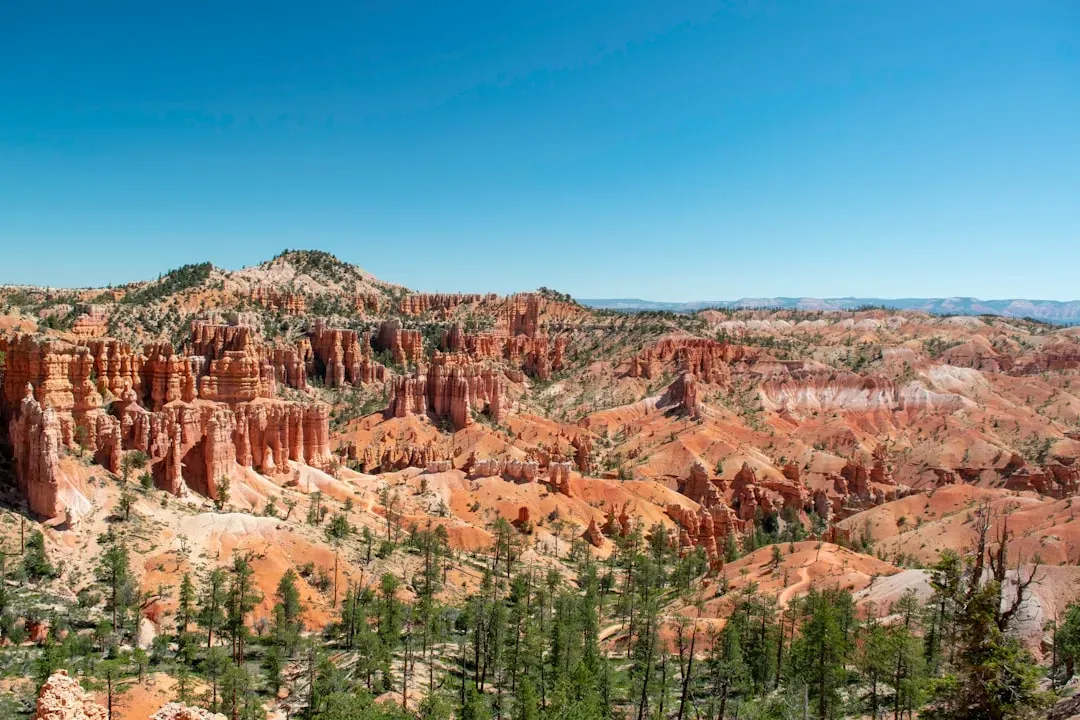
You’ve probably seen photos of Bryce Canyon and thought they looked digitally enhanced. They weren’t. Bryce Canyon is famous for its hoodoos, columns of weathered rock ranging in size from the height of a human to that of a 10-story building. Southern Utah’s Bryce Canyon features thousands of brightly colored stone pinnacles, spires, pedestals, and thin columns called hoodoos. These features were created when sandstone formations developed vertical joints during the stress of regional uplifting. Water then seeped into these joints and, in a process called frost wedging, froze, expanded, and separated them. Tall, thin spires eventually formed wherever hard caprock protected the underlying rock from further erosion. The spires’ bright red, orange, yellow, and purple colors are due to the presence of iron and manganese oxides within the sandstone.
Bryce Canyon National Park offers stunning views and 60 million years of geologic history. The retreat of an ancient seaway carved landforms that are still being shaped by today’s erosion into otherworldly hoodoos. Bryce is at the ideal elevation for hoodoo formation, reaching freezing temperatures some 200 nights a year, and its vistas are still being carved by rain, snow, and ice. Every 50 years, the rim loses a foot. Think about that the next time you’re standing on the edge.
5. Zion National Park, Utah – Jurassic Sandstone Giants
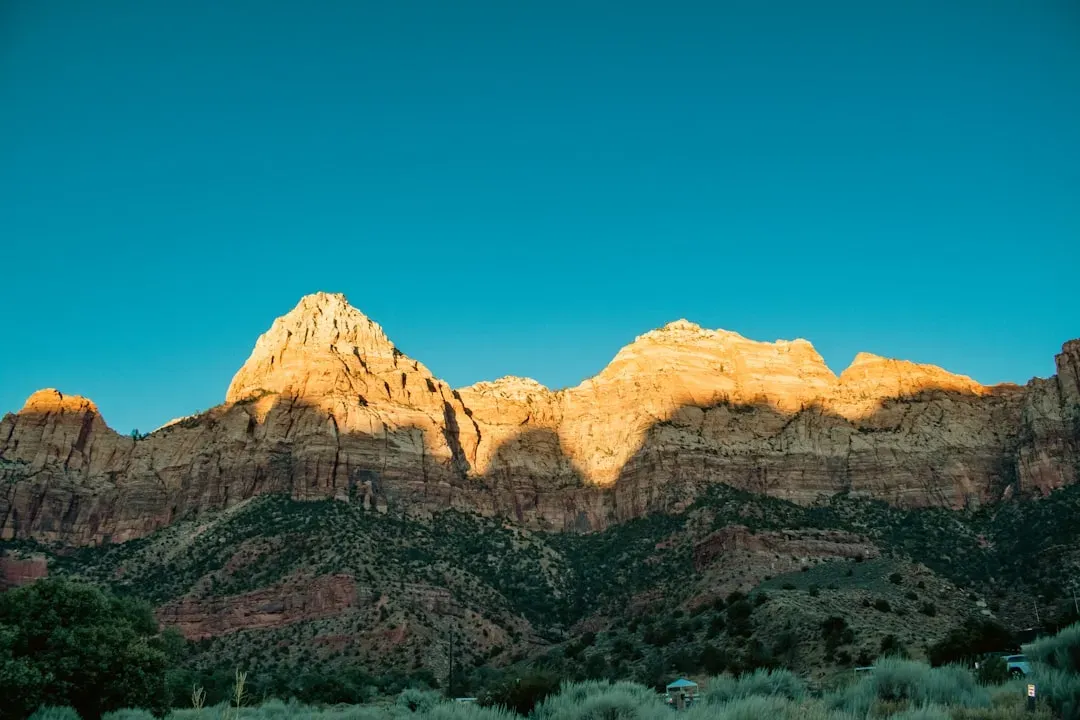
Zion is the kind of place where you crane your neck back so far it starts to hurt, and you still can’t see the tops of the canyon walls. Formed over a period of four million years, the canyons of Utah’s Zion National Park plunge 2,000 to 3,000 feet through red and white sandstone. One of the most fascinating aspects of Zion’s geology is the presence of Navajo sandstone, which was deposited during the Jurassic Period when much of the region was covered by vast desert dunes. Over time, these sand dunes were buried and compressed, eventually forming towering cliffs and mesas.
Most of the sedimentation that went into Zion’s geologic basement occurred during the age of dinosaurs, while the uplift began long after the sedimentary formations were laid down. The park is located along the edge of a region known as the Colorado Plateau. The rock layers have been uplifted, tilted, and eroded, forming a feature called the Grand Staircase, a series of colorful cliffs stretching between Bryce Canyon and the Grand Canyon. The bottom layer of rock at Bryce Canyon is the top layer at Zion, and the bottom layer at Zion is the top layer at the Grand Canyon. It’s a connected geological story written across three of America’s most iconic landscapes.
6. Glacier National Park, Montana – Ancient Rocks Thrust Into the Sky
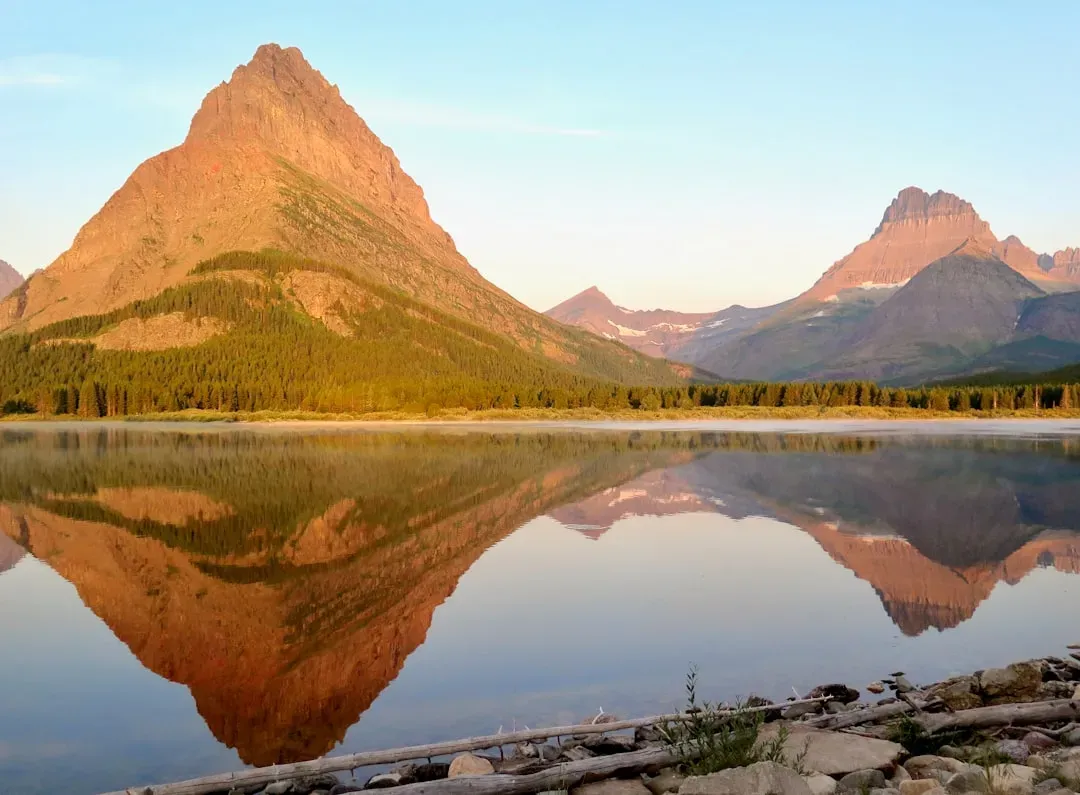
Glacier National Park feels like the edge of the world. Part of that feeling comes from the stunning scenery, but a huge part of it comes from the sheer antiquity of what you’re looking at. The Lewis Overthrust is one of the world’s largest and most famous thrust faults. A slice of Precambrian sedimentary rocks, over two kilometers thick and hundreds of kilometers wide, was thrust 80 kilometers eastward over softer Cretaceous rocks. Recent glaciations have exposed both layers and internal structures.
In the eastern side of Glacier National Park, Chief Mountain provides a world class example of a klippe, which is an erosional remnant of a thrust sheet. The oldest rocks in the parks are Precambrian in age, from 3 billion to 600 million years old. This time interval saw the development of algae, fungi, and soft-bodied marine plants and animals. You’re not just visiting a mountain range. You’re visiting some of the oldest visible rock on the face of North America.
7. Mammoth Cave National Park, Kentucky – The World’s Longest Cave System
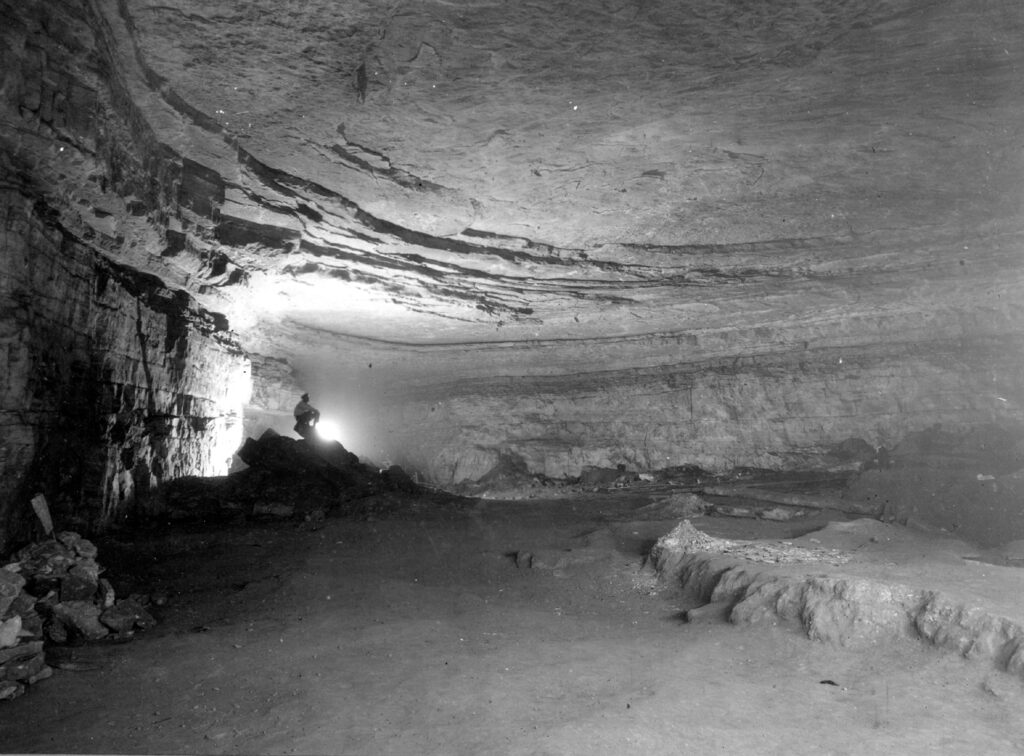
Here’s a fact that stops most people cold: you could walk underground in Mammoth Cave for over 400 miles and still not reach the end. Mammoth is the longest recorded cave system in the world with over 400 mapped miles. Mammoth preserves part of an archetypal karst landscape in South-Central Kentucky with sinkholes, vertical shafts, windows, and springs. That’s roughly the distance between New York City and Boston, and almost all of it is underground.
Some 350 million years ago, South Dakota’s inland sea came and went repeatedly, and throughout that time, calcium carbonate seashells would become limestone, gypsum would crystallize, and the water table would drop, leaving a 142-mile maze cave that’s still growing. The same kind of process shaped Mammoth Cave. The national parks and monuments of the United States have been called the world’s most magnificent rock collection for good reason. Mammoth Cave is perhaps the most literally underground proof of that claim.
8. Carlsbad Caverns National Park, New Mexico – Acid-Carved Underground Chambers
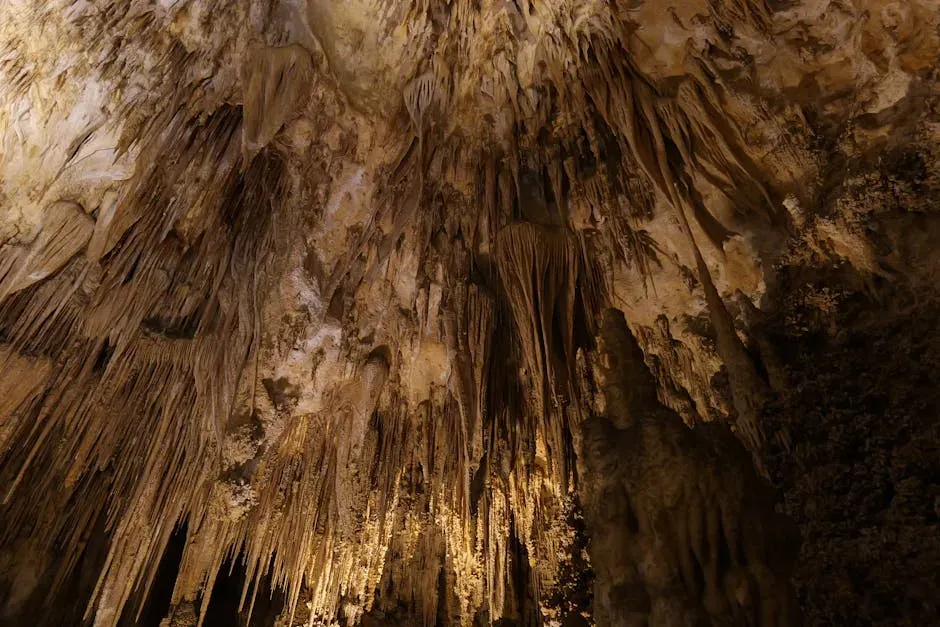
Most caves are carved by water slowly dissolving rock. Carlsbad Caverns took a more dramatic approach. Carlsbad Cavern, with one of the world’s largest underground chambers, displays an amazing array of cave and karst features. Rising sulphur-rich fluids mixed with fresh ground water to form sulphuric acid, which is responsible for the formation of this cave system. That’s right, acid literally ate through the rock to create what you see today. I think that’s one of the most striking geological origin stories in the entire park system.
The park contains more than 100 known caves, including the nation’s deepest limestone cave at 1,604 feet and third longest. Carlsbad Cavern, with one of the world’s largest underground chambers, displays an amazing array of cave and karst features. The cave formations inside, stalactites, stalagmites, and columns, are the result of millions of years of mineral-rich water slowly dripping and depositing calcite. Walking through it feels like stepping inside a natural cathedral, designed by time itself.
9. Badlands National Park, South Dakota – The Earth’s Most Extreme Erosion
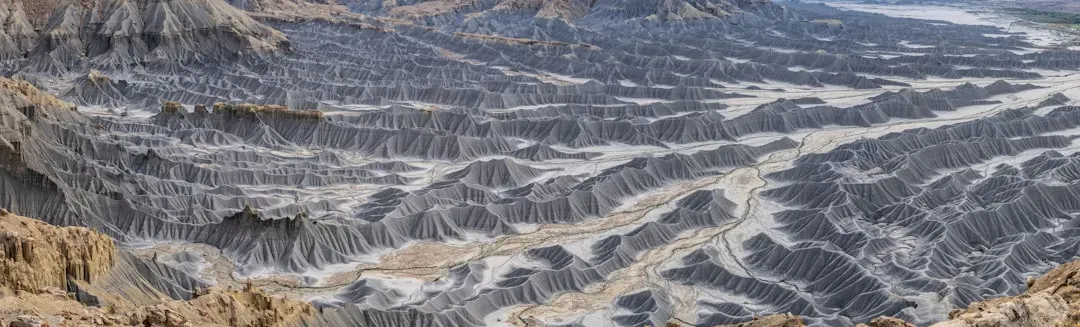
Pull up to Badlands National Park for the first time and your brain genuinely doesn’t know how to file what it’s seeing. Badlands contains some of the world’s most bizarre and alien-looking landscapes, classic examples of badland topography. The poorly consolidated bedrock consisting of loose sediment and volcanic ash is quickly eroded by infrequent rainstorms. Resulting mud mounds, spires, and ridges resemble miniature mountain ranges.
South Dakota’s Badlands National Park is an extraordinary example of sandstone erosion, a process that continues today. Sections of this expanse of deep gullies, sheer slopes, and sharp ridges lose a half-foot of surface material each year, making it one of the world’s highest erosion rates. That means the landscape you see on your visit will literally look different in a century. It’s a place that never stops changing, and there’s something both unsettling and awe-inspiring about standing in a landscape that is actively dissolving around you.
10. Black Canyon of the Gunnison National Park, Colorado – Two Billion Years in the Dark
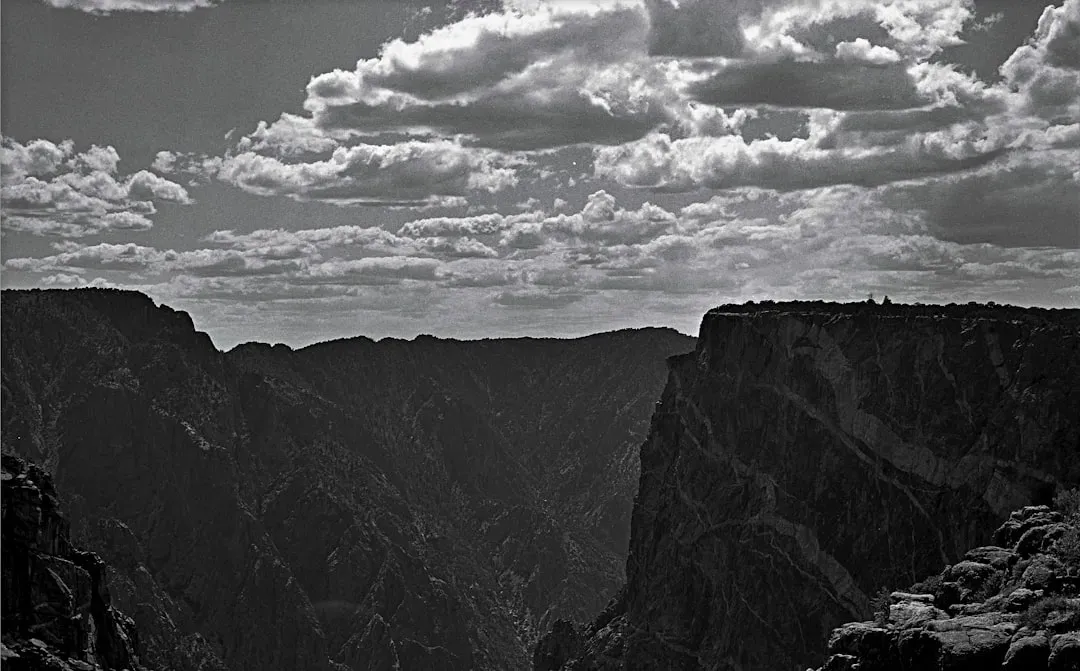
This is one of those parks that honestly doesn’t get the attention it deserves. Slice a knife through 2,700 feet of Colorado’s crust, or wait two million years for the Gunnison River to do the work for you, and you’ve got Black Canyon of the Gunnison, a vertical wilderness displaying nearly two billion years of Earth’s history. It’s narrow, dark, and almost oppressively dramatic. Nothing quite prepares you for your first look down into it.
A river carved the steep, narrow gorges of Black Canyon of the Gunnison National Park over the course of two million years. Hikers can take in the view from the rim before making the trek to the nearly two-billion-year-old gneiss and schist at the canyon’s base. The Black Canyon was carved by the Gunnison River all the way down to the very hard Precambrian basement rocks until the river could no longer change course. Two billion years of planetary history, right there at your feet. It’s hard to say for sure whether it makes you feel humbled or just deeply, wonderfully irrelevant.
11. Petrified Forest National Park, Arizona – A Jungle Turned to Stone
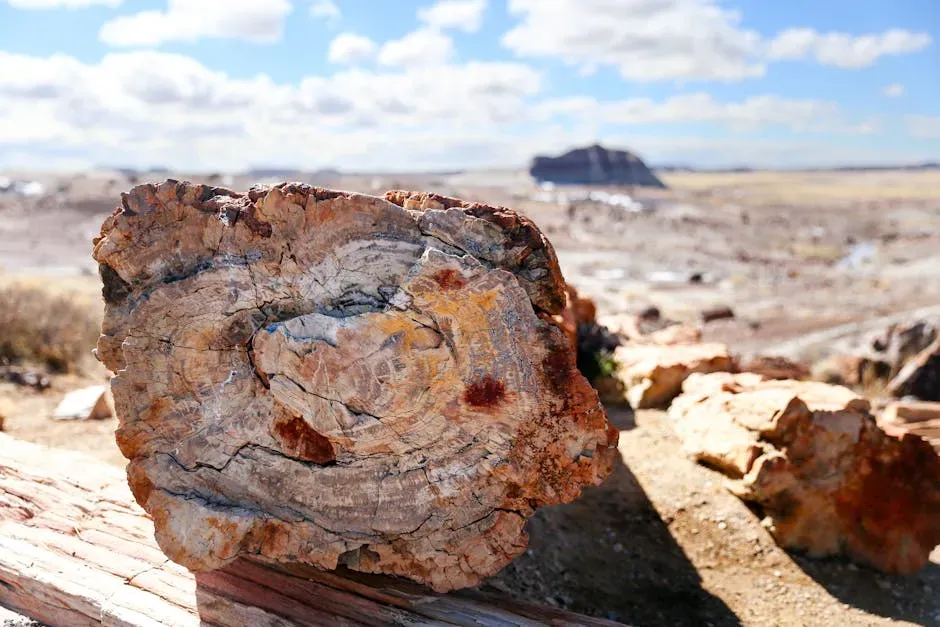
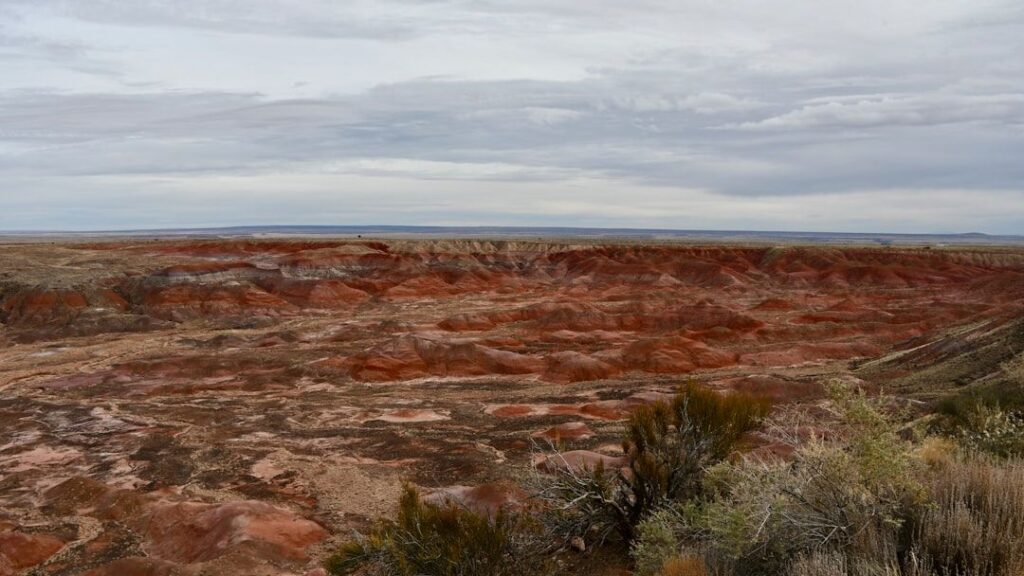
There is something genuinely surreal about walking through what used to be a lush tropical forest and finding it has turned completely to crystal. Petrified Forest National Park preserves traces of an ancient, vastly different landscape. Petrified wood occurs throughout the United States, but some of the most abundant and highest quality examples of these fossils occur here. The trees that now lie scattered across the desert floor fell roughly 225 million years ago, during the late Triassic Period.
Crystal Forest Trail is an easy three-quarter-mile loop to check out an ancient log jam, but this was the dawn of the dinosaurs, and fossils take on the form of fauna as well as flora. Silica-rich groundwater replaced the organic wood cell by cell over millions of years, turning entire trees into quartz, agate, and jasper. The result is a landscape that looks like a forest hit by a petrification spell. You walk around enormous, glittering logs that no axe in history has ever touched, and the colors, deep reds, purples, and yellows, are honestly spectacular.
12. Hawaii Volcanoes National Park, Hawaii – Where New Land Is Born Right Now
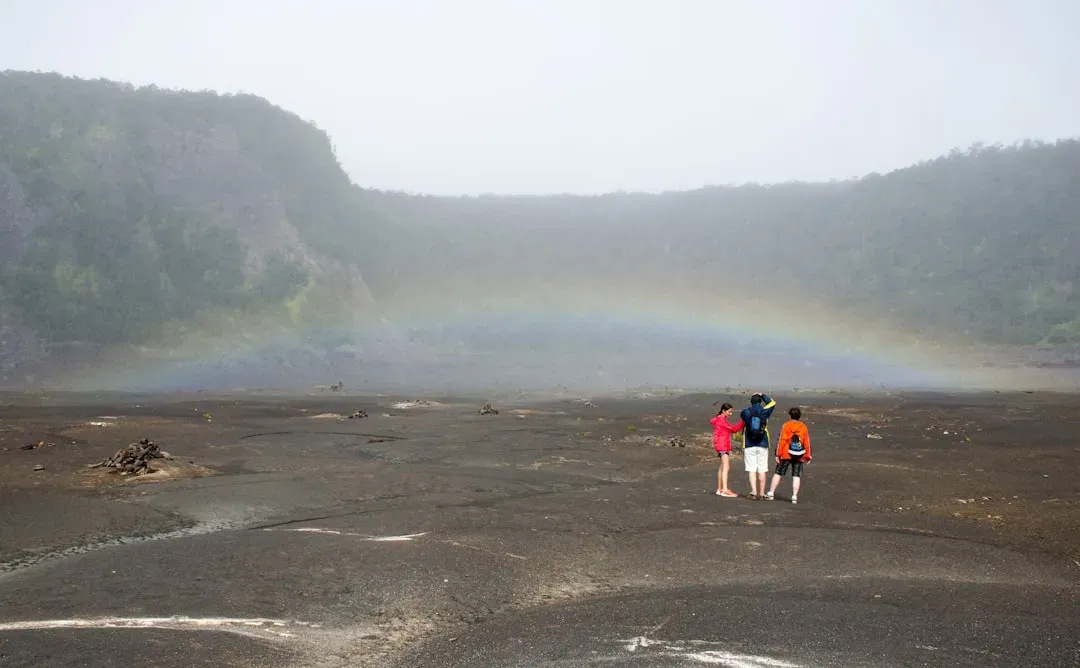
Every other park on this list shows you geological history. Hawaii Volcanoes shows you geology in real time. Hawaii Volcanoes National Park contains the world’s most massive mountain, Mauna Loa, at 13,677 feet. Mauna Loa rises over 30,000 feet when measured from its base on the seafloor, more than a thousand feet higher than Mount Everest. The park also contains Kilauea, the world’s most active volcano.
In contrast to explosive continental volcanoes, the more fluid and less gaseous eruptions of Kilauea and Mauna Loa produce awe-inspiring, fiery fountains and rivers of molten lava that visitors can observe from a safe distance. Kilauea produces enough volcanic material every day to cover a football field to the height of the Washington Monument and has been erupting continuously since 1983. Every other park on this list is ancient, frozen, static. This one is alive and still writing the first chapters of its story. Visiting here while the land is actively forming beneath your feet is, without question, one of the most extraordinary geological experiences on the entire planet.
Conclusion: The Earth Has a Story – These Parks Are Its Pages
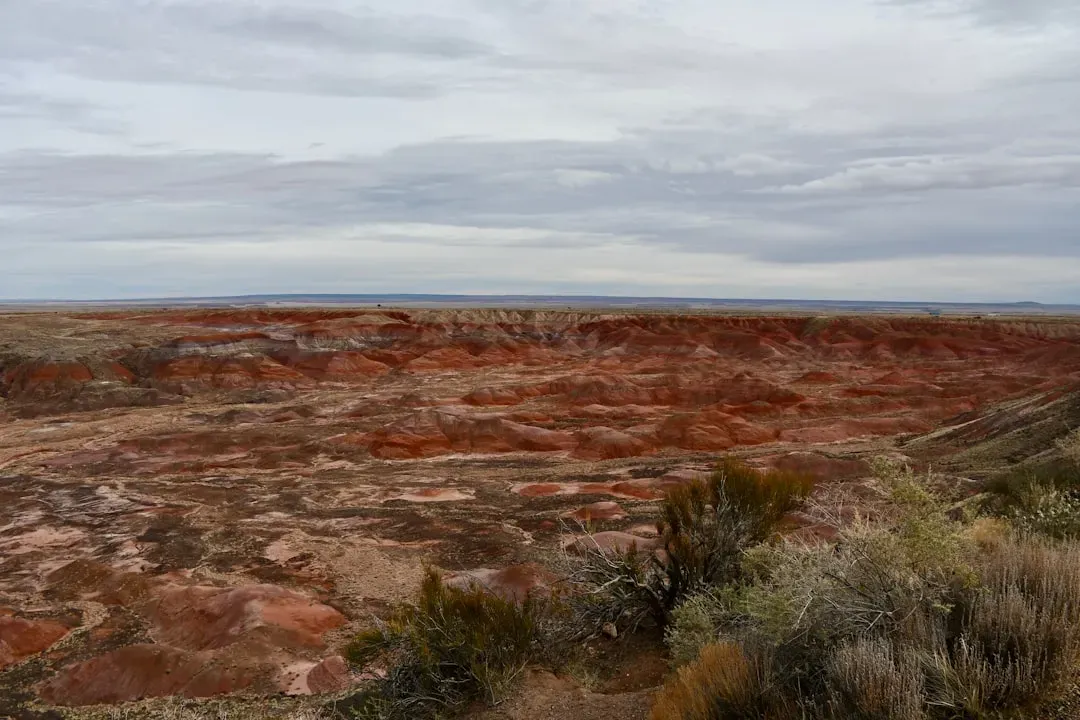
Geology tends to get dismissed as dry, academic, and slow. These twelve parks prove that couldn’t be further from the truth. Whether you’re standing on the rim of the Grand Canyon staring down through two billion years of layered history, or feeling the ground warm beneath your shoes at Yellowstone, or watching lava inch toward the ocean in Hawaii, these places connect you to something genuinely ancient.
The national parks and monuments of the United States have been called the world’s most magnificent rock collection for good reason. Of the National Park Service’s parks and monuments, most have geologic features that are described either as significant or spectacular. That’s a remarkable truth. You don’t need a geology degree to appreciate it. You just need to show up and look up, or down, or sideways, depending on where you’re standing.
The planet has been shaping these landscapes for longer than complex life has existed on it. The fact that you can drive to a trailhead, lace up your boots, and walk through billions of years of history in a single afternoon is, I think, one of the most underrated gifts in human existence. Which of these parks would you put on your list first? Drop it in the comments and let’s talk about it.