Think about the last time you looked at a bird outside your window. Now imagine that creature sharing common ancestry with a terrifying, teeth-filled dinosaur. Or picture a whale, that enormous ocean giant, once shuffling on four legs across a dusty shoreline. These ideas sound wild, even impossible. Yet the rocks beneath our feet hold the proof, locked in ancient stone for millions of years, waiting to be found.
The fossil record provides snapshots of the past which, when assembled, illustrate a panorama of evolutionary change over the past 3.5 billion years. You don’t have to take anyone’s word for it. The fossils speak for themselves. Get ready, because some of these discoveries will genuinely surprise you. Let’s dive in.
1. Tiktaalik Roseae: The Fish That Tried to Walk
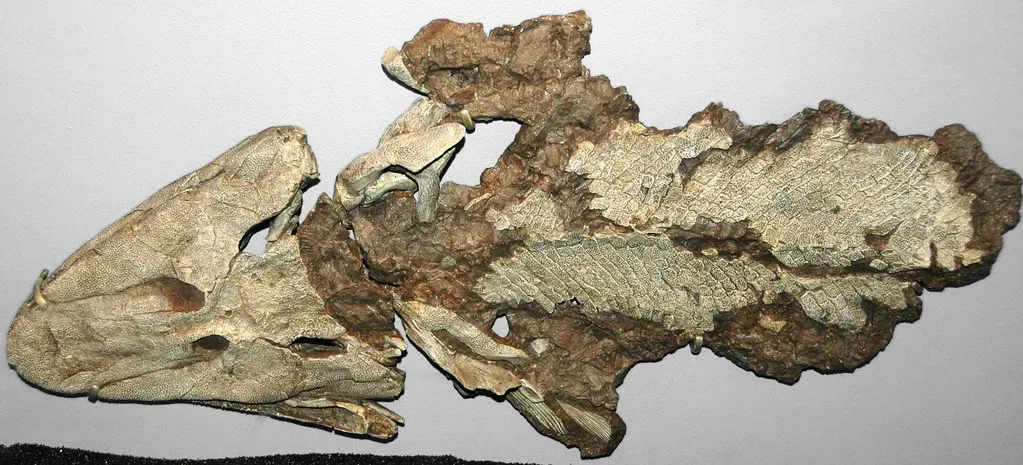
Honestly, few fossil discoveries in modern history have captured the imagination quite like Tiktaalik. Tiktaalik roseae was an extinct fishlike aquatic animal that lived about 380 to 385 million years ago during the earliest late Devonian Period and was a very close relative of the direct ancestors of tetrapods, the four-legged land vertebrates. You can almost picture it: a slimy, flat-headed creature poised at the edge of a shallow, muddy stream, contemplating the alien expanse of dry land.
Unearthed in Arctic Canada, Tiktaalik was a non-tetrapod member of bony fish, complete with scales and gills, but it had a triangular, flattened head and unusual, cleaver-shaped fins. Its fins had thin ray bones for paddling like most fish, but they also had sturdy interior bones that would have allowed Tiktaalik to prop itself up in shallow water and use its limbs for support as most four-legged animals do. Think of it like a creature caught mid-thought, halfway between two completely different lifestyles. Similar bones can be traced through amphibians, reptiles, mammals, and eventually, us.
2. Archaeopteryx: The Dinosaur With Feathers and a Dilemma
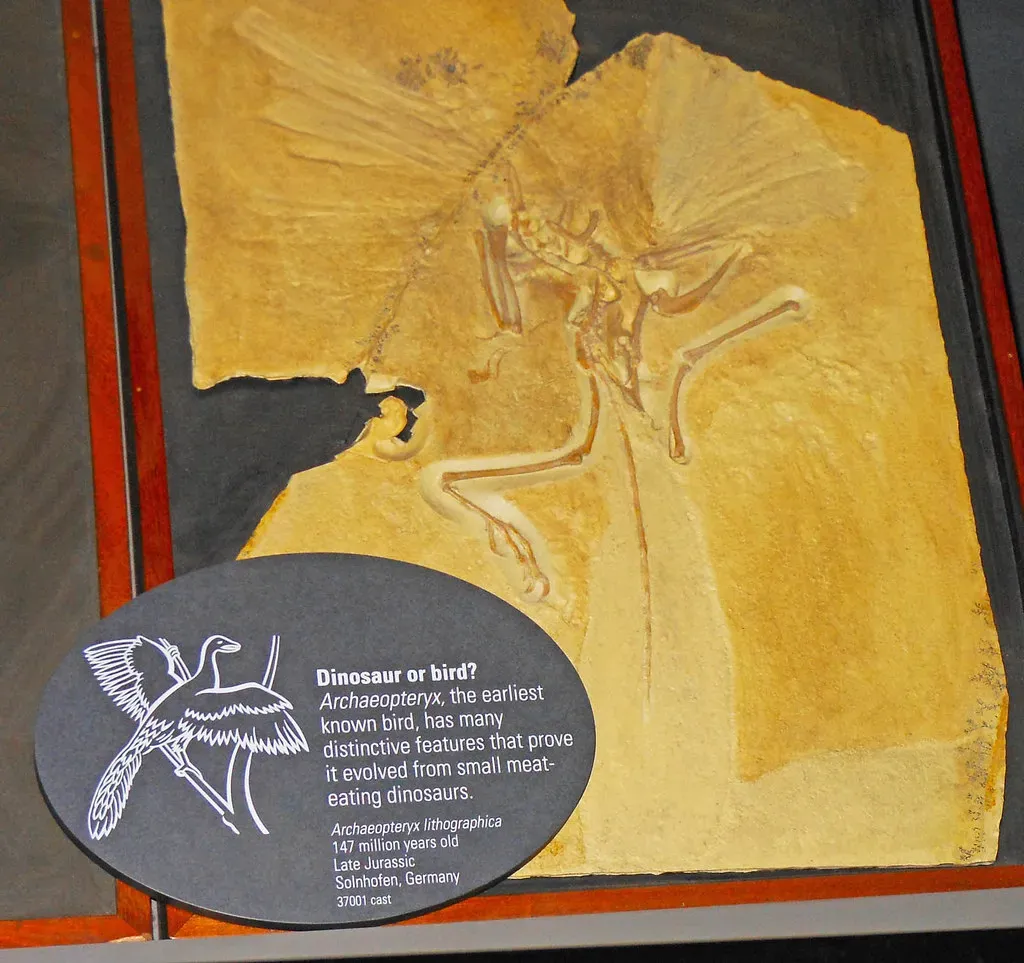
Among the first and most electrifying transitional fossils ever found was Archaeopteryx, discovered in 1861 in the limestone quarries of Solnhofen, Germany, just two years after Darwin’s theory shocked the world. This ancient creature bore the unmistakable imprint of feathers, yet it had teeth, claws, and a long bony tail like a reptile. When you think about it, that timing is almost poetic. Darwin had just told the world evolution was real, and then, almost on cue, the perfect piece of evidence appeared.
The most famous fossil from the dinosaur-bird transition, the skeleton of Archaeopteryx clearly shows several features characteristic of birds, including a wishbone, a reversed perching toe on the hind foot, and of course feathers. But it also shows features characteristic of dinosaurs. Its bones match up, it has sharp teeth, its skull is pretty dinosaur-like, and it had a tail. Archaeopteryx, as well as other transitional species, helped illuminate the fact that dinosaurs never went extinct, at least not all of them. The evolution of small dinosaurs took them on a path that transitioned slowly into modern birds.
3. Pakicetus: The Land Mammal That Became a Whale
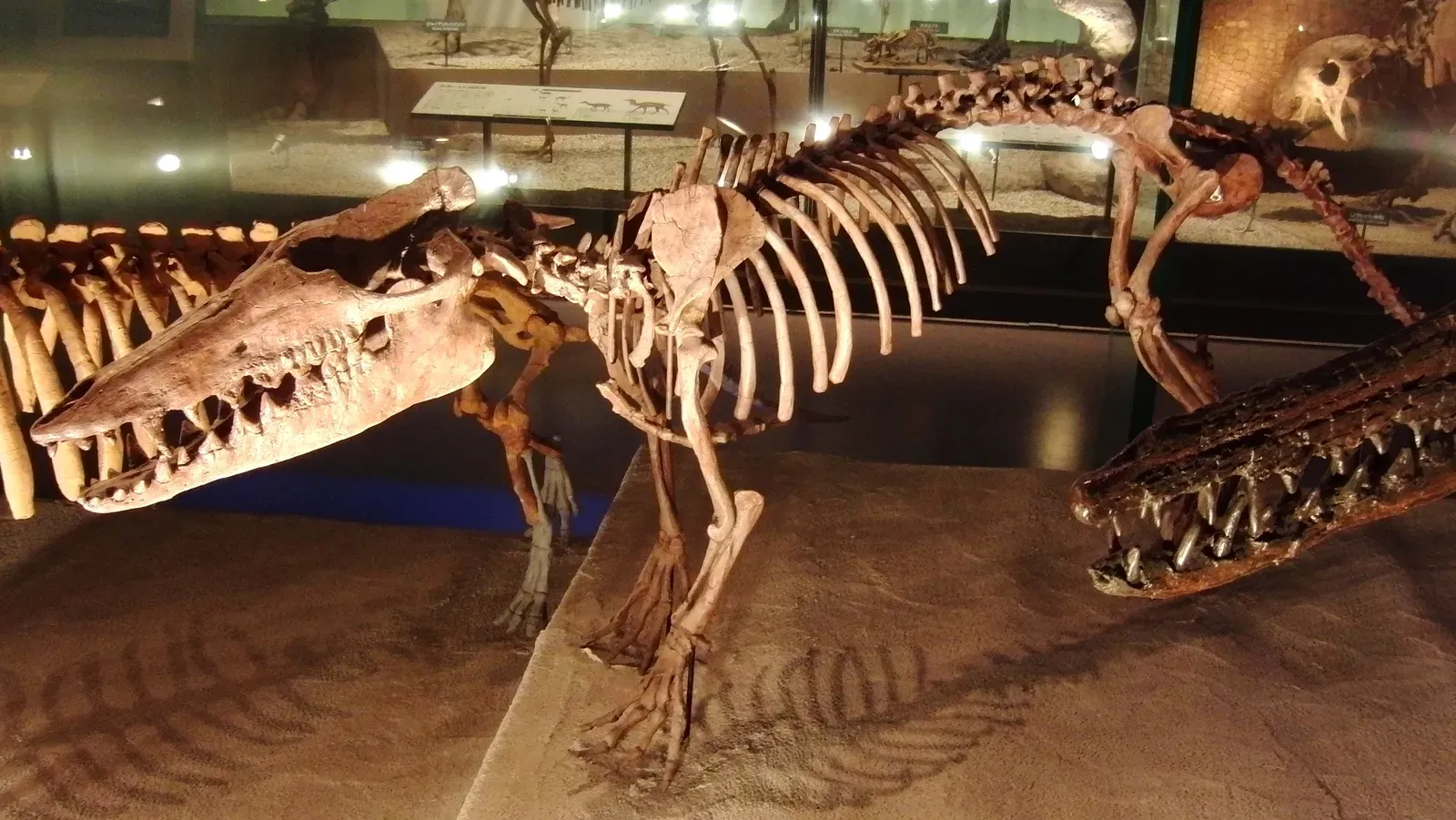
Here’s the thing. If you were to travel back roughly 50 million years and stumble across Pakicetus on a riverbank in what is now Pakistan, you would probably mistake it for a dog or a peculiar wolf. You certainly wouldn’t think, “Ah, yes, there’s the ancestor of the blue whale.” Pakicetus is a close relative of ancient whales, and we know that pakicetids were closely related to whales and dolphins based on a number of unique specializations of the ear. But pakicetids lived on land and had nostrils at the front of the skull, as modern cows and sheep do.
Fossils of pakicetids have been found in northern Pakistan and northwestern India, indicating that they lived in terrestrial or freshwater environments rather than marine habitats. Despite having long limbs, their tiny hands and feet suggest they were not adept swimmers. They likely dwelled near bodies of freshwater and had a varied diet, possibly consuming land animals and aquatic organisms. It’s a genuinely astonishing story when you realize that the molecular biology backs the fossils up completely. When we compare the DNA of modern whales including dolphins and orcas to all other living mammals, we find that they share the greatest similarity with hippos.
4. Ambulocetus: The Walking Whale That Actually Swam
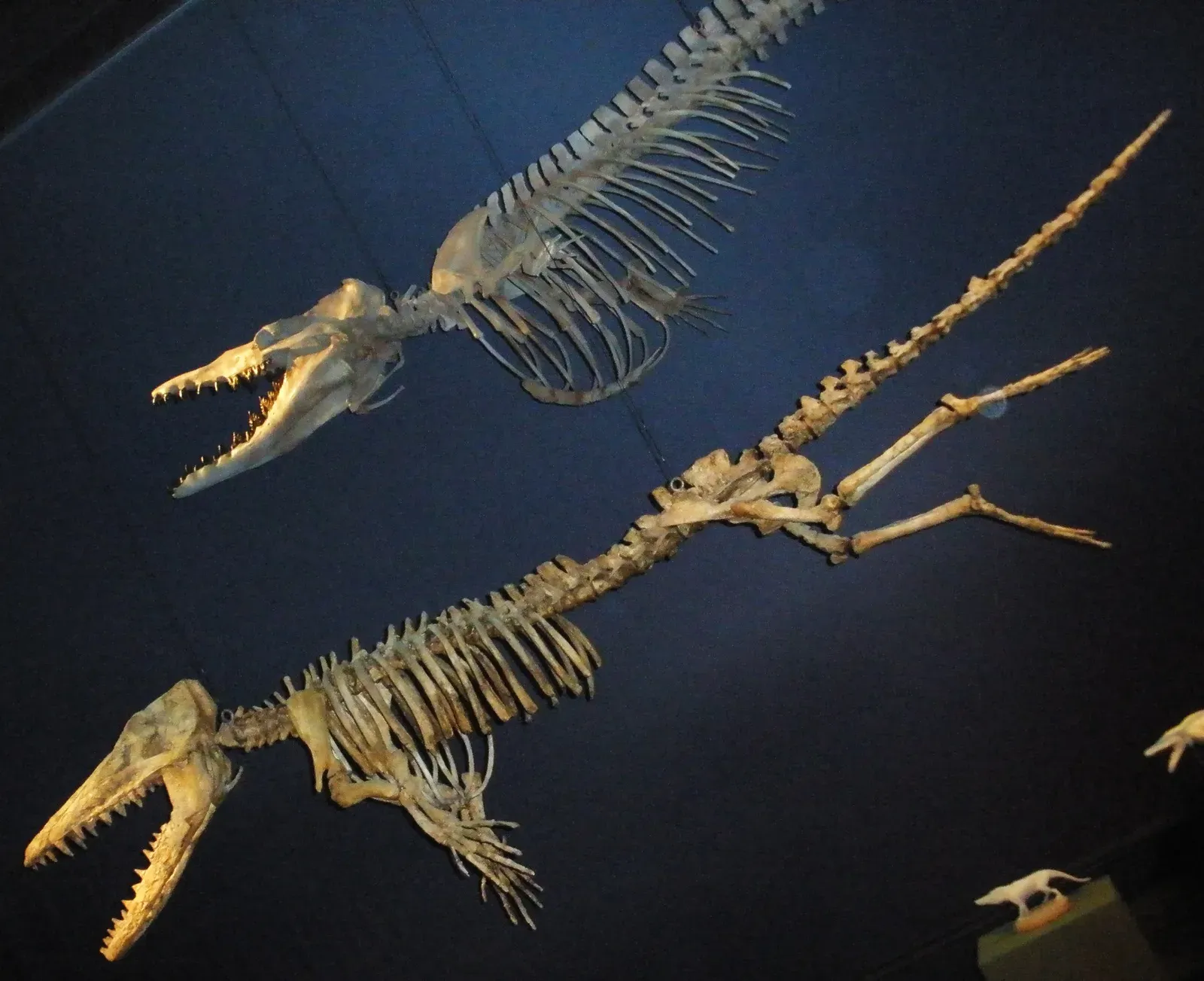
Ambulocetus, or the “walking whale,” was a strange-looking 10-foot-long cetacean from the Eocene Epoch some 45 million years ago that could both walk on land and swim proficiently. I know it sounds crazy, but the fossil evidence is undeniable. This creature essentially bridged two worlds, awkward and magnificent at the same time, like nature’s own experiment in real time.
Compared to other early whales like Indohyus and Pakicetus, Ambulocetus looks like it lived a more aquatic lifestyle. Its legs are shorter, and its hands and feet are enlarged like paddles. Its tail is longer and more muscular, too. The hypothesis that Ambulocetus lived an aquatic life is supported by evidence from stratigraphy. Ambulocetus’s fossils were recovered from sediments that probably comprised an ancient estuary, and from the isotopes of oxygen in its bones. Animals are what they eat and drink, and saltwater and freshwater have different ratios of oxygen isotopes. The isotopes show that Ambulocetus likely drank both saltwater and freshwater, which fits perfectly with the idea that these animals lived in estuaries or bays between freshwater and the open ocean.
5. Lucy (Australopithecus afarensis): The Fossil That Changed Everything About Human Origins
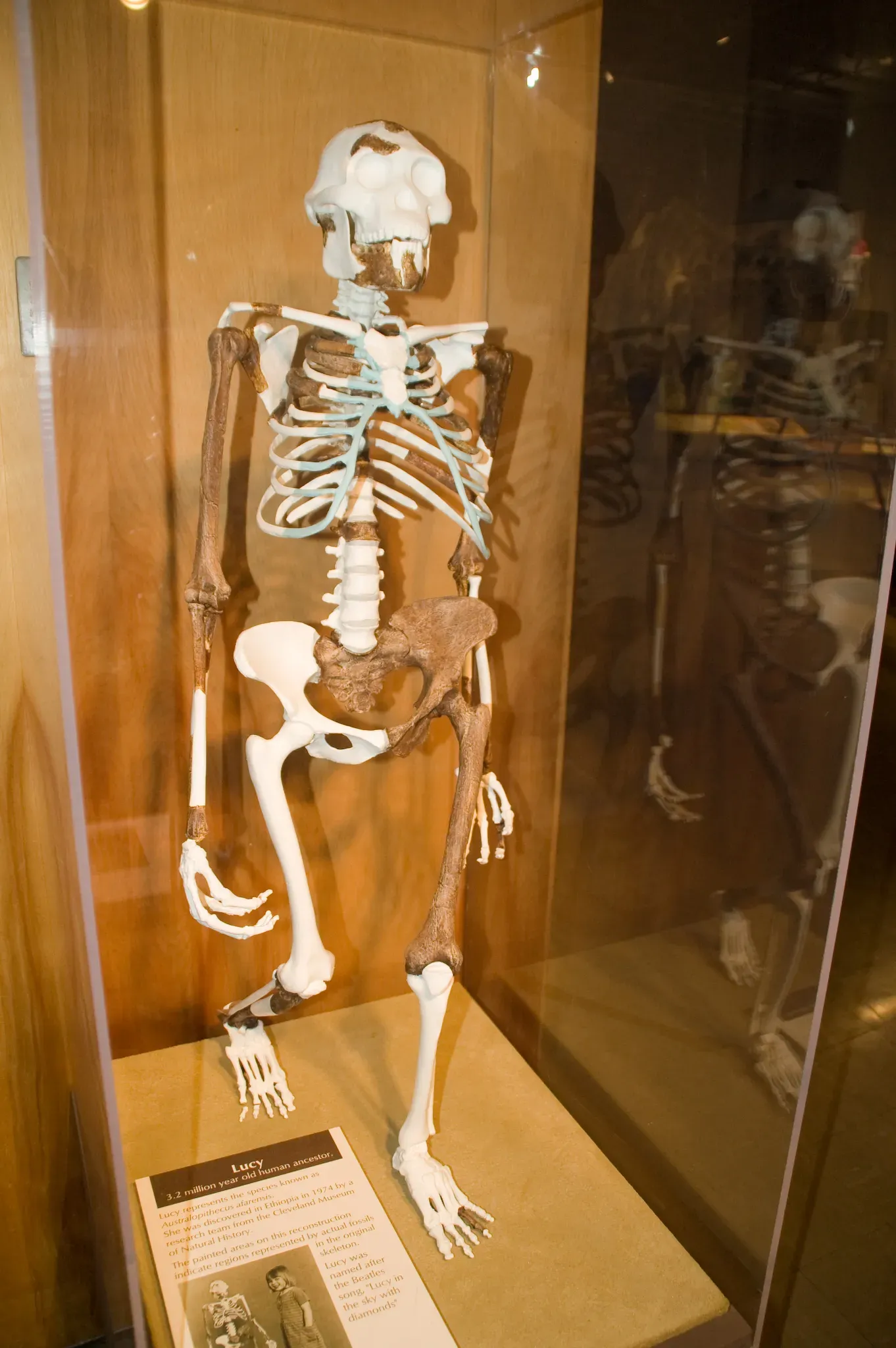
Perhaps no fossil carries more emotional weight than a tiny female skeleton discovered in Ethiopia in 1974. One of the most famous fossils tracing the origins of our own species is Australopithecus afarensis, a hominin species that lived about 3.2 million years ago in what is now Ethiopia. The most iconic specimen of that species is known to the world simply as Lucy. Discovered in 1974 by Donald Johanson and his team, Lucy was a small female hominin, just over three feet tall. When you realize you are looking at the fossilized bones of a distant ancestor, something shifts inside you.
Lucy’s leg bones and pelvis were structured in a way that was almost identical to modern humans, meaning she was an upright walker. Since then, there have been other similar skeletons uncovered. The species is named Australopithecus afarensis and is an example of a transitional species, revealing the evolutionary pathway between ancient primates and humans. Lucy is a classic example of a transitional pathway, as she shows characteristics of both ancient primates, including her size and brain cavity, and modern humans, including her legs and pelvis. Bipedalism was quite an early adaptation, as Australopithecus afarensis was bipedal around 4 million years ago.
6. Eohippus (Hyracotherium): The Tiny Horse That Started It All
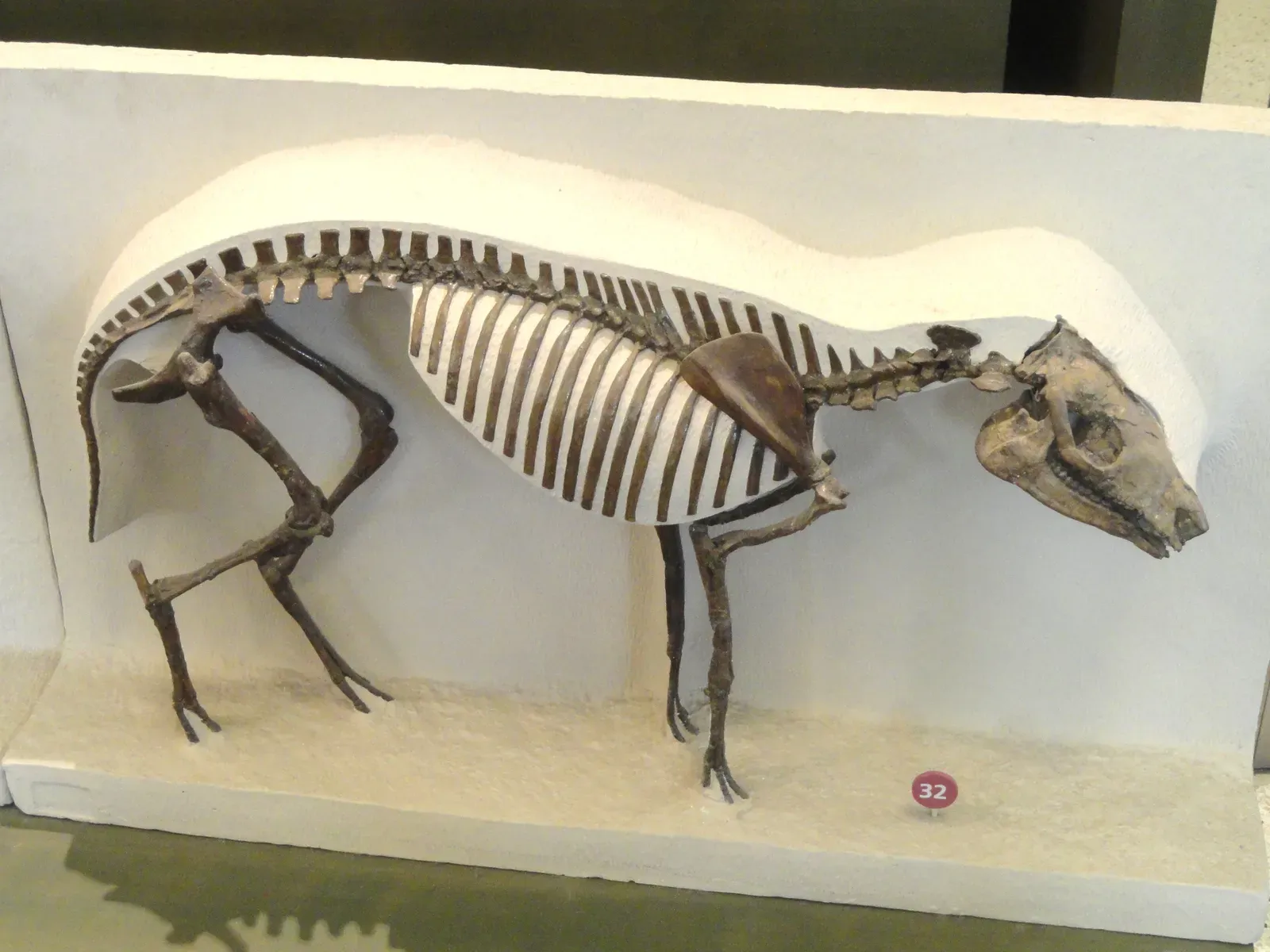
If you had to pick the single most beautifully documented evolutionary sequence in the entire fossil record, the horse would be a very strong contender. Most people picture a horse as a powerful, single-hoofed creature galloping across an open plain. But the earliest horse ancestor you could fit in a backpack. Modern horses have just one toe, the hoof. However, the ancestors of modern horses, which lived more than 50 million years ago, had four toes. We know this from fossils of the earliest horses, like those of Eohippus, also known as Hyracotherium.
If modern horses arose from a four-toed ancestor, we’d expect the lineage to have passed through intermediate forms with an intermediate number of toes. In fact, the fossil record contains many examples of these, represented by three-toed Archaeohippus and Parahippus. In this case and many others, fossils bear transitional features that provide strong evidence illustrating how major evolutionary changes occurred. Think of it like a slow, relentless redesign, generation after generation, driven entirely by shifting landscapes and the need to run faster and farther. The evolution of the horse spans over the past 55 million years.
7. Acanthostega: The Creature That Proves Limbs Came Before Land
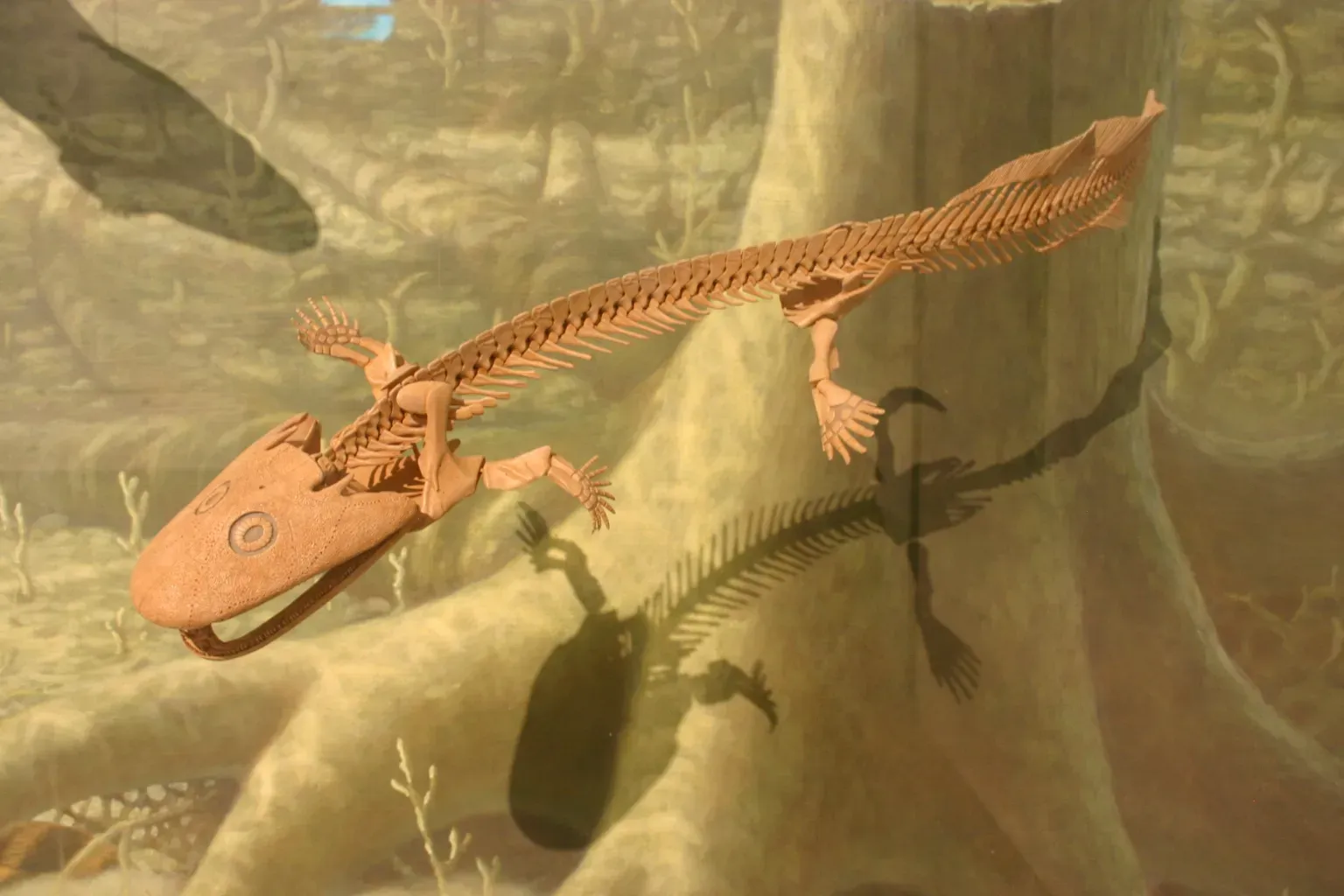
Here is a fascinating and somewhat counterintuitive discovery. You might assume that legs evolved because animals wanted to walk on land. But Acanthostega, a 360-million-year-old creature, challenges that entirely. UChicago Prof. Michael Coates helped reconstruct Acanthostega, a 360-million-year-old fossil exhibiting characteristics of both fish and amphibians, in many ways the evolutionary counterpart to Tiktaalik. The sheer depth of the fish-to-tetrapod transition as revealed through these fossils is staggering.
About 360 million years ago in the Devonian period, the first tetrapods evolved and would have looked a bit like amphibians. There are many fossils which link fish to tetrapods, making this transition one of the most well documented in the fossil record. We probably have so many good fossils of these animals because they lived in shallow, muddy, poorly oxygenated swamps, the ideal environment for fossilization to take place. It is almost ironic that the muck and decay of ancient swamps are precisely why you can understand your own evolutionary history today.
8. The Hominid Skull Series: A Journey Written in Bone
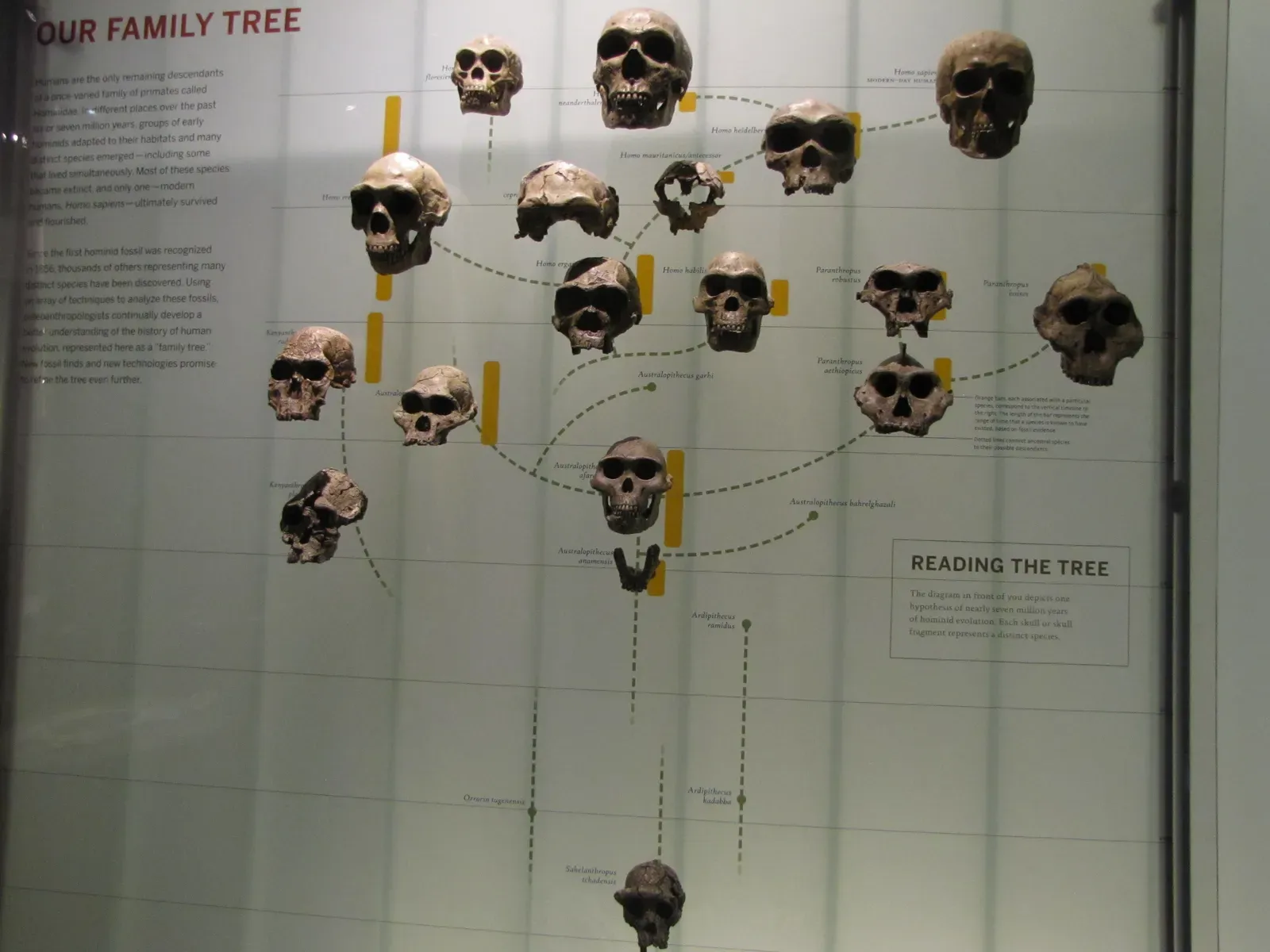
If you ever stand before a museum display of hominid skulls arranged chronologically, you will feel something shift in your perspective on what it means to be human. Thousands of human fossils enable researchers and students to study the changes that occurred in brain and body size, locomotion, diet, and other aspects regarding the way of life of early human species over the past 6 million years. It is not just a scientific record. It is your family album, stretched across deep time.
The fossil record of the past 6 million years reveals the transition from chimp-like species with smaller average brain sizes to species that are increasingly human-like in appearance, meaning bipedal, with larger average brain sizes. In fact, we have fossil evidence for over 20 species of hominins. The human fossil record is pretty good, partly due to human evolution being so recent, and partly because early humans often took shelter in dry, dark caves, which are good conditions for preserving bones. When you consider that not one but many creatures intermediate between living apes and humans have since been found as fossils, and the oldest known fossil hominins are 6 million to 7 million years old, come from Africa, and are known as Sahelanthropus and Orrorin, which were predominantly bipedal when on the ground but which had very small brains, the story of your own species becomes almost breathtaking in scope.
Conclusion: The Story Written in Stone Is Still Being Told
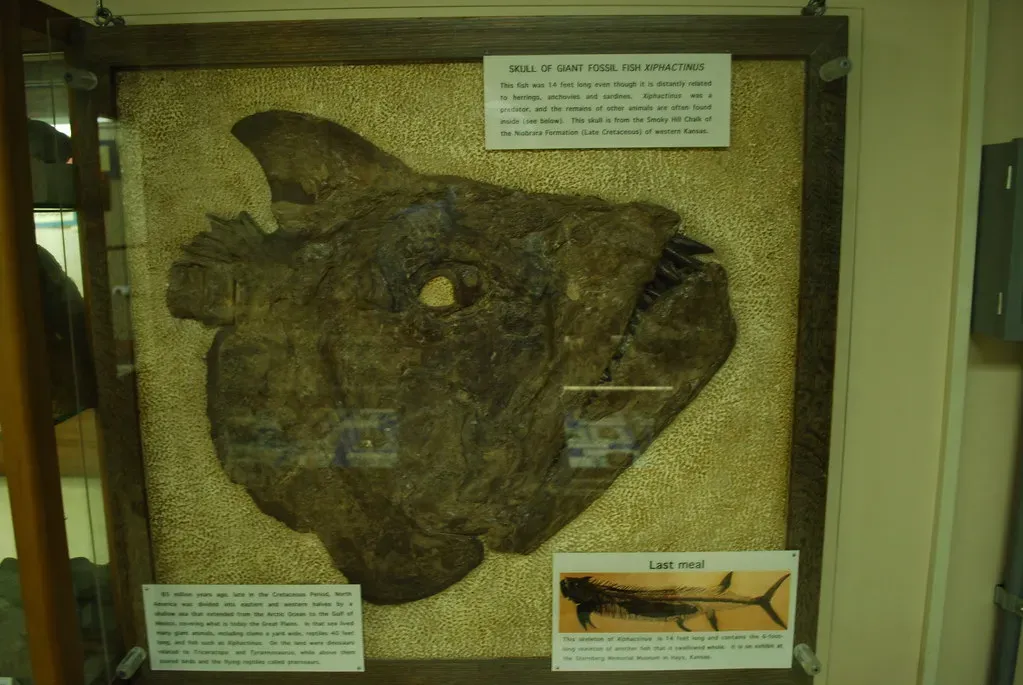
What these eight fossils share, beyond their age and their scientific importance, is something almost humbling. Each one represents a moment frozen in time. A fish deciding to use its fins as proto-arms. A land mammal wading deeper and deeper into the sea until its descendants forgot the shore entirely. A small primate standing upright for the first time on an African plain.
Hundreds of thousands of fossil organisms, found in well-dated rock sequences, represent successions of forms through time and manifest many evolutionary transitions. Undoubtedly there are amazing fossils out there still undiscovered, certainly many new species of extinct species are described every year. The story of life on Earth is nowhere near finished being told, and each new discovery rewrites at least a small corner of what you thought you knew.
Evolution is not a theory that sits in a textbook collecting dust. It is written into every bone, every fin, every ancient footprint pressed into ancient mud. The real question is not whether evolution happened. It is simply how much more of the story is still buried out there, waiting for someone with a brush and a sharp eye to find it. What would you have guessed was out there before reading this?