Poland – In the muddy clay pits of southern Poland, paleontologists uncovered fossils that belonged to Lisowicia bojani, a massive dicynodont from the Late Triassic period around 210 million years ago. This distant mammal relative matched the size of a modern African elephant and shared its landscape with the first dinosaurs. The discovery reshaped understandings of prehistoric herbivores, proving that non-dinosaurian giants thrived far longer than experts once thought.
A Breakthrough in an Unlikely Place
A Breakthrough in an Unlikely Place (Image Credits: Upload.wikimedia.org)
Local workers first spotted bone fragments in 2005 at the Lipie Śląskie clay pit near Lisowice village in Silesia. Researchers Tomasz Sulej and Grzegorz Niedźwiedzki began excavations in 2006, initially suspecting sauropod dinosaur remains due to their enormous scale. Over the next decade, teams recovered more than 1,000 bones from at least two individuals, including limb elements, vertebrae, and parts of the skull. The site yielded the first substantial dicynodont fossils from European deposits, filling a critical gap in the record.
Published in Science in late 2018, the description marked Lisowicia as the largest known dicynodont and the biggest non-mammalian synapsid. Earlier finds from 2008 had hinted at a giant, but full analysis confirmed its unique traits. This “once-in-a-lifetime” haul challenged assumptions about dicynodont decline after the Permian extinction.
Built Like No Other Beast
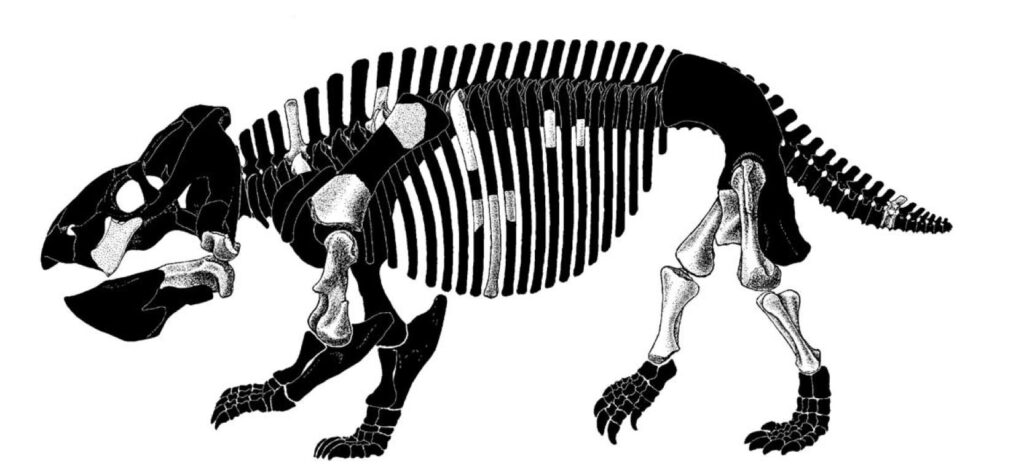
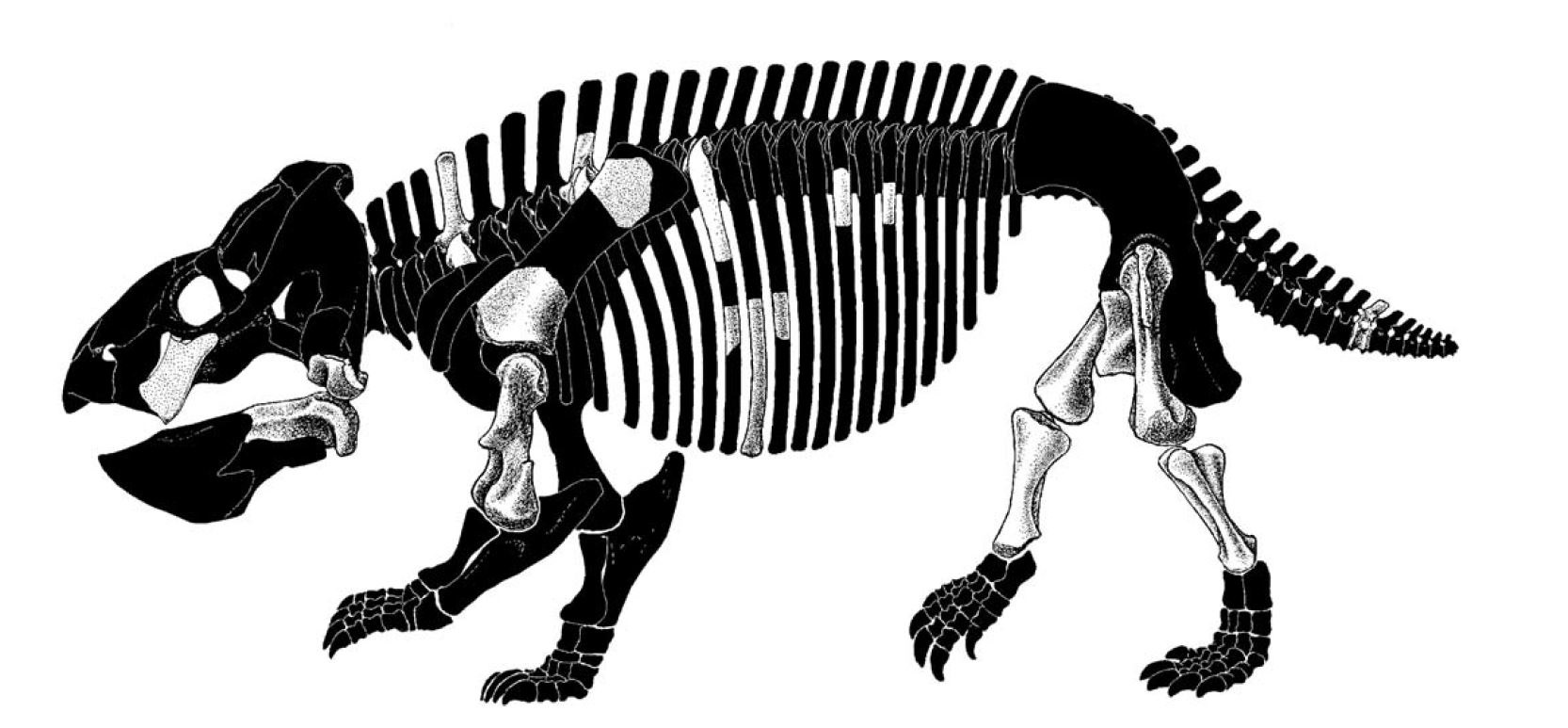
Lisowicia bojani stretched about 4.5 meters long, stood 2.6 meters tall at the hips, and weighed between 5 and 9 metric tons, rivaling today’s elephants. Its barrel-shaped body supported a large head with a toothless, turtle-like beak for cropping plants, flanked by short caniniform processes instead of tusks. Robust limbs anchored directly beneath the torso, enabling an upright posture rare among its kin.
Unique hollows marked its cervical vertebrae, and forelimbs featured backward-facing elbows for efficient forward motion. The genus name honored the Lisowice site, while “bojani” paid tribute to naturalist Ludwig Heinrich Bojanus. Here are key anatomical highlights:
- Erect forelimbs with parasagittal gait, akin to rhinos or hippos.
- High skull crest for powerful jaw muscles.
- Short neck and tail, stocky build for stability.
- Largest femur measured 80 cm long.
- No growth arrest lines, suggesting rapid development.
Thriving in Swampy Realms
Lisowicia inhabited a lush, Everglades-like swamp with slow rivers, oxbow lakes, and dense vegetation including conifers, ginkgoes, and ferns. Coprolites revealed a diet of soft plants and seasonal woody matter, processed by its beaked jaws. Low head position implied grazing on ground-level foliage rather than high browsing.
Predators posed threats; bite marks on juveniles and bone fragments in coprolites linked to the rauisuchian Smok showed dicynodonts faced intense pressure. Communal latrine sites hinted at herd behavior, much like modern elephants. Small dinosaurs, silesaurids, pterosaurs, and early crocodylomorphs shared this watery world, but Lisowicia dominated as the top herbivore.
Overturning Triassic Narratives
Prior views held that dicynodonts faded after the Middle Triassic, overshadowed by rising dinosaurs. Lisowicia proved otherwise, surviving as one of the last of its kind into the late Norian or Rhaetian stages. Its gigantism paralleled sauropodomorph evolution, suggesting shared pressures like predator evasion or energy efficiency drove massive sizes.
“Lisowicia is hugely exciting because it blows holes in many of our classic ideas of Triassic ‘mammal-like reptiles,’” stated Dr. Grzegorz Niedźwiedzki of Uppsala University. Dr. Tomasz Sulej added, “The discovery changes our ideas about the latest history of dicynodonts, mammal Triassic relatives.” This European giant underscored dicynodont success and geographic reach.
Key Takeaways
- Lisowicia bojani reached elephant proportions, the largest non-mammalian synapsid.
- Erect limbs marked an evolutionary leap toward mammalian posture.
- Coexistence with dinosaurs highlighted diverse Triassic ecosystems.
Lisowicia bojani stands as a testament to the Triassic’s complexity, where mammal ancestors rivaled dinosaurs in scale and survival. This find invites fresh questions about gigantism’s roots and prehistoric competition. What surprises might future digs uncover? Tell us in the comments.