Long before towering ice sheets blanketed Antarctica, the continent teemed with life under a balmier sky. Fossils preserved in remote mountain ranges and coastal outcrops reveal a landscape of dense forests and roaming dinosaurs during the Mesozoic Era. Scientists have pieced together this vivid prehistoric tableau from pollen grains, leaf imprints, and bone fragments, offering a glimpse into a world where the South Pole lay within lush, temperate woodlands.
A Greenhouse Climate Nurtured Vast Forests
A Greenhouse Climate Nurtured Vast Forests (Image Credits: Flickr)
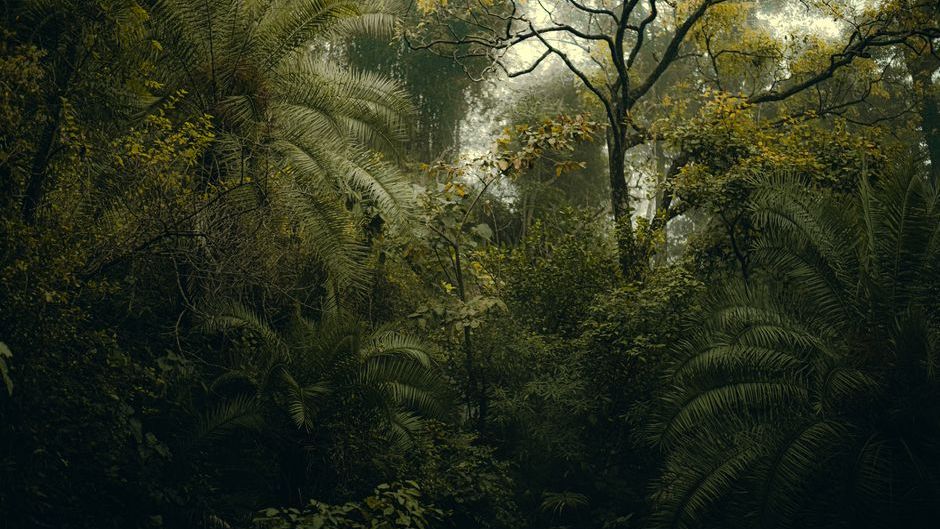
Elevated carbon dioxide levels fueled a greenhouse effect that kept Antarctica ice-free for much of the dinosaur age. Ocean temperatures near the continent reached 30 degrees Celsius during the mid-Cretaceous, while summer air temperatures averaged nearly 70 degrees Fahrenheit. This warmth supported temperate rainforests extending toward the polar circle, dominated by towering conifers and understories of ferns, mosses, and liverworts.
Pollen and spore samples from sediment cores confirm the presence of southern beech trees, gingkos, and primitive flowering plants by around 100 million years ago. Floodplains teemed with scaly tree ferns and Gleicheniaceae species, while rivers carved through the terrain. These ecosystems thrived at latitudes equivalent to today’s Antarctic Circle, with sunlight patterns similar to the present but far milder conditions.
Cryolophosaurus Stalked Giant Herbivores
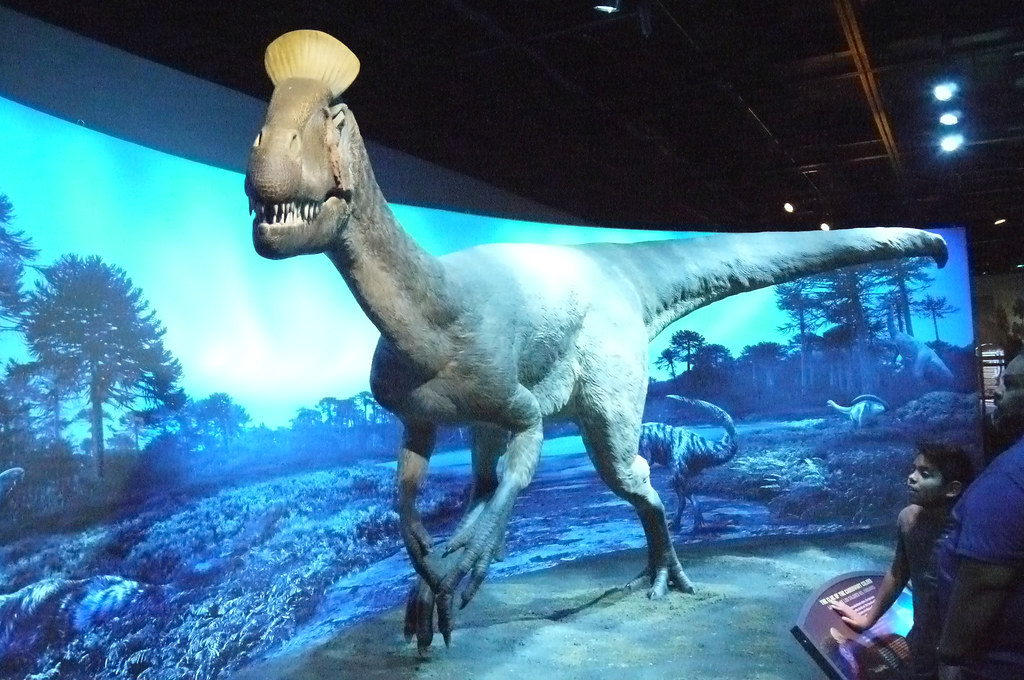
The first major dinosaur discovery on the continent stunned researchers: a crested predator named Cryolophosaurus, unearthed at Mount Kirkpatrick in the Transantarctic Mountains. This Jurassic carnivore, living about 190 million years ago, measured up to 25 feet long and featured a distinctive pompadour-like crest on its skull. It likely hunted large plant-eaters in a mild climate resembling the modern Pacific Northwest.
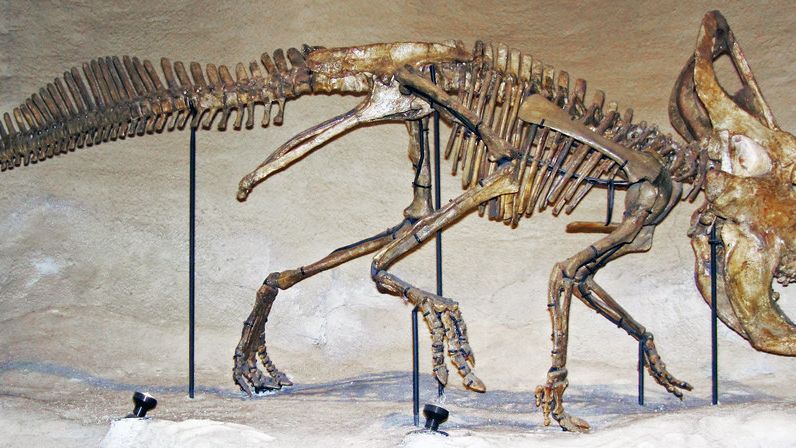
Among its prey stood Glacialisaurus, a long-necked sauropodomorph from the same period. Cretaceous finds added diversity, including semi-bipedal ornithopods, a titanosaur, an ankylosaur, and a duck-billed hadrosaur known from a single tooth. Small theropods and a bird-like Imperobator rounded out the roster, with many herbivores adapting to browse ferns and emerging angiosperms.
- Cryolophosaurus: Crested Jurassic predator, Mount Kirkpatrick.
- Glacialisaurus: Early long-necked herbivore.
- Ornithopods: Small, beaked plant-eaters.
- Titanosaur: Massive Cretaceous sauropod.
- Ankylosaur: Armored defender.
- Hadrosaur: Duck-billed browser.
- Imperobator: Agile bird-like hunter.
Surviving the Polar Night and Chill
Polar dinosaurs faced months of winter darkness, yet evidence suggests they endured without full migration. Small ornithopods and theropods foraged in cool-temperate woodlands averaging 11 to 25 degrees Fahrenheit warmer than today. Their keen night vision and possible warm-blooded traits allowed activity during endless nights, challenging earlier views of strictly tropical reptiles.
“Antarctica during the Cretaceous must have been an environment with no modern analog,” noted paleontologist Matt Lamanna of the Carnegie Museum of Natural History. Fossil leaves and wood from sites like Alexander Island and Beardmore Glacier preserve snapshots of floodplains and conifer stands at 75 degrees south. These creatures navigated rivers and fern-choked valleys, their world a far cry from the barren ice of today.
Fossils Emerge from Beneath the Ice
Prospectors first spotted fossilized leaves during Robert Falcon Scott’s 1910s expedition, but dinosaur bones proved elusive under 99 percent ice cover. The breakthrough came in 1986 with an ankylosaur fragment on the Antarctic Peninsula. Expeditions to the Transantarctic Mountains yielded Cryolophosaurus in the 1990s, followed by pollen-rich sediments revealing 90-million-year-old rainforests.
Recent analyses of nearly 300 samples from Victoria, Australia – once joined to Antarctica – reconstructed Early Cretaceous landscapes. These polar sites, closer to the South Pole than any others, hold the richest bone beds. Drilling and glacial moraines continue to expose roots, spores, and logs up to seven meters tall.
| Fossil Type | Age (mya) | Location |
|---|---|---|
| Cryolophosaurus bones | 190 | Mount Kirkpatrick |
| Conifer logs | 100 | Alexander Island |
| Rainforest pollen | 90 | Sediment cores |
| Ornithopod remains | 120 | Transantarctics |
Key Takeaways
- Antarctica hosted rainforests and dinosaurs until about 34 million years ago.
- Polar species adapted to darkness and cold snaps with advanced vision and metabolism.
- Fossil hunts persist amid melting ice, promising more revelations.
Antarctica’s transformation from dinosaur haven to frozen vault underscores dramatic climate shifts, driven by continental drift and ocean currents. As glaciologists monitor today’s ice streams, these ancient records warn of rapid environmental change. What lessons do polar dinosaurs hold for our warming world? Tell us in the comments.