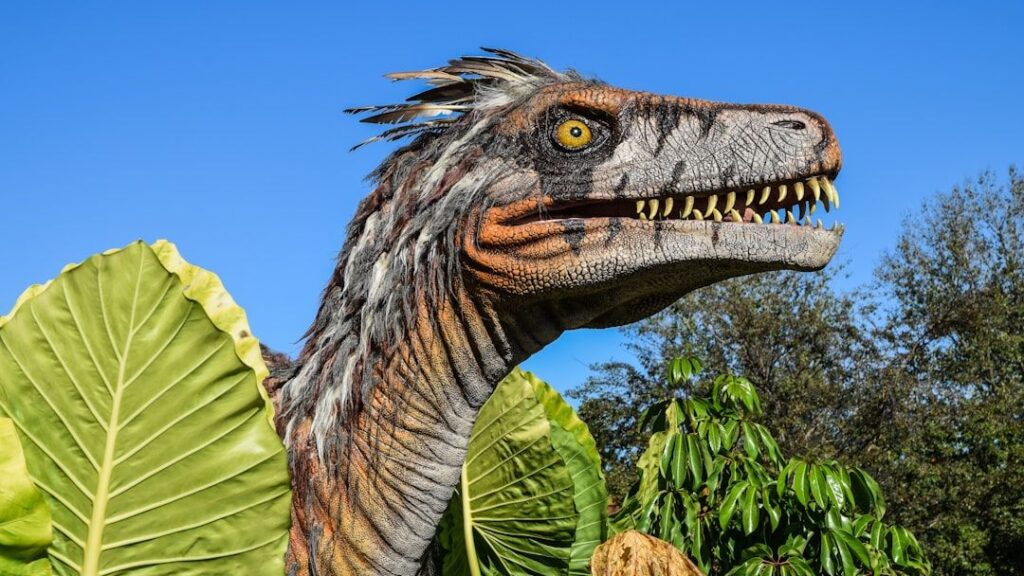
Picture this: you’re imagining a velociraptor. Chances are, you’re seeing something tall, scaly, menacing, and deeply reptilian – a creature built to hunt you down in a kitchen corridor. That image, thanks to Jurassic Park, is almost impossible to shake. It’s burned into pop culture like a brand.
Here’s the thing though – it’s almost entirely wrong. The real velociraptor was a very different animal, one that science has spent decades carefully piecing together. The truth turns out to be stranger, richer, and in many ways, even more fascinating than the Hollywood version. Let’s dive in.
The Jurassic Park Version Was Never Real
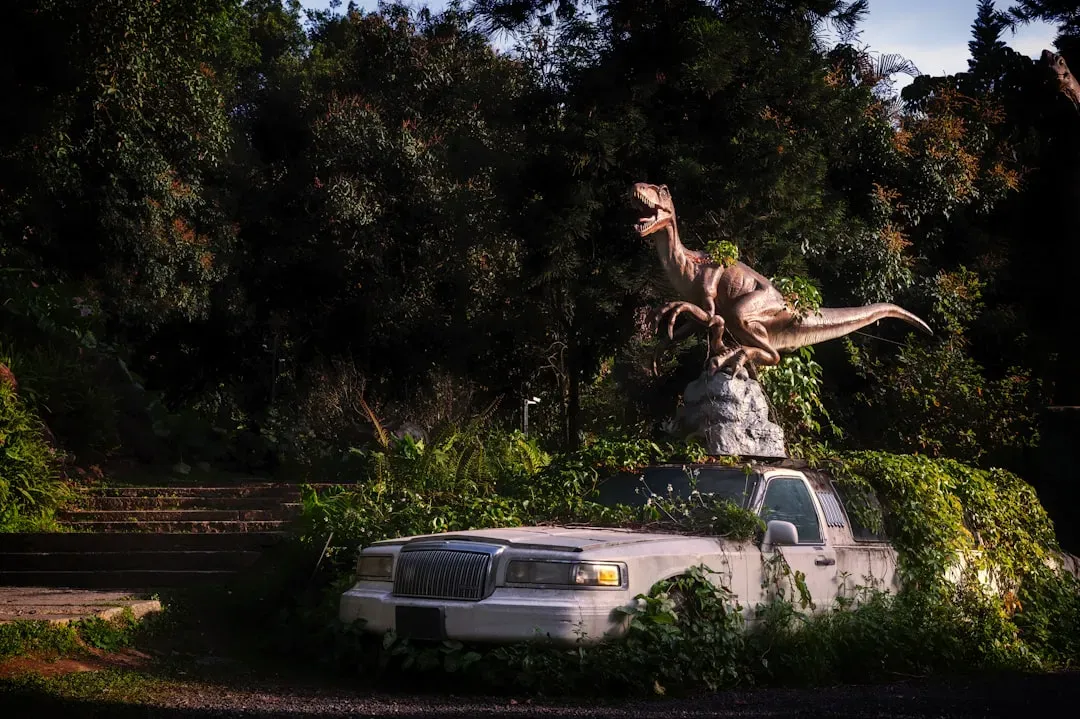
Velociraptor is commonly perceived as a vicious and cunning killer thanks to its portrayal in the 1990 novel Jurassic Park by Michael Crichton and its 1993 film adaptation directed by Steven Spielberg. You probably grew up with that image too. Towering, scaly, impossibly clever. It felt real because it looked real.
The raptors portrayed in Jurassic Park were actually modeled after the closely related dromaeosaurid Deinonychus. Crichton at one point apologetically told the discoverer of Deinonychus, John Ostrom, that he had decided to use the name Velociraptor in place of Deinonychus because the former name was “more dramatic.” According to Ostrom, Crichton stated that the Velociraptor of the novel was based on Deinonychus in almost every detail, and that only the name had been changed. So the creature you feared for decades wasn’t even the right dinosaur to begin with.
The Actual Velociraptor Was Closer to a Turkey Than a Terror
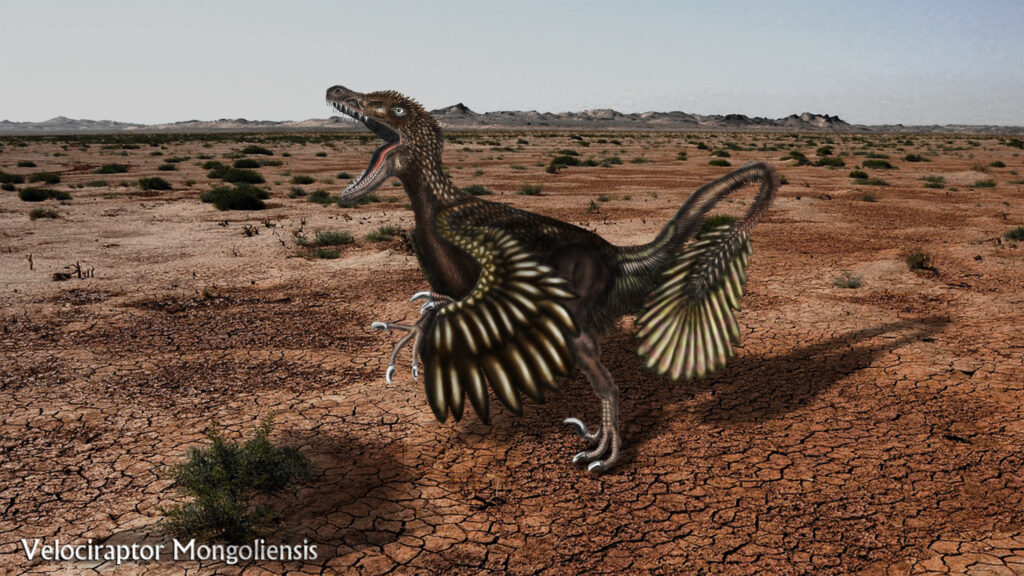
Let’s be real – this one tends to throw people completely off. The actual velociraptor stood approximately 1.6 feet (0.5 meters) tall at the hip and measured about 6.8 feet (2.07 meters) in length – roughly the size of a large turkey. With an estimated weight of around 33 pounds (15 kilograms), this dinosaur was much less imposing than the movie monster that shares its name.
A light, feathery coating would have made it look more like an aggressive turkey than the scaly creatures we know from the movies. Think about that for a second. The dinosaur that had whole generations of children terrified of entering kitchens would probably have come up to your shin. The gap between movie velociraptor and the real thing is almost comedically vast.
The Feather Evidence That Changed Everything
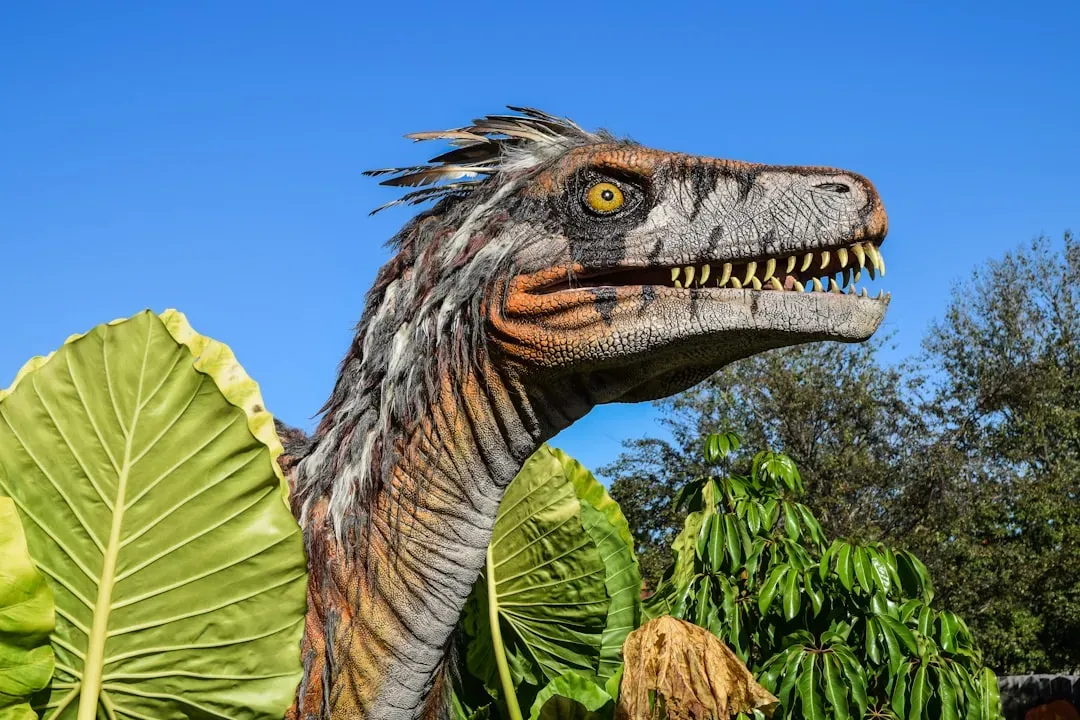
Here is where science delivered one of its most satisfying plot twists. Scientists found evidence of six quill knobs – locations where feathers are anchored to bone – on the forearm of a velociraptor fossil. The fossil specimen examined was a velociraptor forearm unearthed in Mongolia in 1998.
These knobs are direct evidence that velociraptor carried a row of feathers on its forearm, probably about 14 by the research team’s count. And these weren’t primitive proto-feathers either. The quill knobs also suggest that velociraptor’s feathers had a distinctly modern style. They probably looked much like those of today’s birds, rather than the hair-like proto-feathers of its ancestors. In other words, if you saw one today, you might mistake it for a very strange, very unsettling bird.
Why Velociraptor Had Feathers but Couldn’t Fly
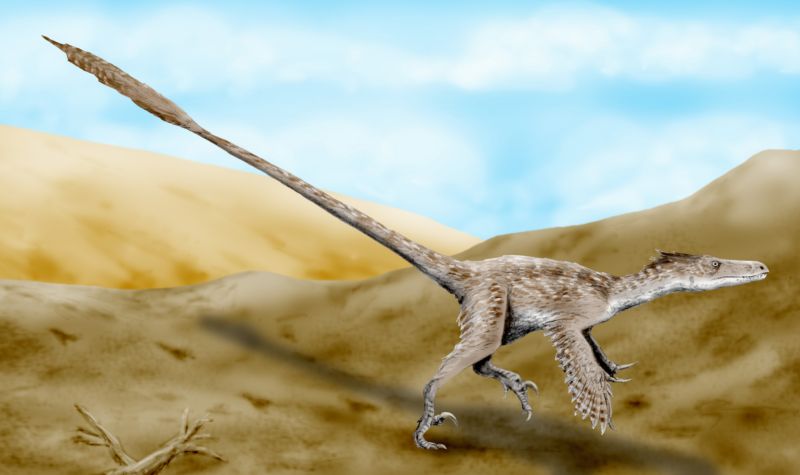
You might be wondering: if it had feathers, why wasn’t it flying around? Good question. Despite its wing-like arms, velociraptor wouldn’t have been able to fly. It didn’t have the apparatus needed to get an animal of its size off the ground. Although it had a wishbone – a fused collarbone like in modern birds – it wasn’t the shape needed to support flapping wings.
The authors of the 2007 study suggest that perhaps an ancestor of velociraptor lost the ability to fly, but retained its feathers. Think of it like the ostrich analogy. Ostriches have wings but they don’t use them for flight – their feathers serve entirely different purposes now. Instead, researchers suggest that velociraptor could have used its feathers to display to mates or rivals, to shield their nests from the cold, or to maneuver while running. Evolution has a habit of repurposing things rather than throwing them away.
The Deadly Sickle Claw and How It Really Worked
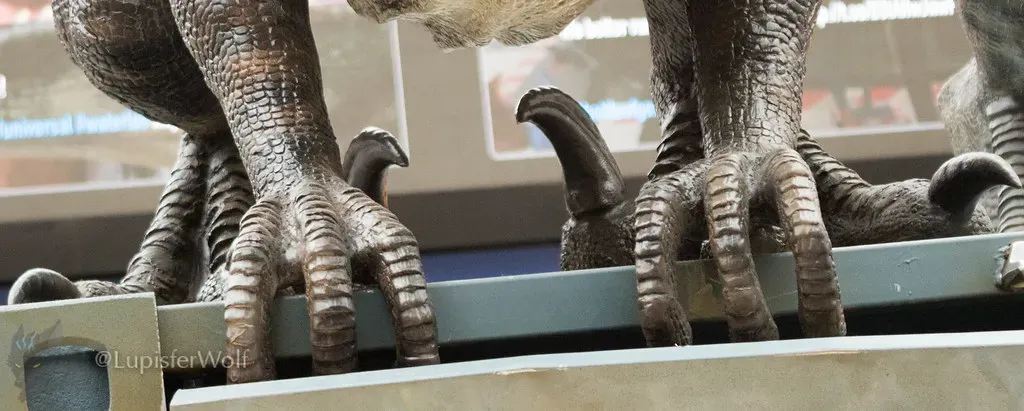
Velociraptor had a distinctive sickle-shaped claw on the second toe of each foot, measuring about 2.6 inches (6.5 centimeters) along its outer curve – a formidable hunting weapon that became its most recognizable feature among both scientists and the public. The movies suggested it used this claw to gut prey in a spectacular, terrifying slash. Science says otherwise.
The “raptor prey restraint” model of predation, known as RPR, proposes that dromaeosaurs killed their prey in a manner very similar to extant accipitrid birds of prey: by leaping onto their quarry, pinning it under their body weight, and gripping it tightly with the large, sickle-shaped claws. Scientists know that dromaeosaurid dinosaurs like velociraptor walked with only two toes on the ground. The famous sickle claw was held up in the air, which would have helped keep it sharp. A precision tool, carefully maintained. More like an eagle’s talon than a horror movie prop.
The Feathered Cousins That Tell Us More About Velociraptor
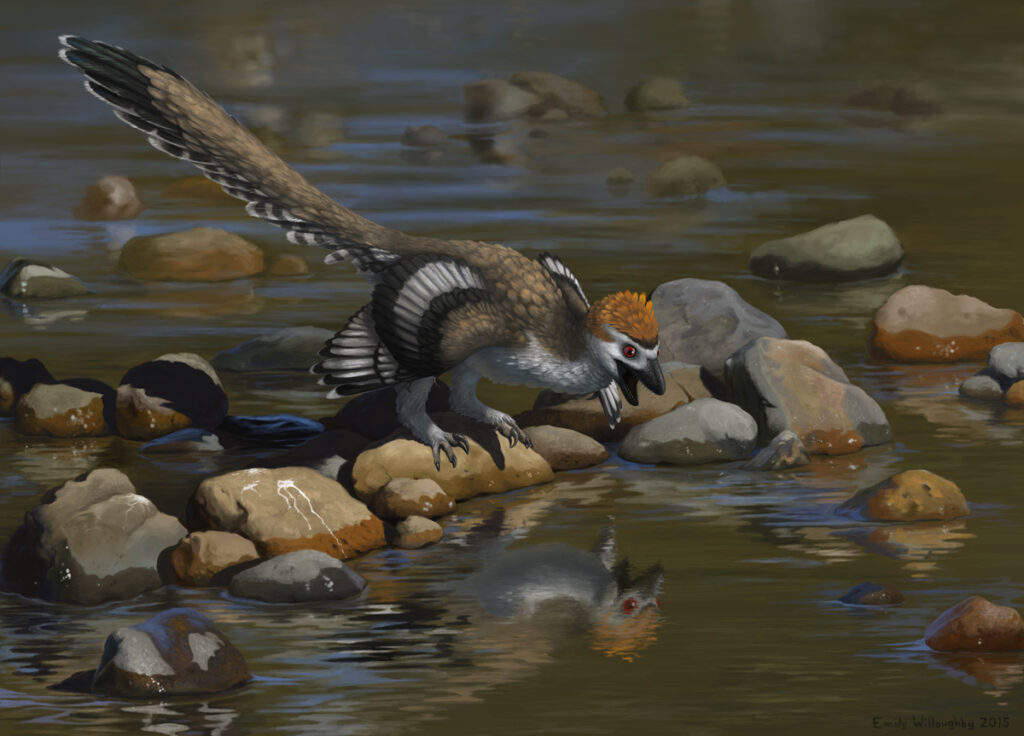
Because velociraptor fossils are rarely found in sediment that preserves soft tissues, scientists have used close relatives to fill in the gaps. One of the most important discoveries was Zhenyuanlong. This new dinosaur, Zhenyuanlong, is one of the closest cousins of velociraptor. Its gorgeous chocolate-coloured skeleton was found by a farmer in 125-million-year-old rocks that were laid down in a quiet lake buried by volcanic ash.
Zhenyuanlong is covered in feathers. Simple hairy filaments coat much of the body, larger veined feathers stick out from the tail, and big quill-pen-feathers line the arms, layered over each other to form a wing. This is a dinosaur that looks just like a bird. We know velociraptor’s body was covered in feathers as close relatives, including Microraptor and Zhenyuanlong, have been found with preserved feathers. In 2007, the discovery of quill knobs on a velociraptor fossil proved that this dinosaur had long feathers attaching from its second finger and up its arms.
Pack Hunter or Lone Predator? The Debate Rages On
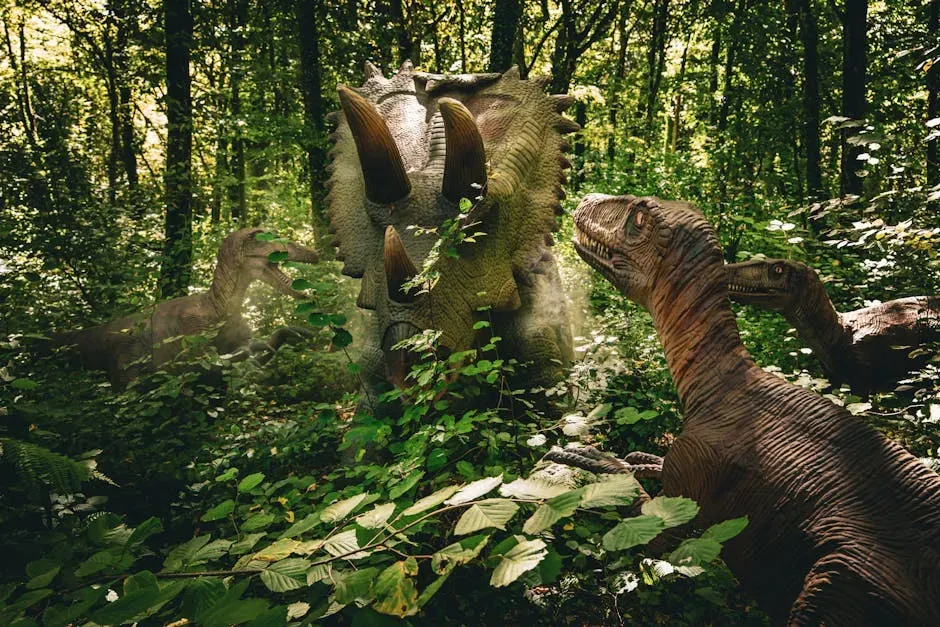
One of Jurassic Park’s most iconic ideas is the pack-hunting velociraptor – cunning, coordinated, terrifyingly strategic. It’s a gripping concept. It’s also largely unsupported by the fossil record. Although many isolated fossils of velociraptor have been found in Mongolia, none were closely associated with other individuals. Therefore, while velociraptor is commonly depicted as a pack hunter, as in Jurassic Park, there is only limited fossil evidence to support this theory for dromaeosaurids in general and none specific to velociraptor itself.
Given its morphology and hunting strategies, it is more likely that velociraptor was more of a solitary predator than a pack hunter. Honestly, that might actually make it more unsettling rather than less. A lone, feathered, bird-like predator stalking small prey through ancient Mongolian deserts – silent, precise, and utterly relentless. It is plausible that velociraptors were opportunistic hunters: capable of solitary ambushes yet also able to scavenge or cooperate when advantageous. Flexible and adaptable, in other words. Nature’s original opportunist.
Velociraptor’s Undeniable Bond With Modern Birds
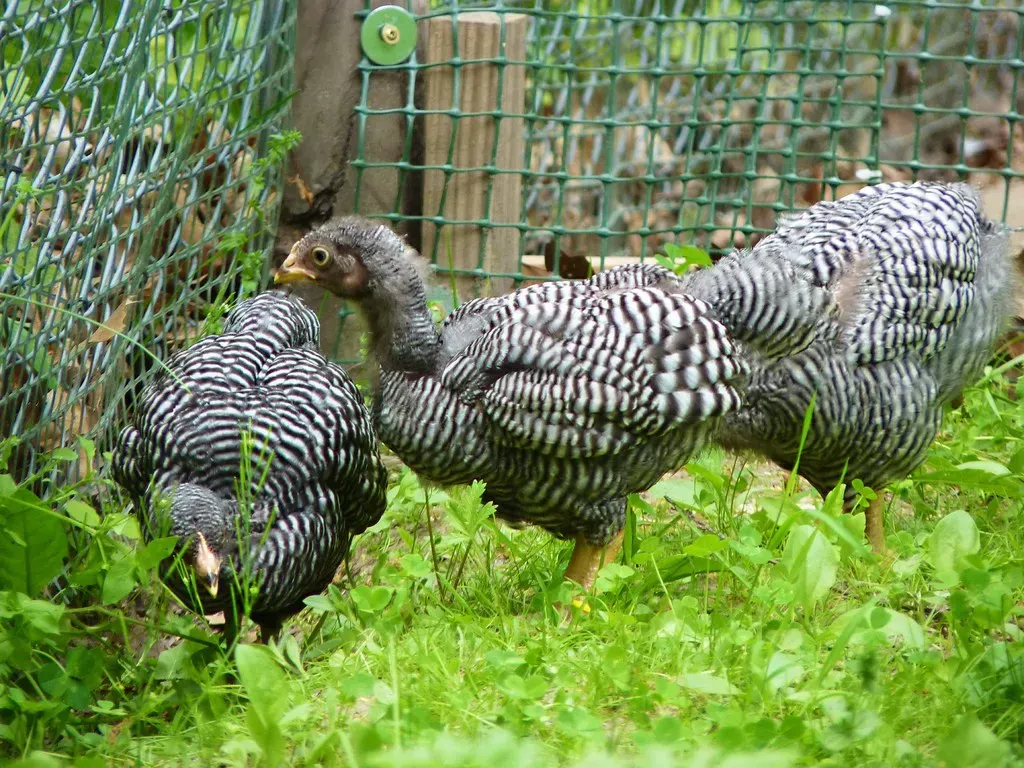
Perhaps the most mind-bending truth about velociraptor is what it tells us about the birds you see every day. There’s strong consensus among scientists that today’s birds are actually dinosaurs, and that they evolved from theropods, a family of three-toed predators that included velociraptor mongoliensis and Tyrannosaurus rex. This family connection explains why velociraptors had many traits found in modern-day birds, including their hinged ankles, swivel-jointed wrists, wishbones, and forward-facing toes.
Birds and dromaeosaurids share a common ancestor dating back to the early Jurassic period. As a result, they share many features, including hollow bones, flight feathers, wing-like arms, stiffened tails, and even a wishbone. In fact, dromaeosaurids, troodontids, and birds are all grouped together within the Paravian clade due to these strong evolutionary similarities. The next time a pigeon struts past you, give it a second look. You’re essentially watching a tiny, peaceful descendant of one of history’s most exciting predatory lineages. Every chirp, flutter, and dive connects us to a prehistoric past spanning over 150 million years.
Conclusion
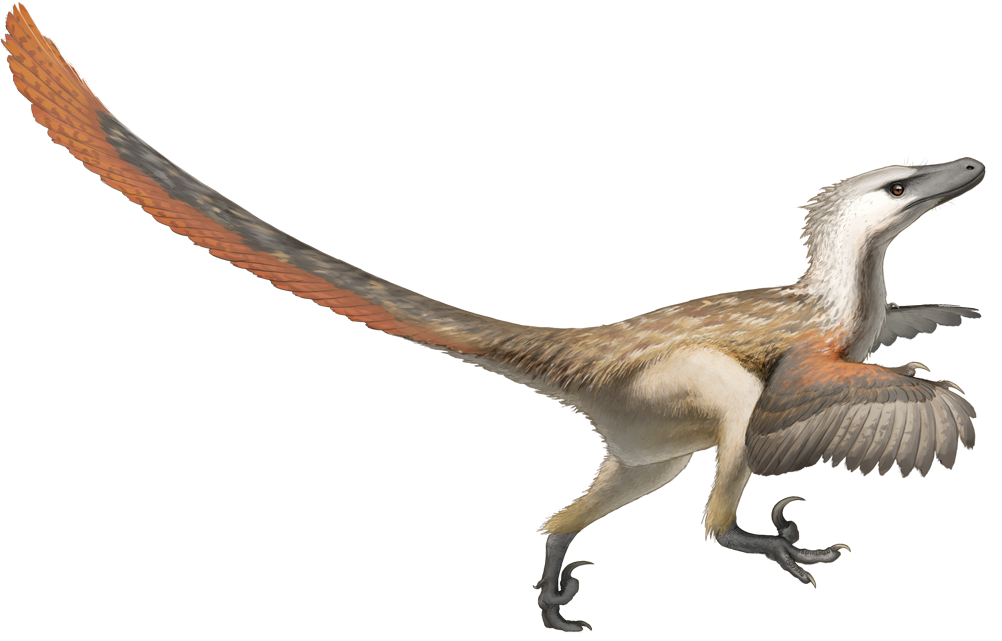
The velociraptor’s story is really a story about how science corrects itself, slowly and brilliantly, one fossil at a time. You’ve been sold a version of this animal that was built for cinema, not for accuracy. The real creature – feathered, turkey-sized, a precise and opportunistic hunter deeply related to the birds singing outside your window right now – is in many ways far more remarkable than the movie monster.
The story of velociraptor is not just the story of a single dinosaur species. It is a window into the evolution of predatory behavior, the origins of birds, and the complex ecosystems of the Late Cretaceous world. Science didn’t make the velociraptor less interesting by giving it feathers. If anything, it made it infinitely more so.
So next time someone brings up Jurassic Park’s infamous kitchen scene, you can smile and think of a feathered, pigeon-sized predator trotting through a Mongolian desert 75 million years ago. What would you have guessed it really looked like?