Millions of years before humans walked the Earth, dinosaurs lived out complex, dramatic, and sometimes surprisingly tender lives. They hunted, migrated, nested, and possibly even comforted their young. The wild part? We know this not because anyone was watching, but because the ground itself remembered.
Rock formations across every continent hold secrets that most people never think to look for. Layers of sediment, fossilized footprints, ancient dung, and nest sites all buried and baked into stone over unimaginable spans of time quietly waited for science to catch up. And it finally has. Let’s dive in.
Trackways That Told Us Dinosaurs Moved in Groups
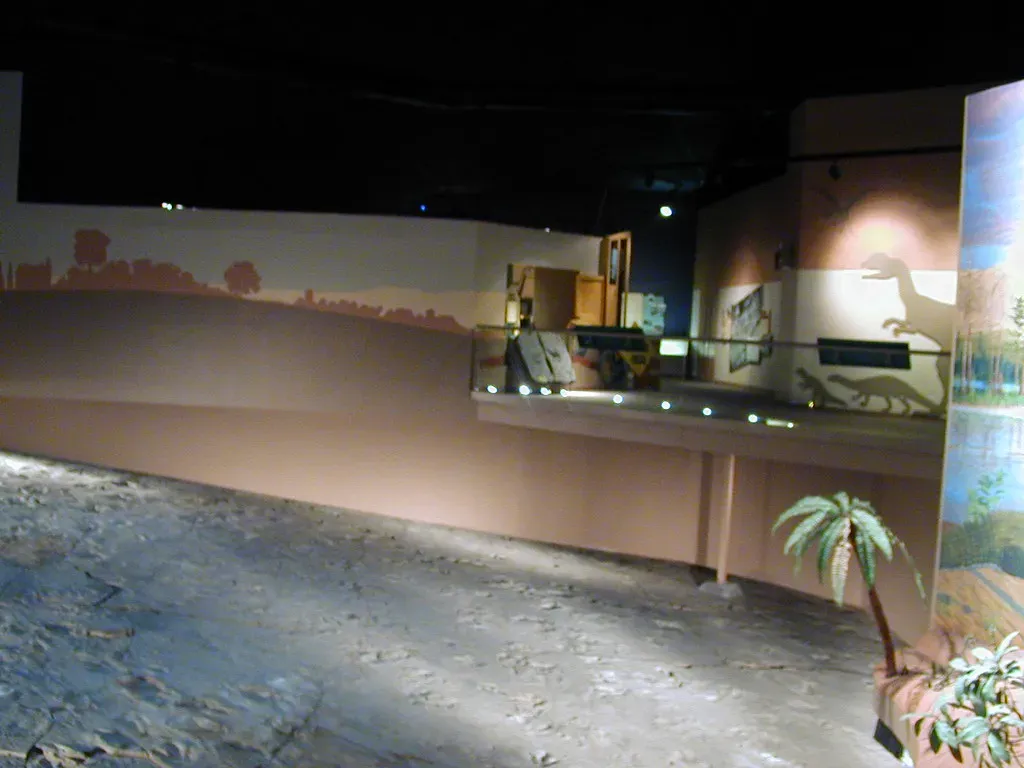
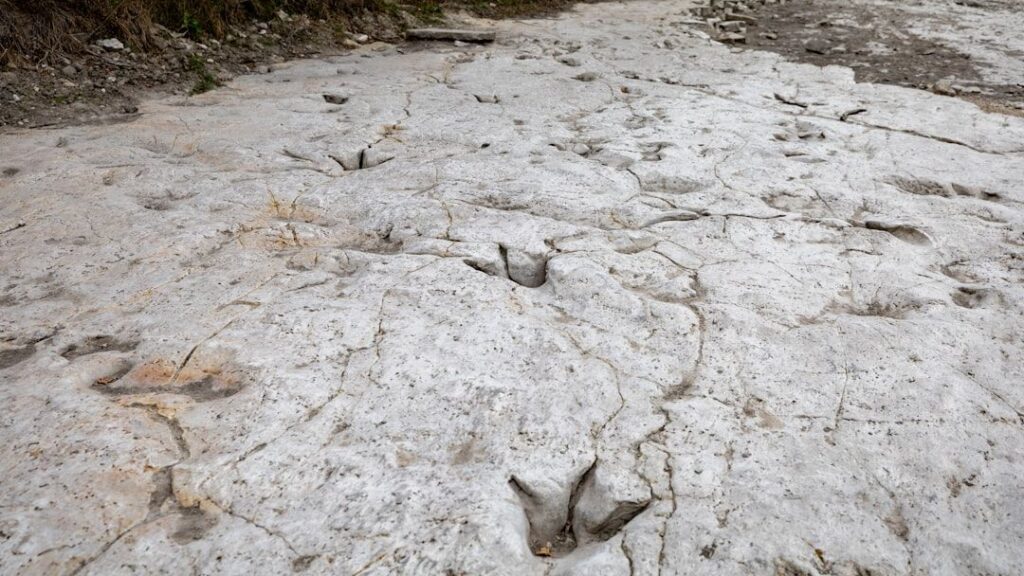
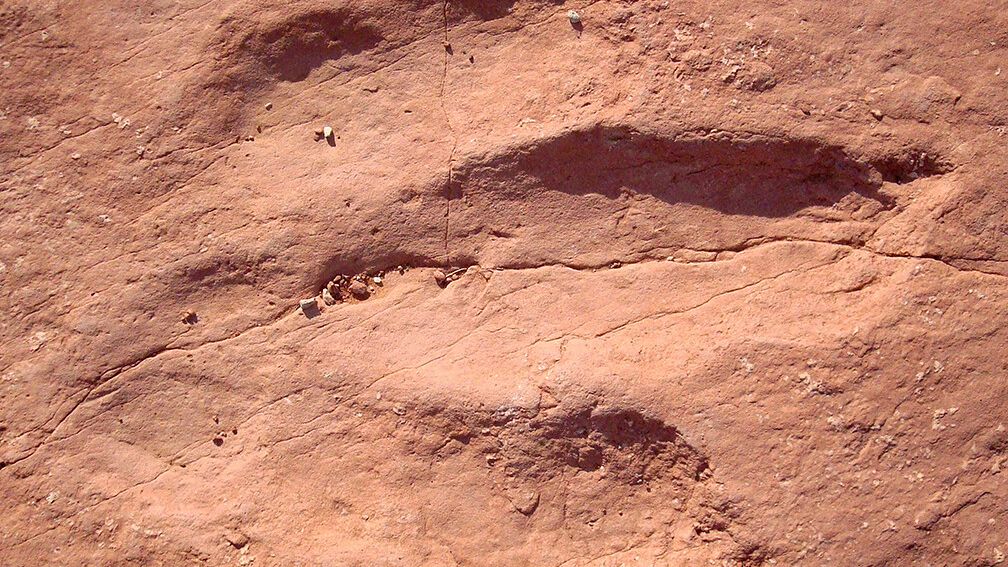
Here’s the thing about footprints – they’re not just evidence that a dinosaur existed. They’re a snapshot of a living moment, a creature in motion, making decisions, possibly traveling with others. Series of fossilized footprints, called trackways, reveal some intriguing evidence about dinosaur behavior and locomotion. Unlike bones, which can be swept far away by water and erosion long after death, tracks tell you exactly where a dinosaur was standing and what it was doing.
Collections of parallel tracks moving in the same direction suggest that some dinosaurs may have traveled in groups. One of the most remarkable examples of this is found along the ancient coastal plains of North America. Large herds of dinosaurs left trackways as they moved north and south along the coastal plain of the western shoreline of the Western Interior Seaway. This extensive series of track-rich coastal plain sediments is called the Dinosaur Freeway. The Dinosaur Freeway reveals about 80 tracksites in a single rock formation ranging from northern New Mexico to northern Colorado. Eighty tracksites. Honestly, that’s not a trail – that’s a prehistoric highway.
Fossilized Footprints That Captured a Hunt in Progress
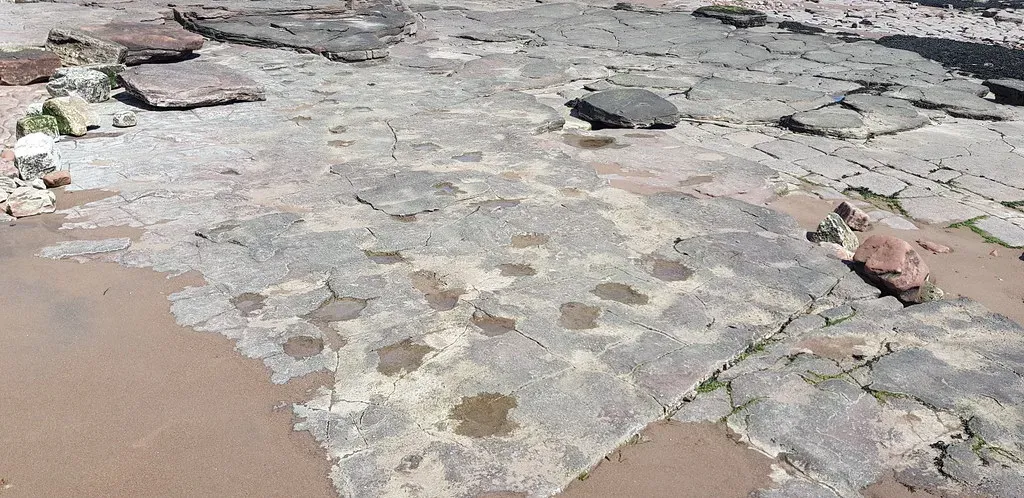
If you think a single set of dinosaur tracks is impressive, wait until you hear what happens when two sets of tracks intersect. Paleontologists uncovered something truly cinematic in the rock record. At first, the Theropod footprints run parallel to the Sauropod footprints, indicating the Theropod was stalking the Sauropod. The Theropod prints then get closer and closer to the Sauropod prints, until the Theropod attacked the Sauropod. Two consecutive right footprints suggest that the Theropod clung to its victim for a short distance, hopping on one leg. After the attack, the tracks indicate the Sauropod dragged its back right foot as if injured. That’s not a theory. That’s a crime scene.
Paleontologists can puzzle out what dinosaurs were doing when they made their tracks. Sometimes, the tracks reveal more information about dinosaur behavior than skeletal fossils can. Think about that for a second. A bone tells you what a dinosaur looked like. A trackway tells you what it was actually doing on a Tuesday afternoon, roughly 150 million years ago. The sauropod trackways parallel each other, suggesting that these dinosaurs traveled in herds. Meanwhile, the theropods are believed to be stalking (not attacking as previously thought) the traveling sauropods. The picture that emerges is strikingly similar to predator-prey dynamics you can watch on any modern wildlife documentary.
Bone Beds That Revealed Age Segregation and Social Structure
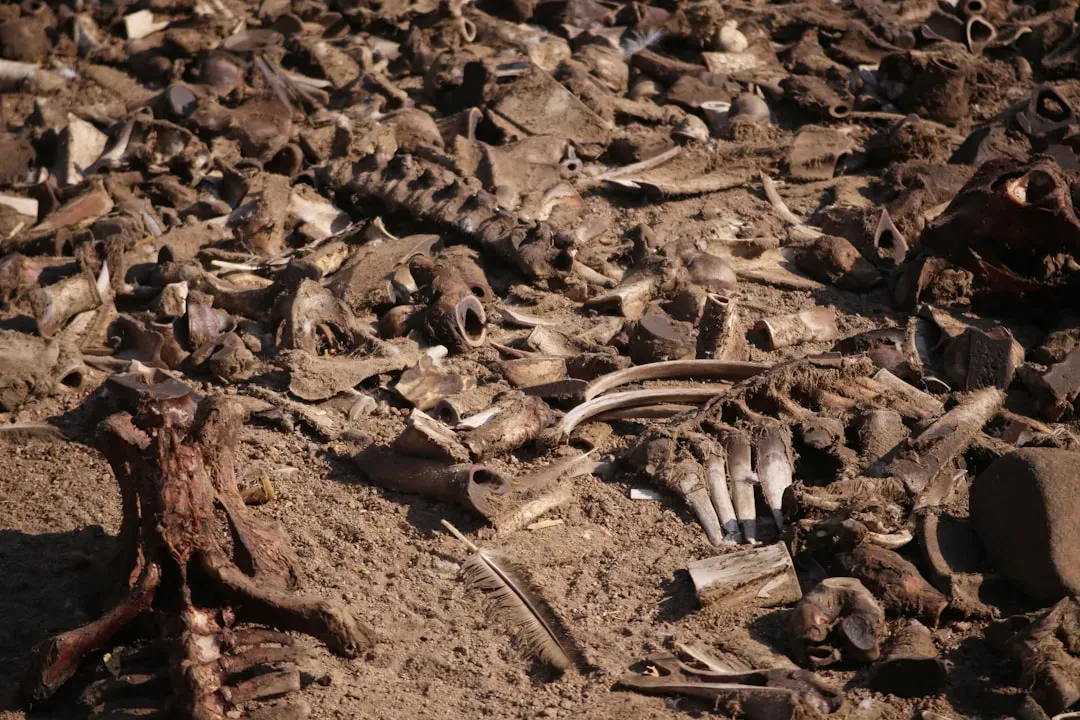
One of the most emotionally striking discoveries in modern paleontology came from Patagonia, Argentina – and it rewrote the timeline for social behavior in dinosaurs entirely. Researchers from MIT, Argentina, and South Africa detail their discovery of an exceptionally preserved group of early dinosaurs that shows signs of complex herd behavior as early as 193 million years ago – 40 million years earlier than other records of dinosaur herding. That’s not just surprising – that’s jaw-dropping. It pushes sophisticated social structure back to nearly the dawn of dinosaur history.
Researchers observed that the fossils were grouped by age: Dinosaur eggs and hatchlings were found in one area, while skeletons of juveniles were grouped in a nearby location. Meanwhile, remains of adult dinosaurs were found alone or in pairs throughout the field site. This “age segregation,” the researchers believe, is a strong sign of a complex, herd-like social structure. The young ones stayed together, and the adults foraged and kept watch. This means that multifamily groups got together not just for breeding and nesting but that they potentially formed life-long herds, more like today’s elephants or wildebeests. I think that comparison alone should permanently change how you picture dinosaurs in your mind.
Egg Mountain and What Nesting Grounds Told Us About Parental Care
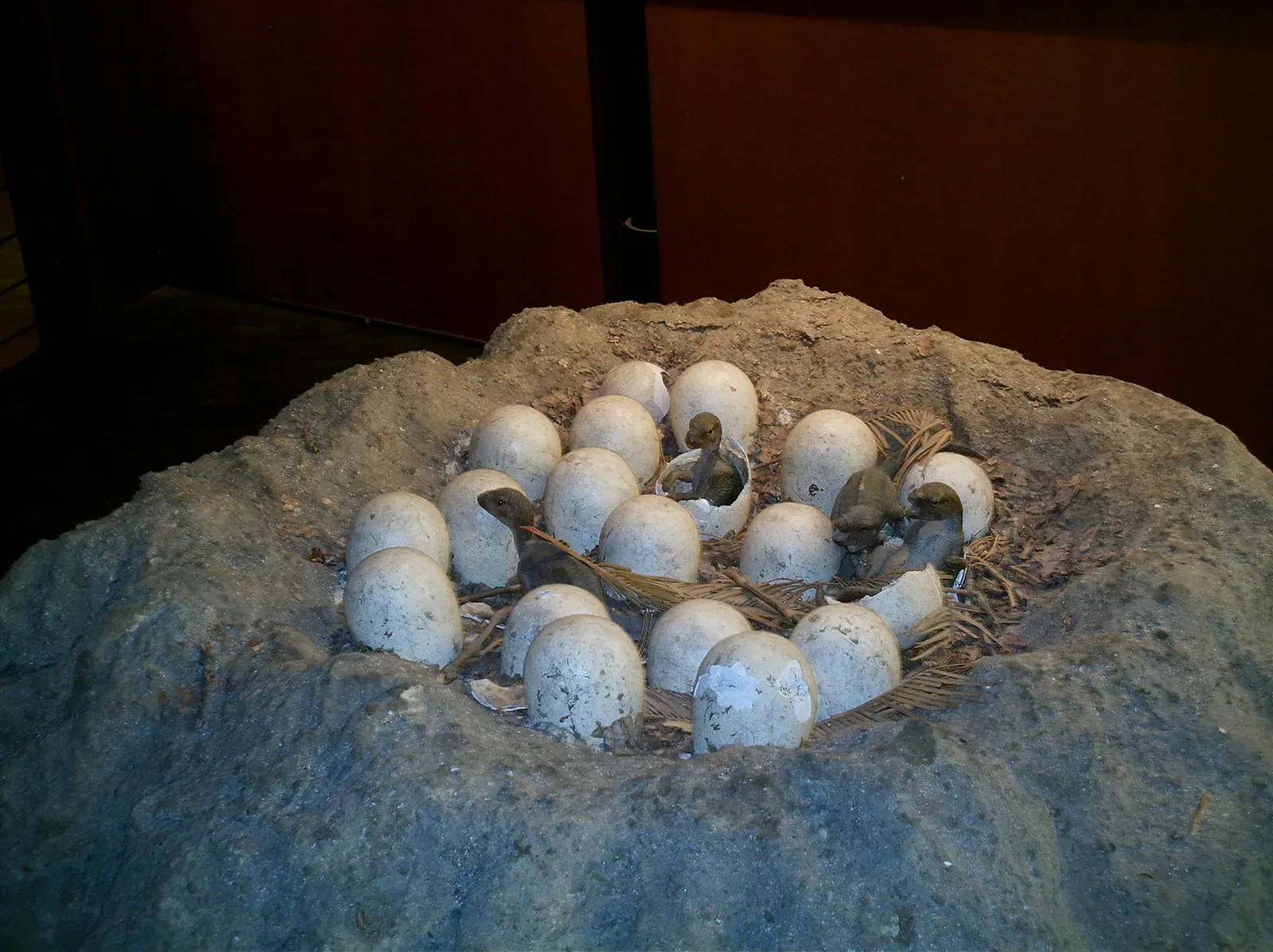
Before the 1970s and 1980s, the prevailing assumption was that dinosaurs were essentially reptilian in their parenting – lay the eggs, walk away, done. Then came a discovery in Montana that turned that assumption completely upside down. Egg Mountain supplied the first strong evidence that dinosaurs fed and cared for their young, and furthermore the first evidence that dinosaurs exhibited complex behaviors. The site, part of the Two Medicine Formation, was discovered in 1977, and it changed paleontology forever.
The discovery at Egg Mountain indicated that Maiasaura exhibited colonial nesting behavior, where large groups, likely herds, would all nest together in one area. After hatching, the adults may have actively cared for their young for a significant amount of time. What’s more, Horner and colleagues found evidence that the adult Maiasaura dinosaurs returned to the same nesting spot year after year, showing enough intelligence to remember the place and appreciate its favourable character. Their nests in the ground were spaced about seven metres apart, suggesting that like modern communally nesting birds, they liked to be close – but not so close that they would bite and bicker. You’ve got to admit – that’s genuinely relatable.
Coprolites: What Fossilized Dung Locked Away About Dinosaur Diets
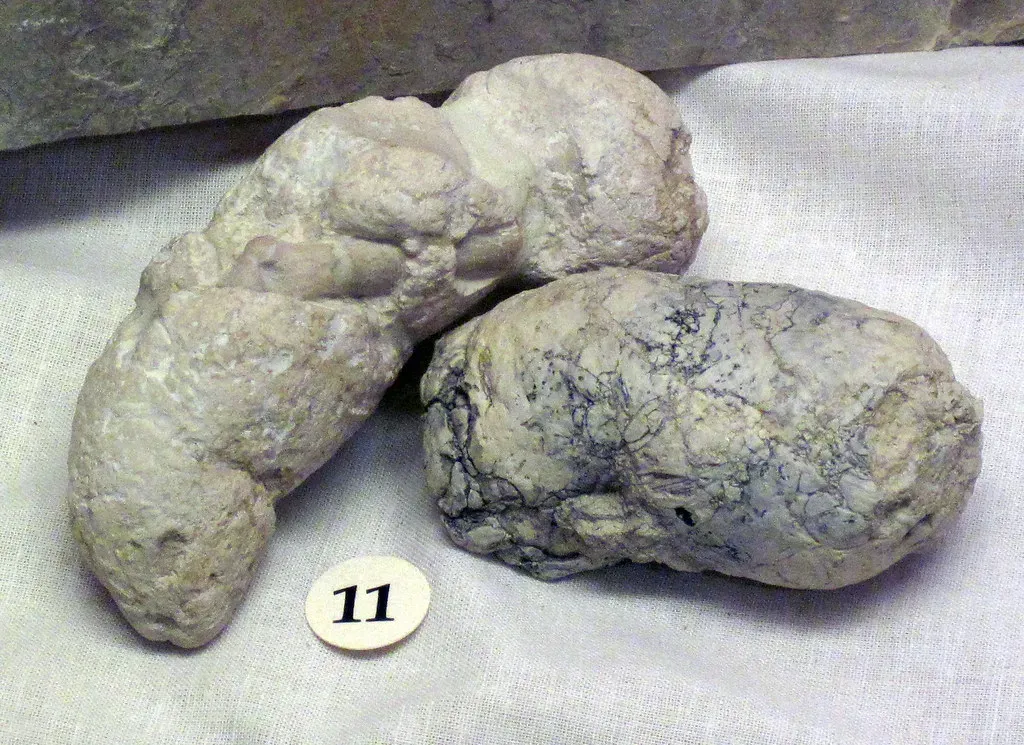
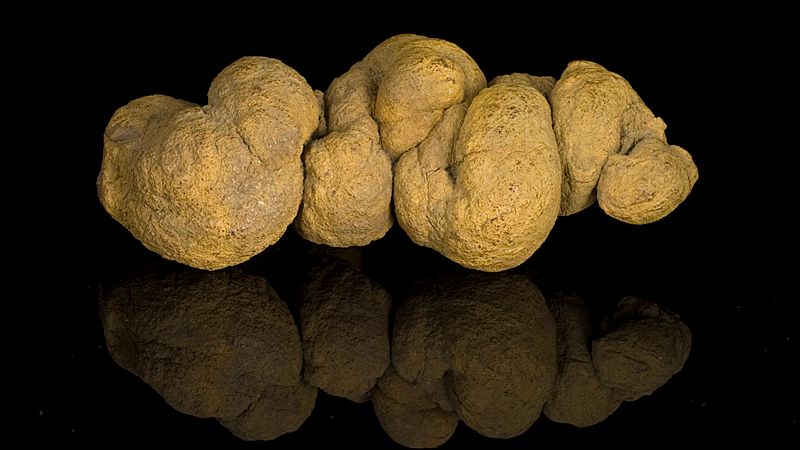
Okay, let’s be real – “fossilized poop” is not exactly the stuff of museum glamour. Yet coprolites, as they are scientifically called, are arguably among the most informative fossils ever studied. They serve a valuable purpose in paleontology because they provide direct evidence of the predation and diet of extinct organisms. You can study a T. rex skull all day, but its dung will tell you things its bones never could.
Tyrannosaurs, instead of being dainty eaters that picked meat from the bone like some scientists had hypothesized, gobbled up their prey, bone and all. It’s a conclusion researchers could make after finding bone shards and undigested meat in their coprolites. It gets even wilder when you look at the herbivores. The contents of coprolites from the first large herbivorous dinosaurs, the long-necked sauropods, surprised the researchers. These contained large quantities of tree ferns, but also other types of plants, and charcoal. The paleontologists hypothesize that charcoal was ingested to detoxify stomach contents, as ferns can be toxic to herbivores. In other words, some giant plant-eaters may have been using charcoal as a kind of ancient antidote – a natural detox strategy millions of years before humans thought of anything similar.
Rock Type and Sediment Structure as Environmental Behavior Maps
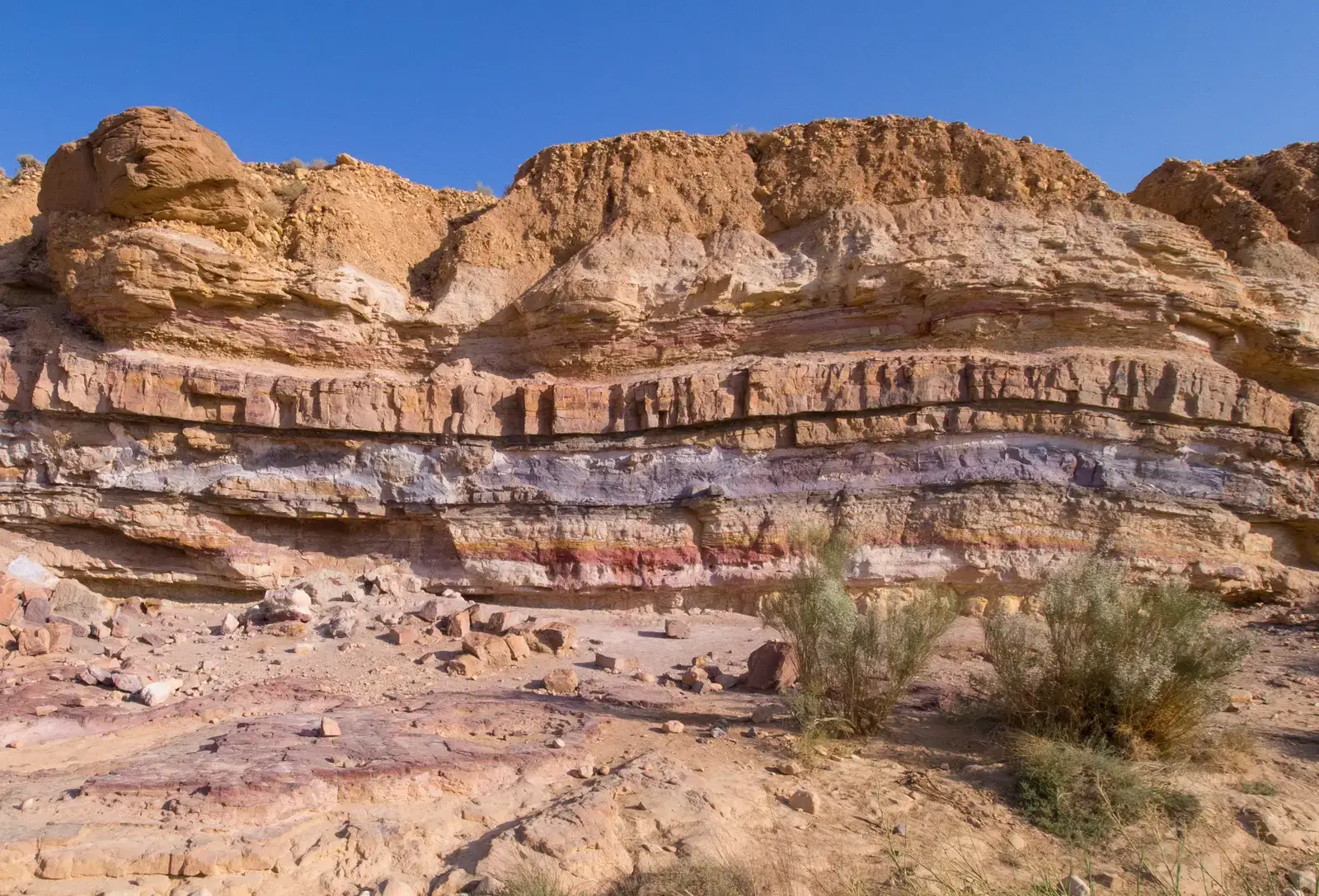
It’s hard to say for sure, but one of the most underappreciated clues in any rock formation isn’t the fossil itself – it’s the rock surrounding it. The types of rocks in an area give us clues as to whether the ancient environment was once an ocean shoreline, a shallow lake, a field of sand dunes, or another type of habitat. The rock becomes a behavioral map, showing you where a dinosaur chose to live, where it went to drink, and what kind of terrain it preferred.
Putting the sedimentary structure and rock type together allows you to reconstruct the paleoenvironment. For example, a set of dinosaur tracks found associated with the impressions of halite (rock salt) indicates that the dinosaur was walking in an arid environment. Think about that like reading a footprint in snow – the snow tells you it was cold, the direction tells you where the animal was going, and the depth tells you how heavy it was. The rock does all of that, just over millions of years instead of a winter morning. The type of rock in which a fossil is found, along with associated plant fossils, pollen, or other animal remains, paints a picture of the ancient environment – was it a forest, a swamp, a desert, or a coastal plain? This helps us understand the ecosystems these dinosaurs inhabited.
CT Scanning Rocks to Find Hidden Behaviors Inside Fossils
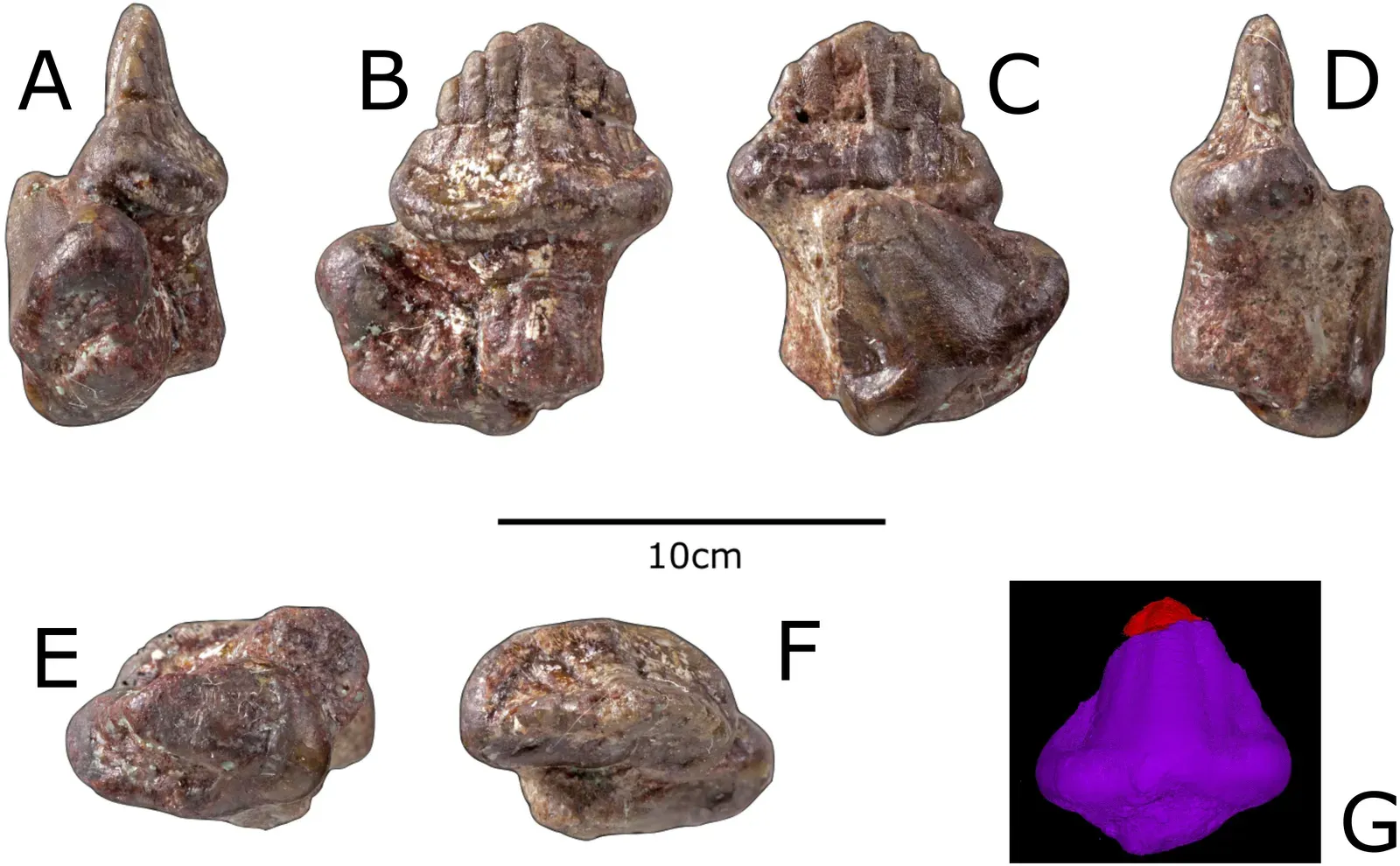
You might think that discovering behavioral clues in rock means physically digging them out. Increasingly, that’s not the case at all. Modern technology has given paleontologists something almost miraculous: the ability to look inside fossils without ever cracking them open. Today, in addition to patience and sharp observation skills, paleontologists employ new technologies to solve unanswered questions about dinosaurs and other fossils. Advanced imaging technology, such as CT scans, allow paleontologists to see the three-dimensional structure of fossils, often without having to remove the matrix.
In 2026, this exact approach led to a stunning discovery in South Korea. Scientists uncovered a rare baby dinosaur on Aphae Island and named it Doolysaurus. Using cutting-edge CT scans, they discovered hidden bones, including a skull, inside rock much faster than traditional methods. The young dinosaur, possibly fluffy and lamb-like, even had stomach stones that reveal it ate a mix of plants and small animals. Those stomach stones, called gastroliths, are themselves a behavioral clue. Inside the fossil, scientists also found dozens of gastroliths, small stones that the dinosaur swallowed to help digest food. These stones suggest the animal had an omnivorous diet that included plants, insects, and small animals. A fluffy, lamb-like dinosaur with a diverse diet, discovered inside solid rock using technology that didn’t even exist a few decades ago. Science really is something else.
Conclusion
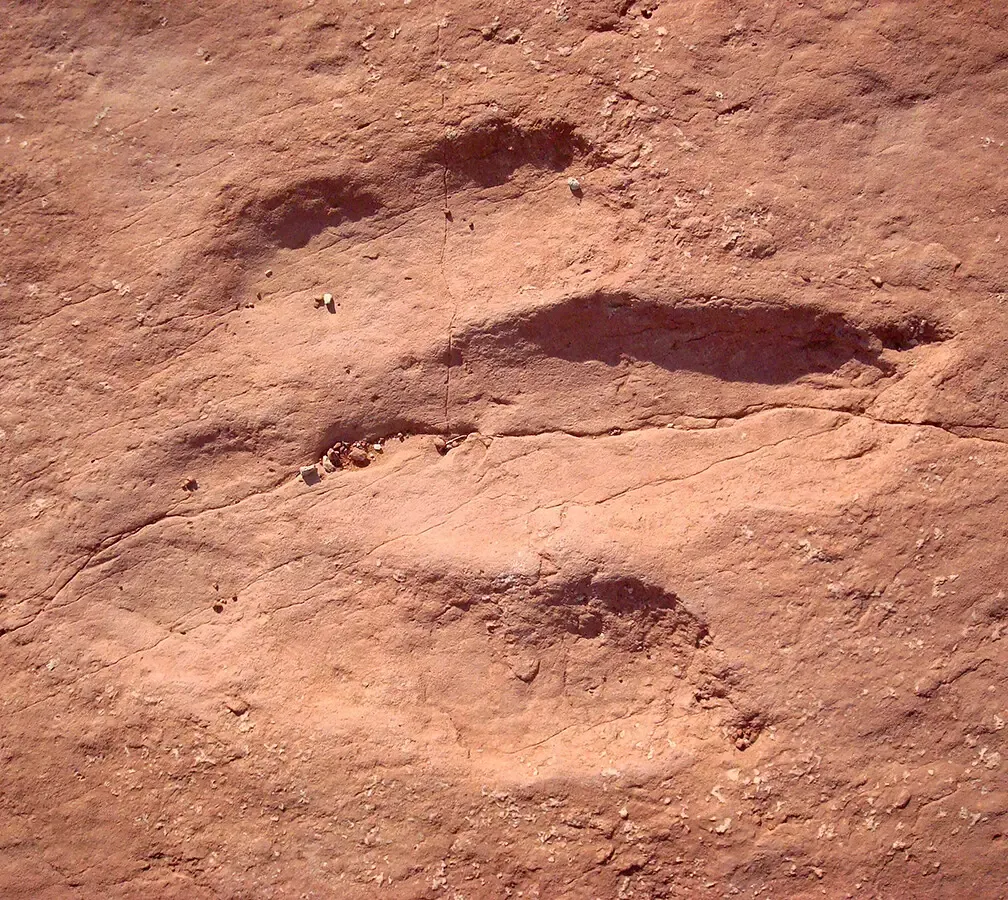
What makes all of this so extraordinary is not just what was found, but where it was found – locked inside ordinary-looking rock, waiting patiently across millions of years. Every trackway, every bone bed, every fossilized dropping is essentially a message in a bottle from deep time. Ichnofossils can teach us a lot about prehistoric ecosystems that body fossils simply can’t. The rocks don’t just preserve what dinosaurs looked like. They preserve how they lived.
From mixed-species herding to parental care, from coordinated hunts to ancient detox diets, the behavioral complexity of dinosaurs keeps exceeding our expectations. Dinosaur tracks provide a snapshot of when these animals roamed across our planet. They are direct evidence of how an individual was behaving at a specific moment in time. Every time researchers look more carefully at a rock formation, they tend to find that these animals were more nuanced, more social, more clever than we ever imagined.
The Earth itself is the archive. You just have to know how to read it. What behavior clues do you think are still waiting to be discovered? Tell us in the comments.