When you picture the Age of Dinosaurs, your mind probably goes straight to towering sauropods, razor-toothed predators, and a world dominated by scales and size. That’s understandable. For most of us, dinosaurs were the headliners, the rock stars of deep time. What you might not realize is that a completely different story was unfolding right beneath their enormous feet, one that would ultimately shape the entire future of life on Earth.
Hundreds of millions of years before you and I arrived, a group of small, furry, largely unremarkable creatures were quietly pulling off one of the greatest biological coups in history. You wouldn’t have given them a second look. Yet these animals, the earliest mammals, were laying the evolutionary groundwork for every dog, whale, bat, and human that would ever exist. Let’s dive in.
The World You Would Have Found Yourself In: The Mesozoic Stage
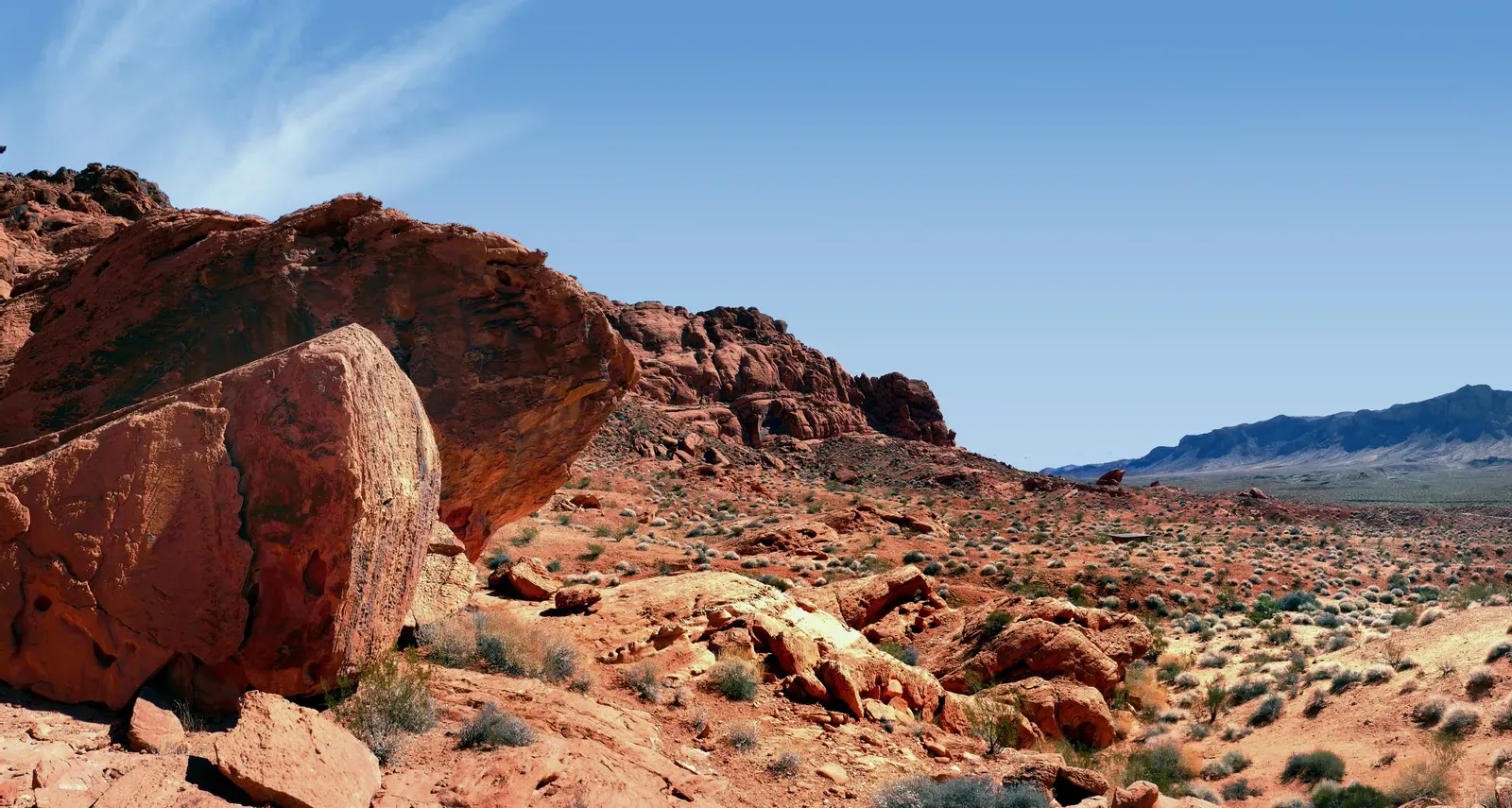
If you could step back in time to roughly 230 million years ago, you would find yourself in a world almost unrecognizable. The Mesozoic was a time of significant tectonic, climatic, and evolutionary activity, with the supercontinent Pangaea in the process of breaking apart into separate landmasses. The very ground under your feet would have been shifting, the oceans reshaping themselves, and the continents drifting apart like slow-motion puzzle pieces.
The Mesozoic is commonly known as the Age of the Dinosaurs because the terrestrial animals that dominated both hemispheres for the majority of it were dinosaurs. Yet tucked quietly into this world of giants was something extraordinary in the making. The first mammals also appeared during the Mesozoic, but would remain small, less than 15 kilograms, until the Cenozoic. Honestly, if you were grading these early mammals on appearance alone, they would have scored terribly. Tiny. Scurrying. Unremarkable. But looks can be devastatingly deceiving.
Your Ancient Relatives: The Synapsid Origins Before the Dinosaurs
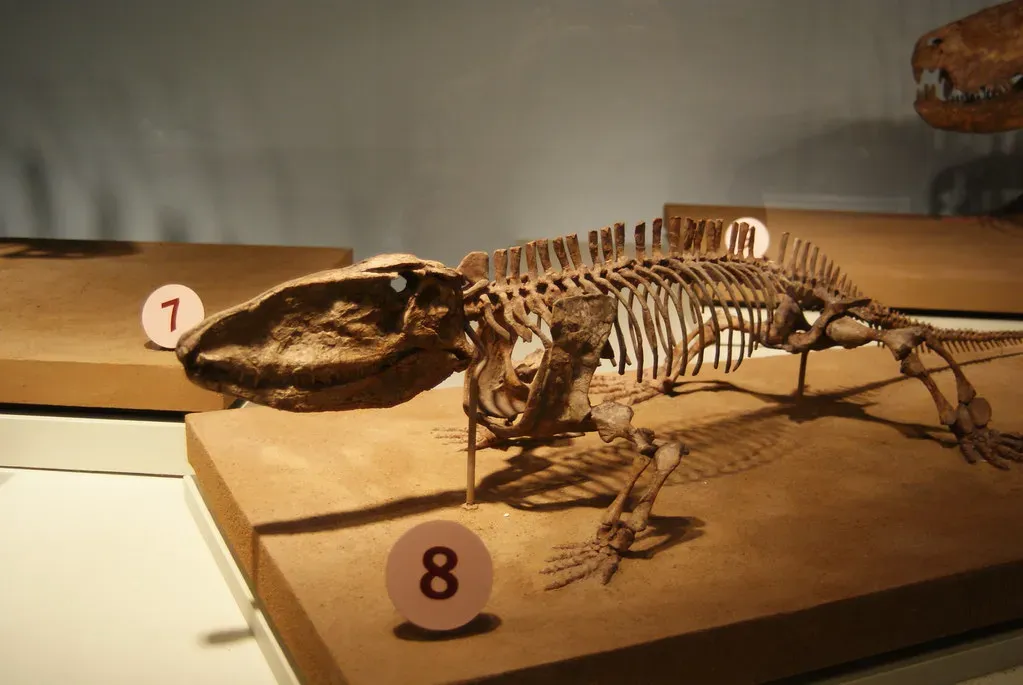
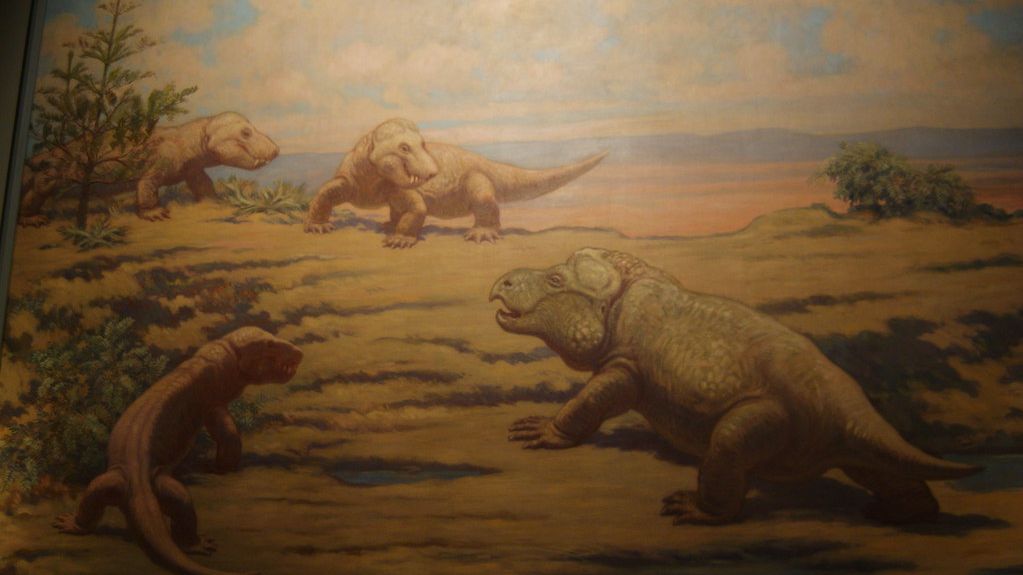
The evolution of mammals passed through many stages since the first appearance of their synapsid ancestors in the Pennsylvanian sub-period of the late Carboniferous period. Think of synapsids as the deep family tree you never learned about in school. They were not dinosaurs, not reptiles exactly, but something in between, an evolutionary bridge stretching hundreds of millions of years.
The Mesozoic mammals were themselves the culmination of a long, evolving lineage of more reptile-like forms called synapsids, as revealed by an extraordinarily good fossil record. The first synapsids lived about 320 million years ago and are distinguished by only a few characters from other rapidly diversifying tetrapods in the warm, humid climate of the time. Your lineage, in other words, is far older than most people ever suspect. Long before a single dinosaur walked the Earth, your ancestors were already out there, surviving, adapting, and quietly diversifying.
When Mammals First Appeared Alongside the Dinosaurs
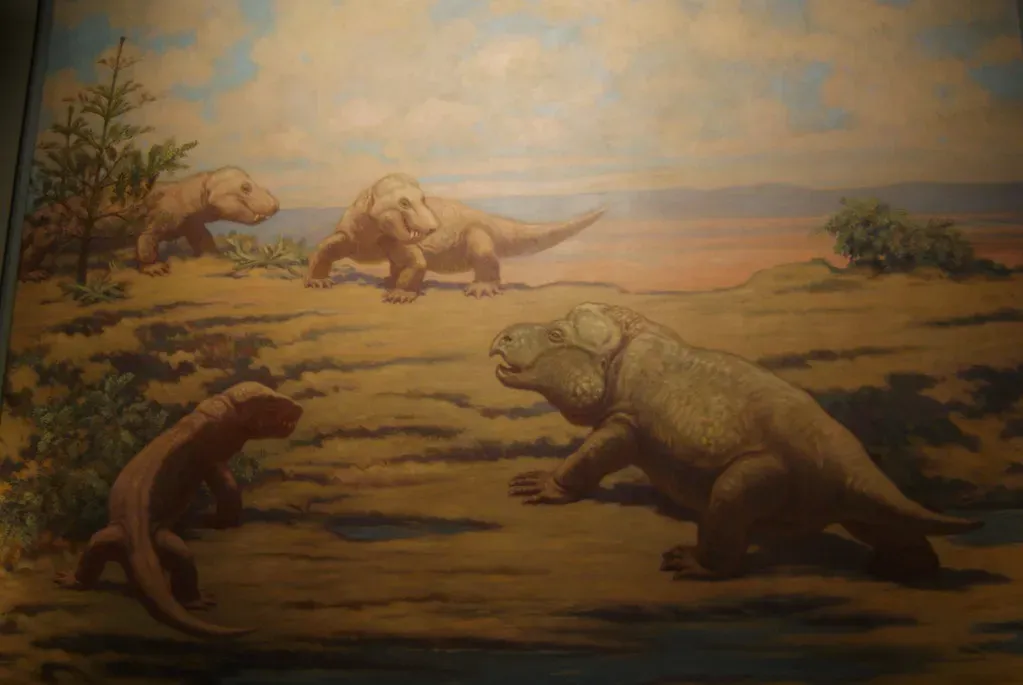
During a period of high evolutionary activity the first dinosaurs appeared slightly earlier than 230 million years ago, closely followed by the first mammals only a few million years later. Those early mammals were small in size and were presumably nocturnal insectivores. Let’s be real here. Arriving just a few million years after the dinosaurs is like moving into a neighborhood right after the loudest, most territorial family on the block has already set up shop. You keep your head down. You stay small.
The end of the Triassic saw the appearance of the first mammals, tiny, fur-bearing, shrewlike animals derived from reptiles. They were not able to compete for the main ecological niches with the dinosaurs and other reptile groups, which became the dominant vertebrates on land, in the sea, and in the air over the course of the following 175 million years. It’s tempting to see this as failure. In reality, it was the smartest survival strategy in the history of vertebrate life.
The Night Shift: How Darkness Shaped Everything You Are
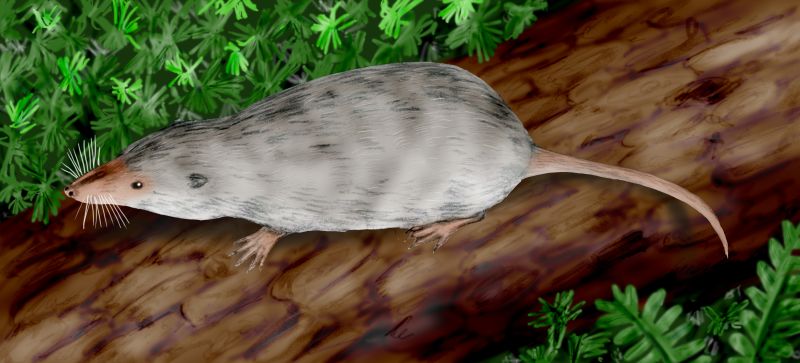
Mesozoic mammals may have been “children of the night.” The phylogenetic distribution of behavior, of specialized eye pigments, and of pupil shape strongly suggests that the ancestor of all mammals was nocturnal. You owe a surprising amount of your biology to darkness. Your ability to hear faint sounds, your emotional brain, your sensitivity to smell. All of it was forged during long, silent nights beneath a Jurassic sky.
The mammaliaforms appeared during this period; their superior sense of smell, backed up by a large brain, facilitated entry into nocturnal niches with less exposure to archosaur predation. Conversely, mammaliaforms’ success in these niches may have prevented archosaurs from becoming smaller or nocturnal themselves. The nocturnal lifestyle may have contributed greatly to the development of mammalian traits such as endothermy and hair. Think about that for a moment. Being forced to hide in the dark for tens of millions of years essentially built the warm-blooded, sharp-sensed, big-brained creature you are today. Adversity, it turns out, is an extraordinary sculptor.
Surprising Diversity: You Would Not Believe What Early Mammals Could Do
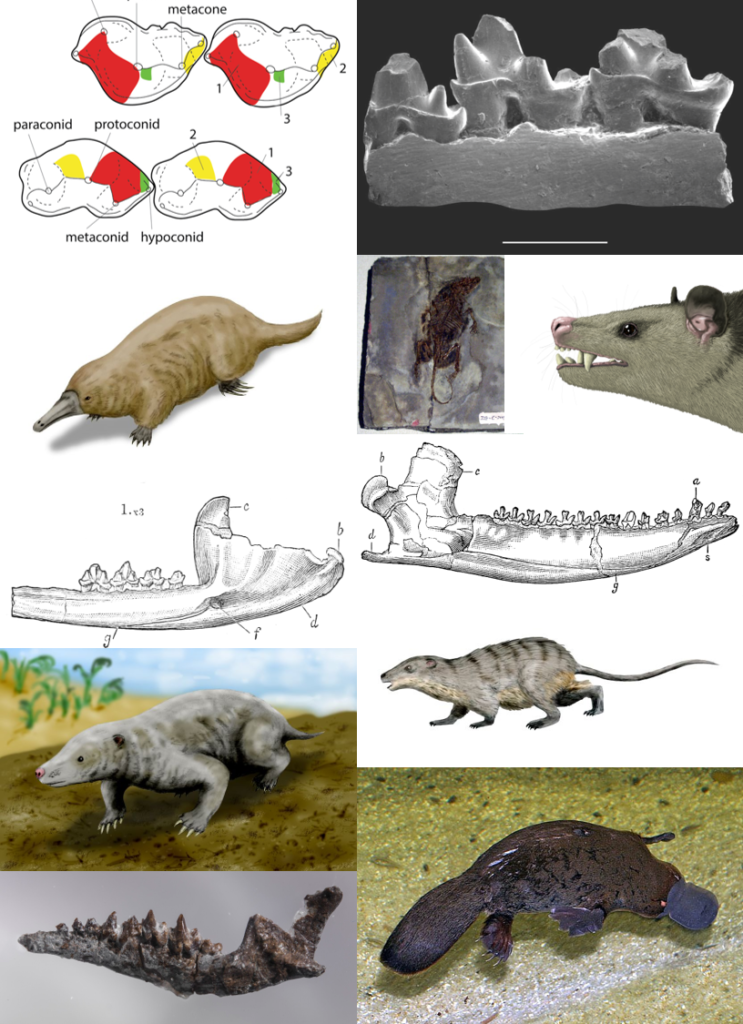
Here is the thing that surprises almost everyone. Early Mesozoic mammals were not all the same timid, shrew-like creatures hiding under ferns. There were tree-climbers like Agilodocodon, diggers like Docofossor that resembled moles, web-footed and beaver-tailed swimmers like Castorocauda, and gliders like Volaticotherium and Vilevolodon that glided between trees on their wings of skin. It’s almost mind-blowing to picture. You essentially had a miniature version of today’s mammals, already diversifying into all kinds of ecological roles, all while dinosaurs were stomping about overhead.
Later in the Mesozoic, after theropod dinosaurs replaced rauisuchians as the dominant carnivores, mammals spread into other ecological niches. It has become clear that the Jurassic and Cretaceous forests, hills and plains teemed with mammals, much as they do today, except that they were all small-bodied, the great majority under one kilogram and very few indeed exceeding the size of a Virginia opossum or red fox. Small body size was not a limitation. It was the ultimate advantage, a tiny key that unlocked an enormous diversity of ecological doors.
Repenomamus and the Moment a Mammal Ate a Dinosaur
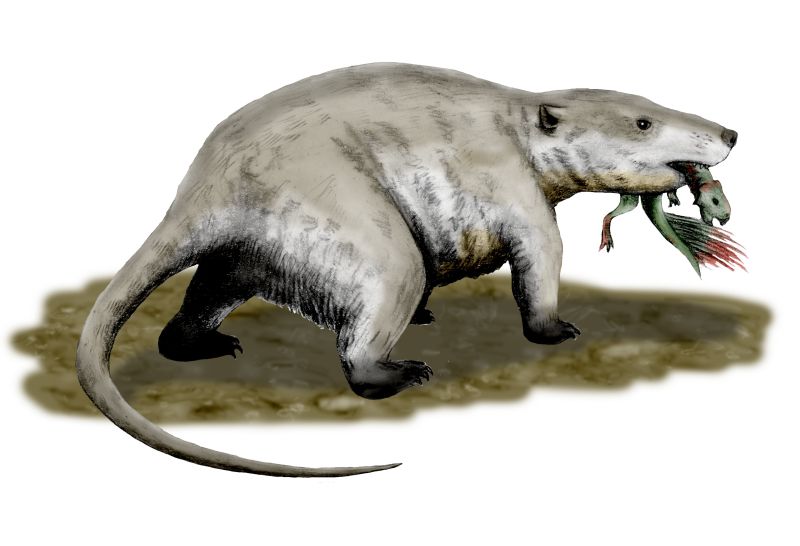
I know it sounds crazy, but there was a mammal that actually hunted and ate dinosaurs. Repenomamus is a genus of eutriconodonts, a group of early mammals with no modern relatives. The known adult of R. giganticus had a body length of 68.2 centimetres and a total length over one meter, with an estimated mass of 12 to 14 kilograms. For the Mesozoic, that was enormous by mammal standards. Think of it as the badger that refused to be intimidated.
Features of the teeth and jaw suggest that Repenomamus was carnivorous, and a specimen discovered with the fragmentary skeleton of a juvenile Psittacosaurus preserved in its stomach represents direct evidence that at least some Mesozoic mammals were carnivorous and fed on other vertebrates, including dinosaurs. In fact, Repenomamus was larger than several small sympatric dromaeosaurid dinosaurs like Graciliraptor. The next time someone tells you mammals were just passive bystanders during the dinosaur era, you can bring up this glorious, stomach-fossil proof to the contrary.
The Three Great Lineages: What You Carry Forward from the Mesozoic
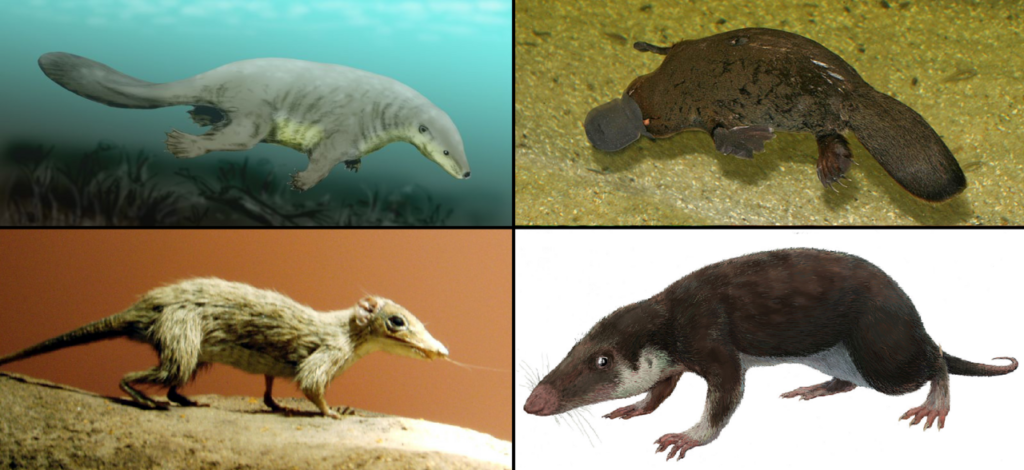
Major steps in mammalian evolution took place during the Mesozoic era, including the evolution of today’s three main groups of mammals: the monotremes (egg-laying mammals), the marsupials (pouched mammals), and the placentals. You belong to one of these lineages, and it emerged during the very era that dinosaurs ruled. Your connection to the Mesozoic is not just historical. It is biological and deeply personal.
The lineage leading to today’s mammals split up in the Jurassic; synapsids from this period include Dryolestes, more closely related to extant placentals and marsupials than to monotremes, as well as Ambondro, more closely related to monotremes. The eutherian and metatherian lineages later separated, with metatherians more closely related to marsupials, and eutherians more closely related to the placentals. Since Juramaia, the earliest known eutherian, lived 160 million years ago in the Jurassic, this divergence must have occurred in that same period. The branching of your own family tree, in other words, happened while T. rex’s ancestors were still evolving. That is a remarkable, humbling thought.
Conclusion: The Quiet Revolution That Made You Possible
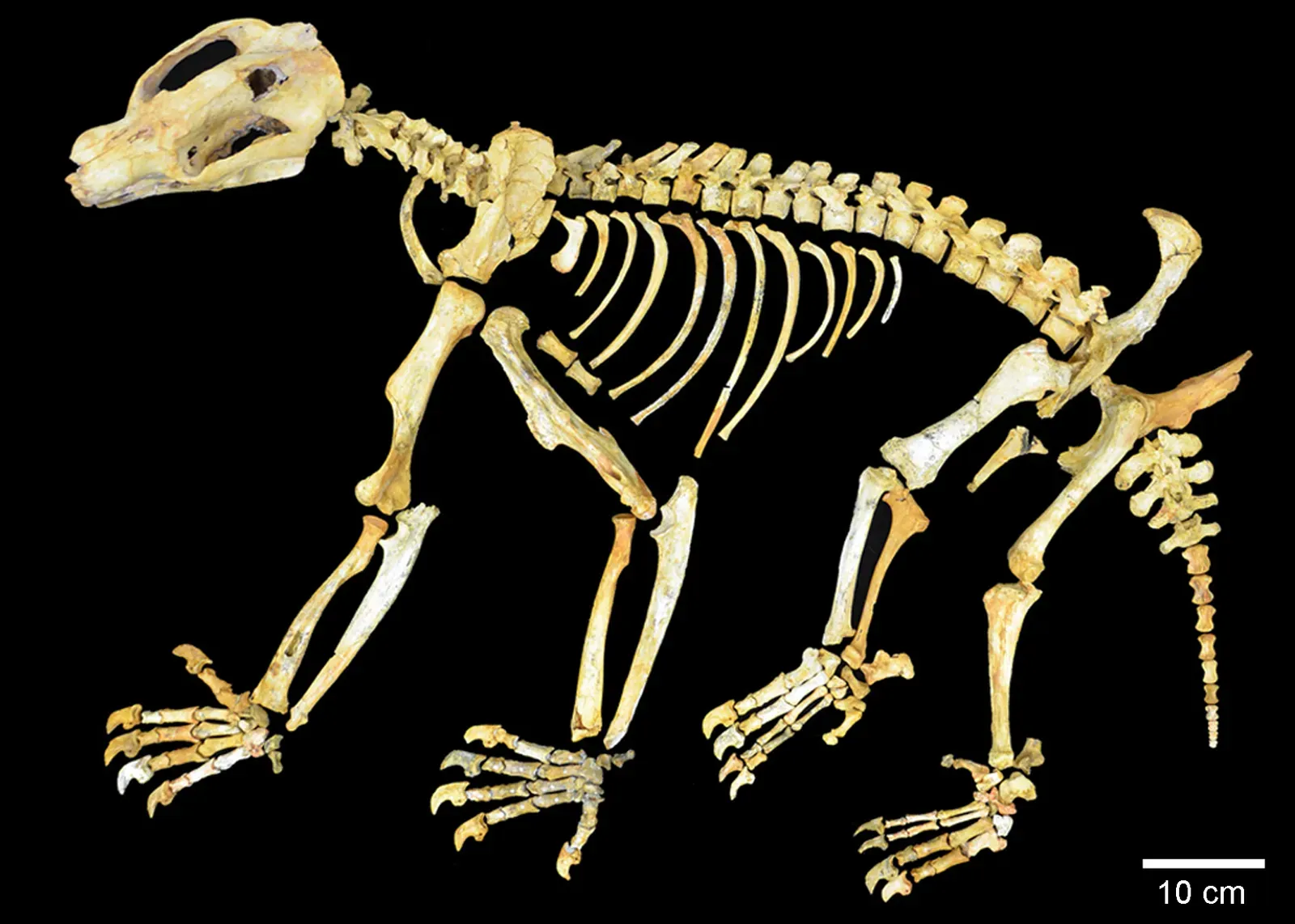
The story of mammalian evolution during the Age of Dinosaurs is one of the most breathtaking examples of biological patience and resilience in all of natural history. While the dinosaurs commanded every headline, your ancestors were busy in the shadows, perfecting hearing, growing bigger brains, learning to regulate their own body heat, and quietly expanding into ecological niches that no one else wanted. This spectacular radiation of mammals over the last 66 million years was only the final one-third of a history we can trace all the way back to 200-million-year-old fossilised mammals of uppermost Triassic age.
The new lack of competition and environmental pressures the dinosaurs once posed allowed mammals to evolve and ascend the food chain. They quickly became bigger, faster, and stronger, which eventually allowed them to prioritize brains over brawn. Every mammal alive today, from a blue whale to a bumblebee bat, from a chimpanzee to you reading this right now, carries the legacy of that long, quiet revolution. The next time you feel overlooked or underestimated, remember this: the animals that quietly endured 165 million years of living in the shadow of giants eventually inherited the Earth. What does that make you think about the power of persistence?