Everything you thought you knew about dinosaurs might need a serious update. Over the past couple of years, paleontology has entered what many researchers are calling a golden era, where discoveries are piling up faster than scientists can fully process them. New fossils, smarter technology, and bolder questions are rewriting chapters that were once considered closed.
New fossils, reanalyses of famous specimens, and increasingly sophisticated tools have continued to upend what we thought we knew about how these animals lived, moved, fed, and evolved. Some discoveries have filled in long-missing gaps in the fossil record, while others forced researchers to confront the uncomfortable reality that a few long-held assumptions were simply wrong. Honestly, it is a thrilling time to be paying attention to prehistoric life. Let’s dive in.
1. Dinosaurs Did Not Originate Where We Thought
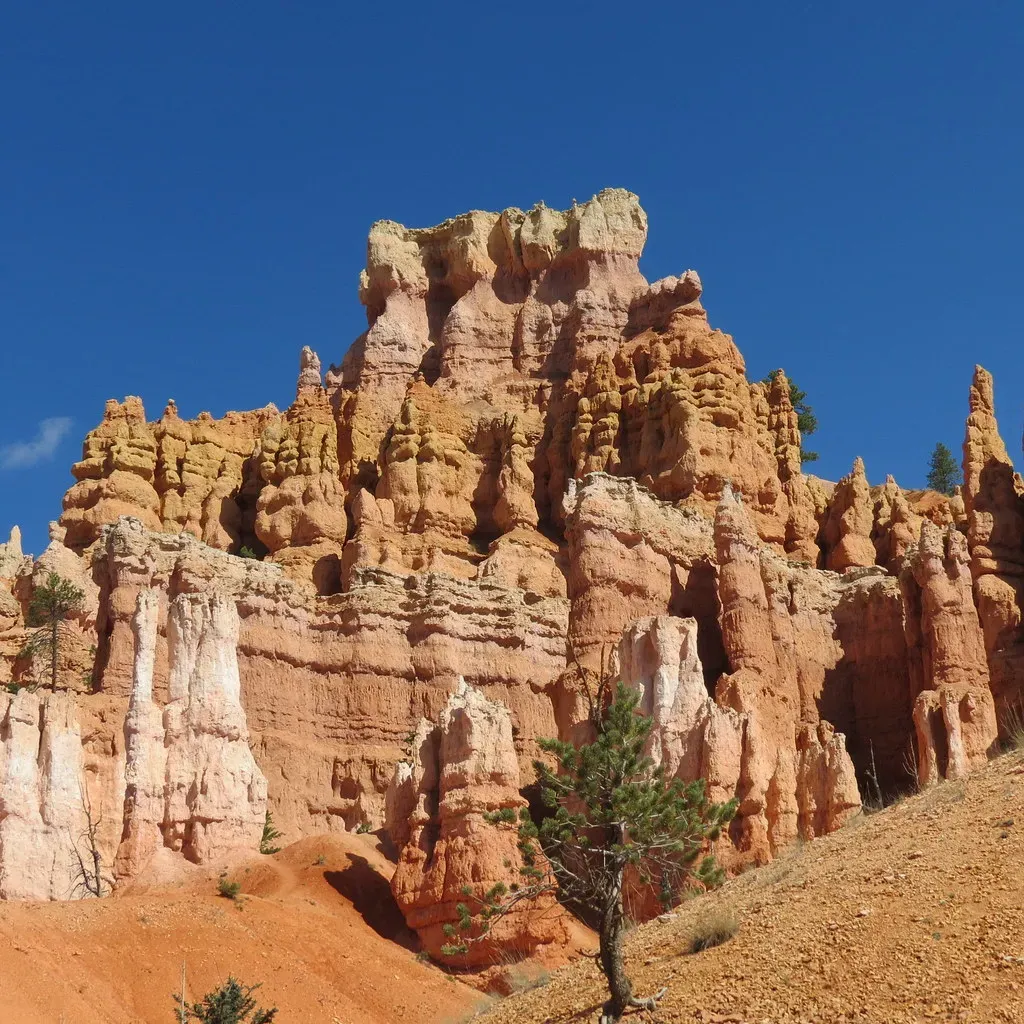
For decades, most paleontologists pointed to the cooler, higher-latitude regions of the ancient supercontinent as the most likely birthplace of dinosaurs. That assumption has now been flipped on its head. A new study published in the journal Current Biology accounted for gaps in the fossil record and concluded that the earliest dinosaurs likely emerged in a hot equatorial region in what was then the supercontinent Gondwana, an area of land that today encompasses the Amazon, the Congo Basin, and the Sahara Desert.
A research team from University College London proposed a new model that accounts for sampling bias in the fossil record, suggesting that early dinosaurs evolved in hot, arid, low-latitude Gondwana rather than the previously assumed cold, high-latitude regions. This theory suggests that dinosaurs were originally heat-tolerant and later acquired endothermy, allowing them to expand into colder regions. Think of it like a desert plant that slowly adapts to survive in colder climates after spreading out. The implications for how we understand dinosaur adaptability are enormous.
2. T. rex Had a Smaller, Distinct Rival – And It Changes Everything
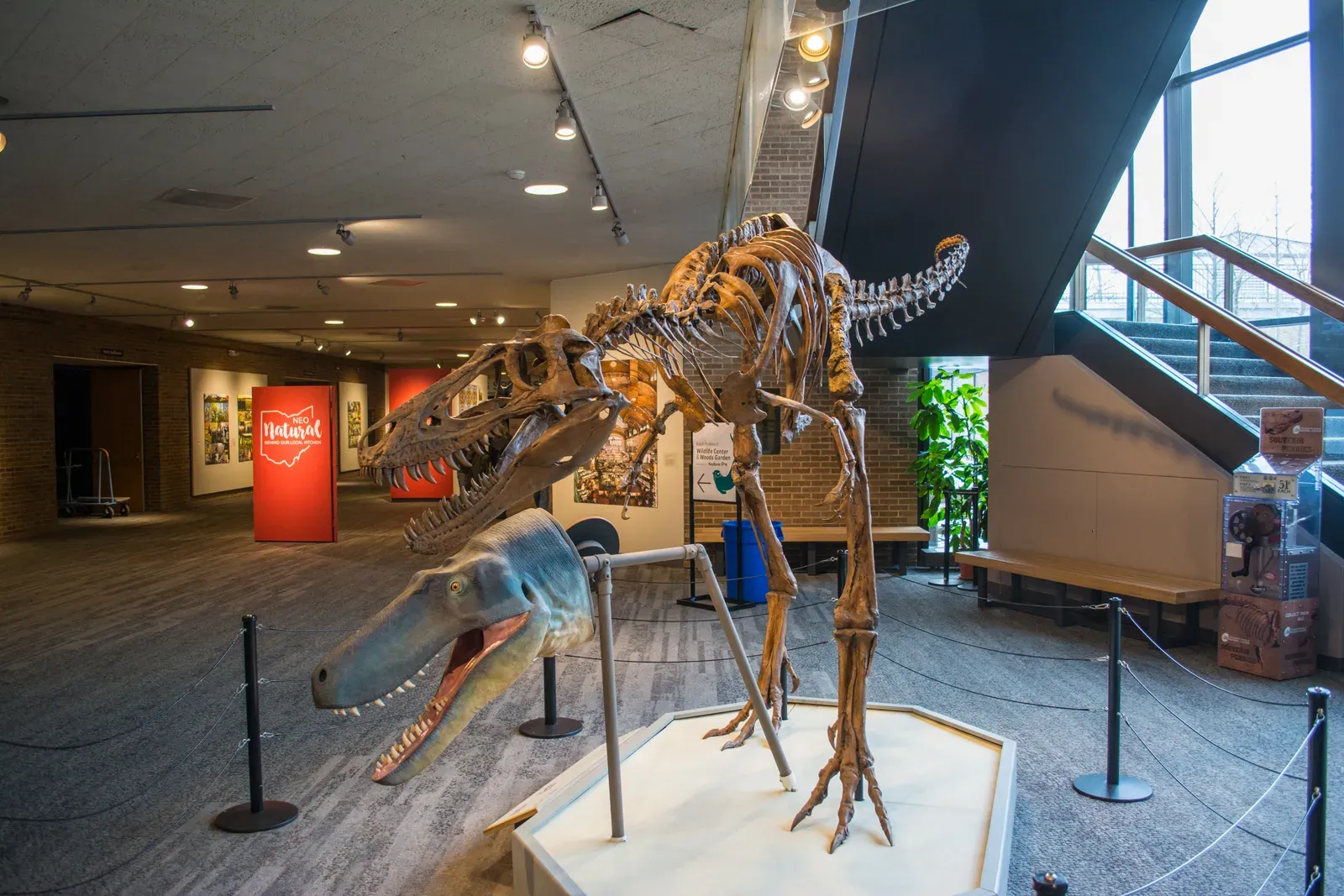
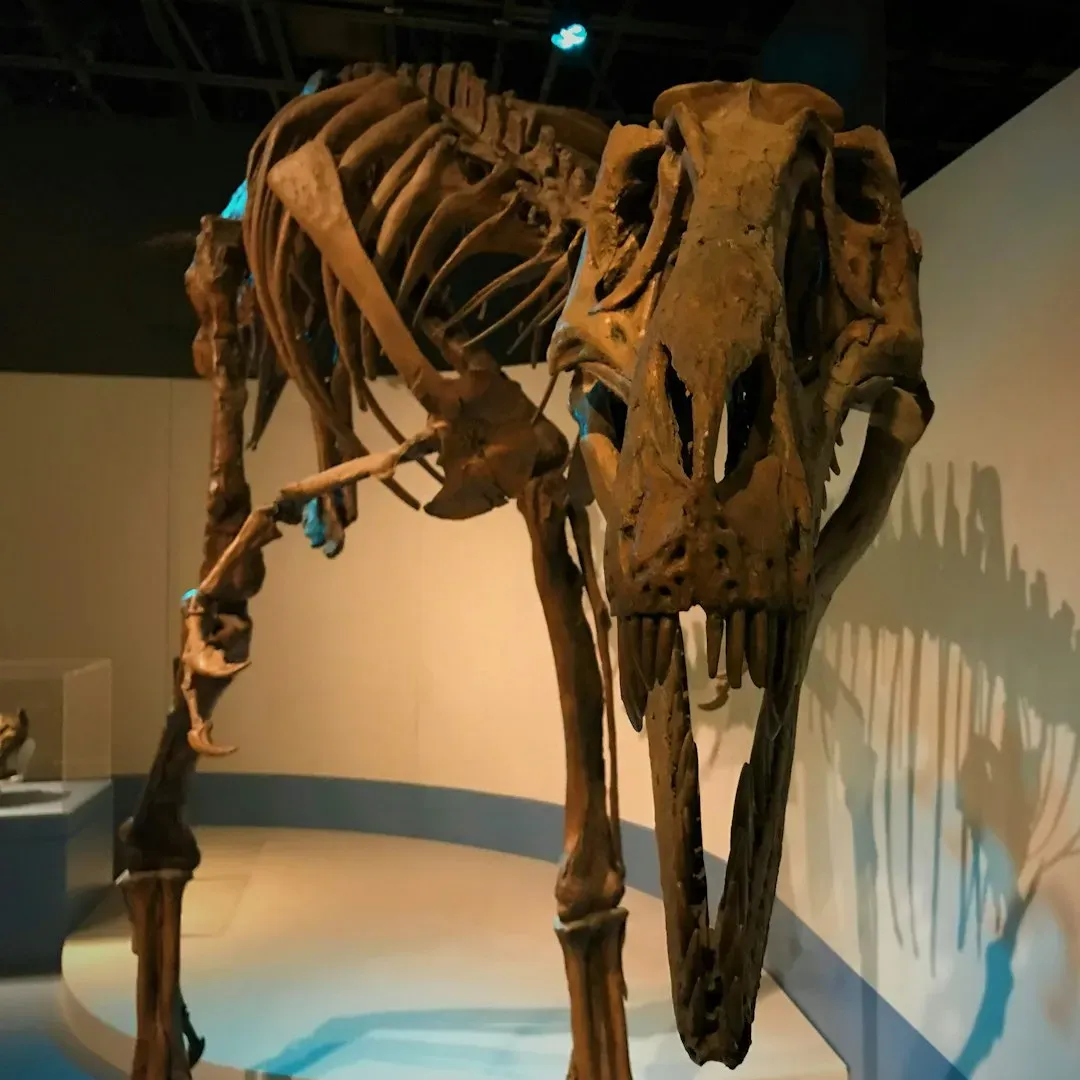
Few debates in paleontology have been as heated as the question of whether Nanotyrannus was a real species or simply a juvenile T. rex. The answer, it now seems, is far more interesting than anyone expected. An analysis in Nature of a specimen nicknamed “Bloody Mary,” one of two creatures in an assemblage known as the “Dueling Dinosaurs,” found enough anatomical evidence to support the case that Nanotyrannus is different from T. rex, including fewer tail vertebrae and more teeth, as well as longer and stronger forearms.
The recent findings follow a 2024 paper that found more than 150 differences between disputed Nanotyrannus specimens and fossils of T. rex. A second study in Science, from different researchers, came to the same conclusion based on the fact that the first skull to be named Nanotyrannus appears to be a mature animal and not a juvenile. The find will cause paleontologists to reconsider how T. rex grew up and how both predatory species coexisted. Two apex predators sharing the same territory? That rewrites Late Cretaceous ecology in ways researchers are still untangling.
3. Tyrannosaur Evolution Involved Multiple Cross-Continental Migrations
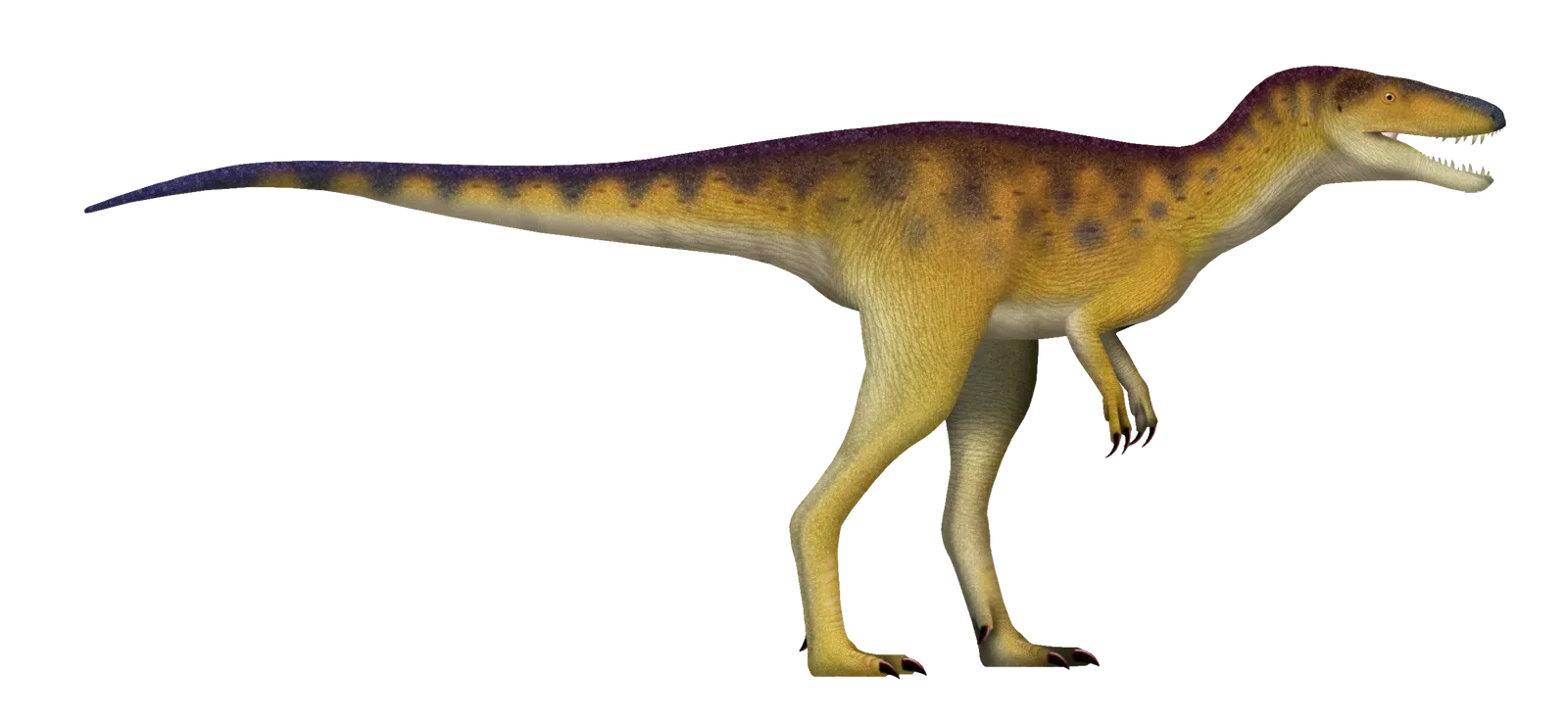
You probably grew up thinking of T. rex as a purely North American icon. The reality is far more globetrotting. Named Khankhuuluu, which roughly translates to “dragon prince,” this small carnivore lived about 86 million years ago in what is now the Gobi Desert. The study of the dinosaur, published in Nature, details multiple tyrannosaur migrations millions of years apart. Khankhuuluu was part of a burst of tyrannosaur evolution that led to slender, agile creatures crossing into prehistoric North America around 85 million years ago. Some of those tyrannosaurs then crossed back into Asia, evolving into new forms and eventually giving rise to the iconic T. rex.
Khankhuuluu is considered a “missing link” between the small, agile early ancestors of tyrannosaurids and the giant apex predators like T. rex. It did not yet possess the powerful jaws and bone-crushing ability seen in later tyrannosaurids. It had a more slender skull and razor-like teeth and is thought to have been a medium-sized predator that hunted with speed and agility. This discovery provides an important window into the process by which tyrannosaurids evolved, and suggests this evolution may have been accelerated by ecosystem-wide changes such as the extinction of other large predators. In other words, the tyrant king earned its crown through millions of years of intercontinental wandering and fierce competition.
4. Sauropod Dinosaurs Were Colorful, Not Dull and Gray
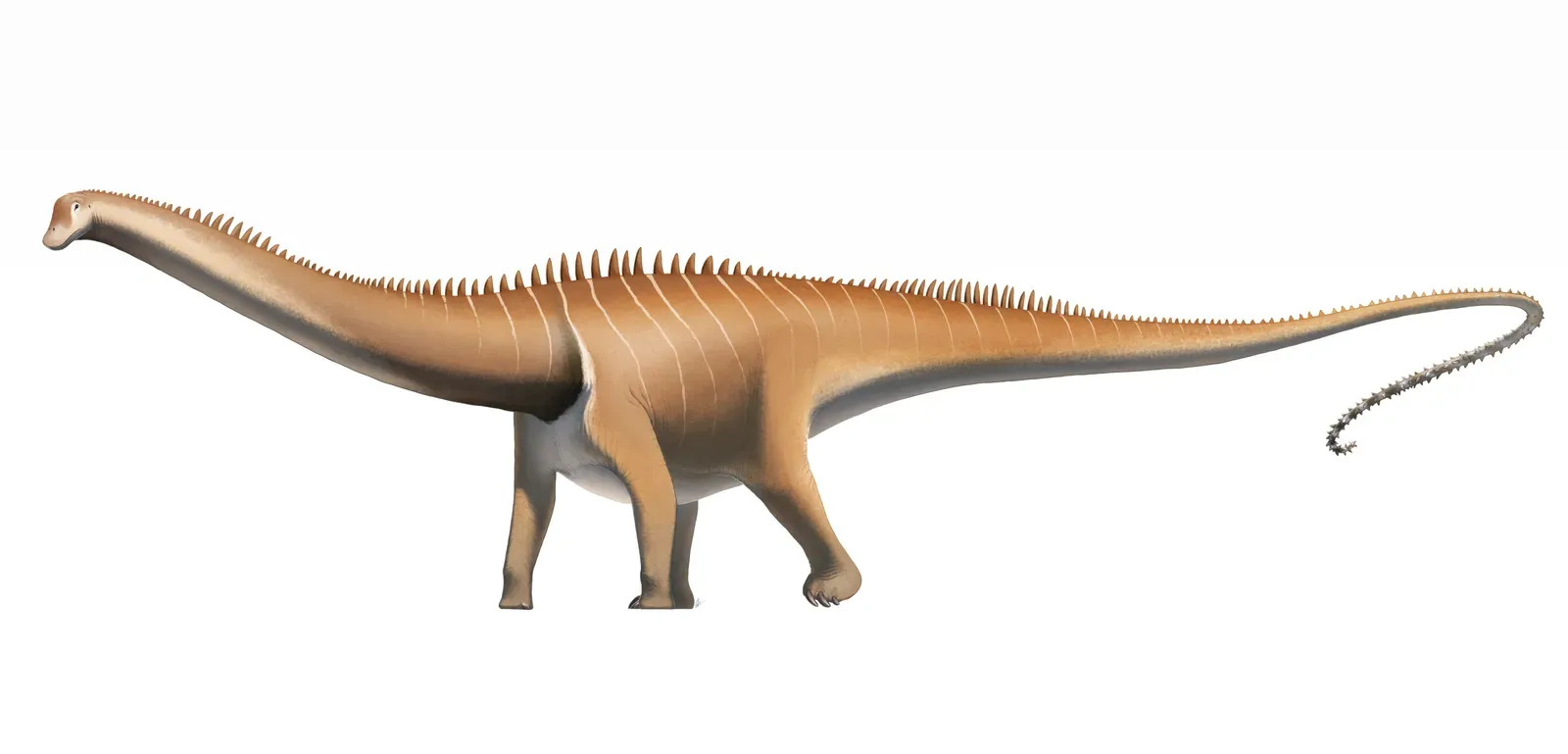
Pop culture has always painted giant sauropods as enormous, lumbering, grayish beasts. Let’s be real – that image may now belong firmly in the fiction bin. Microscopic clues found in fossil Diplodocus skin indicate these dinosaurs were colorful. Sauropod dinosaurs are iconic herbivores, immediately recognizable by their small heads, long necks, and bulky bodies. Beyond their familiar skeletons, the external appearance of these dinosaurs has not been well known because sauropod skin impressions and soft tissue fossils are very rare. From the Jurassic rocks of Montana’s Mother’s Day Quarry, however, paleontologists uncovered fossils of sauropod skin so delicately preserved that they include impressions of pigment-carrying structures called melanosomes.
Some other dinosaur fossils with melanosomes preserved in their scales or feathers have been reconstructed in color. While this team was reluctant to fully reconstruct the juvenile Diplodocus in color, the researchers detected that the dinosaur would have had conspicuous patterns across its scales. The finding suggests sauropod dinosaurs were not uniformly gray or brown, but had complex color patterns like other dinosaurs, birds, and reptiles. This is a reminder that nature has almost always preferred spectacle over blandness. Imagine those massive creatures shimmering with patterned scales as they moved across ancient floodplains.
5. Dinosaur Gigantism Evolved Through Multiple Independent Pathways
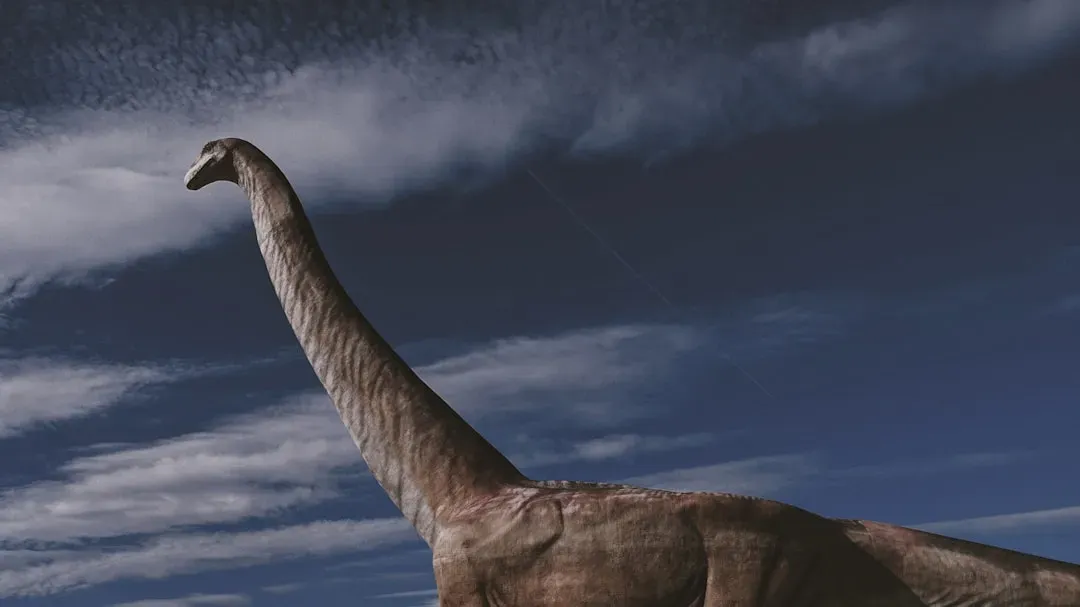
Here’s something that I think genuinely surprises most people: getting enormous was not a single, shared evolutionary trick. Different dinosaur lineages appear to have invented bigness on their own, each in their own way. Research published in 2025 compared the microstructure of appendicular bones in non-avian dinosaurs and large-bodied mammals, interpreting it as indicating that gigantism was achieved through divergent evolutionary pathways in the two groups. It’s a bit like how both birds and bats evolved wings, but through completely different anatomical routes.
Around 66 million years ago, two types of long-necked, four-legged dinosaurs stood out from other sauropods. They had the ability to rise up on their hind legs and stay upright for extended periods. This posture likely helped them reach leaves high in trees and may have made them look larger and more intimidating to predators. The Brazilian Uberabatitan and the Argentine Neuquensaurus were roughly the size of modern elephants. Even though considered small compared to other sauropods, adult Uberabatitans may have reached lengths of up to 26 meters. However, their ability to remain upright for long periods appears to have been limited to younger individuals. The idea that even “small” sauropods could rear up on two legs is nothing short of spectacular.
6. Dinosaurs Were Still Thriving Right Before the Asteroid Hit
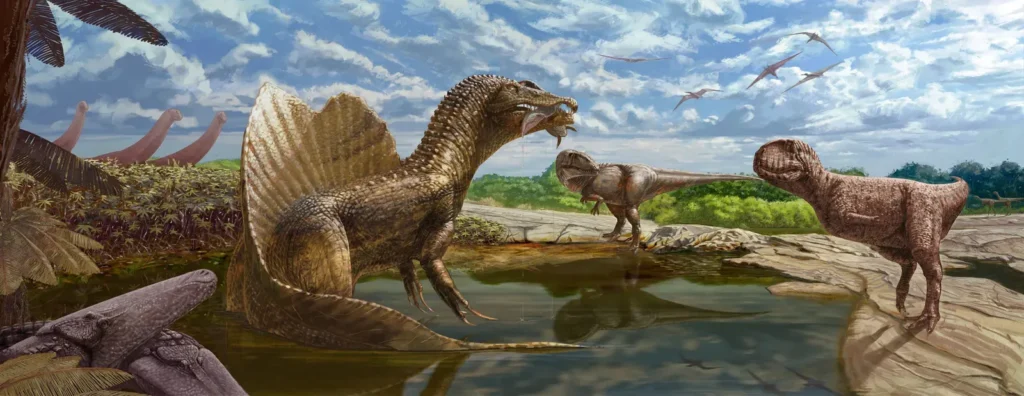
For years, a popular narrative suggested that dinosaurs were already in decline long before that fateful asteroid arrived 66 million years ago. Recent evidence is aggressively pushing back against that idea. Fossil evidence indicates that dinosaurs were not dying out before the asteroid hit – they were thriving in vibrant, diverse habitats across North America. Fossil evidence from New Mexico shows that distinct bioprovinces of dinosaurs existed until the very end.
Researchers at University College London published findings suggesting that the decline in dinosaur diversity at the end of the Cretaceous was not a biological decline, but rather a bias in the fossil record caused by geological fluctuations. This suggests that if the asteroid had not struck, dinosaurs might have continued to thrive, adding a new perspective to a long-standing debate. The conventional fossil record indicated that the number of dinosaur species peaked around 75 million years ago and then declined over the 9 million years leading up to the asteroid impact. However, the research team concluded that this decrease in fossils was caused by a reduction in the exposure of fossil-bearing rocks from the era before the asteroid impact. In short, the asteroid did not finish off a dying dynasty – it cut down a living one at its peak.
7. A Tiny Dinosaur Is Forcing a Rethink of Plant-Eater Evolution
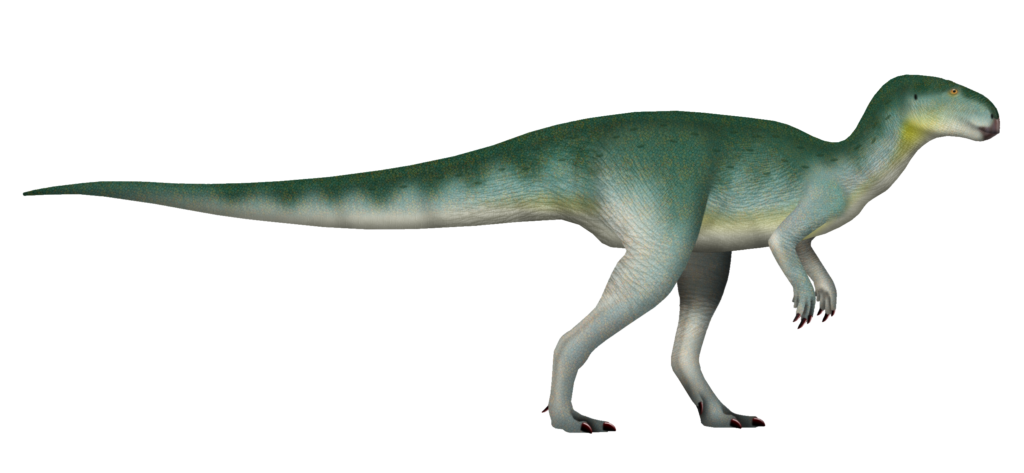
Sometimes the biggest revelations come in the smallest packages. The newly identified dinosaur Foskeia pelendonum is reshaping what scientists thought they understood about how plant-eating dinosaurs evolved and grew. A tiny, overlooked wrist bone called the pisiform may have played a pivotal role in bird flight and it turns out it evolved far earlier than scientists believed. A newly identified tiny dinosaur, Foskeia pelendonum, is shaking up long-held ideas about how plant-eating dinosaurs evolved. Though fully grown adults were remarkably small and lightweight, their anatomy was anything but simple, featuring a bizarre, highly specialized skull and unexpected evolutionary traits. Detailed bone studies show these dinosaurs matured quickly with bird- or mammal-like metabolism, while their teeth and posture hint at fast, agile lives in dense forests.
An international research team identified this new dinosaur species, Foskeia pelendonum, a tiny plant-eating dinosaur that lived during the Early Cretaceous in what is now Vegagete in Burgos, Spain. At just about half a meter long, Foskeia ranks among the smallest known ornithopod dinosaurs. It’s hard to say for sure just how many other small species have been overlooked in museum drawers for decades, but discoveries like Foskeia suggest the answer might be “quite a lot.”
8. Cross-Species Herding Behavior Is Rewriting Dinosaur Social Life
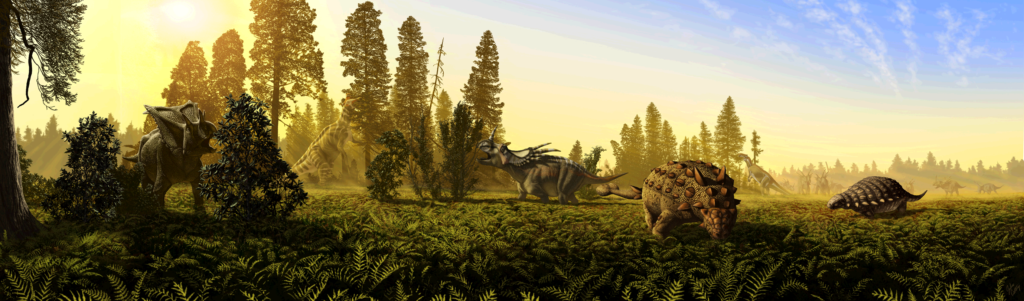
The social lives of dinosaurs were far more complex than the lone-predator, isolated-herd images that dominate popular imagination. One of the most fascinating recent developments involves evidence of entirely different dinosaur species actively choosing to travel and shelter together. Fossil footprints of a mixed herd of ceratopsians and ankylosaurs were discovered in Dinosaur Provincial Park in Canada. The most logical inference is that species with different sensory and defensive mechanisms could increase the overall survival rate of the herd by cooperating. This is considered evidence that ceratopsians and ankylosaurs engaged in complex social behavior. The discovery of tyrannosaurid footprints nearby strongly supports this hypothesis.
Dinosaurs, once considered solitary creatures, are now understood to have engaged in complex social behaviors. New studies have provided insights into the social behavior of dinosaurs, including evidence of herd behavior, parental care, and even potential cooperative hunting. Researchers have also explored how dinosaurs may have communicated with each other using vocalizations, body language, or visual displays. Evidence suggests that many dinosaurs lived in herds, likely for protection, food acquisition, and migration. Think of it like a wildebeest and zebra herd on the Serengeti – different species, shared survival instincts. The Mesozoic world, it turns out, was every bit as ecologically intricate as our own.
Conclusion: The Dinosaur Story Is Far From Over
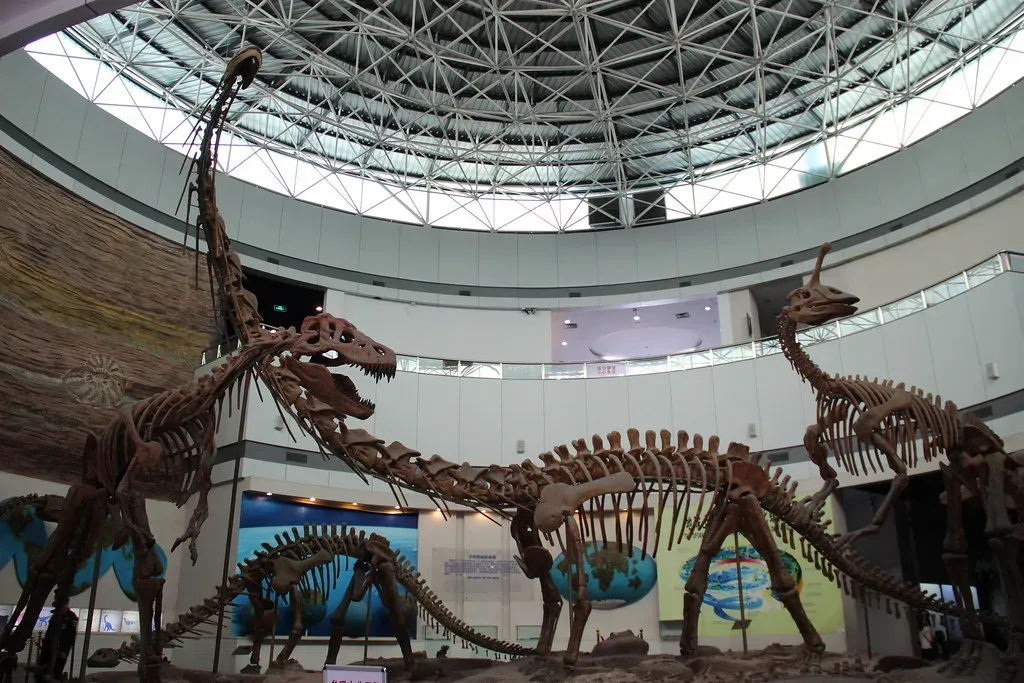
What makes all of this so thrilling is the speed of change. Around 1,400 dinosaur species are now known from more than 90 countries, with the rate of discovery accelerating in the last two decades. The year 2025 alone saw the discovery of 44 new dinosaur species, nearly one a week. Many new discoveries come from paleontological hotspots such as Argentina, China, Mongolia, and the US, but dinosaur fossils are also being found in many other places.
Every one of these eight theories represents not just a new fact, but a fundamental shift in how scientists frame the questions they ask. The field has moved from cataloguing bones to interrogating behavior, color, social structure, metabolism, and migration in ways that feel almost cinematic. Over the past decade, paleontology has entered a new era of rapid discovery and scientific transformation. Breakthrough fossils unearthed across Asia, South America, North America, and Europe have dramatically expanded , biology, and behavior.
Somewhere beneath the sands of the Amazon basin or the Congo, the oldest dinosaur fossils in existence may still be waiting to be found. When they are, the story will change again. What does it say about the world that creatures extinct for 66 million years can still surprise us this much? What do you think – which of these eight theories shook your assumptions the most? Tell us in the comments.