Conservation efforts yielded remarkable results in 2025 when five bird species, absent from verified records for more than a decade, reappeared in the wild. These rediscoveries, confirmed through photographs and sound recordings, came as part of the annual update to the Search for Lost Birds List, a global tally maintained by a partnership of organizations including American Bird Conservancy, Re:wild, and BirdLife International. The list defines “lost” birds as those lacking photographic, audio, or genetic evidence for at least ten years. Amid broader environmental pressures, these sightings offered a tangible boost to ornithologists tracking biodiversity decline.
Stunning Returns from Obscurity
Stunning Returns from Obscurity (Image Credits: Facebook)
Researchers and local birdwatchers documented the first rediscovery in March 2025, when the Broad-billed Fairywren emerged in the rugged mountains of West Papua, Indonesia. Daniel Hoops and Royke Mananta captured images and audio of the species, unseen since 2014. This small, vibrant bird inhabits high-altitude forests, where habitat fragmentation poses ongoing risks.
Later that month, on Luzon Island in the Philippines, Martin Kennewell photographed the Rufous-breasted Blue Flycatcher after 17 years of silence. The bird’s striking rufous chest and blue wings stood out against the island’s dense understory. These early finds set an optimistic tone for the year.
Key Rediscoveries Across the Pacific
The rediscoveries spanned critical biodiversity hotspots in the Pacific region. In May, John Lamaris snapped a photo of the Bismarck Kingfisher on New Ireland, Papua New Guinea, ending a 13-year gap. The iridescent blue and orange bird frequents mangroves and streams, areas vulnerable to logging and development.
- Biak Myzomela (Myzomela erythromelas): Ethan Skinner photographed this nectar-feeding honeyeater on Biak Island, Indonesia, in August 2025, after 21 years missing. One of the rarer documented cases, it highlighted gaps in photographic records for even recently sighted species.
- Broad-billed Fairywren (Malurus latior): Found in West Papua’s mountains by Hoops and Mananta in March; 11 years absent.
- Sulu Cuckooshrike (Coracina mansuetus): Shareef Khaddafi Hairal imaged it in the Sulu Archipelago, Philippines, in November; 18 years gone.
- Rufous-breasted Blue Flycatcher (Cyornis rufopictus): Kennewell’s Luzon find in March; 17 years missing.
- Bismarck Kingfisher (Alcedo websteri): Lamaris’s New Ireland photo in May; 13 years lost.
Each confirmation relied on platforms like eBird and iNaturalist, where citizen scientists shared crucial media. These efforts underscore the power of collaborative monitoring.
Heroes of the Hunt
Local expertise drove many successes. John Lamaris, a PhD candidate from Papua New Guinea, camped in remote areas to document the Bismarck Kingfisher. Similarly, Shareef Khaddafi Hairal navigated the conflict-prone Sulu Archipelago for the cuckooshrike. International birders like Ethan Skinner filled photographic voids for species like the Biak Myzomela.
Daniel Hoops and Royke Mananta combined photography with audio recordings for the fairywren, providing multifaceted proof. Martin Kennewell targeted Luzon’s forests for the flycatcher. Their persistence turned speculation into science.
Gains Offset by New Concerns
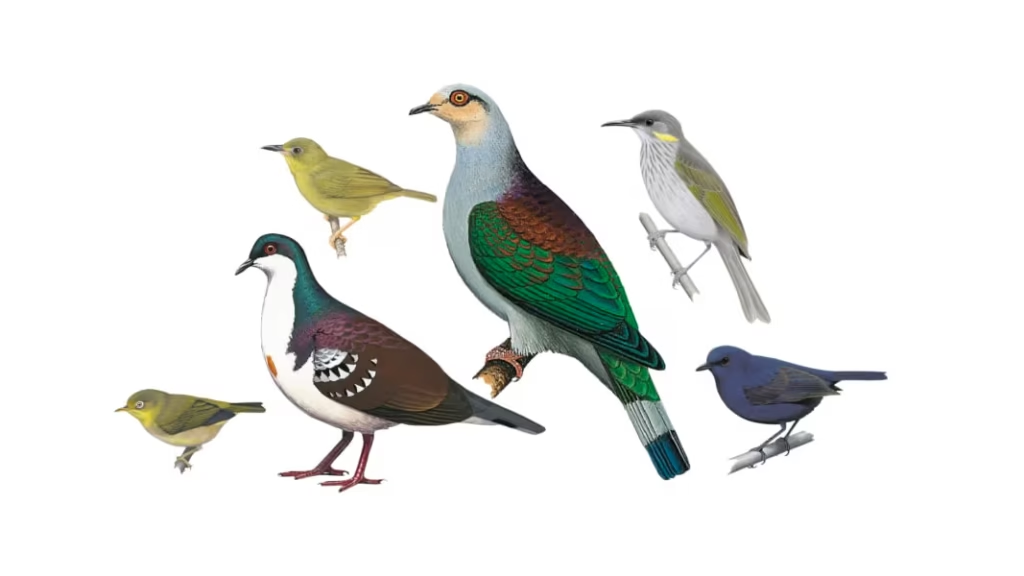
While five species exited the list, six new ones joined for 2026, all from Pacific islands: Mindoro Bleeding-heart, Mindoro Imperial-Pigeon, Guadalcanal Honeyeater, Minahasa Shortwing, Samoan White-eye, and Vanikoro White-eye. These additions, last documented around 2015, reflect island vulnerability, where most bird extinctions occur.
| Category | 2022 | 2025 | 2026 |
|---|---|---|---|
| Lost Birds Total | 142 | 122 | 121 |
| Rediscoveries (in prior year) | – | – | 5 |
| New Additions | – | 11 | 6 |
One extinction marked the year: the Slender-billed Curlew, declared gone by IUCN. A taxonomic shift removed the White-chested Tinkerbird. “These six species mark the lowest number of birds to be added in one of the annual lost bird list updates,” noted the update authors.
Path Forward for Feathered Ghosts
The shrinking list – from 142 species in 2022 to 121 today – signals progress through global vigilance. Yet island endemics dominate new entries, urging intensified protection against habitat loss and invasives. For the first time, no new losses came from continents like South America or Africa.
- Five rediscoveries in 2025 reduced the Lost Birds List despite six additions.
- Pacific islands host most changes, highlighting extinction hotspots.
- Citizen science via eBird and iNaturalist powers these wins.
These birds remind us that absence does not equal extinction. Targeted searches can yield hope. What do you think about these rediscoveries? Tell us in the comments.