Florida – A 16-year-old visitor from Wyoming turned a routine fossil-hunting dive into a remarkable discovery last week. Aiden Andrews unearthed a rare 6-inch tooth from the megalodon, the largest shark to ever roam the oceans, in shallow waters off Manasota Key. His father, Brian, joined him on the guided expedition, which underscored the Gulf Coast’s reputation for yielding prehistoric treasures from the sea floor.
The Thrilling Underwater Find
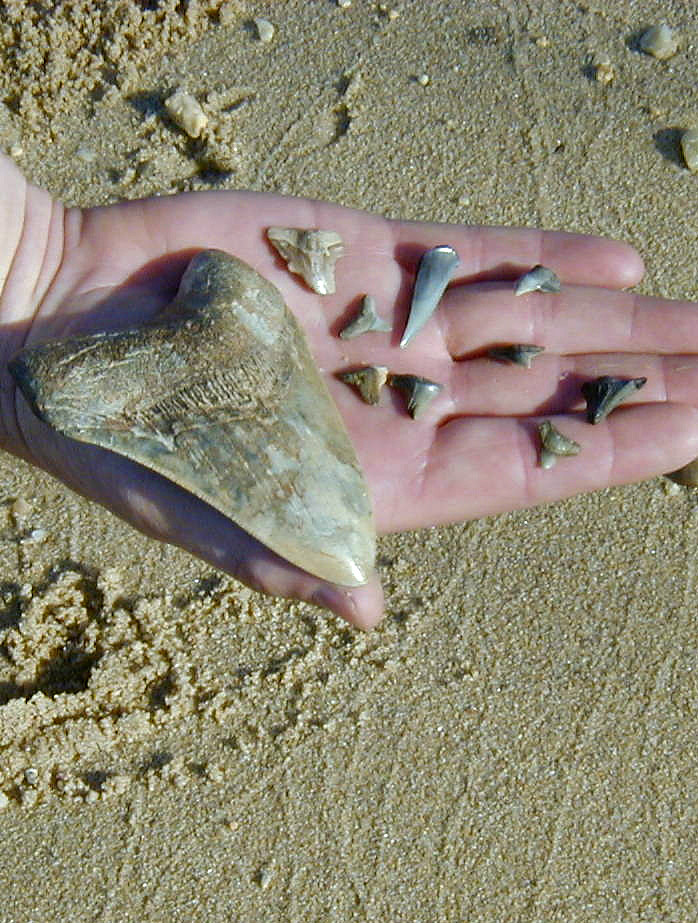
The Thrilling Underwater Find (Image Credits: Flickr)
Plunging into the silty shallows near Sarasota, Aiden Andrews spotted the massive tooth amid the sediment. The moment unfolded during a tour led by Fossil Junkies, a Venice-based company specializing in such hunts. Brian Andrews had already located a 5-inch megalodon tooth earlier in the dive, setting the stage for his son’s even larger prize
Captain John Kreatsoulas of Fossil Junkies captured the excitement on video as father and son celebrated underwater. Small megalodon teeth surface occasionally in the area, but specimens reaching 6 inches remain exceptional. The tooth, millions of years old, emerged pristine from its ancient resting place, offering a tangible link to a vanished era.
Unveiling the Megalodon: A Prehistoric Giant
Scientists classify the megalodon as Carcharocles megalodon, a superpredator that dominated oceans from about 23 million to 3.6 million years ago. This species grew to lengths of 60 feet and weights approaching 50 tons, dwarfing modern great whites. Its serrated teeth, often the size of a human hand, delivered one of history’s most powerful bites.
Florida’s coastal deposits preserve countless such relics due to favorable geological conditions from the Miocene epoch. The shark’s extinction coincided with global cooling and prey scarcity, though debates persist on exact causes. Fossils like Aiden’s tooth provide crucial evidence for reconstructing its formidable anatomy.
- Length: Up to 60 feet, comparable to a school bus.
- Weight: As much as 50 tons.
- Teeth: Triangular with jagged edges, ideal for crushing whales.
- Era: Early Miocene to Pliocene, extinct around 3.6 million years ago.
- Bite force: Stronger than any known animal.
Florida’s Gulf Coast: A Fossil Hunter’s Paradise
The waters off Manasota Key teem with ancient shark relics, thanks to phosphate-rich sediments from prehistoric river systems. Erosion and currents expose teeth daily on beaches and dive sites. Local operators like Fossil Junkies guide enthusiasts to prime locations, ensuring safe access to these natural time capsules.
Venice, nearby, earns the nickname “Shark Tooth Capital of the World” for similar reasons. Divers and beachcombers routinely recover megalodon fragments, though standout pieces like Aiden’s draw widespread attention. The region’s fossil bounty supports both amateur pursuits and scientific study.
| Fossil Type | Size (inches) | Discoverer |
|---|---|---|
| Megalodon Tooth | 5 | Brian Andrews |
| Megalodon Tooth | 6 | Aiden Andrews |
A Family Adventure Yields Timeless Rewards
Brian and Aiden Andrews traveled from Wyoming for the dive, timed as an early birthday treat for the teenager. Their guided trip with Captain Kreatsoulas combined education and thrill, revealing the Gulf’s hidden history. The father-son duo’s shared success amplified the joy of the outing.
Such tours democratize fossil hunting, equipping participants with knowledge of local geology and safety protocols. Aiden’s find exemplifies how ordinary dives can produce extraordinary results. Captain Kreatsoulas emphasized the rarity: “While finding small megalodon teeth isn’t uncommon, finding one that size is quite rare.”
Key Takeaways
- A 6-inch megalodon tooth represents a rare prize, even in fossil hotspots like Florida’s Gulf Coast.
- Guided tours by experts like Fossil Junkies enhance safety and success rates for divers.
- Megalodon fossils continue to reshape our understanding of ancient marine life.
Aiden Andrews’ discovery bridges millions of years, reminding us that Earth’s deep past lies just beneath the waves. Florida’s shores will likely yield more such wonders, inviting explorers of all ages. What do you think about this prehistoric find? Tell us in the comments.