Waitomo, New Zealand – Researchers delved into a remote cave system and unearthed a treasure trove of fossils that illuminate a forgotten era in the nation’s natural history. The remains, preserved for approximately one million years, belonged to 12 bird species and four frog species, painting a picture of diverse prehistoric forests long before human footsteps touched the islands. This discovery challenges long-held views on New Zealand’s biodiversity, revealing waves of extinction driven by natural forces.
A Hidden Time Capsule Emerges
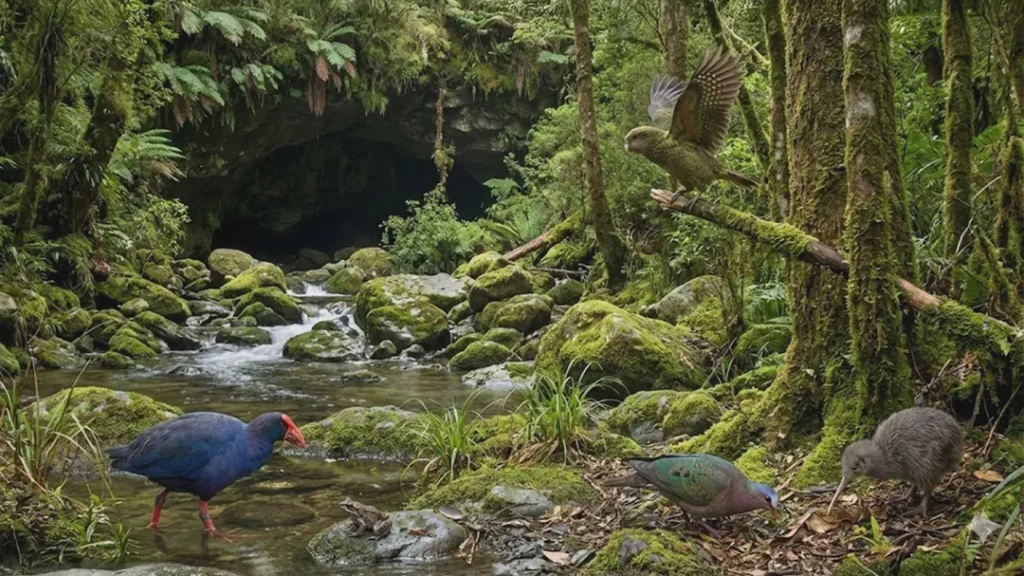
A Hidden Time Capsule Emerges (Image Credits: Reddit)
Deep within a cave near the glowworm caverns of Waitomo, a team of paleontologists and volcanologists made a rare find. The fossils, sandwiched between layers of ancient volcanic ash, offered the first substantial glimpse into North Island ecosystems around one million years ago. Associate Professor Trevor Worthy of Flinders University led the effort, collaborating with Dr. Paul Scofield from Canterbury Museum and experts from the University of Auckland and Victoria University of Wellington.
This site marked the oldest known cave deposit on the North Island. Excavations revealed bones that had remained untouched, protected from erosion and scavengers. The collection filled a critical void in New Zealand’s fossil record, spanning a 15-million-year gap between earlier Miocene sites and more recent deposits. Dr. Scofield described it not as a missing chapter, but a missing volume in the islands’ paleontological story.
The Kākāpō’s Surprising Ancestor Takes Center Stage
Among the avian remains stood out Strigops insulaborealis, a newly identified parrot species and direct forebear to the modern kākāpō. Today’s kākāpō, a hefty, flightless nocturnal bird, contrasts sharply with this ancient relative. Fossil evidence pointed to weaker hind legs, suggesting it relied less on climbing and possibly retained the ability to fly—a trait lost in its descendants.
Further analysis will clarify its flight capabilities, but the discovery already reshapes understanding of parrot evolution in isolation. Worthy noted that this bird belonged to a distinct avifauna, entirely replaced over time. The find highlighted how ancient forests supported unique lineages now extinct or transformed.
Diversity in the Depths: Birds and Frogs of a Bygone Era
The fossils represented a vibrant prehistoric community. Birds dominated the assemblage, with 12 species including an extinct takahē ancestor and a pigeon closely akin to Australia’s bronzewing varieties. These ground-dwellers and forest inhabitants thrived amid shrublands and woodlands before dramatic changes intervened.
Four frog species rounded out the 16 total, underscoring an amphibian presence in damp cave environs and surrounding wetlands. Though specific names for most remain unpublished, the suite indicated a balanced ecosystem vulnerable to disruption.
- Strigops insulaborealis: Kākāpō ancestor, potentially volant.
- Takahē ancestor: Extinct rail relative.
- Bronzewing-like pigeon: Forest pigeon, now lost.
- 11 other birds and 4 frogs: Diverse understory and canopy species.
Volcanic Ash: Nature’s Perfect Seal
The preservation owed much to geology. Fossils lay trapped between ash from two eruptions: one dated 1.55 million years ago and a later cataclysm around one million years past. The younger event blanketed the North Island in meters of ash, much of which eroded away except in sheltered caves like this one.
| Eruption Layer | Age (Million Years) | Impact |
|---|---|---|
| Older Ash | 1.55 | Marked cave formation |
| Fossil Layer | ~1.0 | Trapped remains |
| Younger Ash | 1.0 | Sealed deposit |
Volcanologists Joel Baker and Simon Barker confirmed the dating, linking the ash to regional super-eruptions. This stratigraphic trap created an unparalleled time capsule, shielding the bones from the elements.
Extinctions Forged by Climate and Fire
New Zealand’s wildlife underwent profound turnover, with 33 to 50 percent of species vanishing in the million years before Polynesian arrival around 750 years ago. Rapid climate fluctuations and volcanic barrages drove these losses, resetting bird populations through habitat shifts from forest to shrubland. Scofield emphasized how these forces spurred diversification among survivors.
“These extinctions were driven by relatively rapid climate shifts and cataclysmic volcanic eruptions,” Scofield stated. The study, detailed in Alcheringa: An Australasian Journal of Palaeontology, proved natural sculpting long predated human influence. Worthy added that ancient forests once buzzed with birds absent from later records, underscoring evolution’s relentless pace.
Key Takeaways
- A one-million-year-old cave deposit reveals 16 species, filling a major fossil gap.
- Natural disasters caused 33-50% species turnover before humans arrived.
- Kākāpō ancestor may have flown, hinting at lost aerial prowess.
This Waitomo trove reminds us that New Zealand’s unique fauna emerged from cycles of destruction and renewal. As climate pressures mount today, these ancient lessons urge vigilance for modern biodiversity. What does this lost world tell you about conservation efforts? Share your thoughts in the comments.