When most people picture a dinosaur, they imagine a lumbering gray or greenish beast, something cold, scaly, and terrifying. That image is becoming harder and harder to defend. Science has been quietly dismantling this old notion for decades, and the fossil record keeps delivering bombshells that completely reshape what we think we know about these ancient animals.
Turns out, some dinosaurs were not just feathered. Some were spectacular. We’re talking shimmering, iridescent, rainbow-shifting plumage that would have made a modern peacock stop in its tracks. The evidence is right there in the rocks, encoded in microscopic structures no bigger than a fraction of a human hair. So let’s dive in.
From Scales to Shimmer: How the Story of Dinosaur Feathers Began
Honestly, the shift in our understanding of dinosaurs is one of the greatest intellectual reversals in the history of science. Since scientific research began on dinosaurs in the early 1800s, they were generally believed to be closely related to modern reptiles such as lizards. The word dinosaur itself, coined in 1842 by paleontologist Richard Owen, comes from the Greek for “terrible lizard.” That reputation stuck around for a remarkably long time.
That view began to shift during the so-called dinosaur renaissance in scientific research in the late 1960s; by the mid-1990s, significant evidence had emerged that dinosaurs were much more closely related to birds, which descended directly from an earlier group of theropod dinosaurs. What really broke things open, though, was a fossil from China. Sinosauropteryx fulfilled what paleontologists had been looking for: fossilized feathers along the neck, back, and tail of the dinosaur left no doubt that birds had evolved from feathery dinosaur ancestors.
Knowledge of the origin of feathers developed as new fossils were discovered throughout the 2000s and the 2010s, and technology enabled scientists to study fossils more closely. Among non-avian dinosaurs, feathers or feather-like integument have been discovered in dozens of genera via direct and indirect fossil evidence. You can almost picture the scientific community sitting up straighter with every new dig season.
Caihong Juji: The Rainbow Dinosaur That Changed Everything
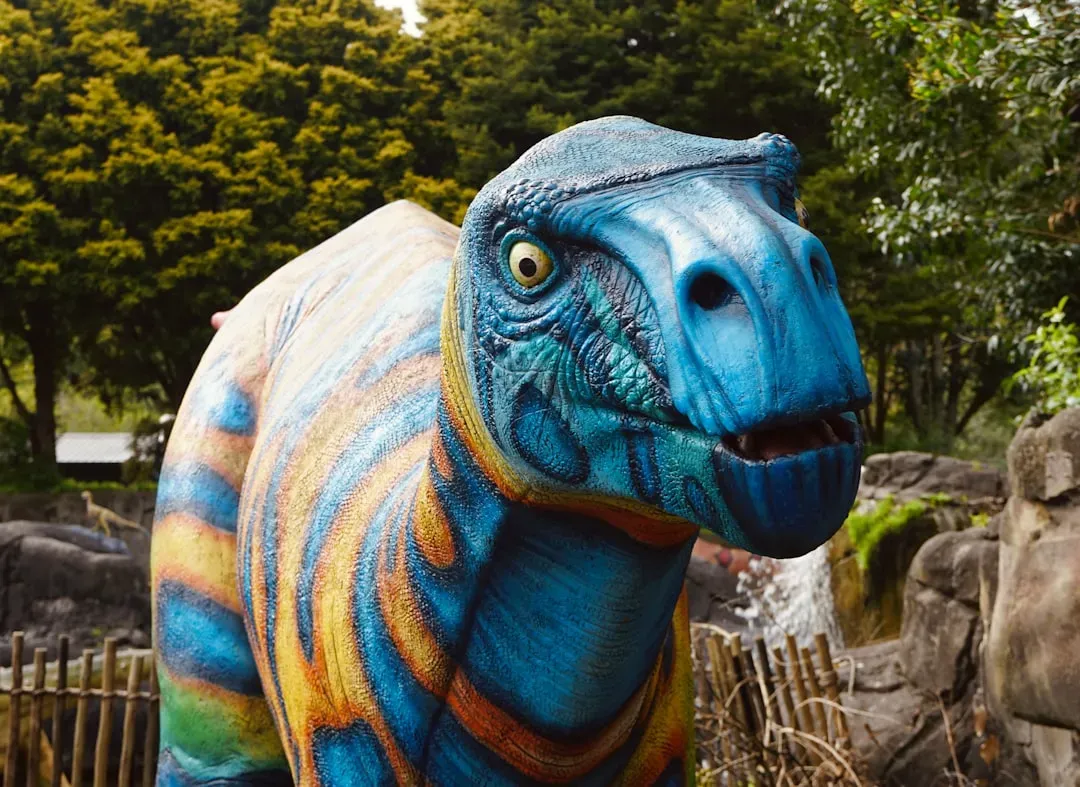
If there is one fossil that truly forces you to completely rethink the prehistoric world, it is this one. Caihong juji, a newly discovered species of dinosaur, was duck-sized with a bony crest on its head, and long, ribbon-like feathers that were likely iridescent. These “rainbow” feathers would have shifted colors and shimmered in the light. Picture that living, breathing, in the Jurassic undergrowth.
Caihong juji means “rainbow with the big crest” in Mandarin. The name is fitting. At 161 million years old, Caihong is one of the oldest feathered dinosaurs yet uncovered. The living animal would have been about the size of a crow, covered in long feathers from the back of its head to the tip of its tail and toes. When paleontologists assessed the dinosaur’s feathers, they found that the plumage was iridescent and would have appeared as a rainbow sheen seen in some modern avians like hummingbirds.
Caihong is the oldest known example of platelet-shaped melanosomes typically found in bright iridescent feathers. This combination of old and new traits is evidence of mosaic evolution, the concept of different traits evolving independently from each other. I think that concept alone is mind-bending enough to deserve its own museum wing.
The Science of Melanosomes: Unlocking Color From Ancient Fossils
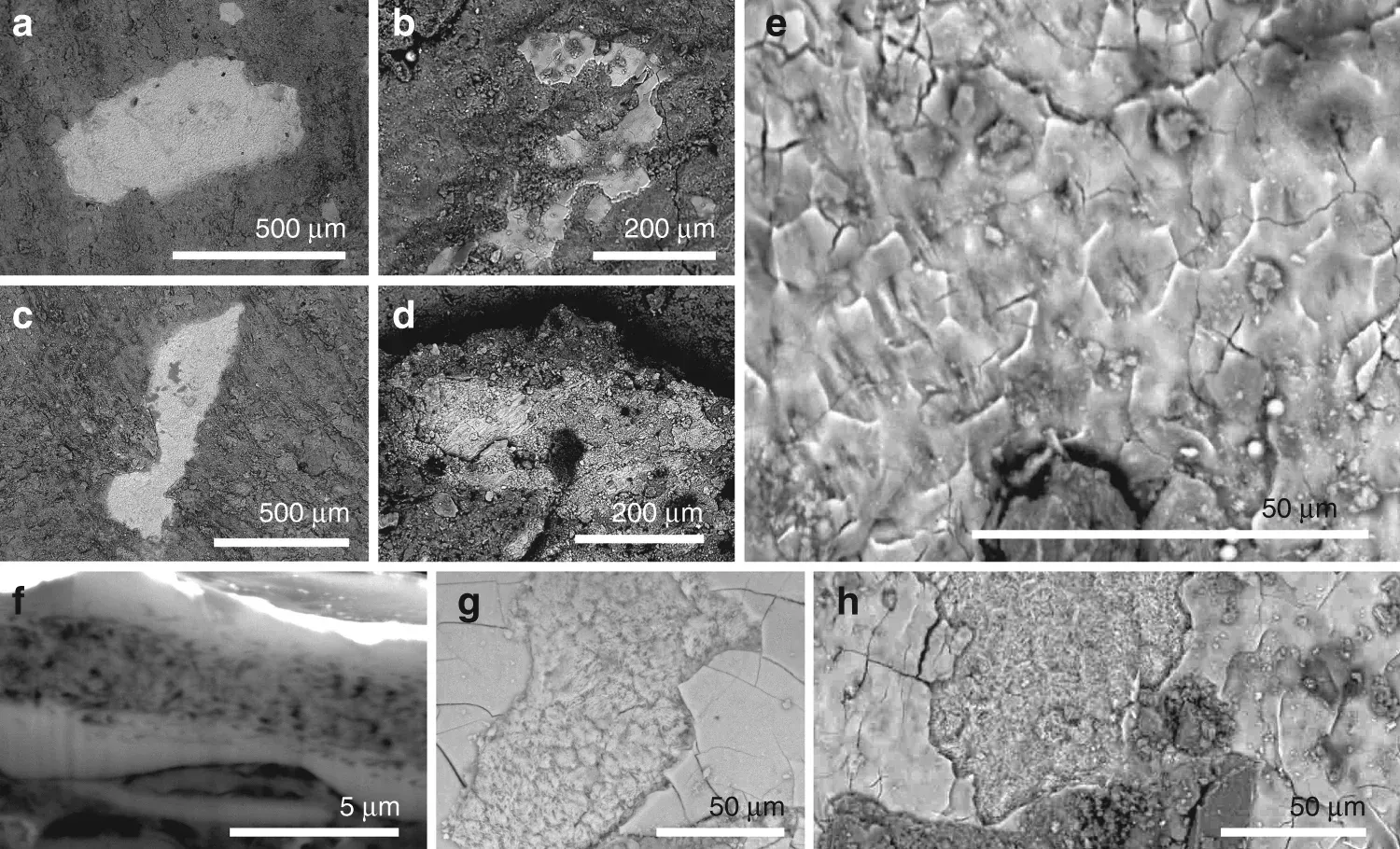
Here is the thing about figuring out dinosaur color. It sounds almost impossible. How do you look at a rock that is over 100 million years old and determine it was once rainbow-colored? The answer lies in microscopic structures called melanosomes, and the story of how scientists cracked this puzzle is genuinely thrilling.
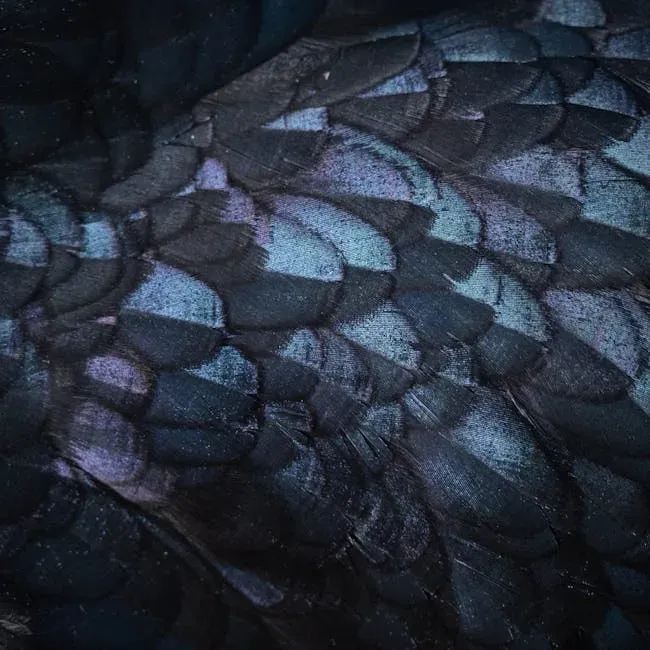
A team identified fossilized melanosomes, which are pigment-bearing organelles, in the feathers and filament-like “protofeathers” of fossil birds and dinosaurs from northeastern China. Found in the feathers of living birds, the nano-size packets of pigment, with a hundred melanosomes able to fit across a human hair, were first reported in fossil bird feathers in 2008. Iridescence arises when the narrow melanosomes are organized in stacked layers.
With the imaging power of scanning electron microscopes, paleontologists started analyzing the shape of melanosomes in well-preserved fossilized feather imprints. By comparing these patterns to those in living birds, scientists can infer the color of dinosaurs that lived many millions of years ago. Melanosomes are organelles within cells that synthesize, store, and transport melanin, the pigment responsible for skin, hair, eye, and feather colors. Think of melanosomes as tiny fossilized paint chips left behind in the rock, waiting patiently for someone clever enough to read them.
Microraptor: The Glossy, Crow-Black Dinosaur With a Sheen to Rival Any Modern Bird
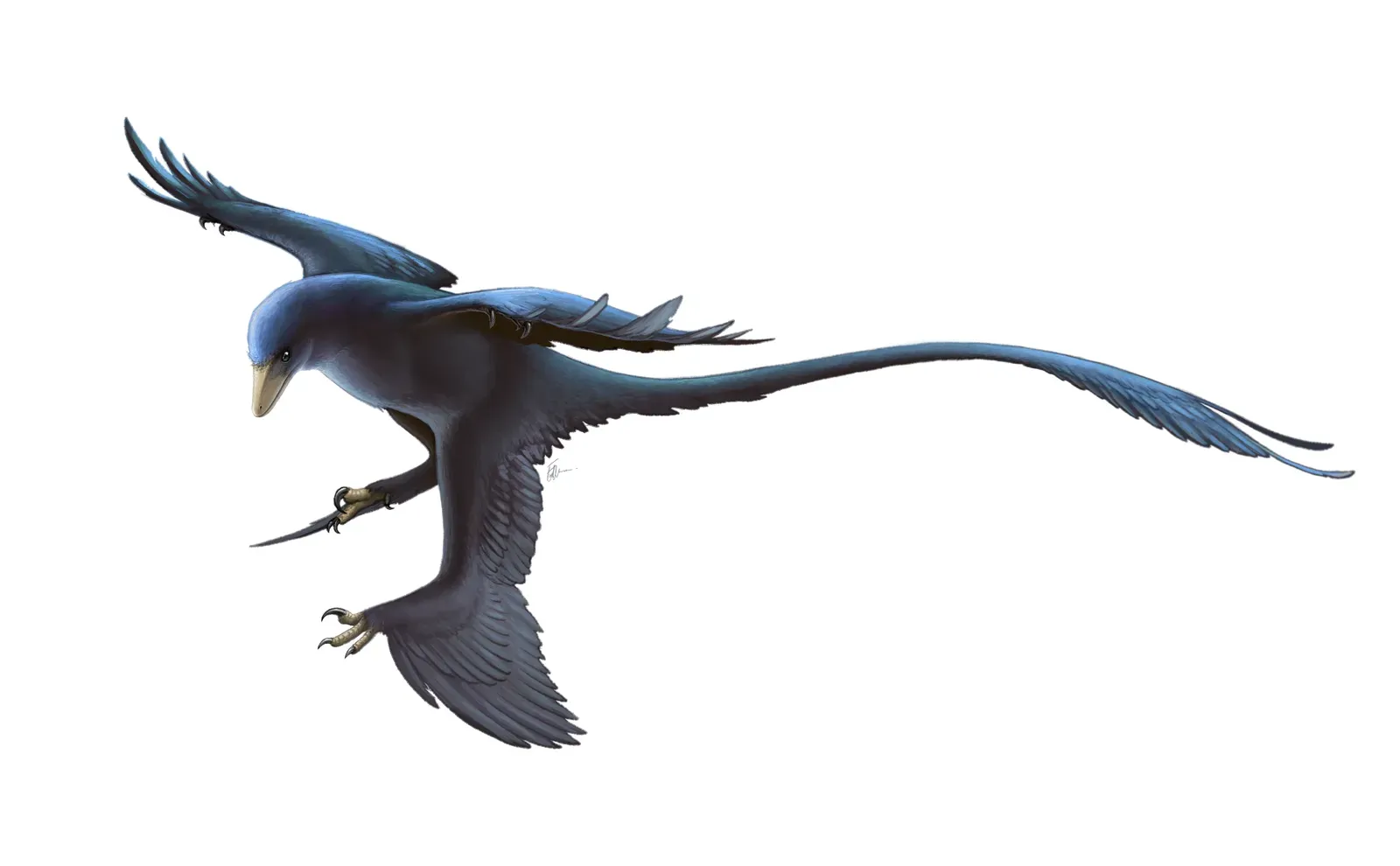
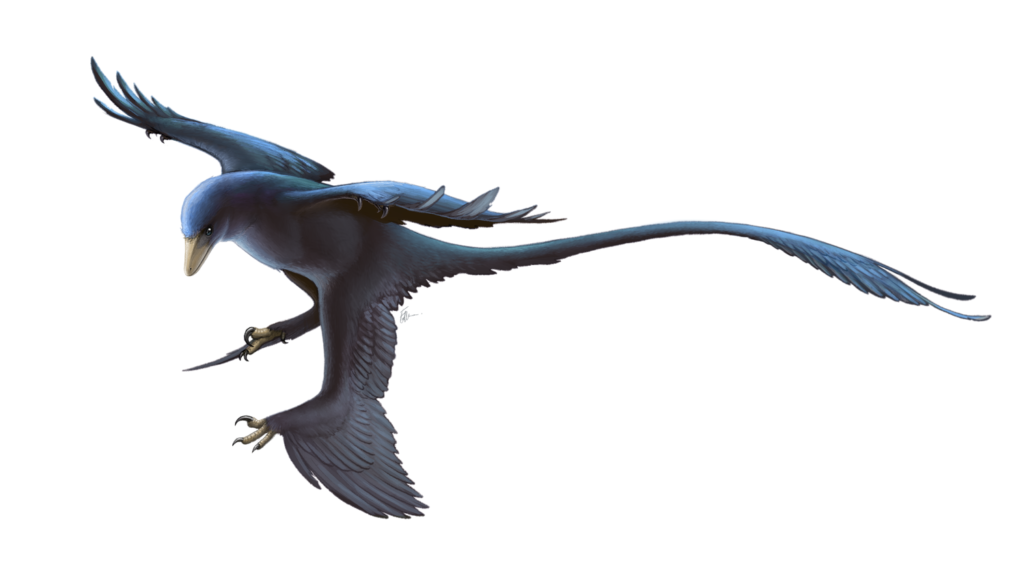
Caihong was not alone in the iridescent plumage department. Meet Microraptor, a four-winged dinosaur that lived roughly 130 million years ago and had a look that was striking in its own right. A team of American and Chinese researchers revealed the color and detailed feather pattern of Microraptor, a pigeon-sized, four-winged dinosaur that lived about 130 million years ago. The non-avian dinosaur’s fossilized plumage, which had hues of black and blue like a crow, is the earliest record of iridescent feather color.
Statistical analysis of the data predicts that Microraptor was completely black with a glossy, weakly iridescent blue sheen. A new specimen shows the dinosaur had a glossy iridescent sheen and that its tail was narrow and adorned with a pair of streamer feathers, suggesting the importance of display in the early evolution of feathers.
Once thought to be a broad, teardrop-shaped surface meant to help with flight, Microraptor’s tail fan is actually much narrower with two elongate feathers. The researchers think that the tail feather was ornamental and likely evolved for courtship and other social interactions, not for aerodynamics. So even back then, looking good might have mattered more than practical utility. That feels oddly relatable.
Feathers Were Not Just for Flying: The Display Hypothesis
This is where things get really interesting, and where the evidence starts to tell a bigger story. There is an increasing body of evidence that supports the display hypothesis, which states that early feathers were colored and increased reproductive success. Coloration could have provided the original adaptation of feathers, implying that all later functions of feathers, such as thermoregulation and flight, were co-opted. This hypothesis has been supported by the discovery of pigmented feathers in multiple species.
Supporting the display hypothesis is the fact that fossil feathers have been observed in a ground-dwelling herbivorous dinosaur clade, making it unlikely that feathers functioned as predatory tools or as a means of flight. Pigmented and iridescent feathers may have provided greater attractiveness to mates, providing enhanced reproductive success when compared to non-colored feathers.
Between the feathers and crest, Caihong provides further evidence that visual displays were important to early feathered dinosaurs, just as they would go on to be for modern birds. Based on new data from Microraptor and other finds, a complex color repertoire that includes iridescence is probably ancestral to a group of dinosaurs called Paraves that originated at least 140 million years ago and includes dinosaurs such as Velociraptor as well as Archaeopteryx, Anchiornis, and living birds. So the dazzling plumage of a hummingbird or peacock today is essentially an ancient inheritance.
The Hidden Gems in the Fossil Record: Soft Tissue Preservation
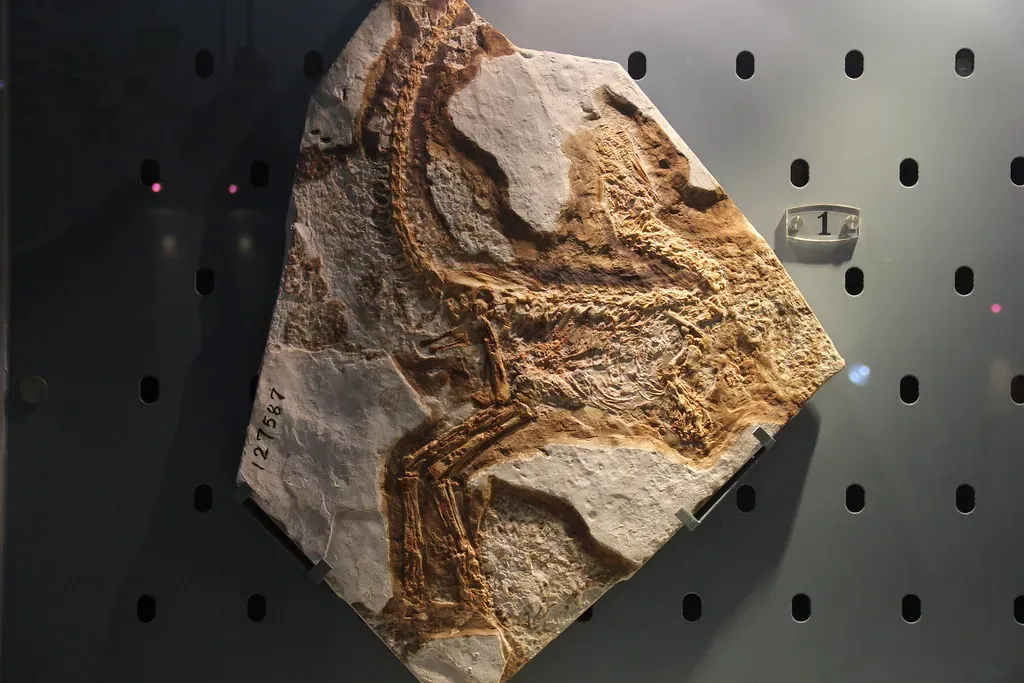
It’s hard to say for sure just how many more spectacular fossils are still sitting undiscovered or even misidentified in museum drawers. The challenge with feathered dinosaurs is not just finding them but recognizing them. Experts had previously missed feather fossils because plumage was thought to have been too delicate to be preserved in the same sandstone wrapped around the dinosaur’s bones. After the discovery of Sinosauropteryx, however, paleontologists started looking for evidence of fossil feathers that previously might have been overlooked or even destroyed as fossils were freed from their encasing rock.
Researchers have used ultraviolet light to identify patches of preserved skin that are invisible in natural light. Further investigation of the fossil skin using X-rays and infrared light revealed spectacular details of preserved cellular structure. That is genuinely jaw-dropping. Entire biological stories, hidden in plain sight under normal lighting conditions.
Feathers, unlike bones, are easier to degrade or get scattered since they detach from the body when decomposition sets in. That can be seen in several true bird fossils, from the age of dinosaurs or later, which also do not contain feathers. The result is that, by the time a dinosaur’s remains are covered by sediment and the slow process of fossilization starts, the feathers and other soft tissue are long gone. Every feathered fossil that does survive is, in its own way, a small miracle.
What New Discoveries in 2025 and 2026 Are Still Teaching Us
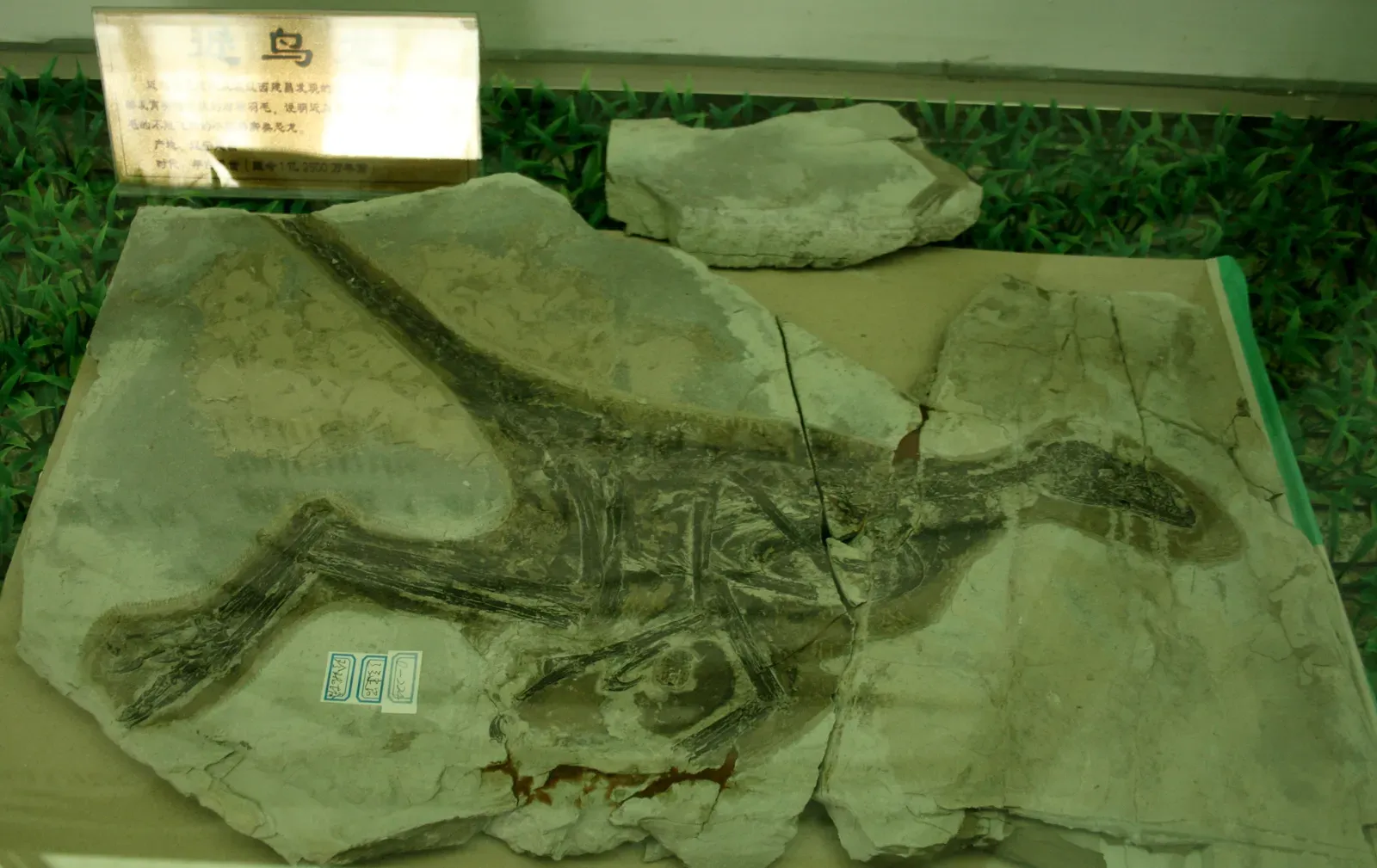
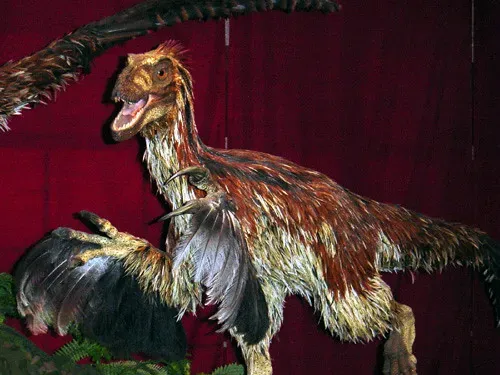
Uploaded by FunkMonk, CC BY-SA 2.0)
Let’s be real: this field is moving fast. The story is nowhere near finished. Recent research continues to push the boundaries of what we think we know. Palaeontologists at University College Cork in Ireland discovered that some feathered dinosaurs had scaly skin like reptiles today, shedding new light on the evolutionary transition from scales to feathers. The researchers studied a new specimen of the feathered dinosaur Psittacosaurus from the early Cretaceous, a time when dinosaurs were evolving into birds. The study shows, for the first time, that Psittacosaurus had reptile-like skin in areas where it did not have feathers.
New research reveals that the protein composition of modern-day feathers was also present in the feathers of dinosaurs and early birds, confirming that the chemistry of feathers originated much earlier than previously thought. That is a stunning molecular confirmation that the biology behind feathers is ancient and deeply conserved. Fossil melanin and fossil melanosome organelles that produced melanin have made it possible to reconstruct dinosaur colour patterns, evidencing fundamental but previously elusive behaviours like camouflage.
Melanosome shape diversity has been reported in multiple fossils of feathered dinosaurs, allowing for the color patterning of these animals to be determined from the preserved melanosome impressions. Even as recently as late 2025, Gallagher and colleagues reported the first documented evidence of melanosomes preserved in the fossilized integument of a sauropod, probably attributable to a juvenile Diplodocus, from the Mother’s Day Quarry in the Morrison Formation of Montana. New chapters keep being written.
Conclusion: The Prehistoric World Was Wilder and More Beautiful Than We Ever Imagined
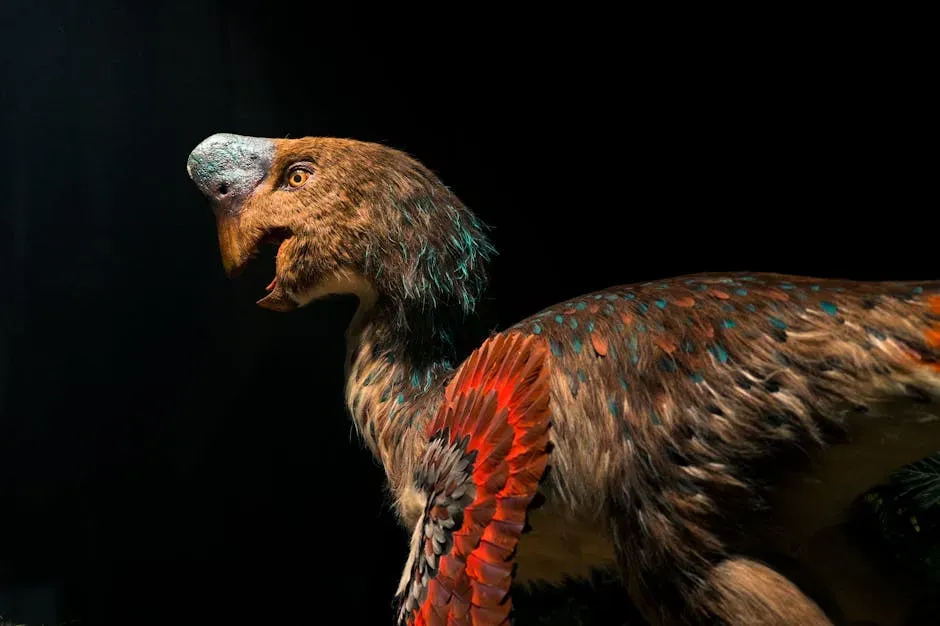
The old image of dinosaurs as drab, grey, and uniform is not just outdated. It is thoroughly disproved. The fossil record, read carefully through the lens of modern technology, tells a radically different story, one filled with iridescent shimmer, rainbow plumage, glossy blue-black sheens, and feathered crests that would not have looked out of place on the most exotic bird alive today.
Birds are the last remaining dinosaurs, and they are also some of the most vibrantly colored animals on Earth. New studies reveal that these iridescent feathers go way back, around 161 million years back. Every time you see a hummingbird catch the light, you are essentially looking at a living echo of something that was already happening in the Jurassic. That connection is astonishing.
Science has essentially handed us a time machine, and the view from here is breathtaking. The question is not whether dinosaurs were colorful. The question now is just how many more spectacular species are still waiting to be pulled out of the earth, glimmering under UV light in some museum storage room. What do you think we might find next? Drop your thoughts in the comments, because honestly, the next discovery could change everything all over again.