Dorset, England – Erosion along the Jurassic Coast has revealed a prehistoric marvel that has paleontologists buzzing worldwide. In late 2023, a massive pliosaur skull emerged from the crumbling cliffs near Kimmeridge Bay, measuring nearly two meters long and preserving details unseen in prior finds. This 150-million-year-old relic from the Late Jurassic period showcases the raw power of an apex marine predator, with jaws locked in a deadly grip and 130 razor-sharp teeth intact.
A Perilous Chase Up the Cliff Face
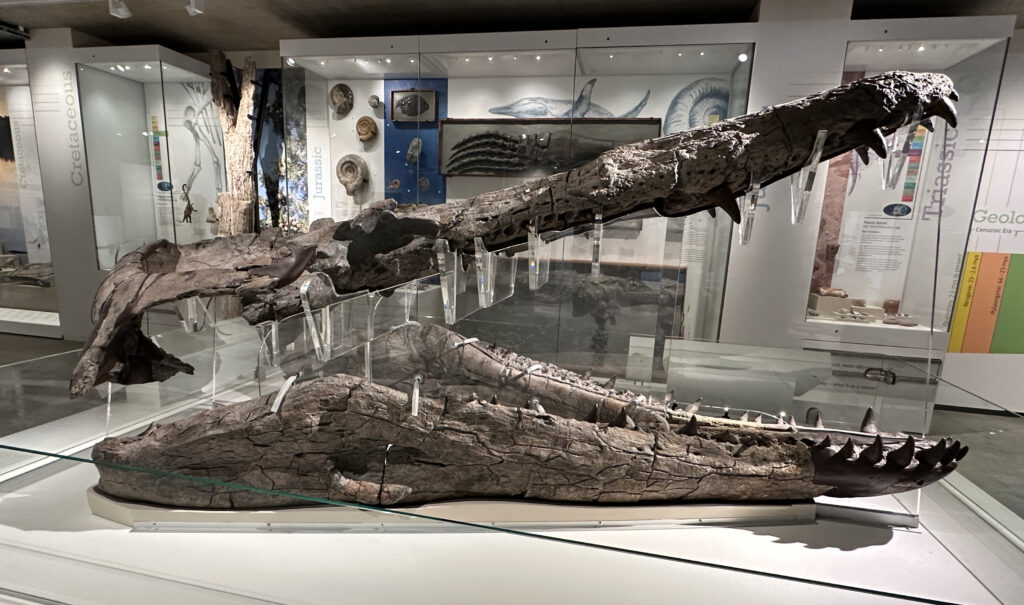
A Perilous Chase Up the Cliff Face (Image Credits: Wikimedia)
Fossil enthusiast Phil Jacobs spotted the tip of a snout protruding from the beach below a towering 15-meter cliff during a routine walk. He alerted local expert Steve Etches, curator of the Etches Collection museum, who mobilized a team for the extraction. Working with ropes and harnesses amid gusting winds, the group cut the fossil into protective blocks and lowered it on an improvised stretcher, a process that spanned months.
Etches described the moment as extraordinary. “It’s one of the best fossils I’ve ever worked on,” he said. “What makes it unique is it’s complete. The lower jaw and the upper skull are meshed together, as they would be in life.” Drone surveys confirmed vertebrae trailing into the rock, hinting at more remains in the rapidly eroding formation. This daring recovery preserved 95 percent of the skull, earning it a Guinness World Record as the most complete pliosaur specimen known.
Engineering of an Underwater Assassin
The skull’s design screams efficiency for slaughter. Its 130 teeth, etched with fine ridges, pierced flesh and allowed swift withdrawal for follow-up strikes. Small pits along the snout likely housed glands sensitive to water pressure changes, aiding hunts in murky depths.
A hole positioned for a parietal eye enhanced navigation and prey detection. Four powerful flippers propelled the full 10-to-12-meter body at high speeds, turning the pliosaur into the Jurassic seas’ dominant hunter. Prey ranged from fish and squid to fellow giants like ichthyosaurs and plesiosaurs.
- Skull length: 2 meters (6 feet 6 inches)
- Width: 0.6 meters (2 feet)
- Teeth count: 130, razor-sharp with gripping ridges
- Sensory pits: For pressure detection
- Preservation: Jaws interlocked naturally
Bite Force to Crush Bones and Dreams
Paleontologists model the pliosaur’s jaws at up to 33,000 newtons of force, enough to pulverize bone and tissue effortlessly. Professor Emily Rayfield noted that such power let the reptile incapacitate victims instantly, much like modern crocodiles tearing limbs with twists.
Dr. Andre Rowe from the University of Bristol called it “sort of like an underwater T. rex,” preying on anything in its domain. The preserved alignment enables precise computer simulations, bypassing assumptions from fragmented fossils.
| Predator | Bite Force (Newtons) |
|---|---|
| Pliosaur | Up to 33,000[4] |
| T. rex | 35,000–57,000 |
| Saltwater Crocodile | 16,000 |
Unlocking Jurassic Secrets Through Science
Since its public debut at the Etches Collection in January 2024, the skull has drawn global experts. Advanced CT scans and 3D modeling reveal muscle attachments, bone density, and swimming dynamics. The Kimmeridge Clay’s unique preservation sealed joints before decay set in.
Featured in David Attenborough’s documentary, the find spotlights the Jurassic Coast’s UNESCO status as a fossil hotspot. Plans persist to excavate remaining bones before erosion claims them. Etches stakes his reputation: “I stake my life the rest of the animal is there.”
Key Takeaways
- 95% intact skull sets preservation record, per Guinness.
- Offers first accurate bite and sensory reconstructions.
- Confirms pliosaurs as unrivaled Jurassic sea lords.
This Dorset gem reshapes views of ancient oceans, where super-predators ruled with unmatched ferocity. As studies continue, it bridges 150 million years to reveal nature’s timeless brutality. What aspects of this sea monster intrigue you most? Share in the comments.