Here’s something that stops most people in their tracks: long before the word “dinosaur” was even invented, ancient civilizations across the globe were carving, painting, and etching images of creatures that bear a haunting resemblance to prehistoric beasts. No textbooks. No museums. No fossil excavations. Yet there they are, on temple walls, burial stones, and cave surfaces – images that look unmistakably familiar to anyone who has ever seen a paleontology illustration.
How is that possible? Was it coincidence? Inspired mythology? Or something far more compelling? The debate between scientists, archaeologists, historians, and fringe theorists has raged for decades, and honestly, the evidence is messier and more fascinating than either side wants to admit. Let’s dive in.
The Ta Prohm Temple and the “Stegosaurus” That Started a Global Debate
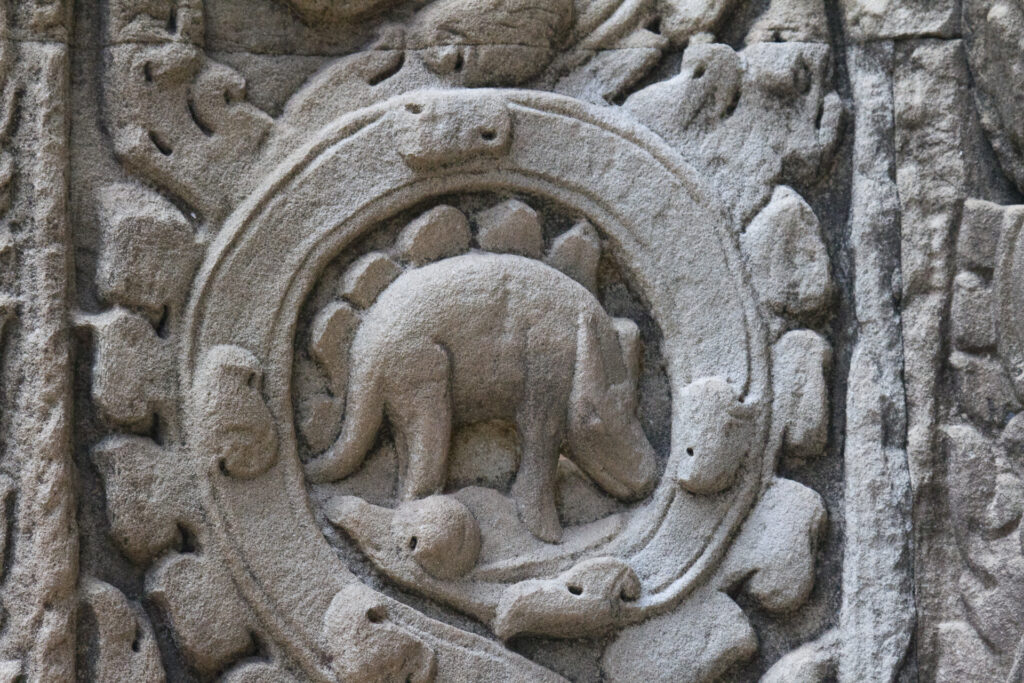
Few ancient mysteries have sparked as much heated argument as a small carving tucked into the stone walls of a Cambodian jungle temple. At Ta Prohm, near Angkor Wat and built by king Jayavarman VII in the late 1100s, a small carving on a crumbling temple wall seems to show a dinosaur, specifically a stegosaurus. The creature is surrounded by dozens of other carvings of known animals like monkeys, deer, birds, and water buffalo, which makes its presence in that lineup feel all the more striking.
The “dinosaur of Ta Prohm” is a bas-relief in the Khmer Empire temple-monastery of Ta Prohm. Numerous reliefs of various animals are present in the temple; the “dinosaur” is one of its more ambiguous artworks. Scientists and skeptics have pointed out serious anatomical issues with the stegosaurus interpretation: beyond the superficial resemblance of the plates, the animal also shares few similarities with stegosaurs. Even if interpreted as plates, the structures along the animal’s back do not resemble stegosaurian plates, which were greater in number and placed in two rows. The more rational explanation, many argue, is that the “plates” are simply background foliage, a common artistic flourish in Khmer temple design.
The Ica Stones of Peru: Genuine Relic or Elaborate Hoax?
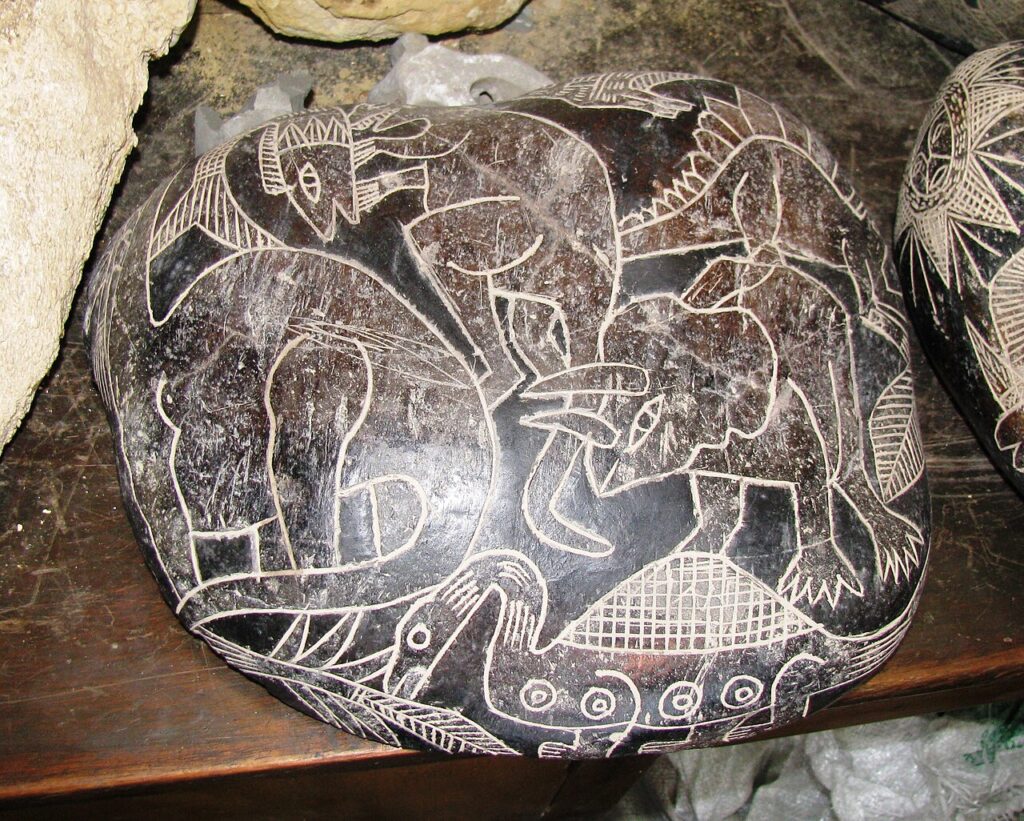
Few artifacts have divided the archaeological world quite like the Ica Stones of Peru. Several of the stones are engraved with depictions of various extinct animals, mostly different types of dinosaurs. Among the dinosaurs depicted are different theropods, sauropods, ceratopsians and stegosaurs. Also present among the stones are depictions of pterosaurs. To believers, this collection is extraordinary evidence of ancient humans who lived alongside prehistoric creatures. To scientists, the story is considerably less romantic.
The Ica stones are a collection of andesite stones with engraved motifs created as a work of art in the 1960s by Peruvian farmer Basilio Uschuya and others in the Ica Province. The artifacts, many of which notably depict non-avian dinosaurs and modern technology in a style imitating Mesoamerican art, were originally sold as having genuine pre-Columbian origin, before Uschuya and other farmers admitted to having created them for profit. Adding further skepticism, one of the stones shows a Tyrannosaurus-like theropod dinosaur with a nearly upright posture and dragging its tail behind it; this is accurate to depictions of Tyrannosaurus in the 1960s but does not reflect the current scientific understanding of the animal. That detail alone is a red flag you simply cannot ignore.
The San People of South Africa and Their Astonishing Fossil Knowledge
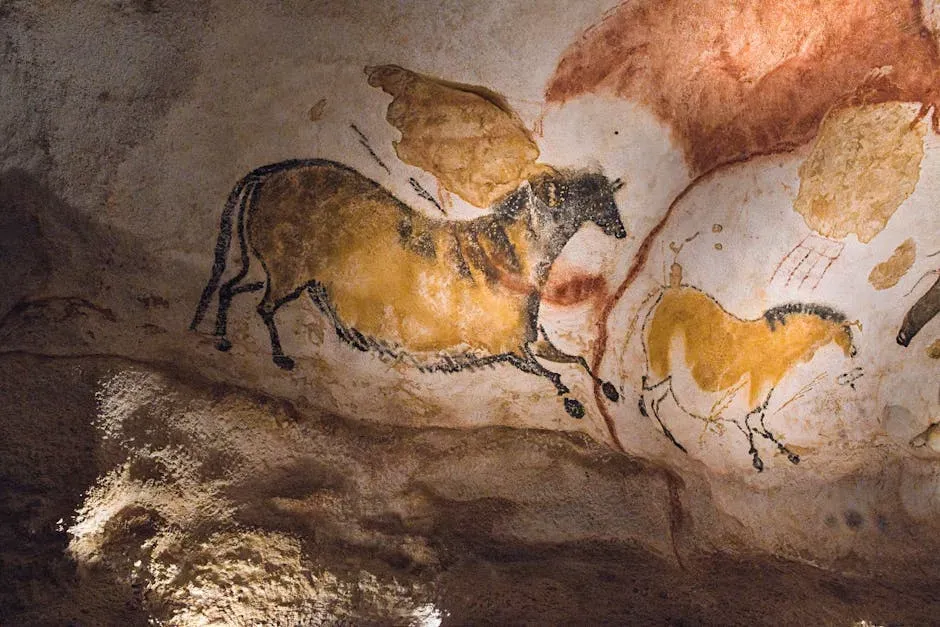
This is where things get genuinely thrilling, because unlike many disputed claims, this one comes wrapped in peer-reviewed science. A study suggests that ancient knowledge of extinct animals may be the case, based on a mysterious rock painting created around 200 years ago by the San people of South Africa. The artwork, known as the “Horned Serpent Panel,” is part of a famous rock art site in the Karoo Basin. Painted between 1821 and 1835, it features familiar animals alongside one that looks strikingly out of place, an elongated creature with short legs, a small head, and downward-curving tusks.
What’s often overlooked is that the San’s environment also contained artifacts from an ancient past: the San lived and hunted among fossil footprints, bones, skulls and teeth of long-extinct reptiles. In recent research, it was shown that the San discovered dinosaur bones in Lesotho, which borders the Free State. They also painted dinosaur footprints on cave walls. Most remarkably, if dicynodont fossils influenced painters of the tusked rock art figure, then that portrayal preceded the first scientific description of dicynodonts in 1845. Think about that for a second. An indigenous people may have documented an extinct species before Western science even had a name for it.
Ancient Brazil: Petroglyphs Placed Right Next to Dinosaur Footprints
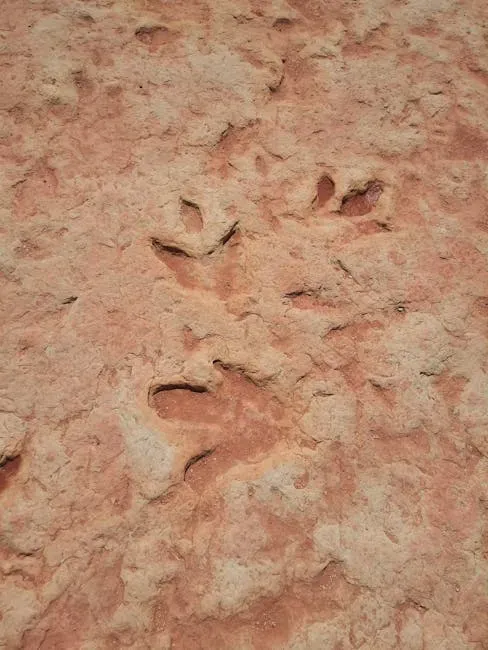
You’d think the most compelling evidence of ancient awareness of prehistoric creatures would come from grand temples or elaborately decorated burial tombs. But sometimes, the story is written right there on the ground. In northeastern Brazil, in a geological formation called the Sousa Basin, 9,000-year-old man-made petroglyphs have been found alongside 100-million-year-old dinosaur footprints. A recent study claims that the prehistoric art was deliberately created by humans who were careful not to disturb the nearby dinosaur tracks, with many of the petroglyphs a mere two to four inches from the fossilized prints.
Some of the glyphs even appear to be illustrated representations of the footprints. The study’s authors suggest this resemblance may have allowed the ancient artists, who are assumed to have known nothing of the existence of dinosaurs, to recognize and interpret the prints. Let’s be real – when ancient humans deliberately carved images two to four inches from fossilized dinosaur tracks, and some of those carvings resemble the tracks themselves, that’s not coincidence. That’s observation. Other instances of humans creating rock art in the vicinity of dinosaur footprints have been found in Australia, Poland, and the Poison Spider Dinosaur Tracks in Zion National Park, Utah.
Ancient China and the Dragon That Looks Suspiciously Like a Dinosaur
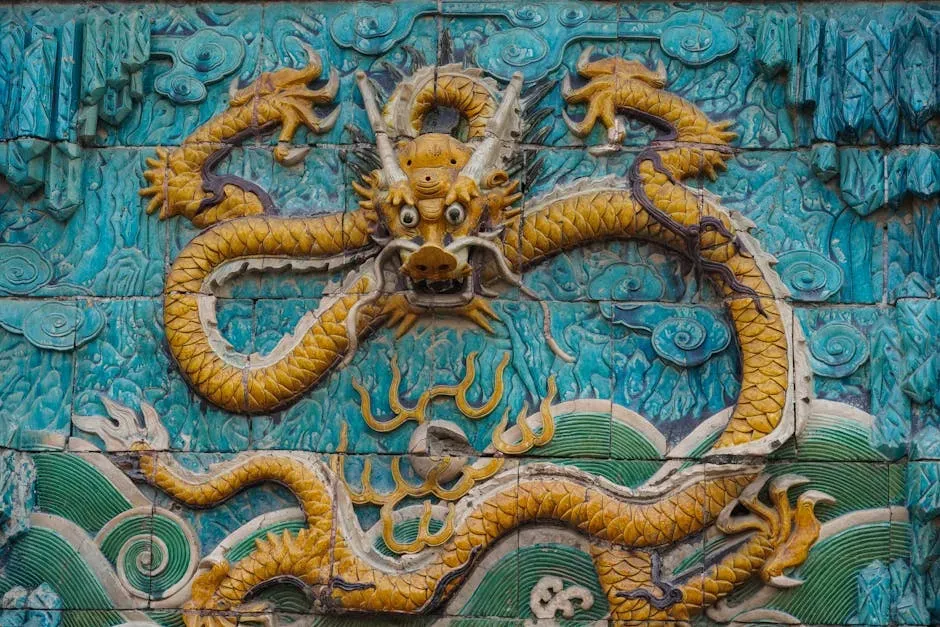
The Chinese dragon tradition is ancient, layered, and culturally complex, which makes any claims about dinosaur connections tricky. Honestly, it’s hard to say for sure where mythology ends and observation begins. About 4,000 years ago, the Hongshan culture in China produced many wonderful jade dragon carvings. Over time these dragon productions became highly stylized and were especially popular as pendants. Most of these ornamental pieces barely resemble a large reptile, but some of the older dragon statues appear to be attempts at modeling certain dinosaurs.
Chinese scholars used “dragon bone” as a general term for various types of fossils, including bones and teeth from at least 60 species of mammals. Dragon bones were used in Chinese traditional medicine as far back as the third century B.C. to treat a wide range of conditions. There is something almost poetic about that, isn’t there? A civilization grinding up dinosaur fossils as medicine, while simultaneously carving images of dragon-like creatures that bear a resemblance to the very animals those bones came from. Whether that resemblance was intentional or accidental remains genuinely open to debate.
Ancient Greeks, Griffins, and Fossilized Dinosaur Skulls
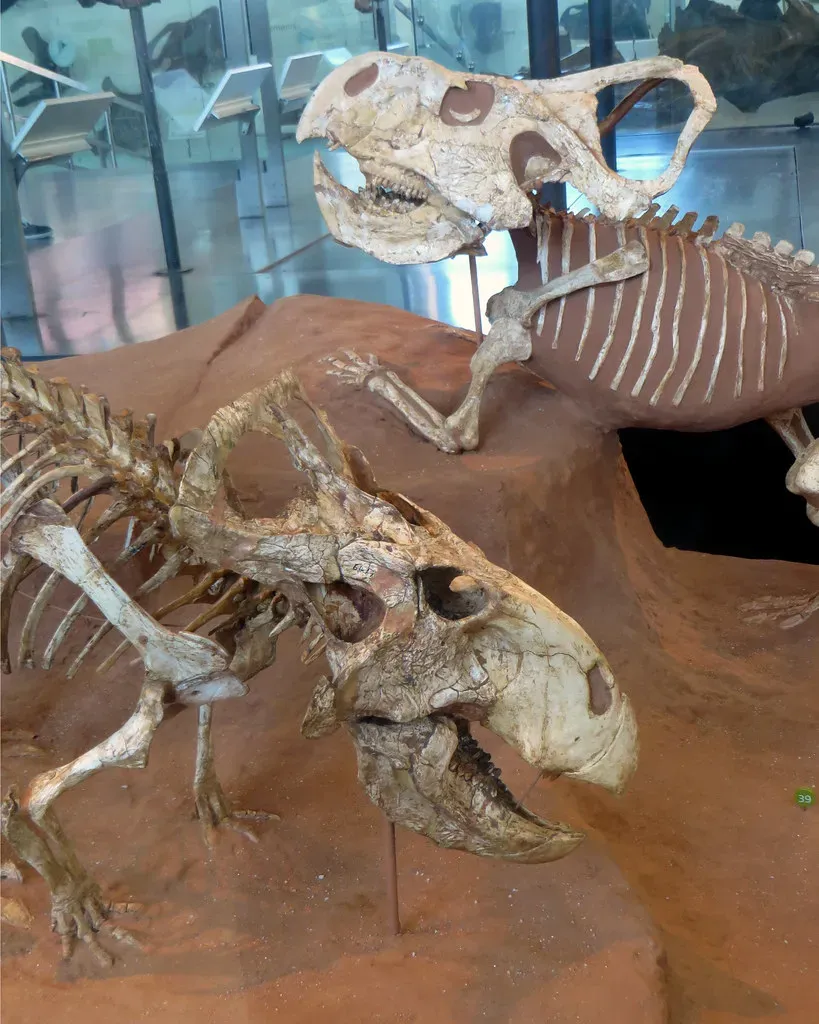
Now here’s a theory so compelling that a serious classical scholar built a career around it. The classical folklorist Adrienne Mayor has proposed that the profusion of literary descriptions and imagery of the griffin in Greek and Roman literature and art beginning in the 7th century BC to the 3rd century AD were influenced by observations and travelers’ accounts of fossilized beaked dinosaur skeletons found in the Turpan and Junggar basins and Gobi Desert. In other words, the mythical half-eagle, half-lion creatures of ancient legend may have been inspired by actual dinosaur bones encountered along ancient trade routes.
Thousands of years ago, Mayor suggests, Scythian nomads prospecting for gold in Mongolia’s Gobi Desert encountered Protoceratops bones. Stories of this beast traveled along trade routes, eventually inspiring griffin stories and art. However, this theory has faced scrutiny. Some scholars threw cold water on this theory. In a 2024 article titled “Did the horned dinosaur Protoceratops inspire the griffin?”, researchers poked several holes in Mayor’s hypothesis. For starters, Protoceratops were located hundreds of miles away from any known gold deposits. It’s a stunning idea – but science demands more than stunning ideas.
What Science Says About Ancient Humans and Their Fossil Awareness
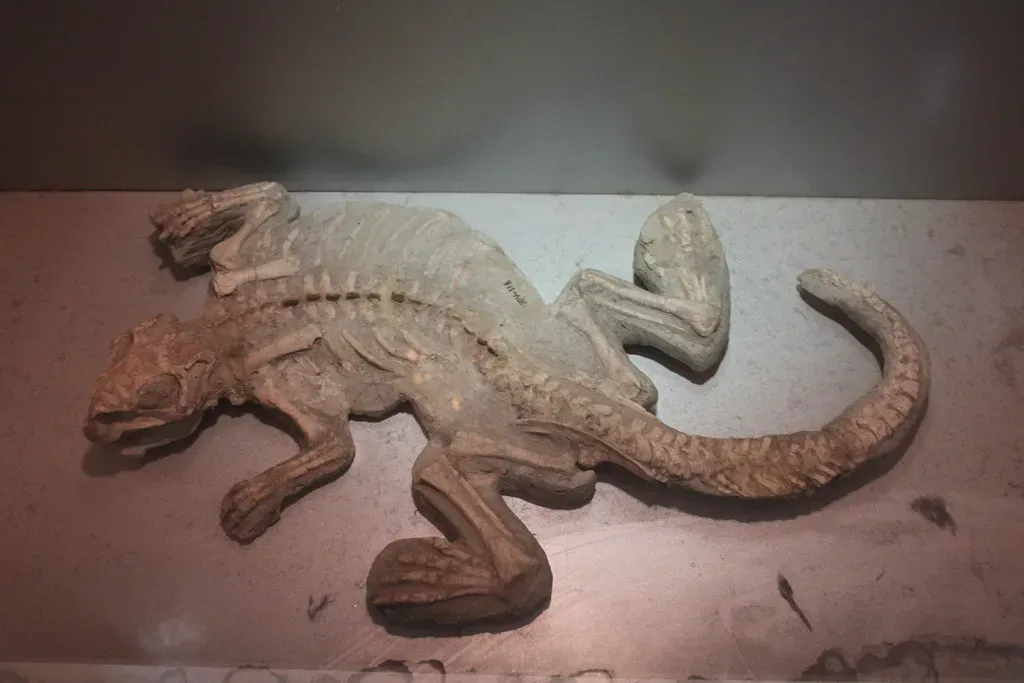
Step back and look at the bigger picture, and what you find is actually quite nuanced. Prehistoric and ancient people with a pre-scientific understanding of nature had a better handle on what fossils represented than western scholars and naturalists of the 16th, 17th, and 18th centuries who considered fossils to simply be an attempt by rock to imitate life. That’s a remarkable admission, and one that rarely gets the attention it deserves. The so-called “primitive” peoples were, in many ways, more observationally honest than their educated European counterparts.
Dig sites near San shelters have yielded chipped stone tools alongside fossil fragments carried from distant outcrops, meaning people collected ancient bones, perhaps as curios or ritual objects. Oral traditions recorded in the late 1800s even speak of colossal beasts that once walked the land before “the ground dried and cracked.” Meanwhile, we know of no evidence of the ancient people around the world excavating dinosaur fossils, reconstructing their skeletons, and then drawing them accurately, as scientists carefully attempt to do in modern times. Unlike scientists and illustrators today, who often recreate the skeletons of dinosaurs based on the fossil record, the ancients depicted the actual bodies of these creatures.
Conclusion: The Evidence Is Real, But the Interpretation Is Everything
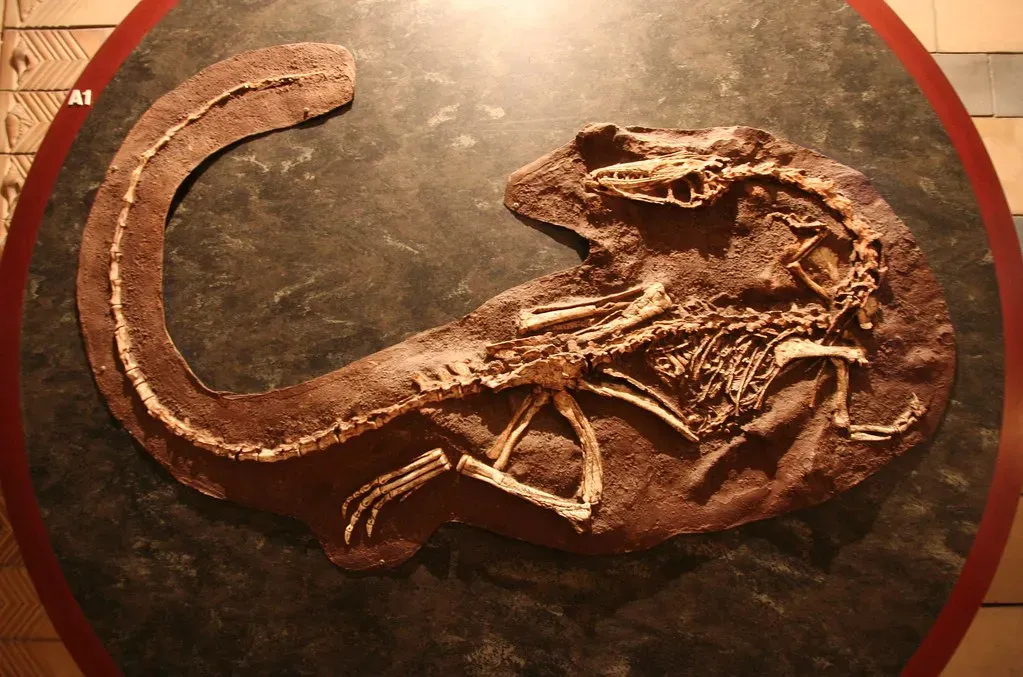
Here’s the thing about all of this: the mystery isn’t that ancient cultures drew creatures that resemble dinosaurs. The mystery is why, and that question deserves honesty rather than agenda. Some of the evidence, like the Ica Stones, has been largely discredited as forgeries. Other cases, like the San people’s artwork in South Africa and the Brazilian petroglyphs placed beside dinosaur footprints, carry genuine scientific weight and have been published in peer-reviewed journals. These are not the same thing, and it’s important not to lump them together.
What seems most likely across the board is that many ancient peoples encountered fossils, observed them closely, incorporated them into their spiritual and artistic traditions, and occasionally created images that bear remarkable resemblance to animals that modern science would not formally identify for thousands of years afterward. That’s not evidence of time travel or cohabitation with living dinosaurs. It’s evidence of something arguably more profound: that human curiosity, pattern recognition, and the drive to make meaning from the unknown is an ancient, universal trait – one that bridges the gap between a San hunter-gatherer in the Karoo and a paleontologist working in a modern lab. The bones were always there. Some people were simply paying attention long before we gave them credit for it.
What do you think – does ancient artwork change how you see the relationship between early humans and the prehistoric world? Share your thoughts in the comments.