
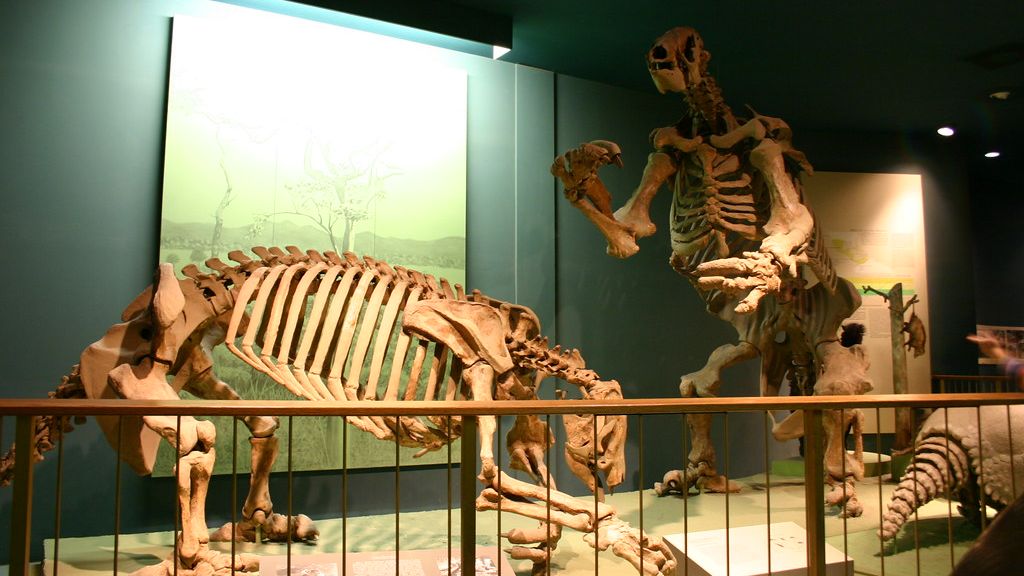
Picture a creature the size of a bus, covered in coarse shaggy hair, walking on its knuckles and hind feet across an ancient grassland, its claws nearly the length of a human forearm. Now picture a small group of Stone Age hunters quietly stalking it from behind, one careful footstep at a time. That scene sounds like pure imagination. Honestly, it sounds like something straight out of a fantasy film. Yet the evidence for exactly this kind of encounter has been quietly building for decades, hidden in fossilized footprints, cut-marked bones, and cave sites scattered from Patagonia to New Mexico.
The story of how ancient humans and giant ground sloths crossed paths is one of the most thrillingly strange chapters in prehistoric history, one that keeps getting rewritten as new discoveries emerge. Scientists are still arguing about what really happened, and the more they dig, the more complex the picture becomes. Let’s dive in.
Meet the Beast: What Giant Ground Sloths Actually Were
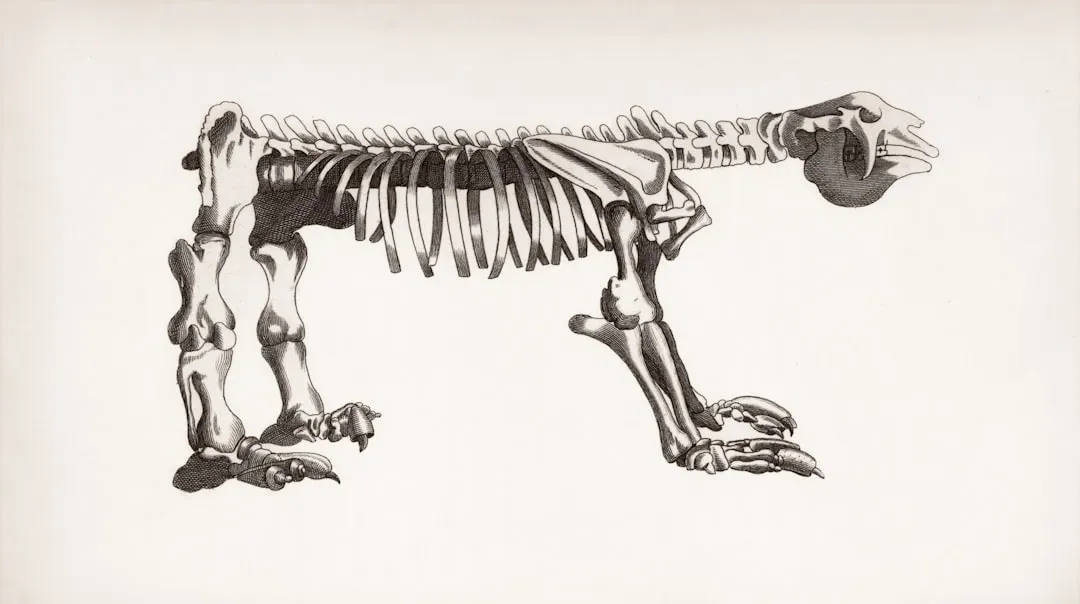
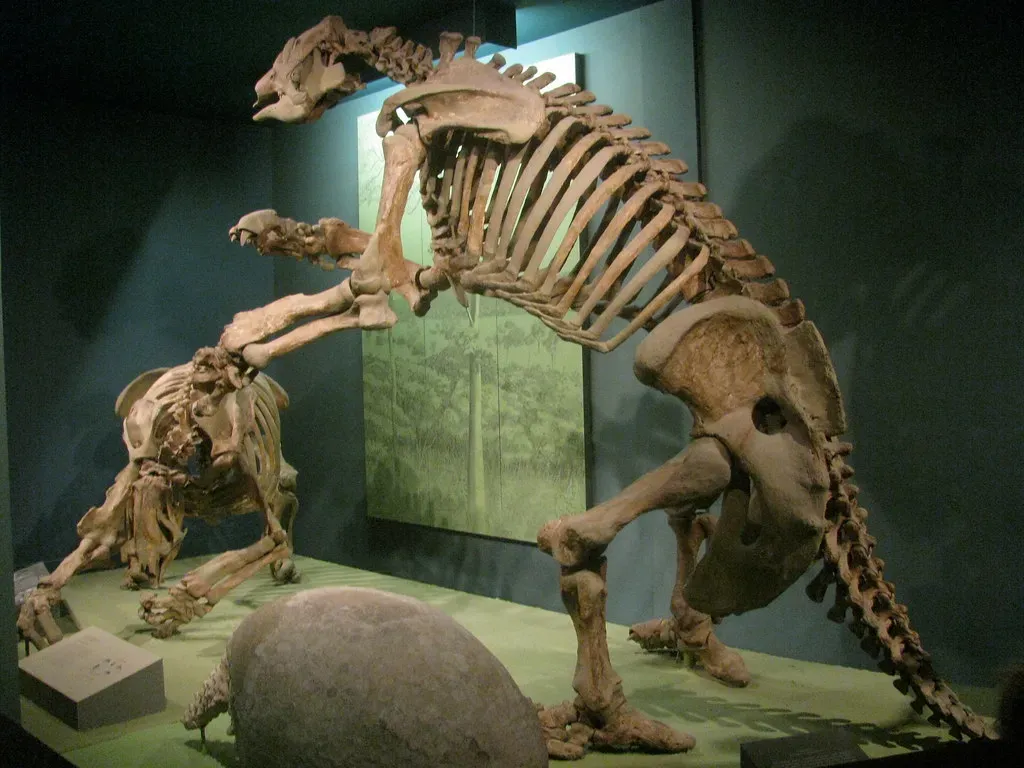
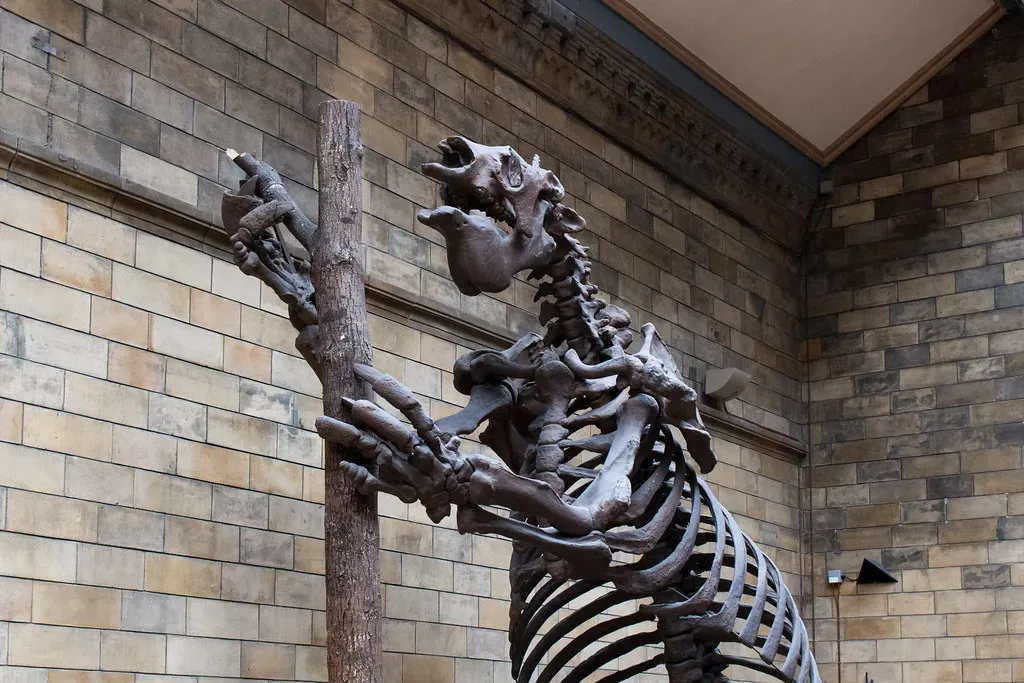
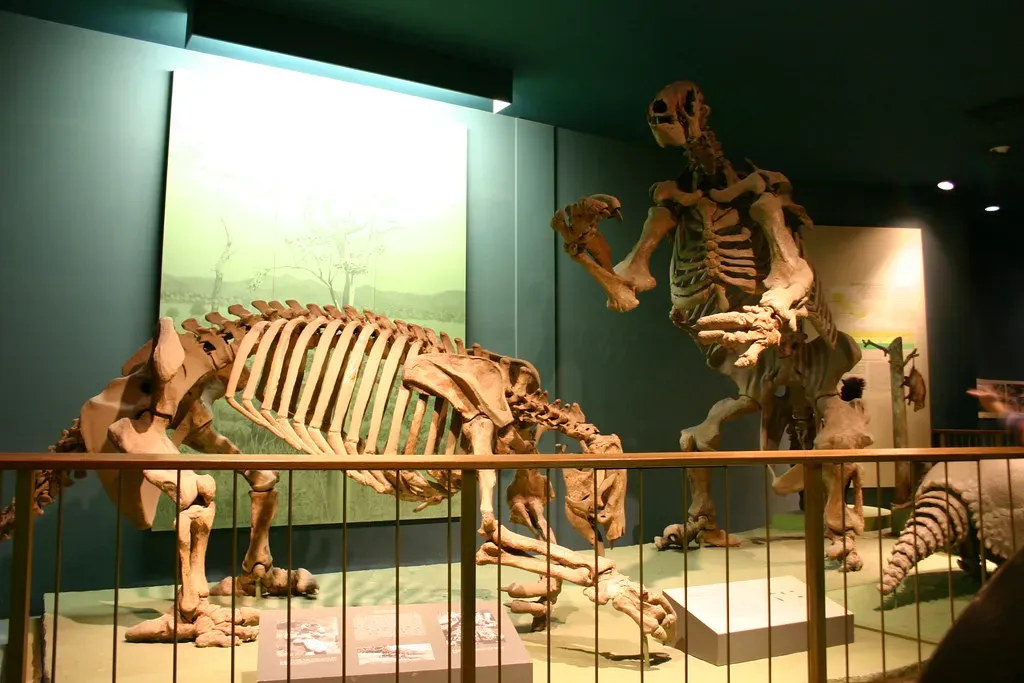
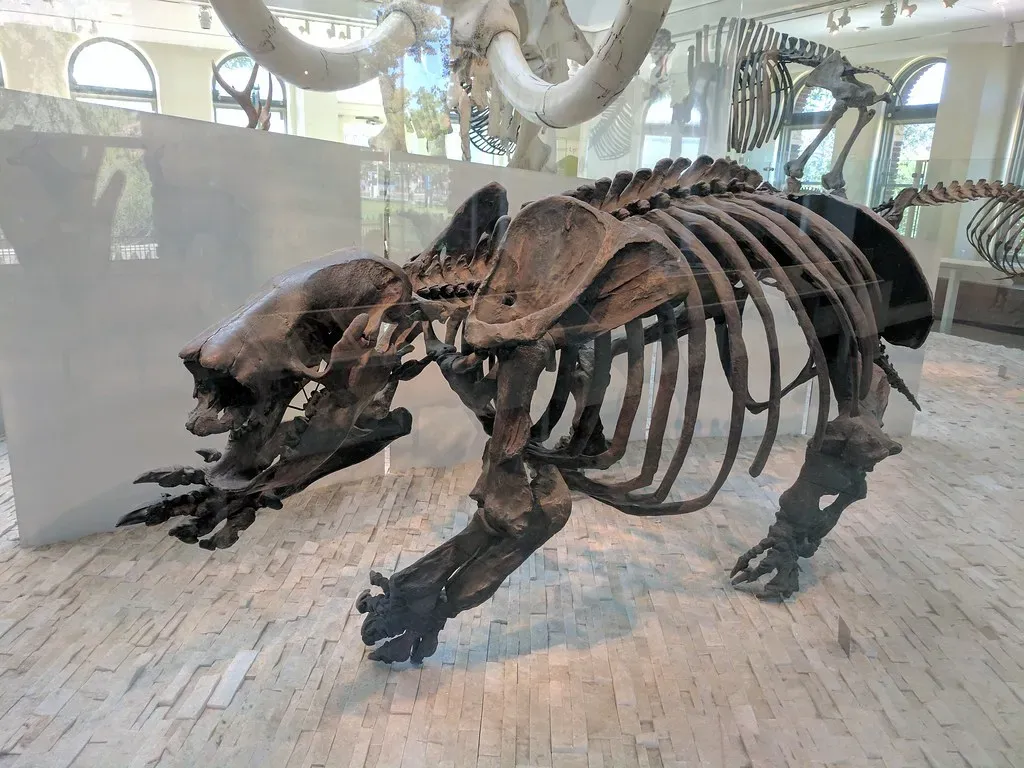
You might think of the modern sloth as a slow, docile, tree-hugging creature that barely moves faster than a yawn. The giant ground sloths that roamed the prehistoric Americas were something else entirely. Ground sloths are a diverse group of extinct sloths in the mammalian superorder Xenarthra, and they varied widely in size – the largest belonging to the genera Lestodon, Eremotherium, and Megatherium, which were roughly the size of modern-day elephants.
The range was dramatic, from the 100-kilogram Caribbean ground sloth to the four-tonne, 3.5-meter-tall Megatherium. That’s not a typo. Four tonnes. Some of these animals were so large they make modern grizzly bears look like house pets. To defend themselves, ground sloths had long, sharp claws on several of their fingers, and they also had thick bones and even thicker joints, meaning they could strike with a surprising amount of power.
Ground sloths often fed in open fields, and recent studies have attempted to discover their diet through fossils of their dung, with analysis finding that they often ate the foliage of trees, hard grasses, shrubs, and yucca – plants located in areas that would have exposed them and made them susceptible to human predation. In other words, their dining habits made them easy to spot. Hard to miss, really, when you weigh as much as a pickup truck and you’re grazing in the open.
The White Sands Revelation: Footprints Frozen in Time
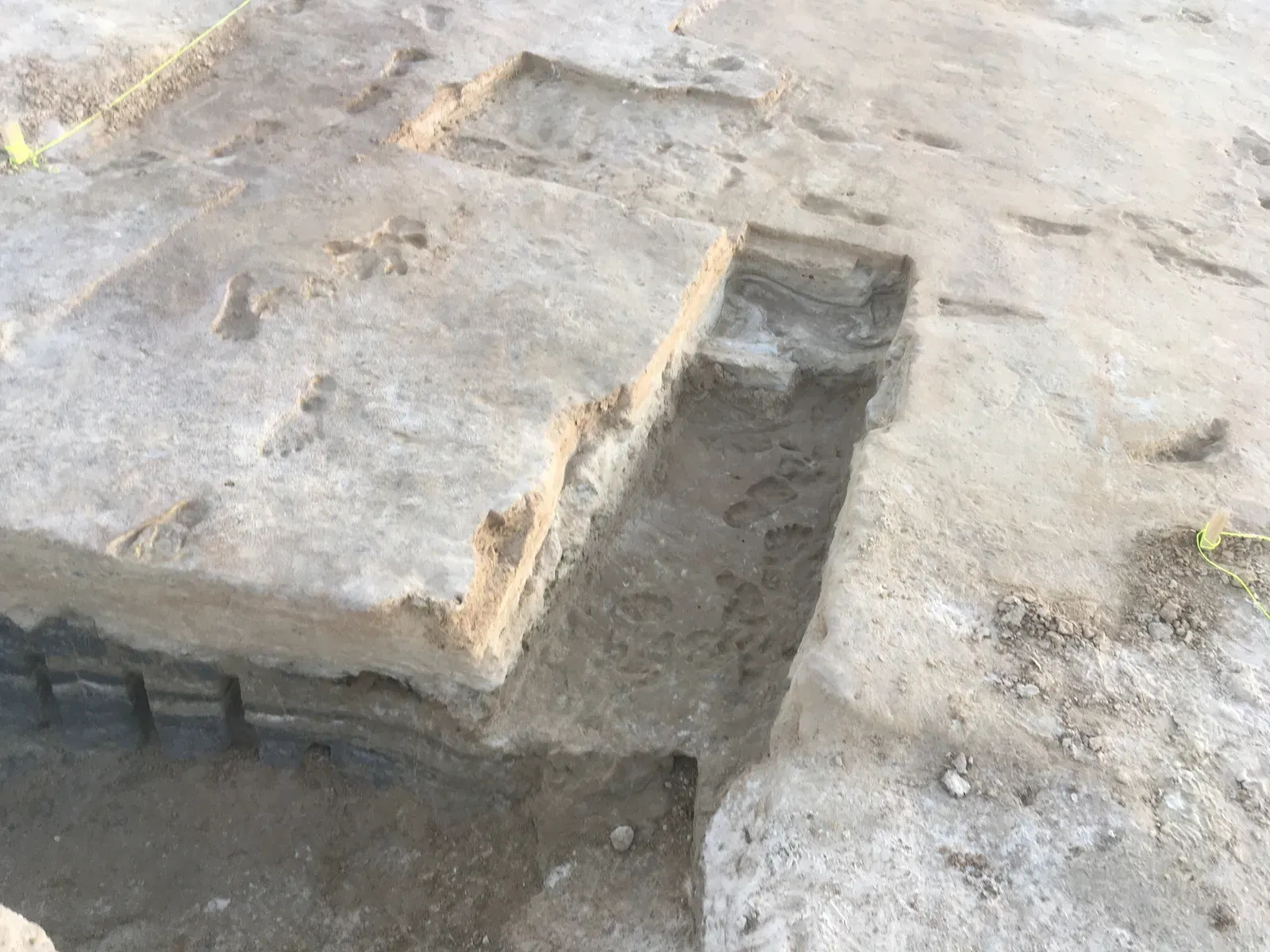
Here’s where things get genuinely spine-tingling. On a remote salt flat in New Mexico’s White Sands National Monument, a team of scientists found the first evidence that humans, at the end of the Ice Age, may have hunted giant, razor-clawed ground sloths. The discovery came in the form of fossilized footprints, which is remarkable in itself, because you’re looking at two species meeting in real time, preserved forever in what was once a muddy lakebed.
Researchers found fossilized human footprints inside the ancient footprints of a giant ground sloth, leading them to believe a human may have stalked the animal in a hunting expedition at the end of the Ice Age. Think about what that means. Someone thousands of years ago was carefully stepping into the oversized tracks of a massive beast, presumably to mask their approach. The humans had to have been purposefully extending their stride to place their feet inside the sloths’ footprints, as individual footprints were between 80 and 110 centimeters apart, while a normal human stride should measure only about 60 centimeters. That’s a deliberate, calculated move, not an accident.
When a sloth trackway isn’t near any other footprints, it generally takes a straight or slightly curving path. Yet when human footprints are also nearby, a sloth’s path sometimes takes sharp turns or indicates the animals reared up on their hind legs. The animals were reacting to something. At the end of the sloth track, the sloth prints move in a circle and there are claw marks on the ground, which researchers interpret as the sloth rearing up on its hind legs and flailing its claws around.
The Campo Laborde Kill Site: Blood on Stone Tools
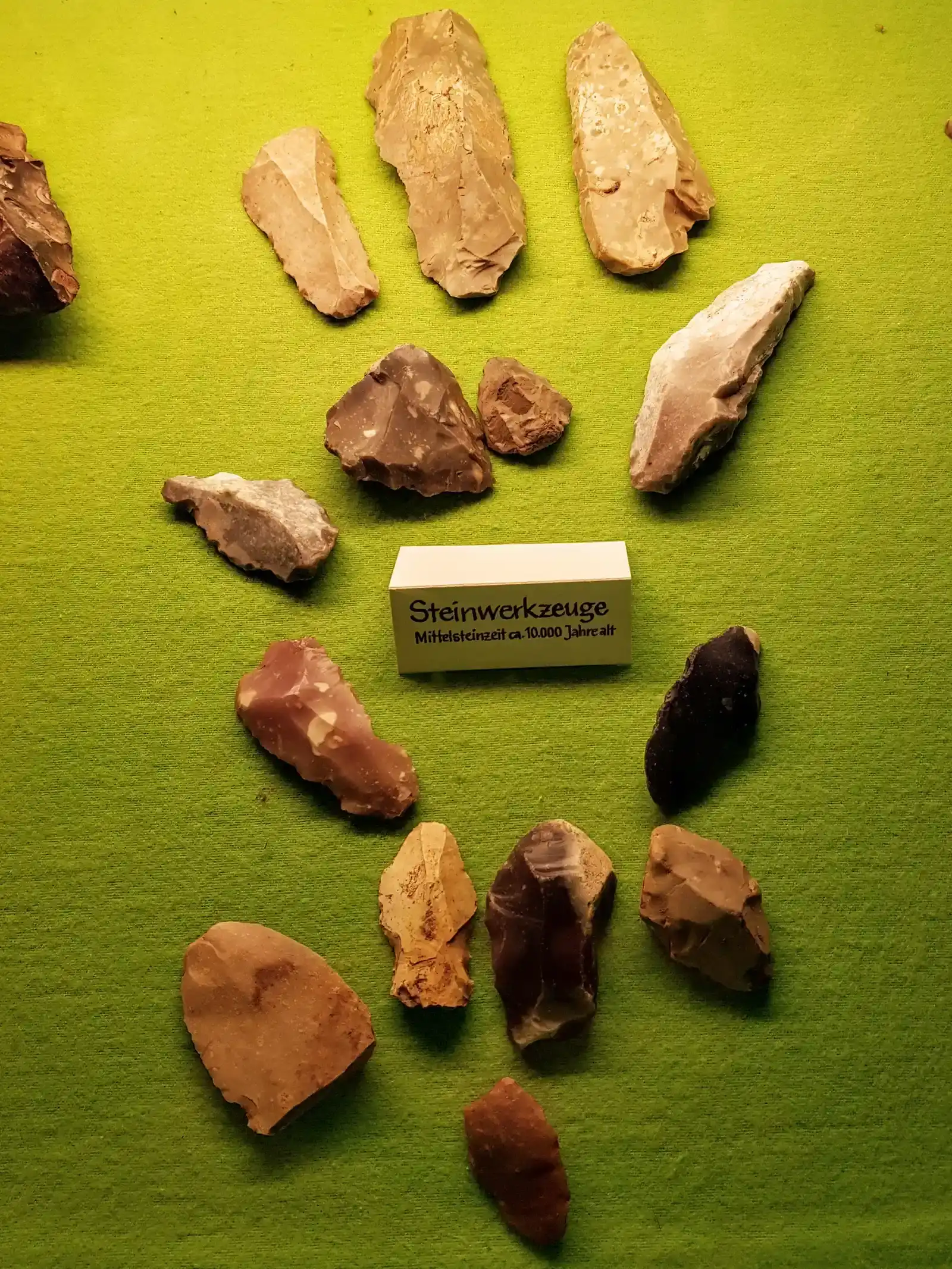
If the footprints of White Sands are thrilling circumstantial evidence, the Campo Laborde site in Argentina crosses into something far more definitive. A kill site dating to around 12,600 years Before Present is known from Campo Laborde in the Pampas of Argentina, where a single individual of Megatherium americanum was slaughtered and butchered at the edge of a swamp, which is the only confirmed giant ground-sloth kill site in the Americas.
The archaeologists found evidence, including a broken piece of knife and other stone tools, that humans clearly hunted and butchered the animal. According to the lead researcher, the team could even tell that the knife had been sharpened, broken, and thrown away. That level of detail is extraordinary. You’re reading the actions of a specific person, on a specific day, tens of thousands of years ago. Researchers re-dated the bones using a more sophisticated purification technology called XAD-2 resin, which separates the organic part of bones from the inorganic elements, and the results revised the timeline by at least 1,000 years older than originally thought, placing this killing site firmly in the Pleistocene era.
Beyond Hunting: Bones Carved into Ornaments
Let’s be real – most people assume the only interaction ancient humans had with giant sloths was hunting them for food. The archaeological record tells a far richer, stranger story. Some of the most tantalizing clues come from an archaeological site in central Brazil called Santa Elina, where bones of giant ground sloths show signs of being manipulated by humans, and sloths like these once had bony structures on their backs called osteoderms that may have been used to make decorations.
At a lab at the University of Sao Paulo, a researcher holds in her palm a round, penny-sized sloth fossil, noting that its surface is surprisingly smooth, the edges appear to have been deliberately polished, and there is a tiny hole near one edge. The belief is that it was intentionally altered and used by ancient people as jewelry or adornment, and three similar pendant fossils are visibly different from unworked osteoderms on the table, which are rough-surfaced and without any holes.
There is evidence of symbolic thinking in the ornaments made from giant ground sloth bones, and these cultures were interacting with the giant sloths not just for subsistence. In Santa Elina, some of the oldest giant ground sloth bones were not only modified but were worn from extensive use. Someone wore a piece of giant sloth as a pendant around their neck. I find that quietly amazing. These were not just prey animals. They held meaning.
The Coexistence Question: Did Humans and Sloths Live Side by Side?
For a long time, the dominant theory was almost absurdly simple: humans arrived in the Americas and quickly wiped out the megafauna in a wave of overhunting. In the 20th century, archaeologists proposed the Overkill Hypothesis, the idea that human overconsumption was the primary cause of large mammal extinctions in the Americas, supported by the discovery of spear points and piles of mammoth bones in Clovis, New Mexico, which at its discovery in 1932 was the earliest known archaeological site in the Americas, dated around 13,000 to 12,000 years old, and scientists believed it provided proof that the emergence of humans led to the demise of the megafauna.
Yet that neat narrative has crumbled under newer evidence. New research from several sites is starting to suggest that people came to the Americas earlier – perhaps far earlier – than once thought, and these findings hint at a remarkably different life for these early Americans, one in which they may have spent millennia sharing prehistoric savannas and wetlands with enormous beasts. The new evidence indicates that humans and megafauna coexisted for thousands of years without humans causing their immediate extinction. That changes everything about how we think of these encounters. It wasn’t necessarily a blitzkrieg. It was, perhaps, a long and complicated relationship.
The Extinction Debate: Humans, Climate, or Both?
It’s hard to say for sure what ultimately killed off the giant ground sloths, and scientists are still arguing passionately about it. While humans certainly contributed to the demise and subsequent extinction of ground sloths, it’s thought they were also victims of large, continent-spanning climatic changes that occurred towards the end of the Pleistocene, when temperatures warmed, ice sheets retreated, and the environments that ground sloths and other megafauna once thrived in changed dramatically.
Research found that populations of megafauna kept increasing until a point around 12,900 years ago when they began to decline sharply, coinciding exactly with the moment of appearance of fishtail-tipped projectile points, suggesting that when humans obtained this new hunting technology, they began to hunt these mammals and led to the decline of these populations. That is a striking correlation. Still, correlation is not causation, and the full picture remains fiercely debated.
After the continental ground sloths disappeared, insular sloths of the Caribbean survived for approximately 6,000 years longer, which correlates with the fact that those islands were not colonized by humans until about 5,500 years before present. That single fact is perhaps the most compelling piece of the whole puzzle. Where humans went, giant sloths vanished. Where humans had not yet arrived, they endured. You can draw your own conclusions.
Conclusion: A Chapter of History We’re Still Writing
What the growing body of evidence tells us is that the story of giant sloths and ancient humans was not a simple one. It was not a quick, brutal extinction story, nor was it a peaceful coexistence. It was a messy, drawn-out, deeply human story involving hunting, craftsmanship, symbolic thinking, and ultimately, the disappearance of something genuinely irreplaceable from the face of the Earth.
You look at a fossilized human footprint sitting inside the enormous track of a Megatherium, and something clicks. That was a moment of tension, of predator and prey sizing each other up on a muddy lakeshore. That was a human being, small and determined, stepping carefully into footprints left by a four-tonne beast. The fact that we can reconstruct these encounters from dirt and bones, tens of thousands of years later, is nothing short of extraordinary.
Every new archaeological site, every re-dated bone, and every polished osteoderm pendant adds a new sentence to a story that is far from finished. The giants are gone, but the echoes of those encounters are still reverberating through the scientific world today. What do you think would have happened if those giant sloths had survived into the modern era? Tell us in the comments.