Picture a creature so strange, so utterly unlike anything you’d expect a dinosaur to be, that when scientists first described it, they struggled to make sense of what they were even looking at. Long crocodile-like jaws. A massive sail rising from its spine. Short hind limbs. Dense bones. A paddle-shaped tail. You wouldn’t be alone if you thought, “That can’t be right.” Yet all of that belongs to one animal – Spinosaurus – and the debate over how it actually lived has been raging among paleontologists for over a century.
Honestly, no other dinosaur has stirred up as much controversy or rewritten the rulebook quite like this one. Was it a river-wading ambush predator? A fully aquatic swimming hunter? Or something even more nuanced and complex than either of those? Every new fossil seems to answer one question and open three more. Buckle up, because what you’re about to discover is equal parts thrilling and genuinely surprising.
A Discovery Cursed by War: The Turbulent History of Spinosaurus
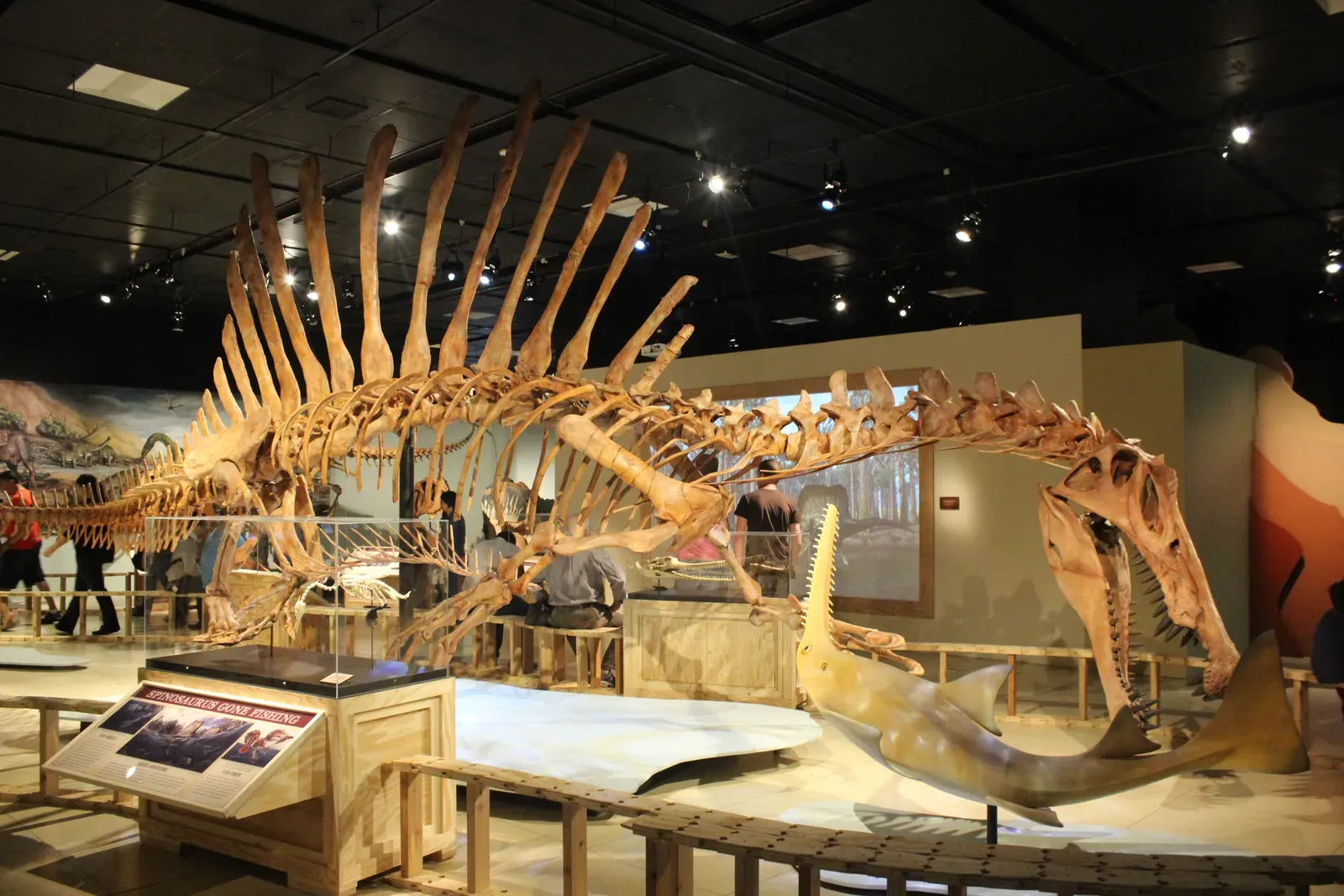
Every great mystery begins with a discovery, and Spinosaurus is no exception. The first partial skeleton was unearthed in 1912 by Richard Markgraf in the Bahariya Formation of western Egypt, and those original remains were then described and named by German paleontologist Ernst Stromer in 1915 – only to be destroyed in Allied bombing raids on Munich during World War II. When you think about it, that tragedy set paleontology back by decades. The physical evidence was gone.
It is only because of Stromer’s meticulous notes, including detailed descriptions and sketches, that much of the scant knowledge surrounding this dinosaur has been retained at all. Think of it like trying to reconstruct a painting from someone else’s verbal description of it. For the next century, a variety of competing inferences were made about its appearance and lifestyle, largely because scientists were working from fragments and artistic reconstructions rather than hard physical evidence.
Over the past century, Spinosaurus transformed from a vaguely known sail-backed curiosity into the centerpiece of one of paleontology’s most intense debates: could a dinosaur truly live and hunt in the water? Once a footnote known from fragments and wartime photographs, Spinosaurus is now a symbol of scientific revision. It’s a story of loss, persistence, and remarkable rediscovery.
A Giant Among Giants: Just How Big Was This Thing?
Uploaded by FunkMonk, CC BY 2.0)
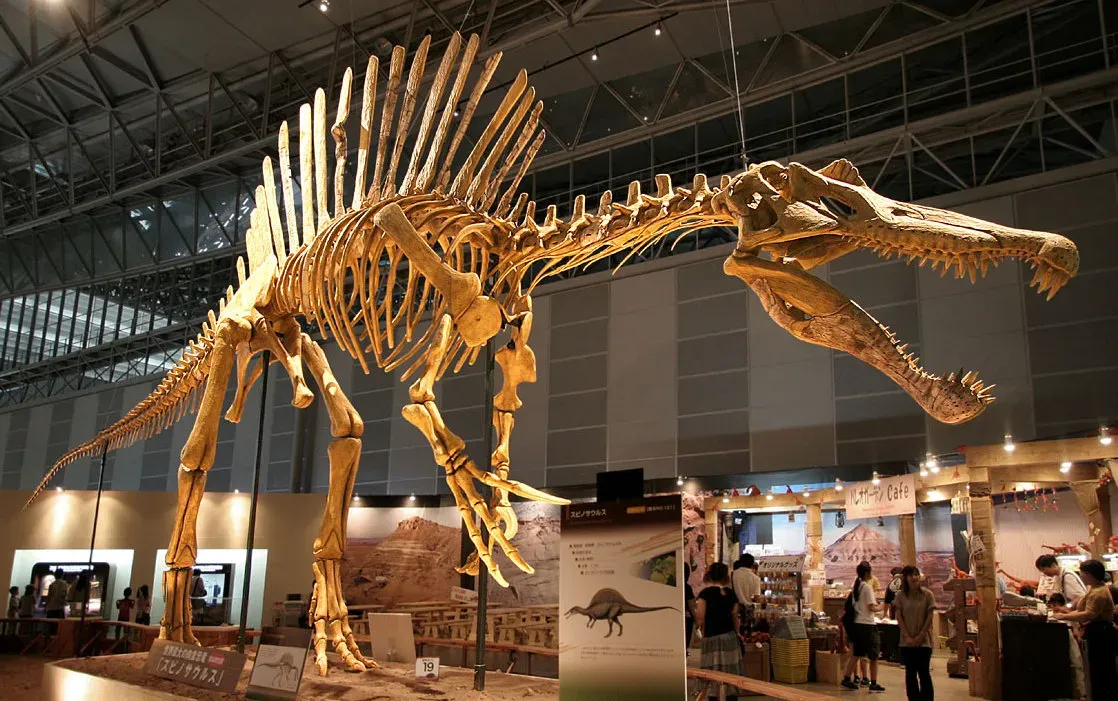
Let’s be real – size matters when you’re talking about apex predators, and Spinosaurus did not disappoint. Spinosaurus is currently regarded as the longest known carnivorous dinosaur, with length estimates ranging from about 14 to over 15 meters, and possibly more depending on reconstruction. In sheer linear size, it exceeded even Tyrannosaurus rex, though it was built very differently. So the next time someone tells you T. rex was the biggest meat-eater that ever lived, you can politely correct them.
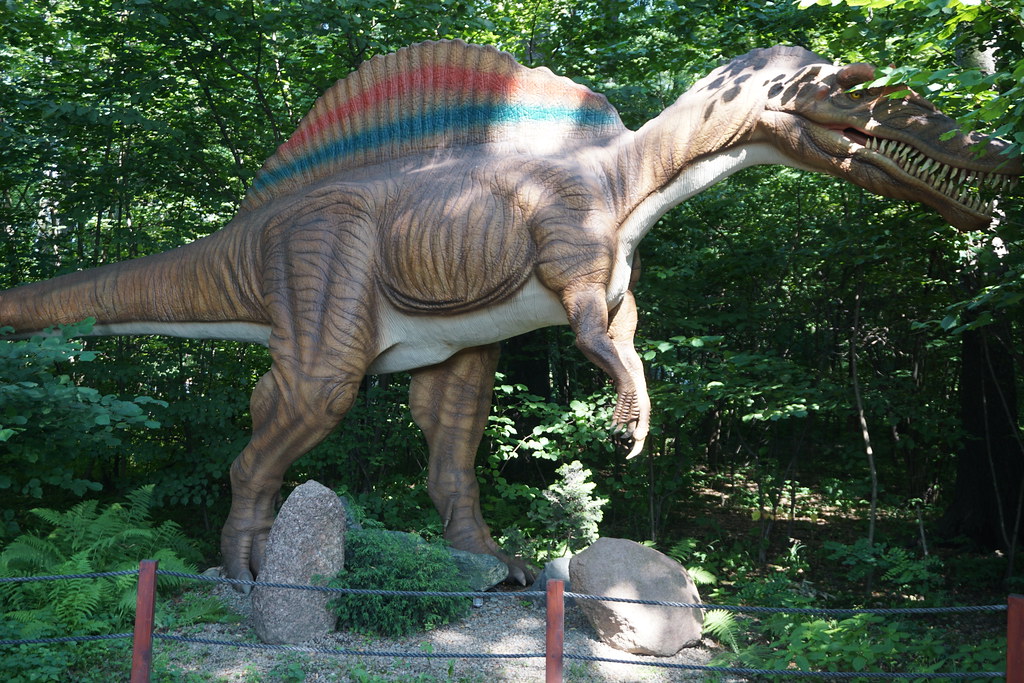
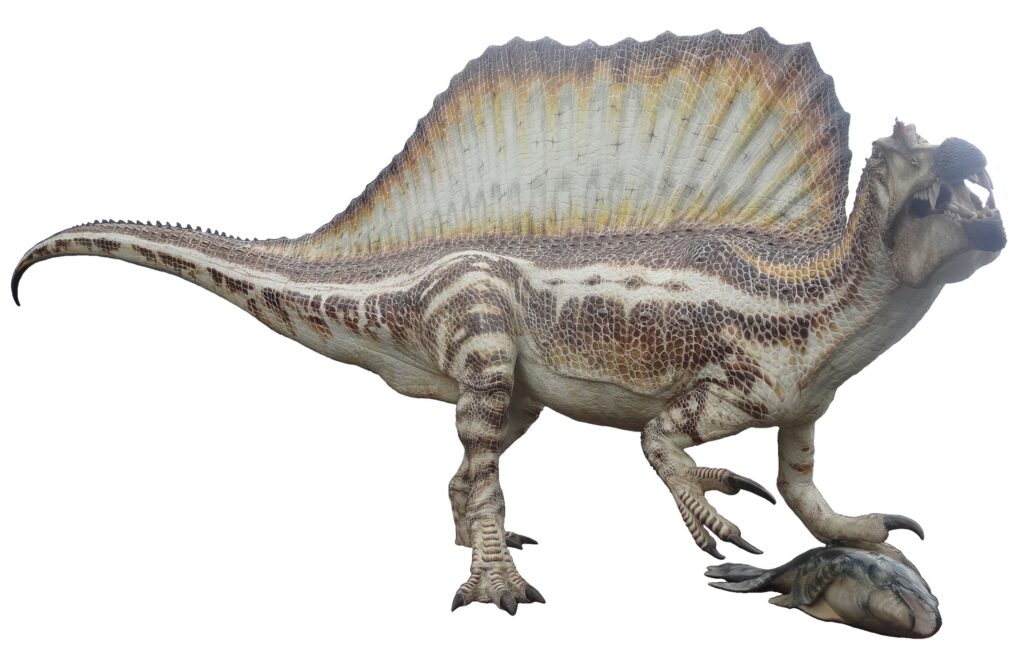
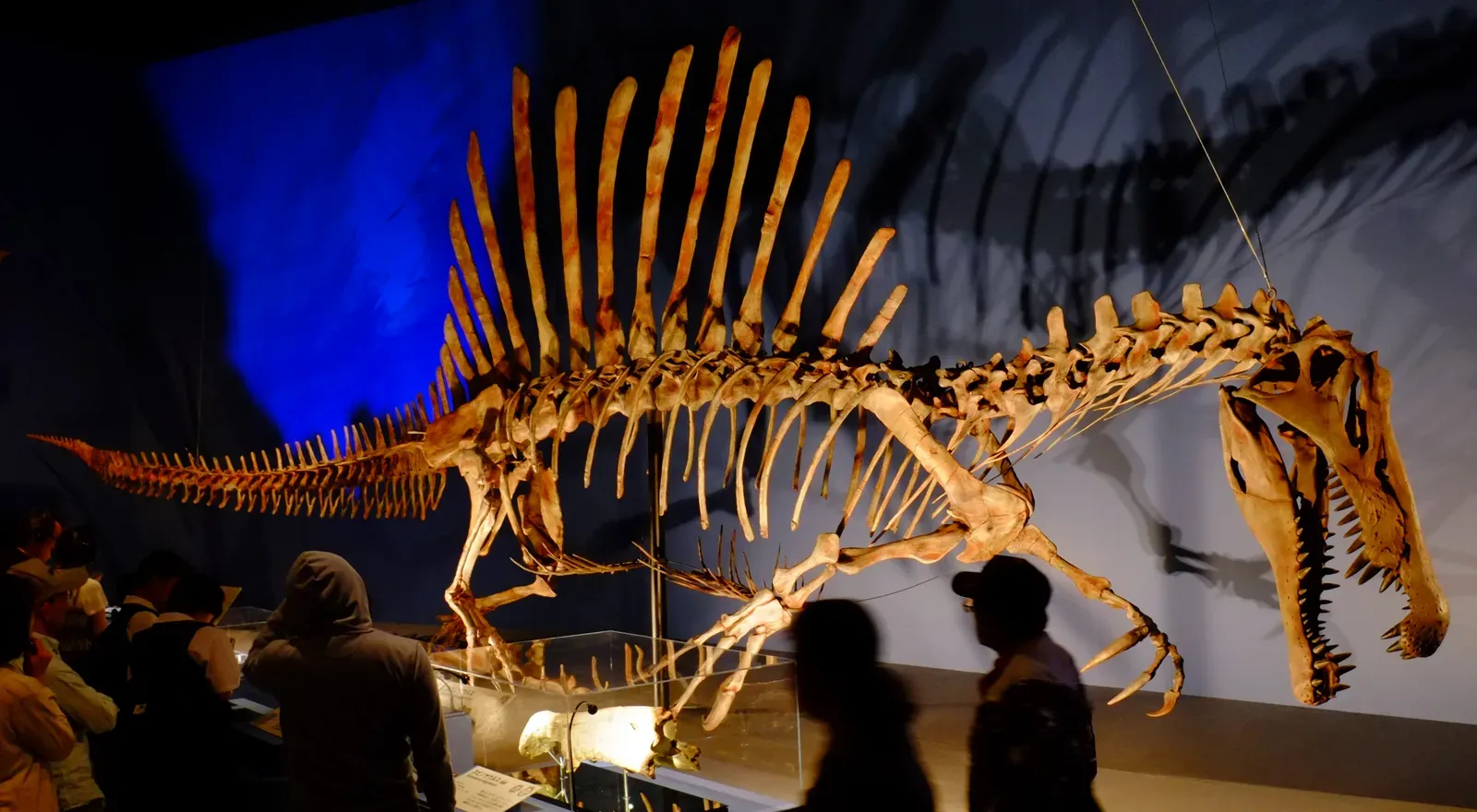
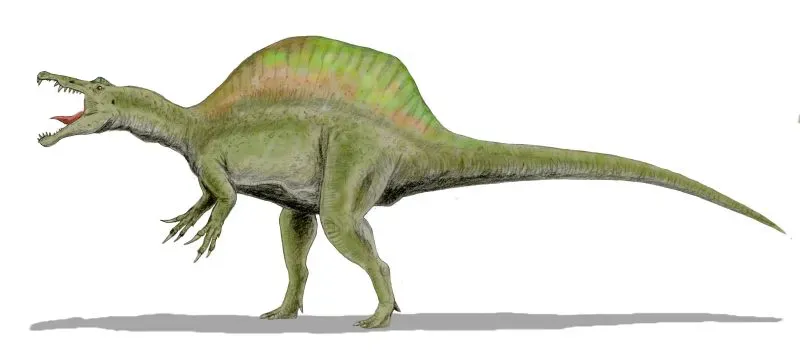
The fossils indicate that Spinosaurus was the largest known predatory dinosaur to roam the Earth, measuring more than nine feet longer than the world’s largest Tyrannosaurus rex specimen. That is not a small difference. That’s like comparing a standard sedan to a stretch limousine. The updated skeleton illustrates that Spinosaurus was long rather than tall, with a slim torso, small pelvis, and short hind legs. The bones themselves were compact and dense. Many semiaquatic animals on the earth today have the same type of bones, like manatees and penguins – a composition that helps them control buoyancy while underwater.
The Ancient Rivers of North Africa: A World Designed for a Monster
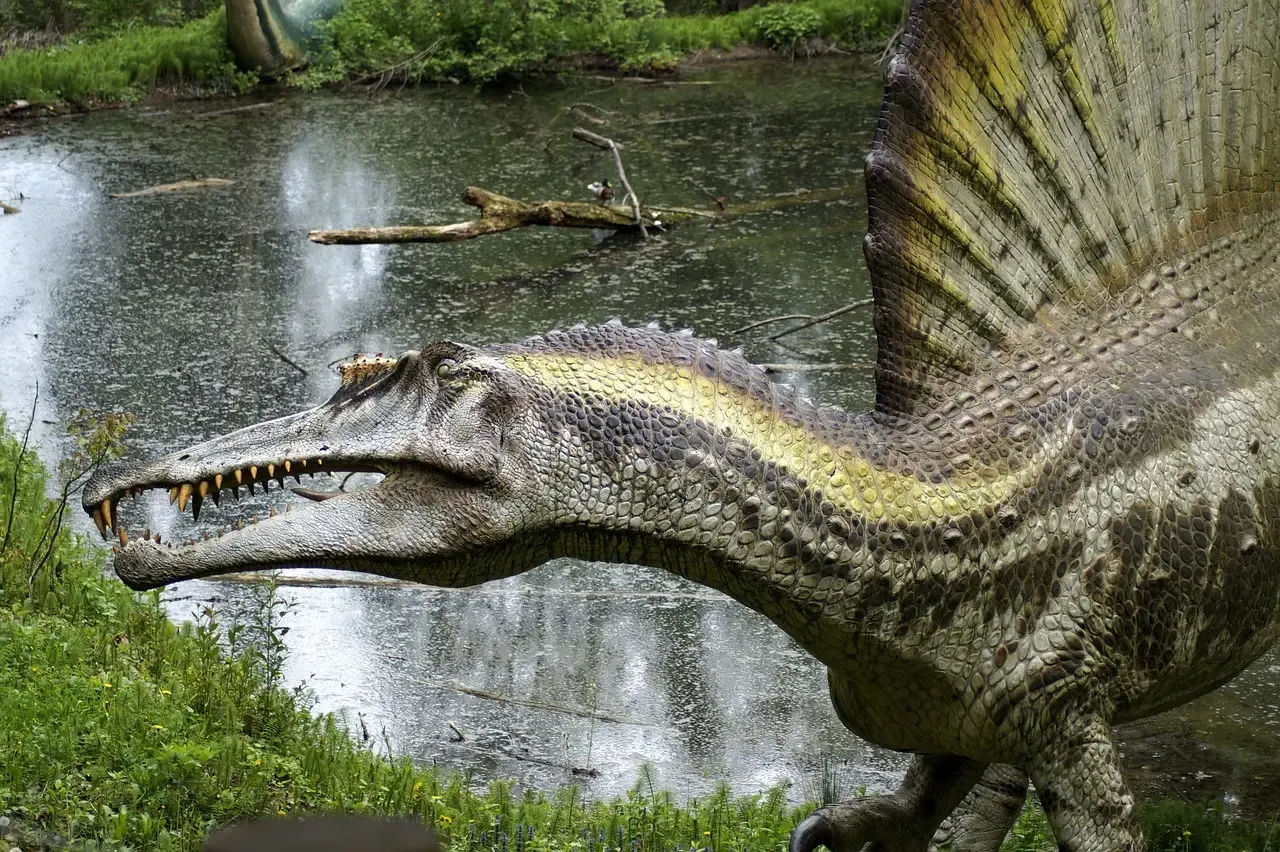
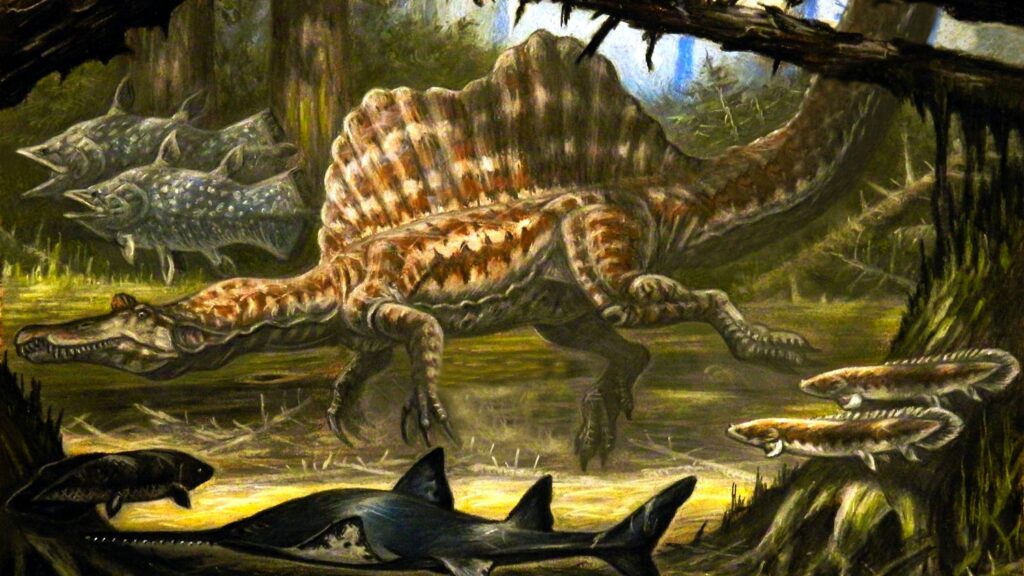
This predator lived in a world vastly different from our own. During the Cretaceous period, the area that is now North Africa was a lush, riverine environment. The landscape was dominated by vast river systems and mangrove forests teeming with a variety of life. The climate was warm, and the area was likely subject to seasonal floods. You have to visualize it: the Sahara Desert as we know it today was once something closer to the Amazon.
A warm, humid climate and a diverse range of ecosystems, including rivers, swamps, and shallow coastal environments on the southern shores of the Tethys Ocean characterized the region. The large Kem Kem river system flowed northwards towards the Tethys, forming an expansive delta dominated by rapidly moving fresh to brackish water that was home to a diverse assemblage of lamniform sharks and the large sawfish-like Onchopristis. It was genuinely one of the most dangerous ecosystems ever to exist. The diverse range of habitats helped contribute to a diverse fossil community, which includes pterosaurs, crocodiles, fish, molluscs, and dinosaurs, with theropods and sauropods also represented.
Built for the Water: The Anatomy That Started Everything
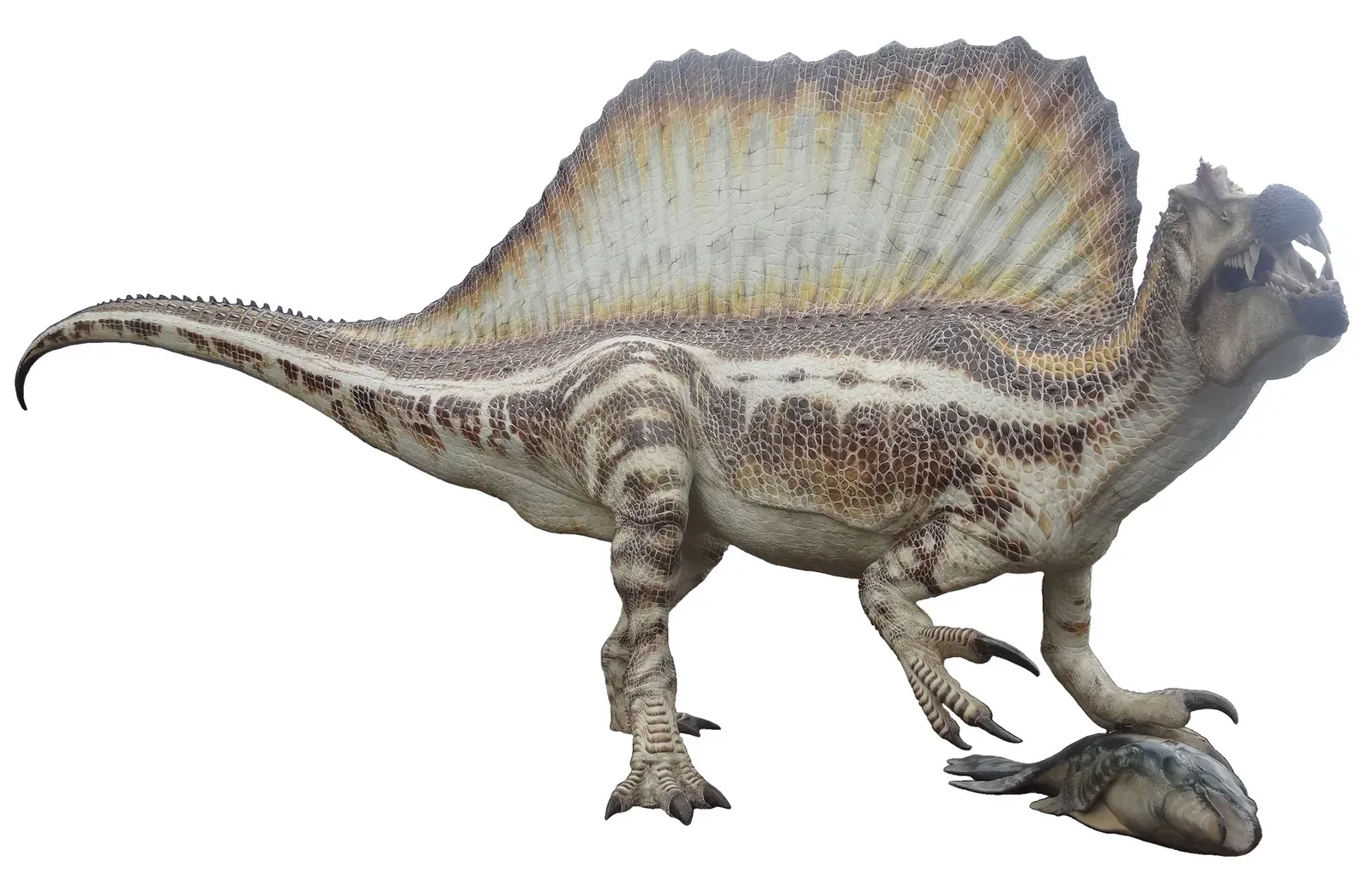
Here’s the thing – Spinosaurus didn’t just look unusual. It was built in ways that were completely unlike any other dinosaur, and those differences pointed strongly toward water. Unlike other theropods, Spinosaurus had several aquatic specializations: a crocodile-like head with a long, slender snout and interlocking pointy teeth for grasping large fish, pressure sensors in the snout to detect moving prey in the water similar to crocodiles, a long crocodile-like tail ideal for propulsion in water, and possibly webbed back feet. That’s not one coincidence – that’s a design blueprint.
The length and shape of the Spinosaurus skull were also useful in defining its ecology. The long skull of Spinosaurus created a larger distance between the jaw hinge and bite point, allowing the jaws to shut faster to catch agile aquatic prey. This adaptation is seen in other groups of aquatic hunting animals, such as mosasaurs and shoreline birds like herons. I think this is where it gets really fascinating. Nature doesn’t repeat the same design by accident. Nostrils positioned further up on the skull allowed breathing while mostly submerged, and its dense bones, like those in whales and other aquatic mammals, supported improved buoyancy while swimming.
The Tail That Changed Everything: Swimming Dinosaur Confirmed?
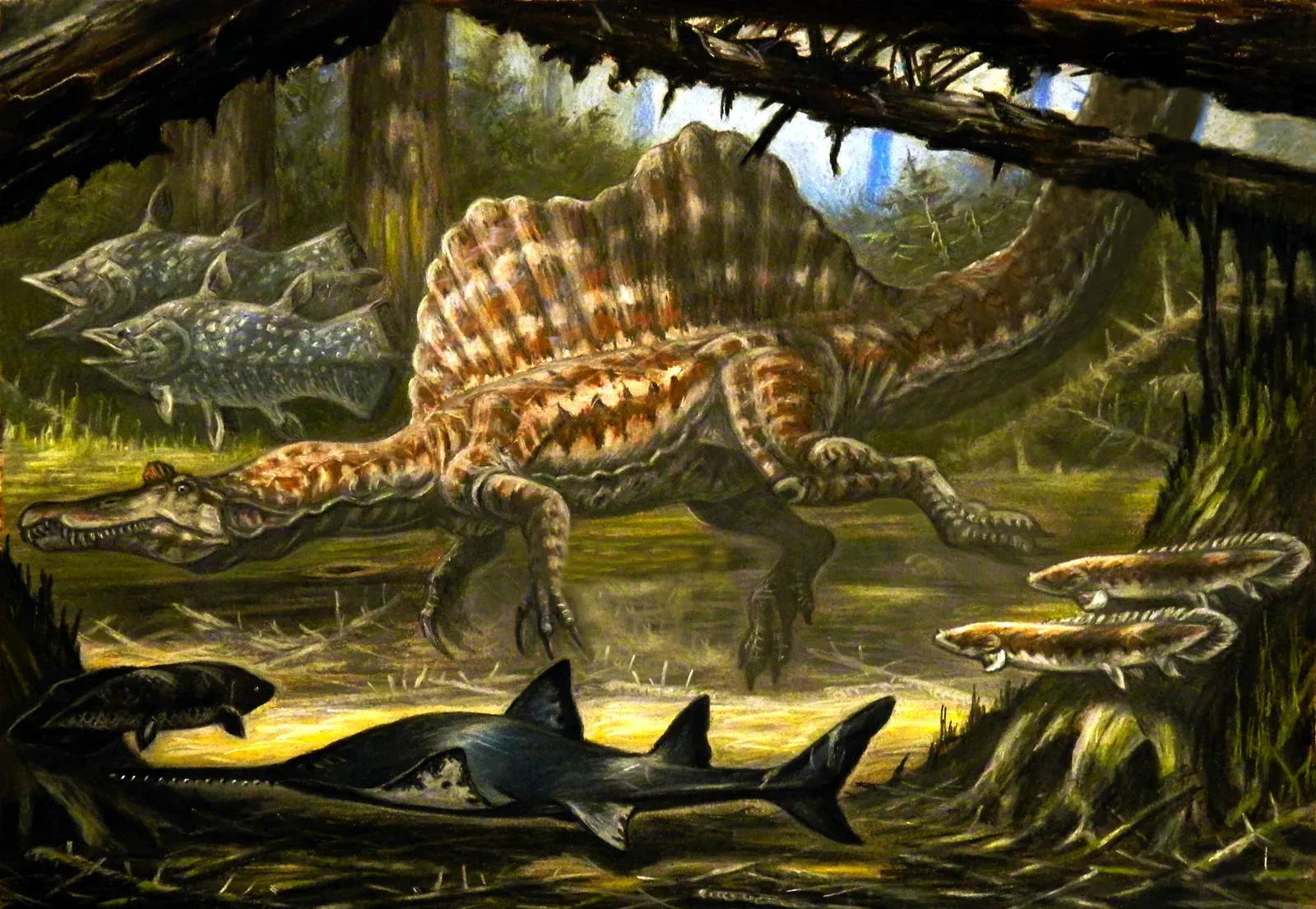
For years, scientists debated whether Spinosaurus was aquatic largely based on skull and limb features. Then came the tail, and that discovery lit a fire under the entire debate. Excavations in 2018 in Morocco found 131 additional bone fragments, including 36 vertebrae, fundamentally changing our understanding of the Spinosaurus tail. It turned out to be far more elongated vertically and less rigid than once thought, indicating it was a powerful source of thrust in the water. Think of it like an eel’s tail rather than a lizard’s.
Studies of the tail show that it had up to eight times as much thrust as other theropod tails, allowing it to swim against currents and accelerate to capture prey. Eight times. That is extraordinary. A study carried out by Ibrahim and colleagues in 2020 showed that Spinosaurus’ thrust and efficiency in water are significantly higher than those of other theropods, but it falls short compared to other semi-aquatic vertebrates. So it was no dolphin, but it was clearly something special. Like a thresher shark’s tail, it may also have been used to slap the water and stun fish.
Wader or Swimmer? The Scientific Debate That Won’t Quit
If you thought scientists had quietly agreed on Spinosaurus being a fully aquatic predator after those tail discoveries, think again. Spinosaurus was among the largest predators ever to prowl the Earth and one of the most adapted to water, but was it an aquatic denizen of the seas, diving deep to chase down its meals, or a semiaquatic wader that snatched prey from the shallows close to shore? That question is still very much alive in 2026. The evidence on both sides is real and compelling.
Multiple studies, including recent ones from 2022 to 2024, suggest Spinosaurus may have been a shoreline predator with heron-like behavior. In 2024, Nathan Myhrvold and colleagues re-evaluated the bone density study, highlighting significant statistical issues that undermine earlier conclusions, contending that Spinosaurus hunted more like herons, wading and plucking prey from the water. Meanwhile, other researchers pushed back equally hard. The fossil record supports an interpretation of Spinosaurus as a semiaquatic bipedal ambush predator that frequented the margins of both coastal and inland waterways. It’s hard to say for sure, but both camps are drawing from solid evidence.
The Iconic Sail: Display, Thermoregulation, or a Swimming Fin?
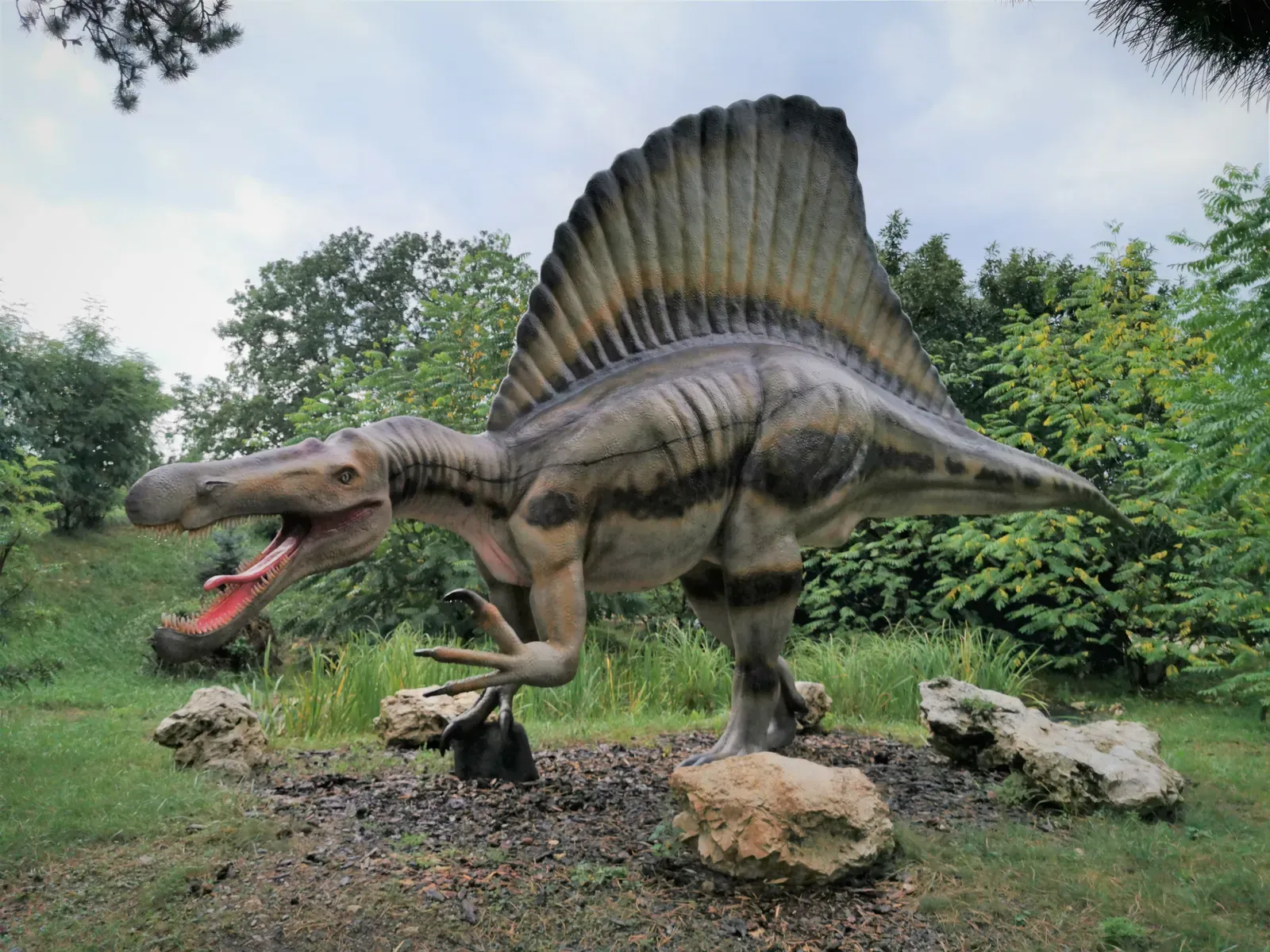
You can’t talk about Spinosaurus without addressing the sail – that dramatic, towering structure rising from its back that made it unlike any dinosaur before or since. The distinctive neural spines of Spinosaurus, which were long extensions of the vertebrae, grew to at least 1.65 meters long and were likely to have had skin connecting them, forming a sail-like structure. In some individuals, those spines reportedly exceeded the height of a full-grown adult human standing upright. That is genuinely hard to picture without your jaw dropping a little.
Multiple functions have been put forward for the dorsal sail, including thermoregulation and display – either to intimidate rivals or attract mates. Some researchers even speculated it was more of a fatty hump than a sail, similar to a bison. The tall, thin, blade-shaped spines were anchored by muscles and composed of dense bone with few blood vessels – suggesting the sail was meant for display and not to trap heat or store fat. Notably, the sail would have been visible even when the animal entered the water. Imagine watching that enormous sail slicing through the surface of an ancient river. It must have been an unforgettable sight.
Conclusion: The River King Still Guards Its Secrets
Spinosaurus_BW.jpg: ArthurWeasley, CC BY 2.5)
Spinosaurus remains, without question, one of the most extraordinary animals ever to walk – or wade – on this planet. Each new discovery, from shortened hind limbs to swimming-adapted tails, has added complexity rather than clarity. More than any other dinosaur, Spinosaurus stands as a reminder that the prehistoric world was far stranger, more experimental, and more diverse than our imaginations once allowed. That, honestly, is what makes it so captivating.
Whether you believe Spinosaurus was an aquatic pursuit predator or a shoreline wader, this long-extinct animal continues to perfectly encompass the reasons paleontology is such a fascinating field, with the constant unknowns and new discoveries moulding and changing our understanding of the distant past. Who knows what paleontological secrets are lying beneath the sands of the Sahara waiting to be unearthed. The river king may have been gone for nearly 95 million years, but its mystery grows stronger with every fossil pulled from the ground.
Was Spinosaurus the true king of the ancient rivers? The evidence strongly suggests it ruled those waterways like nothing else alive at the time – not by outswimming everything in sight, but by mastering the edge between land and water in a way no other giant predator ever did. What do you think – does an ambush hunter lurking at the river’s edge sound more terrifying than an open-ocean swimmer? Tell us in the comments.