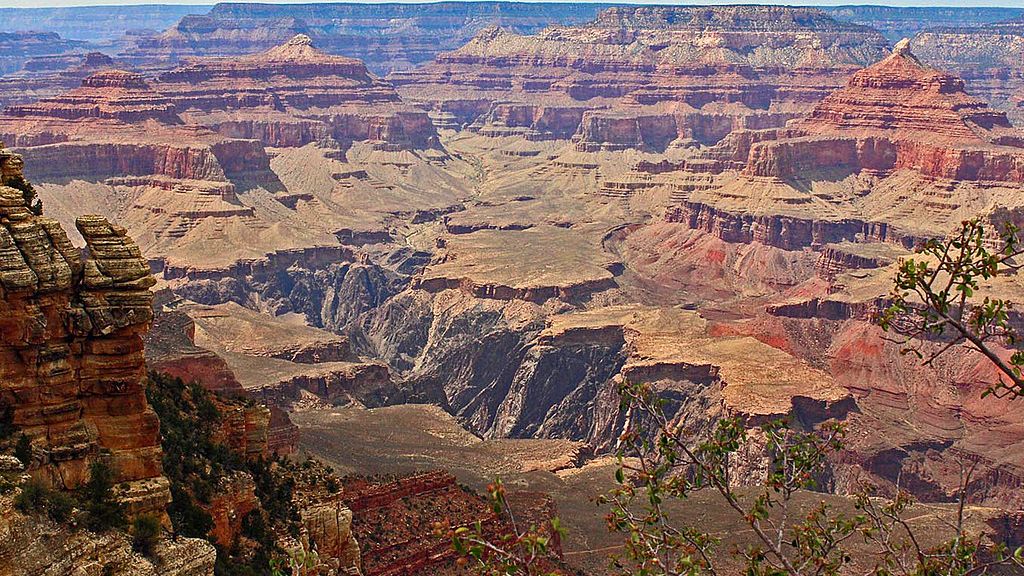
You’ve probably stood at the rim of the Grand Canyon, jaw dropped, convinced that what you’re seeing is just rock and more rock. But here is the thing – what stretches before you is actually one of the most complex, unsolved geological puzzles on the planet. Scientists are still rewriting textbooks because of it.
Every stripe of color banded across those canyon walls is a chapter of a story that stretches back nearly two billion years. Some of those chapters deal with oceans, others with ancient deserts, and a few, strikingly, with the age of dinosaurs itself. Get ready, because what science has uncovered in these layers is far more surprising than you might expect. Let’s dive in.
A Canyon Older Than You Think – Possibly as Old as the Dinosaurs
Most people assume the Grand Canyon is a relatively young geological feature. The standard story goes that the Colorado River started carving it out roughly five to six million years ago. That version is mostly true, but it turns out the full picture is far more complicated and dramatically older.
New geological evidence indicates the Grand Canyon may be so old that dinosaurs once lumbered along its rim. Researchers used a technique known as radiometric dating to show the Grand Canyon may have formed more than 55 million years ago, pushing back its assumed origins by 40 to 50 million years. That’s a jaw-dropping revision to something most of us learned as settled science.
A key finding of the Caltech research team is that samples collected from the bottom of the Upper Granite Gorge region yielded the same uranium-thorium-helium apatite dates as samples collected on the plateau surface nearby. Because both canyon and plateau samples have resided near the same depth since 55 million years ago, a canyon of about the same dimensions as today must have existed at least that far back – and possibly as far back as the time of the last dinosaurs at the end of the Cretaceous period, 65 million years ago.
The team believes an ancestral Grand Canyon developed in its eastern section about 55 million years ago, later linking with other segments that had evolved separately. Honestly, the idea that a prehistoric canyon version of this place watched dinosaurs go extinct overhead is the kind of thought that keeps geologists up at night.
What You Can Actually See: Three Sets of Rocks, Billions of Years Packed Together
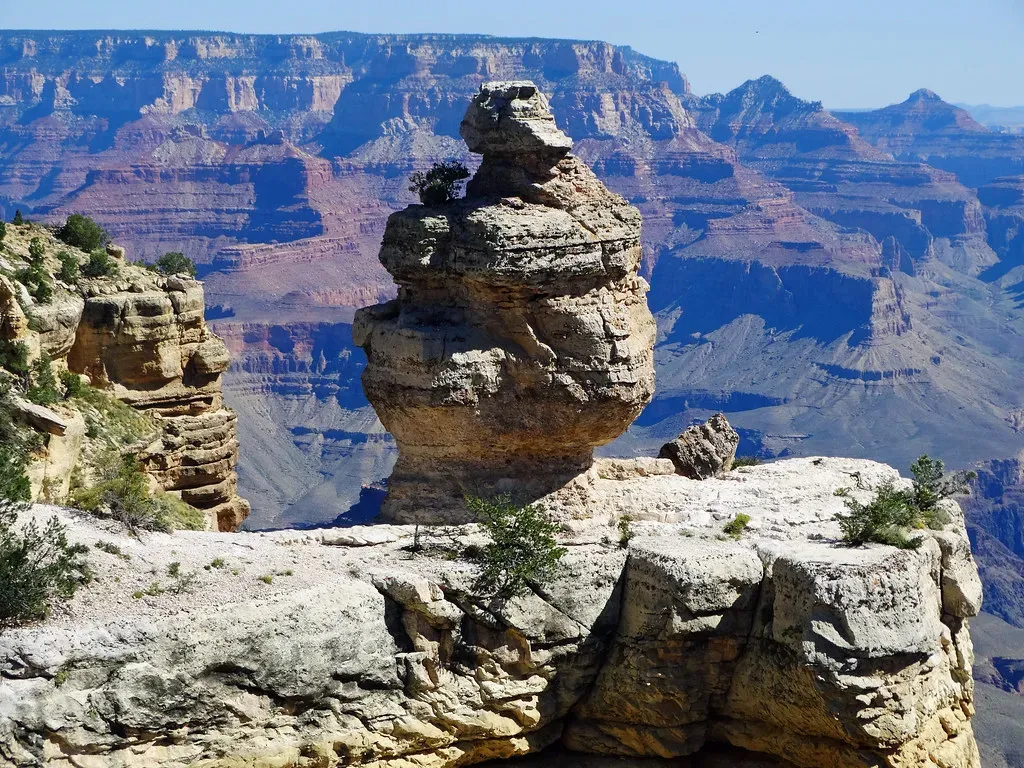
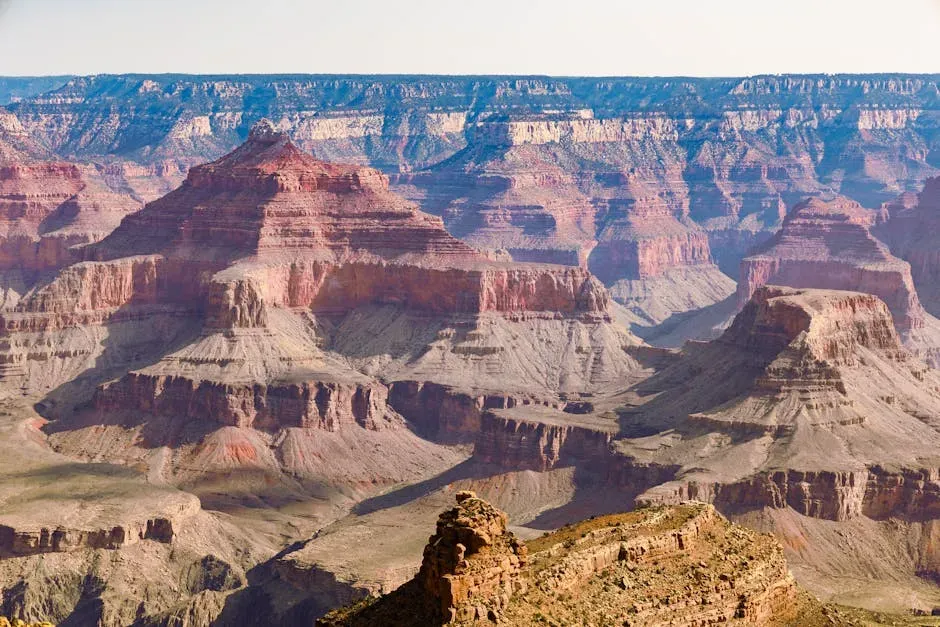
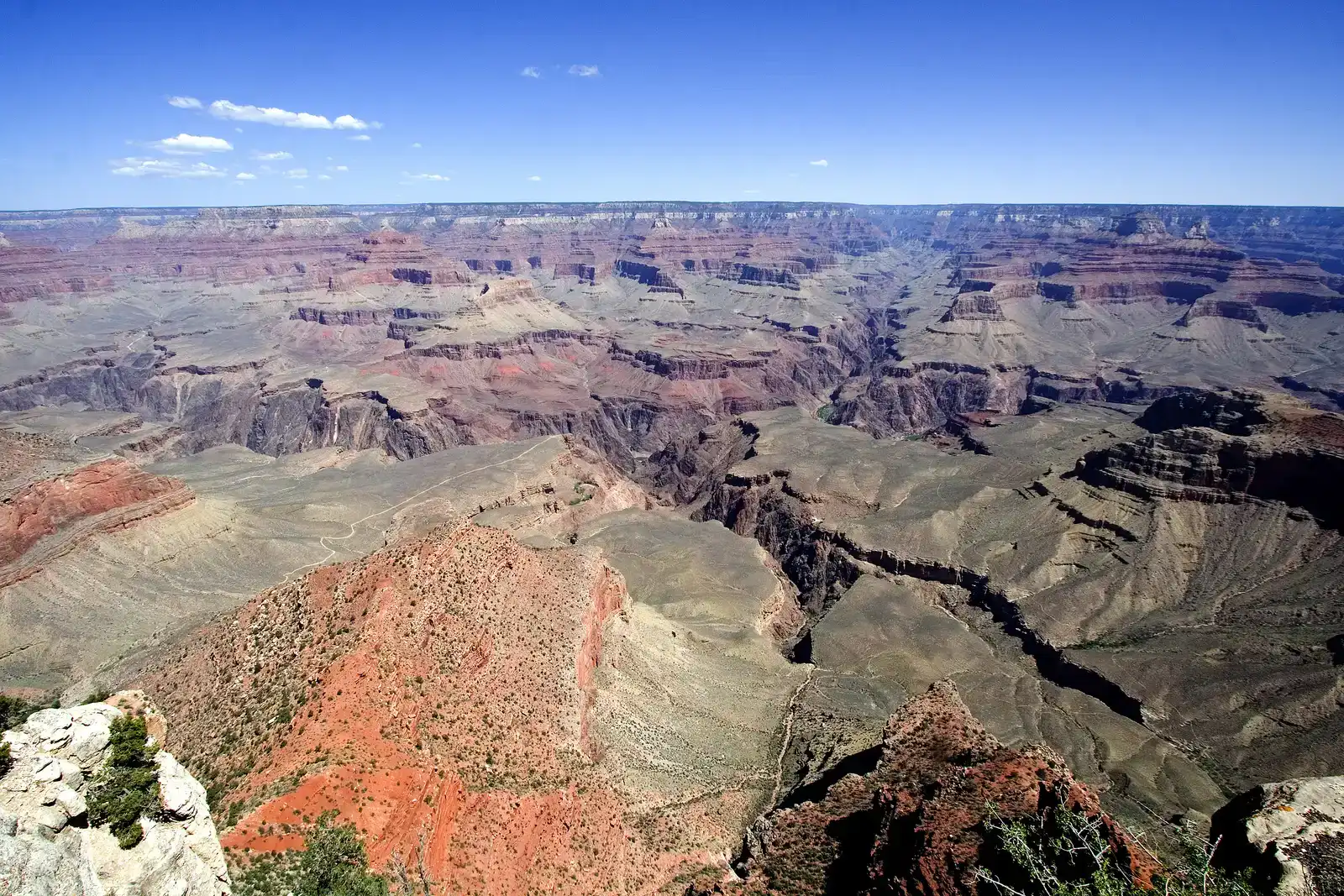
The geology of the Grand Canyon area includes one of the most complete and studied sequences of rock on Earth. The nearly 40 major sedimentary rock layers exposed in the Grand Canyon range in age from about 200 million to nearly 2 billion years old. Most were deposited in warm, shallow seas and near ancient, long-gone shores in western North America. Think of it as flipping through a geological encyclopedia, only the book is a mile deep.
The three main rock layer sets in the Grand Canyon are grouped based on position and common composition: metamorphic basement rocks, the Precambrian Grand Canyon Supergroup, and Paleozoic strata. Each group tells a radically different story about what Earth looked like during that time period. It’s almost like three separate planets stacked on top of each other.
Stratigraphy is the study of rock layering and reveals a wealth of information about what Earth was like when each layer formed. In the Grand Canyon, there are clear horizontal layers of different rocks that provide information about where, when, and how they were deposited, long before the canyon was even carved. The Law of Superposition states that sediment is deposited in layers in a sequence, with the oldest rocks on the bottom and the youngest on top, similar to the way sand piles up in an hourglass.
The Great Unconformity: A Billion Years of Missing History
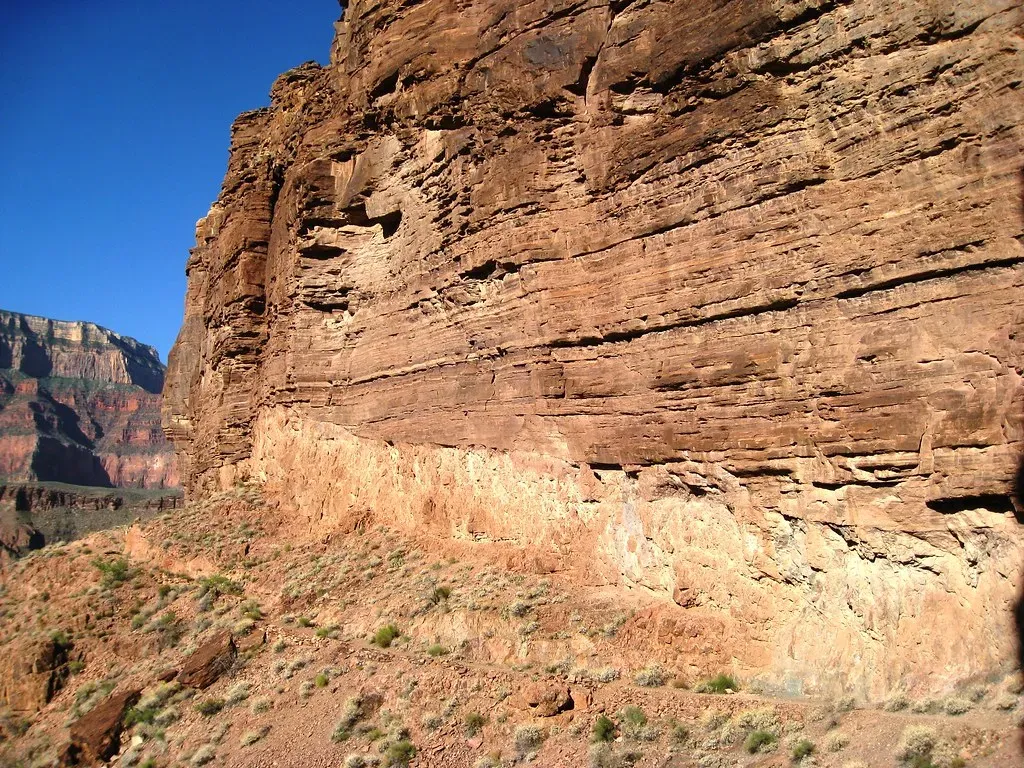
If the canyon’s layers are a book, then the Great Unconformity is where someone ripped out roughly a billion pages. I know it sounds crazy, but one of the most astonishing features of the Grand Canyon is not what you can see – it’s what’s gone.
The Grand Canyon is a layer cake of geological history, with rocks stacked neatly upon one another as they were laid down millions of years ago. That is, until you get deep into the canyon and find the Great Unconformity, a gap between rock layers representing a billion years in some places. Even stranger, the Great Unconformity shows up in rocks worldwide, and always in rocks from the same era – about 550 million years ago and earlier.
Researchers have found that in the Grand Canyon, at least, these rock layers were lost during a tectonic upheaval caused by the breakup of a supercontinent. The findings suggest that although the Great Unconformity is found in rocks from around the world, the reason for its presence may be different in every place. When you realize that a supercontinent literally tore itself apart and erased a billion years of rock record, the canyon starts to feel a little less like a sightseeing destination and a little more like a crime scene.
Researchers found a surprising level of variability in the Great Unconformity, with the western reaches of the canyon cooling 200 million years, on average, earlier than the eastern part. The size of the gap also differs across the canyon, with a smaller gap to the east. At its smallest, the gap covers about 250 million years. At its largest, 1.2 billion years of rock is missing.
The Missing Mesozoic: Why the Dinosaur Chapter Was Erased
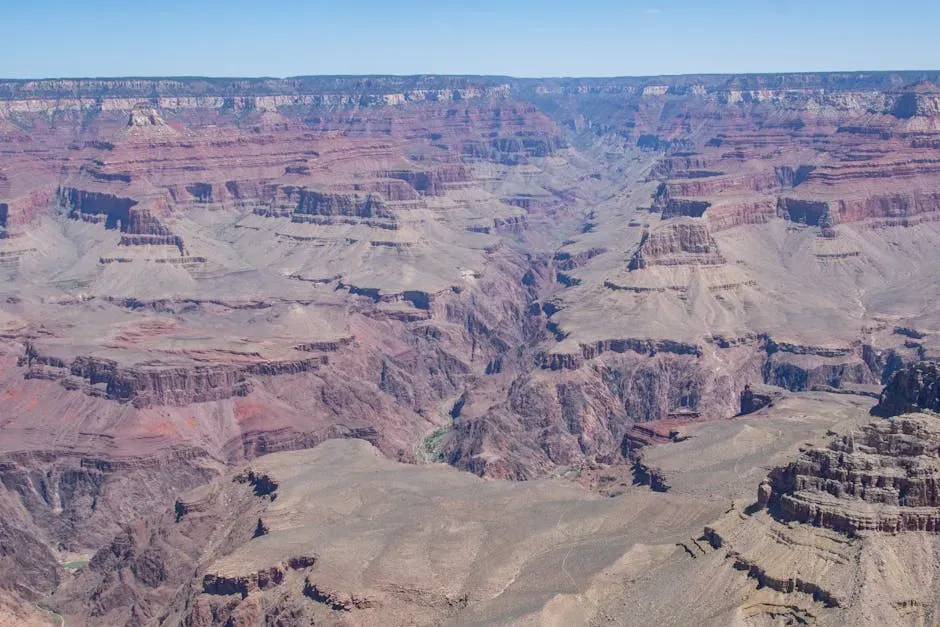
Here’s one of geology’s great ironies. You’re standing in one of the most celebrated geological sites on Earth, supposedly looking into the dinosaur era – and yet there are essentially no dinosaur-era rocks left in the main canyon walls. How is that even possible?
The absence of dinosaur fossils in the Grand Canyon is due to the age of the exposed rocks, dating back to the Precambrian to the Permian periods, which precede the reign of dinosaurs that emerged in the Mesozoic era. Tourists and paleontologists alike witness layers of Earth’s ancient past but must look elsewhere to uncover the remains of the great beasts that roamed millions of years after these rocks solidified. The Grand Canyon’s monumental cliffs and ledges offer a window into the deep past, but one that closes just before the chapter of the dinosaurs begins.
Mesozoic and Cenozoic rocks, ranging from 250 million years old to the present, are largely missing at the Grand Canyon. They have either been worn away or were never deposited. That’s a staggering 250 million years of Earth history, including the entire age of dinosaurs, simply gone from the record. Picture ripping out the most exciting chapters of the best book you’ve ever read. That’s what erosion did here.
Formations totaling over 4,000 to 5,000 feet in thickness were deposited in the region during the Mesozoic and Cenozoic but were almost entirely removed from the Grand Canyon sequence by subsequent erosion. The geology of the Zion and Kolob canyons area and the geology of the Bryce Canyon area records some of these formations.
Triassic Clues Right at the Canyon’s Doorstep
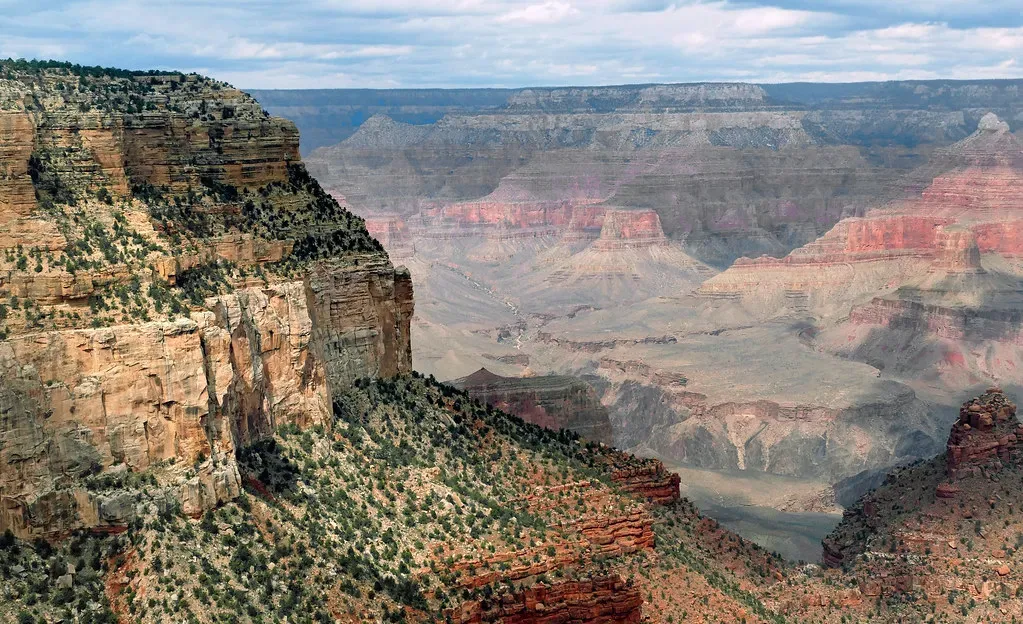
Just because the canyon itself is mostly missing its Mesozoic layers doesn’t mean those layers vanished from the region entirely. In fact, if you look just above the canyon rim and into the surrounding geology, the Triassic period – the very dawn of the dinosaur age – begins to reappear.
The only Mesozoic rocks in the park are limited to isolated Triassic sedimentary rocks belonging to the Moenkopi Formation and Chinle Formation. Both the Moenkopi Formation and the overlying basal Shinarump Member of the Chinle Formation were deposited in continental environments. These formations are your closest brushes with Earth’s dinosaur era within Grand Canyon National Park itself. Small, but enormously significant.
Within Grand Canyon National Park, the Moenkopi Formation contains trace fossils and the Shinarump Member contains fossil wood. Extensive exposures of these Triassic formations are also found in other parks such as Petrified Forest National Park in Arizona, Glen Canyon National Recreation Area in Utah and Arizona, and Capitol Reef National Park in Utah, all of which provide much more information about life in the Triassic.
The Moenkopi Formation: Reading the Dawn of the Dinosaurs
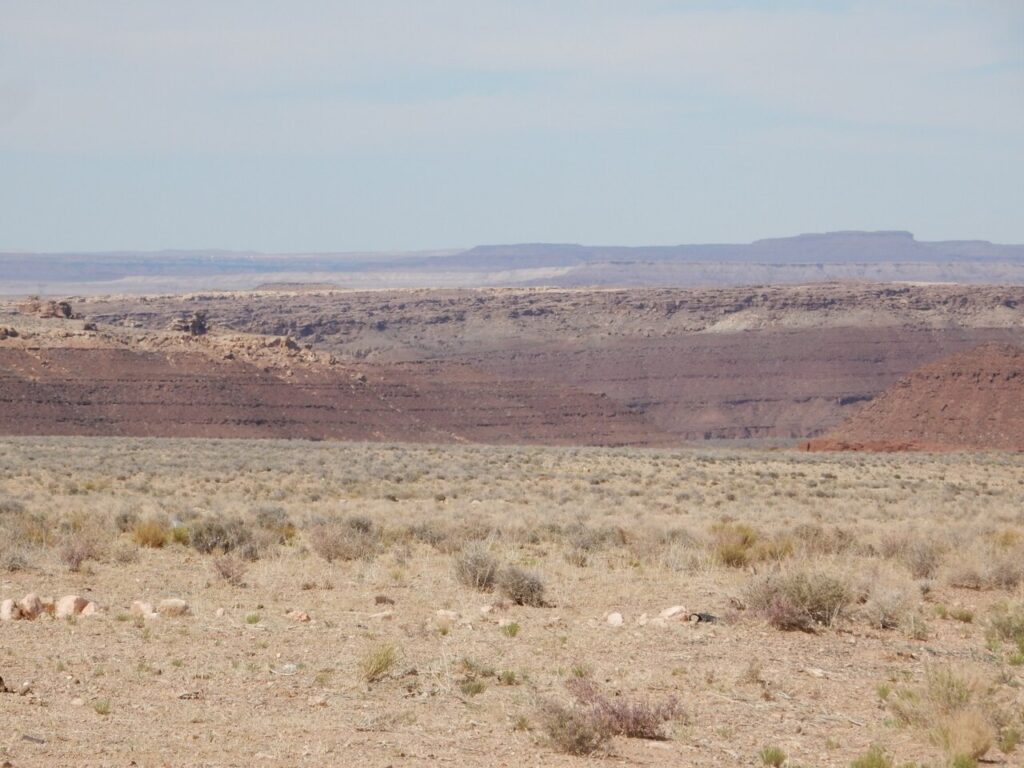
The Moenkopi Formation is like a quiet but incredibly talkative witness to a pivotal moment in Earth’s history. It dates to the Early and Middle Triassic, sitting right at the boundary where the world was recovering from the greatest mass extinction event it had ever seen.
The Moenkopi Formation was deposited in a nearshore coastal environment about 240 million years ago. In Utah and Arizona, the formation is well-known for preserving a diverse array of reptile tracks that predate dinosaurs. These are footprints left by the ancestors of the very animals that would go on to dominate the planet for 165 million years. That is something worth thinking about.
In addition to vertebrate track traces, the Moenkopi Formation preserves fossil invertebrate traces including horseshoe crab marks and fossil plants. The study of these ichnostratigraphic units will aid interpretations about the paleoecology and diversity of the Western Interior during the Middle Triassic – what scientists call “the dawn of the dinosaurs.” So while you won’t find T. rex here, you are essentially looking at the world just before it unleashed its greatest reptilian experiment.
Textbook-Rewriting Discoveries: The Tonto Group and the Cambrian Explosion
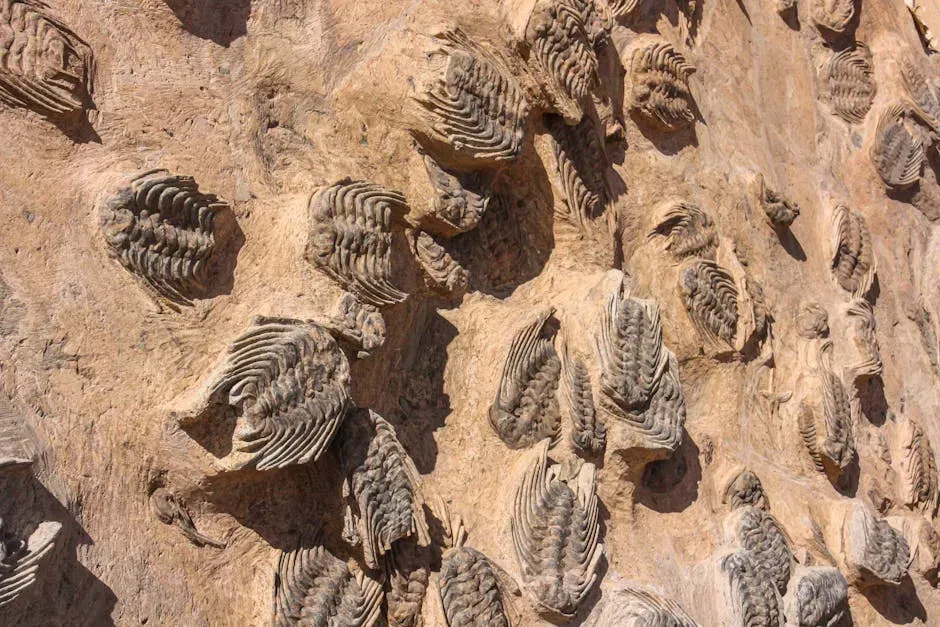
Scientists were already excited about the Grand Canyon’s older layers – but recent research has pushed those discoveries into headline territory. The Tonto Group, one of the canyon’s most studied stratigraphic units, turned out to hold secrets even seasoned geologists weren’t expecting.
The Tonto Group holds a treasure trove of sedimentary layers and fossils chronicling the Cambrian Explosion some 540 million years ago, when the first vertebrates and animals with hard shells rapidly proliferated and sea levels rose to envelop continents with emerging marine life. That was when complex life essentially exploded onto the scene, and the Grand Canyon recorded it in stone.
A recent paper by University of New Mexico researchers and an expanded collaborative team was featured as the lead science article in GSA Today’s November 2024 issue, titled “The Cambrian of the Grand Canyon: Refinement of a Classic Stratigraphic Model.” One of the researchers examined torn-up sediment that may record the evidence of a large hurricane or perhaps a tsunami affecting the shallow marine environment. The idea that you can read a 500-million-year-old storm in a rock is nothing short of extraordinary.
As researchers have noted, the rock record of the Grand Canyon is much more complicated than what scientists currently know, and its story is still being written. The team’s new model offers three key pathways for deeper understanding.
The Newly Named Rock Layers: Hidden in Plain Sight
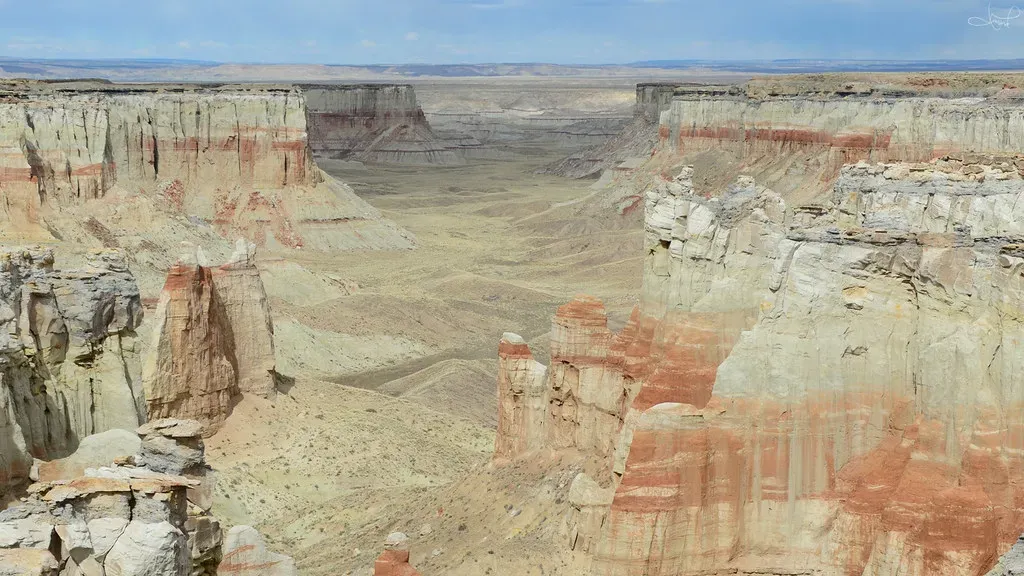
You would think that after over 150 years of intensive scientific study, every single rock layer in the Grand Canyon would have been catalogued, named, and understood. Let’s be real – you’d be completely wrong about that.
A research team identified and bestowed a name upon a previously unexplored 500-million-year-old Grand Canyon formation: the Frenchman Mountain Dolostone. The newly named rock layer had lain hidden in plain sight throughout the Grand Canyon for millennia, but until recently, geologists had not named it or studied it in detail. It takes a certain kind of humility to realize that something this enormous had gone unnamed until our current era.
Researchers used a relatively new technique to determine the formation’s age – subtle differences in the ratio of stable isotopes of carbon. Fluctuations in those ratios occurred at the same time all over the Earth as the layers were deposited. The researchers compared fluctuations in the Frenchman Mountain strata with those in precisely dated rock layers elsewhere in the world. The results indicate that the formation was deposited over an interval of 7.3 million years, during the Cambrian Period, between 502.8 million and 495.5 million years ago.
The Frenchman Mountain Dolostone is the first new formation to be named in the canyon since 1985, when the Surprise Canyon Formation was named. That kind of discovery in a place studied this intensively is a reminder that Earth still holds enormous surprises.
The Colorado River: Still Writing New Chapters Every Day
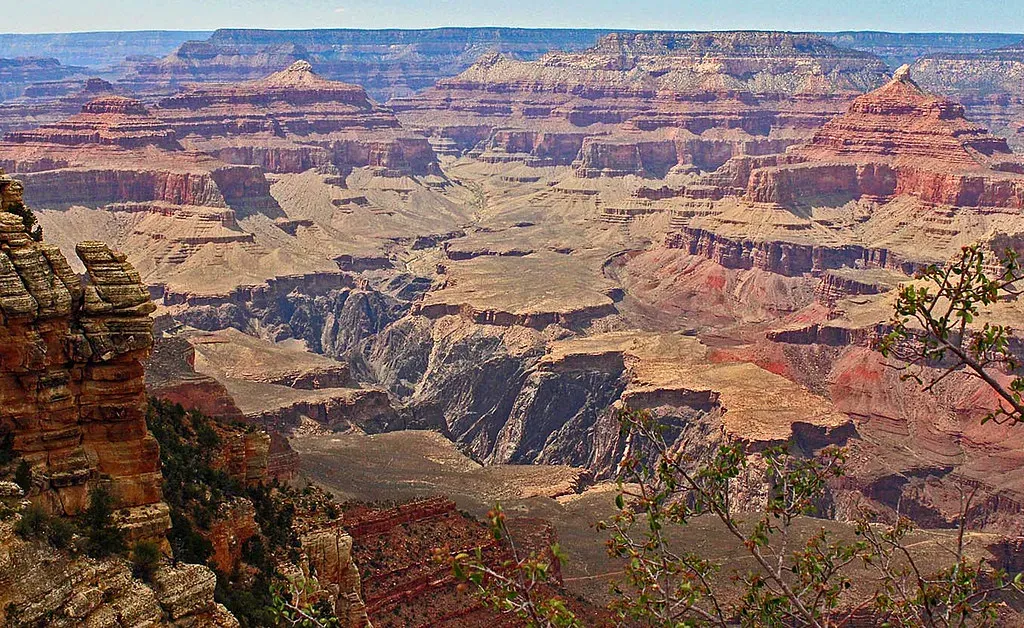
Here is a fact that often gets overlooked: the Grand Canyon isn’t a finished product. It’s still actively being carved, layer by layer, as we speak. The same forces that revealed Earth’s dinosaur-era secrets are still grinding away at the rock.
The Grand Canyon was formed over millions of years through a combination of Colorado River erosion, tectonic uplift, and weathering, revealing nearly two billion years of Earth’s geological history. Rock layers such as Vishnu Schist and Kaibab Limestone act as a natural timeline, showcasing changing ancient environments from shallow seas to desert dunes. The Colorado River remains the canyon’s primary sculptor, carving deep channels and exposing vibrant layers of sandstone, shale, and limestone that define its unique stratigraphy.
How did the river and its tributaries carve their path? The answer may surprise you, since it is not the water itself that does the cutting, but rather the rocky debris eroded and transported in floods. Think of this flood debris acting as a giant rock tumbler that physically abrades the bedrock channels. That image of a rock tumbler basically doing the work of carving one of the world’s greatest natural wonders is both humbling and oddly hilarious.
The canyon itself has formed much more recently than the deposition of its rock layers, only about five million years ago – as opposed to the rocks, the youngest of which are a little less than 300 million years old. The canyon has since been forming at varying rates, with periods of intense erosion carving not just wider but deeper.
Conclusion: The Canyon Still Has Secrets You Haven’t Imagined
What the Grand Canyon ultimately teaches you is that understanding Earth is not a finished project. The more tools scientists bring to bear – radiometric dating, isotope analysis, thermochronology – the more the layers reveal. And every new answer seems to generate three new questions.
The Grand Canyon offers geologists a face-to-face look at three of the four major eras of geological time, providing one of the most complete records of geological history anywhere in the world. The canyon walls encompass a variety of geological features and rock types, with fossils embedded in many of the layers that also provide a look at how life has changed over nearly two billion years since the foundational Vishnu Schist formed at the canyon’s basement.
The dinosaur era may be mostly missing from the canyon’s walls, swallowed up by erosion and geological upheaval, but its ghost is everywhere – in the Triassic formations clinging to the rim, in the tracks left by dinosaur ancestors, in the billion-year gap that speaks of a supercontinent tearing apart. The Grand Canyon isn’t just a view. It’s a question the Earth has been asking since long before the first human ever stood at its edge.
So the next time you look at those stripes of red, gold, and grey stretching toward the Colorado River far below, ask yourself: what else is hidden down there, waiting for someone to finally think to look? What do you think – is Earth still keeping its biggest geological secrets from us?