
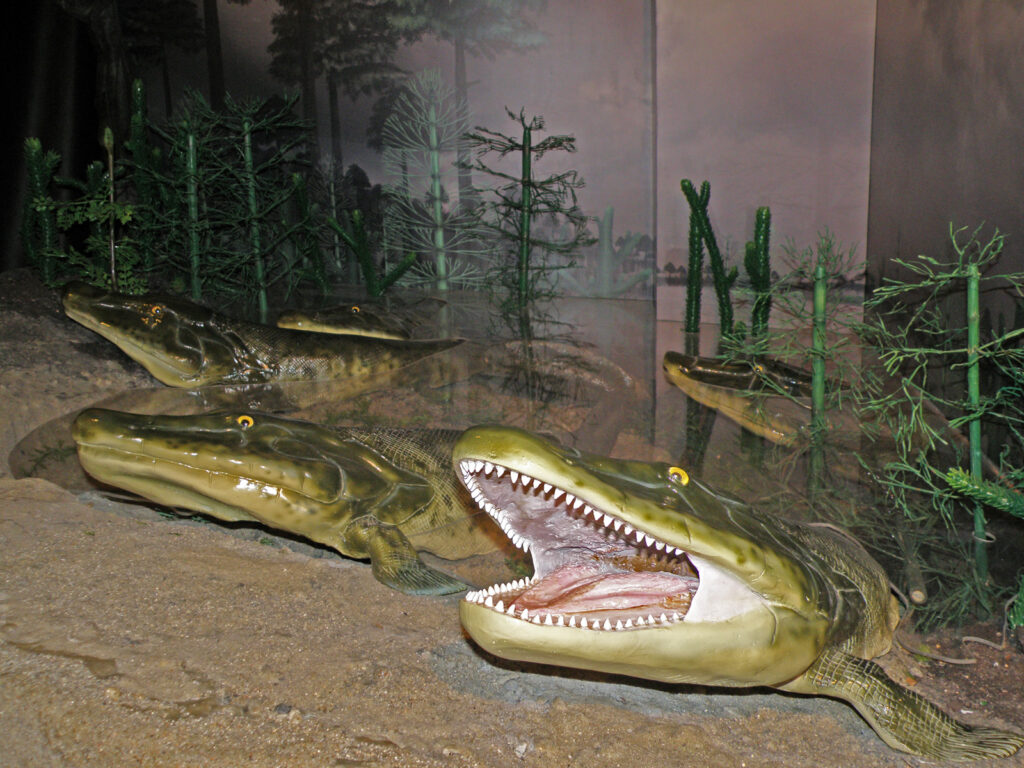
Think about the last time you took a walk, picked something up with your hands, or simply took a breath of fresh air. You probably didn’t stop to consider that every single one of those actions traces back to a remarkable chain of events that began more than 500 million years ago, deep in the primordial ocean. It’s one of those stories that sounds too dramatic to be real – a crawling, gasping, fin-flapping creature hauling itself out of the water and, in doing so, changing the destiny of all life on land.
This is not just a story about ancient fish. It’s a story about you, about every bird, reptile, mammal, and human that has ever lived. The journey from primitive water-dwelling vertebrates to the first true land-walkers is arguably the most profound transformation in the history of life on Earth. Buckle up, because what happened in those ancient seas and muddy shorelines is stranger and more spectacular than most people ever realize. Let’s dive in.
The Very First Vertebrates: Life Before Jaws
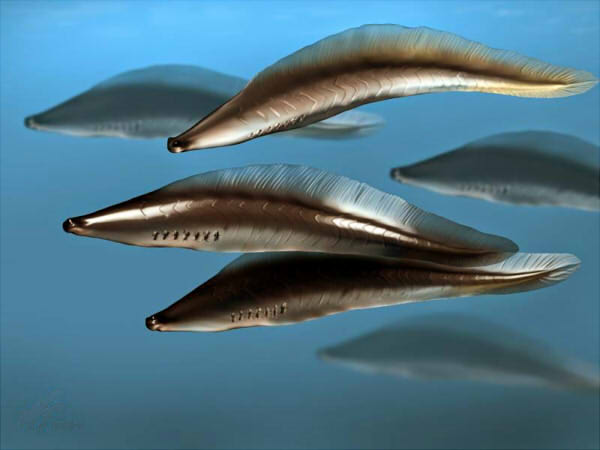
Fish began evolving around 530 million years ago during the Cambrian explosion, a time when early chordates developed the skull and the vertebral column, giving rise to the first craniates and vertebrates. Honestly, if you could travel back and look at these creatures, you wouldn’t immediately recognize them as fish at all. They were strange, humble, and almost laughably small by the standards of what came later.
One of the best-known examples is Haikouichthys, a tiny eel-like animal that represents a major evolutionary milestone. It displayed several revolutionary traits – its body was bilaterally symmetric with a clear left and right side, and it showed early cephalization, meaning its head was distinct from its tail. Within that defined head region were two simple eyes and a mouth, allowing it to sense and respond to its environment in far more complex ways than anything before it. Think of it like the first rough draft of a blueprint that would eventually produce everything from sharks to humans.
These early animals had the basic vertebrate body plan: a notochord, rudimentary vertebrae, and a well-defined head and tail. Yet all of these early vertebrates lacked jaws, relying instead on filter-feeding close to the seabed. It was a modest start – yet the backbone was now in the game, and that changed everything.
The Dawn of Jaws: Armor, Teeth, and the First Arms Race
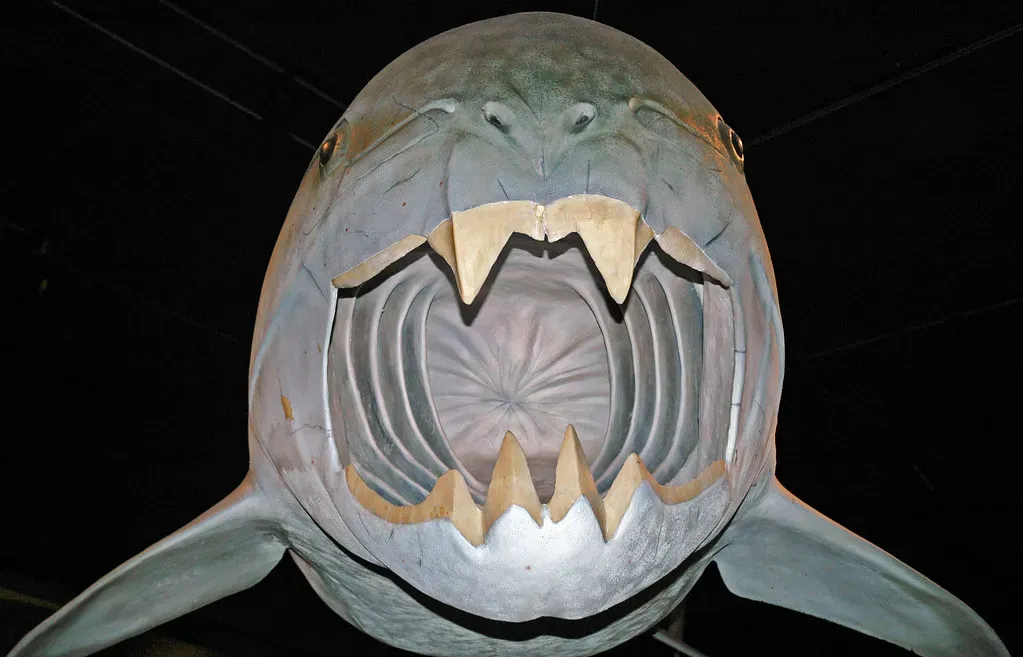
The earliest jawed vertebrates probably developed during the late Ordovician period, and they first appear in the fossil record from the Silurian in two groups: the armored fish known as placoderms and the Acanthodii, or spiny sharks. The arrival of jaws was a game-changer on a level that’s hard to overstate. Imagine an entire ocean of filter-feeders suddenly sharing the water with animals that could actively bite, chase, and kill. The dynamic shifted overnight, in geological terms.
Placoderms, one of the first classes of jawed fish, were characterized by hard armored plates covering their head and neck, while the rest of the body in most species was mostly naked or occasionally covered with primitive scales. Meanwhile, a landmark pair of studies published in Nature in early 2026 revealed that a research team from the Chinese Academy of Sciences unearthed the oldest known complete fossils of bony fishes in southern China, filling a critical gap in the evolutionary timeline and showing that core features of modern vertebrates evolved millions of years earlier than previously believed. Science is still rewriting this chapter, and that’s what makes it so thrilling.
The team identified a new species, Eosteus chongqingensis, in 436-million-year-old deposits in Chongqing. Measuring just three centimeters long, this tiny specimen is the oldest complete bony fish fossil ever discovered. Small in size, massive in significance.
The Devonian: When the Seas Went Wild
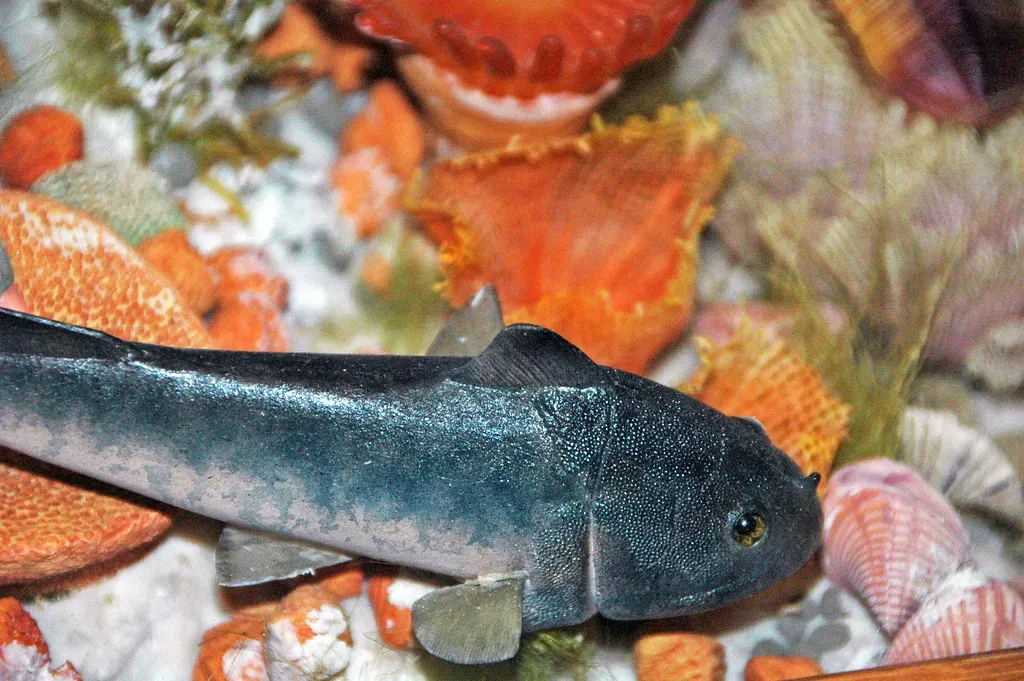
It was a time when the oceans and rivers of the world were ruled by creatures with armored bodies and slicing bony blades in their mouths – welcome to the Devonian, the Age of Fishes, when these creatures were at the height of their strangeness. You’d need a vivid imagination to picture it properly. The Devonian ocean was an alien world packed with diversity, danger, and a kind of evolutionary creativity that the planet hadn’t seen before.
During the Devonian period, a great increase in fish variety occurred, especially among the ostracoderms and placoderms, and also among the lobe-finned fish and early sharks – which is why the Devonian became known as the Age of Fishes. Here’s the thing, though: while all this spectacular radiation was happening in the water, something was quietly brewing that would change everything. The Devonian also witnessed the emergence of the first lobe-finned fishes – a crucial evolutionary innovation. Unlike ray-finned fishes, which rely on thin bone rays to support their fins, lobe-finned fishes possessed fleshy, muscular lobes reinforced by internal bones. Modern examples such as the coelacanth provide a glimpse of this ancient design, which would ultimately give rise to the first vertebrates capable of venturing onto land.
These lobe-finned fish had fleshy fins with a single bone attaching the fin to the rest of the skeleton, evolutionarily comparable to the humerus and femur in a human arm and leg. They first evolved by the Early Devonian, over 400 million years ago, and their three groups of living descendants are coelacanths, lungfish, and tetrapods. Yes – your arm bones trace a direct line back to a Devonian fish fin. Let that sink in for a moment.
Tiktaalik and the Great Leap: Fins Becoming Limbs
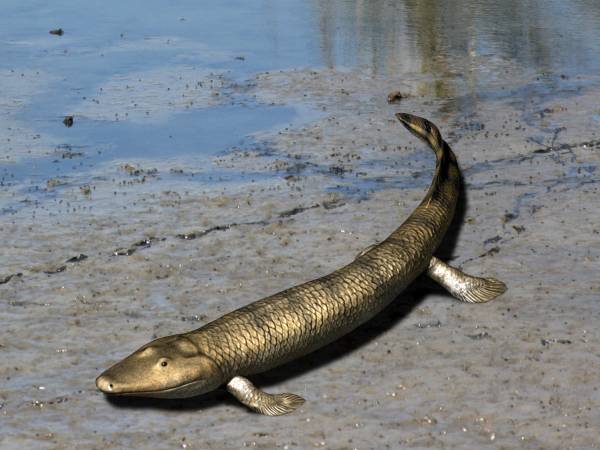
The “fish-to-tetrapod” transition took place somewhere between the Middle and Late Devonian, roughly 400 to 360 million years ago, and it represents the onset of a major environmental shift – when vertebrates first walked onto land. Few moments in the entire history of life on this planet match the weight of that sentence. It’s the pivot point everything else hinges on.
Tiktaalik is known as a “fishapod” in popular culture. When up on land, it would have been similar to a mudskipper – a modern fish that also comes onto land, propped up by its fins. Tiktaalik, being a lobe-finned fish, had fleshier fins than a mudskipper. It even had a functional wrist, elbow, and shoulder configuration, and those fins were incredibly powerful, strong enough to carry it over mudflats and through shallow water full of algae. I think this is where the story gets genuinely spine-tingling.
Early ideas posited that drying-up pools of water stranded fish on land and that being out of water provided the selective pressure to evolve more limb-like appendages to walk back to water. The real picture, researchers now suspect, is considerably more complex. The first animals to get close to walking on land actually had eight digits on each limb – not the five you might expect. Evolution, it turns out, likes to experiment before it commits.
Acanthostega, Ichthyostega, and the Awkward In-Between
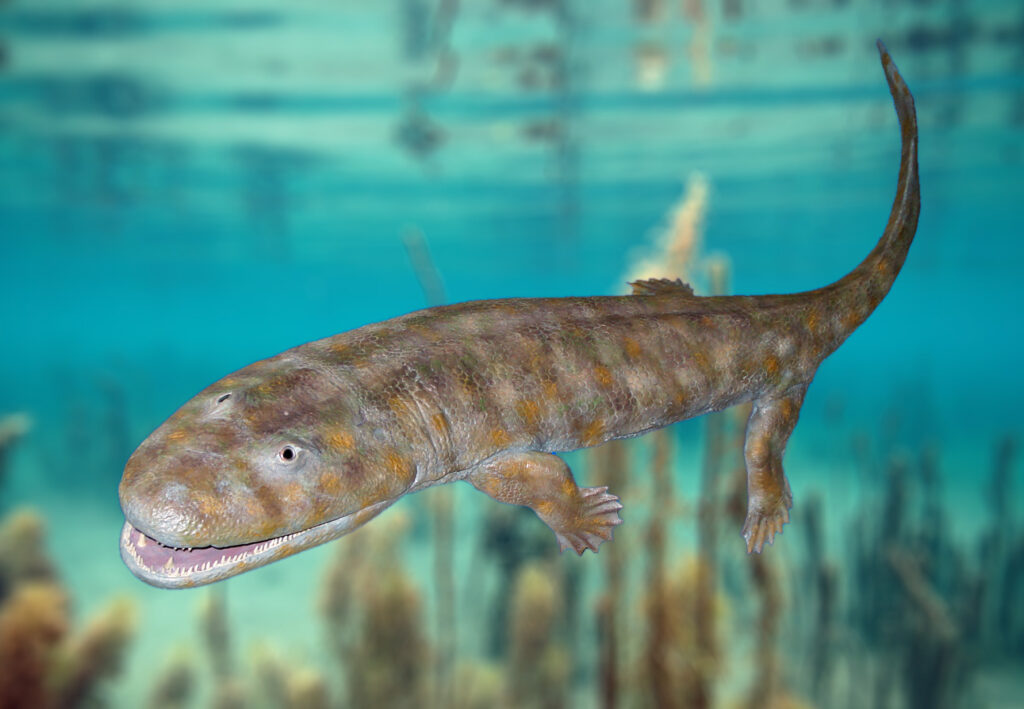
Tetrapod-like vertebrates first appeared in the Early Devonian, and species with limbs and digits were around by the Late Devonian. These early “stem-tetrapods” included animals such as Ichthyostega, with legs and lungs as well as gills, but still primarily aquatic and poorly adapted for life on land. They were genuinely caught between two worlds, and that’s not a metaphor – it’s literal anatomy.
Research by Jennifer A. Clack and her colleagues showed that the very earliest tetrapods, animals similar to Acanthostega, were wholly aquatic and quite unsuited to life on land. This surprised researchers for decades, because why would you evolve legs if you weren’t planning to use them on shore? The earliest form of the pelvis-to-hindlimb connection seen in Acanthostega evolved while these tetrapod precursors were still living in the water, and based on current evidence, Acanthostega appears to have been fully aquatic. Only later, as tetrapod ancestors moved onto land, was this trait co-opted for terrestrial support. Evolution has a habit of repurposing old tools for new jobs – it’s less of an inventor, and more of a tinkerer.
The transition from a body plan for gill-based aquatic respiration and tail-propelled aquatic locomotion to one that enables the animal to survive out of water and move around on land is one of the most profound evolutionary changes known. Every textbook should say that louder.
Conquering the Land: The Rise of True Tetrapods
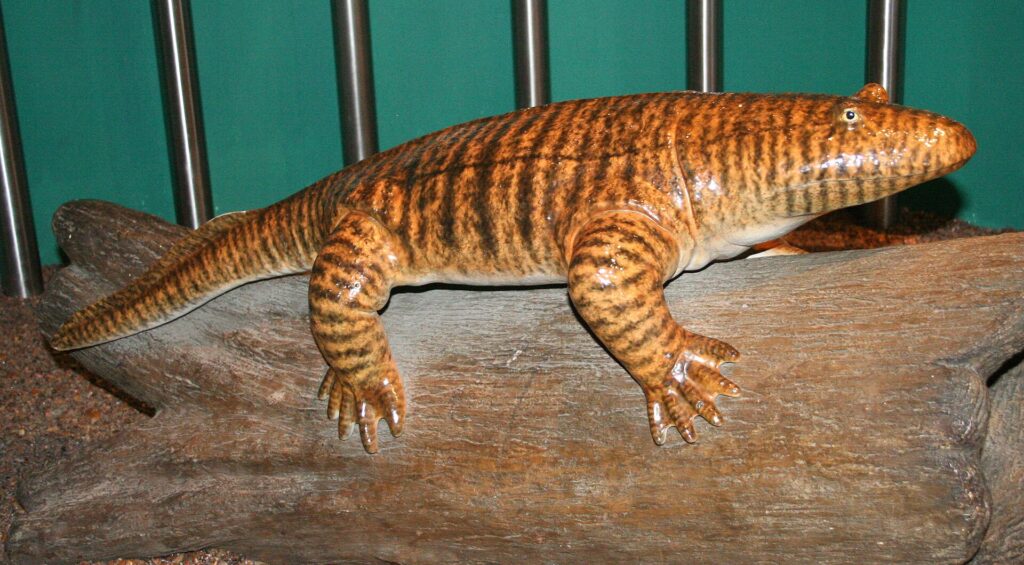
Limbs evolved prior to terrestrial locomotion, but by the start of the Carboniferous Period, 360 million years ago, a few stem-tetrapods were experimenting with a semiaquatic lifestyle to exploit food and shelter on land. The moment the experiment started paying off, the pace picked up dramatically. What followed was nothing short of a vertebrate revolution.
During the early part of the Carboniferous Period, the early tetrapods became established. Unlike earlier forms, these had necks that allowed them to bend their heads down to capture food on land. Like fish, these early tetrapods still laid their eggs in the water and their young often had gills, but as adults many were more terrestrial – making them, in the broad sense, true amphibians. Think of them as the first commuters, splitting time between two completely different environments.
As the tetrapods with an amniotic egg appeared, they no longer needed a larval tadpole stage, and so they were terrestrial for their entire life cycle. This adaptation marks the evolution of the most successful clade of tetrapod: the Amniota. With that one reproductive breakthrough, the land was truly open for business – and vertebrates never looked back.
Conclusion: The Long Walk That Made You
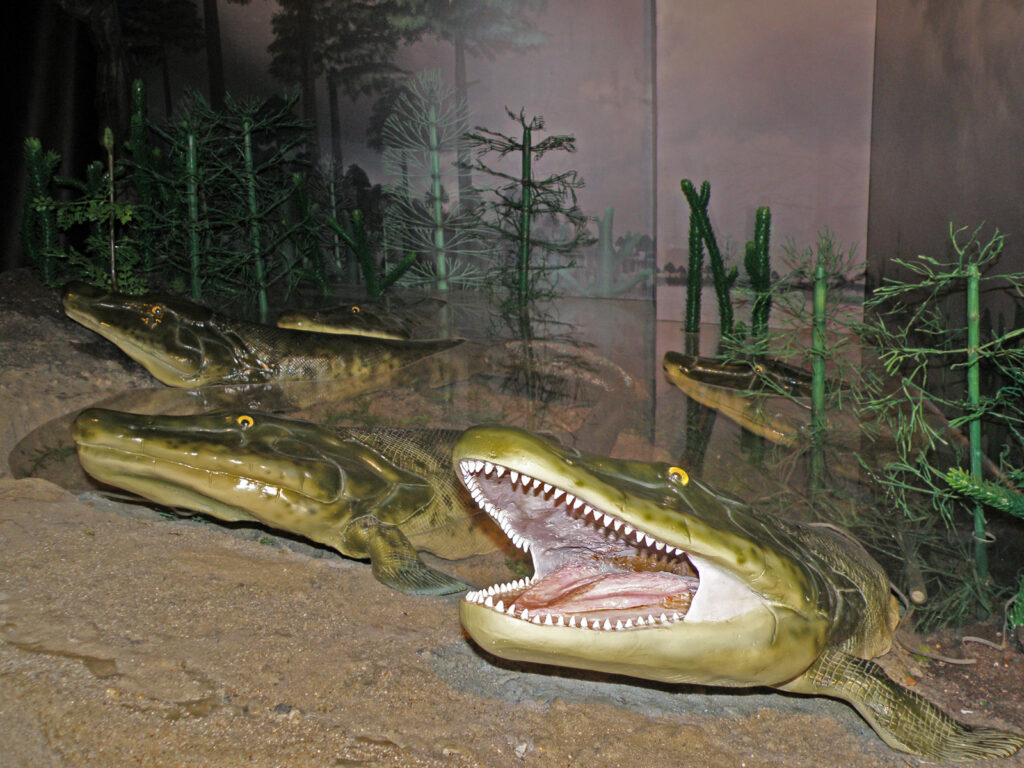
It’s almost impossible to wrap your head around the sheer scale of what happened across those hundreds of millions of years. The vertebrate water-to-land transition initiated in the Devonian was a key event in the history of life. The ability to move in a variety of terrestrial and semiterrestrial environments opened up a range of new ecosystems for colonization and led to the diversity of tetrapod clades we see today.
From a jawless, blind, filter-feeding speck drifting through a Cambrian ocean, to the armored predators of the Devonian, to a gasping, eight-toed creature dragging itself across a mudflat – over the ensuing 350 million years, these so-called tetrapods gradually evolved from their aquatic ancestry into walking terrestrial vertebrates, and these have dominated the land since. The tetrapods, with their limbs, fingers, and toes, include humans, so this distant Devonian event is profoundly significant for every one of us.
Every step you take today is, in a very real sense, the echo of that first awkward shuffle out of the water. Evolution didn’t plan it. It didn’t rush it. It just kept tinkering, one tiny change at a time, until something extraordinary emerged. Pretty humbling, isn’t it? What do you think – does knowing that every bone in your body has a story stretching back half a billion years change how you see yourself? Share your thoughts in the comments.