Beneath the surface of our modern oceans, things can seem almost peaceful. Whales cruise. Sharks patrol. Life moves at a rhythm we recognize. But the fossil record tells a radically different story, one where ancient seas hosted a cast of predators so formidable that nothing alive today even comes close. Some of these hunters operated at ecological levels we had no idea were possible, until the right rock cracked open at the right moment.
Paleontology has a way of humbling us. What you think you know about prehistoric ocean life gets quietly dismantled whenever a new specimen turns up in a cliff face, a desert phosphate mine, or a riverbank. Each of the following seven fossil discoveries didn’t just add a new creature to the list. They genuinely reshaped how scientists understand ancient marine ecosystems, predator behavior, and the deep history of life in the sea.
The Khinjaria Skull: A Window Into an Ocean Crowded With Killers
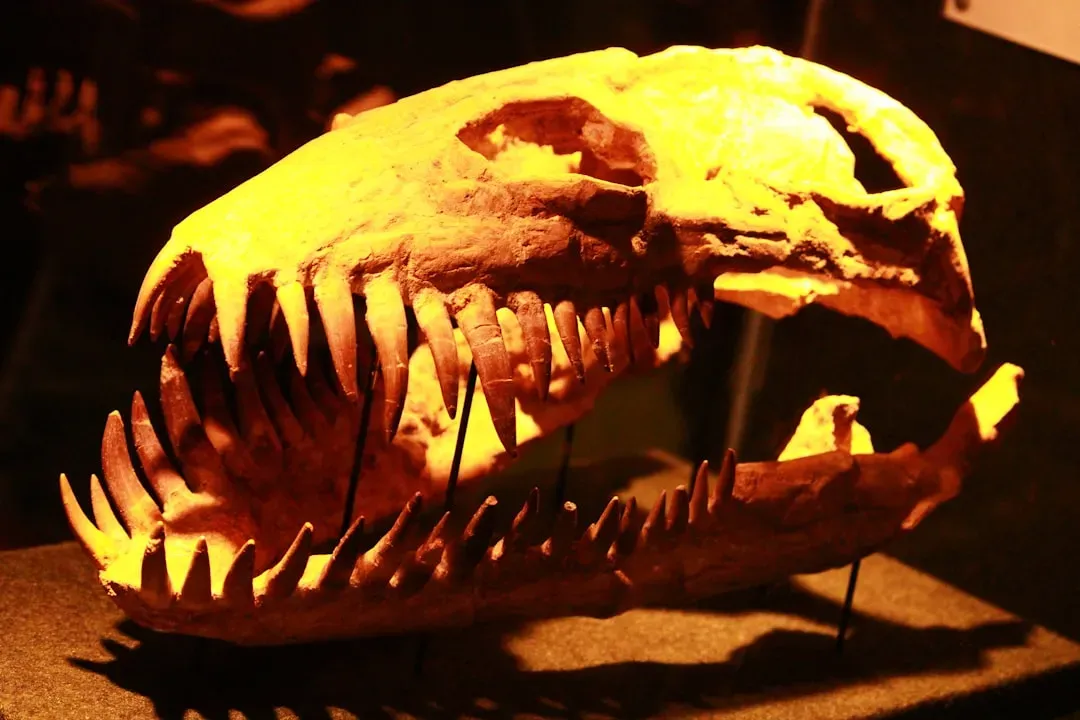
When paleontologists pulled a skull and partial skeleton from a phosphate mine southeast of Casablanca, Morocco, they didn’t fully anticipate what it would reveal about Late Cretaceous ocean ecology. The fossils belonged to a strange new species of marine lizard with dagger-like teeth that lived around 66 million years ago, showing a dramatically more biodiverse ocean ecosystem than what exists today. The creature was named Khinjaria acuta, and its anatomy alone was enough to turn heads.
Khinjaria was a member of the family Mosasauridae, giant marine lizards and relatives of today’s Komodo dragons and anacondas, which ruled the oceans 66 million years ago, during the era of Tyrannosaurus and Triceratops. What made the discovery so significant wasn’t just the animal itself. Their findings showed a dramatically different ocean ecosystem to what you see today, with numerous giant top predators eating large prey, unlike modern ecosystems where a few apex predators such as great white sharks, orca, and leopard seals dominate. You could think of it as the oceanic equivalent of rush hour, except every vehicle on the road was a massive, fanged reptile.
The Paja Formation Fossils: When Seven Food Chain Levels Existed
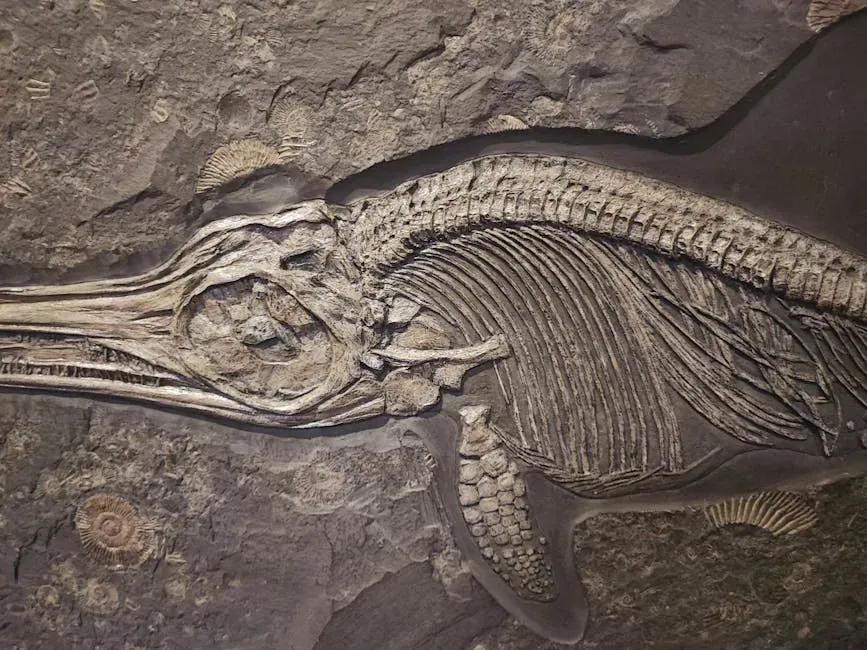
You might assume the ocean food chain has always looked roughly like it does now, with a few elite predators at the top. The fossils locked inside Colombia’s Paja Formation suggest otherwise, quite dramatically. Scientists reconstructed a 130-million-year-old marine ecosystem from Colombia and found predators operating at a food-chain level higher than any seen today. That finding alone deserved a moment of pause.
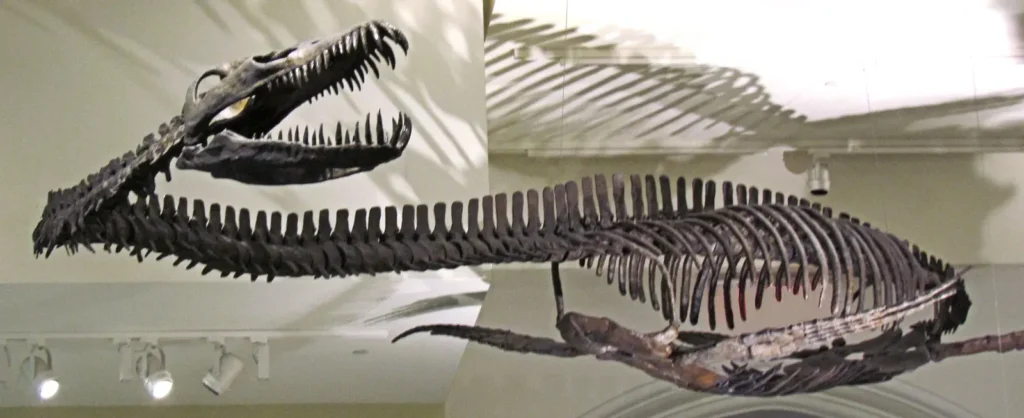
In today’s oceans, food chains typically reach only six levels, with animals such as killer whales and great white sharks sitting at the top. The discovery of predators operating at a seventh trophic level highlights just how rich and complex the Paja ecosystem once was, and it offers rare insight into a deep evolutionary struggle, where predators and prey continuously adapted in response to one another. The Paja Formation dates back to the Mesozoic era, a time shaped by rising sea levels and warmer global temperatures, conditions that fueled a surge in marine biodiversity. The region supported plesiosaurs, ichthyosaurs, and large numbers of invertebrates, creating one of the most intricate marine food webs ever identified. The fossils here didn’t just reveal a species. They revealed an entire forgotten architecture of power.
The Erythrobatrachus Fossils: Southern Hemisphere Secrets After the Great Dying
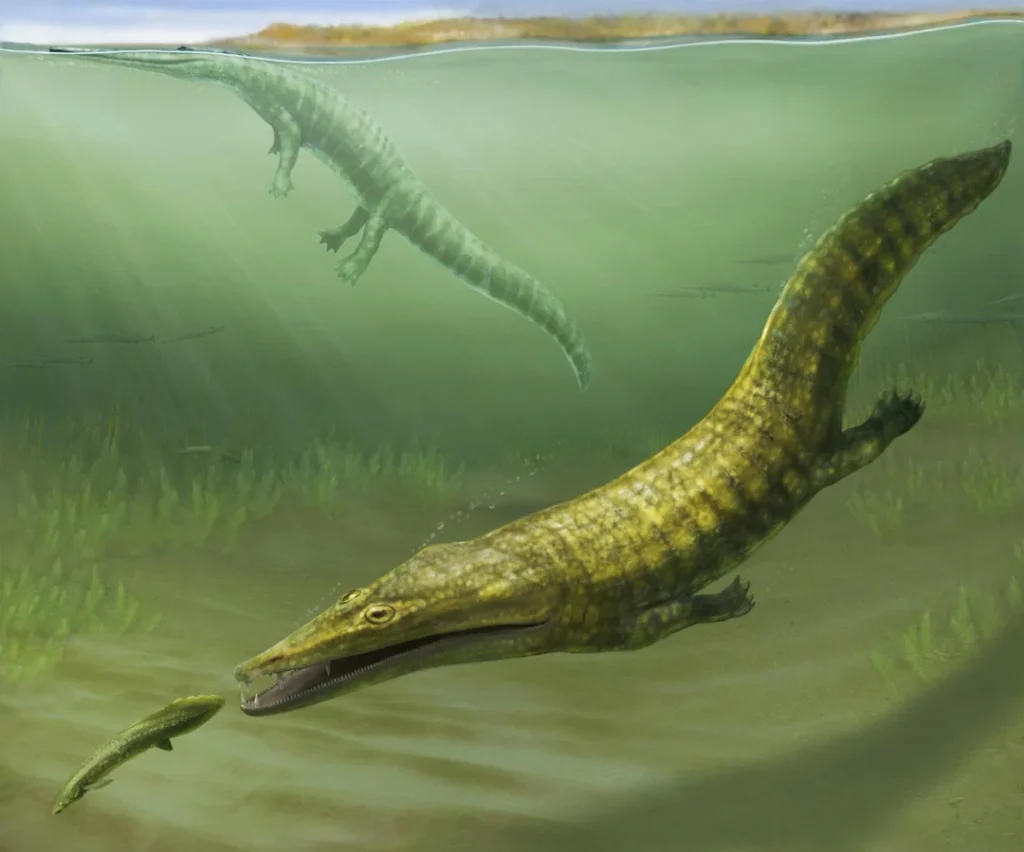
For decades, fossils of the earliest sea-going creatures after the worst mass extinction in Earth’s history came almost exclusively from the northern hemisphere. Most fossils of these early marine hunters had been found in the northern hemisphere, and comparable discoveries from the southern hemisphere had been rare and remain poorly documented. That imbalance started to shift when researchers took a fresh look at specimens that had been sitting in museum drawers for over sixty years.
A lost cache of 250-million-year-old fossils from Australia rewrote part of the story of life after Earth’s worst mass extinction. Instead of a single marine amphibian species, researchers uncovered evidence of a surprisingly diverse community of early ocean predators. The surprises didn’t stop there. Aphaneramma fossils have been discovered in rocks of similar age in Svalbard in the Scandinavian Arctic, the Russian Far East, Pakistan, and Madagascar. These findings suggest that some of the earliest Mesozoic marine tetrapods expanded quickly into multiple ecological roles and spread widely across the planet, possibly traveling along the coastlines of interconnected supercontinents. The realization that these early predators moved at global scale, just a few million years after the planet nearly lost all complex life, is genuinely remarkable.
Megalodon’s Teeth and Vertebrae: Reading the Story of an Ocean Titan
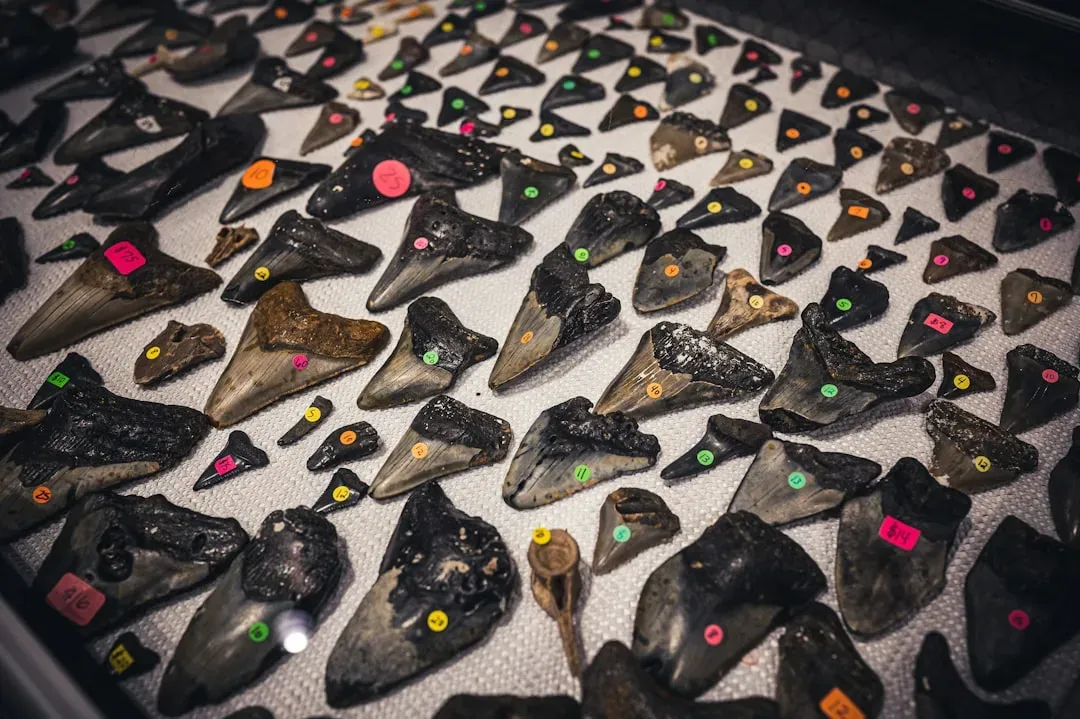
No discussion of ancient ocean predators gets very far without confronting the megalodon. The earliest megalodon fossils date to 23 million years ago, and for nearly 20 million years the enormous shark dominated the oceans until becoming extinct just 3.6 million years ago. The challenge with studying it is immediate: because it is very difficult for cartilage to fossilize, much of what we know about megalodons comes from their teeth, vertebrae, and fossilized poop. Impressive evidence, given the constraints.
Even those fragments have yielded extraordinary insights. A 2025 study, written by 29 fossil shark experts, found that megalodon may have grown up to 24.3 metres long. Its position at the top of the food chain probably had a significant impact on the structuring of marine communities, and fossil evidence indicates a correlation between megalodon and the emergence and diversification of cetaceans and other marine mammals. In other words, the way whales evolved may have been shaped, in part, by the existence of this one colossal predator. That’s not a minor detail. It’s a thread that runs through the entire history of modern ocean life.
The Temnodontosaurus Flipper: Silent Hunter of the Jurassic Deep
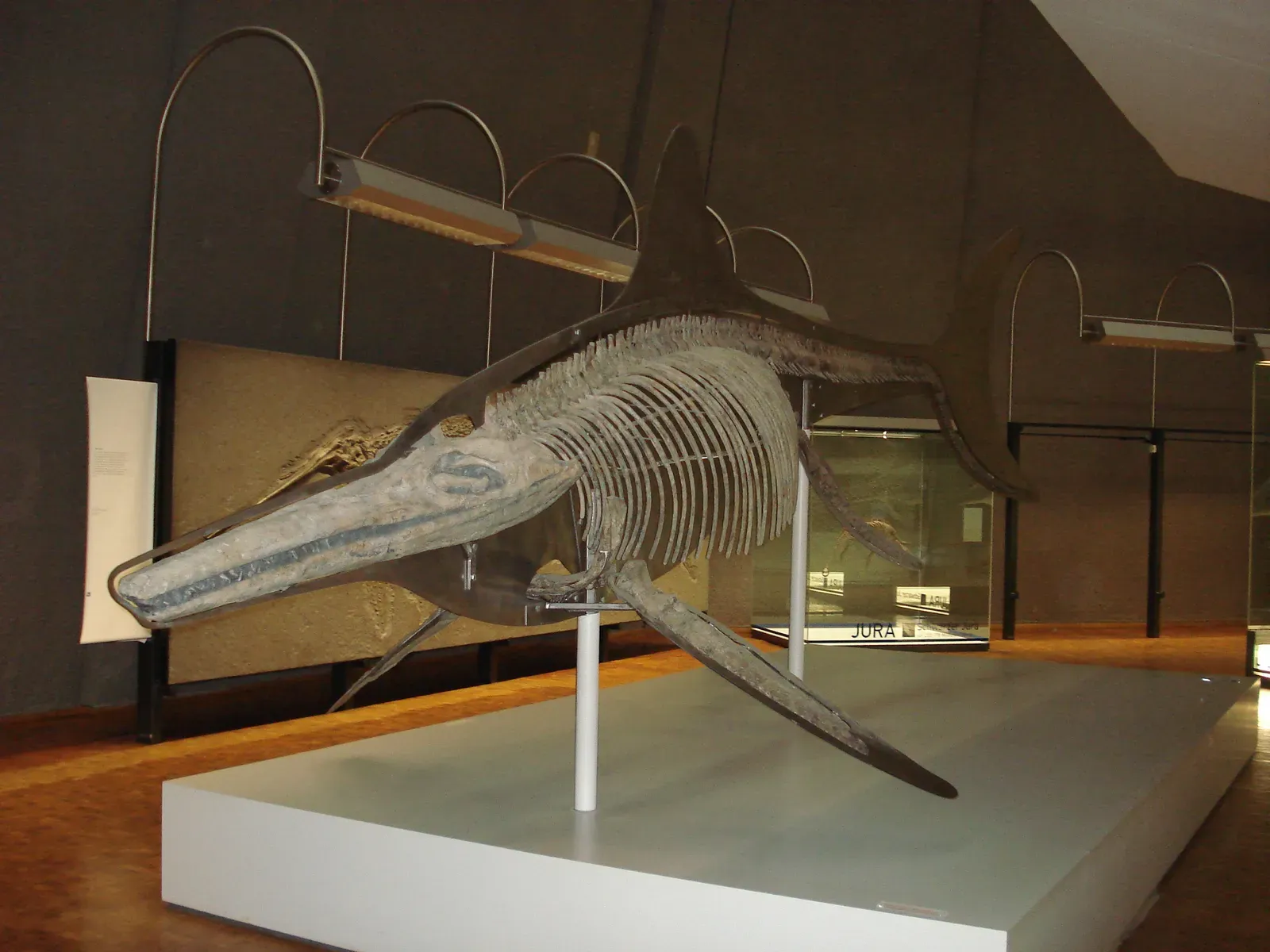
A fossil hunter stumbled across something extraordinary at a road cutting near Dotternhausen in southwestern Germany, a nearly complete front flipper from a giant ichthyosaur, preserved in extraordinary detail including soft tissue. A newly studied fossil reveals that Temnodontosaurus’s flippers had unique adaptations to reduce noise underwater not seen before in any other marine vertebrate. Large ichthyosaurs silently stalked their prey from the shadows. Scientists had never found soft tissue preservation at this scale in a giant ichthyosaur before.
The eyes of Temnodontosaurus were enormous, up to about 10 inches across, and fossil measurements show that ichthyosaurs had the largest eyes of any vertebrate known. One analysis found a Temnodontosaurus eye ring with a diameter of 264 millimeters, bigger than a modern soccer ball, giving strong evidence that these reptiles were adapted to see in extremely low light. Such oversized eyes would have gathered light efficiently at depth, where sunlight quickly fades. That combination of a huge, light-hungry eye and a quiet swimming style points to an animal that often hunted where vision and sound both mattered. In such shadowy water, even a small splash or pressure wave could warn prey, so any edge in staying undetected would have helped this predator catch fast-moving targets. It’s a level of sophistication that surprised even seasoned ichthyosaur researchers.
Traskasaura Sandrae: The Puzzle That Took 37 Years to Solve
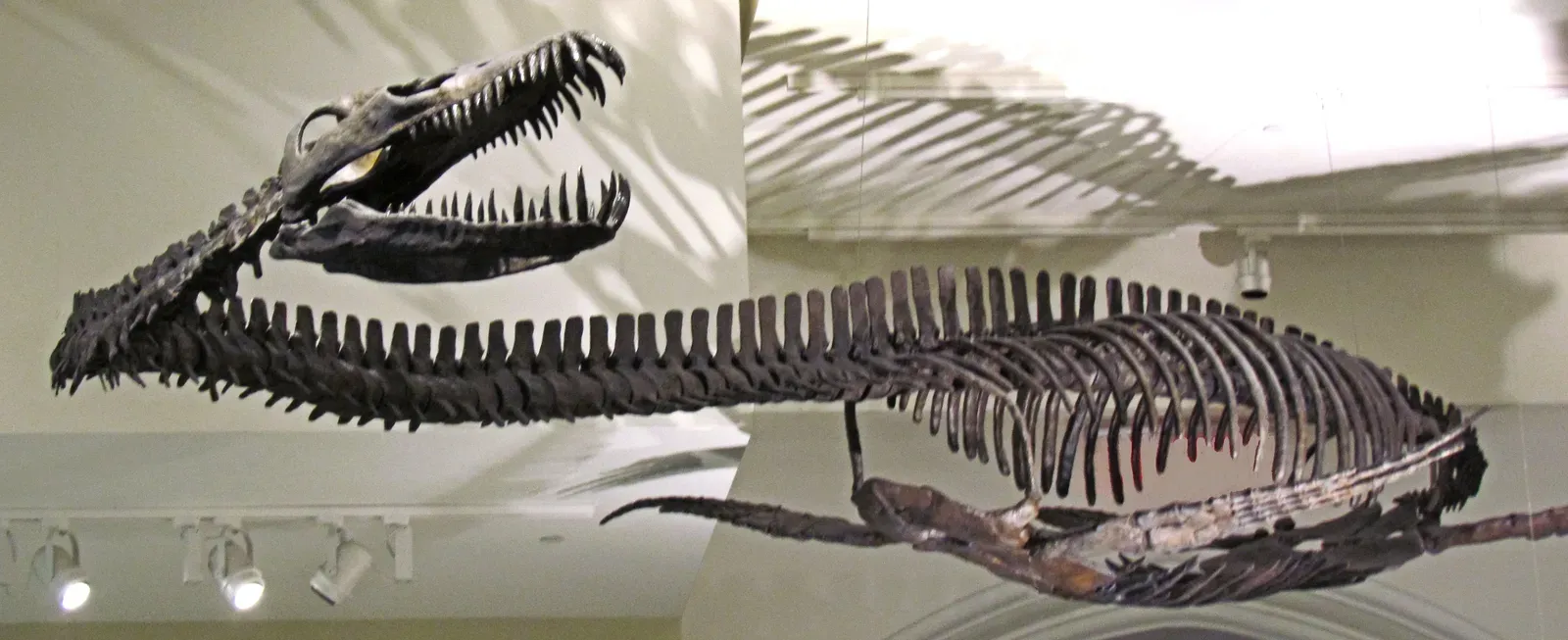
Some fossils don’t give up their secrets easily. One of North America’s most famous fossil discoveries was only recently properly identified as a new species of giant marine reptile that hunted the prehistoric seas 85 million years ago. Traskasaura sandrae, a 12-meter-long elasmosaur with crushing teeth and a distinctive hunting style, represents a crucial piece in understanding how ancient sea monsters evolved. The fossils, first discovered in 1988 along Vancouver Island’s Puntledge River, became British Columbia’s official provincial fossil in 2023 before scientists could even determine what species they belonged to.
The research suggests that early elasmosaurs were more diverse in their hunting strategies than previously recognized. While some evolved into filter-feeders with hundreds of tiny teeth, others like Traskasaura became precision predators with powerful crushing jaws. The presence of abundant ammonoids in the same rock layers supports the hypothesis that these spiral-shelled creatures were Traskasaura’s preferred prey, and the elasmosaur’s robust teeth would have been ideal, possibly, for crushing ammonite shells. Thirty-seven years between discovery and formal identification is a long time, but the wait produced a genuinely important chapter in marine predator evolution.
The Mosasaur Fossils of Morocco: A Predator’s Paradise Now Written in Stone
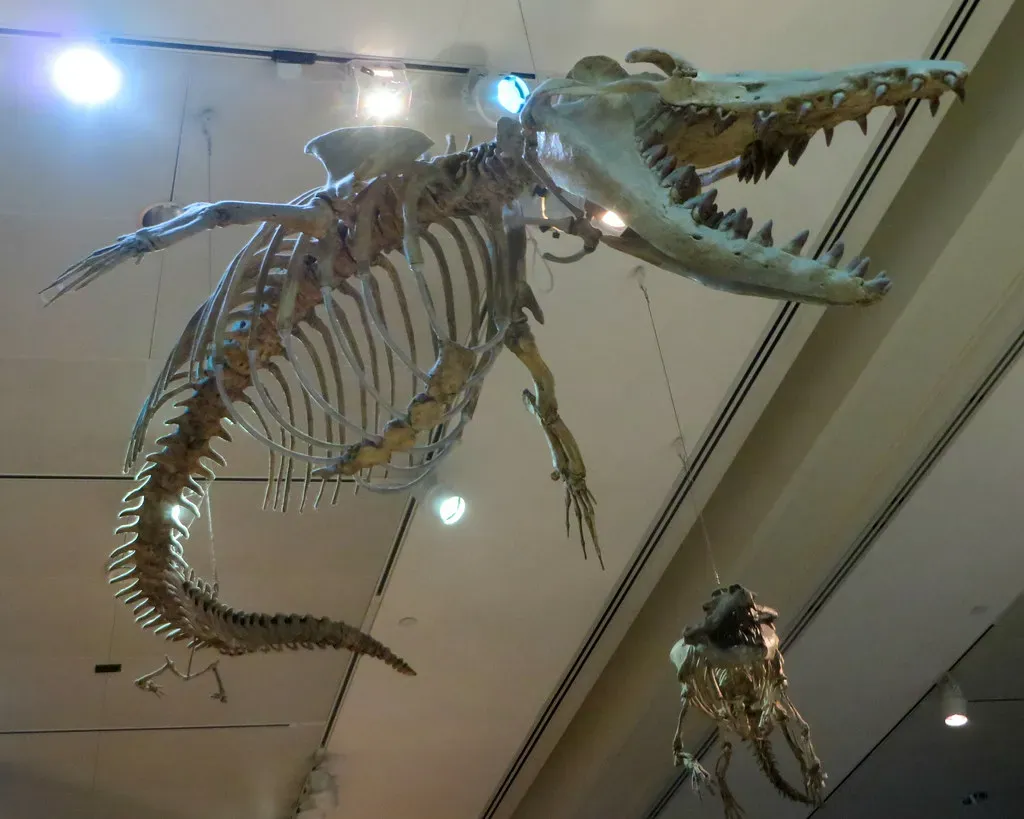
The phosphate deposits of Morocco have yielded one of the most extraordinary concentrations of Late Cretaceous marine predator fossils anywhere on Earth. Khinjaria was part of an extraordinarily diverse fauna of predators that inhabited the Atlantic Ocean off the coast of Morocco just before the dinosaurs went extinct, and the study was based on a skull and parts of the skeleton collected from a phosphate mine southeast of Casablanca. The sheer number and variety of apex predators preserved in this single deposit remains genuinely unmatched.
Mosasaurs, plesiosaurs, and giant sea turtles disappeared along with entire families of fish, opening the way for whales and seals, while fish like swordfish and tuna appeared. However, the ecosystem that evolved after the impact was different. The mosasaur fossils don’t just illuminate a vanished world. They also clarify just how thoroughly that world was dismantled. If validated by future discoveries, findings about mosasaur niche flexibility change how paleontologists interpret marine reptile dispersal at the end of the Age of Dinosaurs, and mosasaurs are considered critical index predators for reconstructing Maastrichtian ocean ecosystems. You’re looking, through these fossils, at both the height of ocean predator diversity and its abrupt, catastrophic end.
Conclusion
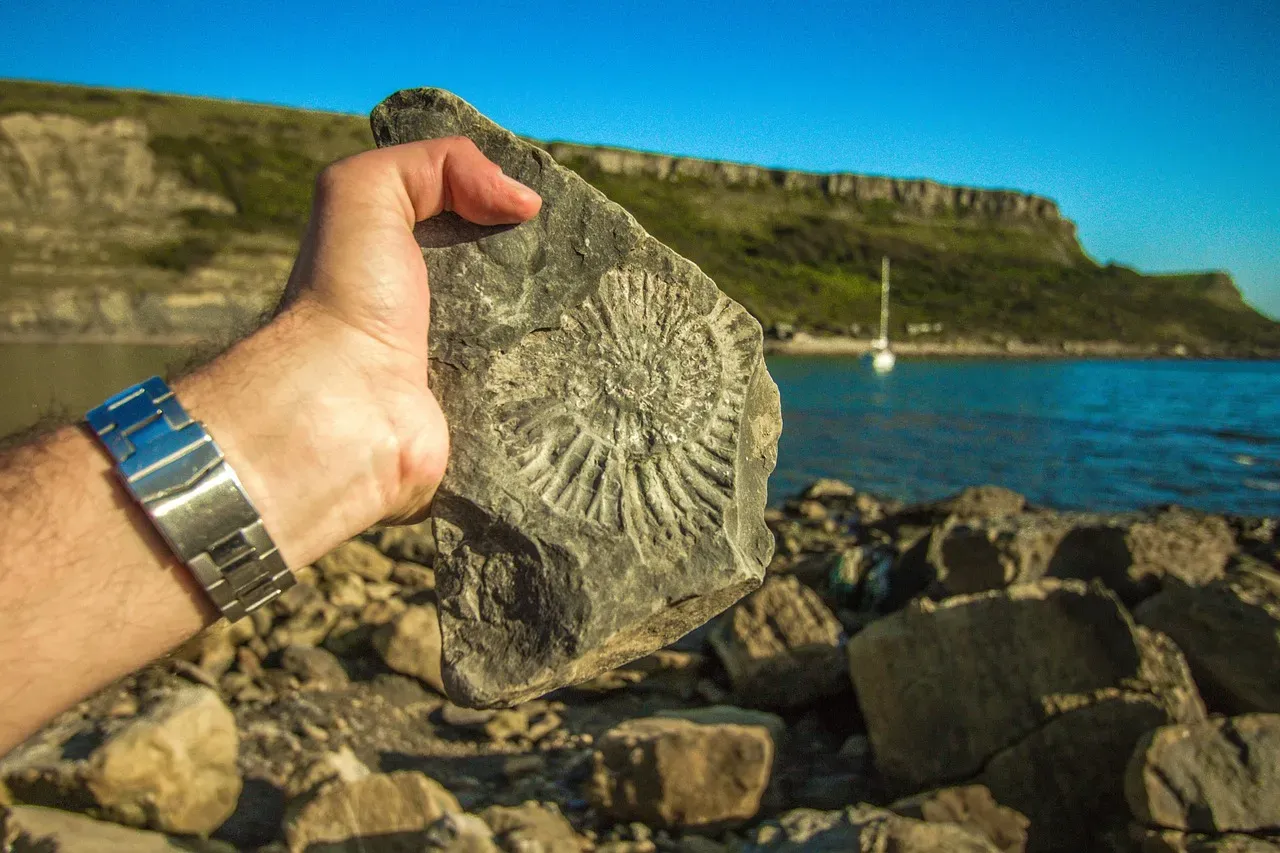
Each of these seven fossils arrived with the weight of a corrected assumption. They told scientists that ancient oceans were stranger, richer, and far more complex than previous models suggested. Recent technological advancements have transformed how scientists study fossils, with techniques such as CT scanning allowing researchers to examine fossils without damaging them and providing better insight into internal structures and potential behaviors. That means fossils collected decades ago, like the Australian marine amphibians or the Belgian megalodon vertebrae, still have stories left to tell.
Very few fossil sites have been studied in enough detail to rebuild entire food webs. As more discoveries emerge, scientists will be able to compare ecosystems across different regions and time periods, deepening knowledge of how ancient oceans influenced the modern seas we depend on today. The ocean surface may look calm, but every wave rolls over a history far older and more violent than it appears. These fossils are the evidence. And the record is still far from complete.