Borneo – Dr. Birutė Galdikas ventured into the remote swamps of Tanjung Puting Reserve in 1971, determined to study orangutans at a time when experts deemed it impossible. Over nearly five decades, her patient observations revealed the hidden lives of these solitary red apes, reshaping scientific knowledge of their behavior and ecology. She died on March 24, 2026, in Los Angeles at age 79 after battling lung cancer, marking the end of an era in primatology.
A Dream Forged in Childhood
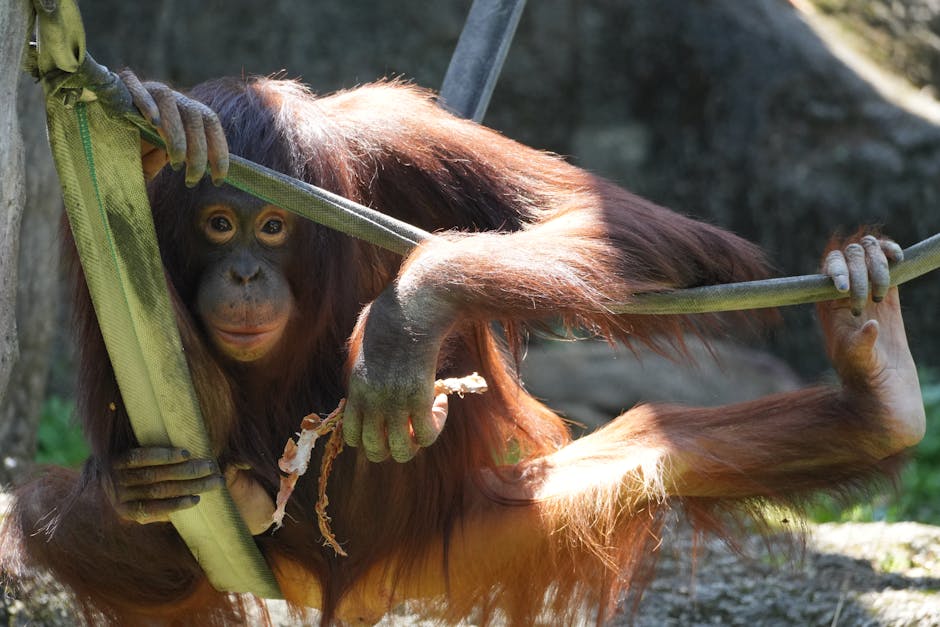
A Dream Forged in Childhood (Image Credits: Pexels)
Born in 1946 in Wiesbaden, Germany, to Lithuanian refugee parents, Galdikas grew up in Toronto after her family immigrated to Canada. Stories of distant jungles and exotic animals captivated her early years; she drew inspiration from tales of adventurers like Jane Goodall. By her teens, she pursued studies in psychology and zoology at the University of British Columbia and later UCLA.
Her path converged with paleoanthropologist Louis Leakey during graduate school. Persistent in her vision to study orangutans, she convinced him to fund her work despite his initial skepticism. In 1971, at age 25, she arrived in Borneo with her first husband, photographer Rod Brindamour, to establish Camp Leakey in the heart of Tanjung Puting.
Revealing the Secrets of Solitary Apes
Galdikas conducted the longest continuous study of any wild mammal led by a single researcher, logging over 150,000 hours of observation. She documented orangutans’ lengthy birth intervals of about 7.7 years and identified more than 400 food types in their diet, from fruits to insects. Her findings illuminated their social structures, tool use, and role as seed dispersers in rainforest ecosystems.
“Their eyes have whites around the iris … just like humans,” she observed in a 2011 interview, highlighting the apes’ expressive gazes that drew her closer to their world. Challenges abounded: leech-infested swamps, isolation without modern amenities, and bouts of severe malaria tested her resolve. Yet her perseverance yielded a 1975 National Geographic cover story, thrusting orangutans into global spotlight.
Conservation Warrior Amid Habitat Threats
Beyond research, Galdikas championed rehabilitation, rescuing hundreds of orphaned or ex-captive orangutans and guiding their return to the wild. She founded the Orangutan Foundation International in 1986, with outposts in the U.S., Indonesia, Australia, and the U.K., which has reintroduced over 500 individuals. Threats like logging, palm oil expansion, and fires fueled her advocacy; she clashed with industries profiting billions from rainforest destruction.
“I was struggling against an industry that was making billions of dollars,” she reflected in a recent interview. It did sometimes come to physical violence. Her efforts earned Indonesia’s highest environmental honor, the Kalpataru Award in 1997, as the only non-Indonesian recipient. She also advised Indonesia’s Ministry of Forestry and mentored nearly 100 local students.
| Key Achievements | Impact |
|---|---|
| Documented 400+ foods | Advanced ecology knowledge |
| Rehabilitated 500+ orangutans | Boosted wild populations |
| Founded OFI (1986) | Global conservation network |
The Final Trimate and Enduring Influence
As the last surviving member of Leakey’s Trimates—alongside Goodall and Dian Fossey—Galdikas brought a female perspective to great ape studies, emphasizing emotions and social bonds. Her books, including Reflections of Eden, chronicled her immersive life in Borneo. She held professorships at Simon Fraser University and Universitas Nasional in Jakarta.
Controversies arose in the 1990s over rehabilitation methods, with critics questioning disease risks and objectivity. Galdikas defended her hands-on approach as essential given limited alternatives. Awards like the Tyler Prize and Officer of the Order of Canada affirmed her stature.
Key Takeaways
- Galdikas transformed orangutans from mysterious to well-understood, aiding conservation.
- Her work spanned generations, protecting Borneo’s rainforests.
- OFI continues her mission, rescuing and releasing orangutans today.
Dr. Galdikas leaves a blueprint for blending science, advocacy, and resilience in wildlife protection. Her story reminds us that one person’s dedication can safeguard entire species. What do you think about her legacy? Tell us in the comments.