
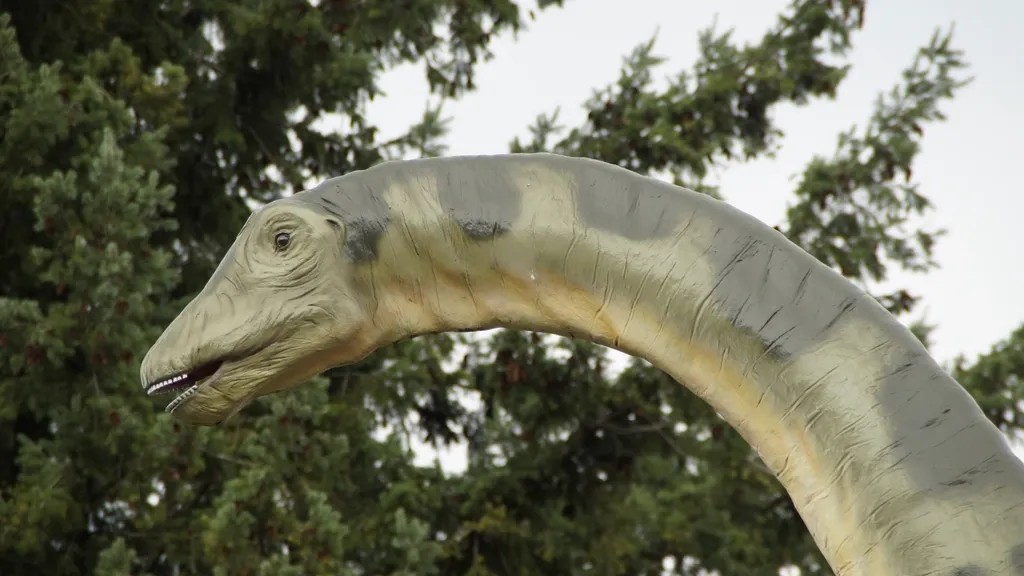
Survival in the prehistoric world wasn’t just about size or brute force. It required something far more precise: the right body, the right instinct, the right set of biological tools tuned by millions of years of trial, pressure, and change. Evolutionary adaptation is the adjustment of organisms to their environment in order to improve their chances at survival in that environment. That process, slow and relentless, shaped some of the most extraordinary creatures Earth has ever seen.
What makes prehistoric adaptations genuinely fascinating is how specific they were. You’ll find creatures that rewired their own metabolism, grew biological armor, or evolved entirely new hunting strategies just to carve out a place in a world that constantly threatened to erase them. Here are ten of the most remarkable examples of that process at work.
1. The Woolly Mammoth’s Full-Body Cold-Weather System
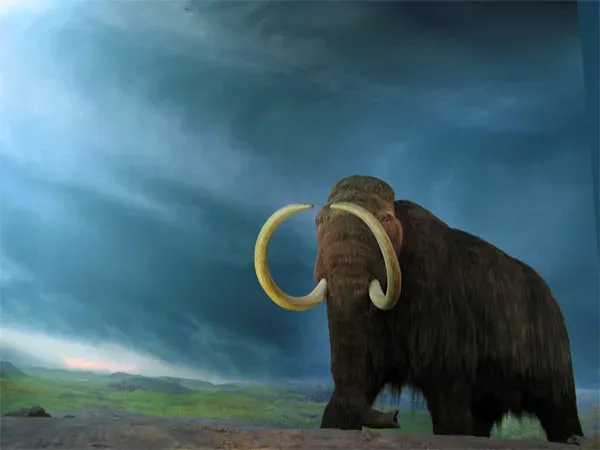
When you think of the woolly mammoth, you probably picture the shaggy coat. That part’s accurate, but the full picture is considerably more complex. The woolly mammoth was well adapted to the cold environments present during glacial periods, and it was covered in fur with an outer covering of long guard hairs and a shorter undercoat. Beneath that layered coat, the insulation ran even deeper.
Mammoths had a yellowish brown undercoat about two and a half centimeters thick beneath a coarser outer covering of dark brown hair that grew more than seventy centimeters long in some individuals, and under the extremely thick skin was a layer of insulating fat at times eight centimeters thick. Their small ears reduced heat loss and frostbite, and the tail was short for the same reason. Every part of the body was coordinated toward the same thermal goal, making the mammoth one of the most comprehensively cold-adapted large mammals ever to walk the planet.
2. Spinosaurus and Its Semi-Aquatic Body Plan
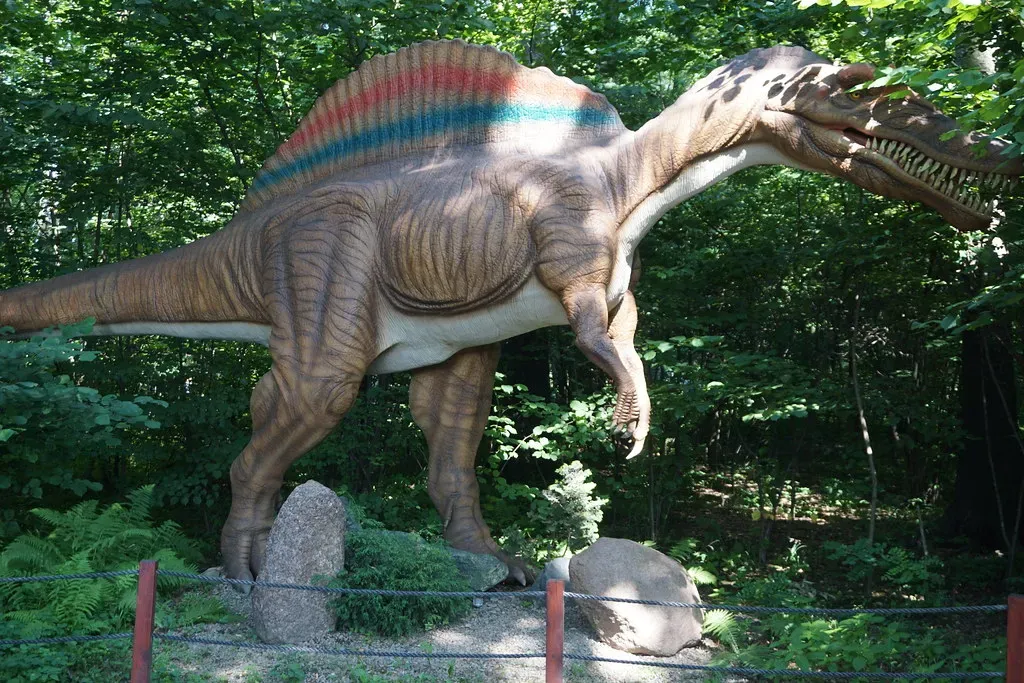
Spinosaurus occupies a genuinely unusual corner of dinosaur evolution. While most large theropods were built for land-based pursuit, this enormous predator developed a suite of features geared toward life near and in the water. With its nostrils positioned far back on the skull, Spinosaurus could breathe while much of its snout remained submerged, an ideal setup for ambush hunting in murky rivers. That single detail changes how you picture it hunting entirely.
Spinosaurus’s leg bones had a high bone density, allowing for better buoyancy control, and multiple functions have been put forward for the dorsal sail, including thermoregulation and display. Rather than evolving in direct competition with massive land predators, Spinosaurus likely avoided ecological overlap by exploiting a different niche altogether, and abundant fish and aquatic prey within Cretaceous river systems provided an opportunity for spinosaurids to specialize. It’s a powerful example of how occupying an untested niche could become a survival strategy in itself.
3. Ankylosaurus and the Art of Living Fortification
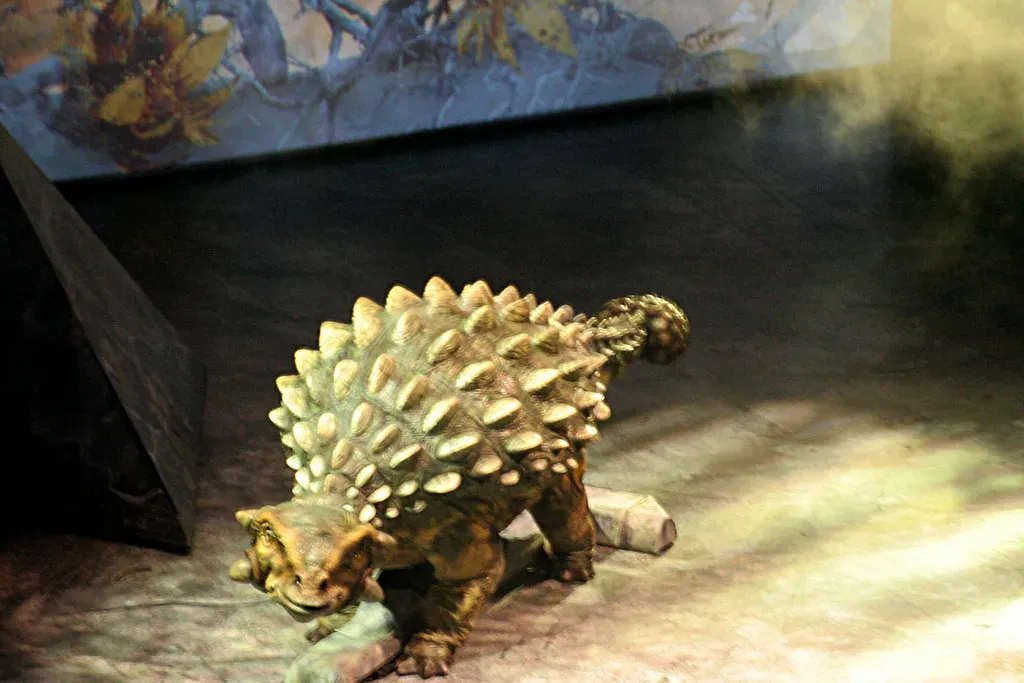
You don’t need speed when your entire body is a defensive weapon. Ankylosaurus, with its formidable armor plating and iconic clubbed tail, is among the most recognizable dinosaurs of the Late Cretaceous period. Picture a creature built less like a predator and more like a moving fortress, its back fused with bony osteoderms that deflected the teeth of even the largest carnivores.
Its body was encased in thick bony plates fused together into an impenetrable shield against predators, and measuring around twenty to thirty feet long and weighing up to several tons, this herbivore wasn’t built for speed but rather resilience, with a heavy club-like tail structure capable of delivering bone-crushing blows. That tail club wasn’t decorative. Studies of Ankylosaurus tail structure suggest the bone mass and leverage were sufficient to cause serious skeletal damage in large predators, making the tail a genuinely functional offensive tool in a body otherwise devoted entirely to defense.
4. Titanoboa’s Sheer, Environment-Matched Size
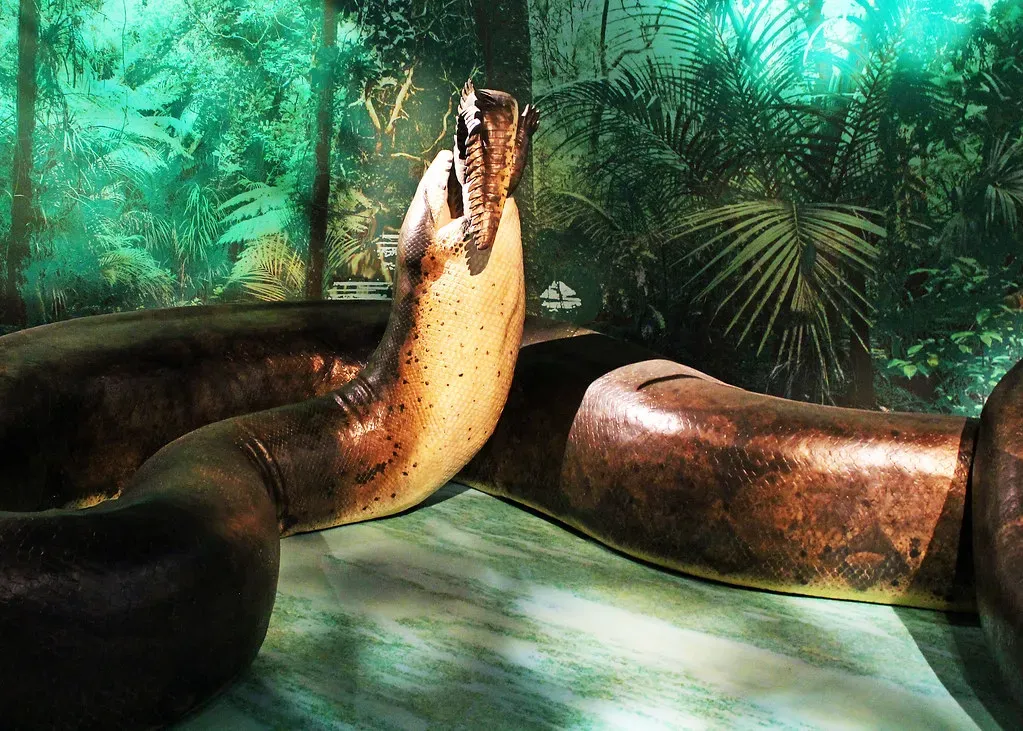
After the mass extinction event that ended the age of non-avian dinosaurs, a different kind of giant emerged from the steaming rainforests of what is now South America. Titanoboa is estimated to grow up to nearly thirteen meters long and weigh around 730 to 1,135 kilograms. To put that in perspective, that’s longer than a school bus and heavier than a large horse. Size at that scale wasn’t just impressive – it was adaptive.
Titanoboa evolved following the extinction of all non-avian dinosaurs, being one of the largest reptiles that lived after the Cretaceous-Paleogene extinction event. Titanoboa is thought to have been a semi-aquatic apex predator, with a diet consisting primarily of fish. Scientists have noted that its enormous bulk is consistent with the extremely high temperatures of its tropical Paleocene environment, since larger body mass in ectotherms like snakes is linked to warmer ambient temperatures. Its size wasn’t incidental. It was shaped by the heat of a world recovering from catastrophe.
5. The Horseshoe Crab’s Unbreakable Blueprint
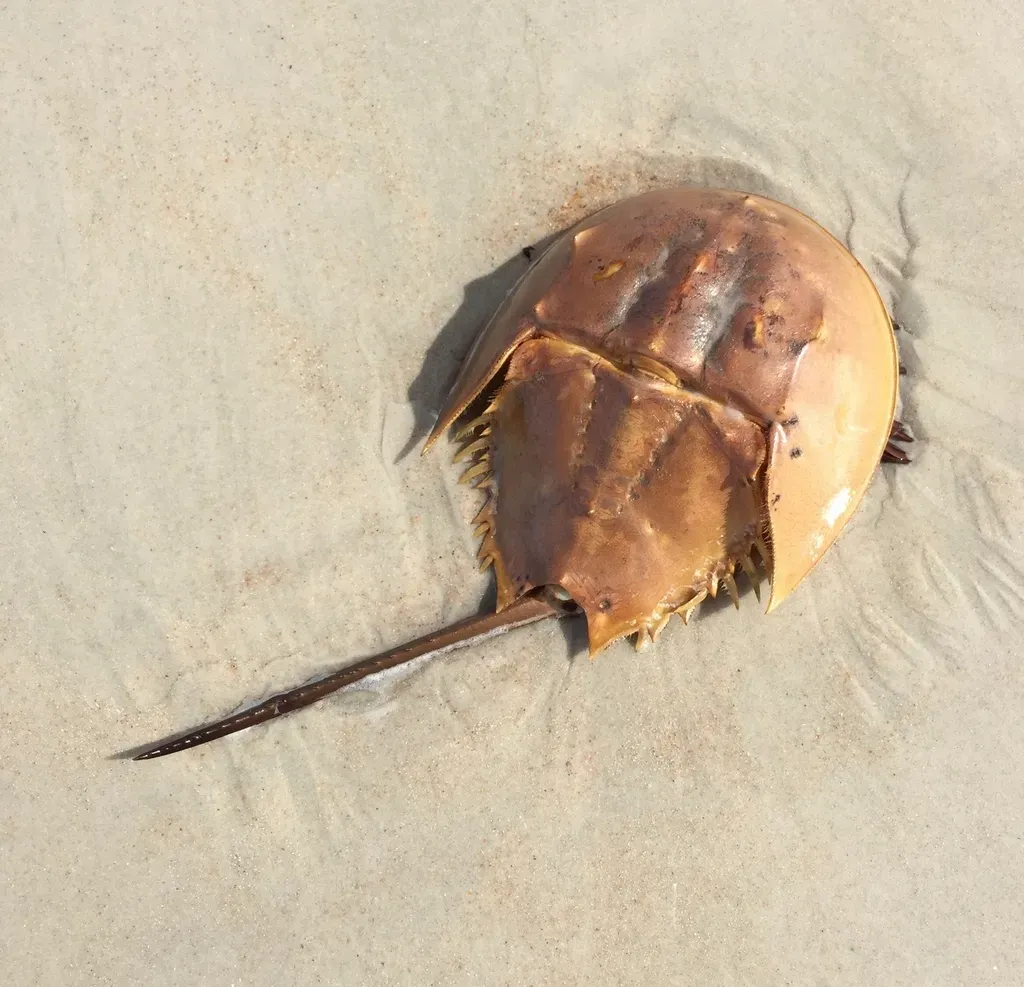
Few survival stories in natural history are as quietly dramatic as the horseshoe crab’s. With a lineage dating back over 450 million years, horseshoe crabs are among the oldest species still alive to date, and these prehistoric animals have survived multiple mass extinctions. They outlived the Permian extinction, the event that erased roughly nine in ten of all marine species. They outlived the asteroid impact that finished off the dinosaurs. Their design, it seems, just kept working.
With their distinctive three-part body structure and ten eyes, horseshoe crabs play a critical role in coastal ecosystems and the biomedical industry. Their ability to endure is shown in their tough exoskeletons, spiral shells, and specialized appendages, which have allowed them to endure in environments that have changed dramatically over time. The compound eye arrangement gives them an unusually wide field of vision in low-light coastal waters, and their copper-based blue blood clots on contact with bacterial toxins, a biological property so effective that the medical industry still relies on it today for testing the sterility of vaccines and implants.
6. Ichthyosaurs and the Convergent Evolution of the Dolphin Form
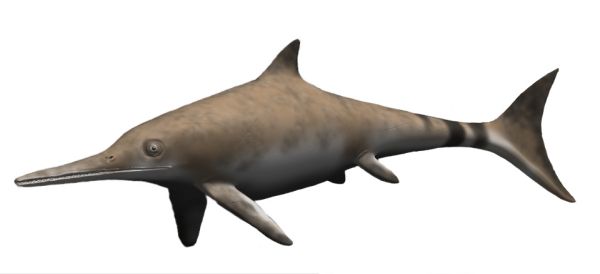
One of the most compelling demonstrations of how powerful environmental pressure can be is what happened to ichthyosaurs. These were reptiles, not fish, not dolphins, yet they evolved into an almost identical form. Ichthyosaurs looked similar to dolphins and were well adapted for life in the ocean, having streamlined bodies and large eyes, making them effective hunters, and fossils show they gave live birth, which is unusual among reptiles.
One of the most remarkable things in biology is convergent evolution, which is when completely unrelated groups of organisms evolve similar features in response to similar environmental pressures. Ichthyosaurs are a textbook case. Their large eyes, among the largest relative to body size of any known vertebrate, likely allowed them to hunt in deep, dim water. Shastasaurus, the largest known marine reptile, glided gracefully through ancient seas, reaching astonishing lengths of up to seventy feet, and unlike other ichthyosaurs, its slender, dolphin-like body was an adaptation for efficient swimming. The ocean essentially demanded a shape, and these reptiles delivered it.
7. Pterosaurs and the Mechanics of Prehistoric Flight
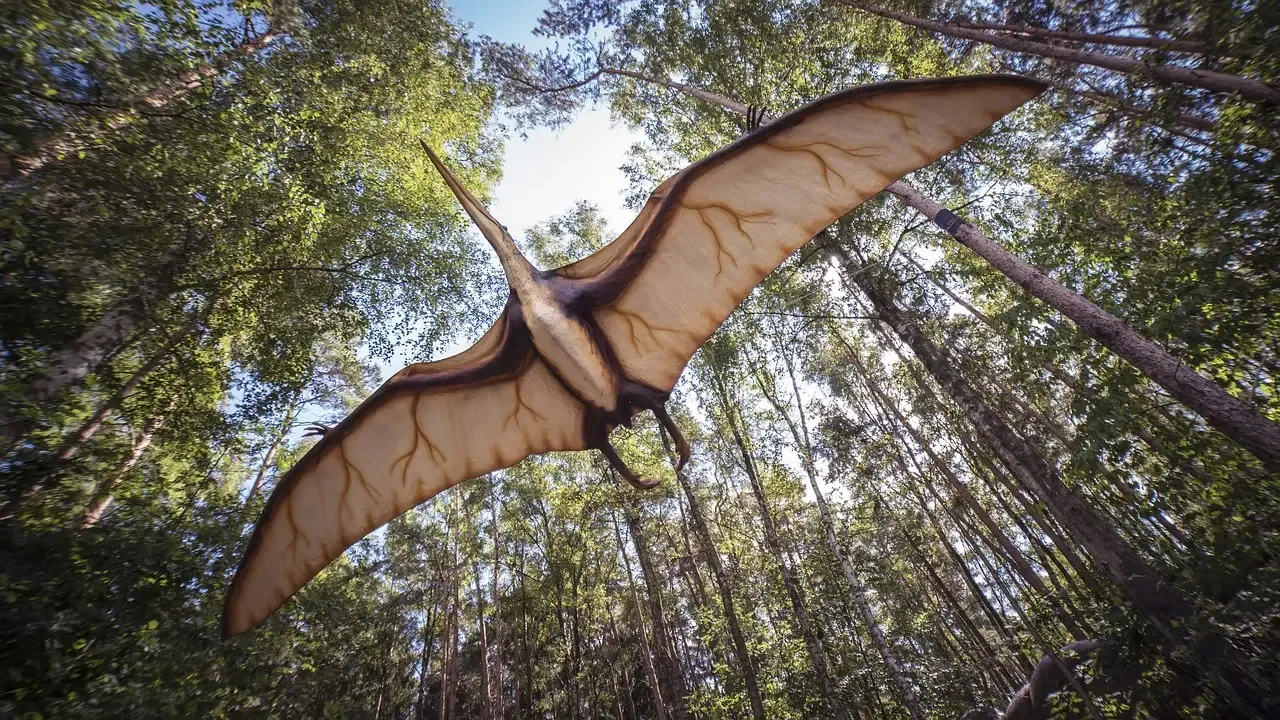
You might assume that flight gave pterosaurs a straightforward advantage: get airborne, avoid predators, access food that ground-dwellers can’t reach. The reality of their flight adaptation was more sophisticated than that. Rhamphorhynchus was a fascinating flying reptile from the Jurassic period, measuring about fifty centimeters in length, and thrived during a time when the skies were filled with various prehistoric creatures, with its diamond-shaped tail rudder and forward-slanting teeth making it well-adapted for catching fish and navigating through the air.
Pterosaurs were traditionally depicted with leathery wings stretched between elongated fingers, but recent studies have prompted a reassessment of their appearance and flight mechanics, with one of the most significant discoveries being the realization that their wing membranes were more complex than previously thought. Pterosaurs belonged to a group of reptiles that were the first creatures to evolve powered flight. That title belongs entirely to them, predating birds by tens of millions of years, and the structural complexity of their wings made them capable of a range of aerial behaviors far beyond simple gliding.
8. Trilobites and the Compound Eye Advantage
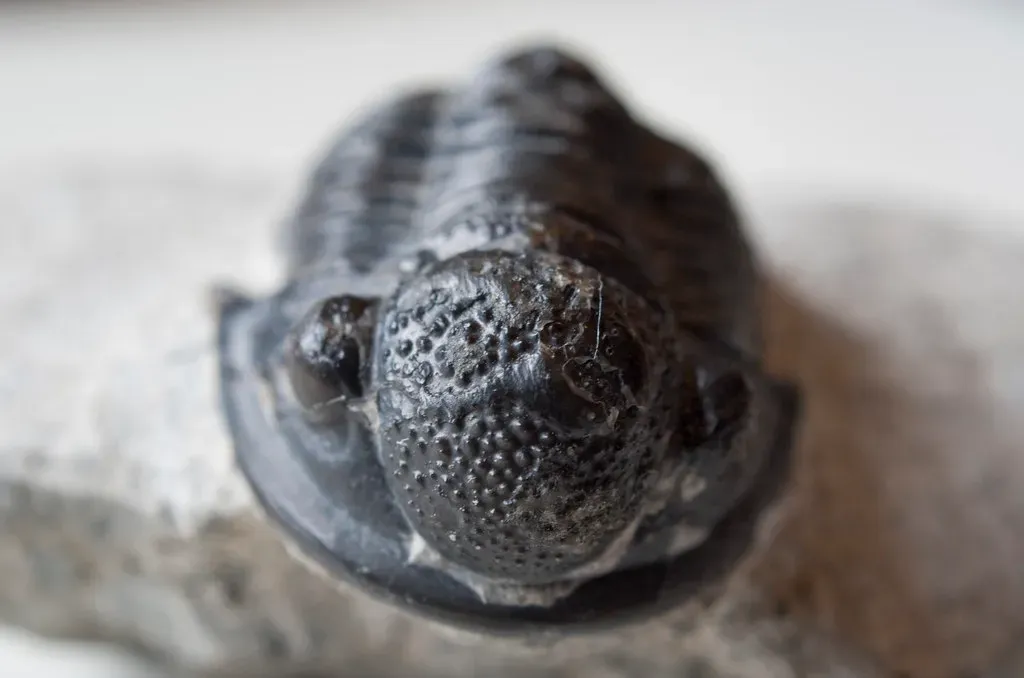
Trilobites are easily overlooked in popular discussions of prehistoric life, overshadowed by the more cinematic dinosaurs. Yet these marine arthropods dominated Earth’s oceans for a staggering span of time. Some groups, such as the trilobites, thrived and dominated Earth for hundreds of millions of years. Much of that success came down to a single remarkable feature: their eyes.
Trilobites evolved some of the earliest complex visual systems in the fossil record. Their compound eyes, built from calcite crystals rather than the soft organic lenses found in most modern animals, were capable of producing detailed images in dim underwater environments. Trilobites were marine arthropods known for their hard exoskeletons and distinctive three-lobed bodies. That exoskeleton, combined with their advanced vision, allowed them to detect predators and locate prey with a precision that gave them a competitive edge over the simpler organisms around them for an almost incomprehensibly long chapter of Earth’s history.
9. The Lungfish’s Drought-Defying Dormancy
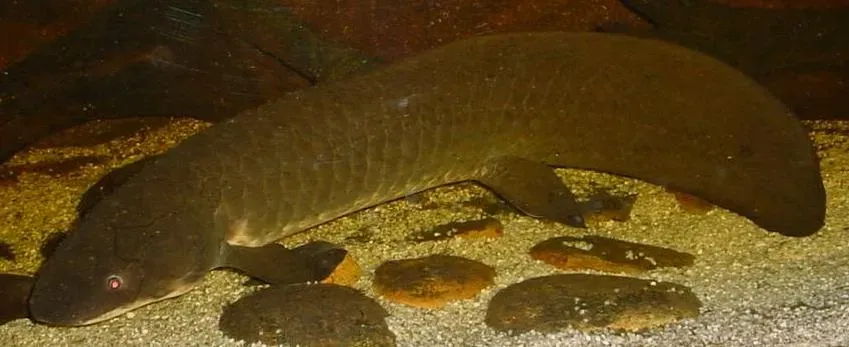
Most fish die when their water disappears. The lungfish found a different answer entirely. The secret to the lungfish’s longevity may come down to their ability to survive droughts by burrowing into mud and hibernating, something other fish can’t do, and like the coelacanth, lungfish are an evolutionary link between fish and early land animals. When rivers dried up, as they did repeatedly across prehistoric Africa, the lungfish simply waited the drought out underground.
This metabolic shutdown, known as estivation, allowed lungfish to reduce their oxygen and energy needs to a bare minimum, surviving sealed inside a mucus cocoon in dry sediment for extended periods. Creatures recognizable as coelacanths, close evolutionary cousins to the lungfish, go back to about 400 million years ago, and these fleshy-finned fish were the evolutionary cousins of lungfish and the very first vertebrates to walk on land. The lungfish lineage essentially bridged two worlds, and the ability to endure land conditions, however briefly, turned out to be one of the most consequential biological innovations in animal history.
10. The Saber-Toothed Cat’s Specialized Predatory Tools
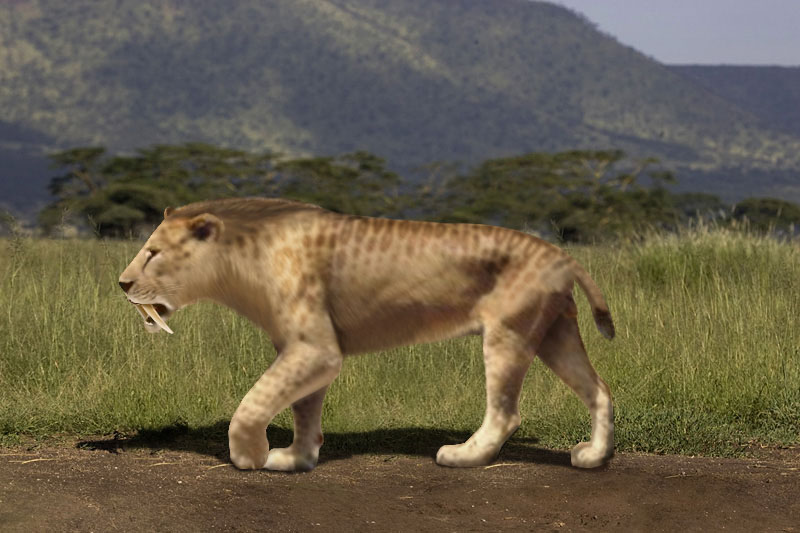
The elongated canine teeth of the saber-toothed cat, most famously Smilodon, are arguably the most iconic prehistoric adaptation in popular culture. What’s often missed, though, is how precisely targeted those teeth were. They weren’t general-purpose weapons. They were highly specialized instruments shaped for a specific killing technique. Saber-toothed cats, known for their long, curved canine teeth, inhabited the Earth during the same period as woolly mammoths, and these predators had adaptations that made them excellent hunters and contributed to their reputation in prehistoric ecosystems.
Fossil analysis of Smilodon skulls reveals unusually wide jaw gape, a skeletal feature that allowed the animal to open its mouth far enough to drive those canines into the throats of large prey. The prehistoric world was a landscape of diverse environments, and in order to thrive in these varied and often inhospitable settings, animals developed a range of specialized adaptations that allowed them to survive and flourish. The saber-toothed cat’s entire anatomy, from its muscular forelimbs built for pinning prey to its reinforced skull, coordinated around those teeth. It was a complete predatory system, not just a dramatic accessory, refined over millions of years to hunt the megafauna of the Pleistocene.
A Final Thought on Prehistoric Ingenuity
What connects all ten of these adaptations is that none of them happened overnight, and none of them were guaranteed to work. All the adaptations in the living world have been produced by natural selection, which acts continuously, on many levels and time scales, and an animal may become well adapted to an ecological niche that then disappears, forcing the animal either to evolve rapidly to fill another or, more likely, to become extinct.
Mass extinction events can seem catastrophic, but they often lead to increased biodiversity in the long run, as surviving species frequently fill the gaps left by extinct ones, leading to new evolutionary pathways and innovations. Every adaptation described here represents a gamble that paid off, at least for a time. Some of these creatures are gone. Others, like the horseshoe crab and the lungfish, are still here, largely unchanged, living proof that getting the biology right once can be enough to last through almost anything the planet throws at you.
The prehistoric record isn’t just a catalog of what used to exist. It’s a working archive of every biological strategy life has tried, failed with, and occasionally perfected. That archive is still being written by every species alive today.