If you grew up picturing dinosaurs as cold, lumbering monsters that laid eggs and walked away, you’re not alone. For decades, that was the default story: dinosaurs were reptilian, ruthless, and emotionally distant. But as new fossils keep turning up, that picture is quietly cracking, and what slips through the cracks is surprisingly tender.
You now live in a moment when scientists can catch dinosaurs in the act of parenting, frozen in stone for tens of millions of years. Adult dinosaurs brooding eggs, babies clustered around a guardian, nesting colonies that look eerily like seabird rookeries today – these finds are forcing you to rethink what “being a dinosaur” really meant. And the more evidence you see, the harder it is to cling to the old idea that they were careless parents.
Did Dinosaurs Really Care For Their Young? The Myth Starts To Crumble
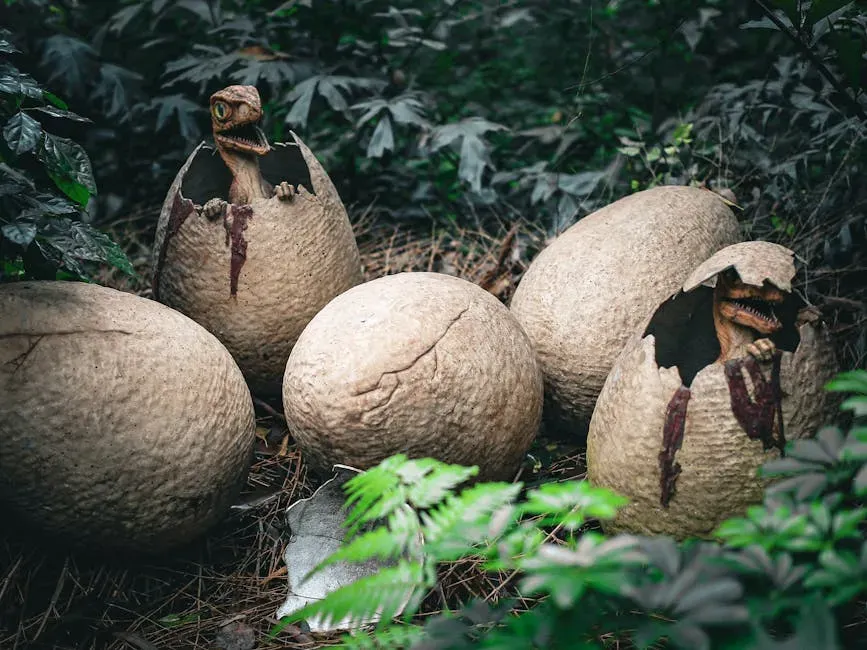
You’ve probably heard the old line that dinosaurs were just “big lizards” that abandoned their eggs like many modern reptiles do. That assumption shaped how you were taught to imagine them: lots of teeth, very little feeling. But as paleontologists have dug deeper – literally and figuratively – they’ve uncovered fossils that directly challenge that story. Instead of empty nests and scattered shells, you now see nests with babies that stayed put, and adults caught right on top of their clutches.
When you look at how scientists actually infer parenting, it’s not guesswork pulled from thin air. They use concrete clues: adults preserved in a brooding pose over eggs, hatchlings of similar age grouped in nests, and nesting grounds that suggest repeated use and long-term care. In other words, you’re no longer relying on armchair speculation; you’re staring at snapshots of behavior preserved in rock. The result is a growing consensus that at least some dinosaurs were much more like dedicated bird parents than aloof reptiles.
Maiasaura And The Rise Of The “Good Mother” Dinosaur
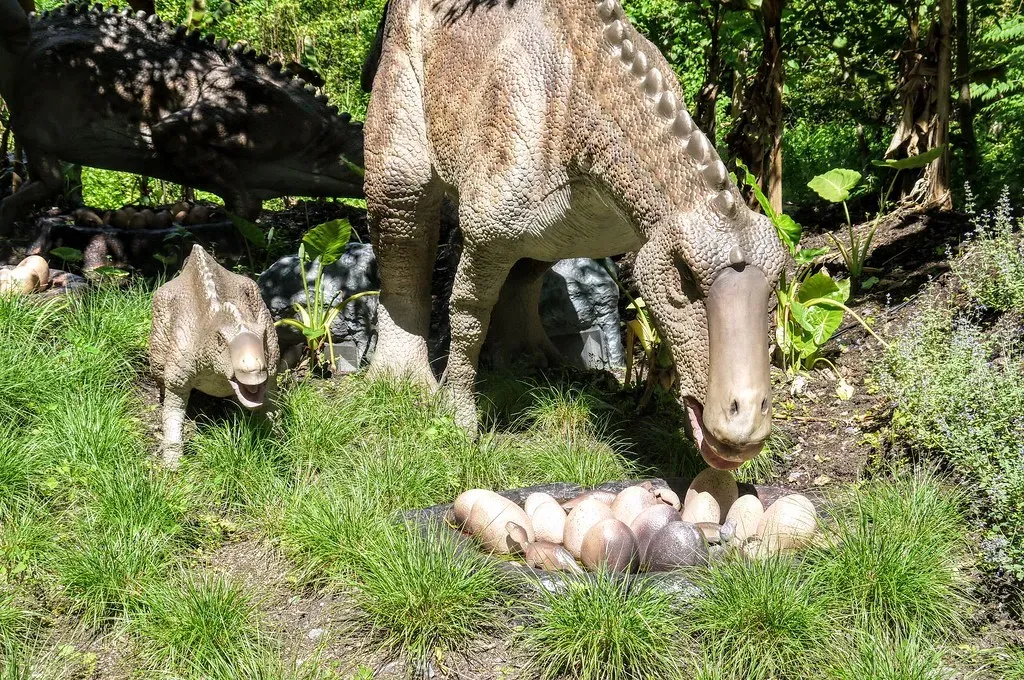
If you want a case study that flips your assumptions, you start with Maiasaura, whose name literally translates to “good mother lizard.” In Montana, researchers uncovered a huge nesting site informally dubbed Egg Mountain: multiple nests, each carefully constructed, with clutches of eggs and evidence that hatchlings stayed in the nest for a while rather than bolting immediately. The babies’ bones show they weren’t ready to walk far, which implies they relied on parents to bring food. That alone pushes you toward a picture of active, ongoing care instead of a one-and-done egg dump. ([fog.ccsf.edu](https://fog.ccsf.edu/~kwiese/TimeLife/content/GoodMotherDinosaur.html?utm_source=openai))
What really grabs you is how communal it all looks. The nests are arranged in colonies, with enough space for adults to move between them, a bit like modern seabird or penguin rookeries. Broken but trampled eggshells inside the nests suggest the young remained there for some time as they grew, not just for a single frantic scramble to the outside world. When you put all that together, you’re looking at more than just biological parenting; you’re looking at a structured social system where adults repeatedly returned, guarded, and likely fed their offspring. ([nhm.ac.uk](https://www.nhm.ac.uk/discover/were-dinosaurs-good-parents.html?utm_source=openai))
From “Egg Thief” To Devoted Sitter: The Oviraptor Story
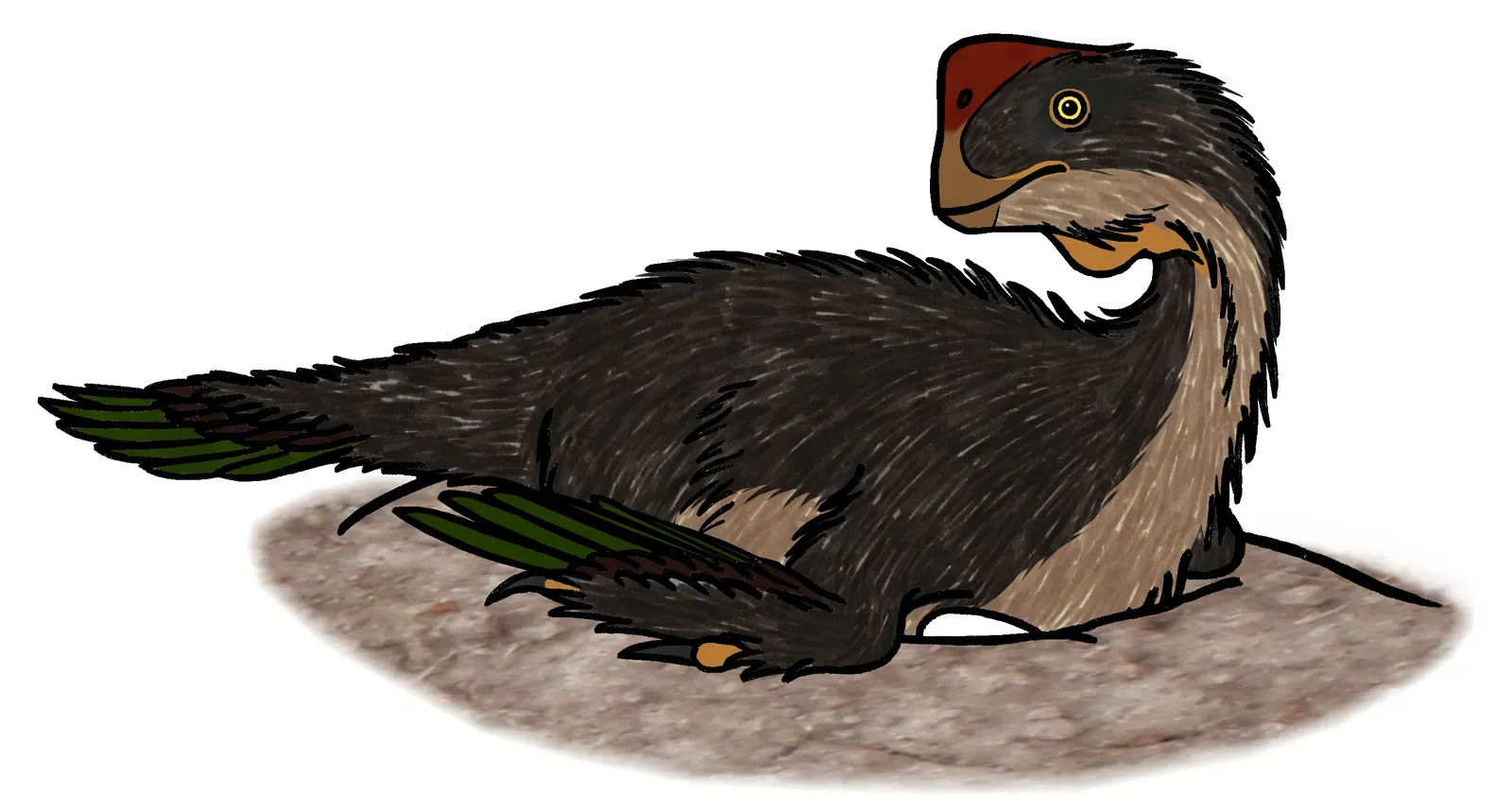
Oviraptor might be the most dramatic example of how easily you can misread the fossil record. Early on, scientists found an Oviraptor skeleton near a nest of eggs and assumed it was raiding someone else’s clutch; the name basically brands it as an egg thief forever. Later discoveries changed that script completely. More complete fossils showed oviraptorosaurs preserved right on top of egg clutches, limbs spread in a classic brooding posture that looks uncannily like a bird sitting on its nest. The eggs themselves turned out to belong to the same group, meaning the “thief” was actually guarding its own offspring.
Newer finds from China even captured an oviraptorosaur literally in the act of brooding when it died, still covering its eggs, some of which contained near-ready embryos. That scene feels almost intimate: an adult staying on the nest long enough that death caught it mid-care. Egg arrangement and shell structure suggest open, possibly partially covered nests, more like bird nests than buried reptile clutches. When you factor in evidence that the eggs may have been pigmented – something often linked to exposed nesting and visual signaling – you end up with a dinosaur that starts to look less like a sneaky thief and more like an attentive sitter.
Stay‑At‑Home Dinosaur Dads: When Fathers Took The Lead
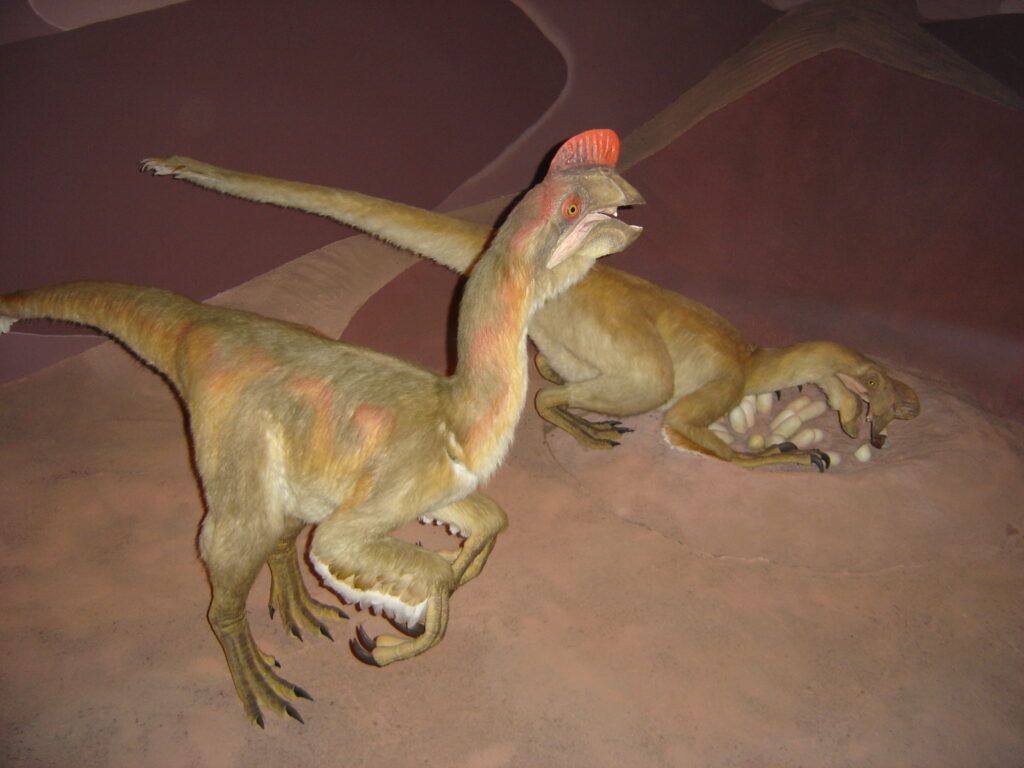
Here’s a twist you might not expect: in some dinosaur groups, fathers may have been the primary caregivers. Research on nests associated with smaller theropods like Oviraptor and Troodon suggests that males may have guarded and incubated large clutches that likely came from multiple females. That pattern mirrors what you see in some modern birds, where males brood communal nests while females lay eggs and move on. Clutch sizes in these fossils are large compared with the body size of the adult, pointing to several mothers contributing to one guarded nest. ([nationalgeographic.com](https://www.nationalgeographic.com/science/article/dinosaur-daddies-took-care-of-their-young-alone?utm_source=openai))
When scientists examined the bones of brooding adults in some of these nests, they did not find the telltale signs of egg-laying bone tissue that you’d expect in a female who had recently produced eggs. That absence is not definitive, but it fits a scenario where males sat on eggs laid by multiple partners. If that interpretation holds, then the earliest forms of “bird-style” paternal care may have deep roots in non‑avian dinosaurs. It means that when you picture devoted dinosaur parents, you might want to imagine a watchful father as often as a nurturing mother.
Evidence Beyond The Nest: Babysitting, Group Care, And Growing Up Dino
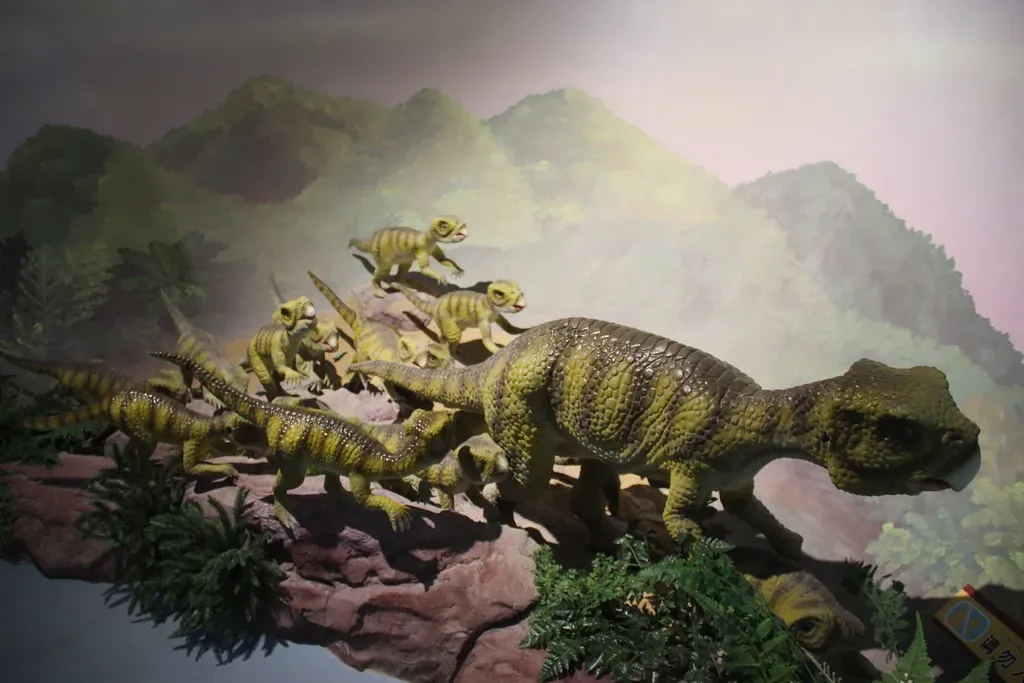
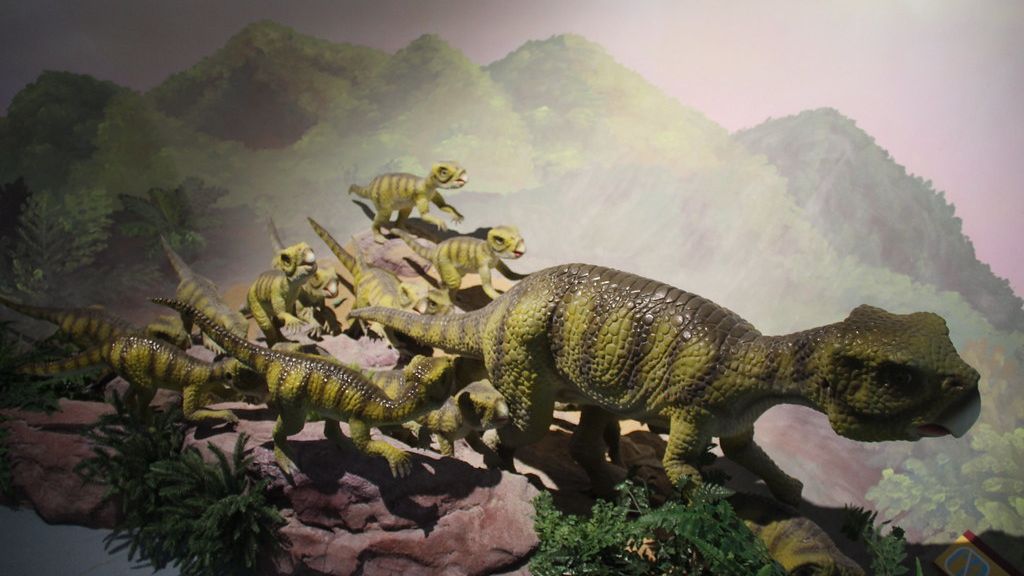
Nests and eggs give you the most obvious clues, but some fossils show care continuing after hatching. In one famous case, a small ornithischian dinosaur called Psittacosaurus was found with dozens of juveniles clustered around or beneath an adult skeleton. The young animals were all about the same age, suggesting a single brood rather than a random pile of bodies. That kind of association points toward post‑hatching protection, maybe like a parent sheltering or herding a group of youngsters. It is hard to explain that arrangement without some form of ongoing care. ([theguardian.com](https://www.theguardian.com/science/2009/feb/08/dinosaur-jr-eggs-parenting-reproduction?utm_source=openai))
Other fossils, particularly from hadrosaurs such as Maiasaura, show juveniles lingering in nesting colonies until they reached a substantial fraction of their adult size, which hints at extended support. You can imagine something more like a nursery ground, where many young lived together under the loose protection of adults, rather than a single parent–single nest model. Some trackways even suggest that young and adults moved together in herds, offering an extra layer of safety. While each line of evidence has its gaps, taken together they nudge you toward a world where at least some dinosaurs invested heavily in helping their young survive those vulnerable early stages. ([dino-world.com](https://dino-world.com/nesting-parenting-and-dinosaur-daycare-how-they-raised-young-1-3197/?utm_source=openai))
Not All Dinosaurs Were Super Parents: The Limits Of The Evidence
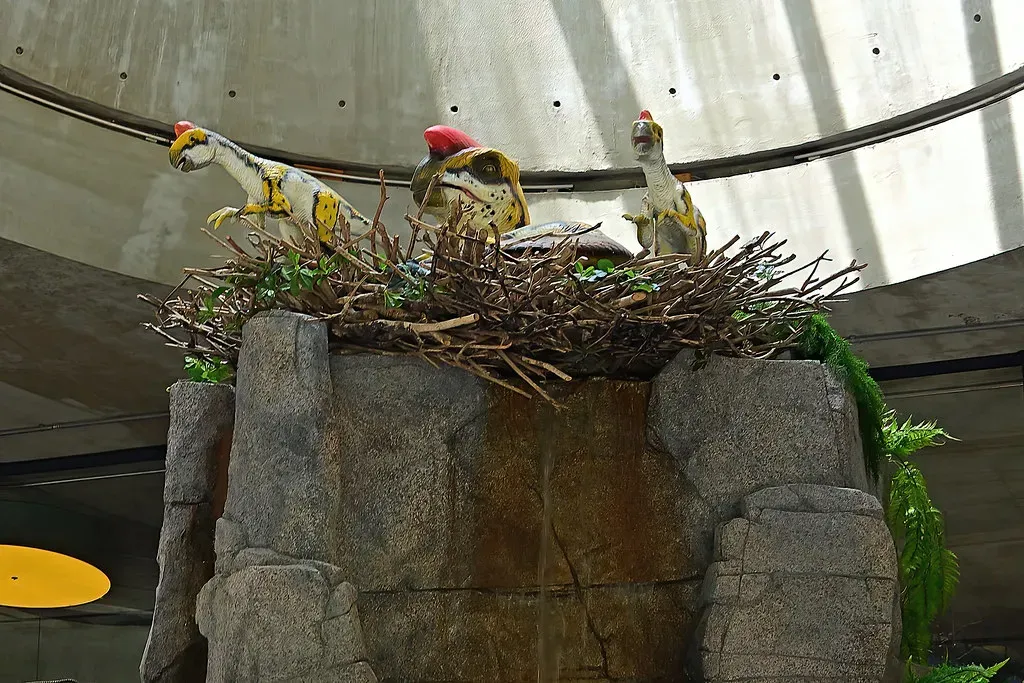
It’s tempting to swing from one extreme to the other and imagine every dinosaur as a doting caregiver once you hear these stories. You need to be careful there. The best evidence of nurturing – brooding adults, complex nests, clustered juveniles – comes from a relatively small sample of species, often smaller to medium‑sized herbivores and birdlike theropods. Many other dinosaurs, especially large sauropods and some big predators, still look more like “lay and leave” breeders based on what you can see so far. Large nesting sites with many eggs but few signs of post‑hatching activity suggest that some species simply relied on sheer numbers rather than intensive care. ([discovermagazine.com](https://www.discovermagazine.com/the-sciences/were-dinosaurs-good-parents-to-their-offspring?utm_source=openai))
On top of that, fossilization is brutally selective. Behaviors like feeding chicks, defending a nest, or leading a group of juveniles only fossilize under rare, almost freakish conditions. So you’re stuck with a biased sample, and that means you have to hold your conclusions with some humility. The fairest view today is that dinosaur parenting was probably as varied as it is in modern birds and reptiles: some species invested a lot, others very little, and many fell somewhere in between. The surprise is not that care existed at all, but that you now have strong enough evidence to say that advanced parental strategies were part of the dinosaur toolkit.
Why Bird Behavior Helps You Read Dinosaur Family Life
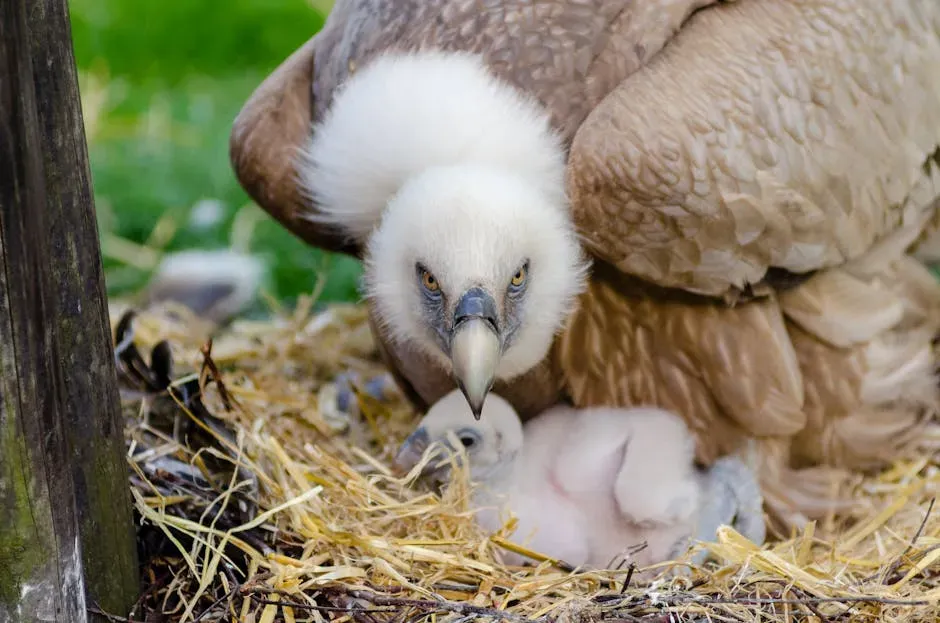
To make sense of all this, you end up looking a lot at birds, because birds are living dinosaurs. Many of the brooding poses you see in oviraptorosaurs are almost a one‑to‑one match with how modern birds spread their wings over eggs. That similarity is not just visually striking; it suggests a shared evolutionary heritage in how these animals incubated and protected their clutches. When you notice that some modern birds nest in dense colonies, show elaborate parental roles, or have males that take on most of the child‑rearing, you suddenly have real analogies that can guide how you interpret those ancient fossil nests. ([smithsonianmag.com](https://www.smithsonianmag.com/science-nature/dino-day-care-36166726/?utm_source=openai))
You also see parallels in egg characteristics. Pigmented eggs, open nests, and careful arrangements are common in many birds that rely on visual camouflage, signaling, or efficient heat transfer. Finding similar traits in dinosaur eggs hints that those behaviors have deep roots. None of this means you can simply map a modern bird’s life straight onto a non‑avian dinosaur, but it does let you use living species as a kind of behavioral Rosetta Stone. When you do that thoughtfully, you start to see dinosaur parenting not as an odd exception, but as a logical step in the long story that eventually led to the chick begging at a backyard bird feeder today.
What Dinosaur Family Life Teaches You About Evolution And Emotion
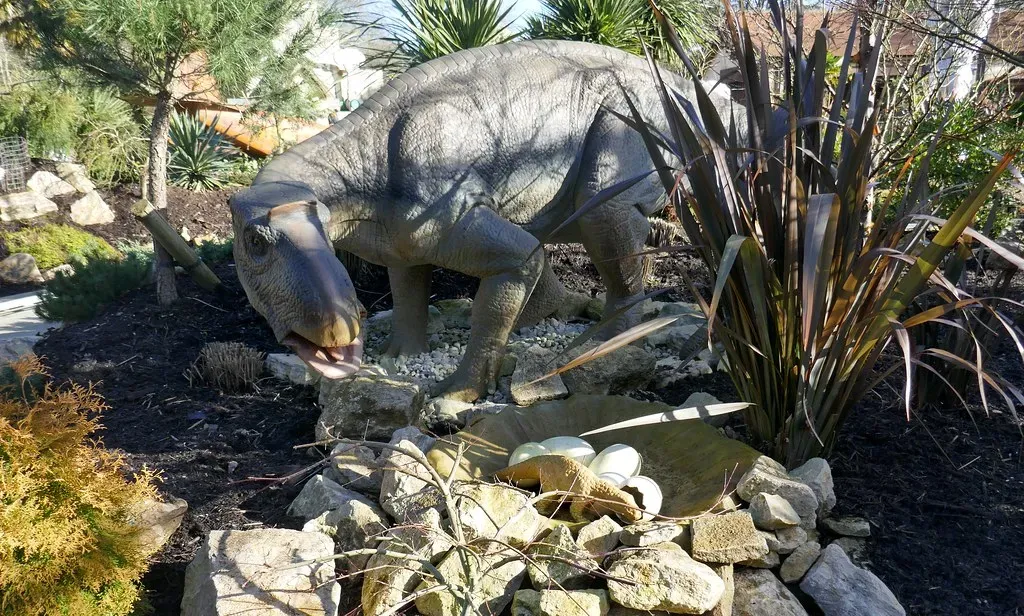
Once you accept that some dinosaurs cared deeply for their young, your sense of them shifts from movie monsters to complex animals navigating tough environments. Intensive parental care is costly: it ties you to one place, demands energy, and exposes you to predators. The fact that evolution favored those costs in at least some dinosaur lineages tells you the payoff in offspring survival must have been enormous. It also hints at social structures and maybe even emotional lives that feel more familiar to you than you might have expected from creatures that vanished tens of millions of years ago. ([samnoblemuseum.ou.edu](https://samnoblemuseum.ou.edu/wp-content/uploads/2018/08/Dinosaur-Eggs-and-Babies-2.pdf?utm_source=openai))
On a more personal level, there’s something oddly moving about an adult dinosaur fossilized in a protective pose over its eggs, or a cluster of young huddled near a putative guardian. You can stand in a museum and feel a quiet connection across time: caring for the next generation is not just your story, it is a strategy life has returned to again and again. When you see parenting show up in such ancient, alien animals, the line between “them” and “you” blurs a little. Maybe the impulse to protect, feed, and teach is not uniquely human or even uniquely mammalian, but a deep evolutionary thread that runs straight through the Age of Dinosaurs.
So when you picture dinosaurs now, you do not have to choose between fierce and tender; they were almost certainly both. Predators still hunted, herds still thundered across floodplains, but in quiet corners of that world, parents also brooded nests, guarded colonies, and nudged youngsters toward survival. The fossils do not give you every detail, but they give you just enough to know that family life, in some form, was already unfolding under those ancient skies. Knowing that, how different do those old reptilian giants feel to you now?