
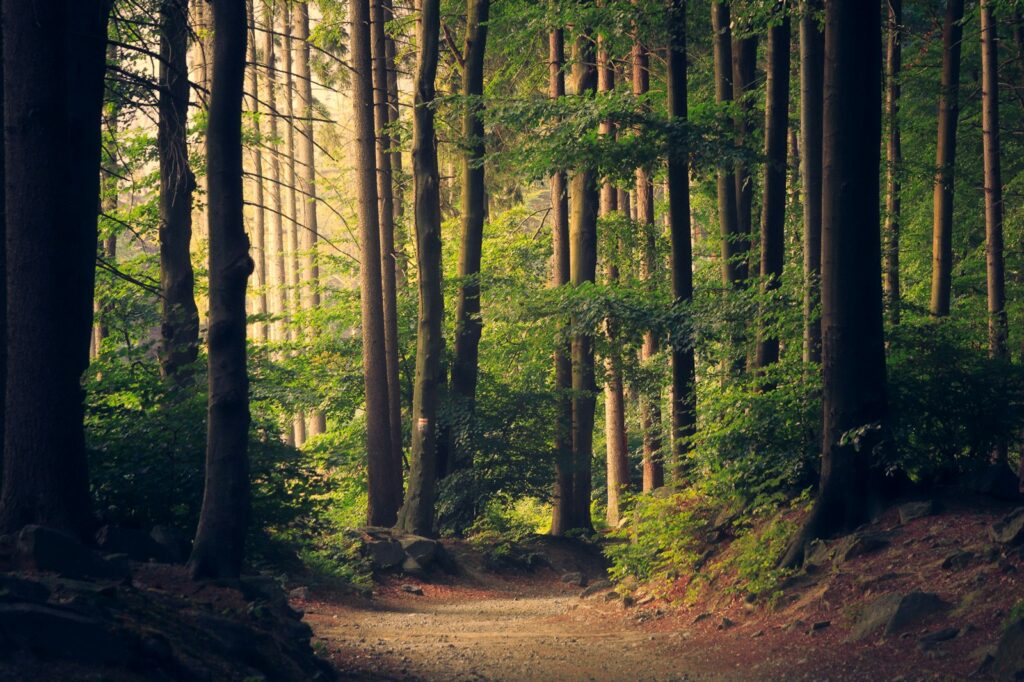
The Cretaceous period, spanning from approximately 145 to 66 million years ago, represents one of the most fascinating chapters in Earth’s climatic history. During this time, our planet experienced greenhouse conditions that made it significantly warmer than today’s world, with global temperatures soaring to levels unseen in human history. This extreme warmth reshaped ecosystems, influenced evolution, and created environmental conditions that would seem alien to modern observers. From lush polar forests to sea levels over 200 meters higher than present day, the Cretaceous greenhouse world offers scientists valuable insights into how Earth systems function under extreme warming scenarios. As we face contemporary climate change, understanding this ancient hothouse period becomes increasingly relevant, providing a geological analog that may help us predict future environmental responses.
The Greenhouse Earth: Understanding Cretaceous Climate
The Cretaceous period was characterized by a pronounced greenhouse climate state that created conditions dramatically different from our modern world. Global average temperatures during this time ranged between 5-10°C warmer than today, with significantly reduced temperature gradients between the equator and poles. This warmth was not uniform across the period but reached its peak during the Cenomanian-Turonian stages (approximately 94-90 million years ago) in what scientists call the “Cretaceous Thermal Maximum.” The extreme temperatures resulted primarily from atmospheric CO₂ concentrations that were 4-6 times higher than pre-industrial levels, with some estimates suggesting they reached 1,000-2,000 parts per million. These elevated greenhouse gas levels created a climate system that redistributed heat more efficiently from the equator to the poles, leading to a more homogeneous global temperature profile than we experience today.
Volcanic Activity: The Engine of Cretaceous Warming
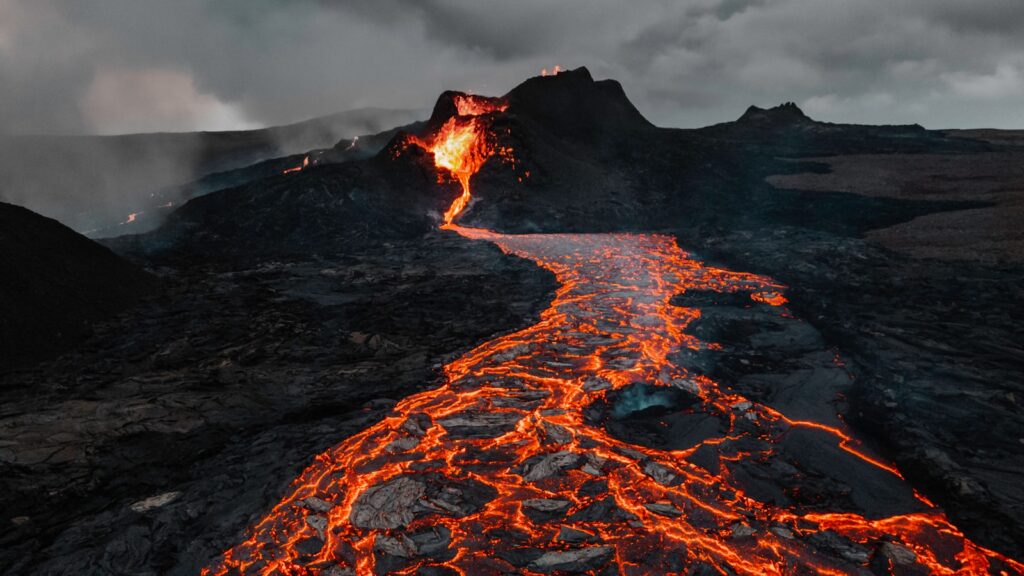
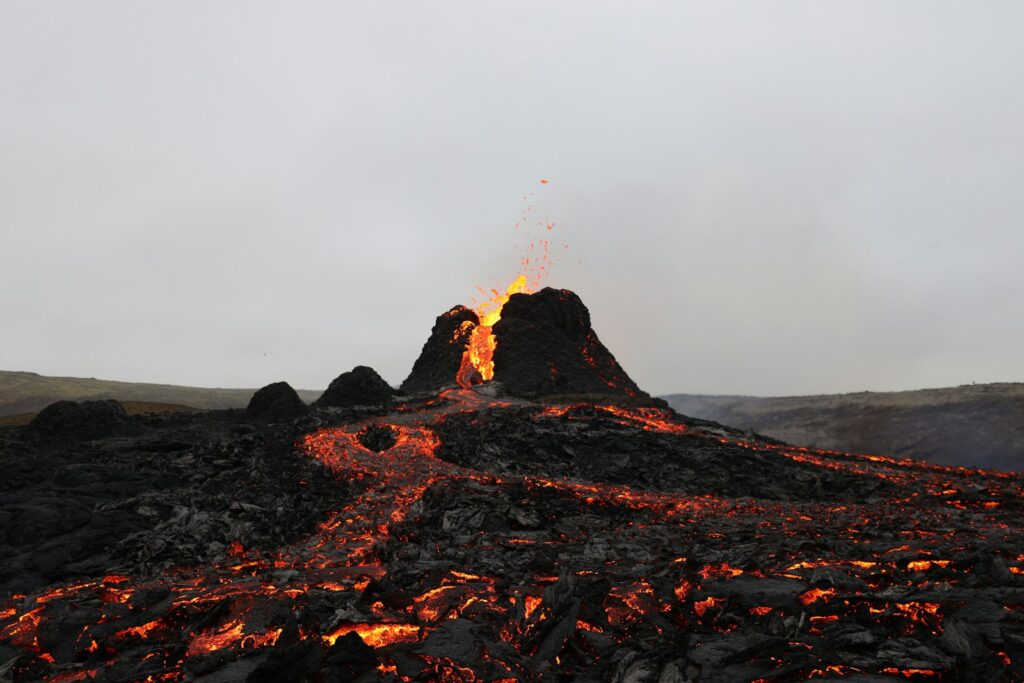
The extraordinary greenhouse conditions of the Cretaceous period were largely driven by unprecedented volcanic activity across the planet. Massive eruptions from Large Igneous Provinces (LIPs) such as the Ontong Java Plateau, Kerguelen Plateau, and Caribbean-Colombian Plateau released enormous quantities of carbon dioxide and other greenhouse gases into the atmosphere. The Ontong Java eruption alone, occurring around 120 million years ago, represents one of the largest volcanic events in Earth’s history, covering an area roughly the size of Alaska with basaltic lava flows. These eruptions didn’t just happen over days or years but continued for hundreds of thousands to millions of years, continuously pumping greenhouse gases into the atmosphere. The volcanic activity was linked to unusually high rates of seafloor spreading and tectonic reorganization, which further contributed to the release of carbon dioxide through mid-ocean ridge systems. This relentless volcanic outgassing overwhelmed the planet’s natural carbon sinks, creating the persistent greenhouse conditions that defined the period.
Polar Regions Without Ice: A World Without Glaciers

One of the most striking features of the Cretaceous greenhouse was the complete absence of permanent ice caps at either pole, creating an “ice-free world” that stands in stark contrast to our modern climate system. Geological evidence from both the Arctic and Antarctic regions reveals that these areas experienced temperate climates with mean annual temperatures well above freezing, perhaps 15-20°C at their warmest intervals. The proof of this warm polar climate comes from multiple sources, including fossil forests found at 70-85° paleolatitude containing species that could not tolerate prolonged freezing. Sedimentary records from the Arctic Ocean indicate surface water temperatures reached a balmy 15-20°C during summer months, supporting a diverse ecosystem of marine reptiles, fish, and invertebrates. Without the high albedo (reflectivity) of polar ice sheets, these regions absorbed more solar radiation, creating a positive feedback loop that further amplified global warming. This ice-free state represents a fundamentally different mode of Earth’s climate system from what we experience today, with profound implications for ocean circulation, weather patterns, and sea levels worldwide.
Forests at the Poles: Antarctic and Arctic Ecosystems
The absence of ice during the Cretaceous transformed the polar regions into lush, thriving ecosystems completely unlike their modern counterparts. The Antarctic continent, rather than being covered by miles of ice, supported diverse temperate to subtropical forests with a remarkable variety of plants, including ferns, cycads, conifers, and early angiosperms (flowering plants). Fossil evidence from the Antarctic Peninsula reveals that dinosaurs, including hadrosaurs and ankylosaurs, traversed these southern forests alongside mammals, amphibians, and a rich community of invertebrates. Similarly, the Arctic Circle hosted extensive conifer forests dominated by relatives of modern redwoods, dawn redwoods, and cypress trees that grew in conditions of extreme seasonal conditions, experiencing months of continuous daylight followed by periods of darkness. Remarkably, these polar forests managed to adapt to the seasonal light conditions while experiencing relatively mild temperatures year-round. Paleobotanical studies of growth rings from Arctic fossil wood show evidence of continuous growth during summer months, followed by dormancy periods, demonstrating how life adapted to these unique polar environments where warmth was plentiful but light remained highly seasonal.
Supergreenhouse Events: The Cretaceous Thermal Maximum
Within the already warm Cretaceous period, scientists have identified several “supergreenhouse” episodes that represented even more extreme warming events. The most pronounced of these was the Cenomanian-Turonian boundary event (approximately 94 million years ago), often called the Cretaceous Thermal Maximum, when global temperatures spiked dramatically above the period’s already elevated baseline. During this event, deep ocean temperatures may have reached an astounding 20°C—nearly 15°C warmer than modern deep ocean water, suggesting tropical surface waters potentially exceeded 36-38°C. These extreme temperatures coincided with one of the most significant oceanic anoxic events (OAE2) in Earth’s history, when vast portions of the world’s oceans became depleted of oxygen, leading to widespread extinctions of marine organisms and the deposition of organic-rich black shales. Evidence from multiple proxy records indicates that the atmospheric CO₂ concentrations during this supergreenhouse interval may have temporarily spiked to over 2,000 ppm, driven by massive volcanic outgassing from the Caribbean Large Igneous Province. These hyperthermal events provide valuable case studies for understanding how Earth systems respond to extreme and rapid warming, with particular relevance to contemporary climate change concerns.
Rising Seas: Flooded Continents and Shallow Oceans
The extreme warmth of the Cretaceous period contributed to one of the highest global sea levels in Earth’s Phanerozoic history, with oceans standing approximately 100-250 meters above present levels at their peak. This dramatic sea level rise resulted from two main factors: thermal expansion of the warmer ocean waters and the complete absence of continental ice sheets that would otherwise lock up water. These elevated seas created vast shallow epicontinental seas that flooded up to 40% of the continental landmass, transforming the geography of Earth in profound ways. North America was split by the massive Western Interior Seaway that connected the Arctic Ocean to the Gulf of Mexico, while much of Europe was reduced to an archipelago of islands amidst shallow, warm seas. The extensive shallow marine environments created ideal conditions for carbonate platform development and widespread chalk deposition—indeed, the Cretaceous period derives its name from the Latin “creta,” meaning chalk, referring to prominent chalk deposits like England’s White Cliffs of Dover. These flooded continents supported incredibly productive marine ecosystems while simultaneously reducing terrestrial habitat area, profoundly influencing both marine and terrestrial evolution during this pivotal period in Earth’s history.
Ocean Circulation: Sluggish Seas and Oxygen Depletion

The extreme greenhouse conditions of the Cretaceous fundamentally altered global ocean circulation patterns, creating marine environments strikingly different from today’s oceans. With dramatically reduced temperature gradients between equatorial and polar regions, the thermal driving forces that power modern deep-water formation were severely weakened or absent. Oceanographic evidence suggests that deep water circulation became sluggish and episodically stagnant, particularly during the most extreme warming intervals. The combination of warmer water temperatures (which naturally hold less dissolved oxygen) and reduced circulation led to widespread oxygen-minimum zones and intermittent oceanic anoxic events (OAEs). During these OAEs, vast swaths of the ocean became completely oxygen-depleted, creating dead zones hostile to most marine life. The reduced ventilation and oxygen depletion created ideal conditions for the preservation of organic matter in sediments, leading to the formation of important petroleum source rocks that would later become major oil reserves. Additional evidence for altered ocean chemistry comes from carbon and sulfur isotope anomalies in marine sediments, suggesting fundamental changes to nutrient cycling and primary productivity patterns compared to modern oceans.
Life in a Hothouse: Adaptations to Extreme Warmth
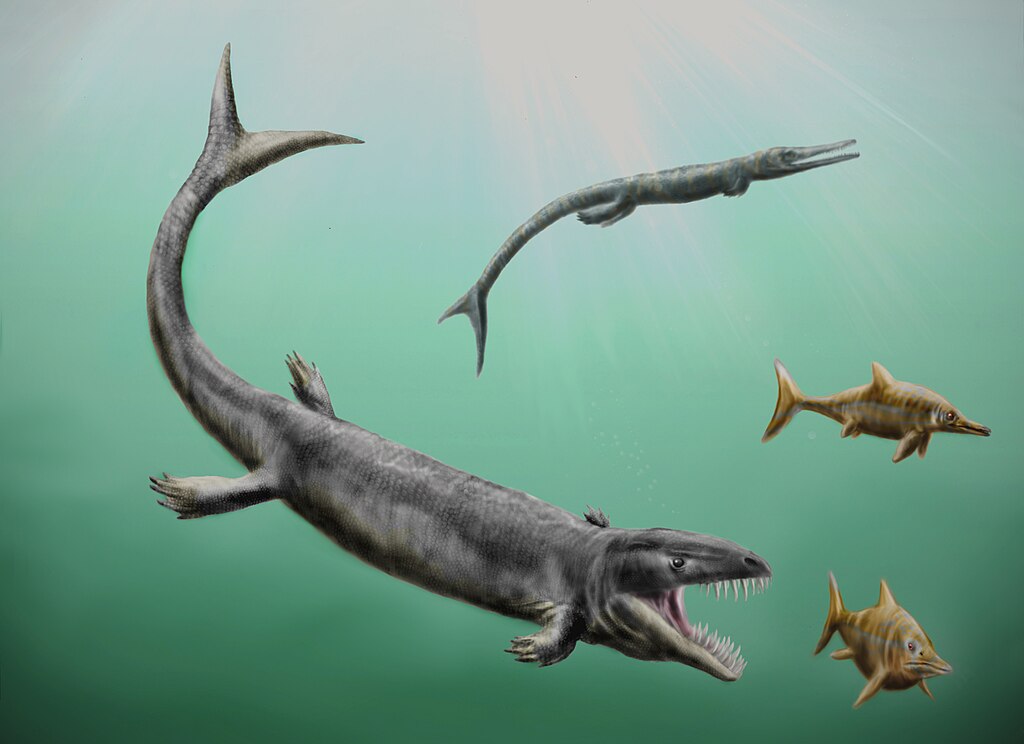
The persistent extreme warmth of the Cretaceous greenhouse forced organisms to develop specialized adaptations to thrive in high-temperature environments. Among dinosaurs, evidence suggests many species evolved extensive vascular networks in specialized structures like crests, frills, and plates that likely served as thermoregulatory radiators to dissipate excess body heat. Marine reptiles like ichthyosaurs, plesiosaurs, and mosasaurs faced particular challenges in warm oceans, potentially developing physiological mechanisms similar to modern leatherback turtles that can maintain body temperatures lower than their surroundings. Plant life adapted to the higher temperatures and elevated CO₂ with modified leaf structures, including reduced stomatal density that improved water use efficiency while capitalizing on abundant carbon dioxide for photosynthesis. The fossil record shows that many Cretaceous organisms had significantly broader geographic distributions than their modern counterparts, with tropical and subtropical species extending much further toward the poles than would be possible today. Interestingly, some evidence suggests that certain tropical regions may have approached or exceeded thermal limits for complex life during the most extreme warming events, potentially creating equatorial “dead zones” where temperatures became too extreme even for heat-adapted organisms.
Evidence in the Rocks: How We Know About Cretaceous Climate

Scientists have assembled our understanding of the Cretaceous greenhouse through multiple independent lines of evidence preserved in the geological record. Oxygen isotope ratios (δ¹⁸O) from marine fossils like foraminifera, belemnites, and bivalve shells provide perhaps the most direct temperature proxies, with lower δ¹⁸O values indicating warmer water temperatures. Complementary techniques like TEX₈₆ and clumped isotope thermometry have further refined temperature estimates, particularly for regions where traditional proxies are less reliable. The distribution of temperature-sensitive sediments offers additional evidence—evaporites and bauxites extended much further poleward than in today’s world, while glacial deposits are absent. Plant fossils provide critical climate information through physiognomic analysis, as leaf margin characteristics and size correlate strongly with temperature and precipitation patterns. The geographic distribution of climate-sensitive organisms like crocodilians, which require minimum temperatures above 10°C year-round, confirms warm conditions extended to high latitudes. Carbon isotope excursions recorded in marine and terrestrial sediments track ancient carbon cycle perturbations, indicating periods of enhanced greenhouse gas concentrations. When combined, these multiple proxies create a robust picture of the Cretaceous climate that has withstood decades of scientific scrutiny.
The Carbon Cycle: Disruption and Regulation
The extreme greenhouse conditions of the Cretaceous resulted from a substantially altered global carbon cycle that operated differently from today’s system. Volcanic outgassing from unprecedented seafloor spreading and large igneous province eruptions continuously injected massive amounts of carbon dioxide into the atmosphere-ocean system. This enhanced CO₂ input overwhelmed the planet’s natural carbon sinks, though Earth’s negative feedback mechanisms eventually prevented runaway greenhouse conditions. Enhanced chemical weathering of silicate rocks, which accelerates in warm, humid conditions, acted as a crucial thermostat by consuming atmospheric CO₂ and eventually restoring balance. The development of extensive chalk platforms composed of calcium carbonate from marine plankton represented another significant carbon sink, sequestering carbon in seafloor sediments. During Oceanic Anoxic Events, the burial of organic carbon in oxygen-depleted environments further removed carbon from circulation, creating a feedback that eventually helped moderate greenhouse conditions. The Cretaceous carbon cycle shows fascinating evidence of multiple equilibrium states, with rapid transitions between them triggered by threshold events like major volcanic eruptions or changes in continental configuration. Understanding these ancient carbon cycle dynamics provides crucial context for evaluating anthropogenic carbon emissions, though the timescales of natural regulation (tens to hundreds of thousands of years) vastly exceed human planning horizons.
From Greenhouse to Icehouse: The End of the Cretaceous Warmth
The extreme greenhouse conditions that characterized most of the Cretaceous began a gradual decline during the last 10-15 million years of the period, setting the stage for the eventual transition to our modern icehouse world. Multiple factors contributed to this cooling trend, including a reduction in volcanic activity as the massive eruptions that had pumped CO₂ into the atmosphere diminished in both frequency and intensity. Changes in continental configuration, particularly the opening of circumpolar oceanic gateways, allowed for the development of more efficient polar heat transport mechanisms that eventually facilitated ice sheet formation. Geological evidence suggests atmospheric CO₂ levels declined substantially from their mid-Cretaceous peak, dropping to perhaps 2-3 times pre-industrial levels by the end of the period. The evolution and spread of angiosperms (flowering plants) may have contributed to cooling through increased carbon sequestration and enhanced chemical weathering processes. The terminal Cretaceous bolide impact at 66 million years ago, while primarily known for triggering mass extinctions, also injected massive quantities of sulfate aerosols into the atmosphere, causing a severe but temporary “impact winter” that further contributed to cooling. This long-term transition from greenhouse to icehouse conditions continued well beyond the Cretaceous, culminating in the establishment of permanent Antarctic ice sheets in the Oligocene and the familiar glacial-interglacial cycles of the Quaternary period.
Lessons for Our Future: The Cretaceous as Climate Analog
The Cretaceous greenhouse world offers valuable but sobering insights as we navigate contemporary climate change challenges. While modern climate change occurs on much shorter timescales than Cretaceous warming, the ancient greenhouse provides our closest geological analog for a world with atmospheric CO₂ concentrations potentially approaching those of the mid-Cretaceous within the next century under high-emission scenarios. The Cretaceous demonstrates that Earth’s climate can maintain stable hot conditions substantially warmer than present, challenging notions that current temperatures represent some sort of planetary optimum. The extreme reduction in equator-to-pole temperature gradients during the Cretaceous carries important implications for projecting future changes to atmospheric circulation, jet streams, and weather patterns as polar regions continue warming faster than lower latitudes. Perhaps most concerning, the Cretaceous confirms that substantial sea level rise inevitably accompanies sustained planetary warming, though the timescales for complete ice sheet loss and thermal expansion extend beyond immediate human planning horizons. One crucial difference between the Cretaceous and today is the rate of change—current warming is occurring at least ten times faster than any Cretaceous climate shift, potentially outpacing the adaptive capacity of ecosystems and human infrastructure alike. By studying this ancient greenhouse world, scientists gain valuable insights into Earth system sensitivity, feedback mechanisms, and potential climate states that might otherwise remain theoretical.
Conclusion
The Cretaceous greenhouse represents an extraordinary chapter in Earth’s climate history that continues to fascinate scientists and provide critical context for understanding our planet’s climate system. This ancient hothouse world, dominated by lush polar forests, shallow seas, and temperatures dramatically warmer than today, offers a glimpse of Earth under extreme greenhouse conditions. While the Cretaceous climate developed over millions of years through natural processes, its study has taken on new urgency as human activities push our modern climate system toward potentially comparable CO₂ levels within just centuries. The stark differences between the Cretaceous and our modern world—from biology to continental configurations—remind us that while we can learn from Earth’s greenhouse past, we are steering our planet into uncharted territory at unprecedented speed. By continuing to unravel the mysteries of this ancient greenhouse world, we gain invaluable insights that may help navigate our warming future.