
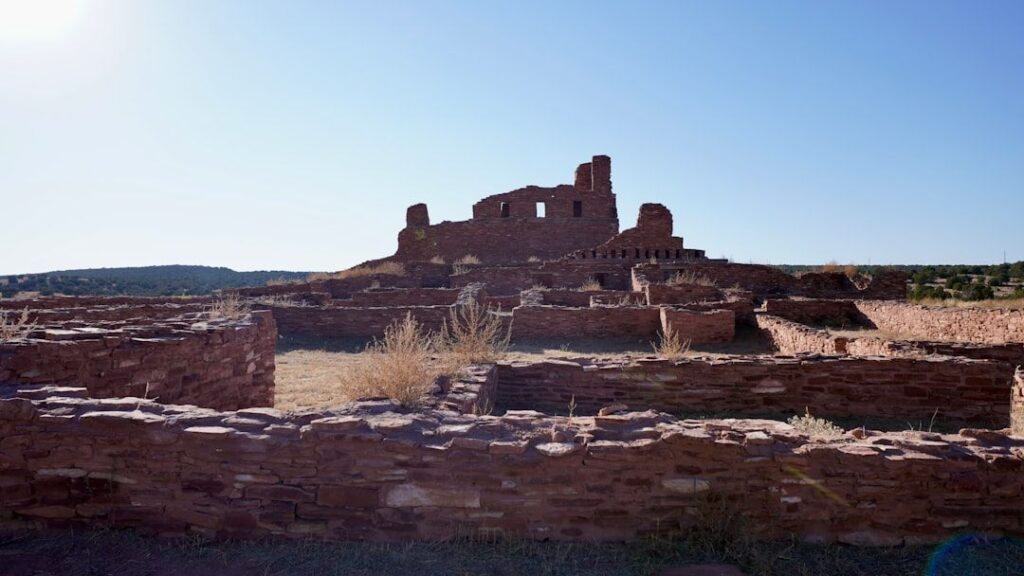
If you grew up thinking America’s story started with the Pilgrims and the Revolutionary War, you’re in for a shock. Long before skyscrapers and interstates, massive cities, observatories, sacred roads, and towering earthworks were thriving here. You can still walk through them, climb them, and in some places almost feel the heartbeat of the communities that built them.
What makes these places so powerful is not just their age, but the way they instantly flip your sense of history. You stop thinking in centuries and start thinking in millennia. You realize you’re standing in someone else’s capital city, someone else’s sacred landscape, someone else’s carefully engineered world. And the wildest part? Many of the most mind‑blowing sites are surprisingly easy for you to visit right now.
Cahokia Mounds, Illinois: The Lost Megacity You Never Learned About
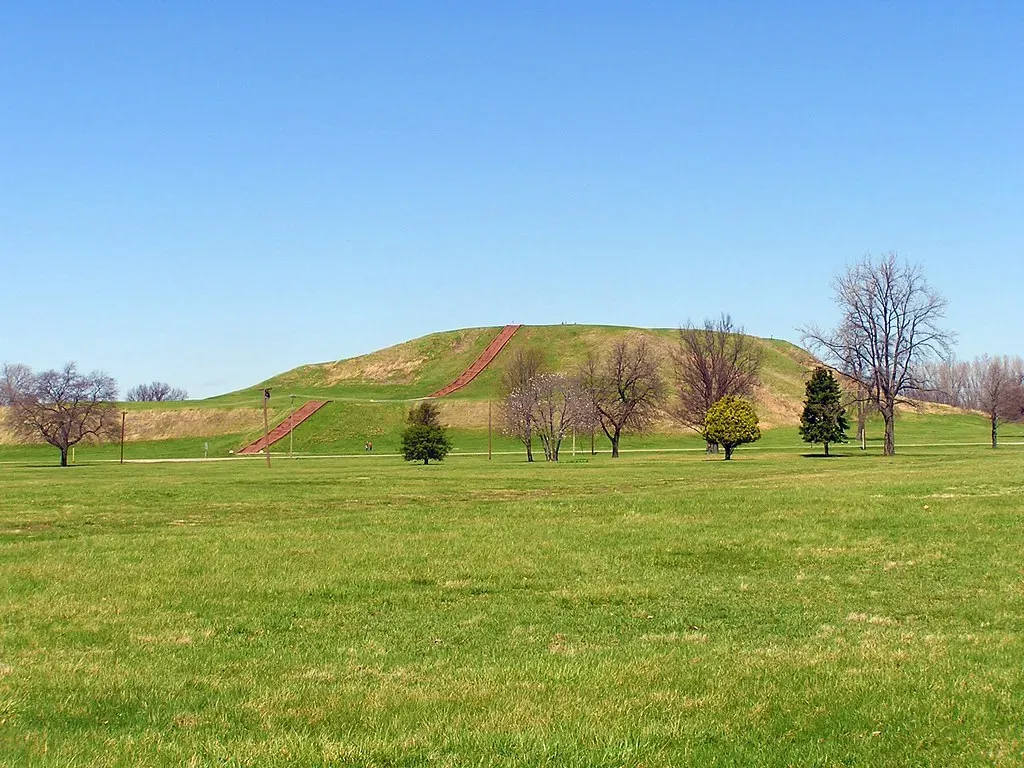
Just across the Mississippi River from modern St. Louis, you can walk through what was once the largest city north of Mexico, centuries before Europeans ever saw this continent. At its peak around the year 1100, Cahokia was home to thousands of people, with a dense core of plazas, neighborhoods, and more than one hundred earthen mounds carefully laid out across the floodplain. When you climb Monks Mound, the largest man‑made earthen structure in North America, you are literally standing on the former seat of power of a complex, stratified society that dominated the region. ([britannica.com](https://www.britannica.com/place/Cahokia-Mounds?utm_source=openai))
As a visitor, you can explore miles of trails that wind through the site and start to pick out the faint outlines of neighborhoods and ceremonial areas as they are interpreted on signs and in the visitor center exhibits. The on‑site museum and interpretive center help you visualize the wooden temples, marker posts, and woodhenges that once stood here, including a massive marker known as the Mitchell Log that researchers now think was hauled more than one hundred miles to serve as a monumental post. ([nps.gov](https://www.nps.gov/places/cahokia-mounds-state-historic-site.htm?utm_source=openai)) When you stand on top of Monks Mound looking over the flat expanse, the nearby highway feels strangely small, like a temporary scratch on a much older canvas.
Chaco Culture National Historical Park, New Mexico: A Stone-Built Cosmic Center
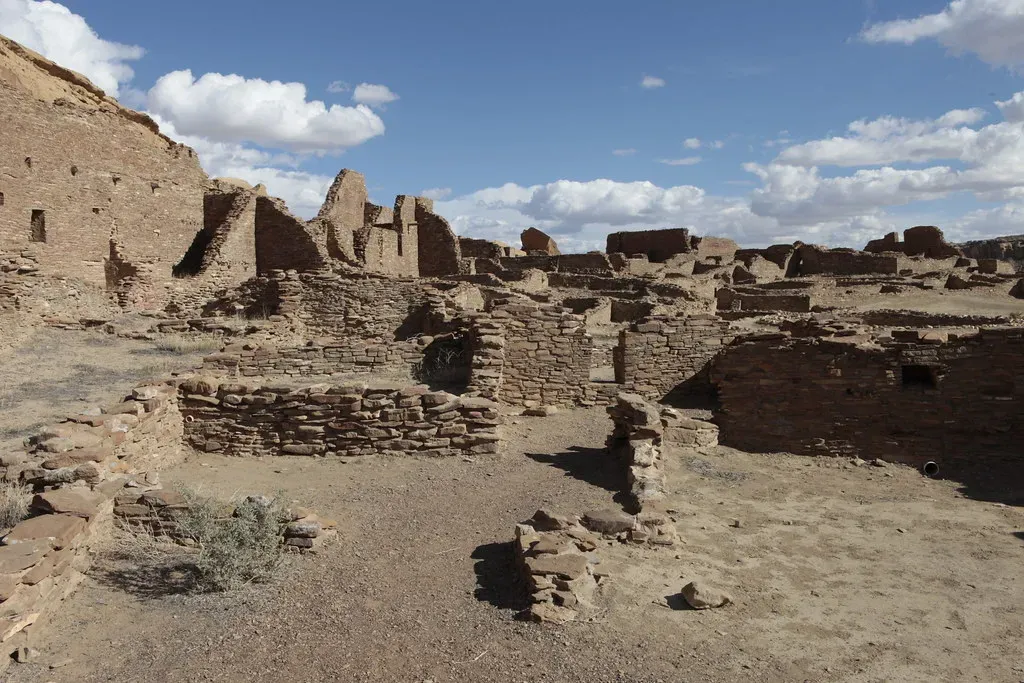
Driving into Chaco Canyon, you feel the modern world strip away with every mile of dusty road, until you’re suddenly surrounded by monumental stone “great houses” that once formed the ceremonial heart of a vast region. This was a major center of Ancestral Puebloan life between roughly the 800s and 1200s, a place tied together by roads, astronomy, and ritual that stretched far beyond the canyon itself. When you walk the loop road and step into places like Pueblo Bonito or Chetro Ketl, you’re moving through multi‑story complexes carefully aligned with celestial events and distant landmarks. ([nps.gov](https://www.nps.gov/chcu/?utm_source=openai))
You can hike to outlying sites, follow petroglyph trails, and sit quietly in plazas that once filled with dancers, ritual specialists, and travelers from hundreds of miles away. The park’s remote location and dark skies mean that, if you stay into the evening, you can see the same star‑filled sky the Chacoans watched when they tracked solstices and equinoxes with eerie precision. ([nps.gov](https://www.nps.gov/chcu/planyourvisit/placestogo.htm?utm_source=openai)) Standing in a roofless great kiva or along a perfectly straight ancient road, you may find yourself wondering how much of this world you can ever really understand – and that sense of mystery is part of what makes Chaco unforgettable.
Mesa Verde National Park, Colorado: Walking Into Cliffside Neighborhoods
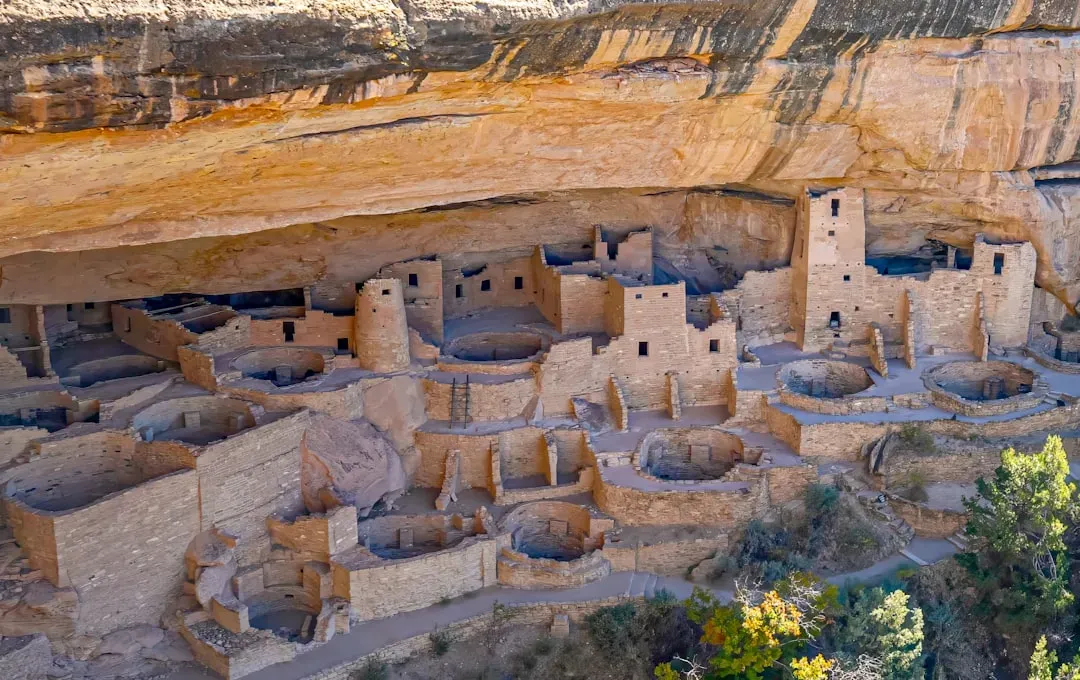
In Mesa Verde, you do not just look at ruins from a distance; you physically climb down ladders, squeeze through passages, and stand inside rooms that sheltered families more than seven centuries ago. This national park protects some of the most famous cliff dwellings built by Ancestral Pueblo people, including Cliff Palace, the largest known cliff dwelling in North America. From the canyon rim viewpoints, you see entire stone villages tucked under sandstone overhangs, but it is when you enter them on ranger‑led tours that they feel astonishingly human‑scaled. ([mesaverdecountry.com](https://mesaverdecountry.com/things-to-do/mesa-verde-national-park/?utm_source=openai))
To explore many of the cliff dwellings, you now book timed, ranger‑guided tours in advance, which helps protect the fragile masonry while giving you context about daily life here – farming on the mesa tops, carefully storing corn, collecting water from seeps, and navigating steep terrain that would make most of us hesitate. ([nps.gov](https://www.nps.gov/meve/planyourvisit/cliff_dwelling_tours.htm?utm_source=openai)) One particularly eye‑opening stop is the Step House area, where you can see both an earlier pithouse village and a later cliff dwelling in the same alcove, making it easier to picture how life and architecture evolved over the centuries. As you climb back up to the modern parking lot, it is hard not to feel that your own world, with all its conveniences, suddenly looks a little soft by comparison.
Great Serpent Mound, Ohio: An Earthwork in the Shape of a Giant Snake
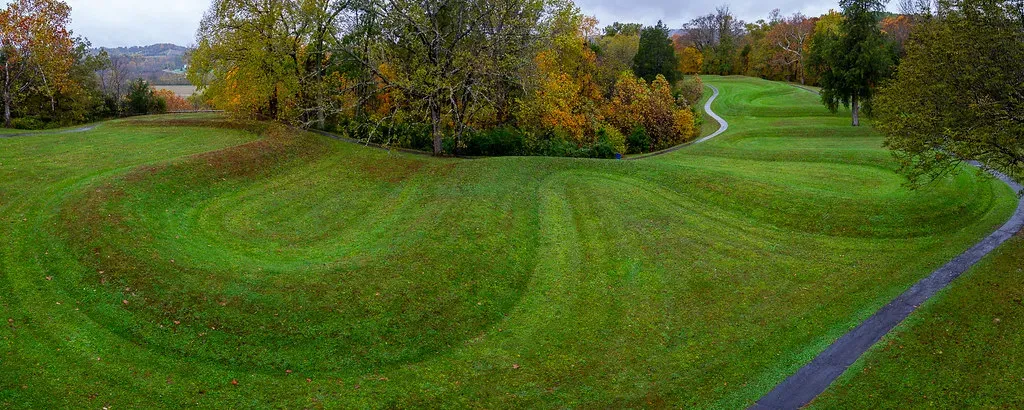
From the ground, the Great Serpent Mound can feel almost abstract – a raised earthen ridge curling across a grassy hilltop – but once you get to an overlook, the shape snaps into focus and you realize you are standing on the head of an enormous snake. This effigy mound stretches for more than a quarter of a mile, undulating in seven coils with a head that seems to be swallowing or presenting an oval shape. It is considered the largest effigy mound in North America and sits dramatically on a plateau above Ohio Brush Creek, making the setting feel as intentional as the sculpture itself. ([en.wikipedia.org](https://en.wikipedia.org/wiki/Serpent_Mound?utm_source=openai))
Archaeologists still debate exactly which culture built it and why, but the evidence points to Indigenous people who carefully shaped the earth to reflect spiritual and perhaps astronomical ideas. As a visitor, you can walk a path around the mound, climb a viewing tower, and linger over interpretive signs that lay out what researchers know – and what they still don’t. ([ohioexploration.com](https://www.ohioexploration.com/mounds/serpentmound/?utm_source=openai)) The absence of a clear, definitive explanation actually makes your experience more powerful: you are looking at a massive artwork whose meaning has not been fully decoded, yet it has survived countless storms and centuries of change because it mattered enough for people to protect it.
Poverty Point, Louisiana: A Vast Earthwork Landscape in the Bayou
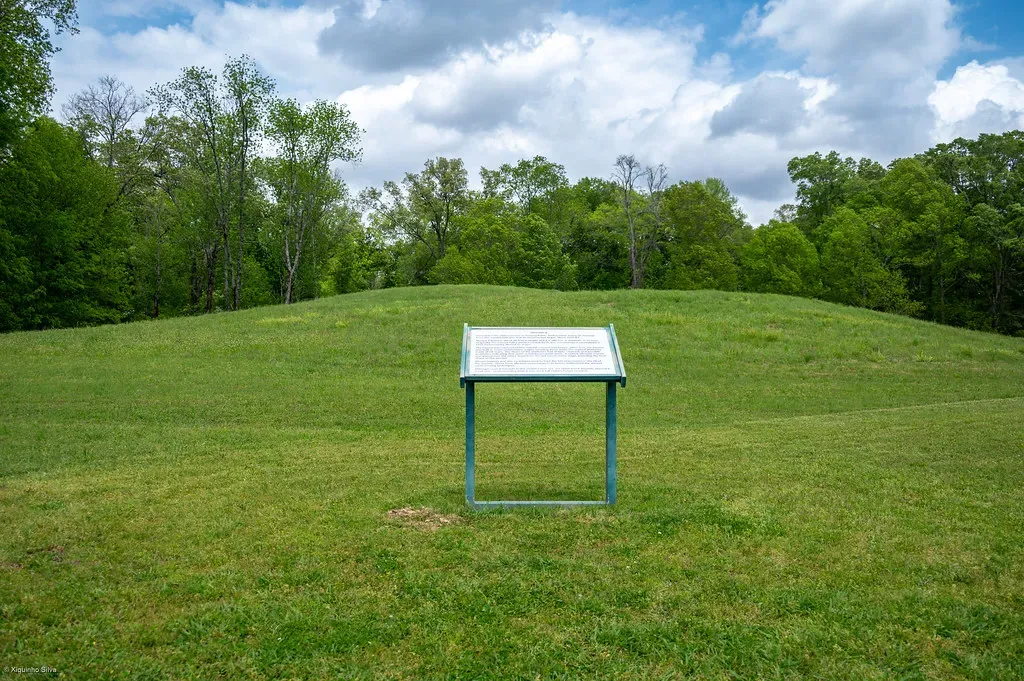
Hidden in the flatlands of northeastern Louisiana is a place that quietly explodes the stereotype that early hunter‑gatherers were always small‑scale and simple. At Poverty Point World Heritage Site, you can stand in the middle of a series of enormous concentric earthen ridges and mounds built nearly three thousand years ago by people who still relied heavily on wild foods rather than intensive farming. These earthworks form one of the largest and most complex prehistoric sites in North America for its time, with a design so large you really only appreciate it when you see it mapped out or viewed from above. ([illinois.gov](https://www.illinois.gov/content/dam/soi/en/web/illinois/iisnewsattachments/22889-cahokia-mounds-interpretive-center-visitor-reservations-now-available.pdf?utm_source=openai))
On the ground, you can drive or walk a loop, stop at viewpoints, and visit a museum that walks you through the scale of the undertaking: tons of earth moved basket by basket, long‑distance trade in stone tools and ornaments, and a layout that seems carefully aligned with both the nearby river and celestial events. The ridges where you stroll today likely supported houses, work spaces, and everyday life, meaning you are quite literally walking through an ancient neighborhood. ([illinois.gov](https://www.illinois.gov/content/dam/soi/en/web/illinois/iisnewsattachments/22889-cahokia-mounds-interpretive-center-visitor-reservations-now-available.pdf?utm_source=openai)) What makes Poverty Point so compelling is that it forces you to rethink what you assume about “simple” societies; clearly, the people who built this landscape were anything but simple.
Taos Pueblo, New Mexico: A Living Community With Ancient Roots
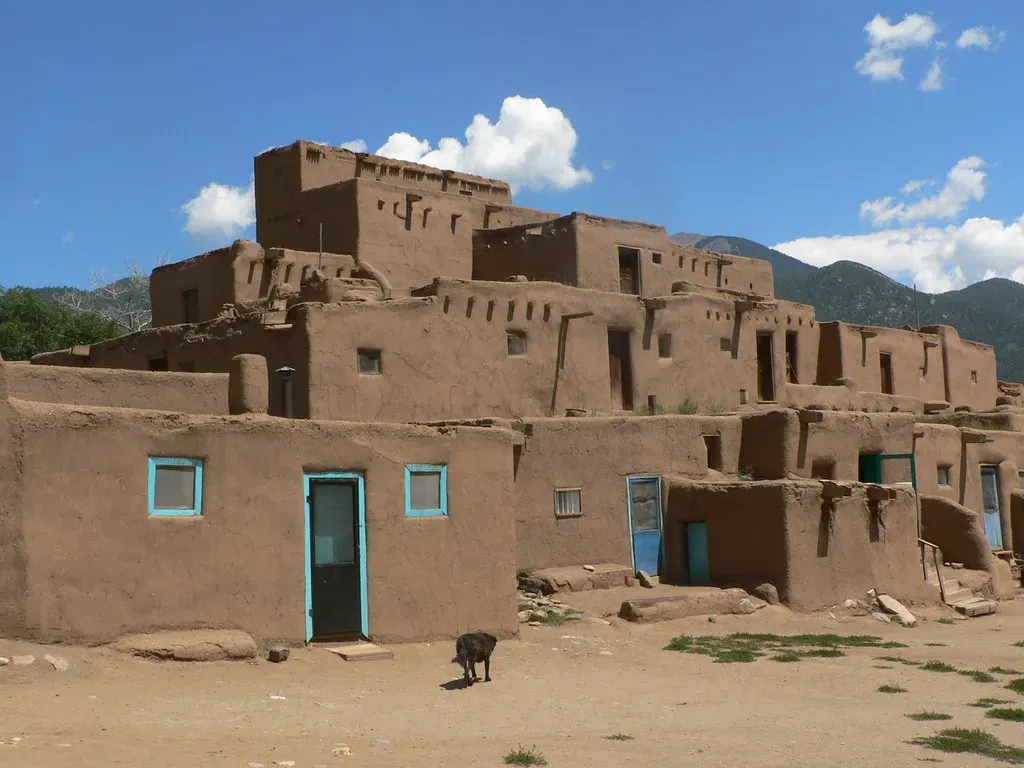
Most archaeological sites feel like time capsules, but at Taos Pueblo you are stepping into a community that has been continuously inhabited for centuries and is still very much alive. The multi‑story adobe structures you see backed by the Sangre de Cristo Mountains are not reconstructions; they are part of a living pueblo that maintains traditional building techniques, cultural practices, and a deep connection to the land. When you visit on a guided tour, you are a guest in a place that has weathered colonization, missionization, and modern tourism while still holding onto its own identity.
As you walk along the central plaza and cross the small stream that runs through the pueblo, you see homes, ovens, and kivas that embody a continuity far older than the United States itself. Small shops and artisans may offer pottery, jewelry, or baked goods, giving you a direct connection to people whose ancestors built and maintained this place long before there was a state line or a highway nearby. The experience can be humbling; you are not just looking at ruins, you are witnessing a culture that has survived and adapted while still honoring its ancient foundations.
Casa Grande Ruins, Arizona: A Mysterious Great House in the Desert
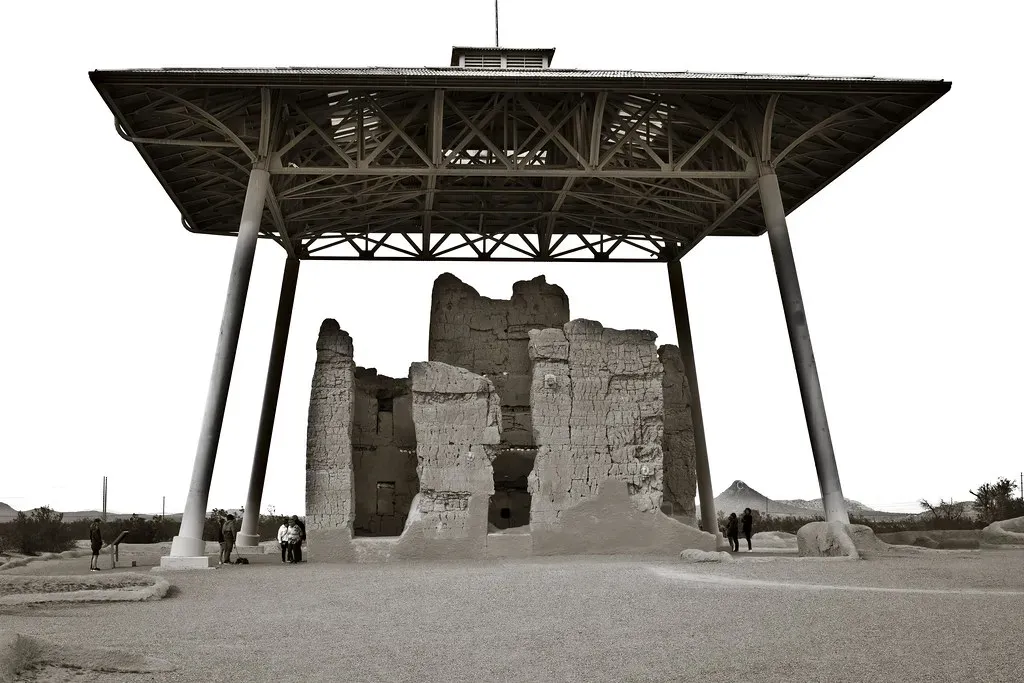
In the Sonoran Desert of Arizona, a towering four‑story structure of caliche rises out of a flat, sun‑blasted plain, protected today by a huge metal shelter. This is Casa Grande, the “great house” built by Ancestral Sonoran Desert people who engineered irrigation canals, farmed in one of the driest regions on the continent, and constructed impressive compounds centuries before Spanish explorers arrived. When you stand at the base of the great house and look up, you can still see window and doorway alignments that appear to mark solar events, hinting at a blend of practical engineering and cosmology.
You can wander along paths that lead past smaller structures, ancient ballcourts, and remnants of canal systems that once supported a surprisingly dense population. Rangers and exhibits help you picture how this compound functioned as a focal point in a network of villages scattered along the Gila River, connected by trade and shared ritual. ([ancientohiotrail.com](https://ancientohiotrail.com/support/pdfs/AOT.pdf?utm_source=openai)) The stark contrast between the ruins and the modern town around them drives home just how thoroughly the landscape has changed, and how easy it is to forget that complex desert civilizations flourished here long before air‑conditioning or deep wells existed.
Conclusion: Letting the Past Rearrange Your Sense of America
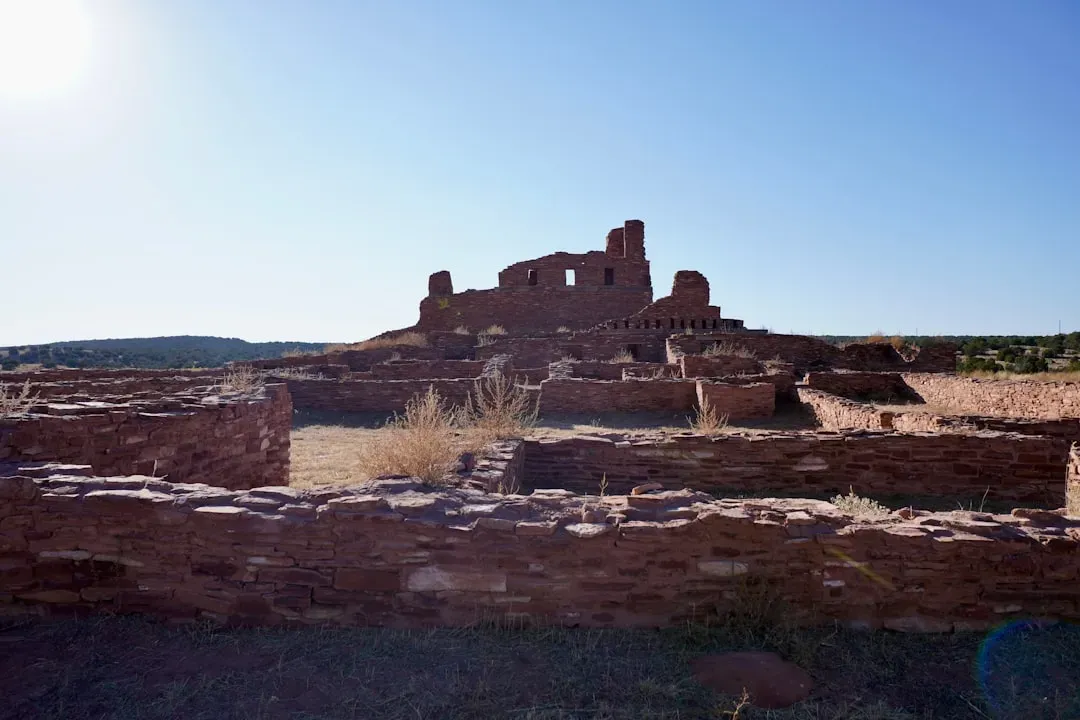
When you visit places like Cahokia, Chaco, Mesa Verde, and the others, you start to realize that America’s ancient past is not a side story – it is the main story that everything else was built on top of. The mounds, pueblos, earthworks, and great houses you walk through are not just “ruins”; they are the visible edges of entire worlds of meaning, politics, science, and spirituality that once thrived here. Every time you climb a mound or step into a kiva, you are reminded that people were asking big questions, organizing complex societies, and reshaping the landscape here long before the first European mapmaker tried to sketch this continent.
You do not have to be an archaeologist to feel that impact; you just have to show up with curiosity and a willingness to let your assumptions be challenged. The next time you plan a trip, you might choose a cliff dwelling over a crowded theme park, or an ancient earthwork instead of another shopping district, and let these places teach you how deep the roots of this land really go. After seeing America through the eyes of its oldest cities and sacred sites, you may find yourself wondering: how different would your sense of this country be if you had started learning its story from here instead of from 1776?