Mutawintji National Park, New South Wales — Scientists have identified a new reptile species confined to a remote rocky gorge, where its population may number fewer than 20 individuals. This skink, now classified separately from a more widespread relative, highlights the value of local Indigenous knowledge in modern taxonomy. Researchers confirmed its unique status through genetic analysis and physical comparisons, marking it as potentially one of Australia’s most imperiled lizards.
A Hidden Resident of the Arid Gorge
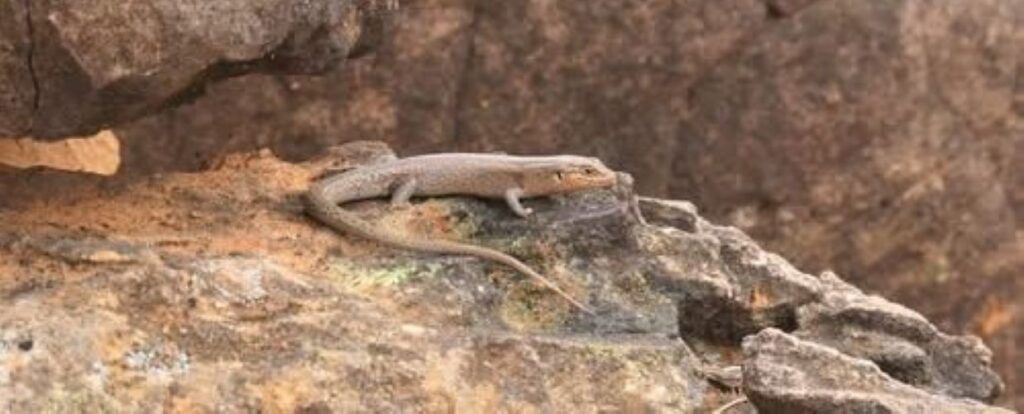
A Hidden Resident of the Arid Gorge (Image Credits: Facebook)
The newly described skink dwells exclusively in a narrow pocket of rugged terrain within Mutawintji National Park, an arid region far from urban centers. Local Wiimpatja Aboriginal Owners have long known of this elusive creature, dubbing it Kungaka, or “the Hidden One,” for its tendency to vanish into crevices and burrows. The scientific name, Liopholis mutawintji, honors the park itself, the sole known habitat for the species.
Observations revealed a strikingly small group of these lizards, raising immediate concerns about their survival. Isolation in this harsh environment amplifies their vulnerability, as any disturbance could tip the balance toward extinction. The park’s protected status offers some safeguard, but the minute population size demands urgent attention.
Challenging Assumptions About White’s Skink
For years, experts regarded the Kungaka as a distant outpost of White’s skink (L. whitii), a reptile common across southeastern Australia. That view persisted despite the gorge population sitting roughly 500 kilometers from the nearest confirmed White’s skink group. A fresh examination prompted by this geographic gap led researchers to question the classification.
DNA sequencing and morphological studies exposed deeper divisions. What was once labeled a single species splintered into three distinct lineages, each adapted to specific ranges. The southern form retained the name L. whitii, while a northern variant became L. compressicauda, leaving the Mutawintji resident as the third, L. mutawintji.
Partnership Drives Scientific Breakthrough
The confirmation process united scientists from the Australian Museum Research Institute with Wiimpatja Aboriginal Owners and the New South Wales National Parks and Wildlife Service. This collaboration bridged traditional observations with cutting-edge genetics, ensuring cultural perspectives shaped the research. Lead author Thomas Parkin noted that Indigenous insights proved crucial in spotlighting the population for study.
Such teamwork underscores a growing trend in biodiversity research, where local knowledge fills gaps left by remote surveys. In this case, it transformed anecdotal reports into verifiable science, refining Australia’s reptile inventory. The effort also strengthened ties between custodians and conservationists, fostering shared stewardship of the land.
Conservation Hurdles for a Fragile Find
With so few individuals, the Kungaka faces existential risks from habitat changes, predators, or even climate shifts in the outback. Its specialized habitat — rocky refuges amid sparse vegetation — limits natural expansion. Park managers now prioritize monitoring to track numbers and health.
Broader lessons emerge for reptile conservation nationwide. Redefining species boundaries can redirect resources to overlooked groups, preventing silent declines. Yet uncertainties linger: exact population counts and long-term threats require ongoing fieldwork.
| Species | Range | Key Distinction |
|---|---|---|
| Southern White’s skink (L. whitii) | Southeastern Australia | Widespread, coastal populations |
| Northern White’s skink (L. compressicauda) | Northern areas | Adapted to inland conditions |
| Kungaka (L. mutawintji) | Mutawintji National Park only | Highly isolated, critically small |
Implications for Australia’s Biodiversity
This discovery reshapes understanding of skink diversity down under, revealing how isolation breeds uniqueness. It serves as a reminder that remote corners harbor secrets, often known first by those who live closest to the land. Protecting such sites becomes not just ecological duty, but a nod to cultural heritage.
Future surveys may uncover more splits within similar groups, urging faster taxonomic reviews. For the Kungaka, survival hinges on sustained protection and vigilance. In an era of rapid environmental change, stories like this affirm the power of combined wisdom to safeguard the wild.