
You exist because the universe never quite settled for being simple. From a searing fireball of energy to the quiet moment when you read these words, your story stretches across billions of years of cosmic accidents, narrow escapes, and self-organizing patterns that almost seem too lucky to be random. When you step back and trace that chain, everyday life starts to look a lot more extraordinary.
In this journey, you will follow how space, time, matter, stars, planets, chemistry, and life itself lined up in just the right way for a thinking brain to sit on a small rock around an average star and ask, “How did I get here?” You will not find magic shortcuts or mystical answers, just a wild, deeply human appreciation of how much had to go right for you to exist at all.
From Nothing Familiar: The Birth of Space, Time, and the First Ingredients
If you rewind the universe all the way back, you hit a wall where your usual sense of reality breaks. You do not find a quiet, empty darkness waiting for things to appear; you find a moment when space, time, energy, and the laws of physics themselves are crammed into something so extreme that your normal intuition simply fails. At that unimaginably early instant, the universe expands rapidly, cools, and in the first heartbeat of cosmic history you get the simplest building blocks: fundamental particles, then hydrogen and helium atoms that will later become stars, planets, and eventually you.
In those first minutes, nuclear reactions in the hot young universe set the basic recipe: mostly hydrogen, a good chunk of helium, and only tiny traces of anything heavier. You might not think that sounds promising, but that lopsided mix is exactly what allows gravity to take over and clump matter into vast clouds. Without that smooth but slightly uneven spread of stuff, nothing would collapse, no stars would light up, and you would be left with a cold, dilute fog forever. You owe your existence to a universe that started simple but not perfectly uniform.
When Stars Learn to Die: Forging the Elements of Life
Those first clouds of gas do not just hang there; gravity slowly pulls them inward until they get so dense and hot that nuclear fusion switches on. In that moment, the universe lights up with the first generation of stars, blazing away in a cosmos that had been dark for hundreds of millions of years. Inside those stellar furnaces, light elements are fused into heavier ones: carbon, oxygen, nitrogen, and many of the other atoms your body depends on are literally cooked in star cores.
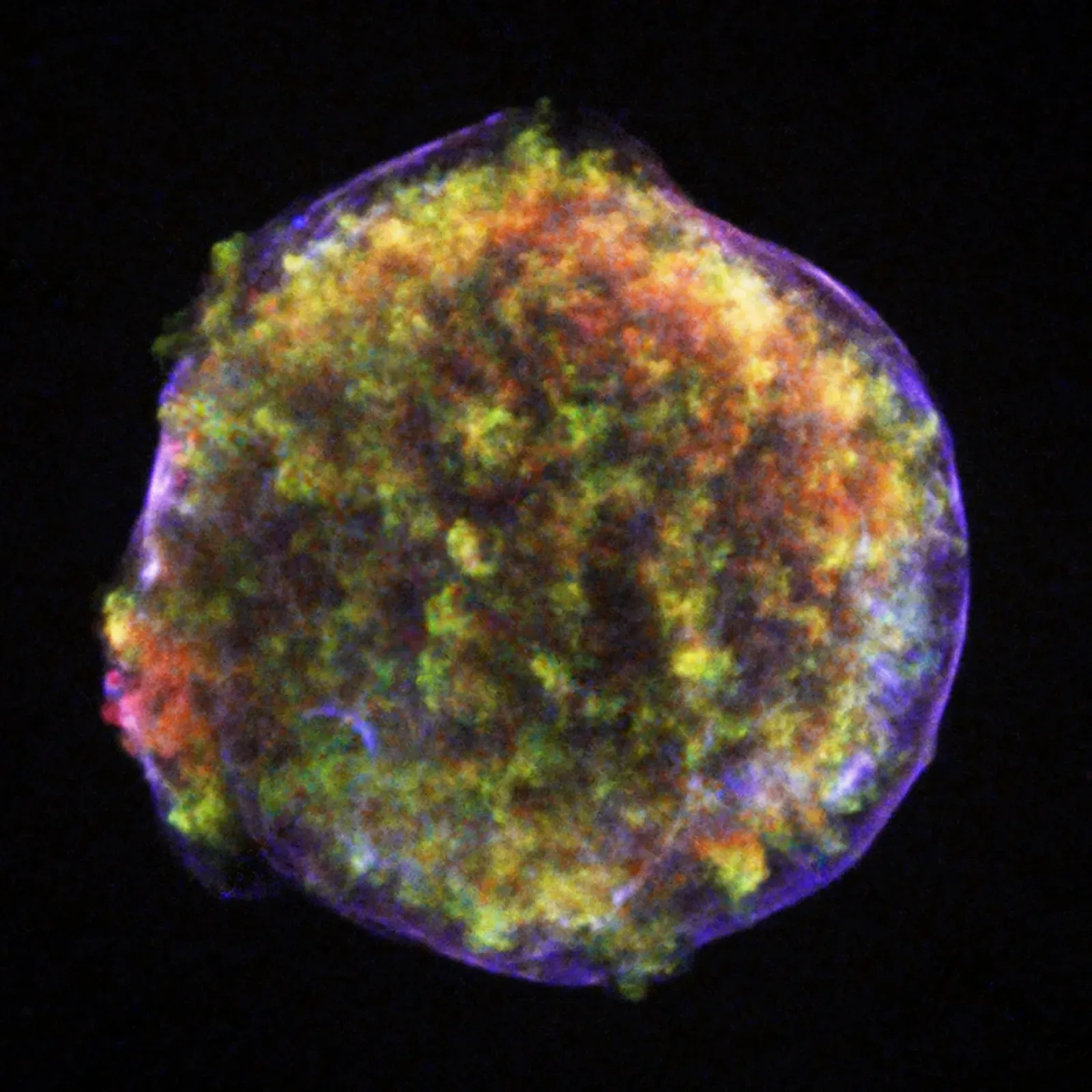
But stars do not keep those treasures to themselves. The most massive ones live fast and die spectacularly, exploding as supernovae and blasting freshly made elements out into space. You can think of these explosions as cosmic recycling events: they enrich the surrounding gas, seeding future generations of stars and planets with the ingredients for rocks, oceans, and organic molecules. When you say that you are made of star stuff, you are not being poetic; you are giving a brutally literal description of your chemical origins.
A Rare Kind of Real Estate: Building the Right Kind of Planet
Once space is filled with heavier elements, new stars form with swirling disks of dust and gas around them, and in those disks, small grains begin to stick together. Over millions of years, these grains grow into pebbles, into boulders, and eventually into planet-sized worlds. Around some stars, the process is chaotic and violent, with countless collisions and near misses, and not every system ends up with a quiet, stable orbit that can cradle liquid water. Your solar system just happened to be one where things calmed down enough for an Earth-like planet to survive.
Your particular planet occupies a surprisingly narrow comfort zone. It orbits at a distance where water can remain liquid at the surface for long stretches of time, and it is just the right size to hold onto an atmosphere without becoming a gas giant. On top of that, it inherits the right mix of elements, gets a useful amount of internal heat, and is accompanied by a large moon that helps stabilize its tilt. You live on a rock that, by cosmic standards, hit an unlikely series of sweet spots, turning it into rare real estate for complex chemistry.
From Chemistry to Biology: When Molecules Start to Care About Surviving
On a young Earth, you would not recognize the place. You would see a restless planet with active volcanoes, meteor impacts, and an atmosphere very different from what you breathe now. But in that messy, turbulent environment, something quietly profound begins to happen: simple molecules start forming more complex chains, some of which can store information and copy themselves. At some point, the line between mere chemistry and primitive biology starts to blur, and suddenly you have self-replicating systems that care, in a very basic sense, about not falling apart.
Once copying enters the picture, evolution has a foothold. Molecules that replicate a bit more reliably, or that are better protected, tend to stick around and outcompete their less stable cousins. Over enormous timescales, this trial-and-error process turns simple self-copying molecules into cells, and then into networks of cells that share resources and tasks. You may feel far removed from that primordial world, but every cell in your body is a direct descendant of those early survivors, still playing by the same rules of variation, selection, and adaptation.
The Long Gamble of Evolution: From Single Cells to Self-Aware Brains
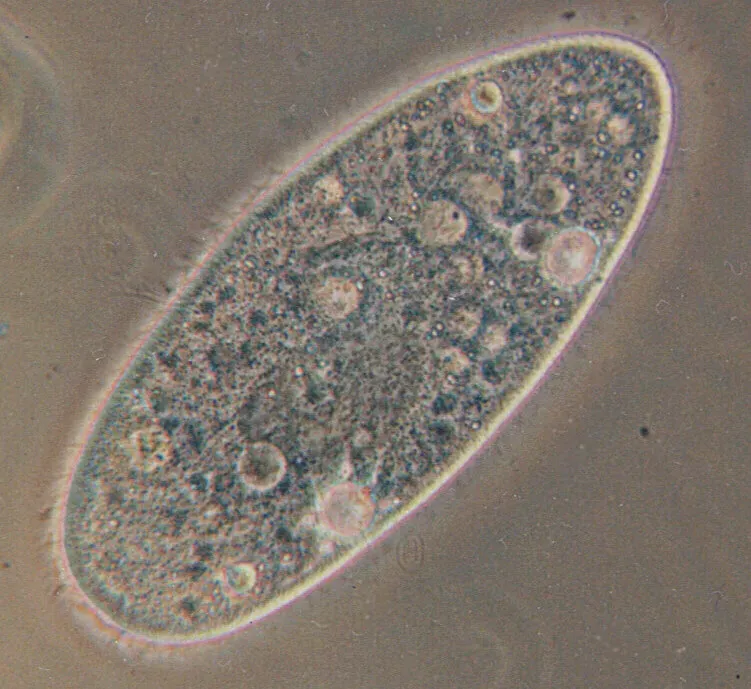
For most of Earth’s history, life stays small and simple. Single-celled organisms dominate the planet for billions of years, quietly transforming the atmosphere and oceans while complex life is still only a possibility. At some point, some cells start forming more permanent partnerships, merging into larger, more complex units that can coordinate and specialize. This leap to multicellular life opens the door to bodies with tissues, organs, and eventually nervous systems that can sense and respond to the world in richer ways.
From there, evolution becomes a long gamble. Small changes in body plans, behaviors, and brains slowly accumulate as species adapt to shifting environments, continental drift, and occasional mass extinctions. Your own lineage passes through tiny mammals surviving in the shadows of dinosaurs, through primates mastering life in trees, and through early humans learning to walk upright, use tools, and share information. The brain you carry today is the outcome of countless evolutionary experiments in perception, memory, cooperation, and strategy, all tuned by what helped your ancestors stay alive and raise offspring.
A Brain That Knows It Exists: Culture, Curiosity, and Cosmic Perspective
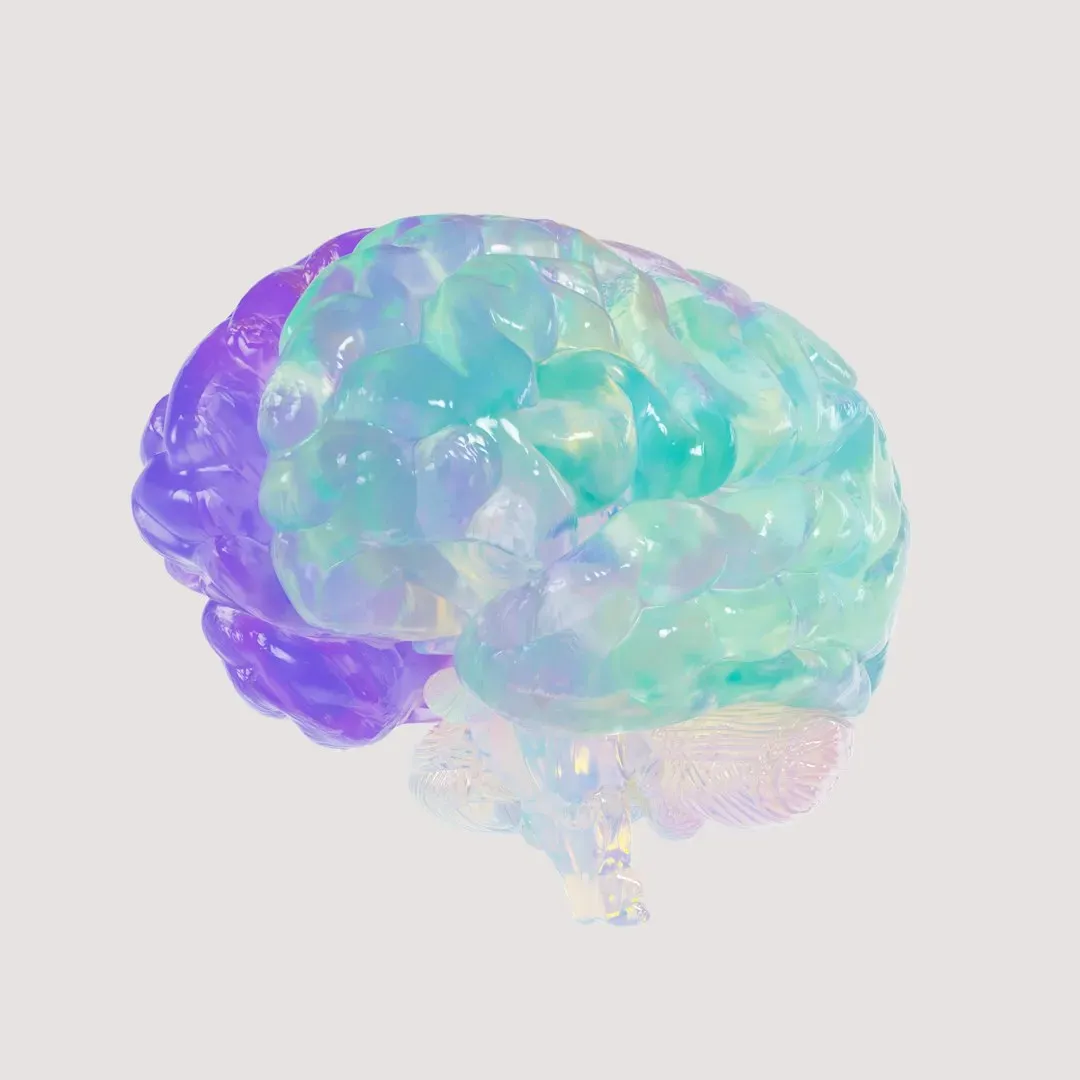
When you arrive at modern humans, something especially strange is happening: the universe has produced a brain capable of asking what the universe is. You are not just reacting to your environment like an animal avoiding predators or seeking food; you are reflecting on your own thoughts, wondering why anything exists at all. That reflective loop, where the mind turns its attention back on itself, makes you part biological organism, part storyteller, constantly weaving meaning out of raw experience.
Once language and culture take off, your species begins building a shared library of knowledge that no single brain could ever hold. You inherit tools, stories, scientific theories, and moral ideas that were shaped by countless generations before you, and you pass your own insights forward. When you learn about galaxies, evolution, or the chemistry of life, you are the universe examining itself through the lens of human curiosity. You become a link in a chain of understanding that stretches as far into the future as your species can endure.
Your Place in the Chain: Why This Cosmic Story Matters to You
Knowing this story is not just an abstract exercise; it changes how you see yourself. Instead of feeling like a random speck in a cold, indifferent cosmos, you can recognize that you are the latest expression of a very long, very unlikely sequence of events. Every breath you take relies on stars that died before your solar system even existed, on ancient microbes that reshaped Earth’s atmosphere, and on fragile evolutionary gambles that could easily have gone another way. You are not separate from the universe; you are its way of becoming aware in one small corner of space.
This perspective can make your everyday choices feel both humbler and more meaningful. On one hand, you see how tiny your lifespan is compared to cosmic time; on the other, you realize that you are rare, and that your conscious experience is a precious outcome of billions of years of cosmic experimentation. How you treat other people, other living things, and this planet becomes part of the story the universe is currently telling through you. When you look up at the night sky, you are not just seeing distant lights; you are seeing the ancestors of your atoms and the backdrop of your entire existence – did you ever imagine you were that deeply connected to everything you see?