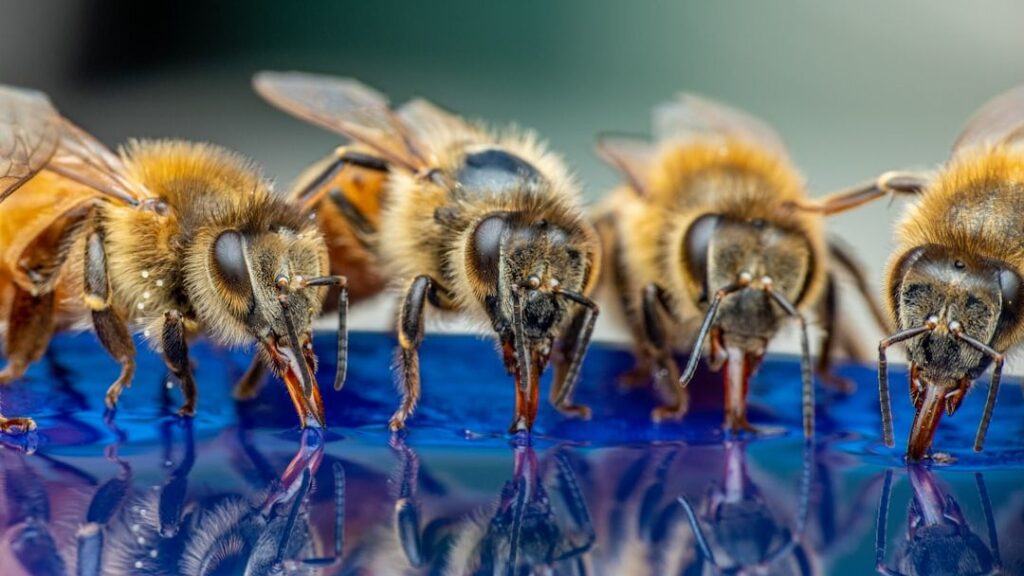
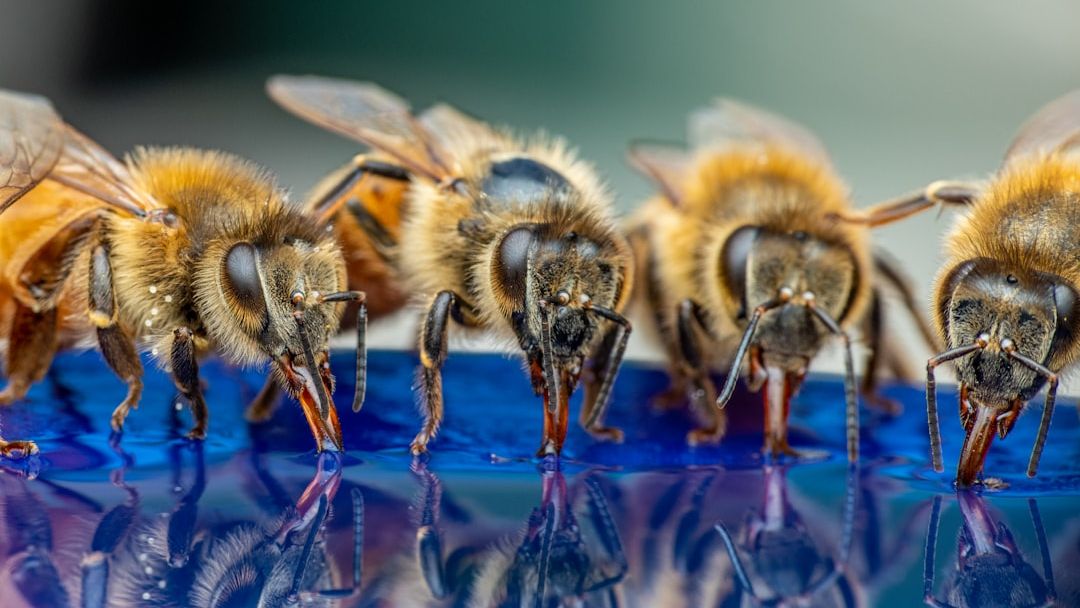
Bees can detect viruses in food sources, but don't necessarily avoid them – Image for illustrative purposes only (Image credits: Unsplash)
Honeybees maintain vigilant chemical senses that help safeguard their colonies from threats. Recent experiments revealed these insects can pinpoint viruses directly in sugar solutions mimicking nectar. Surprisingly, rather than steering clear, bees from certain groups showed a clear preference for the tainted options.[1][2]
This detection capability marks a novel finding in insect behavior. Researchers conducted controlled tests to probe how bees respond when faced with virus-laced food. The results challenge assumptions about pathogen avoidance in pollinators and raise questions about disease dynamics in hives.
A Counterintuitive Preference Emerges
Scientists initiated the inquiry with simple cage setups using young nurse bees, the workers that tend larvae inside the hive. In summer trials during July 2024, these bees generally favored plain sucrose solutions over those spiked with viruses. However, fall experiments in October shifted the pattern dramatically: nurse bees consumed significantly more from feeders containing deformed wing virus (DWV), black queen cell virus (BQCV), or chronic bee paralysis virus.[1]
Joseph McCarthy, an extension associate at the LSU AgCenter, noted the unexpected outcome from an initial test. “To our surprise, the bees were feeding from the virus-treated syrup significantly more than the virus-free food,” he said. The team ruled out contaminants like proteins from infected bees as the attractant, confirming the viruses themselves influenced choices.[2]
Field tests reinforced the trend among older forager bees, responsible for gathering nectar and pollen. Stations offered high-DWV concentrations, low doses, pure sucrose, or water. Foragers visited and drank more from high-virus sites in both spring and fall, regardless of season.[1]
Seasonal and Role-Based Variations
Nurse bees exhibited context-dependent responses tied to time of year. Summer preferences leaned toward avoidance, aligning with lower natural viral loads then. Fall brought attraction, possibly reflecting elevated DWV prevalence that season, when infections peak in colonies.[2]
Foragers displayed consistent boldness. Trained over weeks to use experimental feeders, they flocked to virus-heavy options once introduced. “The foraging bees preferred virus-treated food regardless of season,” McCarthy reported. This held across multiple replicates at the USDA-ARS lab in Baton Rouge, Louisiana.
| Season | Nurse Bees (Cage) | Forager Bees (Field) |
|---|---|---|
| Summer | Prefer clean | Prefer virus |
| Fall | Prefer virus | Prefer virus |
The table highlights these contrasts, drawn from trial outcomes. Concentrations varied: high doses reached 10^9 copies per milliliter for DWV, with controls using phosphate-buffered saline.[1]
Viruses Under the Microscope
Deformed wing virus topped the list, a widespread threat causing malformed wings and reduced lifespans. BQCV and CBPV joined in cage tests, all extracted from symptomatic bees and verified via qPCR for purity. Low and high doses tested sensitivity thresholds, alongside heat-killed versions to isolate live virus effects.
Purified inocula ensured no bacterial or fungal interference. Daily refreshes prevented degradation. Preliminary 2023 tests confirmed feasibility, paving the way for scaled summer and fall runs with dozens of cages, each holding 40 bees from low-mite colonies.[1]
Paula Castillo Bravo, an LSU AgCenter researcher, emphasized the purity checks. “We determined that the amount of proteins were very low, near to undetectable levels for the bees,” she said. This pinpointed viruses as the behavioral driver.
Implications for Pollinator Health and Beyond
Such preferences could accelerate transmission within hives and across flowers, which serve as viral reservoirs. Flowers laden with pathogens might draw foragers, amplifying spread in pollinator networks. This matters amid ongoing bee declines linked to viral epidemics.[2]
The discovery establishes direct virus detection in insects outside hosts. “To our knowledge, this is the first indication that honey bees, or any insect, can directly detect and respond to viruses outside of a host organism,” McCarthy stated.[2]
Mechanisms remain elusive. Viruses lack typical odors, unlike bacteria. Manipulation akin to “zombie” parasites warrants exploration, though unproven here. Future work must clarify sensory pathways and test infected versus healthy bees.
Read the full study in Biology Letters.[1]
These findings reshape views on social immunity. Bees’ acute senses offer protection yet expose vulnerabilities. As researchers probe deeper, the balance between detection and risky choices could inform strategies to bolster hive resilience against invisible foes.