
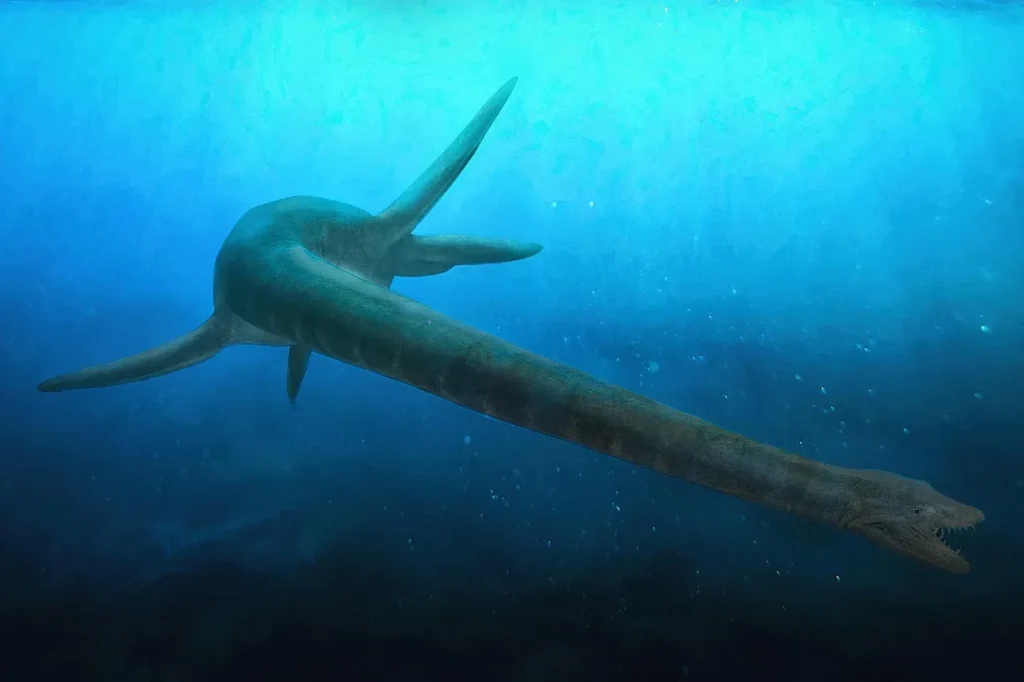
If you have ever looked at an illustration of a plesiosaur and thought it looked like something straight out of a myth, you are not alone. This long‑necked marine reptile has inspired lake monster legends, wild speculation, and plenty of scientific detective work. Yet the real creature that swam ancient seas is far more fascinating than any campfire story.
As you dive into these eight amazing facts, you will start to see the plesiosaur not as some blurry shape in a grainy photo, but as a highly adapted, surprisingly complex predator from a completely different world. By the end, you may find yourself picturing the oceans of the past every time you look at today’s waves and wondering what else might still be hiding in their depths.
1. Plesiosaurs Were Not Dinosaurs (But Lived Right Beside Them)
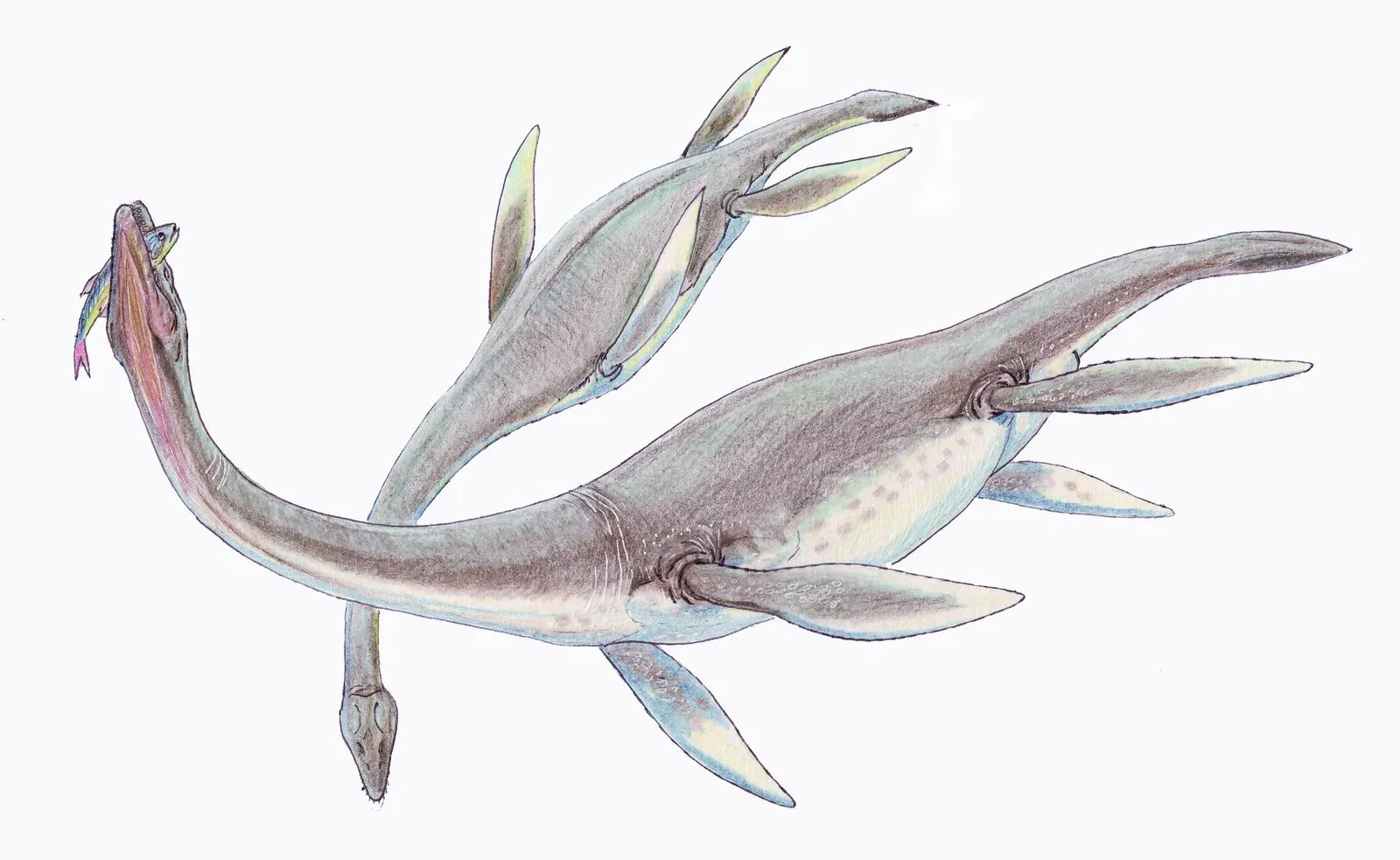
When you first see a plesiosaur in a museum or a documentary, your brain probably files it under the label “dinosaur” and moves on. But if you want to be accurate, you have to put it in a different mental box: plesiosaurs were marine reptiles, not dinosaurs, even though they shared the same planet and many of the same time periods. Dinosaurs mostly ruled the land, while plesiosaurs ruled the seas alongside other marine reptiles like ichthyosaurs and mosasaurs.
You can think of it the way you think about modern crocodiles and birds: they share a distant evolutionary story, but they fill very different roles and live in different environments. In the same way, a Tyrannosaurus on land and a plesiosaur in the ocean were neighbors in time, not members of the same group. When you picture the Mesozoic world, it helps to imagine three overlapping empires: dinosaurs on land, pterosaurs in the air, and marine reptiles like plesiosaurs in the water.
2. That Famous Long Neck Was Made of Dozens of Vertebrae
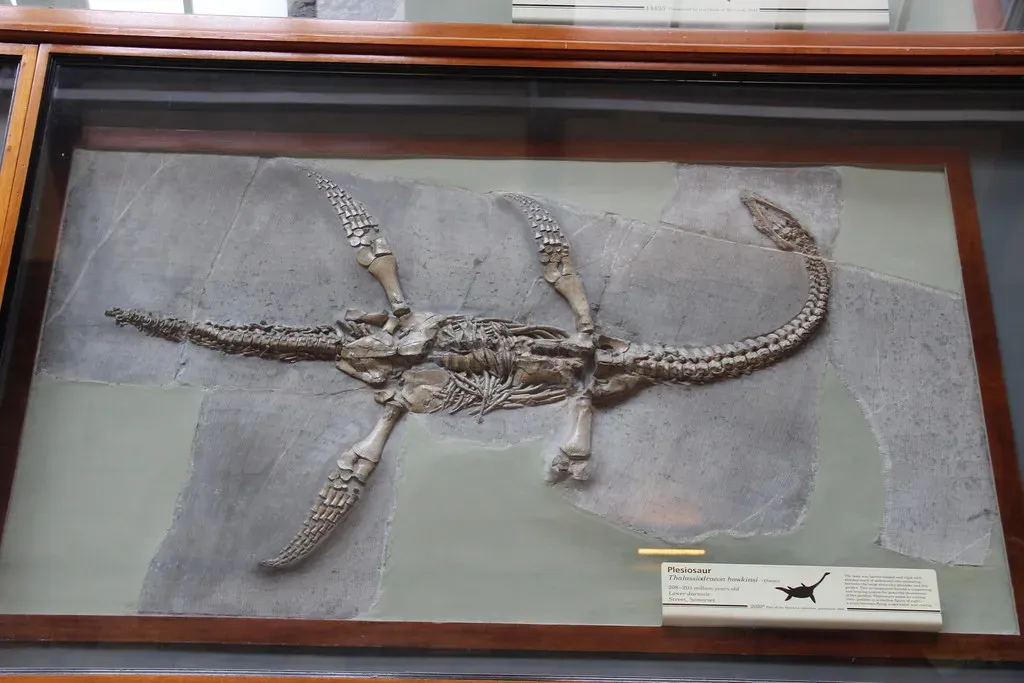
The first thing your eyes lock onto when you see a plesiosaur skeleton is that astonishing neck. Instead of just a handful of neck bones like you have, some long‑necked plesiosaurs carried dozens of vertebrae in a row, giving them an almost snake‑like flexibility from shoulders to skull. Different species showed different extremes, but many had far more neck vertebrae than any animal alive today, including giraffes.
This long neck was not just for show; it let the animal move its small head through the water without shifting its whole bulky body. You can imagine a plesiosaur hovering almost motionless, then gently sweeping its head side to side like a periscope to snap up fish or squid that did not realize danger was so close. Scientists still debate exactly how far that neck could bend without hurting itself, but you are looking at an animal built for reach and subtlety rather than brute head‑on speed.
3. They Were Powerful Underwater “Flight” Swimmers
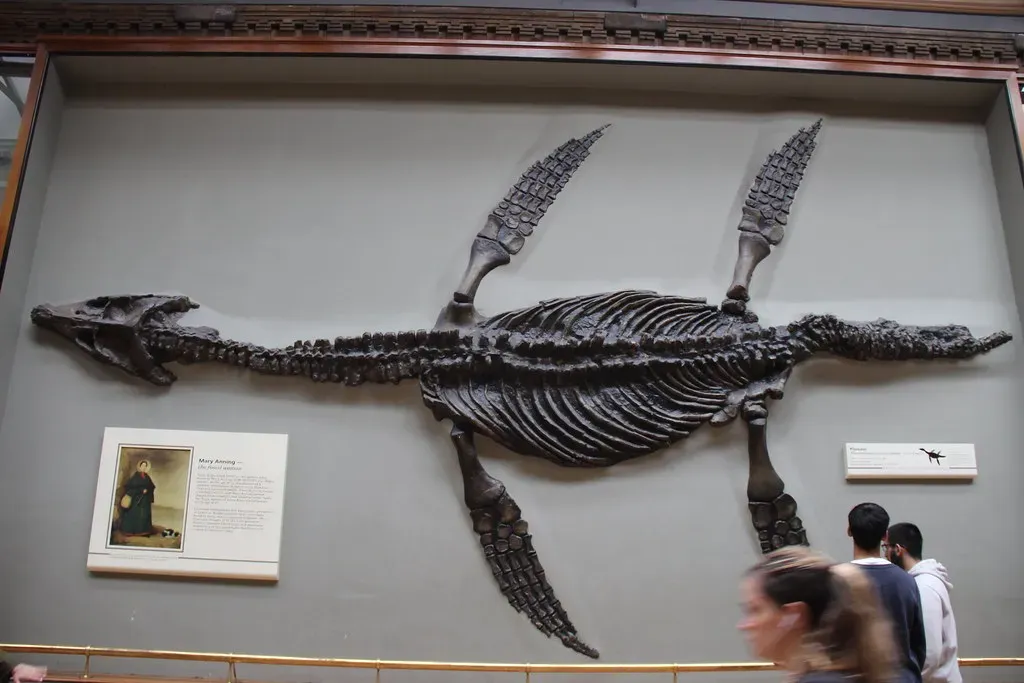
At first glance, a plesiosaur’s body looks a bit awkward: big torso, long neck, stubby tail. But when you focus on the four large, paddle‑shaped flippers, you start to see how it made sense in the water. Instead of swimming with a side‑to‑side tail motion like many modern fish, plesiosaurs used their flippers in a way that is surprisingly similar to how penguins or sea turtles move today. Each stroke pushed them forward in a kind of underwater flying motion.
Researchers have even used digital simulations and robotic models to test different flipper patterns, and the results suggest you are looking at a very efficient swimmer. With the front and back flippers working together, a plesiosaur could glide, turn, and accelerate with impressive control. So while the body plan might look strange from a land‑dweller’s point of view, in the three‑dimensional space of the ocean, it made these animals agile hunters rather than lumbering giants.
4. They Shared the Seas with Giant Marine Killers
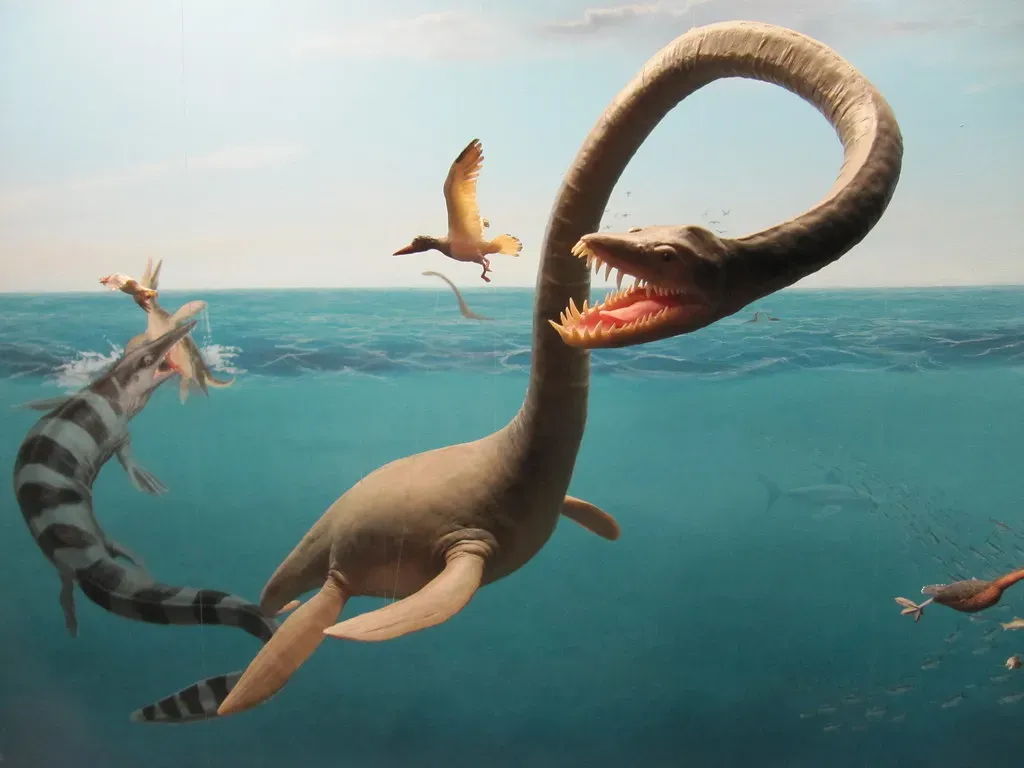
It is easy to picture a plesiosaur as the undisputed king of its world, but the ancient ocean was crowded and dangerous. In many places and times, plesiosaurs had to share the water with massive predators such as mosasaurs and large pliosaurs (close relatives with shorter necks and huge heads). That means a long‑necked plesiosaur was not just a hunter; in some situations, it was potential prey.
When you imagine that neck, you should also imagine the risk that came with it: a vulnerable, extended part of the body that a larger predator could grab. Some fossils show healed bite marks and injuries, hinting that these animals sometimes survived violent encounters. In your mind’s eye, you can replace the calm, blue paintings you often see with a more intense scene: murky water, shifting shadows, and a plesiosaur constantly balancing the need to hunt with the need to avoid becoming lunch.
5. They Gave Birth to Live Young Instead of Laying Eggs
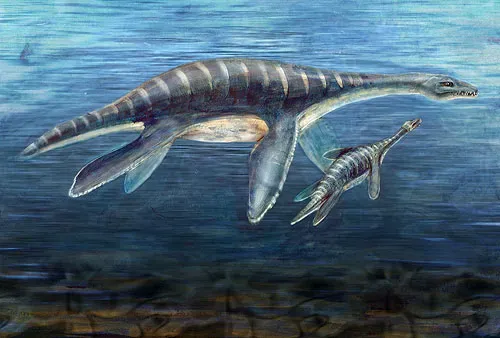
You might assume that all reptiles lay eggs on land, but plesiosaurs break that rule in a big way. Fossils have revealed remains of a large developing baby inside an adult plesiosaur, strongly indicating that at least some species gave birth to live young in the water rather than crawling ashore to nest. For you, that means you are dealing with a marine animal that likely spent its entire life in the ocean, from birth to death.
This kind of reproduction suggests a more complex social and parental life than you might expect from a reptile. When scientists look at the size of the unborn young relative to the mother, it points toward the possibility of fewer, larger babies rather than many tiny ones. If you picture a single, well‑developed youngster following its mother through shallow waters, you are imagining a world where care and survival strategies may have been closer to what you see in some modern whales than in today’s sea turtles.
6. Their Fossils Help You Read Ancient Global Maps
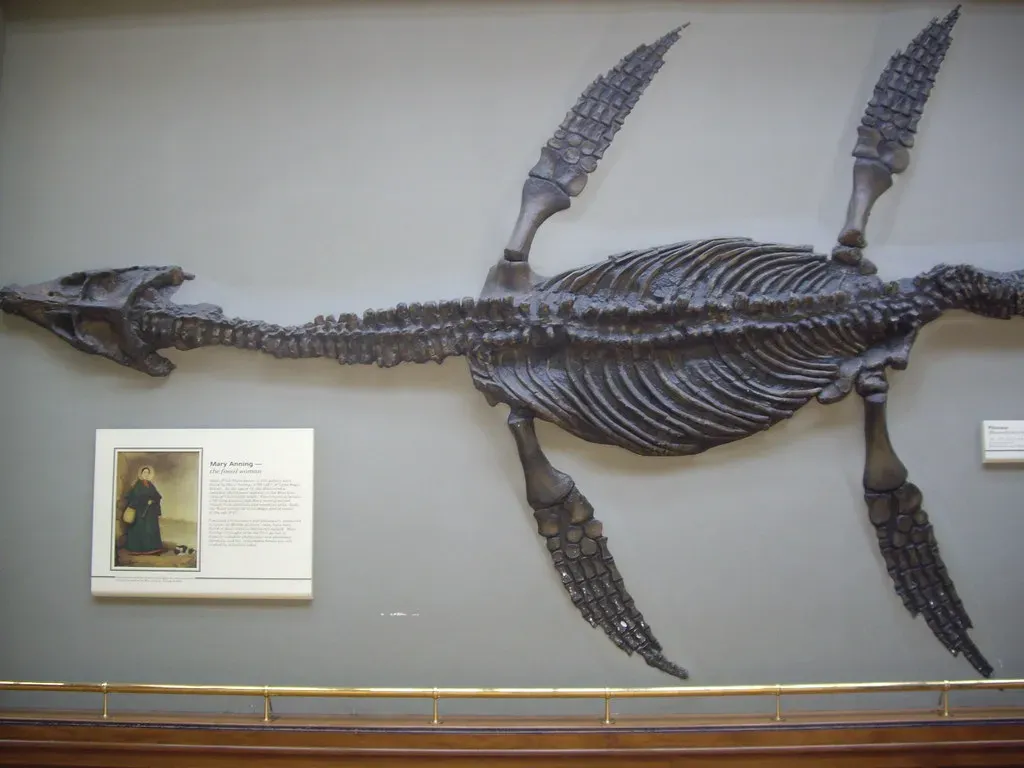
When you hear about a plesiosaur fossil, you might think it is just a cool skeleton in a museum, but it is also a clue about how Earth used to look. Plesiosaur remains have been found on multiple continents, including places that are far from any modern ocean. That tells you that these regions were once underwater or much closer to ancient seas. In a way, every plesiosaur fossil is a pin in a very old world map showing where coastlines and shallow seas used to be.
Because they were widespread and lived for a long stretch of geological time, plesiosaurs help scientists piece together how continents drifted and how sea levels changed. When you stand in a dry, inland region and learn that a plesiosaur was once buried there in marine sediment, it forces you to imagine rolling waves where there is now only dust and rock. It is like seeing a ghost coastline, revealed not by old photographs, but by bones locked in stone.
7. The Loch Ness Legend Warped Their Popular Image
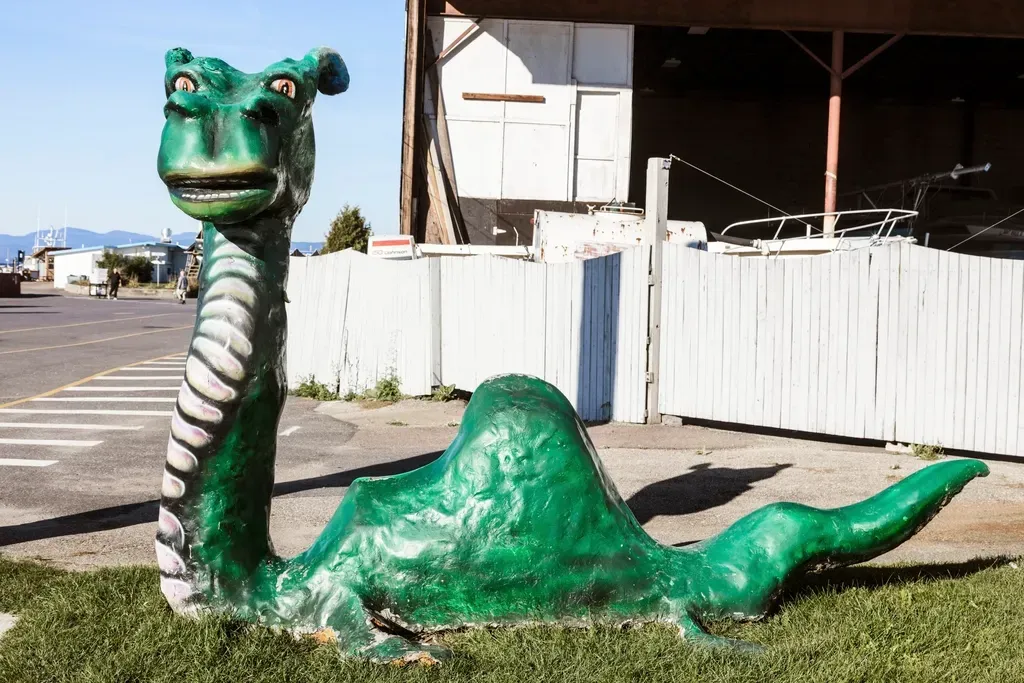
If you are being honest, there is a good chance you heard of plesiosaurs because of stories about lake monsters, especially the famous one from Loch Ness. Popular drawings often show a plesiosaur‑like shape poking its head and neck out of a modern lake, hinting that maybe these ancient reptiles somehow survived in secret. From a scientific standpoint, though, that idea runs into problem after problem, from food supply to breeding populations to the complete lack of reliable evidence.
Yet even if you know the legend is not realistic, you can still see how strongly the plesiosaur silhouette has gripped human imagination. Whenever people glimpse something mysterious in the water, your mind is quick to reach for that long neck and small head shape, because you have seen it so often in books and movies. Ironically, the myth sometimes distracts you from the real, well‑supported story: plesiosaurs truly were extraordinary animals, but they belonged firmly to the ancient oceans, not to hidden corners of the modern world.
8. New Discoveries Keep Changing What You Think You Know
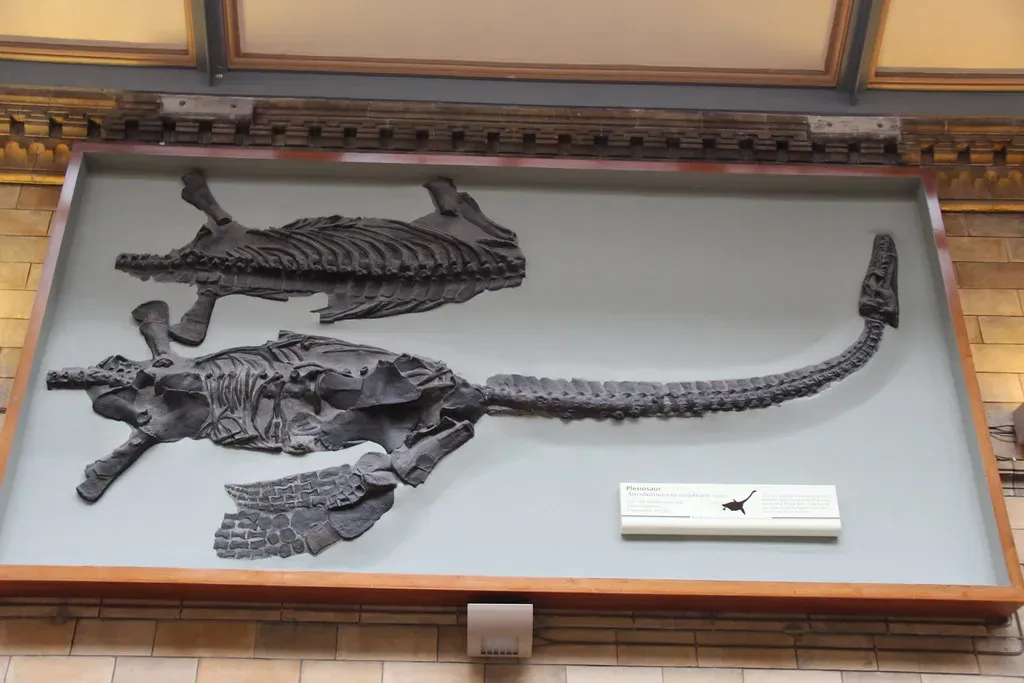
You might assume that everything important about plesiosaurs has already been discovered, but the picture is still evolving. Every few years, new fossils turn up with better preservation, unusual proportions, or surprising features that force you to adjust your mental image. Some finds highlight differences in body size and neck length; others hint at varied diets or unexpected adaptations in different environments across the globe.
When you follow this research, you start to realize that “the plesiosaur” is not a single, simple creature but a whole family of forms that changed over tens of millions of years. For you, that means staying a bit humble about any one reconstruction or painting you see; the next discovery could add nuance, or even upend a long‑held assumption. Instead of thinking of these animals as frozen in time, you can treat them like an unfolding story, where each new chapter deepens your appreciation of just how inventive evolution can be in the open ocean.
Conclusion: Looking at the Ocean with New Eyes
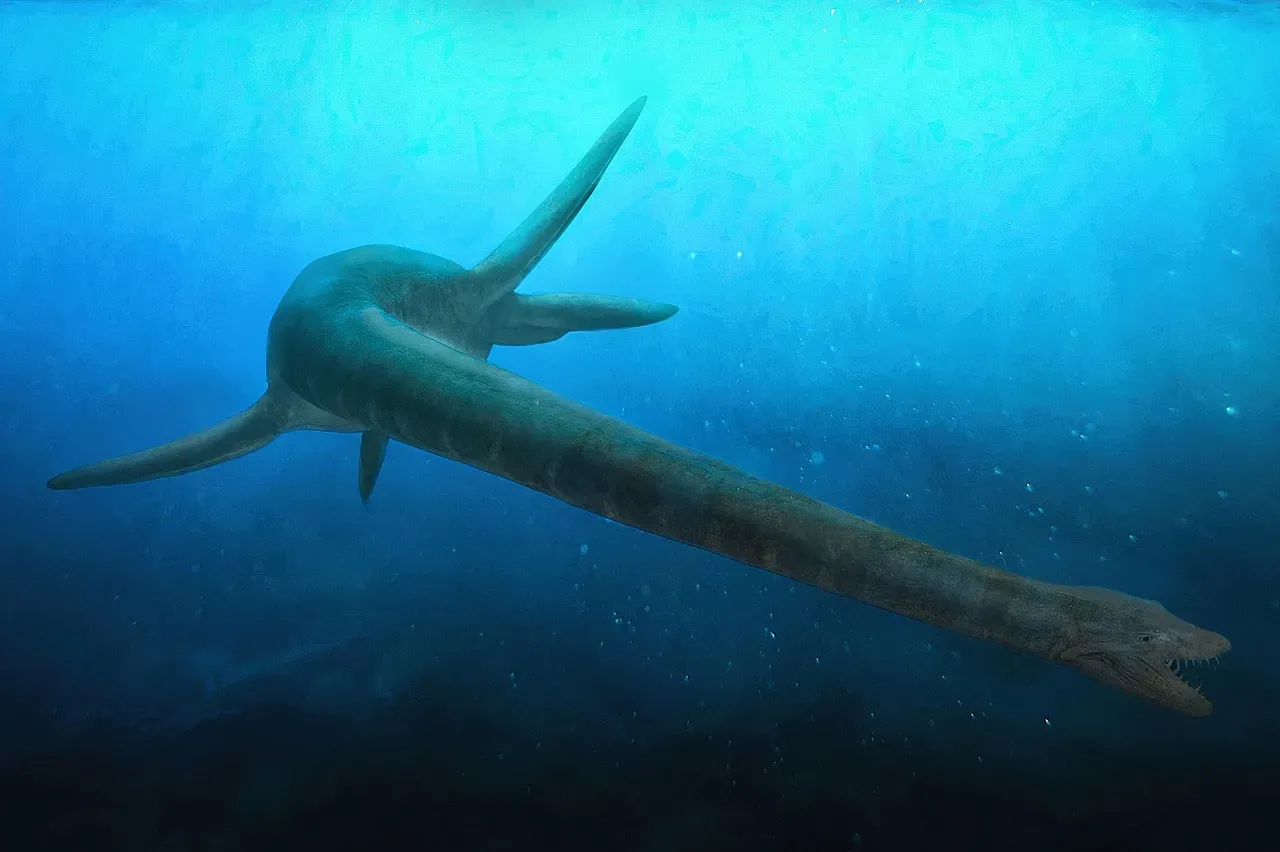
Now that you have walked through these eight facts, you can see the plesiosaur as more than just a long neck and a mysterious reputation. You have met it as a specialized marine reptile with a unique swimming style, a risky but powerful body plan, and a life cycle shaped entirely by the sea. You have also seen how its fossils let you read the history of Earth itself, from shifting continents to vanished coastlines.
The next time you stand on a beach or stare out over a calm lake, you might find yourself wondering what kind of shapes once moved beneath surfaces just like that. Even though plesiosaurs are long gone, the questions they raise about survival, adaptation, and the stories you tell about the unknown are very much alive. When you picture that long neck gliding through ancient water, what part of their world do you wish you could see with your own eyes?