
You probably know your zodiac sign’s headline qualities already: the passionate one, the practical one, the emotional one, the mysterious one. But beneath the clichés, there’s a quieter layer of traits that people do not talk about as much, even though they shape how you move through your life every single day. Those subtle patterns show up in how you argue, how you love, what you fear, and what you’ll quietly sacrifice when no one is looking.
In this article, you will not see a sign-by-sign breakdown. Instead, you will explore ten core traits that every sign carries in its own way. Think of them as hidden settings in your personal operating system. As you read, you might notice that a few feel uncomfortably accurate, some feel oddly validating, and one or two might push you to look at yourself in a way you usually avoid. That is where the real insight lives.
Your Quiet Need To Be Understood, Not Just Liked

You might think you want to be liked, but if you are honest, what you really crave is to feel deeply understood. Surface-level approval can feel nice for a moment, yet it leaves you oddly empty if people are clapping for a version of you that is not quite real. When someone finally mirrors back your actual thoughts, fears, and quirks, you feel a full-body exhale you did not even know you were holding.
This is why you sometimes overshare with the wrong people or shut down with the right ones. You are testing the world: can anyone hold the real you without flinching? Once you notice this, you can start choosing more intentionally where you show your depth and where you keep it light. You do not have to perform for everyone; you just need a small circle where you are not a performance at all.
Your Tendency To Overfunction When You Are Afraid

When you are scared, you probably do not look scared on the outside. You spring into action, rush to “fix” things, organize, plan, or control the moving pieces. People might even praise you for being strong and capable in a crisis, not realizing that your calm efficiency is often just fear in disguise. You cope with anxiety by doing, and it works so well that you rarely question it.
The hidden cost is that you can exhaust yourself trying to hold everything together, while never admitting how panicked you feel inside. You might even resent others who seem too relaxed, because they expose how hard you are working just to stay afloat. Learning to pause before you fix things, and admitting, even quietly to yourself, “I am actually scared right now,” can be more healing than any perfectly executed plan.
Your Deep Loyalty To People You Pretend Not To Need

You like the idea of being independent, and part of you truly is. You can handle a lot on your own, and you are probably proud of that. But there are a few people in your life you are fiercely loyal to, even if you act cool or detached on the surface. You might downplay how much they matter because needing people feels risky.
The reality is that you build quiet emotional contracts with these people: you remember their stories, anticipate their needs, and defend them even when they are not in the room. When those bonds are threatened, your reaction can surprise even you. If you admitted how much they mean to you, you might communicate more clearly, instead of hoping they just magically know. Your secret is not that you do not need anyone; it is that you care more deeply than you let on.
Your Habit Of Turning Pain Into Motivation

There is a part of you that refuses to let pain be pointless. When something hurts you, whether it is rejection, failure, or betrayal, a switch flips: you start thinking about how you can turn this into fuel. Maybe you decide to prove someone wrong, reinvent yourself, or finally pursue the thing you were too scared to go after before. You might not talk about it, but you quietly promise yourself that this hurt will not be the end of the story.
The downside is that you sometimes rush past healing because you are so focused on transforming the pain. You can start to treat your emotions like raw material for self-improvement instead of experiences that deserve to be felt. When you allow yourself to grieve first and “grow stronger” second, your motivation becomes cleaner, calmer, and less tangled up in old wounds you never fully acknowledged.
Your Secret Sensitivity To Tone And Atmosphere

Even if you see yourself as logical or tough, you probably read the emotional temperature of a room much more than you admit. You notice the way someone’s voice tightens at the end of a sentence, how a friend suddenly goes quiet in a group, or how the air shifts after a joke lands wrong. You do not always consciously register it, but your body does, and it subtly shapes how you act.
This sensitivity can be a gift: it helps you adapt, avoid conflict, and comfort people before they even ask. But it can also make you feel overstimulated, drained, or weirdly responsible for keeping everyone okay. When you realize how tuned in you are, you can stop blaming yourself for “overreacting” and start honoring that you simply pick up more signals than most. That awareness lets you set better boundaries with the emotional noise around you.
Your Complicated Relationship With Control

You have a part of you that desperately wants to trust life, and another part that absolutely does not. On good days, you can relax into the flow, go with the moment, and accept uncertainty as part of the adventure. On other days, you want to micromanage outcomes, monitor every detail, and predict every possible problem before it appears. Both sides live in you, even if you publicly present only one.
Underneath this push and pull is a very old question: “What happens to me if I let go?” If you grew up feeling like you had to be the responsible one, control might feel like safety rather than stubbornness. When you gradually experiment with surrender in small, low-stakes ways, you start building evidence that not everything falls apart when you are not gripping so tightly. With time, you can let control become a tool you use, not a cage you live inside.
Your Strong Inner Critic That Sounds Like “Standards”

There is a voice in your head that you probably call “being realistic” or “having high standards,” but it is harsher than you are willing to admit. It picks apart how you look, what you said, what you did not do, and how you compare to everyone around you. Sometimes it even criticizes you for feeling bad about being criticized. It is relentless, and you are so used to it that it feels normal.
Ironically, that inner critic might have started as a way to protect you: if you tear yourself down first, then no one else can hurt you as badly. Over time, though, it stops being protective and starts being corrosive, making it harder to take risks or celebrate small wins. When you catch that voice in the act and consciously switch to how you would speak to a close friend, you begin to rewrite a script you have followed for years without questioning it.
Your Need For Meaning Behind Everyday Choices

You are not as casual as you sometimes pretend to be. Even small decisions carry a quiet sense of meaning for you: what you buy, who you text back, what you say yes to, what you ghost. You are constantly, if subtly, asking yourself, “What does this say about me? What kind of life am I building here?” You might not talk about it, but you feel it, especially late at night or during big transitions.
This need for meaning can make you incredibly intentional when you are clear on your values, but it can also paralyze you when you are confused or scared of choosing wrong. You may stay in limbo longer than you need to because committing feels like carving something in stone. The truth is that your life is more like a draft than a final copy; you can change fonts, margins, and even the story line. Once you accept that, everyday choices stop feeling like traps and start feeling like experiments.
Your Hidden Romanticism About The Future

No matter how cynical or practical you act, there is a part of you that secretly romanticizes the future. You imagine the day when it all finally clicks: the right relationship, the right city, the right job, the right version of you. That vision can pull you through really rough stretches, like a movie trailer you replay in your mind when reality feels too heavy or too slow.
The risk is that you can start living more in your imagined future than in your actual present. You might keep postponing joy until you hit some invisible milestone, or compare real people to fantasy scenarios that no one could match. When you gently bring some of that idealism into the here and now – tiny upgrades, small risks, honest conversations – you give your future self a fighting chance to exist outside your head.
Your Fear Of Being Ordinary (Even If You Crave Normalcy)

On one hand, you might crave stability: a steady income, a decent home, people who show up, routines you can rely on. On the other hand, there is a deeper fear that you will fade into the background and never do anything that feels truly yours. You might roll your eyes at the idea of being “special,” yet the thought of being completely forgettable quietly terrifies you.
This tension can show up in strange ways: you take safe paths but secretly envy people who take big swings, or you make bold moves but then panic and long for something more predictable. When you admit that you want both roots and wings, you can stop judging yourself as indecisive. You are not confused; you are complex, and your life will probably always be a dance between comfort and calling.
Your Capacity To Start Over, Even When You Swear You Cannot
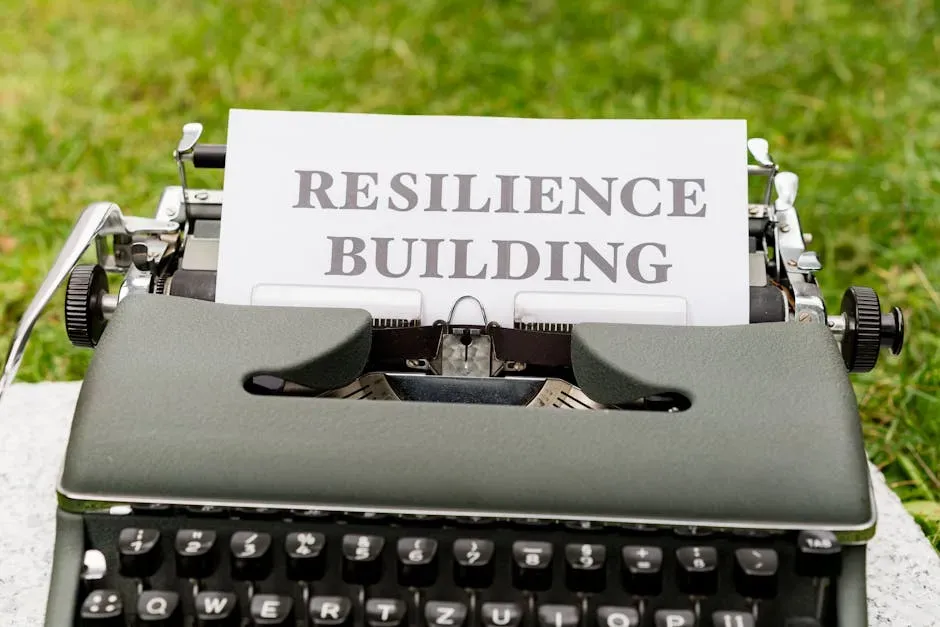
There have been moments in your life when you were sure you were done, stuck, or completely out of options. Yet somehow, you are still here, reading this, carrying experiences you once thought would break you. You have walked away from things you thought you could never leave, survived things you were not prepared for, and rebuilt parts of yourself from pieces you did not think would fit again.
You might underestimate this ability because you remember how messy and uncertain the process felt, not how powerful it actually was. But your chart, your personality, and your history all hold a quiet pattern of resilience: you bend more than you break, and you adapt in ways you only notice later. The next time you are tempted to say, “I could never start over,” remember that you already have – more than once.
In the end, your zodiac sign is not a cage; it is more like a language for the patterns you already feel inside yourself. These ten traits do not dictate who you must be, but they can help you see why you react the way you do, what you secretly need, and where your quiet strengths live. If you use that awareness with honesty and compassion, you turn astrology from entertainment into a mirror that actually helps you grow. Which of these hidden traits felt the most uncomfortably true for you?