

Most people secretly believe confidence is something other people are born with and they somehow missed the memo. In reality, unshakeable self-confidence is far less about genetics and far more about habits, psychology, and the quiet choices you make every single day. When you look closely at people who seem solid in themselves, you rarely find perfection; you find people who’ve learned how to manage doubt instead of waiting for it to disappear.
Think of confidence like a muscle: if you never train it, of course it feels weak; if you train it with the right kind of “stress,” it grows stronger and more reliable. What often surprises people is how scientific this can be – rooted in brain wiring, behavior loops, and emotional conditioning – yet it still feels deeply human and messy in real life. The following ten strategies blend psychology with practical, everyday moves you can actually use, even on the days you feel like a total impostor.
1. Redefine Confidence as a Skill, Not a Personality Trait

One of the most liberating shifts you can make is to stop thinking of confidence as something you either have or don’t have. Modern psychology tends to frame confidence as a set of learned beliefs and behaviors, built over time from experience and interpretation. In other words, it’s closer to learning a language than having eye color; you develop it through practice, feedback, and repetition. When you adopt this view, your low-confidence moments stop feeling like proof that you’re broken and start feeling like signs that you need more reps.
This mindset shift also changes how you interpret other people’s apparent self-assurance. Instead of assuming they’re just naturally bold, you can recognize the thousands of tiny risks, failures, and social experiments that probably trained their confidence. Personally, once I started treating confidence like a trainable skill – almost like learning guitar – it felt a lot less dramatic when I hit a wrong “note” in a meeting or conversation. You can ask yourself: if this is a skill, what’s my next small exercise, rather than what’s wrong with me?
2. Build Micro-Wins to Rewire Your Brain for Success

Your brain is constantly gathering evidence about what kind of person you are, and it tends to believe your track record more than your pep talks. Micro-wins – small, achievable actions like sending one email you’ve been avoiding or doing a five-minute workout – serve as hard proof that you follow through. Over time, these little victories accumulate into a quiet inner story: you are someone who does what you say you’ll do. That story is the foundation of real, unshakeable self-confidence.
Instead of waiting for some huge life overhaul, you can design your days like a series of tiny, winnable bets in your favor. For example, if your goal is to get fit, your first micro-win might simply be putting your workout clothes by the door the night before, then walking around the block. It sounds laughably small, but your brain logs it as action rather than procrastination. Do this across different areas of life – health, work, relationships – and your sense of self-efficacy grows, almost like compounding interest in a savings account.
3. Learn to Regulate Your Nervous System, Not Just Your Thoughts

Most confidence advice focuses on thinking differently, but your thoughts ride on top of your nervous system. When your body is in fight-or-flight mode – racing heart, tight chest, sweaty palms – it’s almost impossible to access calm, rational self-belief, no matter how many positive affirmations you recite. Confidence often collapses not because you lack skill, but because your nervous system is overwhelmed. Learning to recognize and soothe this physiological response is a game-changer.
Simple practices like slow exhalations, grounding your feet on the floor, or naming what you can see and hear can pull your system out of panic and back toward balance. This is not about pretending everything is fine; it’s about giving your brain enough safety to actually use the abilities you already have. Before a big presentation, for example, taking a minute to breathe slowly and feel your weight in the chair can be more effective than mentally screaming at yourself to “be confident.” When your body is regulated, your natural competence has room to show up.
4. Replace Vague Goals with Specific, Behavior-Based Targets
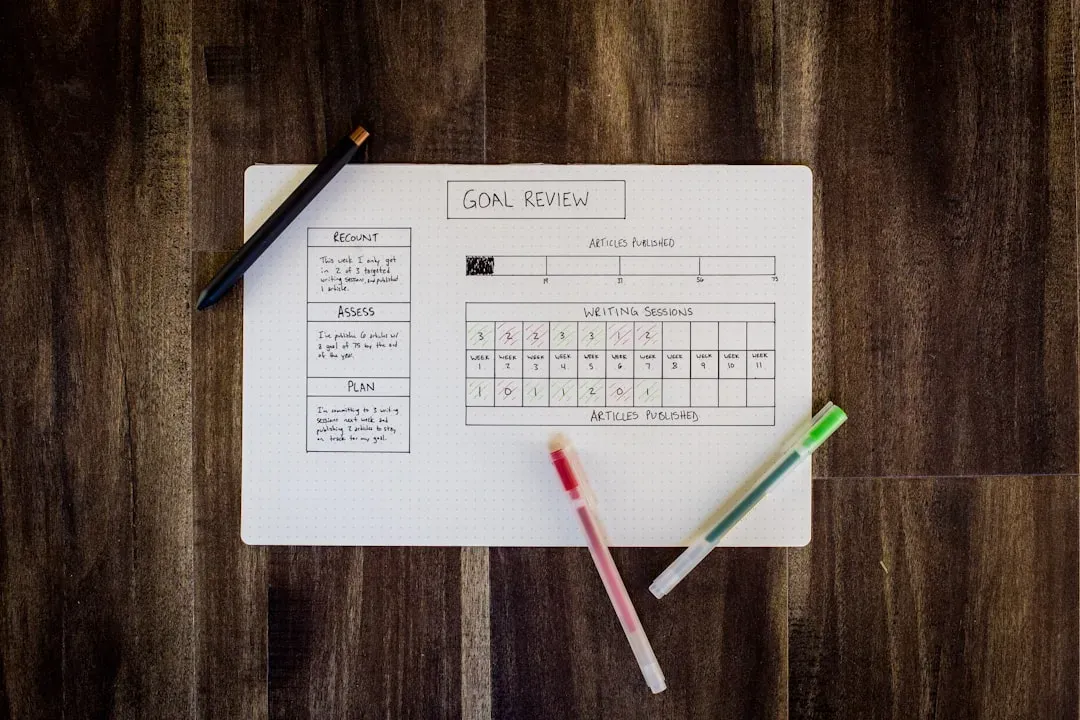
Nothing erodes confidence faster than chasing fuzzy goals you can never quite measure. Telling yourself you want to “be more successful” or “get in shape” sounds inspiring, but your brain has no clear scoreboard for knowing whether you’re winning. This ambiguity quietly fuels self-doubt, because there’s always a way to feel behind. Specific, behavior-based goals – like writing for twenty minutes a day or strength training three times a week – give you concrete actions you can actually complete and check off.
Behavior-based goals shift your focus from distant outcomes to controllable daily moves, which is where confidence is actually built. You might not be able to control whether your book becomes a bestseller, but you can absolutely control whether you write a page today. The more your goals are framed around what you can do rather than what others might give you, the sturdier your sense of agency becomes. Over time, hitting these clear targets conditions you to see yourself as competent and reliable, even when big results are still on the horizon.
5. Talk to Yourself Like a Tough, Fair Coach

Self-talk might sound like fluffy advice, but it has very real effects on performance, resilience, and risk-taking. Harsh inner criticism can hijack your attention, drain your energy, and make you less likely to attempt anything where you might fail. On the other hand, blindly positive self-talk that ignores reality can feel fake and be just as unhelpful. The sweet spot is what you might call “tough, fair coaching” – the way a good mentor would speak to you under pressure.
This kind of inner voice acknowledges mistakes without making them your identity. For example, instead of telling yourself that you are terrible at public speaking, you might say that today’s talk was shaky because you didn’t rehearse enough, and next time you’ll practice differently. It’s honest but not cruel; demanding but not demeaning. When I started asking, “If I were coaching a friend, what would I say right now?” my entire tone shifted. That shift didn’t make my problems disappear, but it stopped me from turning every setback into a character assassination.
6. Use Exposure to Fear Instead of Waiting to Feel Ready

One of the most reliable findings in psychology is that avoidance keeps fear alive. The more you dodge situations that make you anxious – like speaking up in a meeting or sharing your work publicly – the more threatening they seem over time. Confidence grows when you gently but deliberately expose yourself to the things that scare you, at a level that is challenging but not overwhelming. Think of it like progressively lifting heavier weights at the gym rather than suddenly trying to bench-press a car.
You can design a simple exposure ladder for almost any fear. If you’re terrified of networking, step one might be messaging one person online; step two, attending a small event and staying for twenty minutes; step three, initiating a conversation with a stranger. Each time you survive one rung of the ladder, your brain updates its prediction: maybe this isn’t as dangerous as I thought. Over weeks and months, this process can transform something that once felt impossible into something merely uncomfortable, and eventually into something you handle with steady confidence.
7. Separate Your Identity from Your Performance

A lot of fragile confidence comes from tying your entire sense of worth to how you perform in a single domain: your job title, grades, income, body, or relationship status. When that one thing wobbles – and it will, eventually – your whole identity feels like it’s crashing. Unshakeable confidence, by contrast, is built on a broader, more flexible self-concept. You are not just your achievements; you are a mix of values, efforts, relationships, and traits that can’t all be wiped out by one bad day.
Practically, this means learning to say, “I failed at this task,” instead of “I am a failure.” It can also mean deliberately investing in different parts of your life – creative hobbies, friendships, physical health – so that your sense of self is diversified rather than concentrated in one basket. When work is rough but you still feel grounded as a good friend, a curious learner, or a caring parent, you have more emotional shock absorbers. This separation between identity and performance does not lower your standards; it protects your dignity while you keep pushing for ambitious goals.
8. Curate Your Environment and Social Circle Intentionally

Confidence is not built in a vacuum; it is constantly shaped by the people and environments around you. If you are surrounded by chronic pessimists, harsh critics, or people who subtly mock your ambitions, your belief in yourself will eventually erode, no matter how many self-help books you read. Conversely, spending time with people who model courage, take smart risks, and genuinely want you to win can normalize growth and experimentation. Your social circle quietly teaches you what is “normal” to attempt and what is “too much.”
This does not mean cutting off every friend who is having a hard time; it means noticing how you feel after repeated interactions and making thoughtful adjustments. You can seek out communities – online or offline – where your goals are taken seriously and progress is celebrated, even when it is small. Changing your environment might be as simple as following more empowering voices on social media and muting the ones that constantly trigger comparison. Over time, this curated input becomes the psychological “background noise” against which your own confidence rises or falls.
Another underrated piece of environment is the physical space you live and work in. A cluttered, chaotic setting can subtly signal to your brain that you are disorganized or behind, while a simple, intentional space can make it easier to feel calm and capable. Even small upgrades – a clear desk, a dedicated corner for focused work, a reminder note with your top value for the week – can act like visual anchors. When your surroundings stop fighting you, your confidence has one less battle to fight every day.
9. Turn Setbacks into Data Instead of Drama

People with durable confidence experience failure just like everyone else, but they interpret it differently. Instead of viewing a setback as a verdict on their worth, they treat it like feedback on a strategy. This is not just positive thinking; it is a practical way to extract information from painful experiences. When you miss a promotion, launch a project that flops, or stumble in a relationship, you can ask: what, specifically, can I learn from this about timing, skills, or communication?
Approaching failure as data shifts you out of shame and into curiosity, which is a far more productive emotional state. It allows you to tweak your approach rather than abandon your goal entirely. For example, if a presentation goes poorly, the “drama” interpretation might be that you are simply not leadership material. The “data” interpretation might be that your slides were too dense, or you didn’t rehearse with a friendly audience first. One story ends your growth; the other points you to the next experiment. Over time, this habit builds resilience, and resilience is one of the most underrated components of genuine confidence.
10. Align Your Confidence with Your Values, Not Just Outcomes

Many people chase confidence as a byproduct of constant winning, but that approach is fragile and exhausting. A deeper, more sustainable form of self-confidence comes from knowing you are living in alignment with your values, even when results are uncertain. If you value courage, honesty, or creativity, you can measure your day by whether you acted in those ways, not just by whether you “succeeded” in the traditional sense. This value-based approach gives you a stable inner compass instead of a scoreboard that resets constantly.
When your self-respect comes from value alignment, you can pursue ambitious goals without letting them define you. You might still want the promotion, the finished book, or the thriving business, but your confidence does not vanish if those milestones take longer than expected. You can look back at a tough week and still feel grounded because you showed up bravely, treated people well, and honored what matters to you. That kind of confidence does not shout the loudest in the room, but it tends to last the longest.
Conclusion: Confidence as a Daily Practice, Not a Final Destination

The idea of “unshakeable” confidence sounds almost mythical, like something reserved for movie characters and social media stars. In real life, even the most grounded people wobble, question themselves, and have nights where they overthink everything. The difference is not that they found some magical switch; it is that they built systems and habits that help them steady themselves more quickly. They treat confidence as a daily practice made of micro-wins, nervous system regulation, honest self-talk, and value-driven decisions.
If there is one opinion I hold strongly, it is this: waiting to feel confident before you start is one of the most effective ways to stay stuck. The people who actually achieve their goals are usually the ones willing to move forward while still feeling awkward, unsure, and occasionally terrified. Over time, their actions rewrite their story about who they are. You do not need to become a different person to build unshakeable self-confidence; you just need to start training the one you already are. Which of these ten practices will you experiment with first, even if your hands are still shaking a little?