

There’s a special kind of torture your mind seems to love: you’re trying to fall asleep, and suddenly you remember that awkward comment you made three years ago at a party. Your stomach drops, your face heats up, and for a second it feels like you are right back in that room. Logically, you know nobody else is thinking about it. But your body clearly did not get the memo.
That strange mismatch between what you know and what you feel is not a character flaw. It is a brain doing exactly what it evolved to do: treat social rejection as a threat to survival. When you keep replaying embarrassing moments, your nervous system may still be reacting like you have just been pushed out of the tribe’s circle around the fire. Understanding why that happens does not just make you feel less broken; it also gives you a roadmap for finally turning down the volume on those mental replays.
Why Your Brain Treats Social Pain Like Physical Danger
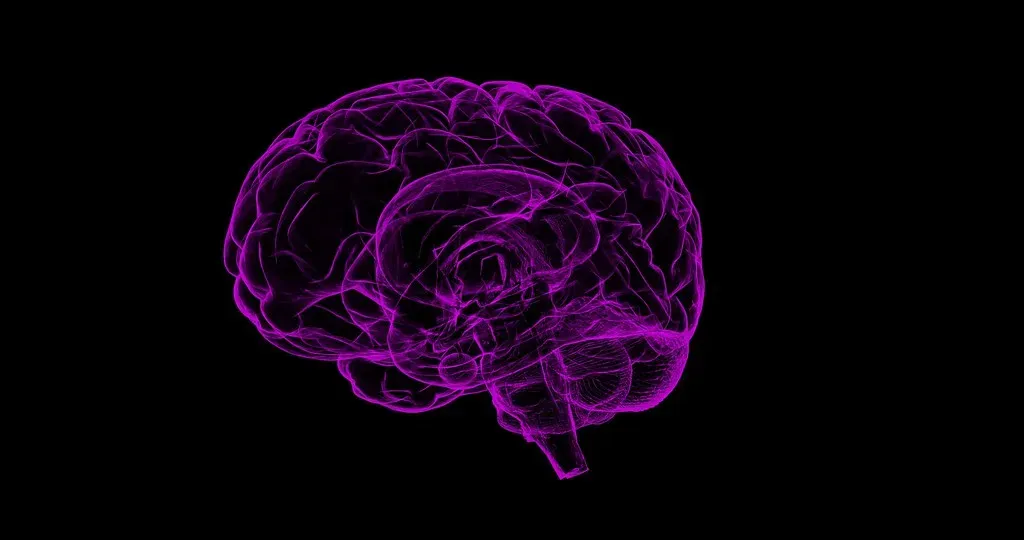
Here’s the surprising part: your brain does not neatly separate “social pain” from “physical pain.” Brain imaging studies have found that regions involved in physical pain processing, such as the anterior cingulate cortex, also light up when people are excluded or rejected socially. In other words, that sting you feel after being left out of a group chat is not just in your head in the casual sense – it is literally processed in overlapping neural systems that respond to bodily threat.
From an evolutionary standpoint, this makes brutal sense. For most of human history, being socially rejected by your group could directly threaten your food, safety, and protection. The nervous system that survived and got passed down to you was the one that took social connection deadly seriously. So when you keep reliving an embarrassing moment, your brain can interpret it as potential evidence that you are at risk of being cast out, even if you are just sitting on your couch holding your phone.
The “Replay” Problem: How Rumination Keeps Threat Circuits Switched On

Replaying old embarrassing scenes is a form of rumination: mentally going over the same event again and again without actually resolving it. Neuroscientists have linked this style of thinking to increased activity in the default mode network, a set of brain regions active when your mind wanders to the past or future. When that wandering gets stuck on negative social experiences, you essentially keep pressing “re-experience” instead of “remember.” Your body reacts as if the threat is happening now, not then.
Over time, this can condition your system into a kind of hypersensitivity. The more you rehearse the humiliation, the more efficient your brain becomes at pulling up the associated feelings of shame, anxiety, and self-criticism. It is like practicing a bad song on repeat: your neural circuits for social threat become better tuned, not weaker. That is why a minor awkward moment from years ago can still trigger a full-body surge of stress today, even while another part of your mind is rolling its eyes at how over-the-top that reaction is.
Shame, the Inner Critic, and the Brain’s Alarm System

When you replay an embarrassing memory, the emotion that usually floods in is shame: the sense that something is wrong not just with what you did, but with who you are. Shame has a powerful relationship with the brain’s threat circuitry, including regions like the amygdala that help detect danger. The more harshly you judge yourself, the more your inner critic acts like an internal bully, activating the same alarm systems that would respond to external attack.
That critical voice may sound like it is just giving you “tough love” so you do not make the same mistake again. But in practice, constant self-attack keeps your nervous system in a state of chronic social threat, as if you are always on the verge of humiliation. This can feed anxiety, depression, and a sense of never being good enough. Ironically, the brain regions involved in self-referential thinking and evaluation can become over-engaged, turning reflection into self-sabotage instead of growth.
Why Some People Get Stuck Replaying More Than Others

Not everyone replays embarrassing events with the same intensity or for the same length of time. Genetics, temperament, and early experiences all shape how sensitive your threat system is to social slights. People with a history of bullying, harsh criticism at home, or unstable relationships may be especially primed to interpret social awkwardness as dangerous. Their brains simply learned early on that missteps have high emotional costs, so the system leans toward vigilance.
Conditions like social anxiety, obsessive–compulsive tendencies, or past trauma can further amplify this replay loop. For example, if you already expect rejection, your mind will eagerly catalog and rewatch any moment that seems to confirm that fear. This is not weakness or drama; it is a nervous system trying (in a clumsy way) to keep you safe by over-analyzing everything. The downside, of course, is that it can trap you in a self-fulfilling cycle where you feel more and more alienated, even if other people are not actually judging you as harshly as you imagine.
How Chronic Social Threat Shows Up in the Body

When your brain treats social embarrassment like a survival threat, your body quietly pays the price. Stress hormones such as cortisol and adrenaline do not particularly care whether the danger is a charging animal or an imagined audience laughing at you. Over time, frequent activation of this stress response has been linked with trouble sleeping, digestive issues, muscle tension, headaches, and feeling constantly “on edge.” Your body starts to live in what some psychologists call a “threat posture,” braced for something bad to happen.
Emotionally, you might notice a tendency to withdraw, avoid social situations, or stay hyper-aware of every expression and comment. Your nervous system is trying to protect you by narrowing your world and scanning for signs of disapproval. Unfortunately, that same pattern can erode confidence and close off opportunities for connection – the very thing your brain is desperate to protect. It is like putting your social life into permanent airplane mode to avoid one bad text message.
Breaking the Loop: Changing How You Relate to Old Memories

The goal is not to erase embarrassing memories – you cannot lobotomize your past, and honestly, some cringe-worthy moments are exactly how we learn. What you can change is the way you relate to those memories when they pop up. Practices drawn from cognitive behavioral therapy, for instance, encourage you to question your automatic interpretations: Was that really as catastrophic as it feels? Is it true that everyone still remembers? What evidence supports that story, and what evidence contradicts it?
Mindfulness-based approaches add another layer by teaching you to notice the memory, the surge of shame, and the critical thoughts as events in the mind, not as facts about who you are. Instead of launching into another 20-minute replay, you might mentally label it as “embarrassment memory” and gently bring your attention back to the present moment. Over time, this can reduce the fusion between the memory and your sense of self, so the brain does not treat every cringe flashback like a fresh emergency.
Rewiring Safety: Updating Your Brain’s Social Threat Settings

To convince your brain that social rejection is not always a life-or-death threat, you need real, lived experiences of safety and acceptance. This can start small: sharing something mildly vulnerable with a trusted friend and noticing that they do not run away, or intentionally staying in a conversation after a minor awkward pause instead of escaping. Each of these moments gives your brain new data: social missteps happen, and you are still okay.
Self-compassion practices can be surprisingly powerful here. When you respond to your own embarrassment with kindness rather than attack – saying to yourself, for example, that anyone in your position would feel this way – you activate brain systems linked to soothing and connection rather than fear. Over time, this shifts the default setting from “I am in danger” to “This is uncomfortable, but I am safe.” It is not quick magic, but it is neuroplasticity in action: repeated experiences of safety gradually reshape how your nervous system responds to social stress.
When To Get Extra Help (And Why It Is Not Overreacting)

If your mental replays are constant, if they are interfering with sleep, work, or relationships, or if you find yourself avoiding life because of fear of humiliation, that is not something you just have to grit your teeth through. Persistent social threat responses can be part of anxiety disorders, depression, trauma responses, or obsessive patterns that benefit from professional support. Therapies like cognitive behavioral therapy, acceptance and commitment therapy, compassion-focused therapy, and trauma-informed approaches all have tools for calming an overactive threat system.
Reaching out does not mean your embarrassing moments are objectively worse than anyone else’s; it means your nervous system is carrying a heavier load than it can comfortably manage alone. A good therapist does not wave away your pain as silly, but also does not collude with the idea that you are permanently broken. They help you build new experiences of safety, connection, and self-respect so that your brain does not have to keep replaying the old tapes at full volume.
Conclusion: Your Embarrassing Moments Are Loud, But They Are Not The Truth

I still vividly remember a moment in my own life when I said something awkward in a crowded room and spent years replaying it, convinced everyone must secretly think I was ridiculous. Looking back now, I am far more struck by how cruel my own mind was to me than by the actual mistake. That is the quiet tragedy of these survival circuits: they were designed to protect us, but when they go unchecked, they end up distorting reality and shrinking our lives.
The hard but liberating truth is that your brain can keep ringing the alarm long after the threat has passed, especially when it comes to social rejection. You do not have to pretend those feelings are trivial, but you also do not have to treat them as a verdict on your worth. With curiosity, new experiences of safety, and sometimes a bit of outside help, you can teach your nervous system that social missteps are uncomfortable, not catastrophic. So the next time an old cringe memory surfaces, maybe ask yourself: is this a sign that I am unlovable, or just proof that my brain cares a little too much about keeping me inside the tribe?