

There is a strange moment that tends to arrive somewhere in your forties. The noise of your twenties and thirties starts to fade, and you realize that time is not an endless runway anymore. Careers, kids, aging parents, changing bodies, old dreams you quietly shelved – it all comes rushing into focus at once, and you start asking much bigger questions about how you want the rest of your life to actually feel.
Books can be brutal mirrors at that age, but they can also be gentle guides. The right ones do more than entertain; they rearrange your sense of what a “good life” looks like, challenge the stories you’ve been telling yourself for decades, and offer language for fears you have never said out loud. The twelve books below are not a bucket list for looking smart. They are a toolkit for facing midlife honestly – love, regret, money, purpose, aging, death – and then choosing, deliberately, how you want to live from here.
1. Man’s Search for Meaning by Viktor E. Frankl

Few books hit harder in midlife than this one. Written by an Austrian psychiatrist who survived Nazi concentration camps, it asks a single question that becomes impossible to dodge after forty: what is your life actually for? Frankl’s core idea is that humans can endure almost anything if they can locate or create meaning, even when they can’t change their circumstances.
By this point in life, you’ve probably discovered that achievement alone does not fill the void and that comfort can be oddly unsatisfying. This book pushes you to move from “What do I want?” to “For what am I willing to suffer?” It is not a comforting read, but that is exactly why it matters; it forces you to look straight at pain, loss, and disappointment and then treat them as raw material for purpose instead of as reasons to shut down.
2. Being Mortal by Atul Gawande

In your forties, the illusion of endless time really starts to crack: you notice small changes in your own body, your parents’ health becomes a topic of real concern, and you begin to sense that the medical system is not magically designed to protect your dignity. This book, written by a practicing surgeon, examines how modern medicine handles aging, illness, and the final phase of life – and how often it gets the priorities wrong.
Instead of focusing only on survival at any cost, it argues that the real goal should be a life worth living, right up to the end. Reading it in your forties gives you a priceless head start: you begin thinking now about what matters more to you than simply “staying alive.” It also arms you to advocate for aging parents and, eventually, for yourself. It is sobering, but oddly freeing, because once you accept that life is finite, you can stop pretending otherwise and start making braver, more honest choices.
3. The Second Mountain by David Brooks

Many people spend their first four decades climbing what this book calls the “first mountain”: career, status, accomplishments, the visible markers of success. Then something happens – divorce, burnout, loss, or just a quiet sense of emptiness – and they realize they climbed the wrong peak. This book suggests that a second, deeper mountain is available: one built around commitment, relationships, community, and moral values rather than ego.
In your forties, you are perfectly placed between these two mountains. You have enough history to know what has and hasn’t worked, and enough time left to change course with intention. The book is unapologetically opinionated: it criticizes shallow individualism and the obsession with personal branding, and pushes you toward a life of service, rootedness, and integrity. Whether you agree with every point or not, it will nudge you to ask whether your current trajectory leads toward a life you would actually respect.
4. The Body Keeps the Score by Bessel van der Kolk

By forty, most people carry emotional bruises they never had time or tools to unpack. Childhood wounds, messy relationships, work stress, health scares – they do not just disappear because you push them aside. This book, written by a psychiatrist who has spent decades studying trauma, makes a simple but unsettling claim: your body remembers what your mind tries to forget.
What makes it essential in midlife is its insistence that healing is possible, but rarely purely intellectual. It shows how trauma reshapes the brain and body, and why talk alone often is not enough. For someone over forty, perhaps starting to feel old emotional patterns hardening into personality, this can be a jolt of hope. It suggests practical, embodied ways to soften those patterns so the next forty years are not dictated by the first forty.
5. A Gentleman in Moscow by Amor Towles

Not every life-changing book has to be heavy nonfiction. This novel follows a Russian aristocrat sentenced to house arrest in a grand hotel for decades. On paper, it sounds like a story about confinement, but what makes it so powerful for readers over forty is how it turns limitation into a canvas for grace, curiosity, and decency.
By midlife, you know that many of your big choices have already been made: where you live, who you are with, which careers you did or did not pursue. It is easy to feel stuck or resentful about doors that have closed. This book quietly argues that meaning and beauty are still possible inside whatever constraints you live with. The Count’s playful, dignified way of moving through an unchosen life can inspire you to bring more attention, kindness, and style to your own everyday routines, even when circumstances are far from ideal.
6. When Breath Becomes Air by Paul Kalanithi

There are books you appreciate at twenty and books you can only truly feel at forty. This memoir, written by a neurosurgeon facing terminal cancer in his thirties, belongs firmly in the second category. It explores what it means to spend a life learning to fix broken bodies, only to have your own body suddenly betray you when your adult life is just beginning.
For someone over forty, the questions it raises land differently. You have probably already watched at least one friend or peer face a serious diagnosis, and you know in your bones that health is a privilege, not a guarantee. The book forces you to confront the uncomfortable idea that your timeline is not promised. At the same time, it quietly models how to keep loving, creating, and choosing joy even when time is short. It is heartbreaking, but it has a strange way of making ordinary days feel more luminous.
7. Atomic Habits by James Clear

Midlife is when many people secretly give up on changing themselves. The story goes something like this: this is just who I am, it’s too late, the grooves are too deep. This book calls that bluff with a mountain of research and practical examples showing that tiny, consistent changes can completely reshape your identity over time. Its central message is that you do not rise to the level of your goals; you fall to the level of your systems.
What makes it crucial after forty is that your margin for wasted years shrinks. You cannot afford another decade of vague intentions. The book breaks down behavior change into small, doable steps: adjusting environments, redefining identity, and designing routines that require less willpower. For someone who wants to age with strength, mental clarity, and financial stability, this is less a self-help trend and more a survival manual. It gives you a credible path from “I wish” to “I do,” even if your past attempts at change have repeatedly failed.
8. The Psychology of Money by Morgan Housel

By forty, money is no longer an abstract topic. You have lived through recessions, market swings, unexpected bills, maybe divorce or career shocks. You have seen that intelligence does not guarantee financial sanity, and that most money decisions are emotional long before they are rational. This book dives into the messy human side of finance with stories rather than formulas, and that is exactly what most people over forty need.
Instead of obsessing over the latest hot investment, it focuses on timeless principles: the power of time, the danger of envy, the weirdness of luck, and why behaving reasonably often beats trying to be mathematically perfect. At this stage of life, your biggest financial risk often is not ignorance but overconfidence, impatience, or panic. Reading this now can help you avoid catastrophic late-life mistakes, protect what you have built, and ensure that money serves your life instead of quietly ruling it.
9. Grit by Angela Duckworth

When you are younger, it is easy to believe that talent is everything. By your forties, you have watched brilliantly gifted people burn out, and seen seemingly average people quietly build extraordinary lives through stubborn persistence. This book gives that observation a framework: long-term passion and perseverance often beat raw ability.
For someone over forty, grit is not just about chasing some big flashy dream; it is about staying committed to what truly matters when the novelty wears off. That might mean caring for an elderly parent, rebuilding after divorce, sticking with a new career, or simply fighting for your own health. The research and real-world examples in this book are a reminder that it is not too late to pursue meaningful goals, but you can no longer rely on enthusiasm alone. You need staying power, and you can actually train it.
10. Quiet by Susan Cain

If you have spent decades feeling like you are “too quiet,” “too sensitive,” or “not outgoing enough,” midlife is the perfect time to stop apologizing. This book dives into the strengths of introverts in a world that often celebrates loudness and constant social performance. It shows how many of our workplaces, schools, and even families are built around extroverted ideals that simply do not fit everyone.
Over forty, you are probably tired of squeezing yourself into roles that drain you. Quiet gives you permission, backed by science and real stories, to redesign your life around your natural temperament. That might mean changing how you work, how you parent, or how you socialize. The deeper message is liberating: the way you are wired is not a flaw to fix but a resource to understand and use wisely for the decades ahead.
11. Meditations by Marcus Aurelius
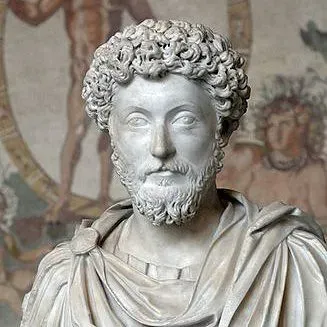
The older you get, the more you realize how little control you have over external events: politics, the economy, other people’s choices, even your own aging. This collection of personal reflections from a Roman emperor sounds distant in time, but its core ideas are shockingly current. It insists that while you cannot control what happens to you, you can always control how you respond.
Reading it over forty, with some real scars and regrets behind you, turns it from a philosophical curiosity into a daily manual. It encourages you to stop wasting energy on outrage and self-pity and instead cultivate inner steadiness, clear priorities, and simple virtues like courage and fairness. You do not have to agree with every ancient idea to feel its impact. The book functions like a quiet, stern friend who refuses to let you indulge your worst moods for too long.
12. The Midnight Library by Matt Haig

There is a very particular kind of regret that hits in midlife: you can see, in vivid detail, all the lives you might have lived if you had chosen differently. Different career, different partner, different city, different risks. This novel takes that feeling and turns it into a story about a woman who gets to explore those alternative lives in a mysterious library between life and death.
What makes it powerful for readers over forty is not just the fantasy of trying on all your what-ifs, but the conclusion it gently steers you toward: no life is free of pain, and perfection is an illusion. The point is not to find the flawless path, but to fully inhabit the one you are on now. Instead of encouraging you to obsess over parallel universes, it nudges you to forgive your past self, accept your present self, and commit to the future you can still influence.
Conclusion: It Is Not About Finishing the List

Looking at a list like this, it is tempting to treat it like homework for being a “serious” adult: twelve books to prove you are deep and wise and aging correctly. That mindset completely misses the point. After forty, the real luxury is not ticking off prestigious titles; it is choosing which voices you allow to shape the rest of your life. These particular books matter because they confront subjects most of us avoid – mortality, regret, trauma, money, meaning – and they do it with enough honesty to actually change how you live, not just what you know.
My opinion is simple and a little blunt: if your reading does not make you rethink at least one major assumption about your life, you are wasting precious time. You do not have to read all twelve of these, and you certainly do not have to agree with them. But you owe it to yourself to let at least a few of them unsettle you, comfort you, and push you to design the next decades with your eyes open. In the end, the most important question is not whether you finished the list, but whether, because of what you read, you become a person your future self would be proud to grow old as. Which of these would you dare to pick up first?