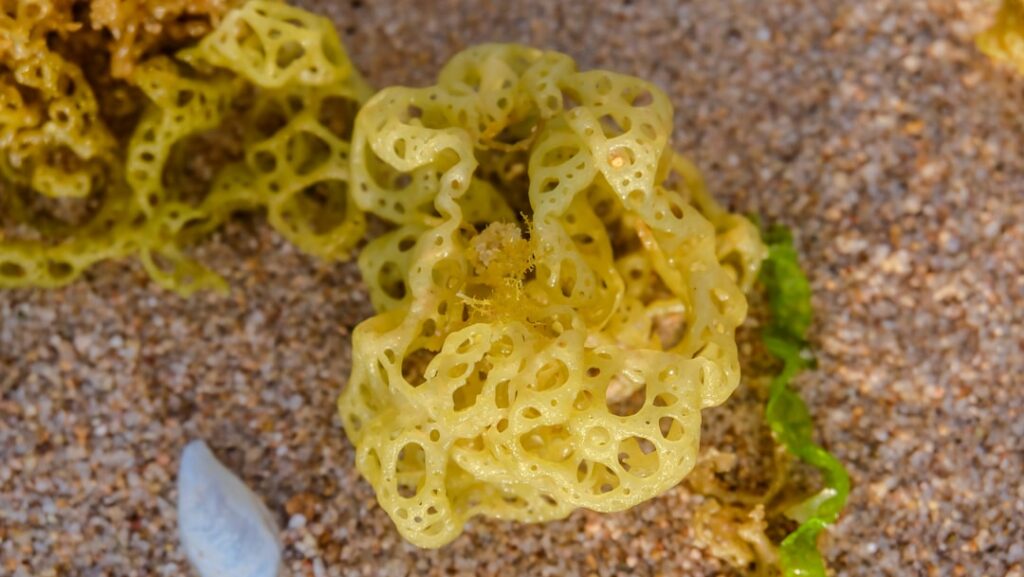
Chemists use sea sponge bacteria to create new molecules for drug discovery – Image for illustrative purposes only (Image credits: Unsplash)
Florida State University researchers have completed the first laboratory synthesis of two intricate molecules originally produced by bacteria that live in partnership with a Pacific Ocean sea sponge. The achievement removes a major barrier to studying these compounds in greater detail and testing their value as starting points for new medicines. In particular, one of the molecules shows activity against proteasomes, cellular structures whose inhibition has already proven useful against certain rare blood cancers.
Why Access to These Compounds Has Been Limited
Sea sponges and the microbes they host have long supplied scientists with biologically active molecules, yet collecting enough material for thorough testing remains difficult. The sponge in question, Acanthostrongylophora ingens, grows in Indonesian waters and must be gathered by scuba divers, then frozen and shipped under controlled conditions to prevent breakdown. Even when samples reach the lab, yields are low and the process is costly, making large-scale biological evaluation impractical.
Synthetic chemistry offers a way around these constraints. By building the molecules from readily available starting materials, researchers can produce them in any quantity needed and create modified versions that might perform better in the body.
How the FSU Team Built the Molecules
Doctoral student Zackary Firestone led the effort in the laboratory of Associate Professor Joel M. Smith. The team focused on tetradehydrohalicyclamine B, first reported in 2018, and its close relative epi-tetradehydrohalicyclamine B, identified the following year. Both compounds come from bacteria that share a symbiotic relationship with the sponge.
Firestone succeeded in producing only the biologically active mirror-image form of each molecule, a critical detail because the wrong geometry would not interact properly with target proteins. The work relied on a series of carefully chosen reactions that assembled the complex structures efficiently from commercial reagents.
Early Clues About Medical Relevance
Initial tests indicate that tetradehydrohalicyclamine B interferes with proteasomes, the cell’s machinery for clearing damaged proteins. In cancers such as multiple myeloma and mantle cell lymphoma, where toxic proteins build up, this interference can trigger cell death. The second molecule has not yet undergone similar biological screening, but its unusual structure has drawn interest for further investigation.
These findings remain preliminary. Additional studies will be required to determine potency, selectivity, and safety before any clinical path can be considered.
What Matters Now
The synthesis provides researchers with reliable supplies of both compounds and the ability to generate derivatives. This step is essential for determining whether the molecules can be refined into viable drug candidates.
Placing the Work in Context
Natural products or their derivatives account for roughly half of all approved medicines. The FSU project continues a long tradition at the university of advancing complex syntheses that later support medical applications, including the landmark work on Taxol decades earlier.
Support for the current study came from the National Institutes of Health and the National Science Foundation. The results appear in the Journal of the American Chemical Society.
With synthetic routes now established, the next phase will involve systematic testing to clarify how these molecules might be optimized or combined with existing therapies. The outcome could expand the toolkit available to scientists working on hard-to-treat cancers, though that outcome is still years away.