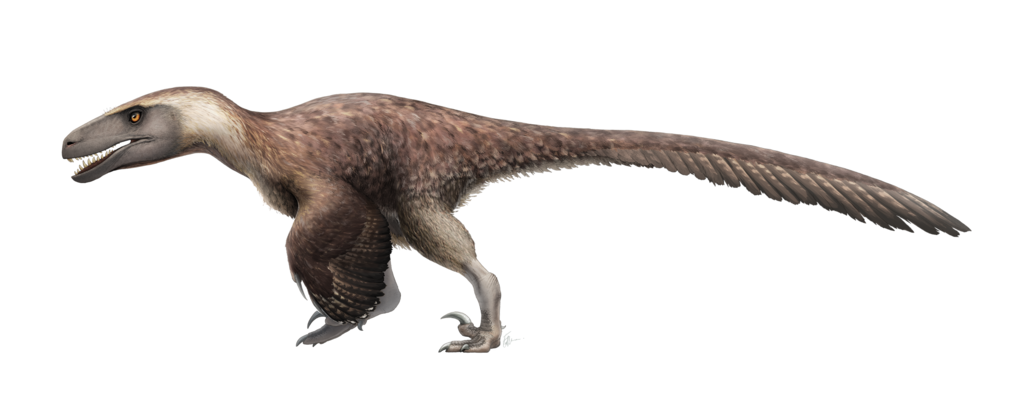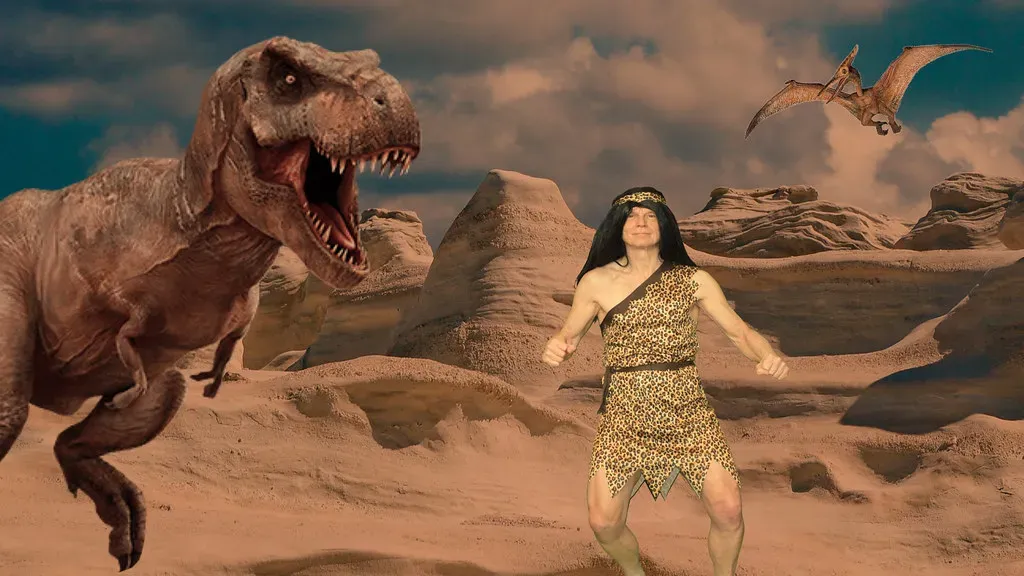
There is something irresistibly cool about giant dinosaurs, sabertooth cats, and humans trying to survive in a world that wants them dead by breakfast. Hollywood knows this, and it has spent decades throwing anything with claws and fangs onto the screen. The problem is that, once you look even slightly closer at the science, a lot of these films are less prehistoric adventure and more full-blown fantasy with a fur coat. Sometimes that can be fun; other times it is so wildly off the mark that you can almost hear every paleontologist in the audience audibly groan.
That clash between spectacle and science is exactly where these movies live. They are often entertaining, occasionally iconic, but scientifically they are a beautiful disaster. From cavemen dating dinosaurs to mammoths building the pyramids, the mistakes go way beyond small details and into the realm of alternate timelines. Let’s walk through ten of the most cringeworthy offenders, what they get hilariously wrong, and why a little basic paleontology could have made them far more interesting without killing the fun.
1. One Million Years B.C. – Cavemen And Dinosaurs Hanging Out Like Roommates
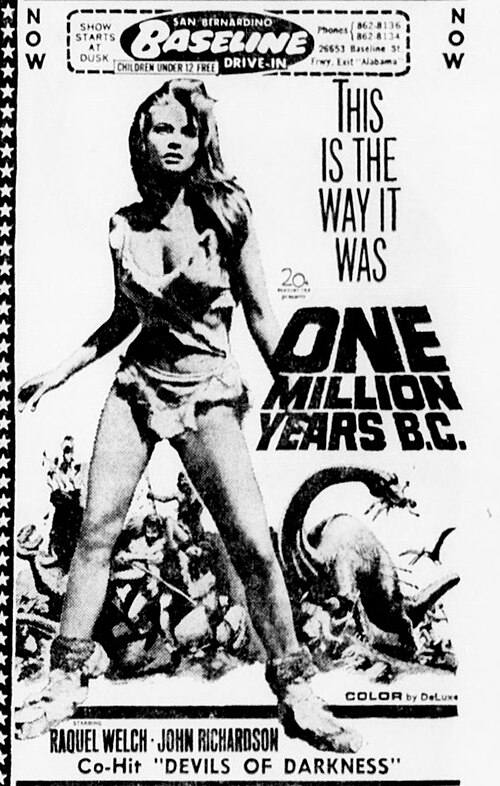
One Million Years B.C. is probably the poster child for prehistoric nonsense. The film throws together stone‑age humans and giant dinosaurs as if they all clocked in for the same shift at the same time in Earth’s history. In reality, non‑avian dinosaurs were wiped out roughly sixty‑six million years before anything resembling modern humans appeared, so the idea of Raquel Welch sharing a beach with a lumbering Allosaurus is basically a time mashup fan‑fiction. The movie does not just blur eras; it completely steamrolls the geological timeline.
What makes it especially cringey today is that, even when the film came out in the 1960s, scientists already knew dinosaurs and humans never coexisted. Instead of using the real prehistoric mammals or early hominins that actually lived in the last few million years, the movie chose the more sensational dinosaur route. On a visual level, it is iconic and influential, but scientifically it sends viewers home with a cartoon version of prehistory that has more in common with a theme park ride than with the fossil record.
2. 10,000 BC – Mammoths Building Pyramids And A Chronology From Another Planet
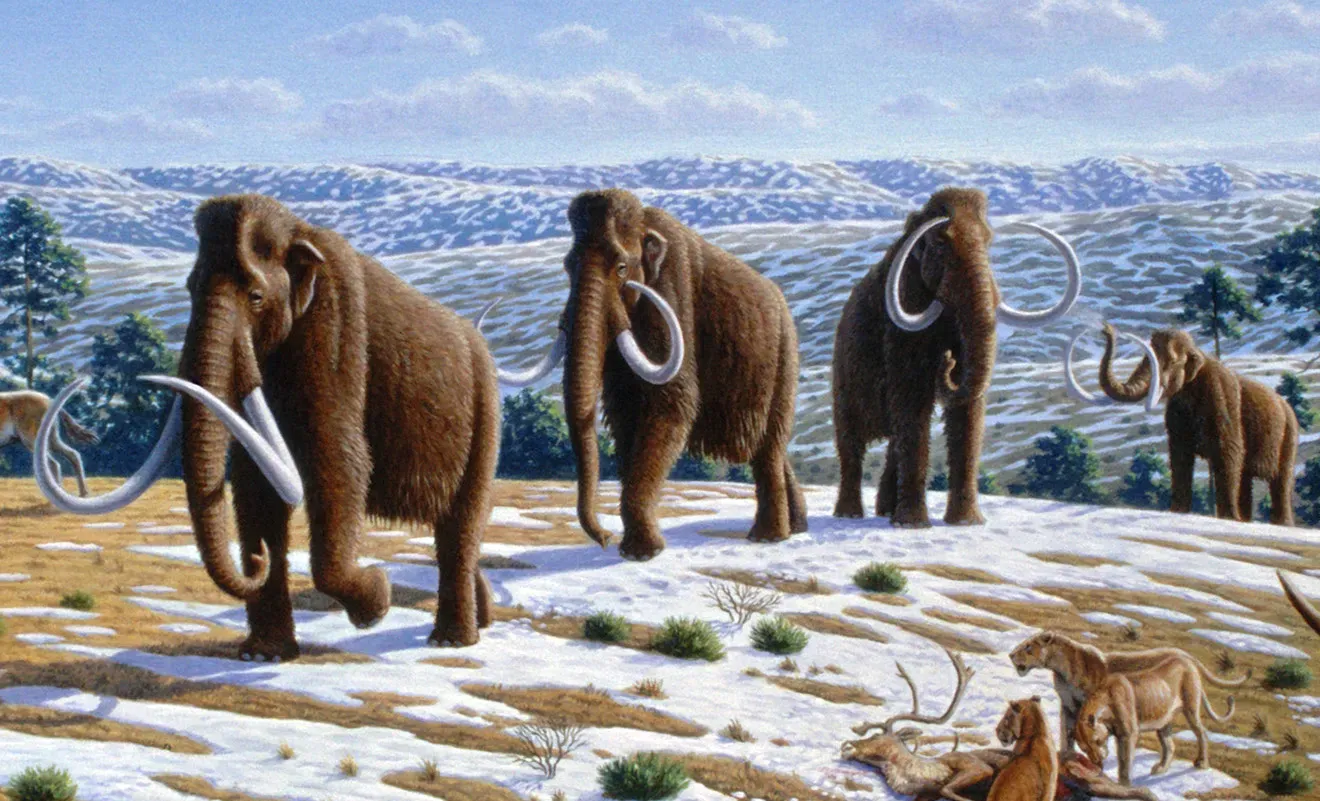
10,000 BC feels like someone took a stack of history flashcards, threw them in the air, and filmed where they landed. It mixes Ice Age hunter‑gatherers with Egyptian‑style pyramids, domesticated animals, and advanced architecture thousands of years before anything like that actually existed. The film suggests that woolly mammoths are being used to haul giant stone blocks for early pyramids, even though mammoths died out in most places long before the famous Egyptian pyramid era began. The result is a visual spectacle glued together with a timeline that simply does not add up.
Beyond the absurd chronology, the portrayal of human culture is a mess. Farming, complex cities, and organized construction projects all evolved gradually over many thousands of years, not as a sudden leap in the late Ice Age. In 10,000 BC, ancient societies from different ages and regions are mashed into one vague fantasy civilization with none of the nuance that makes real archaeology so fascinating. It ends up reinforcing the old myth that prehistory is just a blurry, interchangeable backdrop, rather than a long, detailed story with distinct chapters.
3. The Flintstones (Movies) – Stone Age Suburbia With Zero Sense Of Time
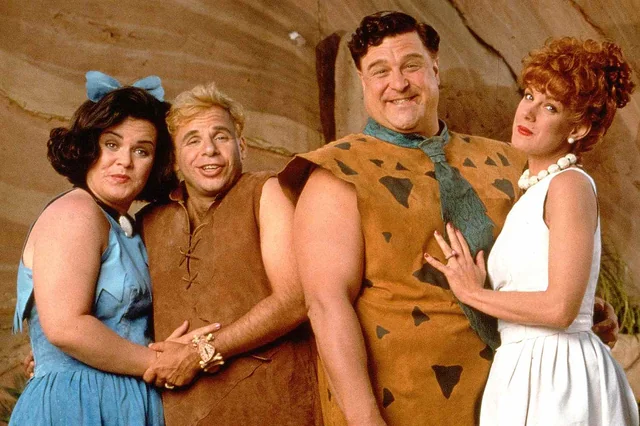
On one hand, The Flintstones is clearly not trying to be a documentary. It is a gag strip turned into live‑action movies, full of sight jokes about dinosaurs as cranes and baby mammoths as vacuum cleaners. But even when a film is obviously comedic, it still shapes how people subconsciously picture “caveman times.” The movies treat all of Earth’s deep history like a single sitcom neighborhood, where humans, dinosaurs, and Ice Age animals all coexist inside a 1950s American lifestyle translated into rock and bone.
From a scientific perspective, the entire premise is impossible. Humans did not live with dinosaurs, stone‑age workers did not have quarries full of brontosaurus-powered appliances, and the idea of a housing subdivision during the Paleolithic is pure fantasy. The cringeworthy part is not that it is silly; it is that it plays into the lazy stereotype that prehistory is just “old stuff all at once.” Instead of using even a little nod to real creatures that did live alongside early humans, the movies lean fully into the dinosaur cliché and flatten millions of years of history into one endless cartoon weekend.
4. The Land That Time Forgot – A Lost World Where Evolution Hits Fast‑Forward
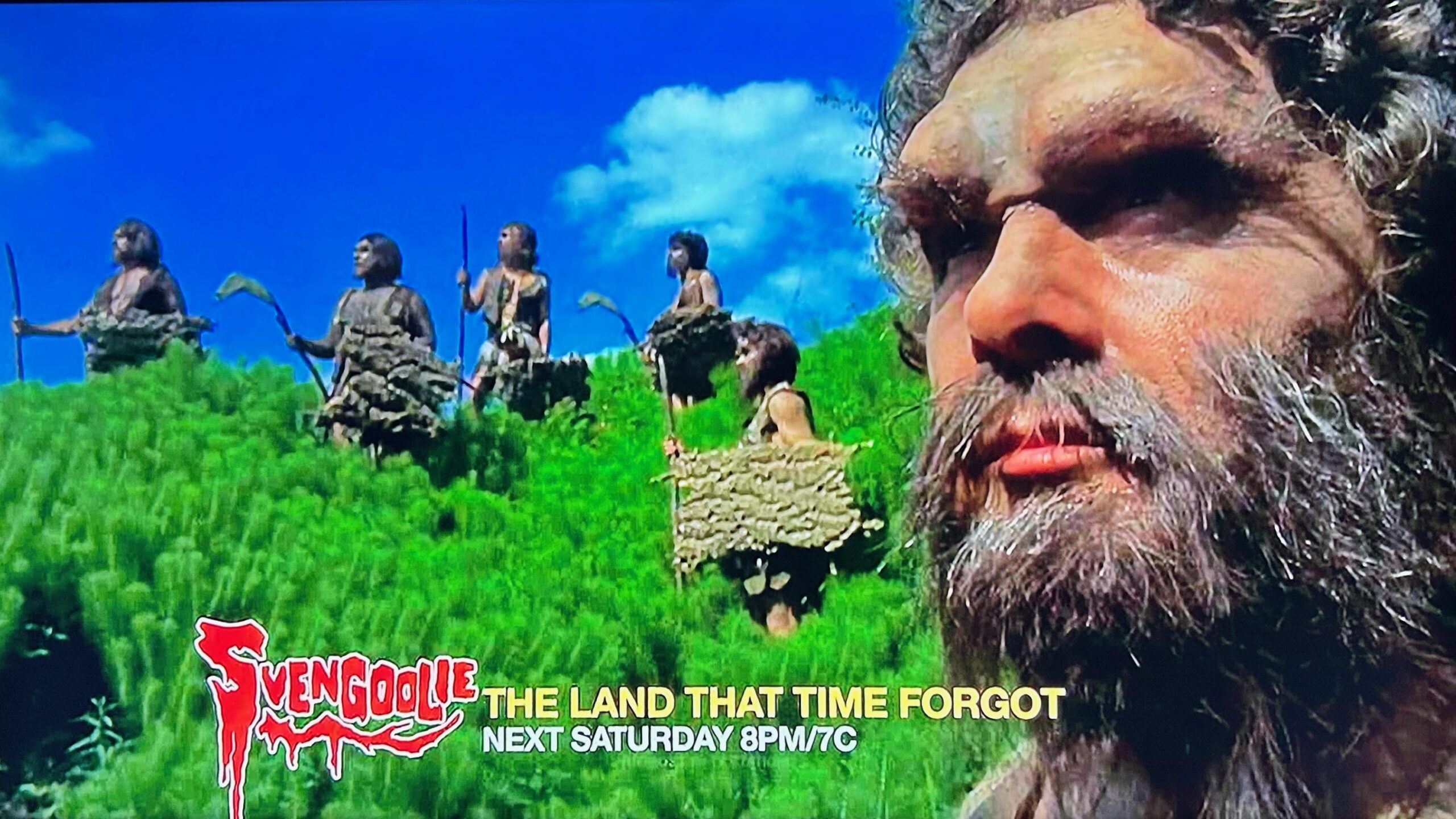
The Land That Time Forgot runs with the classic “lost world” idea: an isolated island where dinosaurs, primitive humans, and all sorts of creatures from different eras somehow survived together. The film takes this further by suggesting that evolution is happening in visible, step‑by‑step stages as you move across the island, as if you are walking through a sped‑up museum timeline. That might be a fun narrative gimmick, but it has nothing to do with how evolution or ecosystems really work. Evolution does not arrange animals in neat, linear zones like a theme park map.
On top of that, the creature mix itself completely ignores the actual fossil record. Dinosaurs from the Mesozoic, Ice Age mammals from the Cenozoic, and vaguely “primitive” humans are simply dropped together to maximize variety rather than accuracy. This creates the illusion that evolution is a ladder with clear rungs, instead of a branching, messy tree spread over hundreds of millions of years. The movie is entertaining pulp, but from a scientific standpoint it encourages some of the most persistent misconceptions about prehistoric life and how species change through time.
5. 100 Million BC – Time Travel, Outdated Dinosaurs, And Zero Ecological Logic
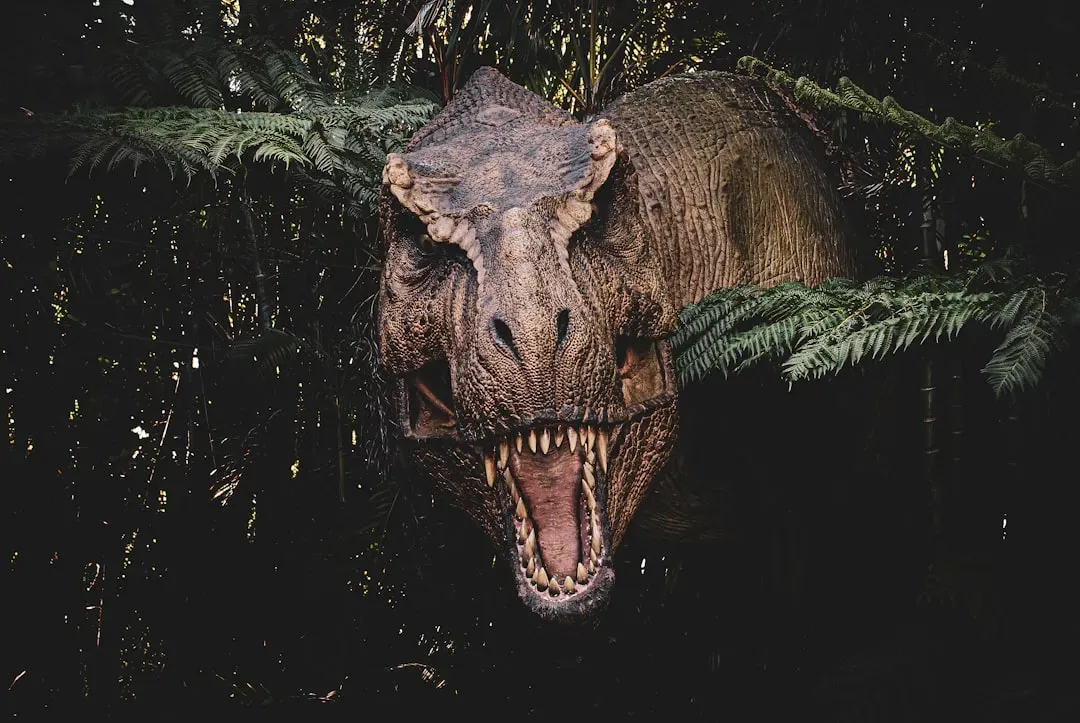
100 Million BC is a lower‑budget time travel movie that sends modern soldiers back to the age of dinosaurs, and it feels like the script’s research stopped at a toy catalog. The creatures are a random grab bag of “dinosaur‑ish” monsters that often look nothing like what scientists currently think those animals looked like. Feathers, accurate limb posture, and realistic movement are mostly ignored in favor of the older, lumbering lizard approach that paleontology has been moving away from for decades. It is like watching a modern movie about spaceflight that still treats rockets as firework sticks.
The ecological setup is no better. The film shows mixed dinosaur species that probably never shared the same time or place, behaving more like movie monsters than animals with actual survival strategies. Predators attack nonstop, as if they have no energy limits or hunting patterns, and herbivores exist mainly to get eaten in dramatic fashion. The cringeworthy part is not that the film invents dangers – time travel is already fantasy – but that it wastes the chance to use what we really know about Mesozoic ecosystems, turning a rich ancient world into a generic monster arena.
6. Dinotopia: The Movie – Charming Concept, Painfully Soft On Science
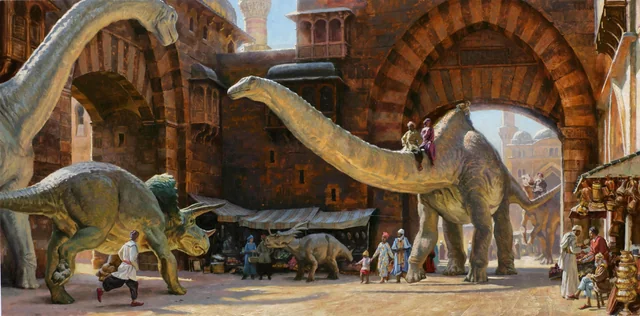
Dinotopia, based on the illustrated books, imagines a utopian island where intelligent dinosaurs and humans live together in a kind of hybrid fantasy society. As pure fantasy, that idea can be charming, and the designs occasionally nod to real species. But the movie leans into talking dinosaurs with advanced culture and architecture while never grappling with the fact that dinosaurs and humans are separated by tens of millions of years. Scientific plausibility is brushed aside completely in favor of a whimsical, almost fairy‑tale setting wearing a thin prehistoric costume.
What makes it land on a list like this is how it blurs the line between speculative evolution and outright magic without acknowledging it. Dinosaurs here are essentially people in scaly bodies, with social roles and moral codes almost identical to human norms. The film never asks what it would mean for a non‑mammalian lineage to evolve intelligence or culture differently; it just copies human civilization and paints it green. It is a missed opportunity to explore real questions about intelligence, evolution, and coexistence, replaced instead by a feel‑good fantasy that only pretends to be prehistoric.
7. Caveman (1981) – Slapstick Humor, Stone Age Stereotypes
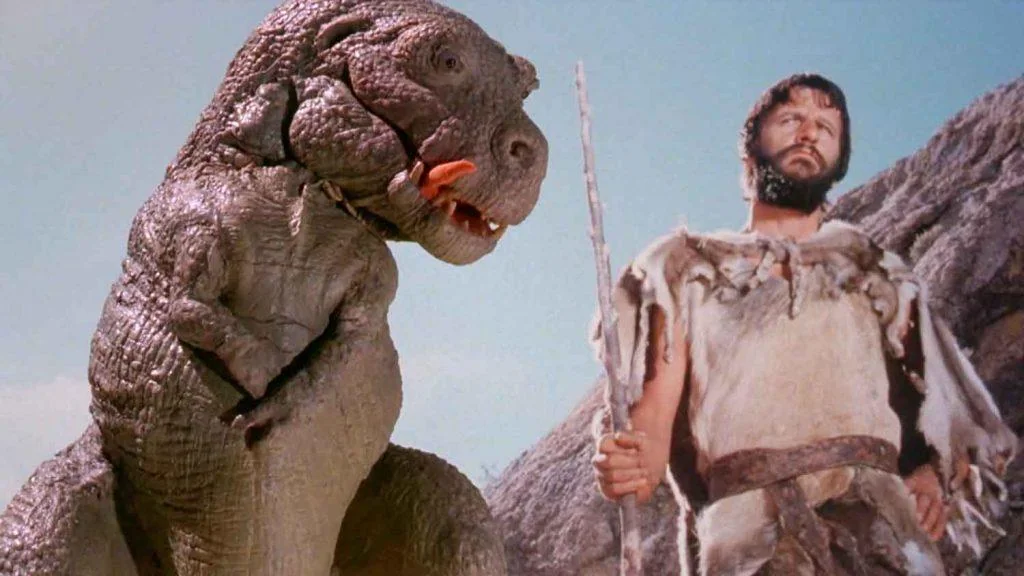
Caveman is a broad comedy with stop‑motion dinosaurs, grunting cave people, and a tone that screams late‑night rerun. While it is clearly meant to be funny rather than factual, it leans heavily on the old image of prehistoric humans as dim‑witted, barely articulate buffoons living in caves, which does not line up with what we know about early human culture. Even very early Homo species used tools, organized group activities, and developed forms of communication far more complex than the movie suggests. Reducing them to clumsy punchlines makes for cheap laughs but reinforces bad stereotypes.
Then there is the dinosaur problem again. Caveman shows humans dealing with big, scaly, tail‑dragging beasts that look like they were ported over from mid‑century monster films, long after paleontologists had begun updating those images. Dinosaurs in the movie act mostly as props in slapstick gags, ignoring details like realistic body posture or behavior that could have made them more interesting without killing the humor. The end result is a film that is sometimes genuinely funny but lands firmly in the “please don’t treat this as history” category.
8. The Croods – Goofy Fun In A World That Never Existed
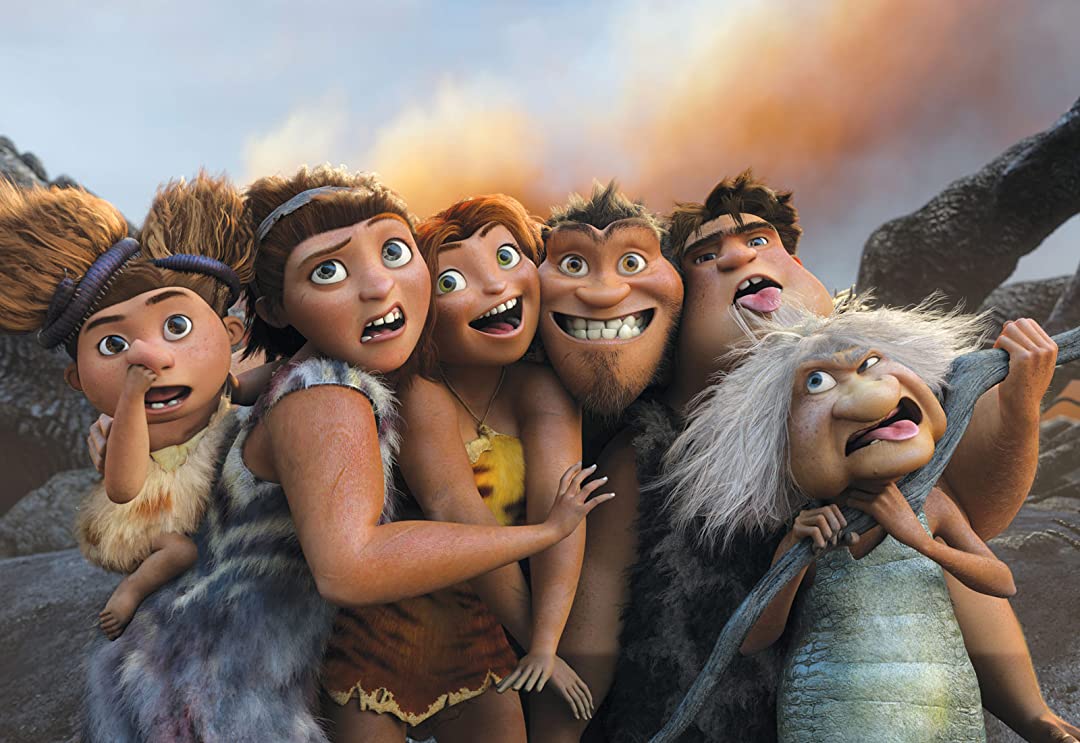
The Croods is a colorful animated film about a prehistoric family trying to survive in a changing world, and to be fair, it never claims to be strict science. Still, it places its cave‑dwelling characters in a surreal mashup environment with imaginary animals and an evolutionary backdrop that makes no sense. You get creatures that are half one species, half another, and a planet that seems to be inventing new life forms overnight. The movie treats prehistory like a fantasy landscape where anything goes, as long as it looks cool on screen.
On the human side, it frames early Homo‑like characters as crude, fearful, and technologically stuck until a conveniently gifted outsider shows up with clever ideas, which oversimplifies how innovation actually evolves in real populations. Real prehistoric people were not waiting around for one special genius to invent everything; they gradually accumulated skills and knowledge over countless generations. The Croods does have heart and humor, but scientifically it reinforces the same old “dumb caveman” myth while populating their world with creatures that belong in a dream sequence, not in Earth’s fossil history.
9. 10,000 BC (Again) And Its Neighbors – The Myth Of The Single “Primitive” Culture
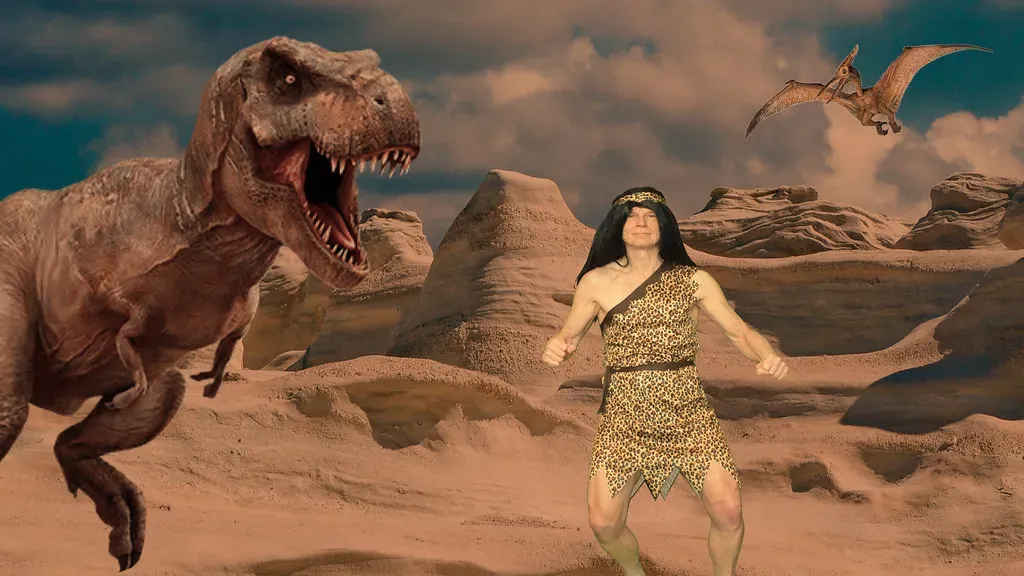
Even beyond its impossible timelines, 10,000 BC and similar films push the idea that ancient humans everywhere were basically the same: fur‑clad, spear‑wielding, and spiritually vague. In reality, prehistoric cultures were incredibly diverse, with different tools, art styles, belief systems, and survival strategies depending on where and when they lived. Treating all early humans as one generic “tribe” erases that complexity, which is honestly one of the best things about studying prehistory in the first place. The past was not a single outfit; it was a whole wardrobe.
Movies in this mold rarely show the subtle but powerful evidence we actually have, like cave art, funerary practices, or carefully crafted tools that reveal planning and creativity. Instead, they rely on dramatic sacrifices, mystical prophecies, and cartoon villain overlords that could be dropped into any fantasy franchise. It is cringeworthy not because fantasy is bad, but because the real story of early humans is already gripping without needing that much distortion. By flattening everything into “primitive people versus hardship,” these films waste a chance to show audiences how rich and varied our deep past really was.
10. Planet Of Dinosaurs – A Budget Disaster Stuck In Old Dinosaur Myths
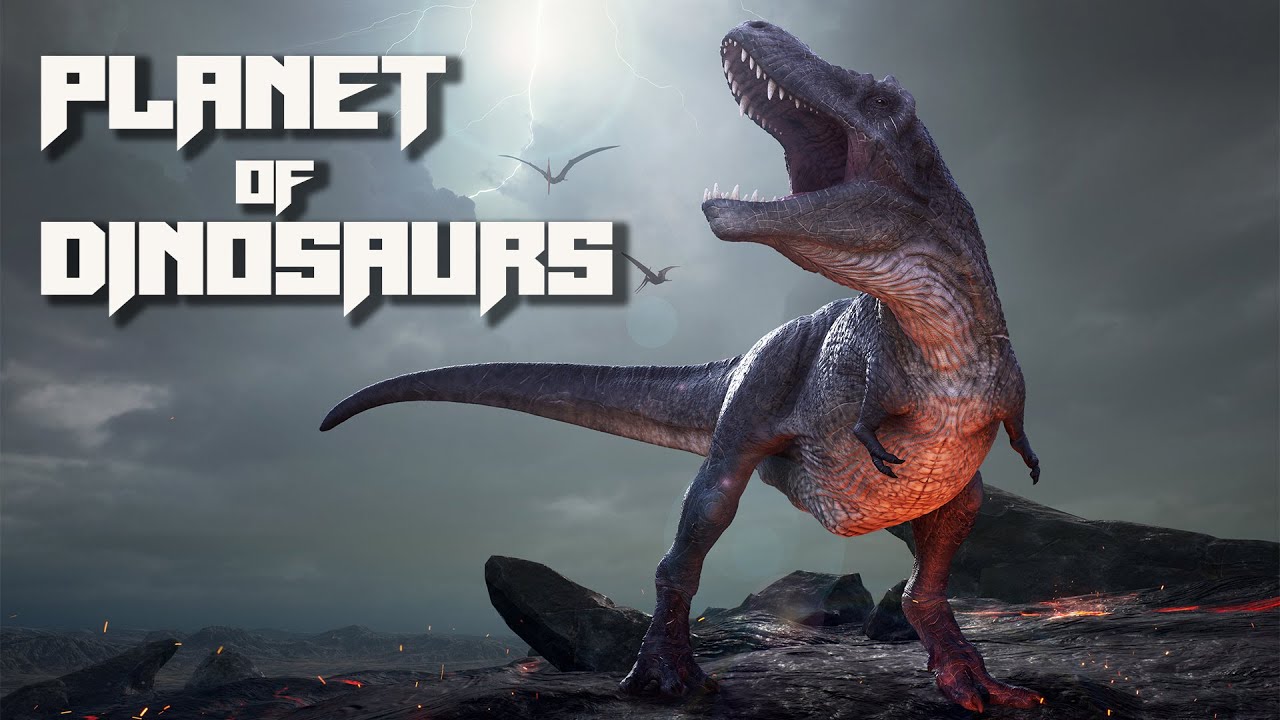
Planet Of Dinosaurs strands a group of humans on a distant world populated by dinosaur‑like creatures, and while the premise is science fiction, the film still drags in outdated ideas from older dinosaur movies. The creatures move like stiff, tail‑dragging reptiles, with little hint of the more dynamic, bird‑like behavior supported by modern research. Everything about them screams mid‑twentieth‑century illustration rather than the more accurate, agile, often feathered reconstructions that scientists argue for today. It is as if the film was already behind the times when it was made.
The humans, meanwhile, treat the planet like a prehistoric safari park where every beast is a constant threat and ecosystems are barely there. There is little sense of how real animals balance risk, conserve energy, or interact with their environment in complex ways. Instead, you get near‑continuous chase scenes and attacks with no ecological logic. The cringe factor comes from watching a concept that could have blended speculative science and adventure end up recycling the same old dinosaur tropes, missing the chance to show what a genuinely alien but scientifically inspired world might look like.
Conclusion: When Prehistory Becomes Just A Costume
Looking across these movies, a pattern jumps out: Hollywood often treats prehistory less as a real chapter of Earth’s story and more as a loose costume it can throw over any fantasy it wants to tell. Humans are simplified into “cavemen,” dinosaurs are turned into generic monsters, and millions of years of evolutionary change are squeezed into one messy, impossible moment. As someone who loves both movies and science, I find that frustrating because the true prehistoric record is far more surprising and dramatic than most of these scripts bother to explore. You do not need mammoths building pyramids when the reality of how humans actually built the first cities is already mind‑blowing.
That does not mean we should demand every film be a textbook; popcorn entertainment has its place, and many of these titles are fun in their own chaotic way. But when the same errors keep repeating – dinosaurs with humans, “dumb” early people, timelines shredded beyond recognition – it stops being harmless and starts shaping how generations imagine the deep past. The good news is that modern filmmakers have access to better research and more open‑minded audiences than ever. The real question now is simple: will they keep recycling the old myths, or finally make prehistoric movies that are just as exciting as these, but grounded in the astonishing story the fossils are already telling us?