
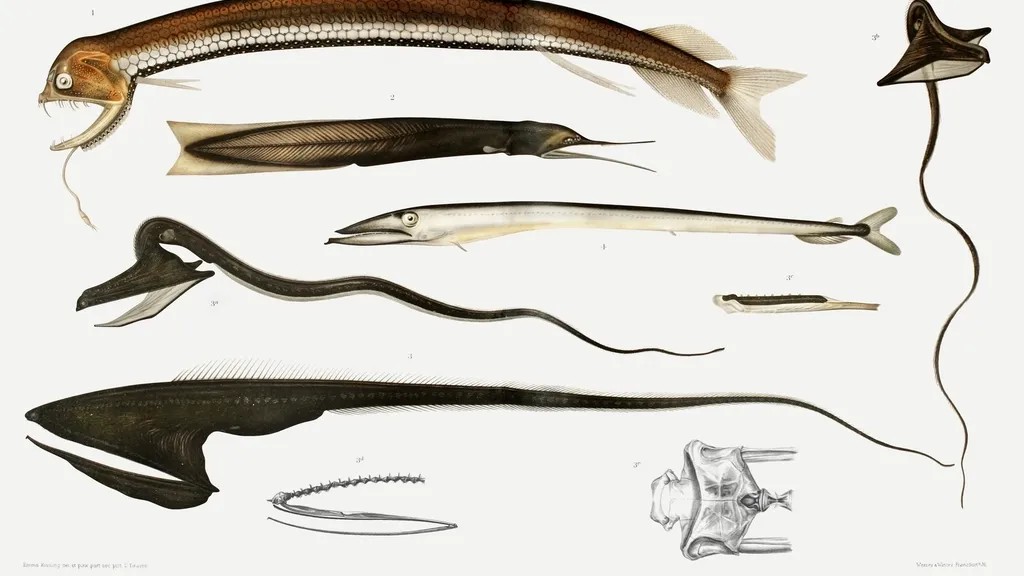
If you grew up thinking sharks were the scariest things in the sea, the ocean’s twilight zone is about to rewrite your nightmares. Far below the bright, blue surface, in a band of dim, eternal dusk, live creatures that look less like animals and more like rejected designs from a science fiction movie. They are real, very much alive, and many of them haven’t changed much in millions of years.
Scientists call this region the mesopelagic, but the name that really fits is something closer to a haunted attic of evolution. Light barely reaches this world, pressure grows brutal, and yet it holds one of the largest concentrations of animal life on Earth. From transparent vampires to fish with headlights growing from their heads, these prehistoric looking monsters quietly rule a realm most of us will never see – and honestly, that feels both comforting and weirdly disappointing.
The Twilight Zone: A Narrow Band Of Endless Dusk
The ocean’s twilight zone sits roughly between about two hundred meters and one thousand meters below the surface, where sunlight fades from weak blue glows into near total darkness. It is not bright enough for plants to grow, but not quite pitch black either – more like permanent late evening, the kind where shapes blur and shadows might be something watching you back. Temperatures drop sharply, and the pressure climbs to dozens of times what your body experiences at sea level, a slow, squeezing reminder that this realm does not welcome human bodies.
Because food is scarce here, everything that survives in this strip of water has to be shockingly efficient or seriously weird – often both. Many animals migrate up and down through these depths every single day, following the thin rain of dead plankton and microscopic particles that sink from above. Imagine the largest daily wildlife commute on the planet, happening silently in the dark, while we are busy scrolling through social media. This is the stage where the monsters of the mesopelagic have evolved some of their strangest tricks just to eat, avoid being eaten, and hang on for one more day.
Bioluminescent Beacons: When The Monsters Make Their Own Light
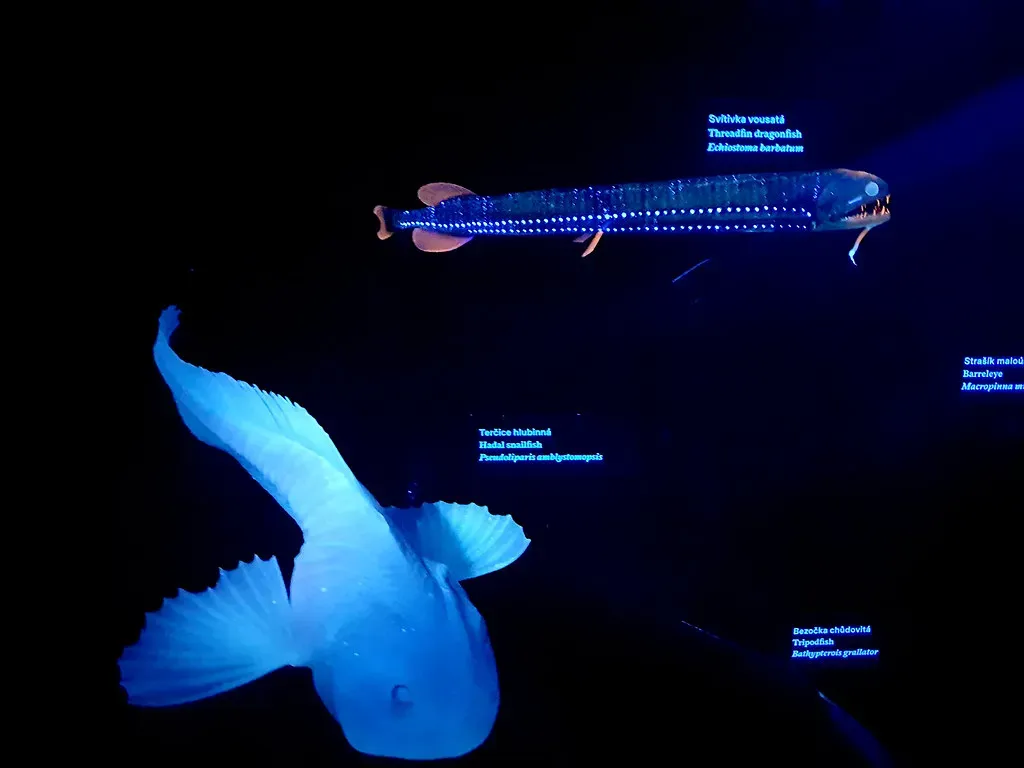
One of the most shocking things about twilight zone life is how many animals there can literally light themselves up. Bioluminescence – light produced by chemical reactions in the body – is incredibly common here, used like headlights, flash grenades, tracking beacons, and camouflage all rolled into one. Some fish carry rows of tiny glowing organs along their bodies, like a string of fairy lights that can help them hide by matching the faint glow from the surface above, making their outline vanish from a predator’s view below.
Others use light as a lure, hanging glowing bait from modified fins or jaw extensions in front of their mouths to attract curious prey straight into a waiting trap. There are shrimp that spit clouds of glowing fluid to confuse or distract attackers, and jellylike creatures that flash in sudden bursts that feel almost like a silent alarm system. Standing back from it all, it really does feel like a strange, neon-lit city where the street lamps, security systems, and billboards all evolved out of hunger and fear. If anything in nature proves that darkness does not mean emptiness, it is this glowing, ghostly world.
Anglerfish: The Living Lanterns Of The Deep
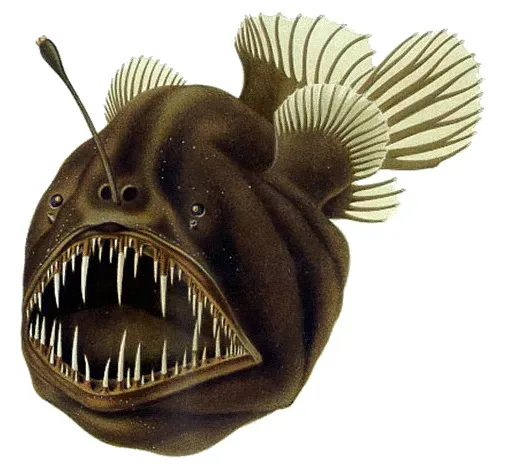
Few twilight zone monsters are as instantly recognizable as the anglerfish, the nightmare icon with a lantern dangling over a mouth full of jagged, inward-curving teeth. These fish look like somebody gave a toddler a ball of clay and said, “Make something terrifying,” and then never edited it for practicality. Their bodies are often short and bulbous, with enormous heads and jaws that can swing open wide enough to swallow prey nearly as big as they are, helped by stretchy skin and expandable stomachs.
The famous “fishing rod” on their heads is actually a modified dorsal spine tipped with a glowing lure, powered by bioluminescent bacteria. In the almost total darkness, that tiny light can be the difference between starvation and survival, pulling in smaller fish, crustaceans, or anything unlucky enough to take a closer look. Perhaps the wildest part is how different males and females can be; in many anglerfish species, the females are huge, terrifying lantern-bearers, while the males are tiny, simplified, and focused almost entirely on finding a mate. It is hard not to look at them and feel as if evolution took a perfectly normal fish and then dialed up the weirdness until the knob snapped off.
Vampire Squid: The Cloaked Relic Of The Deep Past
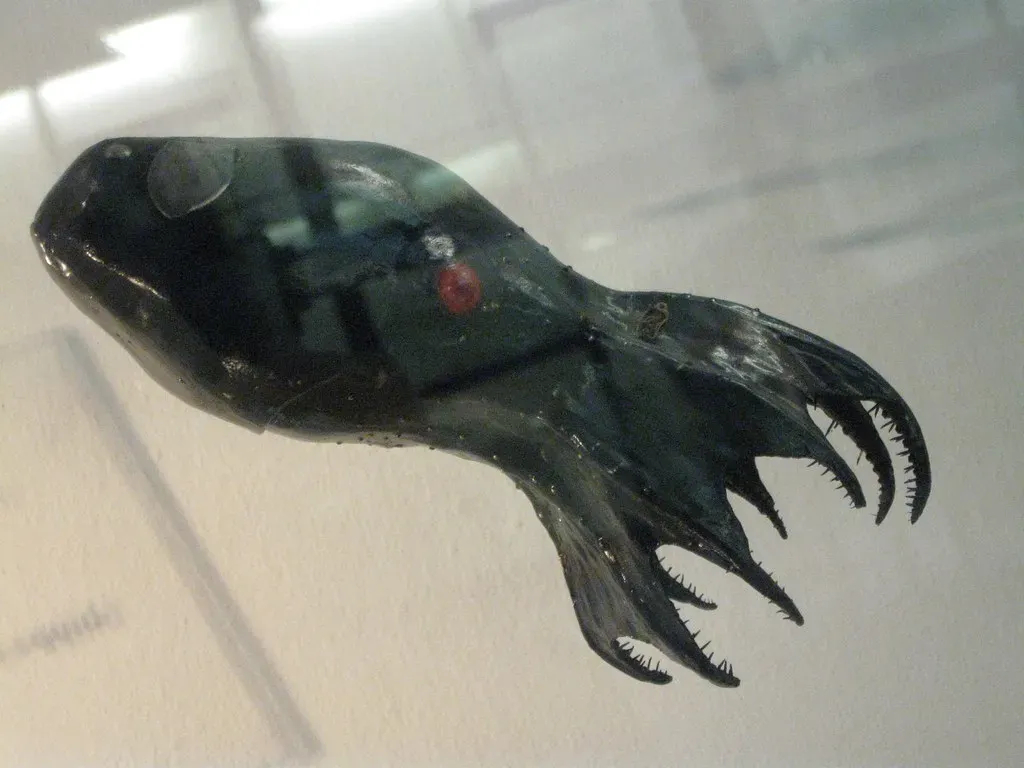
Despite its name, the vampire squid is not a bloodsucker, but it certainly looks like one designed for a gothic comic book. Its dark, reddish skin, large blue eyes, and spooky webbing that connects its arms like a cape give it a dramatic, almost theatrical presence in the twilight gloom. When threatened, it can turn itself inside out in a move called the “pumpkin” or “umbrella” pose, pulling its arms over its body and revealing rows of soft, spine-like structures that make it look larger and more menacing.
What really sets the vampire squid apart is how ancient and specialized it is. It belongs to a lineage that split off from other squids and octopuses a very long time ago, and it survives not by chasing fast prey but by gently collecting marine snow – the tiny flakes of dead plankton and organic debris drifting down from the bright surface waters. With low-energy lifestyles and gas-filled internal structures that help them float, they seem less like active predators and more like patient, drifting caretakers of the dark ocean. To me, they feel like the quiet, slightly spooky librarians of the twilight zone, preserving an old evolutionary story that almost everything else has left behind.
Gulper Eels: Stretch-Mouthed Shadows With Ballooning Throats
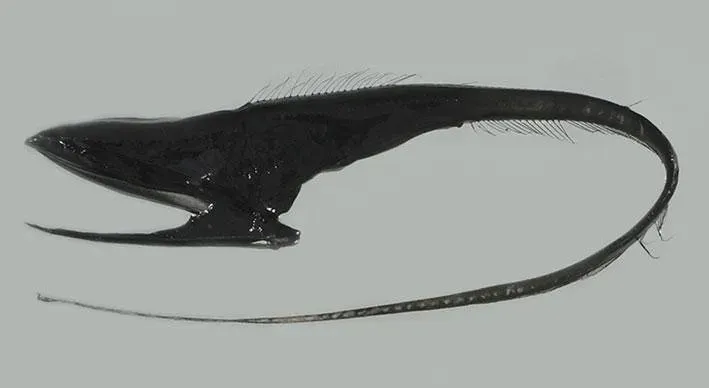
Gulper eels look as if someone took a regular eel and then blew up its head and mouth to cartoonish proportions while leaving the body as a thin trailing string. Their lower jaws and throat can balloon outward like a huge dark sack, allowing them to swallow prey of all sorts of shapes and sizes in one sudden gulp. In a world where meals can be rare and unpredictable, having a mouth that big is like carrying a collapsible grocery cart that can handle whatever shows up.
Many gulper eels also carry a bioluminescent organ at the end of their tail, which can glow or flicker to attract curious animals in the darkness behind them. Instead of actively chasing everything down, they can hang almost motionless in the water and let their weird silhouette and faint light do the work. The combination of tiny, almost delicate body and enormous, flexible head gives these fish a very alien, almost puppet-like appearance. Seeing footage of a gulper eel unfurling its mouth is one of those moments where you instinctively think, “There is absolutely no way that thing is real,” and then have to sit with the unsettling fact that it very much is.
Dragonfish And Viperfish: Needle-Toothed Hunters With Invisible Weapons
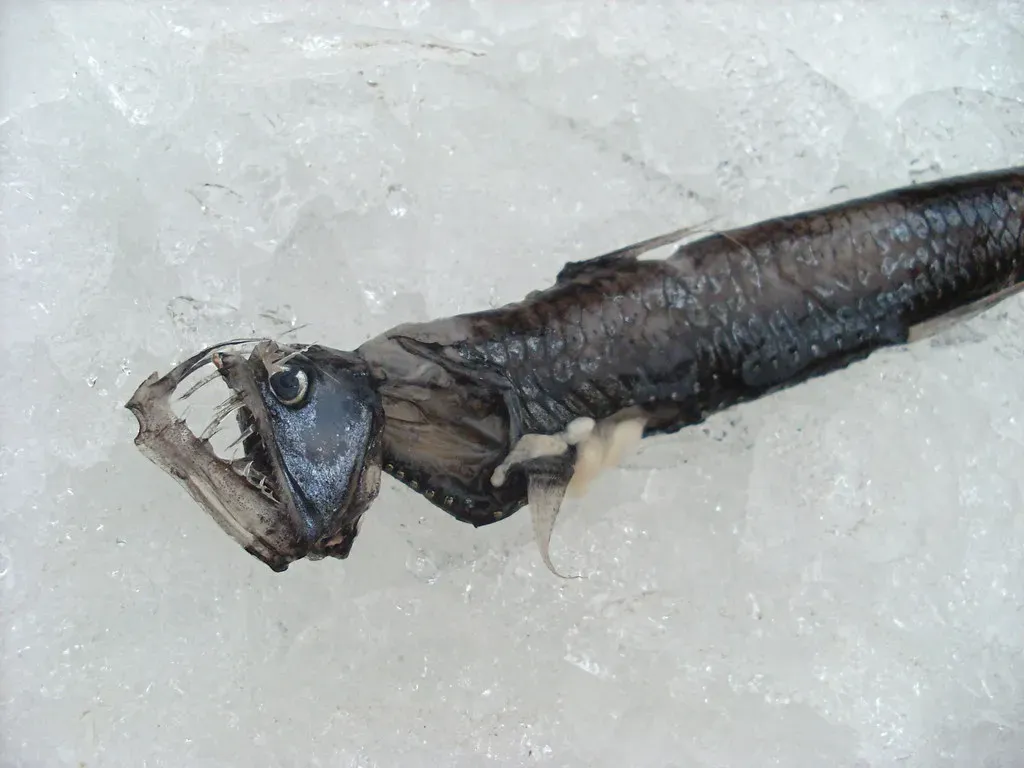
Deep-sea dragonfish and viperfish take the classic image of a fanged predator and strip it down to its purest form: long bodies, massive jaws, and thin, needle-like teeth that sometimes curve outside the mouth even when it is closed. These teeth are so fine and transparent that they can be nearly invisible in the faint blue light that filters down from above, giving their prey almost no visual warning. Some species of dragonfish can even produce red light, a color that most twilight zone animals cannot see, essentially giving them a private wavelength flashlight to spot targets without revealing themselves.
Like anglerfish, many dragonfish carry luminous lures or glowing patches along their bodies that they can control and pattern. This turns their bodies into flexible, living billboards: sometimes used to attract dinner, sometimes used to confuse predators, and sometimes used as a kind of species-specific signature. These animals are not huge by human standards, but their appearance is so vicious that size feels like a side note. If sharks are the wolves of the upper ocean, then dragonfish and viperfish are like sleek, bone-toothed assassins lurking in the alleyways of the twilight zone.
Hatchetfish, Lanternfish And The Masters Of Stealth
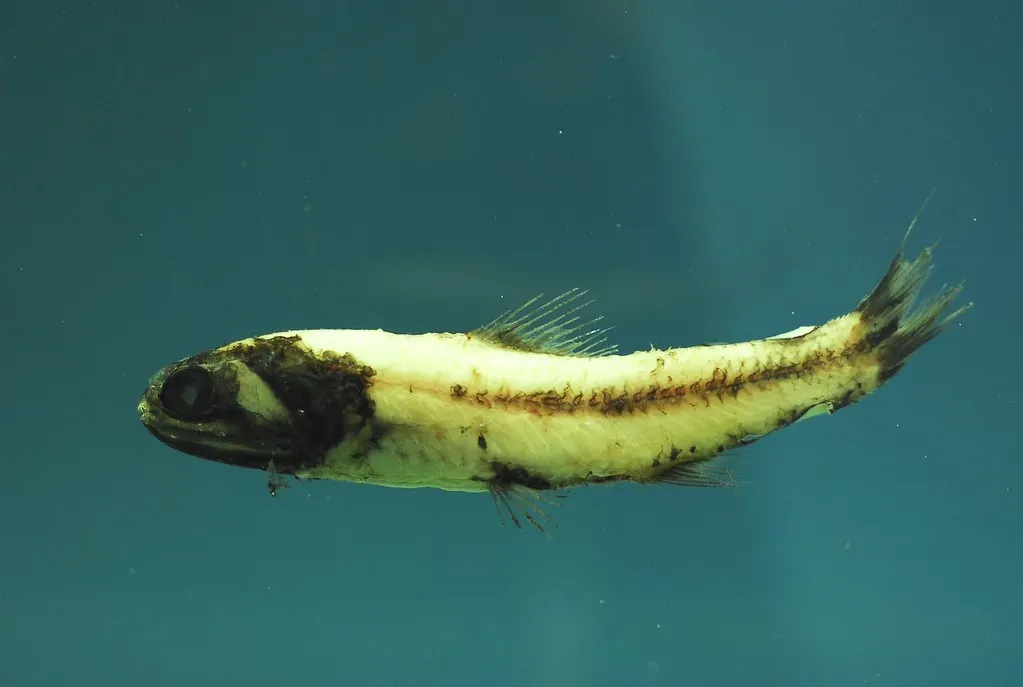
Not every monster in the twilight zone is big and obviously terrifying; some are frightening because of how perfectly adapted and almost invisible they are. Hatchetfish, with their flattened, shiny bodies, look like floating silver blades, and they use this shape along with bioluminescent organs on their undersides to virtually disappear when seen from below. By matching the faint light filtering down, they blur the boundary between their own bodies and the background, making it much harder for predators to pick them out against the dim surface glow.
Lanternfish, on the other hand, might be some of the most important animals on the planet that most people have never heard of. They are small, abundant, and covered in rows of tiny light organs that form species-specific patterns along their sides and bellies. Every evening, many lanternfish migrate upward toward shallower waters to feed, then descend again before dawn, forming part of the largest routine movement of biomass on Earth. They may not look as dramatic as an anglerfish or a gulper eel, but in terms of shaping ecosystems and cycling carbon, these understated creatures might quietly out-monster them all.
Ancient Survivors In A Modern Ocean: Why These Creatures Matter
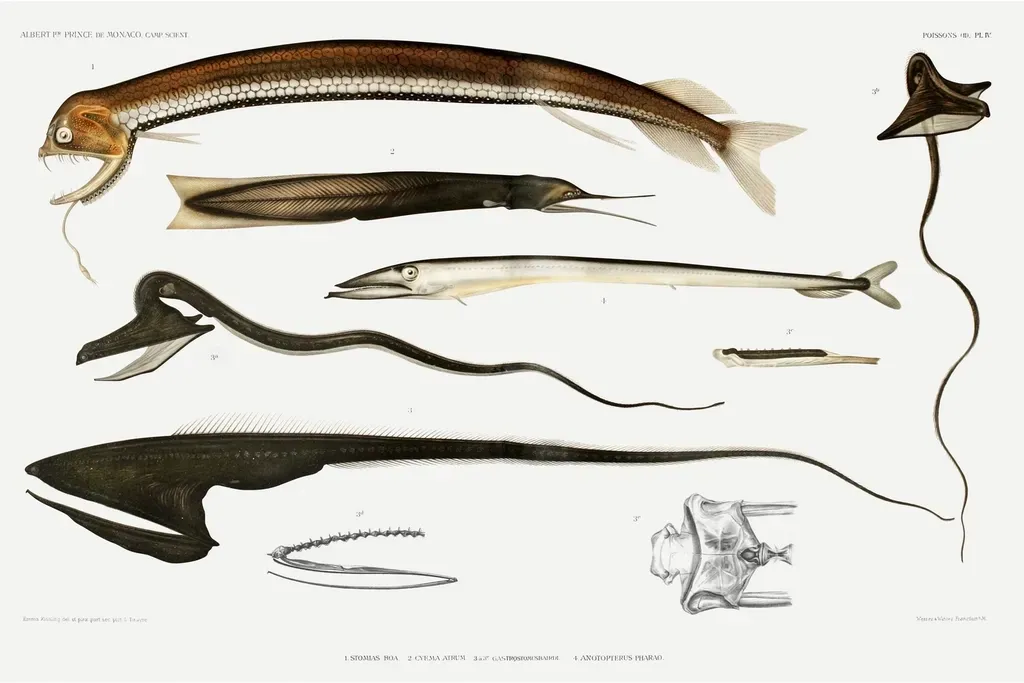
Many twilight zone animals look prehistoric not just because they are strange, but because parts of their basic body plans have changed relatively slowly over huge spans of time. When scientists compare fossils and genetic data, they often find that these lineages have been haunting the deep for far longer than most familiar surface species have existed. In a sense, these creatures are not just bizarre neighbors; they are living records of ancient evolutionary experiments that turned out to work so well, they never needed a major redesign.
At the same time, the twilight zone is not some untouched, timeless sanctuary. Fishing fleets are starting to explore these depths for new resources, and there is growing interest in targeting the enormous schools of small fish that live here, particularly for things like animal feed and supplements. We barely understand how this zone fits into global climate regulation, carbon storage, or long-term ocean health, and yet we are already nudging at its edges with nets and technology. To me, there is something deeply unsettling about that mismatch: a human impulse to harvest first and ask questions later, even in a realm we still mostly know through grainy videos and grainier guesses.
Conclusion: The Monsters We Ignore At Our Own Risk
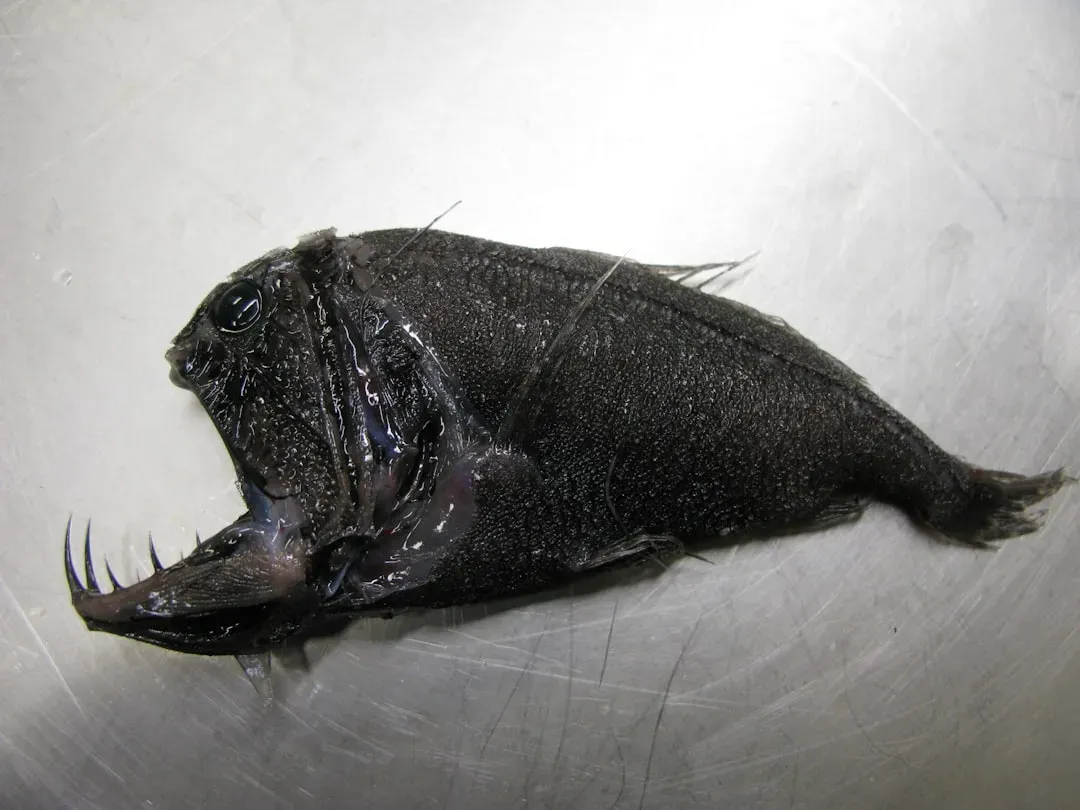
When you really sit with what lives in the ocean’s twilight zone, it is hard not to feel a mix of awe, discomfort, and a strange kind of affection. These animals look monstrous to us because they were shaped by rules we rarely experience: crushing pressure, darkness, scarcity, and a constant tightrope walk between starvation and being eaten. Yet each needle tooth, glowing lure, and inflatable throat is a solution that works, and has often worked for far longer than our own species has been around. In their own eerie way, they are success stories, not mistakes.
My personal opinion is that calling them monsters says more about us than it does about them. We label what scares or confuses us instead of admitting that we simply do not understand it yet, especially when it hides out of sight. The twilight zone is not a horror movie basement waiting to be cleared out; it is a vital, complex engine of the planet that we are only just beginning to map, let alone respect. Before we trawl it, mine it, or treat it like another pantry to raid, we should probably ask ourselves a blunt question: if we cannot even name most of the creatures living there, what gives us the confidence to decide their fate?