There is something strangely thrilling about the idea that, somewhere above the treeline, a massive, shaggy figure could be watching us from the snow. For more than a century, climbers, soldiers, monks, and trekkers have come back from the Himalayas and nearby ranges with stories they insist are real: colossal footprints in fresh powder, eerie calls in the night, and glimpses of an upright shape moving where no person should be. Modern science keeps shrugging and asking for better evidence, yet the reports keep coming, stubborn and oddly consistent across time and culture.
In 2026, we can decode genomes, photograph black holes, and send robots to Mars, but we still cannot quite put the yeti legend to bed. The most credible sightings are a messy mix of eyewitness emotion, partial physical traces, and later scientific debunking, and that tension is exactly what makes them so fascinating. When you look closely, you do not just get a monster story; you get a window into how humans handle the unknown. Let us walk through five of the most famous cases and see where solid ground ends and the snow – and speculation – begin.
1. Eric Shipton’s 1951 Everest footprints: the modern yeti visual that started it all
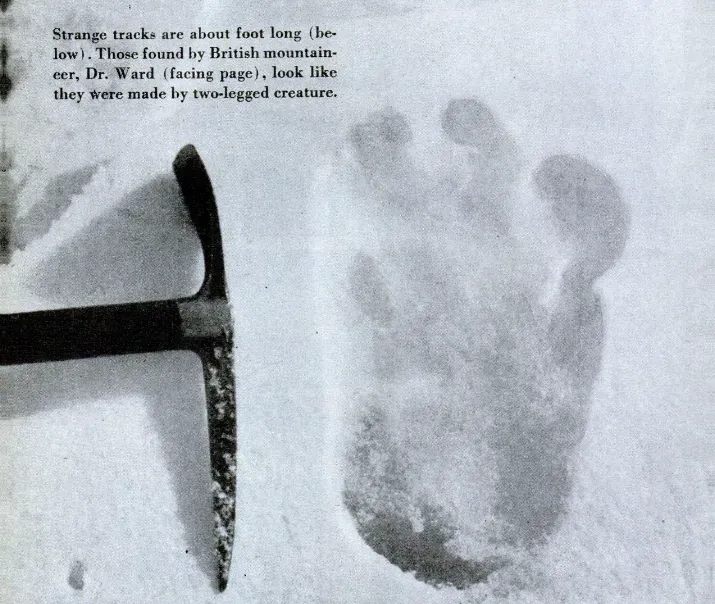
If there is a single image that burned the yeti into the modern imagination, it is the photograph British mountaineer Eric Shipton took in 1951 on the Menlung Glacier near Everest. Shipton and his team came across a line of enormous, humanlike footprints spaced out as if made by a biped striding confidently across the snow. One of the photos shows a climber’s boot next to a single print, and the print looks disturbingly large, with clear toes and what seems like a defined heel, captured in crisp Himalayan light. It was exactly the kind of picture that makes your rational brain protest while your gut whispers that something is not right.
For decades afterward, this footprint trail was held up as the most tantalizing piece of physical evidence for a yeti, reprinted in books and documentaries and pinned to the walls of believers’ clubs. Skeptical explanations later pointed to melting snow distorting smaller tracks, or a known animal like a bear stepping in its own prints, stretching and reshaping the impressions as the sun worked on the surface. Personally, when I look at that image, it hits the same part of my brain as those deep-sea photos of unknown shapes drifting beyond the light: you know there is a likely mundane answer, but the sheer strangeness of the sight keeps nagging at you anyway.
2. The 1953 Everest expedition: climbers’ quiet encounters in the “death zone”
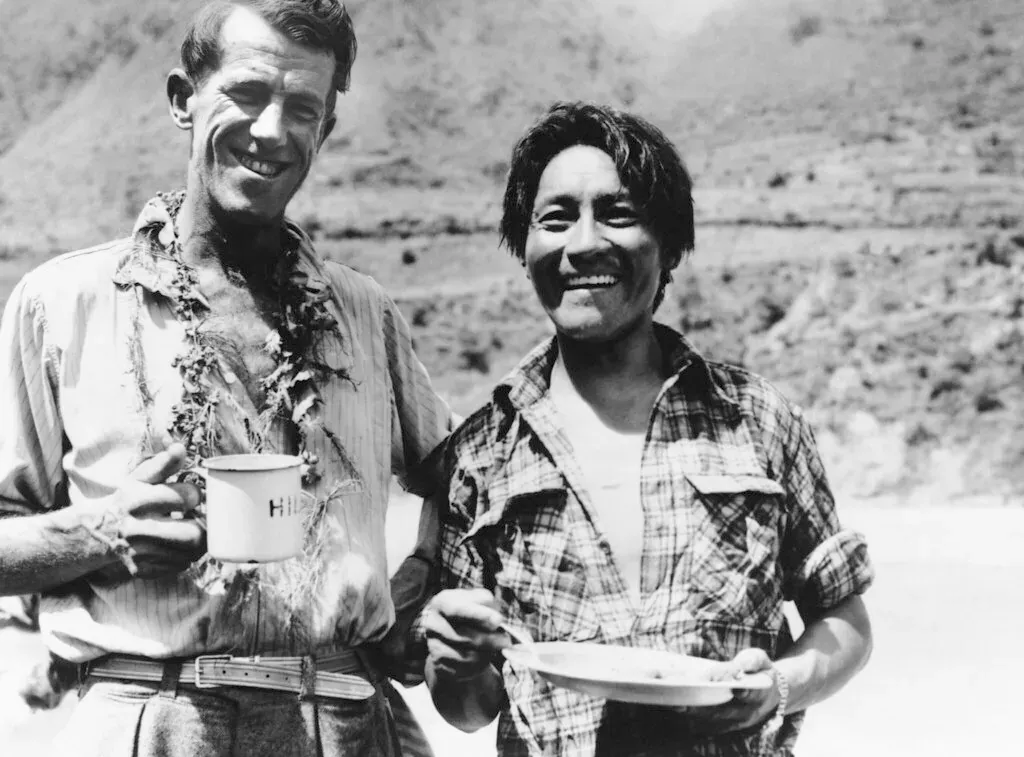
Just two years after Shipton’s photos, the 1953 British expedition that eventually put Edmund Hillary and Tenzing Norgay on the summit of Everest added more fuel to the yeti fire. Members of the team reported seeing large footprints at high altitude, again in remote snowfields that few humans had ever crossed. Tenzing himself had grown up with Sherpa stories of the “metoh-kangmi,” often translated as “man-bear-snow creature,” and he reportedly took the traces seriously enough to talk about them in interviews, while still stopping short of calling them definitive proof. These were not casual tourists but hardened mountaineers, used to reading snow and ice like a book.
Critics have often pointed out that extreme altitude, exhaustion, and low oxygen can play tricks on perception, especially when people are already primed by local legends. That argument makes sense, and I think it explains some of the more dramatic tales that came out of mid‑twentieth‑century Himalayan expeditions. Still, the consistent pattern is hard to ignore: independent teams, over several years, kept noticing large, upright-looking tracks at similar elevations in similar regions. Even if you lean fully skeptical, you are left with an interesting puzzle about how our expectations, the brutal environment, and real animal behavior combine into stories that feel absolutely real to the people who tell them.
3. The Pangboche “yeti scalp” and “hand”: sacred relics meet modern science
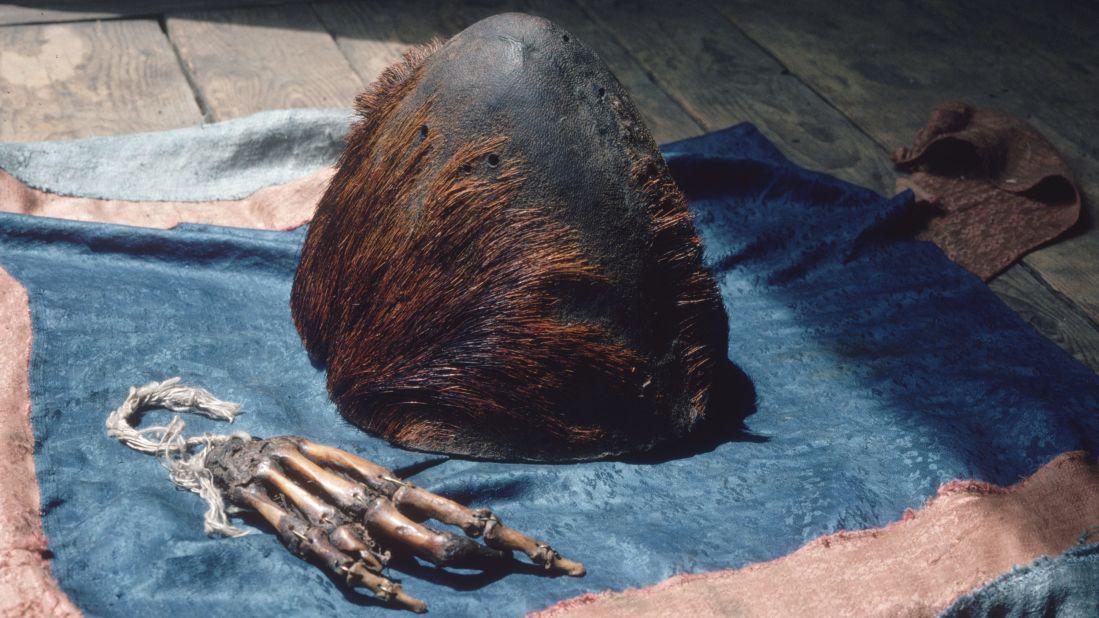
One of the strangest chapters in yeti lore played out not on a windswept ridge, but inside a monastery. In Pangboche, a village in Nepal, monks long displayed a so‑called yeti scalp and a hand as sacred relics, showing them to visiting climbers and trekkers. The scalp looked like a dark, dome‑shaped cap of hide covered in thick hair, and for many visitors it felt like the missing link between legend and reality. For years, these relics were presented as tangible proof that someone had once killed or at least encountered a real creature, not just footprints melting in the sun.
Eventually, however, scientists were allowed to examine samples from the relics, and the findings were far less dramatic than the stories. Analyses over time pointed toward known animals, such as the serow (a goat‑like mammal) and possibly other livestock, with nothing indicating an unknown primate. On top of that, parts of the “hand” were lost or stolen, and copies and replacements muddied the story even further, turning the whole saga into a chain of misunderstandings, souvenirs, and wishful thinking. To me, the Pangboche relics show how deeply the yeti idea is woven into local culture: even when the biology does not back it up, the objects still carry emotional and spiritual weight for people who live in those valleys.
4. The 2011–2017 DNA studies: when “yeti hair” turned into bears

In the twenty‑first century, the mystery shifted from grainy photos and battered relics to test tubes and sequencers. Several research teams collected alleged yeti hairs, bones, and other samples from across the Himalayas and Central Asia, then ran them through genetic analysis to see what they really came from. A high‑profile study published in the mid‑2010s found that most of the so‑called yeti samples matched local animals like bears, wolves, and other common mammals once their DNA was compared to known databases. For a moment, one or two samples seemed to match an unusual bear lineage, which got briefly hyped as evidence of a mysterious hybrid or unknown species, but later work suggested they still fit within known bear variation.
From a scientific perspective, these results were exactly what a cautious biologist would expect: unusual hair in a remote, cold, bear‑rich region mostly belongs to, well, bears. It is a bit like checking every creak in an old house for ghosts and consistently finding bad plumbing instead. As a fan of mysteries, I find these studies oddly satisfying; they show the tools of modern genetics calmly stripping away layers of myth, while also revealing fascinating details about how brown bears and other large animals adapted to high mountains. At the same time, the tests only cover the samples that people bothered to collect and submit, so hardcore believers argue that the “real” yeti remains unsampled somewhere out there. That may be a stretch, but it highlights how, for some, no amount of ordinary explanations will ever fully close the case.
5. Recent trekkers, soldiers, and social media “yeti” footprints in the snow
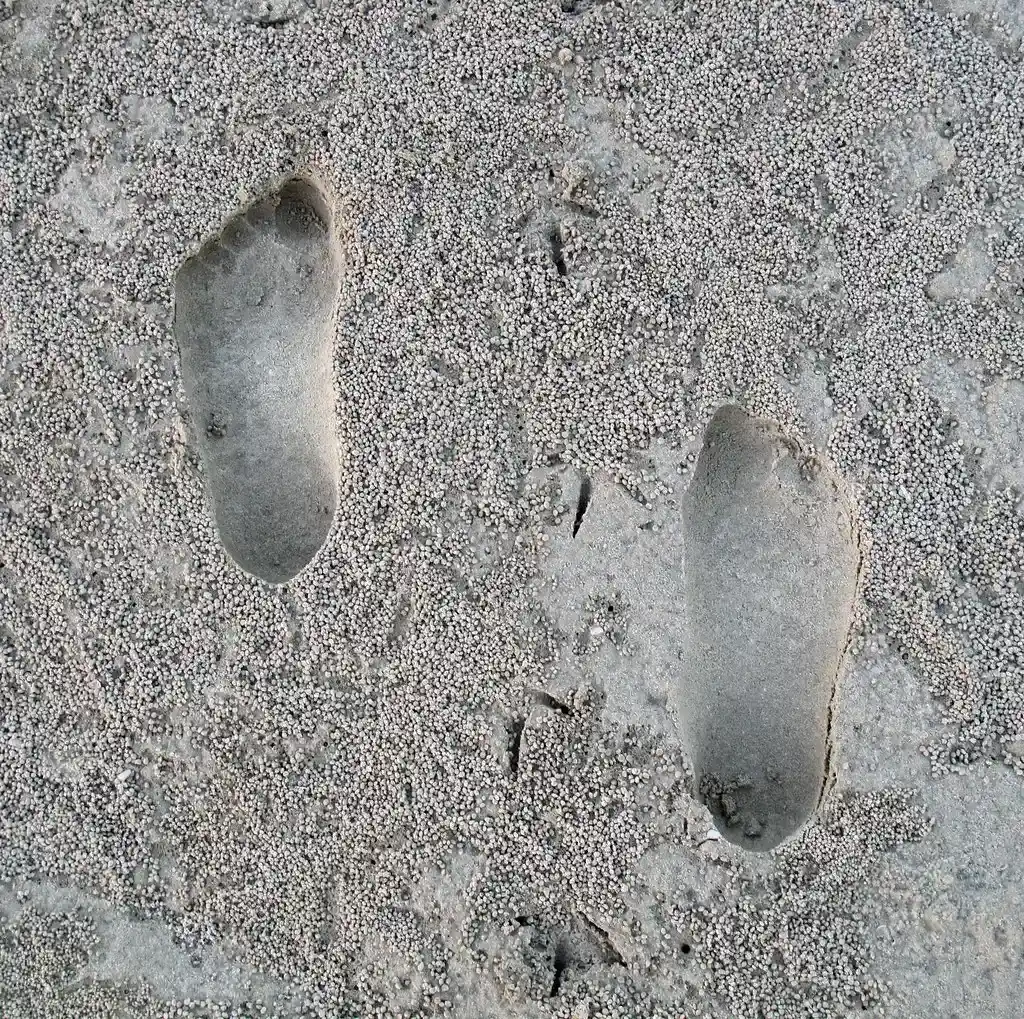
Even in the 2010s and 2020s, reports of yeti‑like footprints keep popping up, especially when cameras and social media are close at hand. In one widely shared case, a military unit in the Himalayas released photos of a single line of large, spaced‑out tracks marching across a snowy field, claiming they belonged to a mysterious “mythical beast.” The images went viral, with people arguing in the comments about scale, gait, and whether the pattern looked more like a person stepping in old tracks or a bear’s hind feet landing in front of its forefeet. It was like watching a global campfire story unfold in real time, with skeptics and believers trading theories instead of ghost stories.
More recently, trekkers and guides still report strange tracks at high altitudes, and every few years a new photo set does the rounds, usually accompanied by breathless headlines and then more sober follow‑up analyses suggesting misidentified animal prints. When you learn how bears can walk partly upright, or how melting and refreezing snow can enlarge and reshape normal tracks into weird, elongated impressions, a lot of these images suddenly look far less paranormal. My own take is that most modern “evidence” is best seen as a mirror for our hopes and fears: in an age where we are mapping almost everything, people really want there to be at least one big secret left in the wild. Whether those tracks are made by a rare bear, an odd stride, or simple misperception, the feeling they trigger – that the world might still hold a hidden giant – is very real.
Conclusion: a legend between snow and science
When you line up the most famous , a clear pattern emerges: strong emotions and vivid stories on one side, and increasingly mundane explanations on the other. Shipton’s dramatic footprints, the Everest climbers’ stories, the Pangboche relics, the DNA tests, and the recent viral track photos all tug at that same deep curiosity that makes us peer into the dark just a little longer than we should. Yet each time science gets a solid grip on the evidence, it tends to resolve into bears, goats, weather, or human misjudgment rather than a hidden mountain ape. From a strictly biological standpoint, the odds that a large, breeding population of unknown primates has remained undetected in heavily traveled ranges for decades are, in my view, extremely low.
And still, I do not think the yeti is going anywhere. As long as there are remote ridges, half‑seen tracks, and cold nights where the wind sounds almost like a voice, people will keep telling these stories and sometimes sincerely believing they have seen something impossible. In that sense, the yeti is less a creature and more a compass needle pointing toward our craving for mystery in a world that feels increasingly mapped and measured. You can be firmly skeptical about a literal snow monster and still feel a flicker of wonder when you see those old photos and hear those old tales. Maybe the real question is not whether the yeti exists, but why we need it to – and what that says about the parts of ourselves we still have not fully explored. Which side do you find yourself on after hearing these stories: the tracks in the snow, or the lab report on the desk?