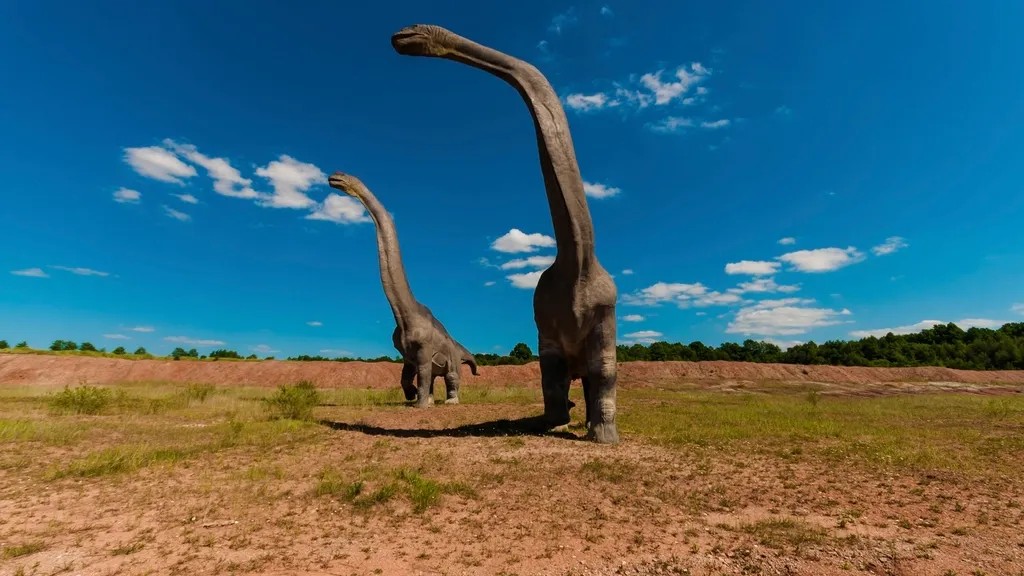
If your mental image of the prehistoric world is all roaring T. rexes, stampeding herds, and endless jungles under a blood-red sky, you’ve basically been raised on a beautiful lie. The real ancient Earth was weirder, noisier, smellier, and in many ways more alien than anything Hollywood usually dares to show. Creatures you’ve never heard of were doing things that seem almost impossible for animal bodies, and entire landscapes behaved in ways that would look fake if you put them on screen.
What follows is not a list of “fun dinosaur facts,” but a peek behind the curtain at the stuff that usually gets cut because it is either too subtle, too gross, or too hard to explain in a two-hour blockbuster. Think dragonfly-size fleas, forests that caught fire like matchsticks, and oceans that could quietly suffocate entire coastlines. And the dinosaurs are just one part of it. The prehistoric world was not a single long dinosaur chase scene; it was a series of radically different Earths stacked on top of each other, each with its own rules. Let’s walk through eight things the movies almost always leave out.
1. The Skies Were Packed With Giant, Terrifyingly Capable Fliers
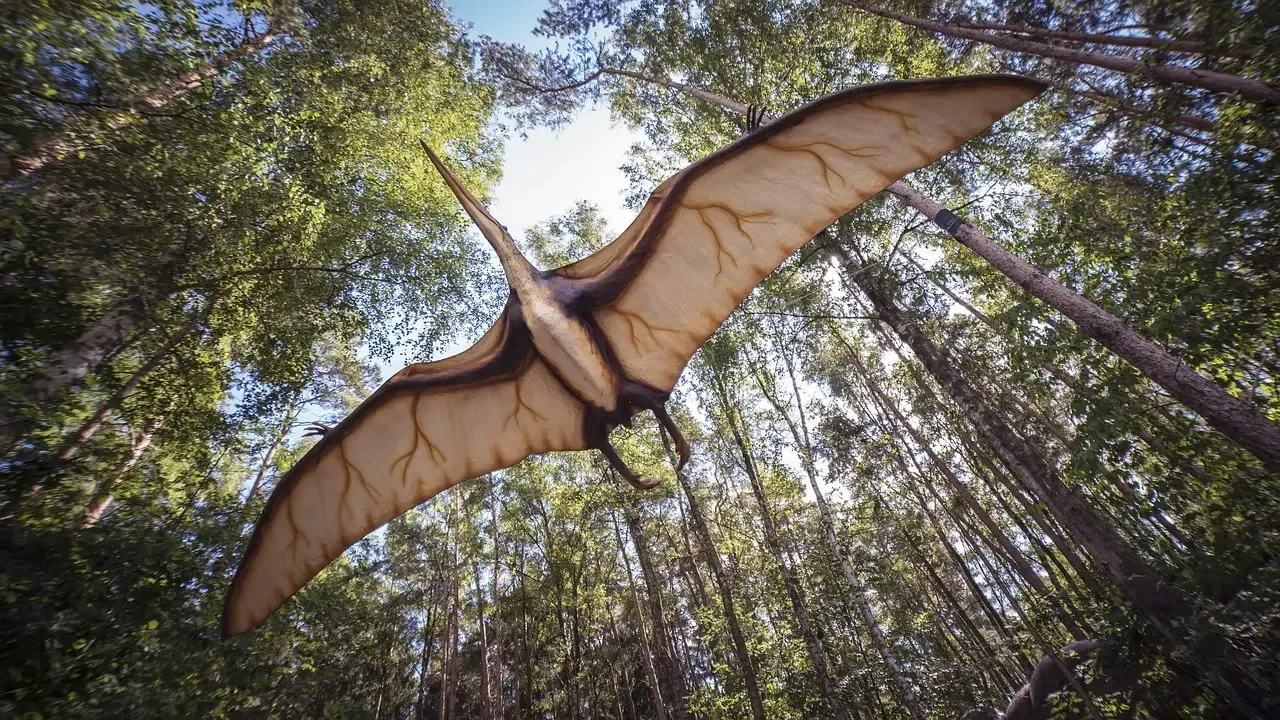
Most movies treat the air as a side stage: a few flapping pterosaurs swoop in to grab a human and then vanish again. In reality, the skies above the dinosaurs were some of the most extreme environments on Earth, ruled by pterosaurs that could be as tall as a giraffe when standing on the ground. These were not clumsy gliders; many species show adaptations for powerful flight, long-distance soaring, and complex hunting strategies, with huge wing membranes supported by a single massively elongated finger. If you imagine standing on a Late Cretaceous coastline, you might see dozens of these animals circling like vultures and albatrosses combined, using ocean winds to ride invisible highways in the sky.
On top of them, early birds were already diversifying, some with teeth, claws on their wings, and long bony tails, others moving toward the sleeker, more modern shapes we’d recognize today. Insects were also a huge presence overhead, from swarms of ancient mosquitoes and flies to dragonflies the size of a human forearm. Movies focus on the ground because that’s where people are, but for many prehistoric animals, life was three-dimensional and aerial: sleeping on cliffs, launching from tree trunks, gliding between conifers, or skimming river surfaces. If you could step back in time, you’d probably spend the first few minutes just staring silently up, trying to process how crowded and alive the sky actually was.
2. Most Dinosaurs Lived in Open, Seasonal Landscapes – Not Endless Jungles
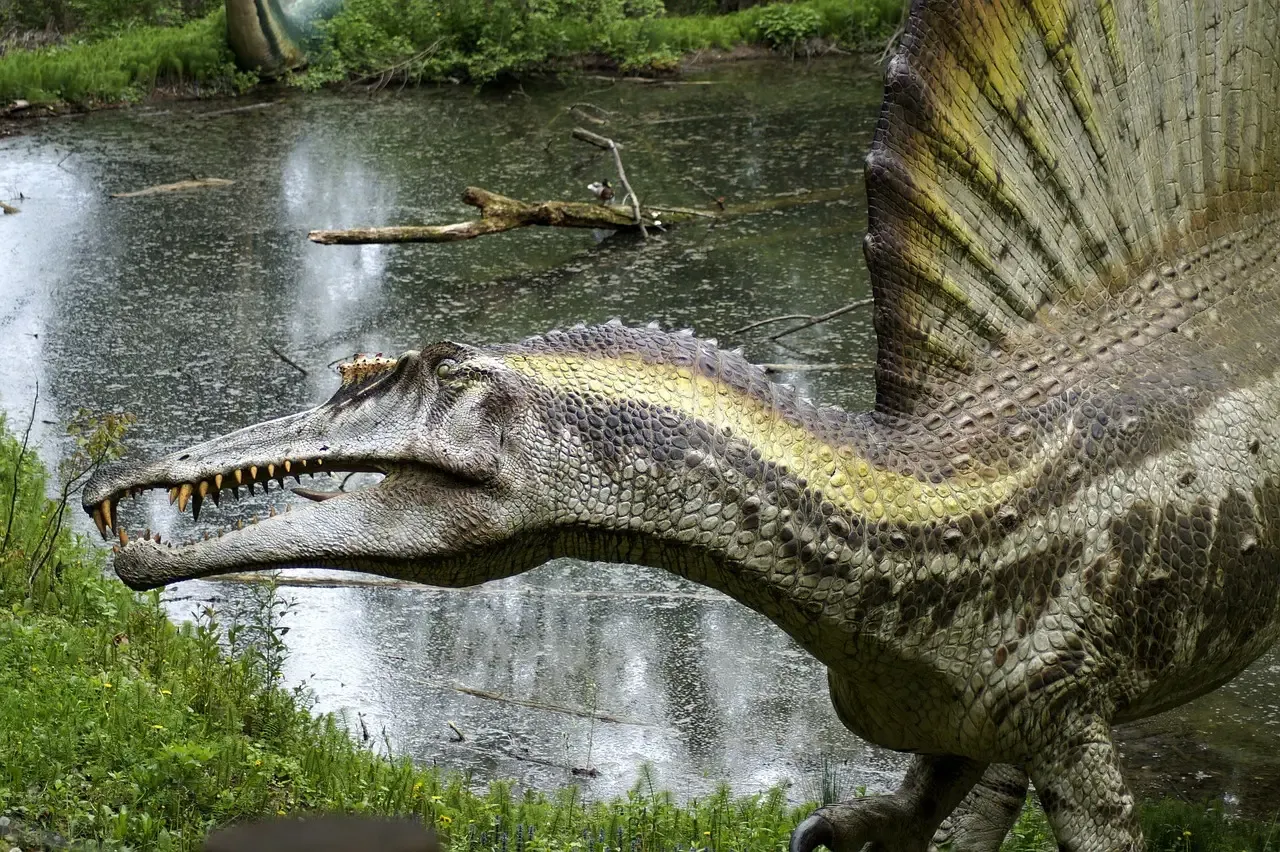
Hollywood loves lush rainforests: dripping leaves, fog, shafts of sunlight. But many dinosaurs, including famous ones like Triceratops and Tyrannosaurus, actually lived in environments that were more like broad floodplains, open woodlands, and seasonally dry river systems. Fossil soils, pollen, and plant remains from their habitats point toward patchy forests, fern prairies, and river channels that flooded, dried, and shifted over time. Think more “American West with weird plants and massive reptiles” than “Amazon jungle with dinosaurs pasted in.” These places had wet and dry seasons, fire scars, and muddy floodplains where carcasses washed up and rotted in the sun.
That kind of landscape matters, because it changes how these animals behaved. Herds may have migrated across big distances, tracking fresh plant growth like modern wildebeest and caribou. Predators likely followed floodplains where prey concentrated, and juveniles probably used thicker vegetation as cover, not some uniform deep jungle. It also means that dust storms, grasslike groundcovers (from other plant groups before true grasses spread widely), savanna-style trees, and smoke from seasonal fires would have been normal parts of the backdrop. The prehistoric world was not one single green wall of vines, but a mosaic of open and closed habitats, constantly shifting with climate and river dynamics.
3. The Air Itself Was Different – Thick, Hot, and Sometimes Hard to Breathe
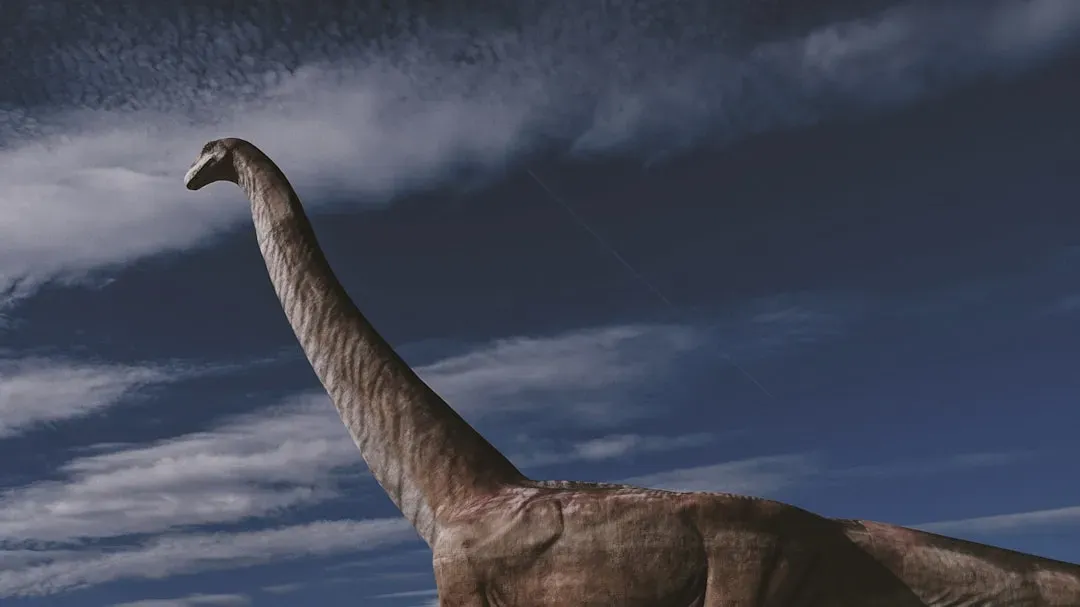
Movies love dark storm clouds and lightning, but they rarely touch the strangest part of prehistoric weather: the composition of the atmosphere itself. Over deep time, levels of carbon dioxide and oxygen see-sawed dramatically. In some periods long before the dinosaurs, oxygen climbed far higher than today, which likely helped fuel enormous insects and giant, fire-prone forests. In much of the Mesozoic, carbon dioxide was substantially higher than modern levels, helping to drive a greenhouse climate with warm poles and no permanent ice sheets. That meant milder winters at high latitudes, steamy interiors on continents, and a hydrological cycle that pumped huge amounts of moisture around the planet.
For animals, those changes were not just background numbers; they shaped everything from body size to migration routes. Warmer, more humid air can feel heavy, especially in low-lying basins, and fluctuating oxygen levels could have favored animals with efficient lungs and high-performance circulation. Birds and non-avian theropods seem to have had complex, birdlike respiratory systems with air sacs that would have given them an edge in thin or fluctuating air. Instead of the familiar crisp blue sky of a modern dry day, many regions might have been hazy, with distant horizons blurred by moisture, dust, volcanic aerosols, or wildfire smoke. Just walking outside in some prehistoric eras would’ve felt different on your lungs and skin in a way that movies almost never dare to show.
4. Smell, Rot, and Disease Were Constant, Powerful Forces
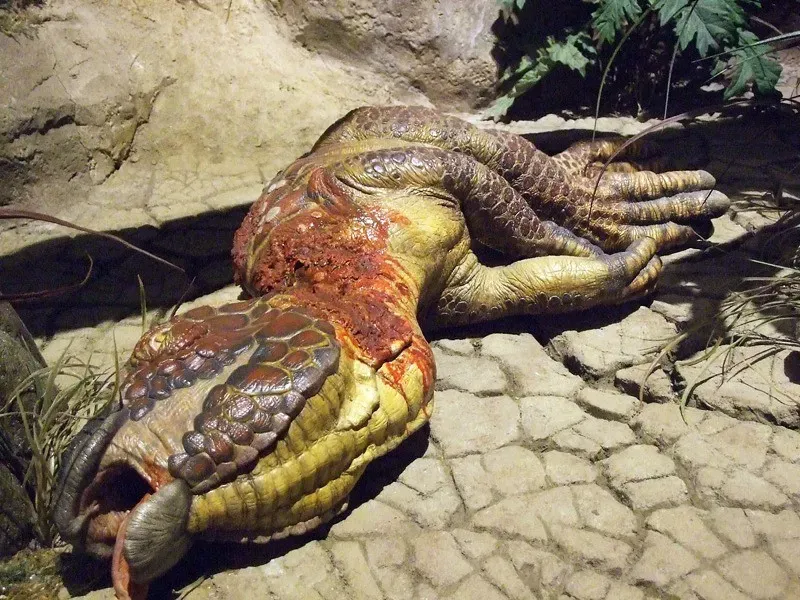
On screen, a dinosaur battlefield looks dramatic but weirdly clean: a dead animal, maybe a few flies, then cut to the next chase. Reality would have been overwhelmingly visceral. Large animals dying on floodplains, in rivers, or near coasts would quickly turn into hubs of rot, insects, bacteria, and scavengers. The smell alone, mixing decomposing flesh with stagnant water and fermenting plant matter, would hit you like a physical blow. Flesh-eating beetles, maggots, parasitic worms, and carrion birds (or their prehistoric equivalents) would converge, turning carcasses into violent, buzzing ecosystems within hours or days.
With that comes disease. Parasites, blood-borne pathogens, fungal infections, and gut microbes were as much a part of dinosaur lives as they are for modern animals. Fossil bones sometimes show signs of infections, arthritis, tumors, or healed injuries that would’ve changed how those animals walked, hunted, or socialized. Herds probably carried ticks and mites; predators likely picked up nasty infections from biting into infected prey. Instead of pristine, shiny-skinned giants, the real prehistoric world included limping animals, scarred hides, patchy feathers, and individuals weakened by parasites. The ecosystem was not just predator versus prey, but life versus an invisible army of microbes and worms constantly trying to break everything back down to its base ingredients.
5. The Oceans Were Alien Worlds of Monsters, Muck, and Mass Kill Zones
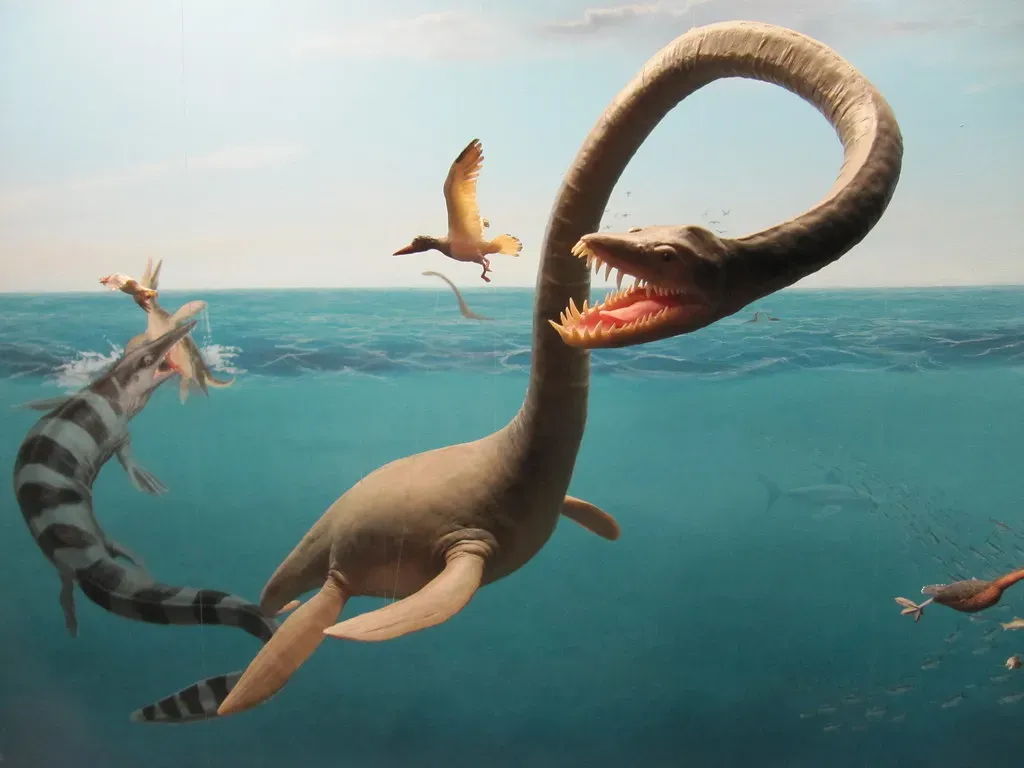
When movies do wander into prehistoric oceans, they usually give us one giant marine reptile leaping out of crystal-clear water to eat something big and dramatic. That makes for good trailers, but it misses the real story: ancient seas were entire alien worlds layered with predators, plankton, reefs, and dead zones. In different periods, oceans were ruled by ammonites with coiled shells and tentacled mouths, armored fish, early sharks, and later by marine reptiles such as plesiosaurs, mosasaurs, and ichthyosaurs. Instead of simple food chains, many of these seas had complex food webs where energy flowed through tiny plankton, filter feeders, scavengers on the seafloor, and apex hunters chasing fast, streamlined prey in the water column.
At the same time, those oceans were sometimes unstable in ways that are hard to dramatize on screen. Geological evidence points to episodes when parts of the ocean became low in oxygen, forming vast “dead zones” where most large animals either fled or suffocated. In shallow basins, decaying organic matter could sour the water, releasing toxic gases from the seafloor. Imagine a coastline where one season brings thriving reefs and fish schools, and a few thousand years later that same region turns into a stinking, murky kill zone where carcasses drift and sink in slow motion. These shifts contributed to several mass extinctions long before the famous asteroid, reshuffling marine life again and again in brutal, invisible ways that would look almost surreal if filmed accurately.
6. Many Dinosaurs Were Fluffy, Colorful, and Socially Complex
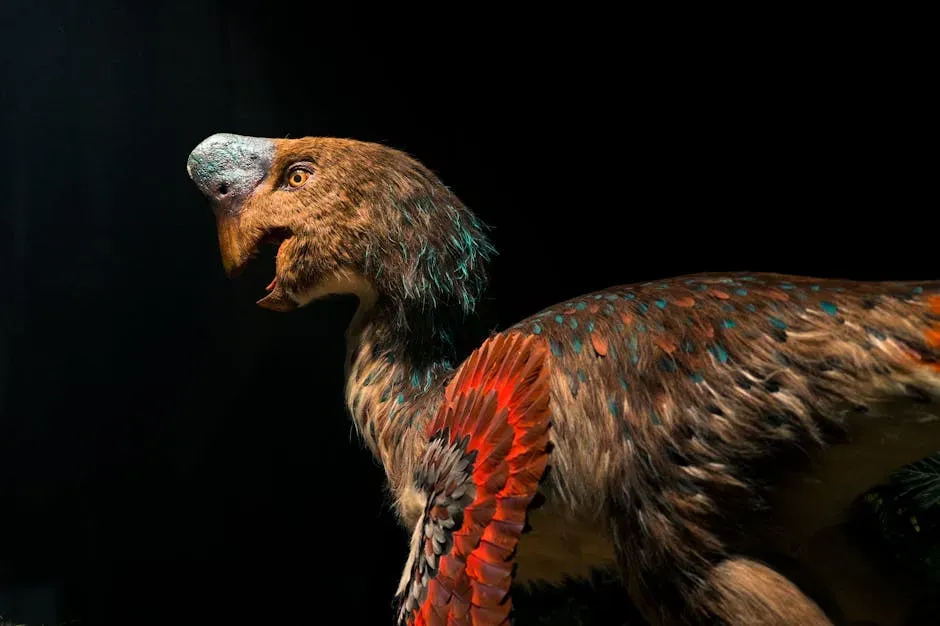
Even now, a lot of people picture dinosaurs as big, scaly lizards with dull green or brown skin. Fossils have been steadily wrecking that image. Skin impressions and feather imprints show that many species, especially among the theropods, carried coatings of filament-like fuzz, full feathers, or elaborate crests and tail fans. Microscopic structures in some fossil feathers suggest a range of colors and patterns, including dark stripes, light patches, and possibly iridescent sheens. Instead of a monotone T. rex stomping through a gray forest, picture smaller feathered predators stalking through undergrowth like oversized, irritable roadrunners, flashing patterns to communicate with their own kind.
Then layer personality on top of that. Bone beds with multiple individuals, trackways of groups moving together, and the nesting sites of some species all hint at social behavior: herds, family groups, or at least loose flocks. Some dinosaurs cared for their young; others probably competed for mates with visual displays, vocalizations, and maybe even scent signals. If you’ve ever watched birds argue over food at a feeder or display to each other in spring, you already know the kind of drama that might have played out daily in a Cretaceous valley. Hollywood sticks with toothy roars because it’s simple, but the real prehistoric world likely sounded and looked more like a chaotic, colorful bird colony scaled up to absurd sizes.
7. Forests, Fires, and Plants Were the Quiet Engineers of Everything
Movies mostly use plants as set dressing: some ferns, generic “Jurassic Park trees,” a few vines. In truth, prehistoric plants were the slow, patient engineers of the entire world dinosaurs lived in. Over hundreds of millions of years, different plant groups rose and fell: early spore plants, towering clubmoss forests, seed ferns, conifer forests, then flowering plants invading and transforming ecosystems like a biological revolution. Each wave of plant innovation changed soils, climate, and the kinds of herbivores that could thrive. When flowering plants and modern-style trees spread during the Cretaceous, they brought nectar, fruits, and new leaf types, opening the door for more specialized insects, new feeding strategies, and different kinds of forests.
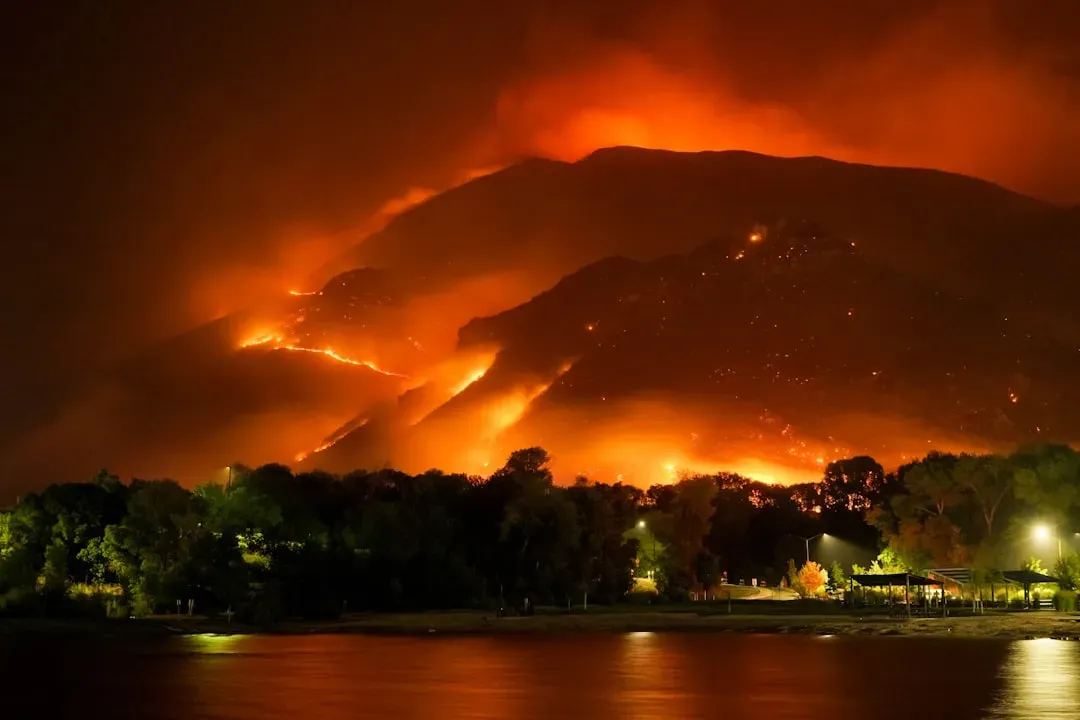
Fire was the other big player, and it almost never shows up on screen except as a background explosion. In high-oxygen times, ancient forests were frighteningly flammable. Charcoal in the fossil record shows that wildfires have been part of Earth’s story for hundreds of millions of years. Some plants evolved thick bark, resprouting abilities, or fire-triggered seeds, turning fire from a pure disaster into a recurring, even necessary, disturbance. Picture a Late Cretaceous landscape where lightning storms sweep across dry seasons, igniting stretches of woodland; herbivores flee or circle burned patches for new green shoots, and scavengers follow smoke to find weak or dead animals. Plants and fire were constantly redrawing the map of where dinosaurs could live, in ways as dramatic as any predator chase but spread out over years and centuries.
One thing dinosaur movies almost never admit is that the world kept going after the non-avian dinosaurs vanished. The asteroid impact at the end of the Cretaceous was a planetary catastrophe, but it did not reset Earth to an empty, smoking crater. Survivors included early mammals, birds, crocodilians, turtles, insects, fish, and countless small plants and fungi. In the harsh aftermath, with skies darkened by dust and ash, these hardy lineages threaded their way through famine and cold, evolving into new forms as ecosystems slowly stitched themselves back together. Forests regrew, rivers found new paths, and the animals that made it through explored the ecological spaces the dinosaurs had once filled.
That recovery phase may be one of the most dramatic chapters in Earth history, but it receives almost no cinematic attention. It is a story of resilience, not just destruction: mammals experimenting with body sizes and diets, birds diving into new niches, flowering plants expanding and diversifying. The modern world you and I know, from elephants and whales to oak trees and songbirds, is built on the ruins of that lost dinosaur-dominated planet. Ignoring the comeback story flattens the whole narrative into a simple before-and-after, when in reality the aftermath was an era of strange, transitional worlds that would look nothing like the Cretaceous and nothing like today, but quietly set up everything that came later.
8. Time Was So Vast That Entire Worlds Rose and Fell Before Dinosaurs Existed
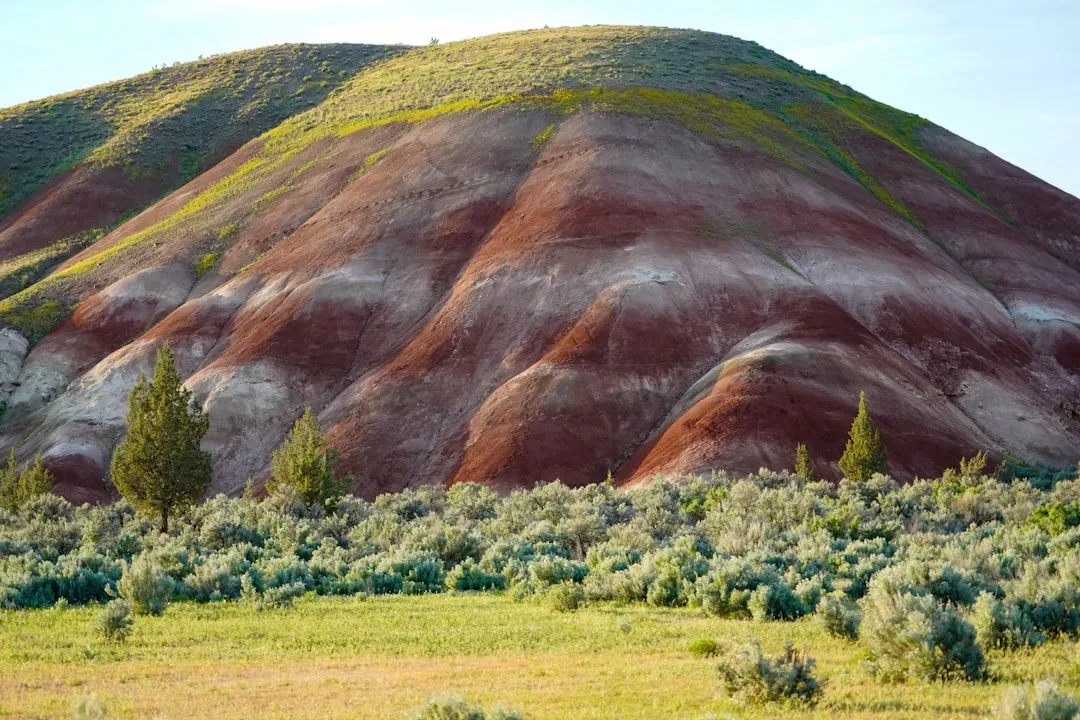
Almost every movie treats “prehistoric time” as one blurred setting where cavemen, mammoths, and T. rex might as well bump into each other. In reality, the time scales are more mind-bending than any plot twist. The gap between Stegosaurus and Tyrannosaurus is longer than the gap between Tyrannosaurus and us. Long before dinosaurs, early fish, trilobites, and other marine creatures ruled the seas; later, strange amphibians and reptile-like mammals strutted across swampy continents. Several mass extinctions ripped the biological deck apart, wiping out most species and giving entirely new groups space to take over. By the time classic dinosaurs appeared, Earth had already lived through multiple full cycles of rise, flourish, and collapse.
That depth of time is not just a trivia point; it changes how you understand the world under your feet. A rock layer holding dinosaur bones might rest on older layers full of completely different life, separated by millions of years and dramatic climate swings. The landscapes we see in movies are snapshots, but the real Earth is closer to a vast, layered novel where each chapter took tens of millions of years to write. Personally, once I really let that sink in, it made my own worries feel both tiny and weirdly freeing. The prehistoric world was not just about dinosaurs; it was about an Earth that kept reinventing life over and over, far beyond the edge of any script.
Conclusion: The Real Prehistoric World Is Stranger, Messier, and Far More Alive
If there’s one big takeaway from all this, it’s that the prehistoric world was not a cleanly edited action movie about predators chasing jeeps. It was a tangled, living system where air chemistry, plant evolution, disease, wildfires, and slow climate beats mattered just as much as teeth and claws. Atmospheres thickened and thinned, forests burned and regrew, oceans flipped between thriving and lethal, and animals stumbled through it all with injuries, parasites, social dramas, and surprising bursts of innovation. The dinosaurs were spectacular, sure, but they were just one cast in a very long-running planetary experiment.
My own opinion, and I’ll admit I’m a little stubborn about this, is that the more we learn, the less satisfied we should be with neat, glossy versions of prehistory. The truth is messier and more humbling: Earth has been many different planets, and we happen to live on the current version. Maybe future dinosaur movies will lean into that strangeness – show the smoky horizons, the fluffy predators, the suffocating seas, the awkward recovery after catastrophe. Until then, we can at least hold a richer, weirder picture in our heads and remember that our familiar world is just the latest chapter in a story that refuses to stay simple. Knowing that, how could you ever look at a fossil, a bird, or even a forest fire the same way again?