Imagine walking through deep prehistoric forests, hearing the low rumble of something massive moving in the distance, and suddenly realizing: this place actually fits your personality a little too well. That is the wild idea behind pairing each zodiac sign with the dinosaur era that mirrors its energy best. When you look at the mood, climate, and dominant creatures of each age of dinosaurs, it starts to feel less like dry science and more like cosmic set design tailored to each sign.
In reality, there was no single “dinosaur era,” but a long sweep of time called the Mesozoic Era, which includes three major periods: Triassic, Jurassic, and Cretaceous, each with its own vibe, climate, and starring species. To keep things fun and grounded, we will mostly stick to these, plus a few more refined slices like Early vs Late Jurassic or Cretaceous, because each has its own personality. Let’s step into Earth’s deep past and see which prehistoric world would feel strangely like home for your zodiac sign.
Aries – Late Cretaceous Chaos

Aries is bold, impulsive, and wired for action, and nothing screams high-stakes intensity like the Late Cretaceous. This is the age of apex predators such as Tyrannosaurus rex and the armored, horned tanks like Triceratops. The ecosystems were complex and competitive, with large predators and herbivores constantly testing each other’s limits. It was a time of climactic drama, shifting seas, and an Earth edging toward a famous extinction-level ending.
This period suits Aries because it rewards bravery and quick decisions. Imagine sprinting through dense Cretaceous forests or across open floodplains where one wrong move could make you lunch for something huge and toothy. Aries thrives in environments where courage and assertiveness are not optional, they are survival tools. The Late Cretaceous is where fighters, pioneers, and those who rush in headfirst would feel completely alive.
Taurus – Middle Jurassic Green Paradise
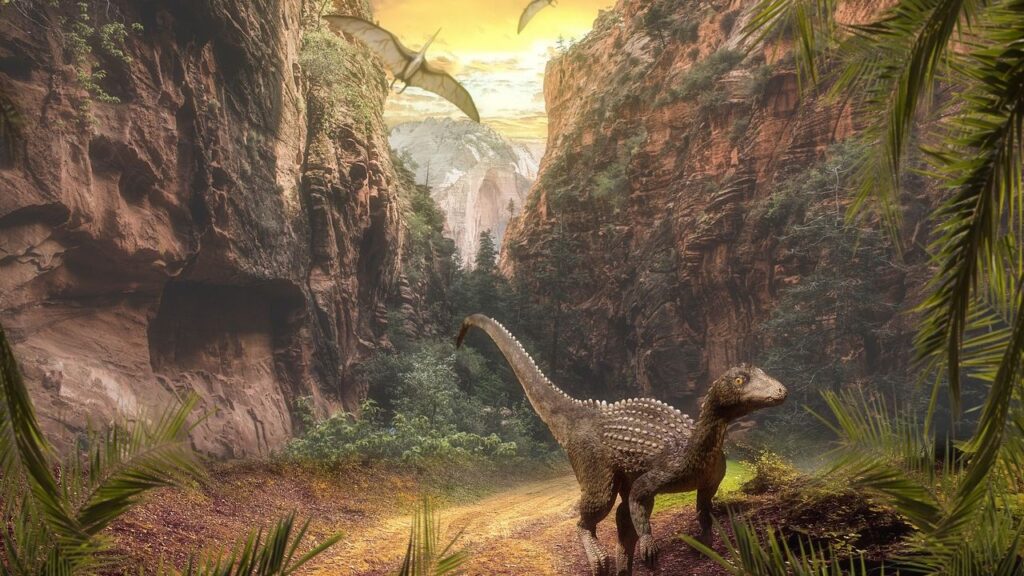
Taurus is all about comfort, sensuality, and slow, steady living, so the lush Middle Jurassic feels like a prehistoric spa retreat. During this time, the world was generally warm with extensive forests of conifers, ferns, and early cycads. Large herbivorous dinosaurs, like long-necked sauropods, dominated many landscapes, spending their days moving slowly and grazing on abundant vegetation. The overall mood was stable growth rather than constant chaos.
For Taurus, this is the ideal setting: plenty of food, reliable climate, and a slower pace of life that allows for savoring every moment. You can almost picture a Taurean soul as a massive herbivore lumbering peacefully through deep green valleys, unbothered and secure. The Middle Jurassic was not free of danger, but its thriving plant life and relatively balanced ecosystems make it feel like the ultimate prehistoric comfort zone for this earth-sign hedonist.
Gemini – Early Cretaceous Evolution Lab

Gemini thrives on variety, ideas, and constant change, and the Early Cretaceous was like an evolutionary brainstorming session. During this time, flowering plants were just starting to appear and spread, shaking up ecosystems that had long been dominated by ferns and conifers. New dinosaur groups were evolving and diversifying, while others were fading, leading to a patchwork world of experimental life forms and shifting niches. It was a period where adaptation and curiosity paid off.
This era fits Gemini because it is all about transition, exploration, and mixing the old with the new. The landscape would have been a dynamic blend of familiar prehistoric greenery and pioneer flowering plants, offering endless new things to investigate. For a sign that gets bored easily, the Early Cretaceous serves up a world in motion, filled with changing habitats, emerging species, and the sense that the story is just getting more complicated and interesting.
Cancer – Late Triassic Survival Struggle
Cancer is deeply emotional, protective, and strongly tied to themes of family and survival, and the Late Triassic was one of the most emotionally charged chapters of Earth’s history. This was the time when true dinosaurs were just starting to appear while older reptile groups still ruled, in a world recovering from massive extinctions and environmental instability. The climate could be harsh in many regions, often hot and seasonal, with powerful monsoons and long dry spells testing every living thing.
This world suits Cancer because it highlights resilience, nurturing, and clinging to what matters in tough times. Small early dinosaurs and other creatures survived by staying adaptable and, in many cases, by relying on group behavior or protective strategies. The Late Triassic feels like the backdrop to a story about overcoming adversity and building strong bonds under pressure, which matches Cancer’s instinct to shield, care, and create emotional safety even when everything outside feels dangerous and uncertain.
Leo – Late Jurassic Dinosaur Spotlight

Leo lives for drama, recognition, and center-stage energy, and the Late Jurassic is the classic “movie poster” dinosaur period. This is where you find huge, iconic creatures often featured in popular culture: towering sauropods with unbelievably long necks and large predators like Allosaurus stalking through open plains and forests. The landscapes were grand, with extensive floodplains, forests, and warm climates that let dinosaurs grow truly massive.
The Late Jurassic perfectly mirrors Leo’s need for spectacle and presence. It is a world where size, showiness, and sheer visibility matter, and where enormous herbivores and fearsome carnivores are locked in an epic visual drama. If the Mesozoic had a red carpet, it would have rolled out during the Late Jurassic. This is the era for Leos who want to stride through life like they own the valley, head high and completely convinced they are the main event.
Virgo – Early Jurassic Rebuilding and Refinement

Virgo is analytical, detail-oriented, and quietly determined to improve systems, and the Early Jurassic is a period of rebuilding and gradual refinement after earlier upheavals. Following a major extinction at the end of the Triassic, dinosaur groups began to diversify more confidently, establishing clearer ecological roles. The environment, still warm, started to stabilize into new patterns of life, allowing more subtle adjustments and specializations among different species.
This time suits Virgo because it is less about big flashy moments and more about careful organization and long-term progress. Ecosystems were being restructured, niches were getting more clearly defined, and life was testing what worked best in the new order. Virgo energy fits a world where small improvements add up, where survival comes from smart adaptations rather than brute force. The Early Jurassic is like a cosmic reminder that patient, methodical growth can quietly reshape an entire planet.
Libra – Mid Cretaceous Ecological Balance

Libra craves balance, harmony, and beautifully complex systems, and the Mid Cretaceous offered some of the most richly layered ecosystems on record. By this point, flowering plants were spreading widely, reshaping landscapes into more varied and colorful habitats. Insects, birds, and many dinosaur groups interacted with these plants in increasingly intricate ways, from pollination to seed dispersal, creating more interdependent webs of life.
This era feels right for Libra because it highlights symmetry and connection. Rather than a world ruled purely by raw strength, the Mid Cretaceous showcases delicate mutual relationships between species. The stability of the system depends on cooperation and equilibrium, not just dominance. For Libra, this is the ultimate prehistoric illustration of how beauty, diversity, and balance can support a thriving world, where every creature plays a role in maintaining the overall harmony.
Scorpio – End-Cretaceous Edge of Extinction

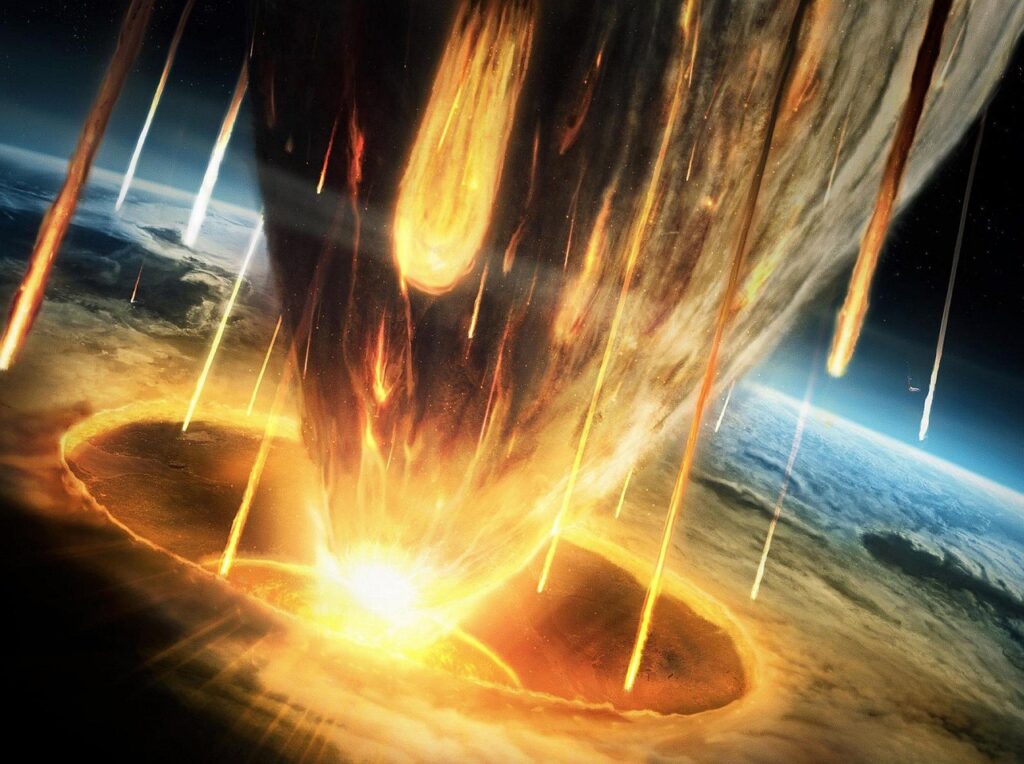
Scorpio is intense, transformative, and drawn to the shadowy edges of life and death, and nothing embodies that more than the final stretch of the Cretaceous just before the mass extinction. The world was rich but fragile, with giant dinosaurs, early birds, and evolving mammals all sharing increasingly complex ecosystems. Beneath that apparent fullness, though, geological and cosmic forces were quietly setting the stage for a catastrophic impact event that would end the age of non-avian dinosaurs.
This liminal moment suits Scorpio because it is saturated with themes of power, hidden threats, and rebirth through destruction. The end-Cretaceous symbolizes the moment before everything changes, when intensity peaks and nothing will ever be the same again. Scorpio energy thrives in such portals of transformation, where endings are brutal but also clear the way for entirely new eras. It is the dark, magnetic moment between worlds, and Scorpio understands that space better than any other sign.
Sagittarius – Early Cretaceous Global Wanderlust

Sagittarius is adventurous, restless, and obsessed with big horizons, and the Early Cretaceous offers the perfect backdrop for cosmic backpacking. During this period, continents were drifting apart into new positions, opening up shifting coastlines, island chains, and inland seas. Different regions hosted very distinct dinosaur faunas, so traveling the world then would mean encountering an endless variety of strange and fascinating creatures and landscapes.
This suits Sagittarius because it is essentially a world built for exploration and discovery. Wander across one landmass and you would find long-necked herbivores and agile predators; sail across a shallow sea to another and the entire cast of characters changes. The Early Cretaceous encourages movement, curiosity, and the urge to see what lies beyond the next ridge. For Sagittarius, it is a reminder that the world has always been bigger and more surprising than we think.
Capricorn – Triassic Grit and Ambition
Capricorn is disciplined, ambitious, and built for long climbs up hard mountains, and the Triassic period is the original test of grit. Following the largest mass extinction in Earth’s history, life in the Triassic had to rebuild almost from scratch in many places. Early reptiles, including the ancestors of dinosaurs, crocodiles, and even mammals, were competing fiercely for dominance in harsh, often hot and dry landscapes. Survival meant persistence, toughness, and long-term strategy.
This environment fits Capricorn because it rewards those who can endure scarcity and slowly rise through sheer determination. Dinosaurs did not start out as obvious rulers; they had to outcompete other powerful reptile groups over tens of millions of years. The Triassic is the story of small, tough beginnings and relentless upward trajectories, which mirrors Capricorn’s path from humble starts to enduring power. It is not glamorous, but it is the foundation on which future empires were built.
Aquarius – Late Jurassic to Early Cretaceous Innovation Wave

Aquarius is future-focused, rebellious, and fascinated with innovation, and the transition from the Late Jurassic into the Early Cretaceous is basically nature’s research and development lab. During this time, bird-like dinosaurs and early true birds were evolving, flight strategies were diversifying, and plant life was edging toward the breakthrough of flowering species. The rules of what a dinosaur, a plant, or even an ecosystem could be were slowly being rewritten.
This era works for Aquarius because it is full of evolutionary experiments and unconventional life paths. New body plans, new survival techniques, and new relationships between plants and animals were emerging, pushing life beyond old limits. It is the prehistoric equivalent of a tech revolution, but in feathers, leaves, and bones instead of code. Aquarius energy fits perfectly with this restless creativity, where the future is not clear yet but you can feel everything changing.
Pisces – Greenhouse Cretaceous Dreamworld
Pisces is dreamy, emotional, and deeply connected to water and imagination, and the Cretaceous greenhouse climate feels like a planetary daydream. Sea levels were often high, creating shallow inland seas that covered large parts of continents, while warm temperatures supported lush, sometimes tropical vegetation on land. Marine reptiles, ancient fish, and early marine birds filled the oceans and seas, while diverse dinosaurs moved through dense forests and coastal plains.
This world suits Pisces because it blurs boundaries: land and sea, forest and shoreline, even dinosaur and bird. The Cretaceous is full of transitional, fluid forms and environments where you constantly move between elements and moods. For a sign that lives half in reality and half in a rich inner world, this watery, hazy, biologically extravagant era feels like home. It is a reminder that life can be both fragile and fantastical at the same time, just like the Piscean heart.
Conclusion – Your Cosmic Era in Earth’s Deep Past
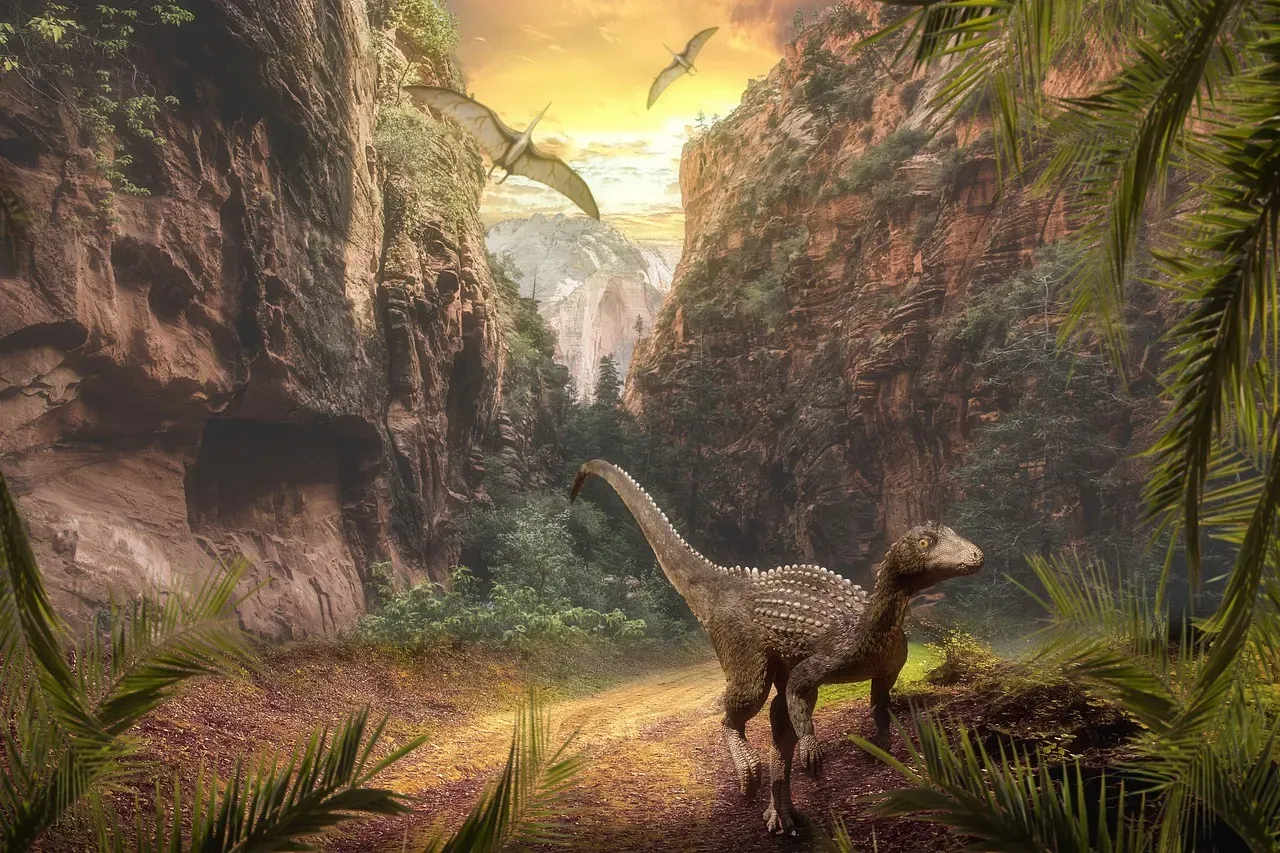
When you line up the zodiac with the great ages of dinosaurs, you start to see personality not as something vague and mystical, but as a story about where you would thrive if you were dropped into Earth’s deep past. Fiery signs gravitate to high-drama periods full of predators and upheavals, grounded signs sink into the calm, green stretches of stability, and air and water signs find their home in times of rapid change or blurred boundaries. It is obviously symbolic rather than literal, but good symbolism has a way of revealing what we are drawn to at a gut level.
If anything, this mashup of astrology and paleontology reminds us that our identities are shaped by the environments we imagine ourselves in. Some of us need Triassic grit, others crave Late Jurassic spectacle, and a few are secretly built for that eerie, transformative cusp at the end of the Cretaceous. You do not have to believe in astrology to enjoy the question: in which ancient world would your personality quietly fit right in? And now that you have walked through these eras, does your sign’s dinosaur age feel as uncomfortably accurate as it does for mine?