Imagine walking through a forest where dragonflies have wings as wide as your arm span and millipedes stretch longer than a family car. That sounds like a sci-fi movie, but scenes like that actually happened on Earth hundreds of millions of years ago. Our planet was once home to insects so huge they would make today’s bugs look like miniatures from a toy set.
These ancient giants did not just exist; in some ecosystems they dominated. Before dinosaurs thundered across the land, oversized insects filled the skies and crawled through dense, swampy forests. Understanding how they got so big, and why they eventually shrank, is like opening a time capsule that reveals what Earth’s atmosphere, climate, and food webs used to be. And honestly, it tells us a lot about how fragile our current balance really is.
The Age Of Oxygen: Why Giant Insects Could Exist At All
It sounds almost unreal, but one of the main reasons insects once grew massive is that the air itself was different. During the late Carboniferous and early Permian periods, roughly hundreds of millions of years ago, Earth’s atmosphere contained far more oxygen than today. Instead of the current level that barely reaches about one fifth of the air, some estimates suggest it climbed to nearly one third or more in certain stretches of time. For creatures that breathe through networks of tiny tubes rather than lungs, that kind of oxygen-rich air was like a biological power-up.
Insects do not breathe like we do; they rely heavily on passive diffusion of oxygen through small openings in their exoskeleton. That system starts to fail as body size increases because oxygen has a harder time reaching deep tissues. But in an atmosphere packed with more oxygen, diffusion works over greater distances, allowing bodies to scale up without suffocating. In a sense, the sky itself was giving insects permission to break size records that are impossible today.
Meganisoptera: Dragonflies With Eagle-Sized Wings
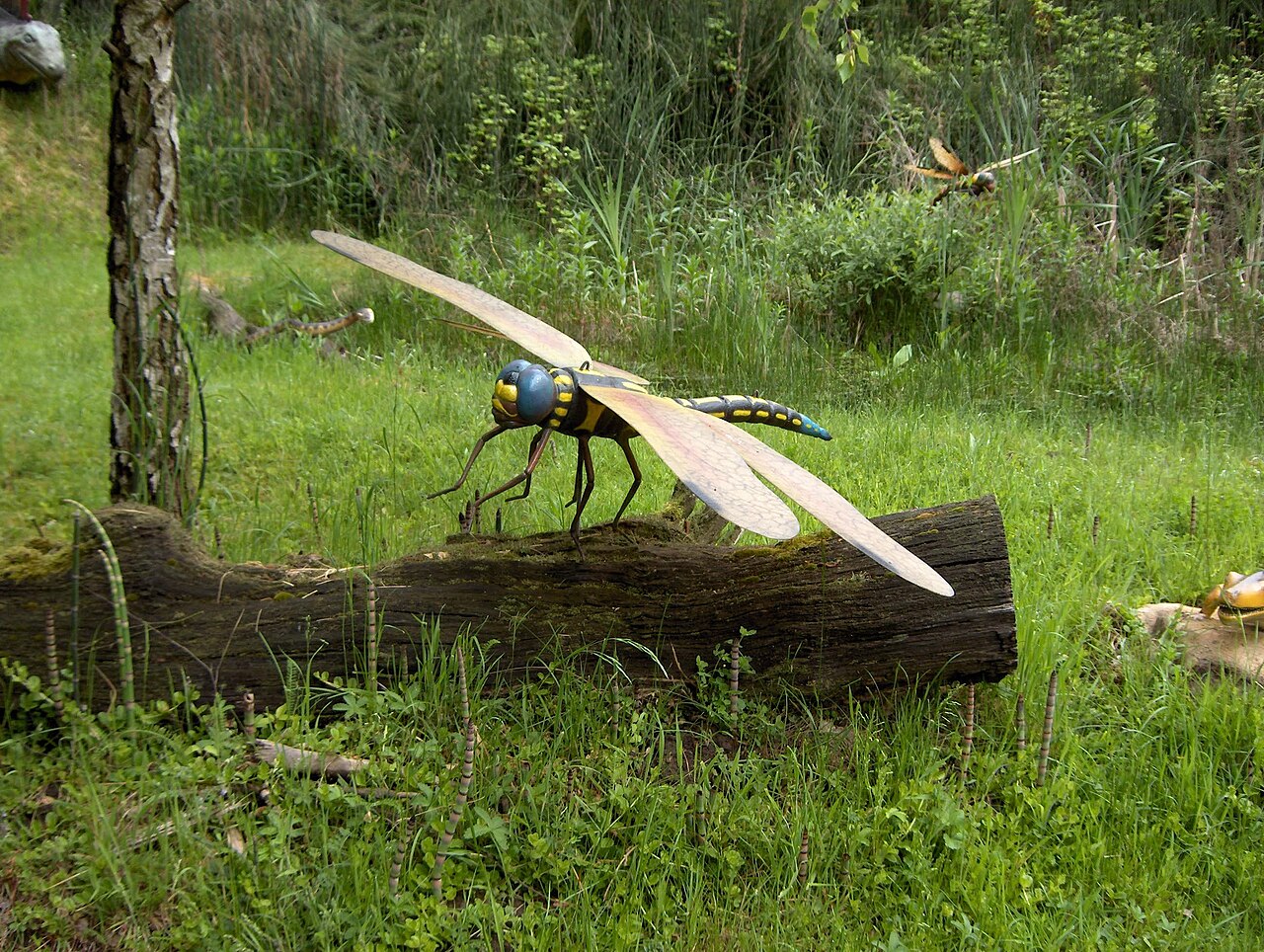
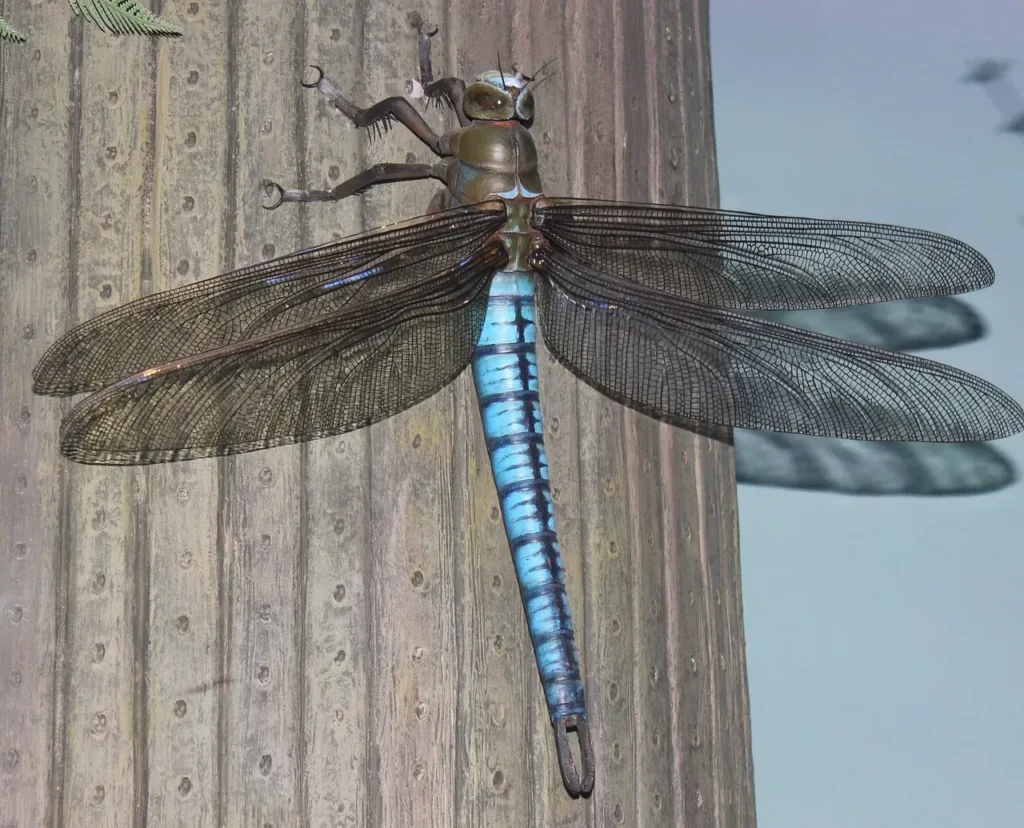
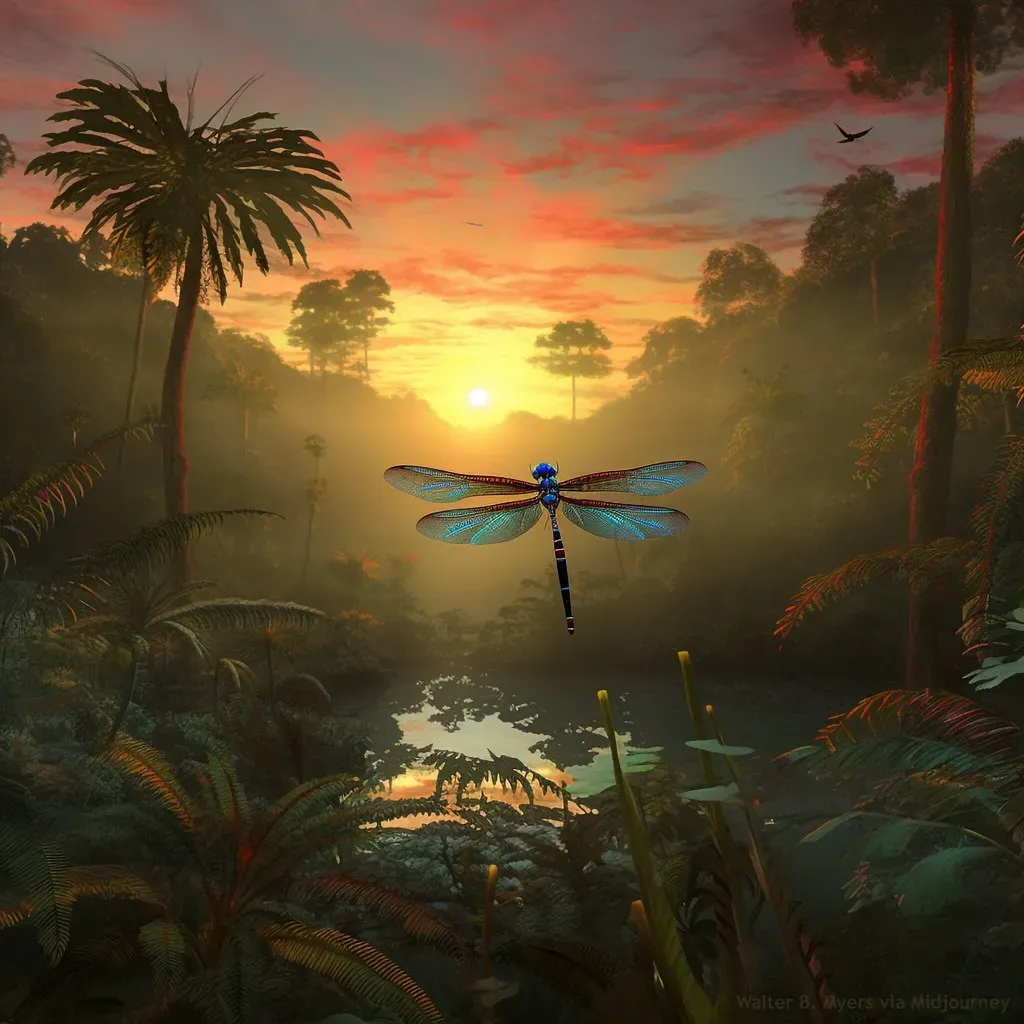
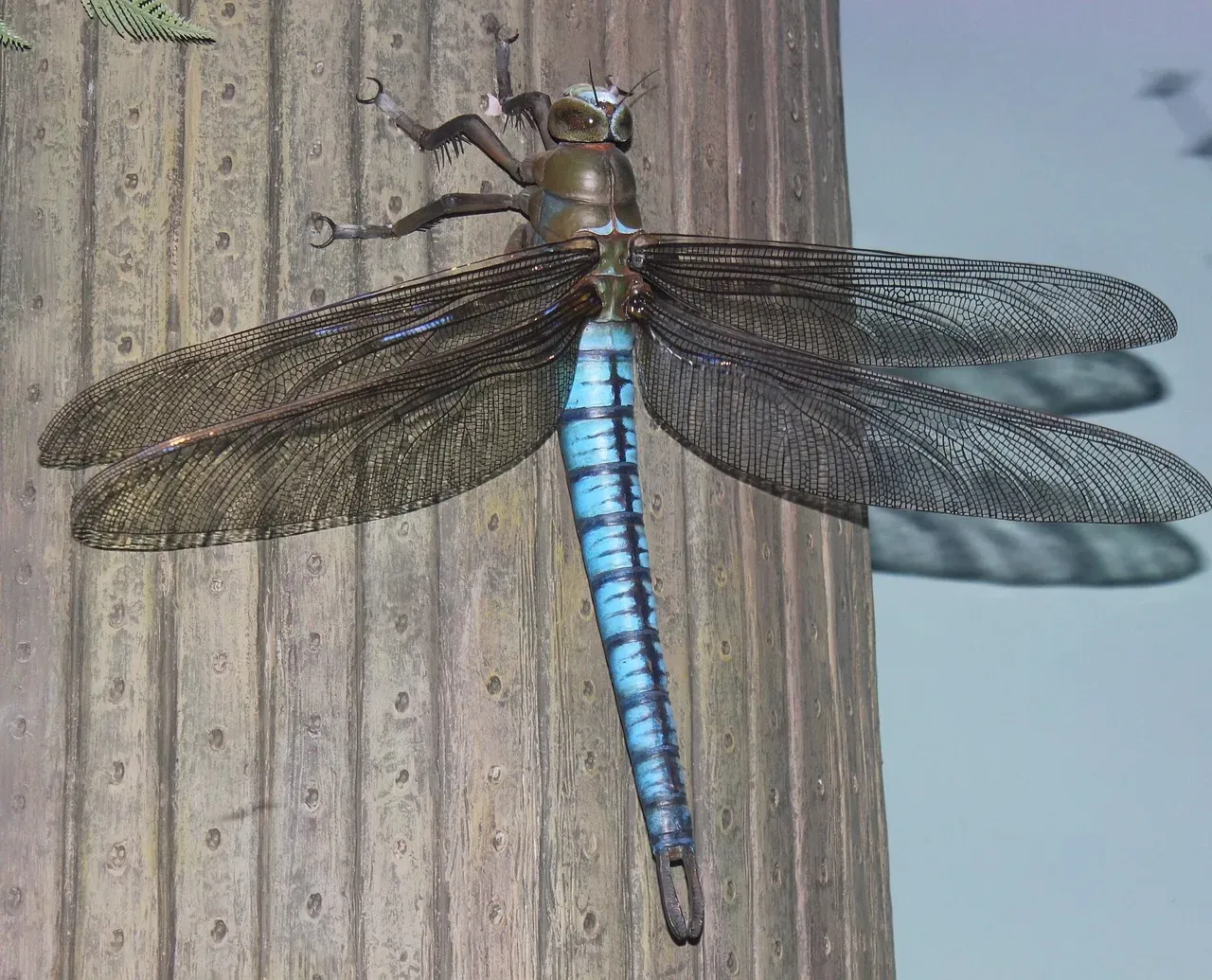
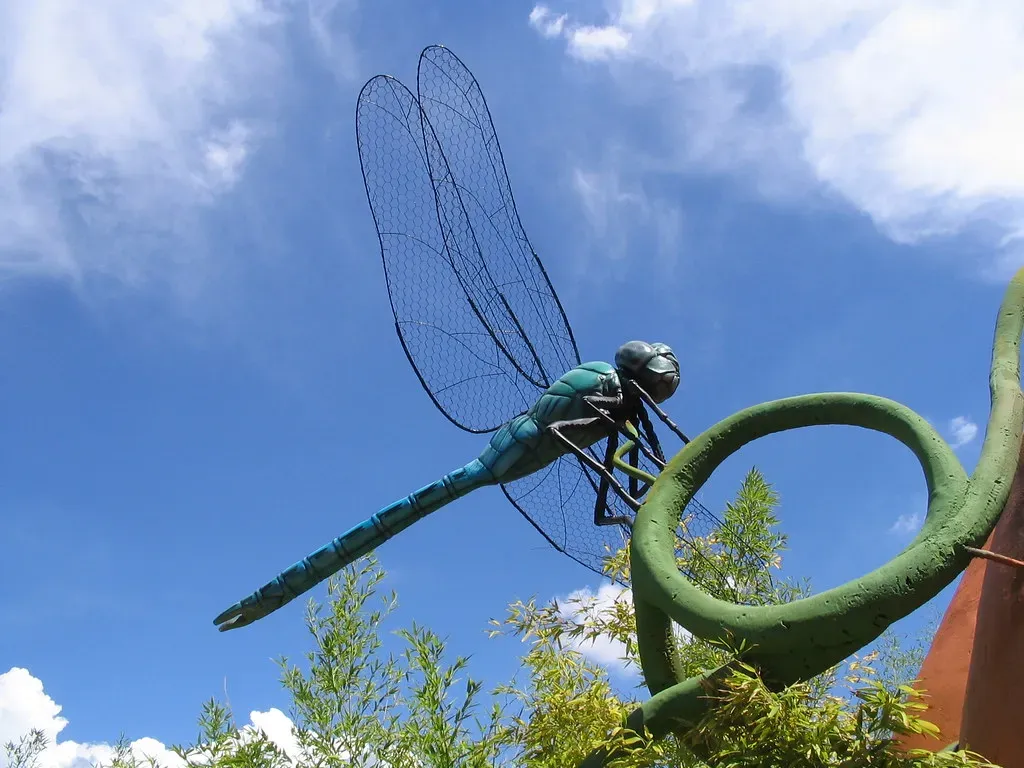
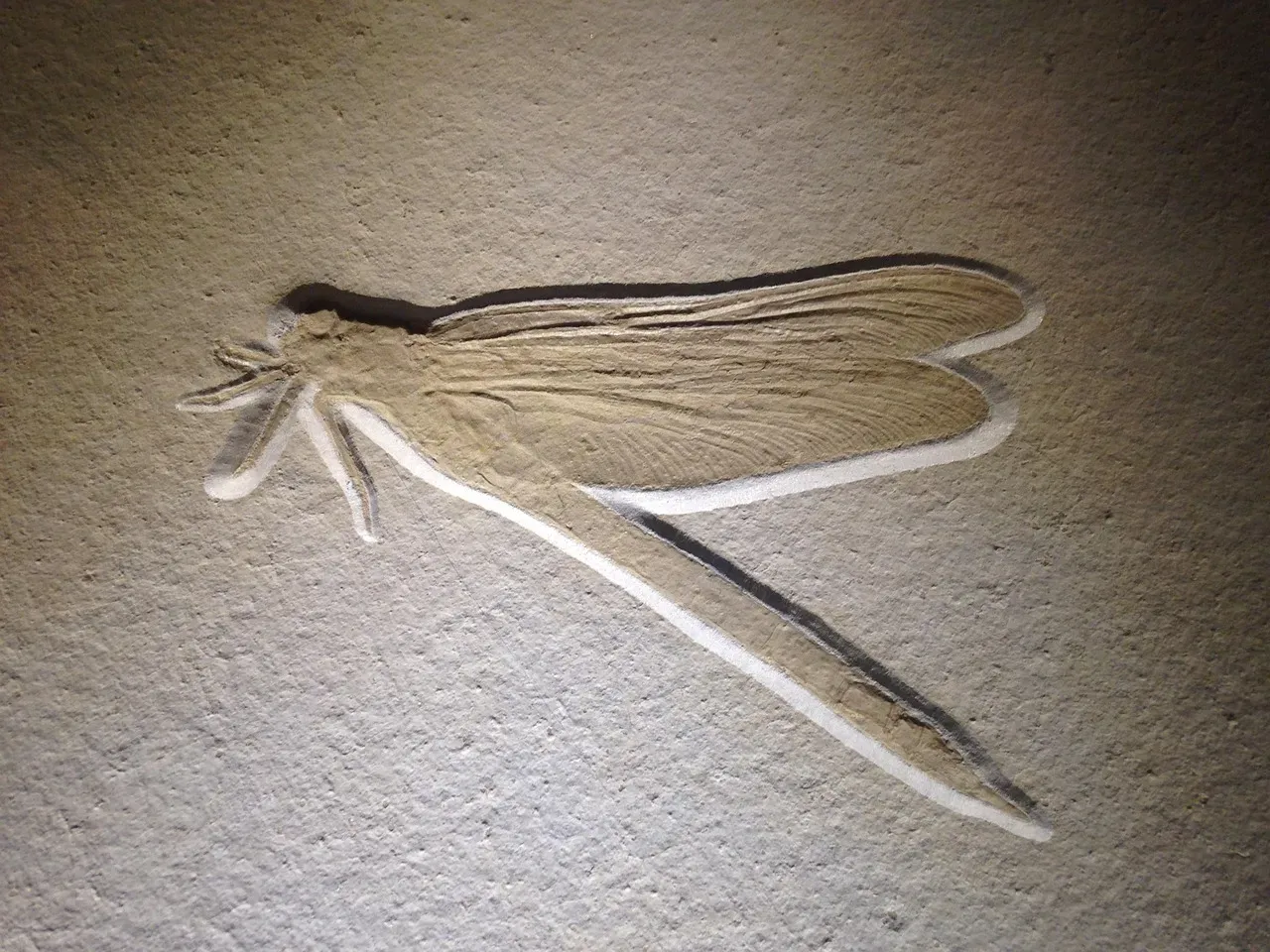
Long before modern dragonflies zipped around ponds, their ancient relatives, often grouped under Meganisoptera, were gliding through the air with jaw-dropping wingspans. Some species, like the famous Meganeura, are estimated to have had wings stretching more than two feet across, rivaling the spread of a small eagle. Picture looking up and seeing something that looks like an oversized dragonfly hovering above you, its compound eyes scanning the swamp for prey. That is not the kind of bug you casually brush away.
These giant aerial predators likely hunted other insects and smaller invertebrates, ruling the skies in the absence of birds and bats. Their large wings and powerful flight muscles would have made them agile and fast, probably capable of sudden bursts of speed similar to modern dragonflies. They occupied a top predator niche in the air, something insects largely do not hold today. When you realize their dominance came mostly from atmospheric conditions that no longer exist, it makes the modern world’s limits on animal size feel strangely arbitrary.
Arthropleura: The Multi-Legged Titan Of The Forest Floor
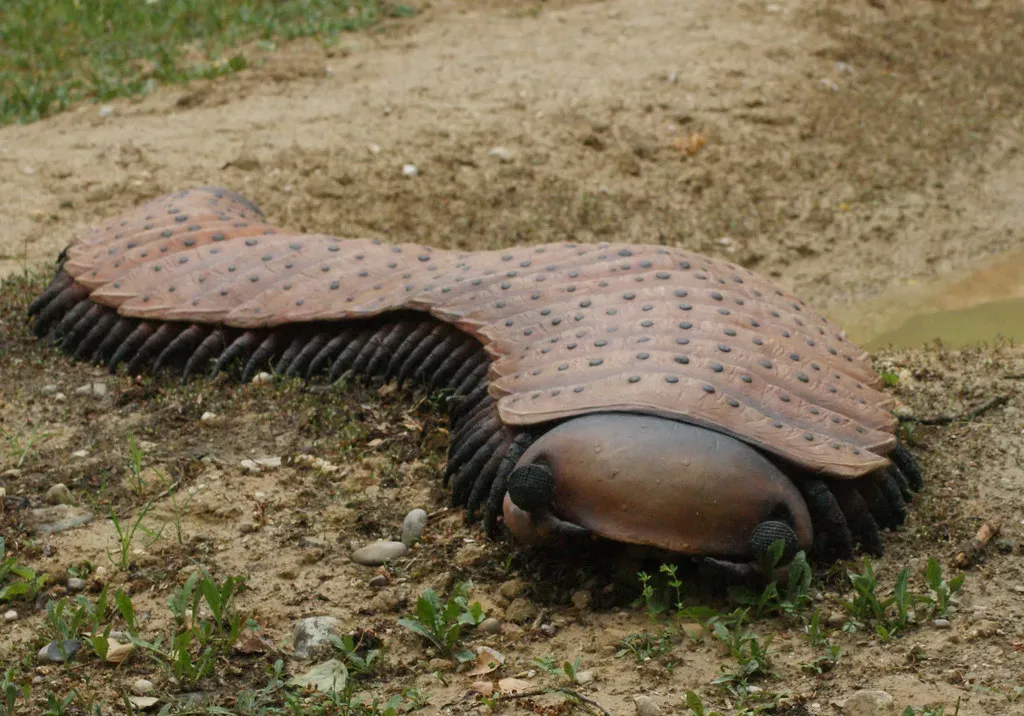
If Meganeura ruled the air, Arthropleura owned the ground. This giant millipede-like arthropod could reach lengths estimated at more than eight feet, making it one of the largest known land invertebrates of all time. Imagine a living train of armored plates gliding silently through the leaf litter, dozens of legs rippling in perfect coordination. Fossil trackways show that this creature was not a sluggish crawler; it moved with purpose through the dense Carboniferous forests.
Interestingly, despite its terrifying looks, Arthropleura may have been mostly herbivorous or detritivorous, feeding on decaying plant material, leaves, and perhaps fallen branches. That makes it less of a monster and more of a mobile compost machine, recycling the lush plant life that flourished in high-oxygen, swampy environments. To me, the fact that one of the biggest land arthropods ever might have just wanted to munch on plants is oddly comforting. It is a reminder that size alone does not make something a predator or a villain.
The Swamp Forests: Giant Insects’ Perfect Playground
The ecosystems that supported these giants looked nothing like our modern forests. During the late Carboniferous, vast swamp forests covered much of what is now North America and Europe, packed with towering lycophytes, horsetails, and seed ferns. These wet, warm, low-lying environments trapped huge amounts of plant material and built up the coal deposits we mine today. In that dense and humid world, oxygen-rich air filled every shaded pocket between the trunks and ferns.
It was a perfect playground for oversized insects and arthropods. Swamps created stable, moist microhabitats where fragile exoskeletons did not dry out easily, and the sheer abundance of plant biomass provided endless food and hiding places. When I think about those forests, I imagine something closer to an alien jungle than anything familiar today. Giant dragonflies above, massive millipedes below, and all of it wrapped in a haze of humidity and thick, oxygen-heavy air – it is no surprise that size limits were pushed in every direction.
Why The Giants Disappeared: Shrinking With A Changing Planet
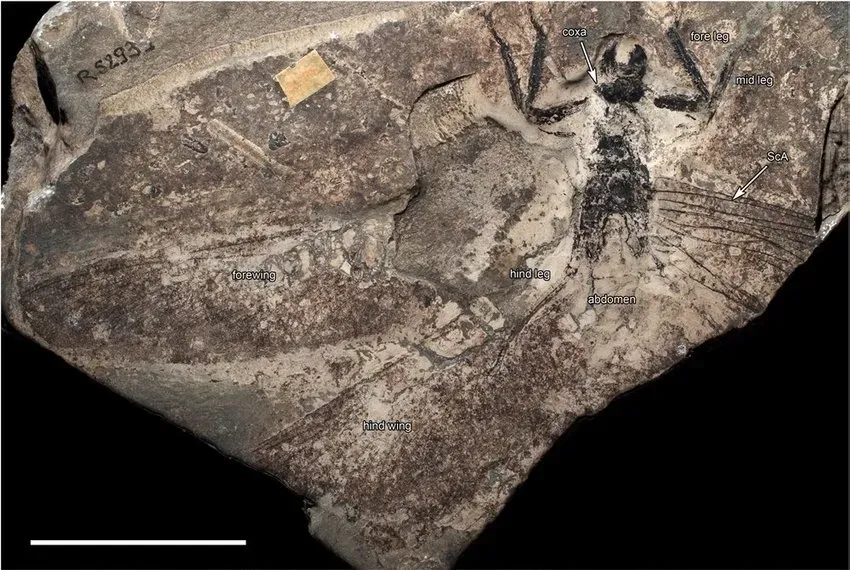
The big question is not just how giant insects evolved, but why they vanished. Over time, Earth’s atmospheric oxygen levels declined from their extraordinary highs and moved closer to what we have now. As oxygen dropped, the biological advantage of being enormous became a problem, especially for creatures breathing by diffusion. Large bodies struggled to get enough oxygen to their tissues, and smaller, more efficient forms had the edge in survival and reproduction.
Other changes piled on. As new vertebrate predators evolved and diversified, including early amphibians and reptiles, giant insects were no longer facing only invertebrate rivals. Competition for food and habitat increased, and the climate itself shifted, with swamp forests shrinking and drier, more varied landscapes spreading. I think of it like a slow but relentless squeeze: atmosphere, predators, and habitat all gradually pushing insects toward smaller, more adaptable forms. By the time dinosaurs appeared, those arm-span dragonflies and car-length millipedes were long gone.
Modern Echoes: Today’s Largest Insects And What They Tell Us
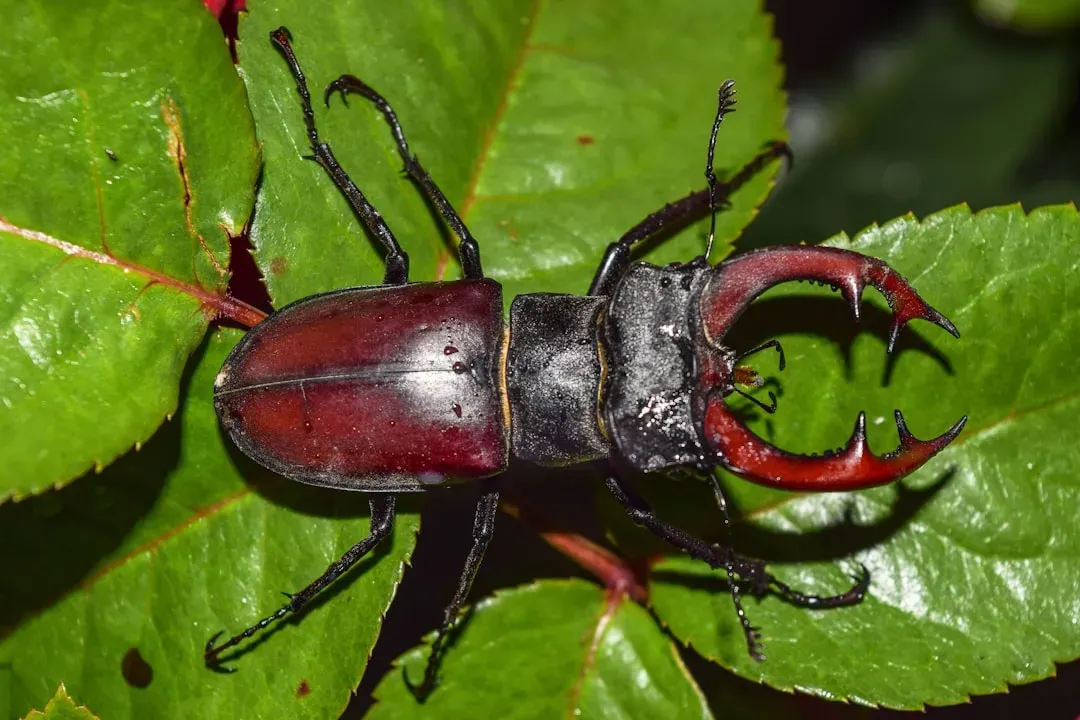
Even though the era of true insect giants has passed, we still have some impressive modern insects that hint at what is biologically possible. Huge stick insects, massive beetles like the titan beetle, and large butterflies and moths show that insects can still test the upper limits of size within today’s oxygen and ecological constraints. However, none of them come close to matching the scale of Meganeura or Arthropleura, which tells us how tightly body size is tied to environmental conditions.
Modern large insects often live in warm, resource-rich environments, a faint reminder of those ancient swamp forests. They also reveal how physical constraints, such as the need to molt an exoskeleton and the challenges of supporting weight without internal bones, keep most insects relatively small. To me, it is almost like looking at a faded photograph of a once-vibrant scene; traces of the old story are still there, but the intensity is gone. We can study today’s biggest insects as living models that help us reverse-engineer what life might have been like when the air itself supercharged their ancestors.
Could Giant Insects Ever Return?
This is where speculation meets science, and it gets fun but also sobering. In theory, if Earth’s oxygen levels increased dramatically again and stayed high for long periods, larger insects might have a better chance to evolve. But that would require massive shifts in global ecosystems, fires, and climate – changes that would bring serious risks to humans and many other animals. A world that is friendly to giant insects would likely be very uncomfortable for us.
On top of that, today’s world is filled with birds, bats, mammals, and reptiles that dominate many of the niches giant insects once held. Evolution does not rewind cleanly; it builds on what is already there. Even if conditions favored bigger insects, they would be competing in ecosystems already crowded with efficient vertebrate predators and complex food webs. Personally, I think the age of truly giant insects is over for good, and that is probably for the best. Imagining them is thrilling, but actually sharing a campsite with a dragonfly the size of a hawk would be another story entirely.
Conclusion: The Strange Comfort Of Knowing We Live In The Small-Bug Era
When you zoom out and look at the long history of life, it is humbling to realize we live in what you could call the small-bug era. The creepy-crawlies we swat away or trap in a glass are the tiny, toned-down descendants of creatures that once ruled the air and the forest floor. To me, that makes our everyday world feel a bit less ordinary and a lot more fragile. The size of a dragonfly or a millipede is not just a random quirk; it is a reflection of deep planetary forces, from oxygen and climate to predators and plants.
I also think there is a quiet warning hidden in their story. Giant insects rose because conditions allowed it, and they disappeared when those conditions changed beyond what they could handle. We are currently pushing Earth’s atmosphere and ecosystems in new directions at a speed that makes past natural shifts look slow. If the fate of ancient insect giants teaches anything, it is that no form of life, no matter how dominant it seems in its moment, is guaranteed a permanent place. Next time you see a dragonfly skimming a pond, will you still think of it as small – or as a surviving echo of a world that could never exist again?