If you’ve ever stood next to a full-grown African elephant and felt tiny, try to imagine ten of them stacked into one impossible, mountain-sized animal. That’s the scale we’re talking about with the largest dinosaurs ever found: living bulldozers of bone and muscle that quietly reshaped the ground with every step. The idea that a single creature could weigh as much as ten elephants sounds like something from a fantasy novel, yet it is one of the most grounded, humbling realities of our planet’s past.
What makes it even more fascinating is that we do not have a neat, single answer carved in stone. Instead, we have a puzzle of fossil fragments, competing hypotheses, and a cast of giant contenders with names that feel almost too big for the tongue: Argentinosaurus, Patagotitan, Dreadnoughtus and more. Scientists argue, measure, recalculate and sometimes completely change their minds, which is part of the thrill. Let’s walk through what we actually know about these titanic creatures, why “ten elephants” is a fair comparison, and how far we can push our imagination without leaving the solid ground of evidence.
The Race for the Top: Which Dinosaur Was Really the Biggest?
The honest, slightly annoying truth is that no one can say with absolute certainty which dinosaur holds the undisputed heavyweight title. For years, Argentinosaurus has been treated as the quiet champion, estimated to weigh roughly the same as ten or even more adult African elephants. Then came Patagotitan mayorum, sometimes nicknamed the Patagonian titan, which made headlines as possibly even heavier, although later studies trimmed those early, extravagant estimates back down to a more cautious range.
Other giants like Dreadnoughtus, Notocolossus, Puertasaurus, and a handful of fragmentary fossils add to the drama. Some are known from only a few bones, which makes scaling them up to a whole animal feel a bit like trying to guess the size of a car from just a single tire. Paleontologists use careful comparative anatomy and statistical models, but even then the margins of error are huge. That is why responsible scientists talk in ranges and probabilities, not in flashy, exact figures, even though popular headlines often pretend those uncertainties do not exist.
Meet the Titanosaurs: Gentle Giants Built Like Moving Hills
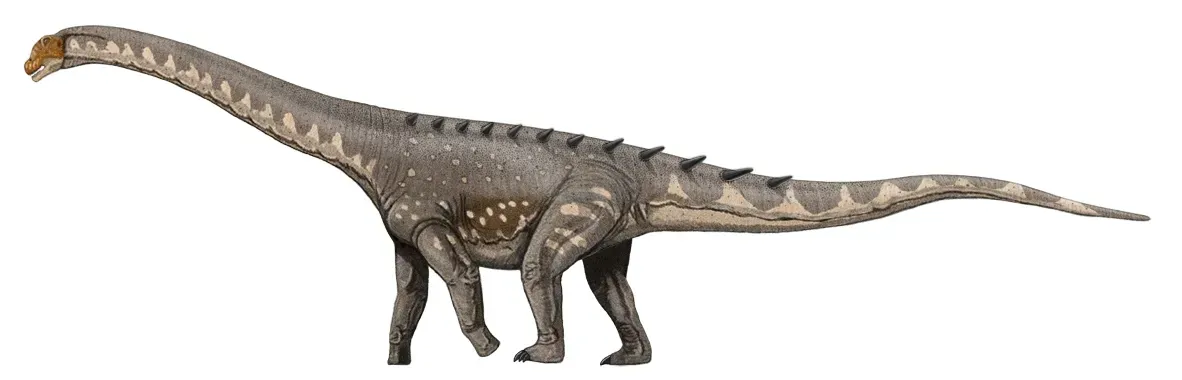
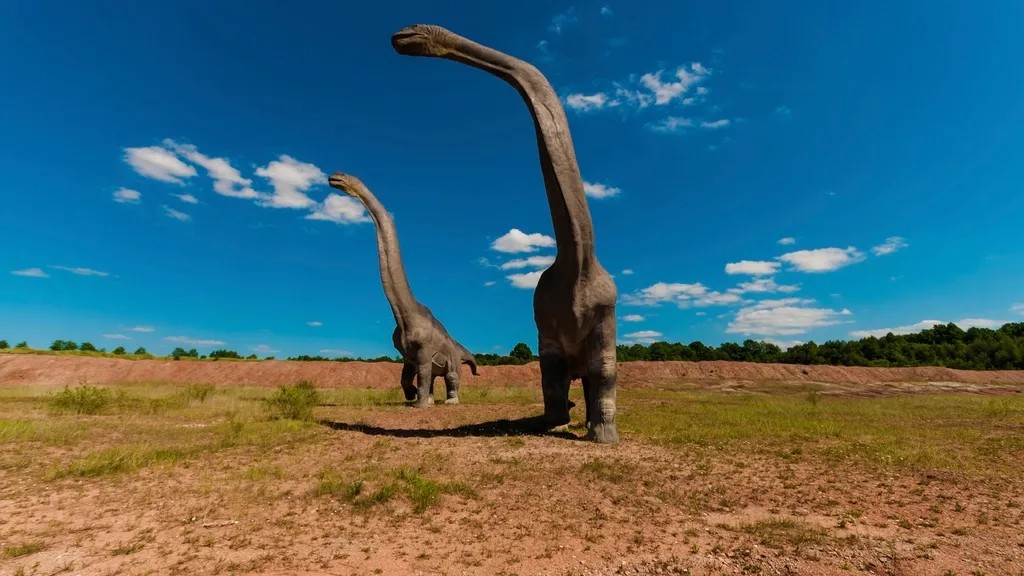
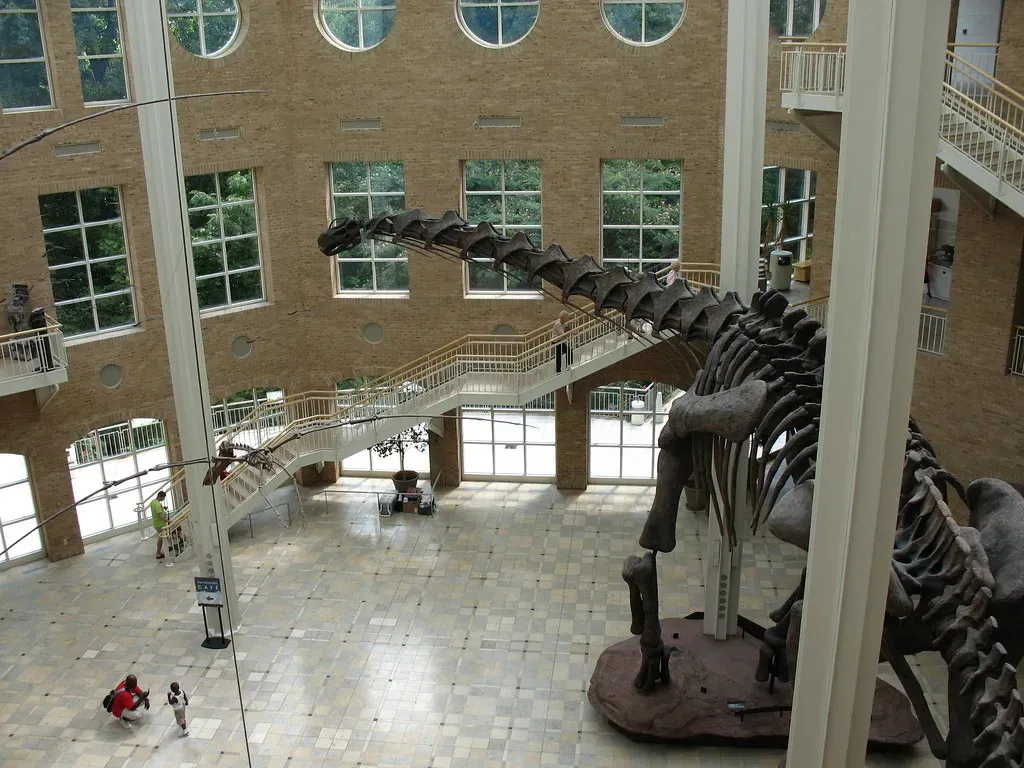
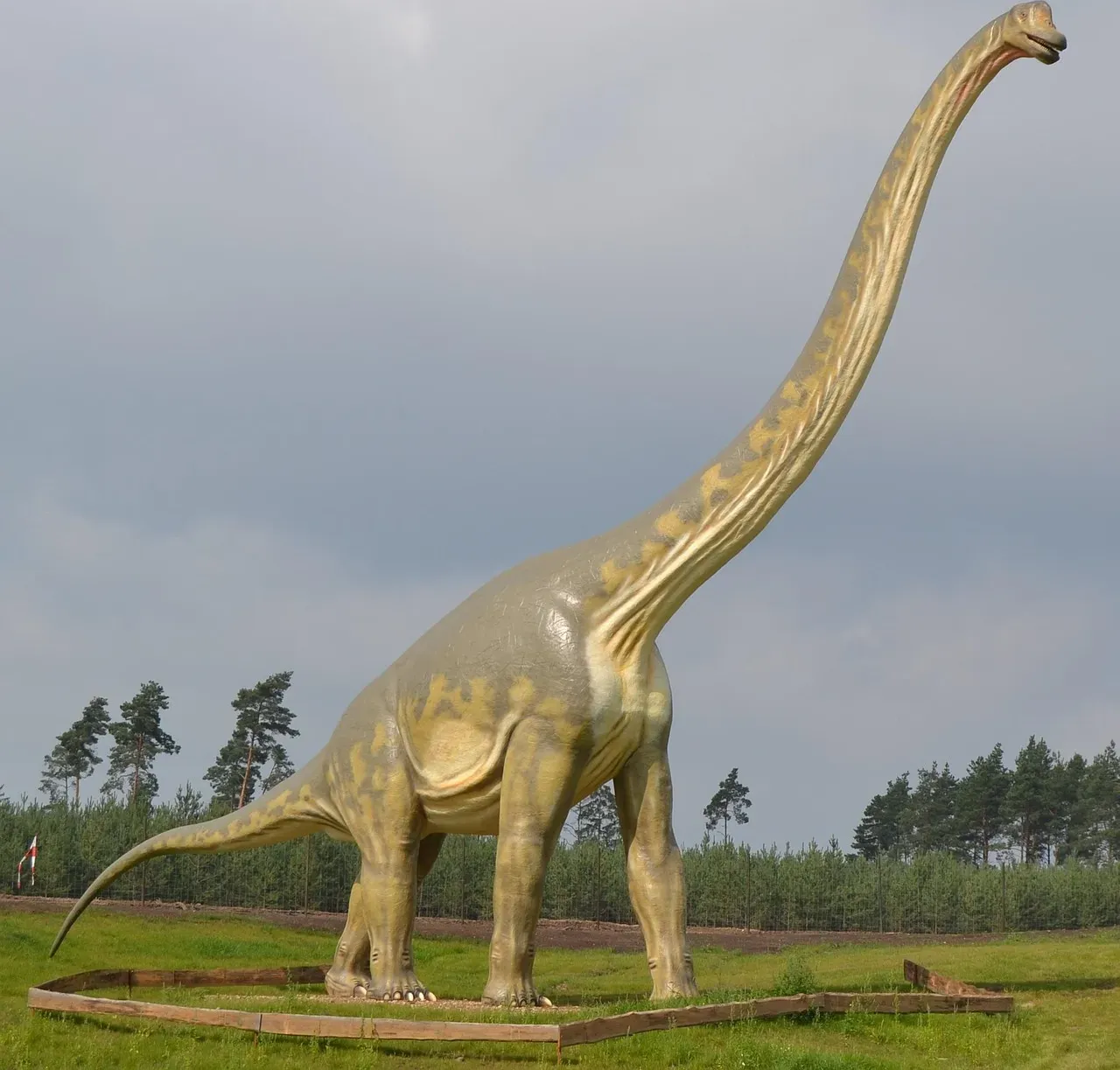
The dinosaurs that reach the “ten elephants” scale belong mostly to a group called titanosaurs, which were a branch of sauropods: long-necked, long-tailed, four-legged herbivores. If you picture a classic brontosaurus-like silhouette, you’re on the right track, just scale it up until a human looks like an action figure at its feet. Titanosaurs like Argentinosaurus and Patagotitan probably carried incredibly long necks balanced by massive tails, with pillar-like legs that worked more like structural columns than flexible limbs.
Their backs were likely crossed by a complex web of muscles and ligaments, anchored to tall vertebral spines that helped distribute weight and absorb stress. Many titanosaurs also had distinctive body armor in the form of small bony plates embedded in their skin, like a natural combination of tank and giraffe. It’s surprisingly easy to assume such giants must have been slow and clumsy, but their bone structure suggests they were well adapted to moving their enormous bodies efficiently, even if not at sprinting speeds. In a way, they were living engineering solutions to the question: how big can a land animal realistically get?
How Scientists Weigh a Dinosaur That No Longer Exists
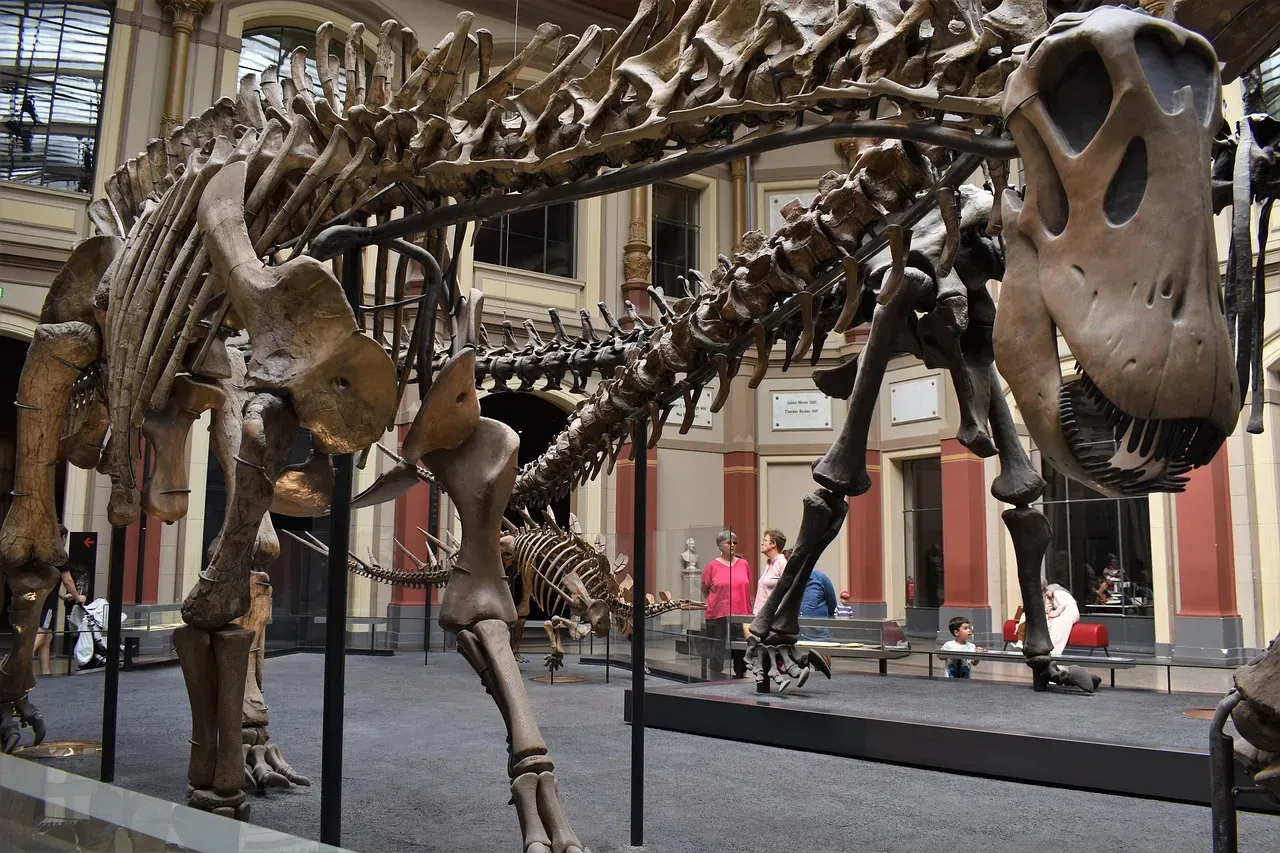
Here’s the tricky part: we have never, and will never, put a dinosaur on a scale. Every weight estimate you see for Argentinosaurus, Patagotitan or any other giant is an educated reconstruction based on bones, modern animal comparisons, and computer modeling. One common method is to measure certain limb bones – like the circumference of the femur – and use equations built from living animals to infer total body mass. This is similar to a doctor estimating a person’s weight from height and body measurements, except with far less complete data.
Another approach is to digitally reconstruct a 3D model of the dinosaur’s body, then calculate the volume and apply assumptions about tissue density. The challenge is that small changes in body shape or density assumptions can shift the final estimate by many tons. That is why one study might report a dinosaur as weighing roughly eight elephants, while another pushes it to twelve for the same species. Personally, I find this constant revision reassuring – it means the field is alive and self-correcting, rather than pretending to offer perfect answers from imperfect fossils.
Ten Elephants of Sheer Mass: Making Sense of the Numbers
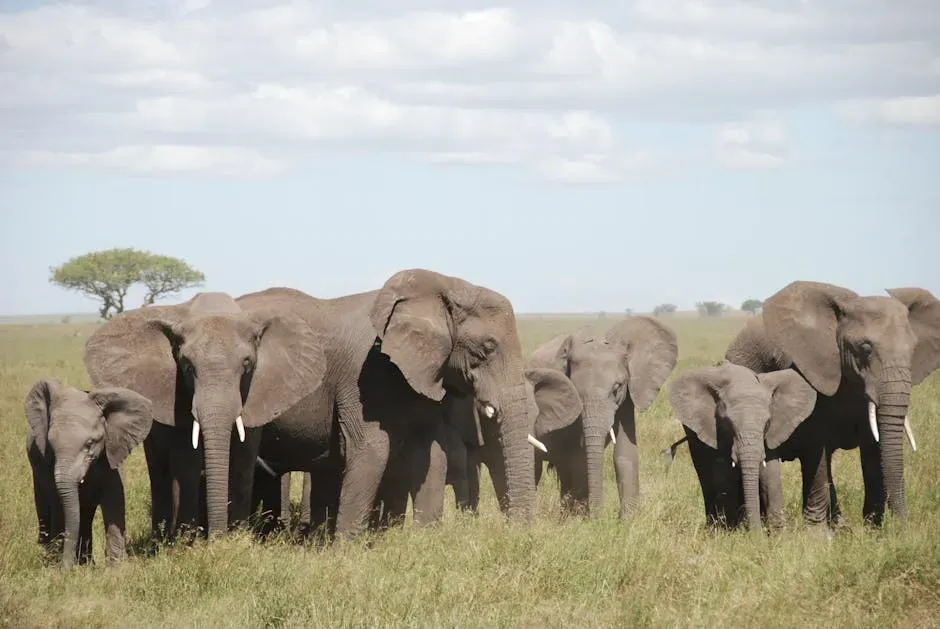
When scientists say a dinosaur weighed as much as ten elephants, they are reaching for a comparison anyone can visualize without a degree in physics. A large African elephant can weigh on the order of six metric tons, give or take. So a dinosaur in the fifty- to sixty-ton range fits neatly into that “ten elephants” shorthand. It is not meant as a precise unit, but as a way to express the staggering reality that these animals pushed right up against the limits of what bones, muscles, and metabolism can handle on land.
Imagine a city bus or a fully loaded truck, except it is alive, growing, eating, and walking on four legs. Now multiply that by several dozen individuals moving across a plain, all nibbling vegetation to fuel their gigantic frames. The amount of plant matter needed to sustain even a small herd would have been outrageous by modern standards. Thinking in elephants helps, because we already accept that an elephant is gigantic; realizing that the largest dinosaurs were essentially ten times that in mass forces the brain to stretch in a way raw numbers never quite achieve.
Carrying that kind of weight safely is a non-trivial engineering problem, even for nature. The bones of the biggest dinosaurs show thickened shafts, reinforced joints, and clever internal structures designed to be strong yet not completely solid, a bit like the trusses in a bridge. Their posture, with legs placed mostly straight under the body rather than splayed to the sides, minimized bending stresses. Even the shape of their feet, with soft tissue pads and multiple bones distributing pressure, mattered. In a landscape that could turn muddy or uneven, these animals were effectively living test cases of structural physics, and the fact that they thrived for millions of years tells us the design worked astonishingly well.
Growing a Giant: How Do You Build an Animal That Big?
One of the most mind-bending aspects of these megadinos is how they got so big in the first place. They likely hatched from eggs that were surprisingly modest in size, simply because there are hard physical limits on how large an egg can be and still allow enough oxygen and heat to reach the embryo. That means a creature that might eventually weigh ten elephants started life closer to the size of a house cat or small dog. From there, they had to grow at impressive rates, adding mass year after year without breaking their own support systems.
Bone studies suggest that many sauropods grew quickly when young, somewhat like oversized teenagers on a permanent growth spurt, then slowed down as they approached adult size. Their long necks let them access huge amounts of plant material without needing to walk constantly, and their simple, continual feeding style acted like a slow but steady conveyor belt of energy. In evolutionary terms, being huge can offer serious benefits – fewer predators to worry about, access to high vegetation, and perhaps more resilience against drought or seasonal shortages. The catch is that it requires a finely balanced system of reproduction, growth, and ecosystem support, and once that balance tips, giants become vulnerable.
Living With Monsters: What Their World Must Have Felt Like
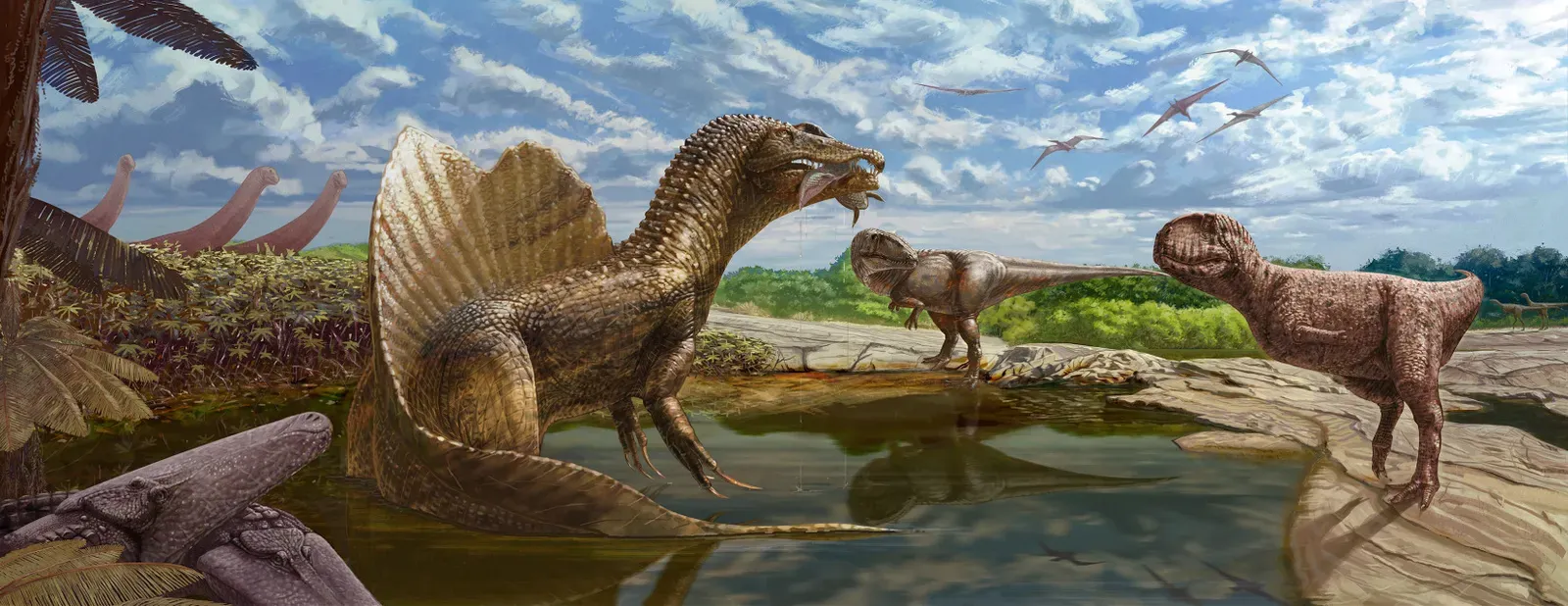
If you could step into the Cretaceous landscapes where these titans roamed, you would probably feel small in a way that is difficult to put into words. Forests and floodplains would be shaped by the constant feeding and trampling of enormous herds, with vegetation trimmed at heights no modern grazer can reach. The sounds alone – deep footfalls, the creaking of enormous joints, low-frequency calls – might be felt as vibrations in your chest more than heard with your ears. Predators, even large theropods, would seem nimble and sharp by comparison, weaving around these moving hills of flesh.
What fascinates me most is not just the individual giants, but the idea of them as part of a functioning ecosystem. Their dung would have fed insects, fertilized soil, and influenced plant communities; their trails would have become pathways for smaller animals. In a sense, they were landscape architects on legs, rewriting their environment every day simply by existing. When the last of these giant sauropods disappeared, it was not just the loss of big animals, but the loss of a particular way life was organized on Earth – a mode of being where “ten elephants” was just another day walking to the nearest patch of trees.
What These Giants Really Tell Us About Life’s Limits
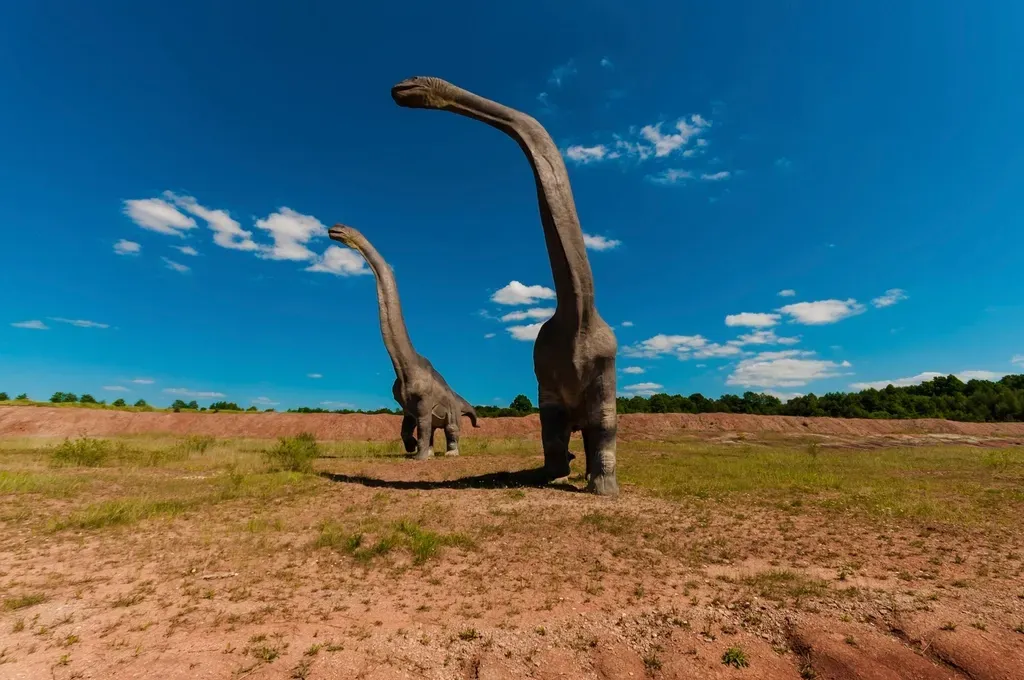
In the end, arguing over whether Argentinosaurus or Patagotitan was heavier by a few tons misses the deeper, more provocative point. The fact that any land animal could reach the mass of ten elephants tells us something profound about the flexibility of life and the physics of our planet. Gravity, atmospheric composition, plant productivity, and evolutionary trial-and-error all conspired to make room for creatures that pushed against the very edge of what bone and tissue can endure. That alone is more awe-inspiring, to me, than any specific number on a chart.
My own view is that we sometimes obsess too much over the precise rankings and not enough over the broader story. The largest dinosaurs remind us that our everyday sense of “big” is hilariously local and human-centered. They force us to admit that nature has already run experiments at scales that make even elephants look modest. Next time you see a reconstruction of one of these giants and feel that small, delicious jolt of disbelief, lean into it – that feeling is a reminder of how much bigger, stranger and more ambitious life on Earth has been than our current snapshot suggests. If this is what evolution pulled off once, what other extremes might be hiding in the parts of the fossil record we still have not found?