Walk into almost any natural history museum in the country and you’ll still find it: a towering T. rex standing upright like a giant kangaroo, teeth permanently bared, tail scraping the floor, posed mid-roar as if it’s about to sprint after a Jeep. That image has been burned into popular culture for decades. There’s just one problem – palaeontologists stopped believing it years ago.
The fossil record has quietly dismantled the Hollywood T. rex piece by piece, one biomechanical study and skin impression at a time. The researchers who know the animal best have been discussing the real version in conference rooms and scientific papers while museum displays sit frozen in a version of the past that no longer holds up. Some of what they’ve found is surprising. Some of it is flat-out strange. And at least one discovery announced in 2025 blows up decades of T. rex research entirely.
#9 – The Spine Was Nearly Horizontal, and That Changes Everything About the Animal
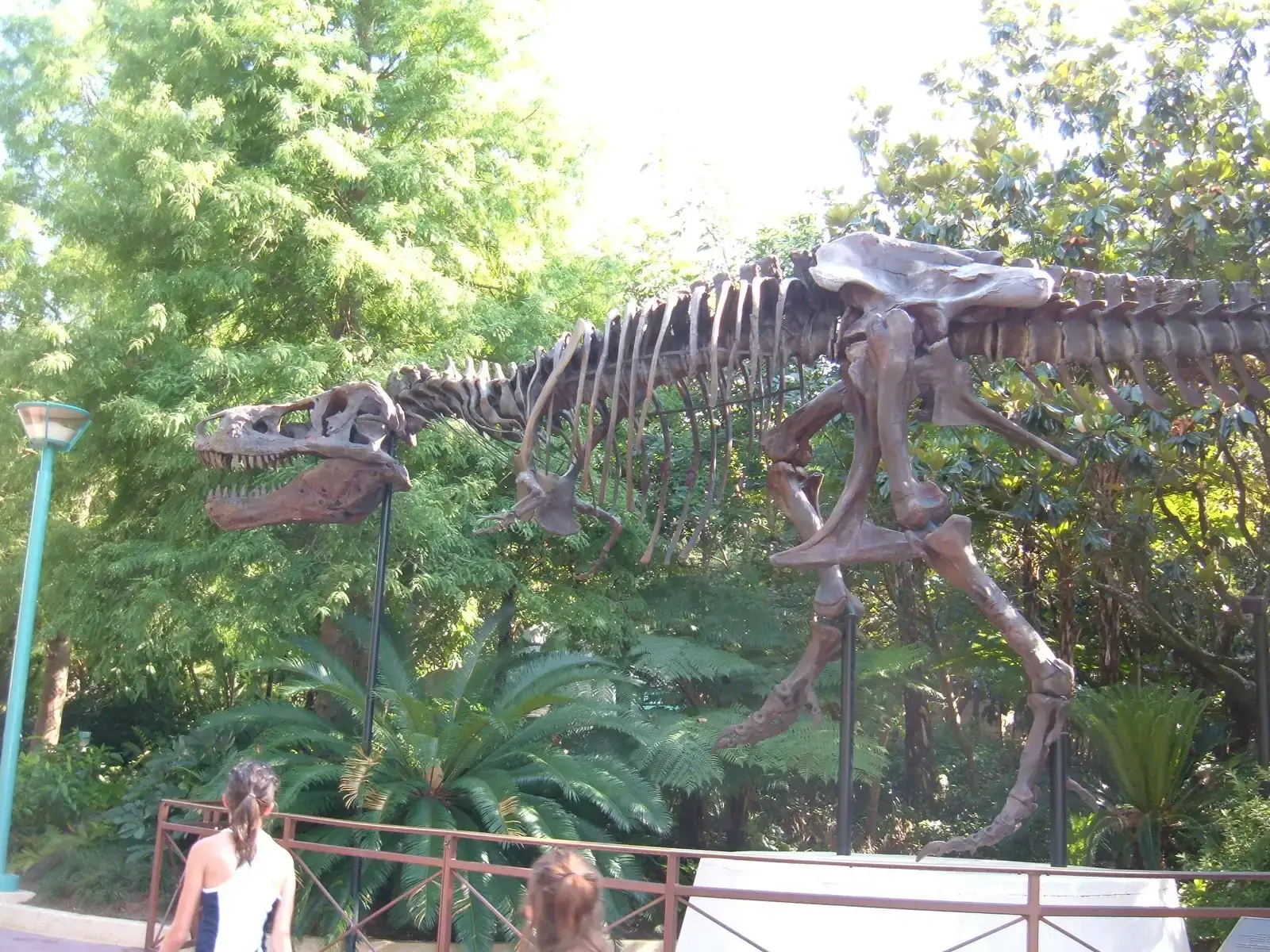
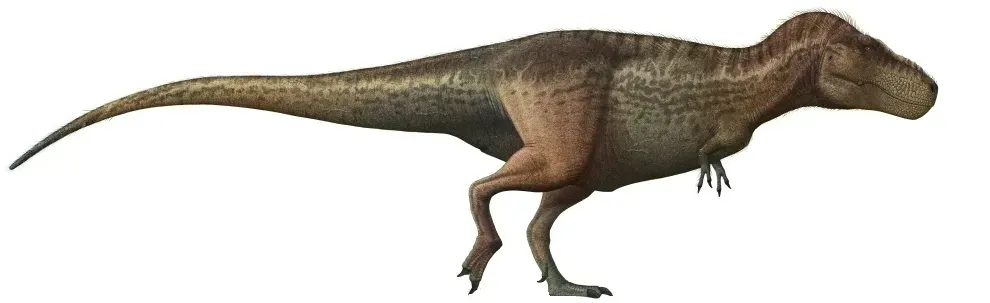
The classic upright T. rex pose – chest out, head high, tail dragging – is anatomically impossible. Palaeontologists have known this for decades. The tail was a massive counterbalance, keeping the spine roughly parallel to the ground so the skull stayed level with the hips. Think less kangaroo, more enormous, predatory seesaw. Skeletal mounts built before the 1990s got this badly wrong, and those images lodged themselves so deeply in public memory that the corrected posture still looks “wrong” to casual visitors even when it’s scientifically accurate.
The horizontal stance reshapes the entire silhouette of the animal. The head drops forward and low. The tail extends nearly flat behind the hips. The tiny forelimbs, instead of hanging uselessly at chest height, actually sat closer to the mouth in this posture than older vertical reconstructions allowed. Many newer skeletal mounts reflect this, but countless illustrations, toys, logos, and older exhibit labels haven’t caught up. The T. rex most people picture is a creature that could not have existed – its vertebrae would have failed under the stress within minutes.
At a Glance
- Pre-1990s skeletal mounts widely depicted the upright, tail-dragging posture – now known to be anatomically impossible
- The correct posture keeps the spine nearly parallel to the ground, with the tail acting as a rigid counterbalance
- In the horizontal stance, the forelimbs sit considerably closer to the mouth than older reconstructions showed
- CT scans of T. rex vertebrae suggest the head was naturally angled 5–10 degrees downward in resting posture
- Corrected mounts exist in several major institutions, but popular imagery – toys, logos, film posters – hasn’t followed
#8 – It Probably Couldn’t Hit 20 mph, and That Reframes How It Hunted
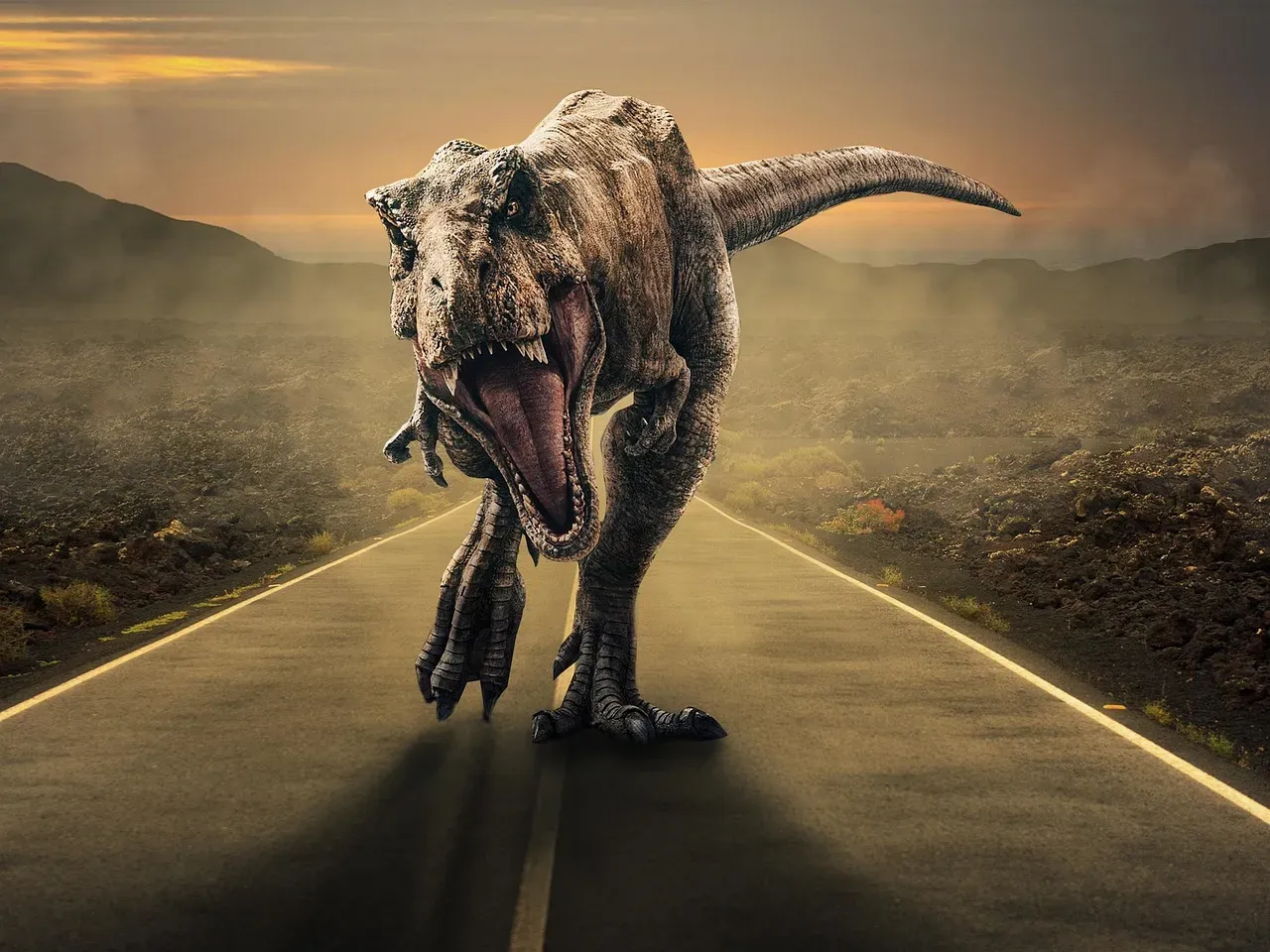
The film version of T. rex keeps pace with a speeding vehicle. The real version, according to every credible biomechanical model produced in the last twenty years, topped out somewhere between 10 and 18 miles per hour for a full-grown adult – roughly a strong human jog. Leg bone proportions, estimated muscle mass, and trackway evidence all point in the same direction. Running faster would have placed catastrophic stress on leg bones that weren’t built for it. Juveniles were quicker, but the eight-ton adult version was built for power, not pace.
This lower speed doesn’t make T. rex less formidable – it makes it a different kind of predator. Rather than a sprint hunter burning energy on long chases, it appears to have been a deliberate, ambush-capable pursuer that closed short distances with tremendous force. Many museum dioramas still stage dynamic pursuit scenes that reflect the old speed estimates. That framing misleads visitors about how the animal actually interacted with prey – and it undersells the intelligence and patience that a slower, more calculated predator requires.
#7 – Those “Useless” Little Arms Could Generate Hundreds of Pounds of Force
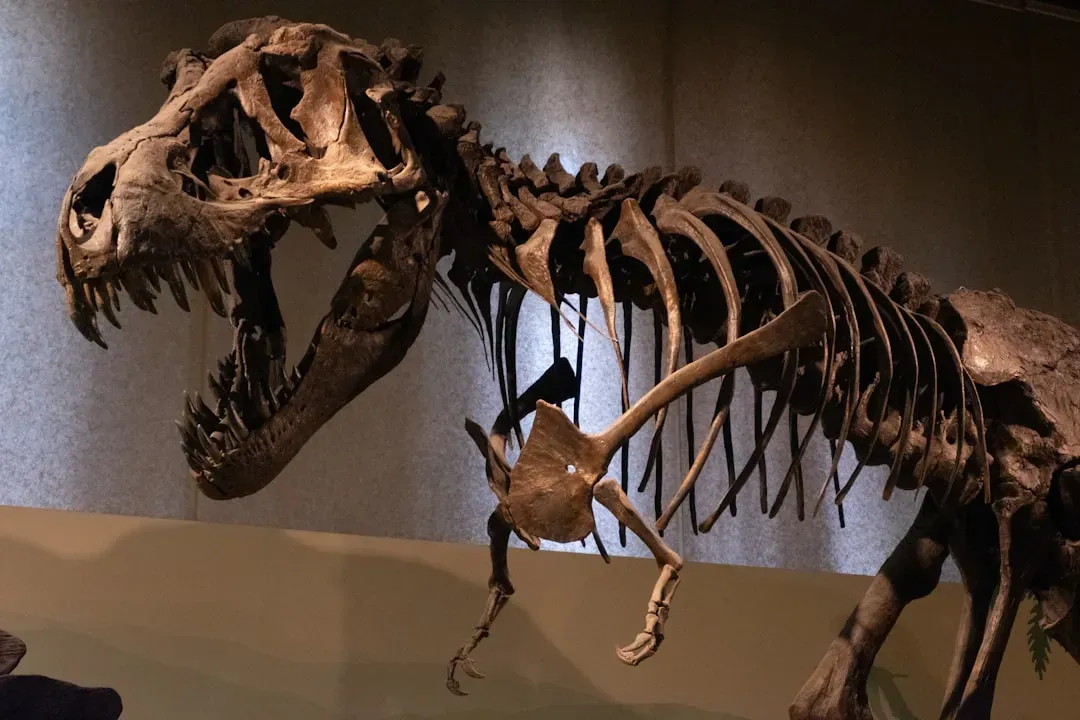
The tiny forelimbs have become a cultural punchline, but palaeontologists find the “useless arms” framing genuinely frustrating. Studies of muscle attachment scarring on T. rex arm bones show the forelimbs were capable of generating an estimated 400 pounds of force per arm – extraordinary for something so small. Healed fractures and stress injuries on arm bones from multiple specimens suggest these limbs were used regularly and under real load. They weren’t decorative. They weren’t evolutionary leftovers waiting to disappear. They worked.
The most likely functions include gripping during mating and bracing to push off the ground from a resting position – both tasks where a burst of localized power matters more than reach or range of motion. Some researchers argue the arms shrank precisely because the skull took over all prey-handling duties, freeing the forelimbs to specialize in these other roles rather than vanish entirely. Museums rarely get into this nuance. The arms usually get a single dismissive label, if they get any explanation at all, which is a shame because the real story is considerably more interesting.
#6 – T. Rex Had Predator Eyes Built for Precise, Depth-Judging Strikes
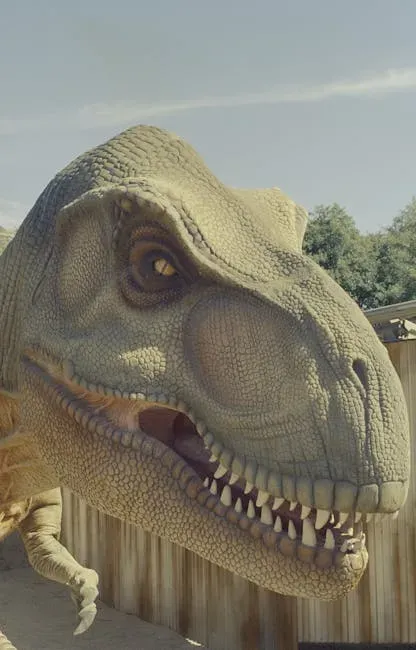
Most large theropods had eyes positioned toward the sides of the skull for wide-angle awareness. T. rex is different. The eye socket and braincase anatomy give it roughly 55 degrees of binocular overlap – comparable in quality to many modern raptors, and dramatically better than any living reptile. That’s not a design suited to spotting movement across a wide field. It’s a design suited to judging exactly how far away something is and hitting it accurately. Forward-facing predator eyes are expensive in evolutionary terms, which means T. rex paid a real cost in peripheral vision to gain that depth perception. Evolution doesn’t make that trade without a reason.
Evidence also suggests strong low-light visual capability, based on comparisons with the scleral ring dimensions of related species. Whether T. rex was primarily a daytime hunter or occasionally active at dusk remains debated, but the optics clearly weren’t those of a passive scavenger scanning horizons. Older museum artwork routinely shows the eyes set more to the sides of the head, which gives the animal a more reptilian, less threatening expression. The corrected version – eyes forward, gaze locked – looks far more like an apex predator. Because it was.
Quick Compare: T. Rex Vision vs. Other Animals
- T. rex binocular overlap: ~55 degrees – broader than a modern hawk
- Modern hawk binocular overlap: ~30–50 degrees – renowned for aerial precision
- Modern alligator binocular overlap: ~20 degrees – far narrower, mostly monocular
- Human binocular overlap: ~120 degrees – wide, but aided by mobile eye muscles T. rex lacked
- Herbivore dinosaurs (e.g., hadrosaurs): Near-zero binocular overlap – wide-angle prey awareness only
#5 – It Had Lips, and the Permanent Snarl Is Completely Made Up
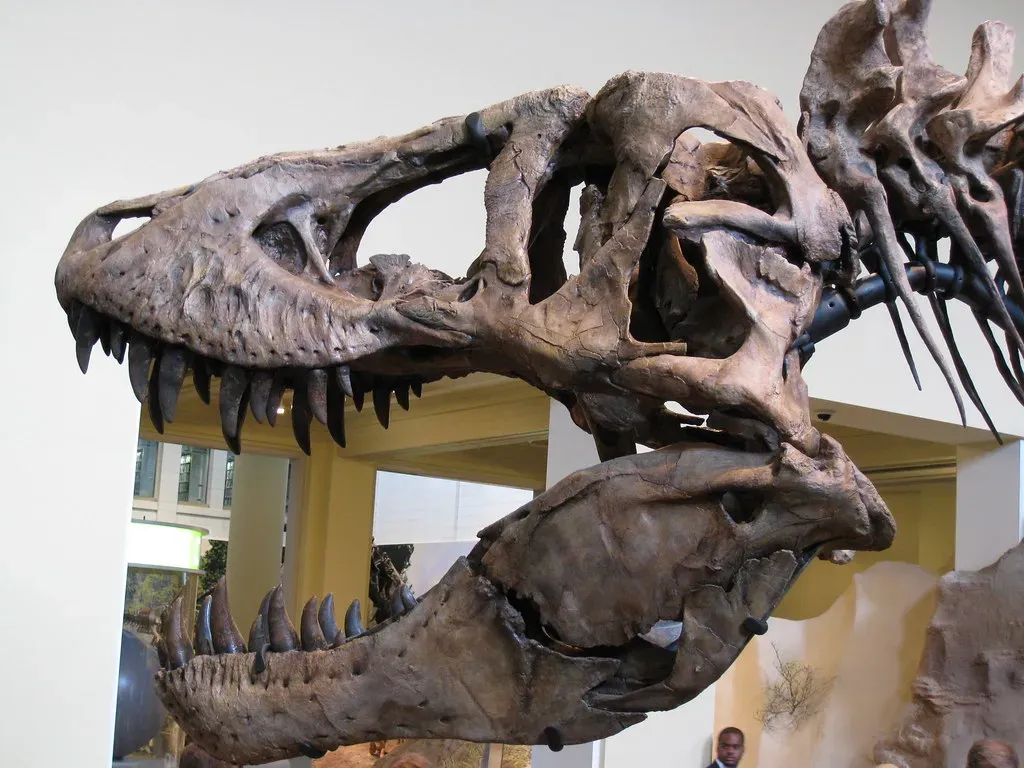
The signature T. rex look – teeth always visible, upper lip permanently curled into a snarl – almost certainly never existed in life. Analyses of facial bone foramina (the small holes that supply nerves and blood vessels to soft tissue) and tooth enamel wear patterns match the patterns seen in monitor lizards and other lipped reptiles, not crocodilians with permanently exposed teeth. Crocodile teeth don’t need protection from drying out because crocodiles spend their lives near water. A land-dwelling predator living in the semi-arid Late Cretaceous would have needed fleshy lips to keep that enamel from cracking.
This is one of those findings that has been discussed in the literature for years while the popular image stayed completely unchanged. The implication is striking: a resting T. rex with its mouth closed looked less like the forever-snarling beast on every museum poster and more like an enormous, scaled-up monitor lizard – mouth closed, expression neutral, teeth hidden. The teeth were still catastrophically effective the moment that mouth opened. But the resting face? Completely different from everything you’ve seen. Most major exhibits haven’t touched their signage on this yet.
#4 – The Bite Force Was Real and Staggering, But the Skull Was Built Around a Specific Strategy
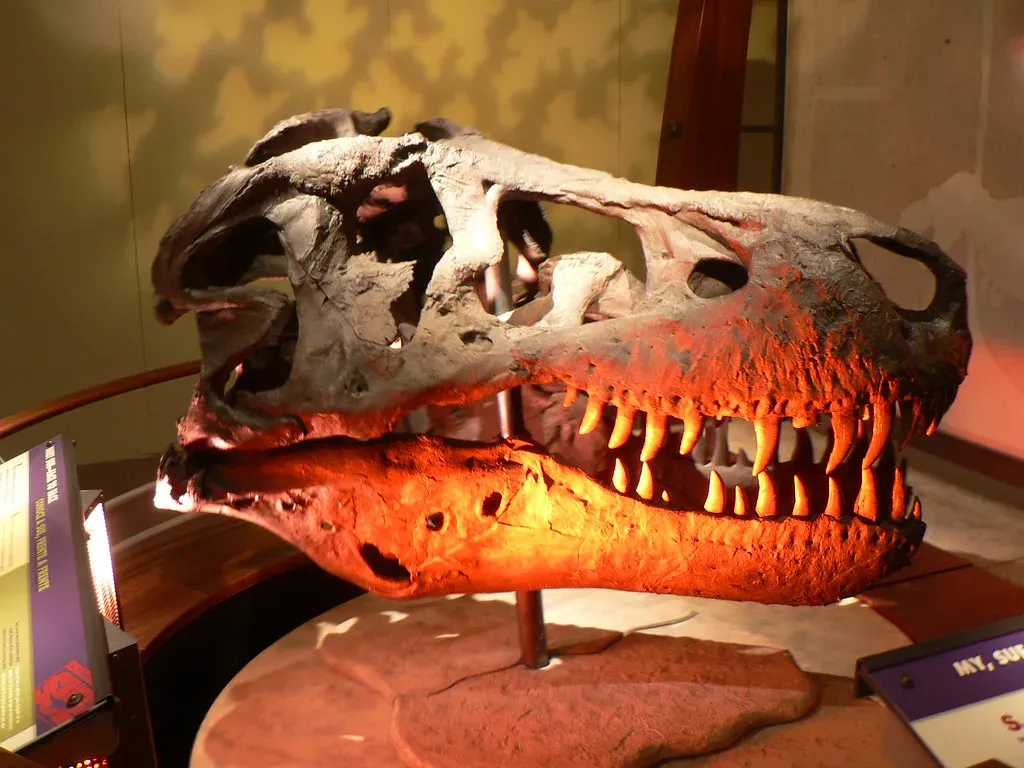
Posterior bite force estimates for adult T. rex range from 35,000 to 57,000 newtons – the strongest of any land animal that has ever existed, enough to crush through bone and drive teeth into the marrow of a Triceratops frill. The skull architecture tells the story: every structural element, from the fused nasal bones to the reinforced back of the jaw, was engineered to absorb and transmit exactly this kind of catastrophic load. It wasn’t a flexible, agile skull built for catching fast prey. It was a bone press built for processing large, armored animals completely.
The force was heavily concentrated at the posterior teeth, not the front. This means T. rex likely used the front teeth to seize and position prey, then rotated its head to bring the crushing back teeth to bear – a feeding technique confirmed by bite marks found embedded deep in hadrosaur and ceratopsian bones. Some popular accounts over the years exaggerated the numbers even beyond what the models support, which ironically undersells the real story: an animal so precisely engineered for a specific ecological role that its entire skull was essentially one massive bone-cracking tool. Museums are starting to present the numbers, but rarely the full mechanical context.
Fast Facts: The T. Rex Bite
- Bite force: 35,000–57,000 newtons at the back teeth – the strongest of any known land animal, living or extinct
- For context: human bite force typically measures under 1,000 newtons
- The force was roughly equivalent to the weight of a medium-sized elephant pressing down with each crunch
- Peak force was concentrated at the posterior (rear) teeth, not the front – a bone-crushing, not prey-snatching, design
- Younger T. rex individuals had significantly weaker bites, suggesting juveniles targeted different, softer prey than adults
- Bite marks pressed into Triceratops and hadrosaur bones have physically confirmed the force estimates
#3 – The Fully Feathered T. Rex Was Also an Overreach
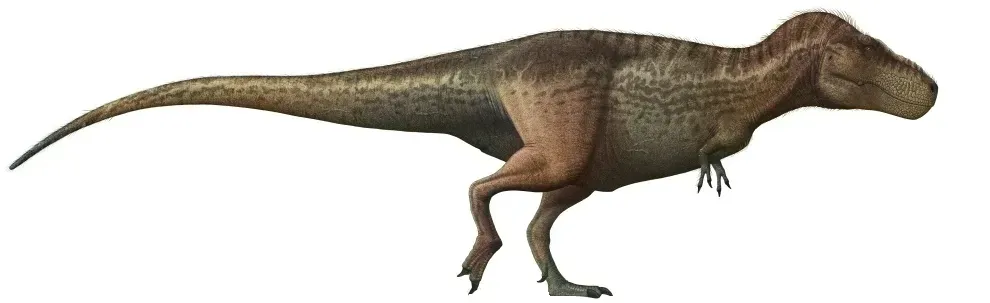
When early tyrannosauroid relatives were found with clear feather impressions in the early 2000s, the natural assumption was that T. rex probably had extensive plumage too. Reconstructions flooded in – feathered adults, downy juveniles, the works. The popular science coverage ran with it enthusiastically. But direct skin impressions recovered from actual T. rex specimens tell a different story. The patches recovered so far, from the neck, hips, and tail regions, show scales. Not feathers. Scales.
The current working interpretation is that early tyrannosauroids retained the ancestral feathered condition, but as the lineage scaled up in body size, feathers became a thermoregulatory liability rather than an asset. A large warm-bodied animal generates enormous internal heat; a thick feather coat would cause dangerous overheating. Adults likely lost most of their plumage over evolutionary time for the same reason elephants lost theirs – being enormous changes your relationship with heat. Juveniles may have retained some fuzz for insulation before they hit serious body mass. The fully feathered adult T. rex that dominated popular science imagery for a decade appears to have been a well-intentioned overcorrection. Many museum exhibits haven’t navigated this revision cleanly yet.
Worth Knowing: The Feather Question
- Early tyrannosauroids like Yutyrannus (discovered 2012) were clearly feathered – fueling the assumption T. rex was too
- Actual T. rex skin impressions from neck, hip, and tail regions show scales, not feathers
- The leading explanation: at 8+ tons, a feather coat would cause dangerous overheating – the same reason elephants are largely hairless
- Juveniles may have had insulating fuzz before body mass made it a liability
- The “fully feathered adult” reconstruction, dominant in popular science for ~a decade, is now considered an overcorrection
#2 – It Took Roughly 40 Years to Reach Full Size, and That Rewrites Its Life History
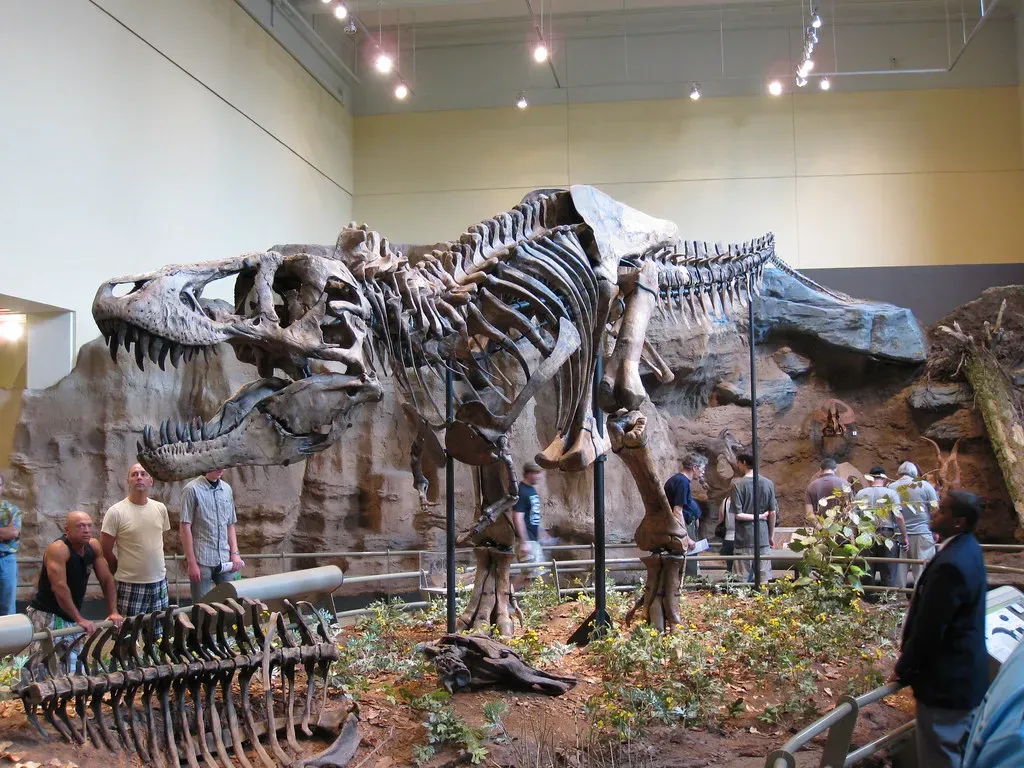
Bone histology – the microscopic growth ring analysis that works like tree rings for dinosaur skeletons – originally suggested T. rex reached adult size in 20 to 30 years. Newer work on a broader range of specimens, with better controlled sample sets, pushes that estimate toward 40 years for the largest individuals to hit their maximum dimensions around eight tons. That is a remarkably slow trajectory for a non-avian dinosaur. It means T. rex spent decades as a subadult – lighter, faster, and probably targeting completely different prey than the massive adults – before locking into its final ecological role.
This extended growth window has real consequences for understanding population dynamics in the final Cretaceous. It means older adults and the subadult cohort were effectively competing for different resources, which reduces direct intraspecific competition and may explain how multiple life stages of this enormous animal could coexist in the same ecosystem without crashing prey populations. Earlier growth curve estimates were also complicated by material later reassigned to Nanotyrannus – which introduces the single most disruptive piece of T. rex science to land in years.
#1 – Nanotyrannus Was a Separate Animal, and That Breaks Decades of T. Rex Research
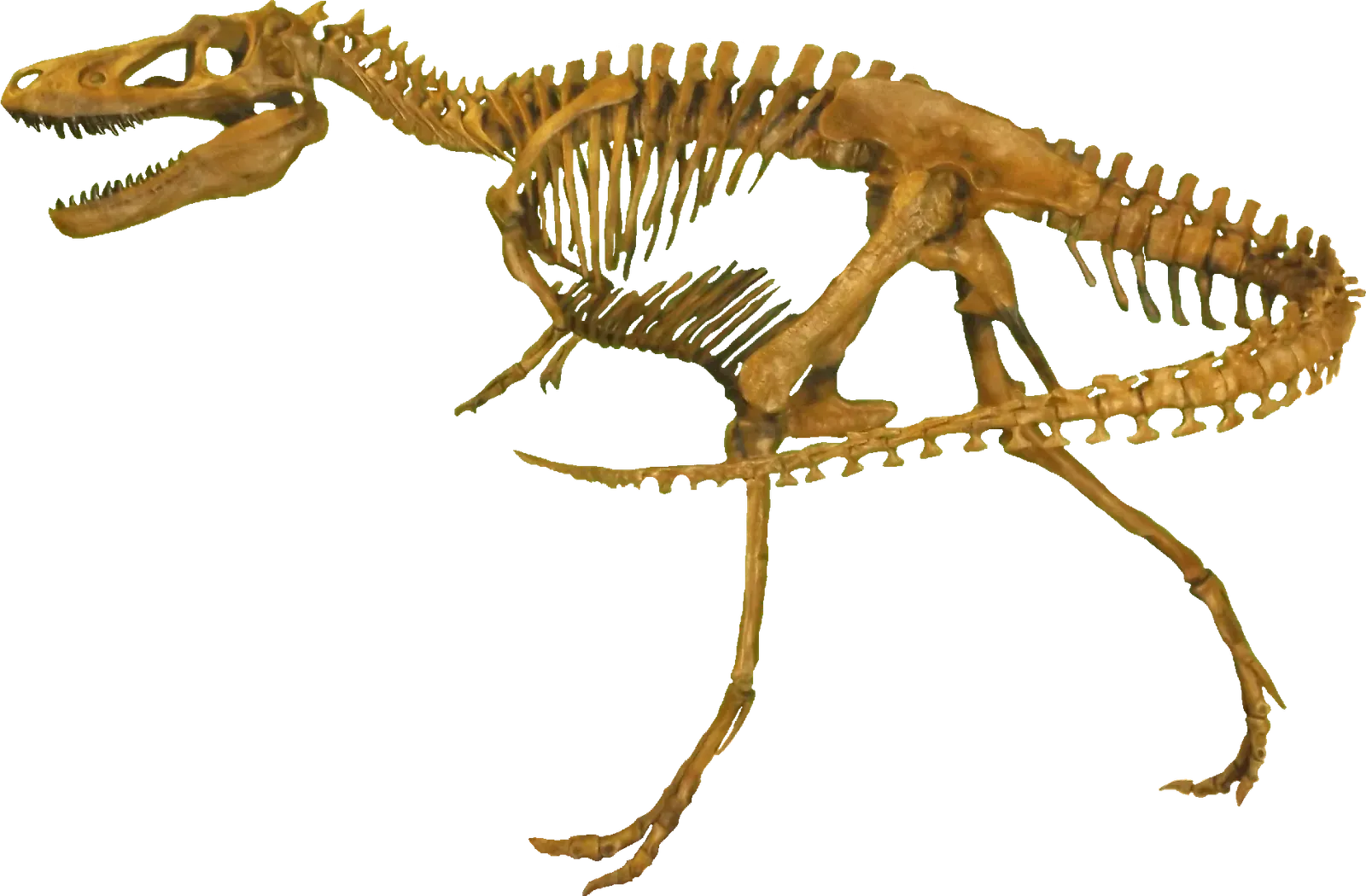
For years, the small tyrannosaur specimens labeled Nanotyrannus were dismissed as juvenile T. rex individuals. The argument seemed reasonable: big animals start small, and without soft tissue you’re working from bones that change dramatically through growth. But a comprehensive 2025 skeletal analysis of a complete specimen changed the conversation in a way that’s hard to overstate. Features like proportionally larger forelimbs, different tooth counts, and distinct cranial architecture appear consistently across multiple specimens and don’t match any stage of confirmed T. rex ontogeny. Nanotyrannus was its own animal – a smaller tyrannosaur that shared the Late Cretaceous Hell Creek ecosystem with T. rex rather than growing into it.
The downstream consequences are genuinely significant. A substantial body of research over the past few decades studied “juvenile T. rex” behavior, growth rates, sensory development, and ecology – and some of that work was drawing on Nanotyrannus specimens without knowing it. Those conclusions now need to be revisited. It also means the Hell Creek formation supported at least two distinct tyrannosaur species simultaneously, which reshapes our understanding of apex predator ecology in that environment entirely. Most museums haven’t updated a single label. The mounts and displays still reflect the old interpretation. Given how thoroughly this finding reshapes the picture, that gap between what researchers know and what the public sees has rarely been wider.
Fast Facts: The Nanotyrannus Bombshell
- A landmark 2025 study published in Nature, led by Lindsay Zanno and James Napoli, confirmed Nanotyrannus as a fully distinct genus
- A second, independent December 2025 study in Science reached the same conclusion using hyoid bone histology
- The confirmed adult Nanotyrannus weighed approximately 1,500 lbs – roughly half the size of a full-grown T. rex
- Key distinguishing features: higher tooth count, enlarged hands, shorter tail, and unique cranial nerve and sinus patterns
- Two Nanotyrannus species are now formally recognized: N. lancensis and the newly named N. lethaeus
- Prior research that used Nanotyrannus specimens as “juvenile T. rex” data now requires reassessment
The Verdict: The Real T. Rex Deserved Better Than This
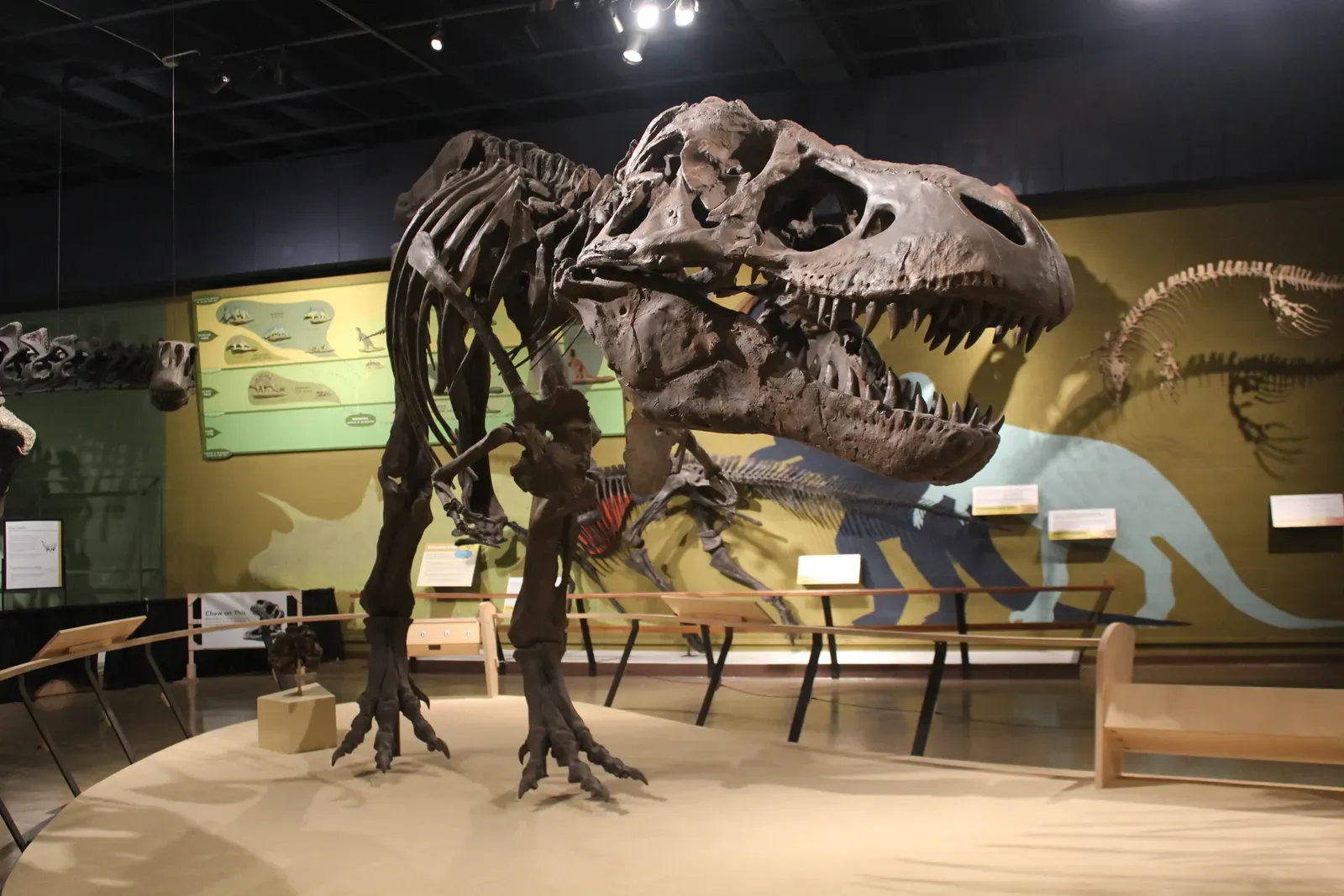
Here’s the honest takeaway: the T. rex that palaeontologists actually study is more interesting, more ecologically complex, and more biologically strange than the movie version ever was. A horizontally balanced, lipped, forward-eyed ambush predator that took 40 years to reach full size, shared its ecosystem with a misidentified cousin, and had arms that could still bench-press a grown man – that animal is more compelling than a scaly kangaroo chasing a Jeep. The Hollywood version flattened it into pure menace. The real fossil record gave it a life history.
Museums aren’t villains here – retooling major permanent exhibits costs millions and takes years, and institutions have to weigh every update against budget realities. But the gap between what researchers know and what the public sees has stretched wide enough that it’s doing real damage to scientific literacy. People form their intuitions about evolution, predator ecology, and paleontology from these displays. When the displays lag a generation behind the science, so does the public understanding. The T. rex story isn’t finished – if anything, 2025 just restarted several chapters of it. The least we can do is let the real animal finally take the stage.