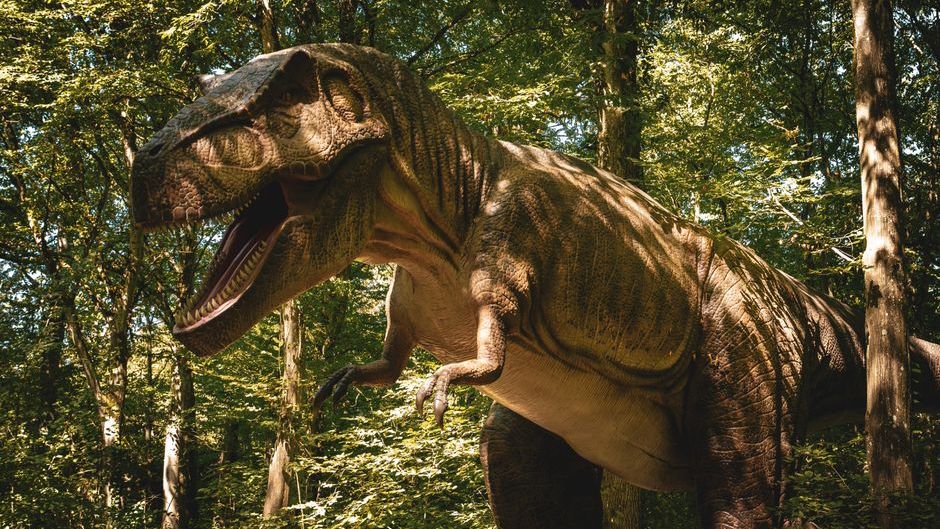
Close your eyes and picture a T-Rex. Chances are you see a towering, upright monster with tiny useless arms, a thunderous roar, and eyes that can’t detect anything that isn’t moving. You probably see scales everywhere, a perpetual snarl showing off rows of naked banana-sized teeth, and a body built for sprinting down a highway. That image is burned into an entire generation thanks to toys, blockbuster films, and museum displays. And according to scientists, nearly every single detail of it is wrong.
What the fossil record actually reveals is stranger, more impressive, and honestly more terrifying than anything Hollywood invented. We’re talking about an animal with eyesight sharper than a falcon, arms that could curl 400 pounds, and a growth timeline that stretched nearly four decades. The real T-Rex has been hiding in plain sight, waiting for the popular version to catch up. It hasn’t yet. Here’s where your mental image falls apart.
#11 – It Didn’t Stand Upright Like a Kangaroo
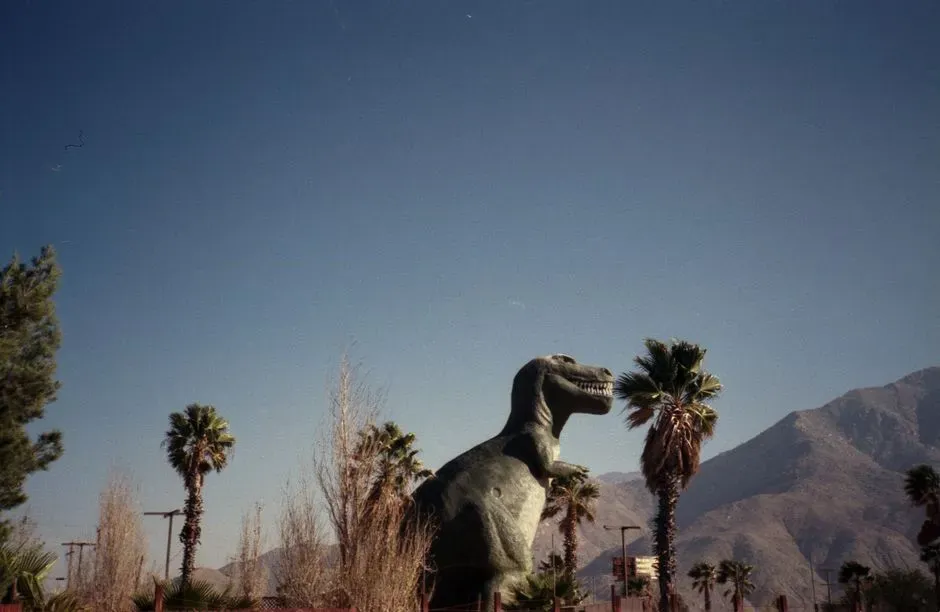
For decades, museum displays and monster movies showed T-Rex strutting nearly vertical, chest forward, tail dragging behind like an afterthought. It looked menacing. It also would have killed the animal. Fossil evidence from the spine, hip socket, and tail vertebrae makes a purely upright posture structurally impossible – the forces involved would have snapped the pelvis under the animal’s own weight.
The actual posture was horizontal, with the spine running nearly parallel to the ground and that massive tail extending straight back as a precision counterbalance. Scientists confirmed this by mapping muscle attachment scars, calculating center of gravity, and running biomechanical simulations. The tail wasn’t dragging. It was load-bearing. Paleontologists corrected this in research circles decades ago, yet the kangaroo stance still appears on children’s backpacks and fast-food cups. It is, at this point, one of the most stubbornly persistent myths in popular science.
Fast Facts
- T-Rex’s spine ran nearly parallel to the ground, not vertical like a kangaroo
- The tail acted as a precision counterbalance – it never dragged
- Hip socket anatomy makes a fully upright posture structurally impossible
- Biomechanical simulations confirmed the horizontal posture decades ago
- The myth still appears on mass-market merchandise and toys worldwide
#10 – Those “Useless” Arms Could Bench-Press 400 Pounds
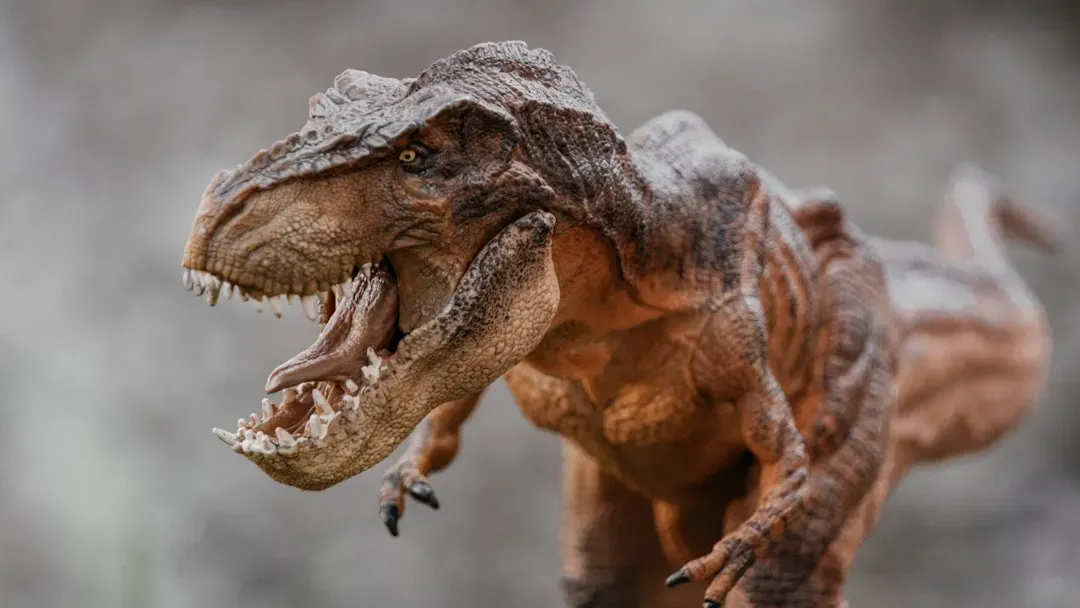
Nothing invites mockery quite like T-Rex arms. They’re the go-to punchline, the evolutionary joke, the proof that even nature makes embarrassing design choices. Except the mockery ignores what the bones actually show. Muscle attachment scars on those short forearm bones indicate extraordinary density of force. Biomechanical estimates suggest each arm could exert a curling force of approximately 180 kilograms (400 lb). Making them, relative to body size, about three times stronger than a human arm.
What were they for? Leading hypotheses include bracing against the ground when rising from a prone position, pinning struggling prey during that initial, skull-delivered bite, or playing a role in mating behavior. The most widely accepted explanation is that the skull became more important than the arms during evolution. A big head needs big neck muscles to support it – and neck and arm muscles compete for muscle attachment space across the bones of the shoulder. The arms were reduced, not retired. There’s a significant difference between those two things.
#9 – Its Eyesight Was Sharper Than a Falcon’s
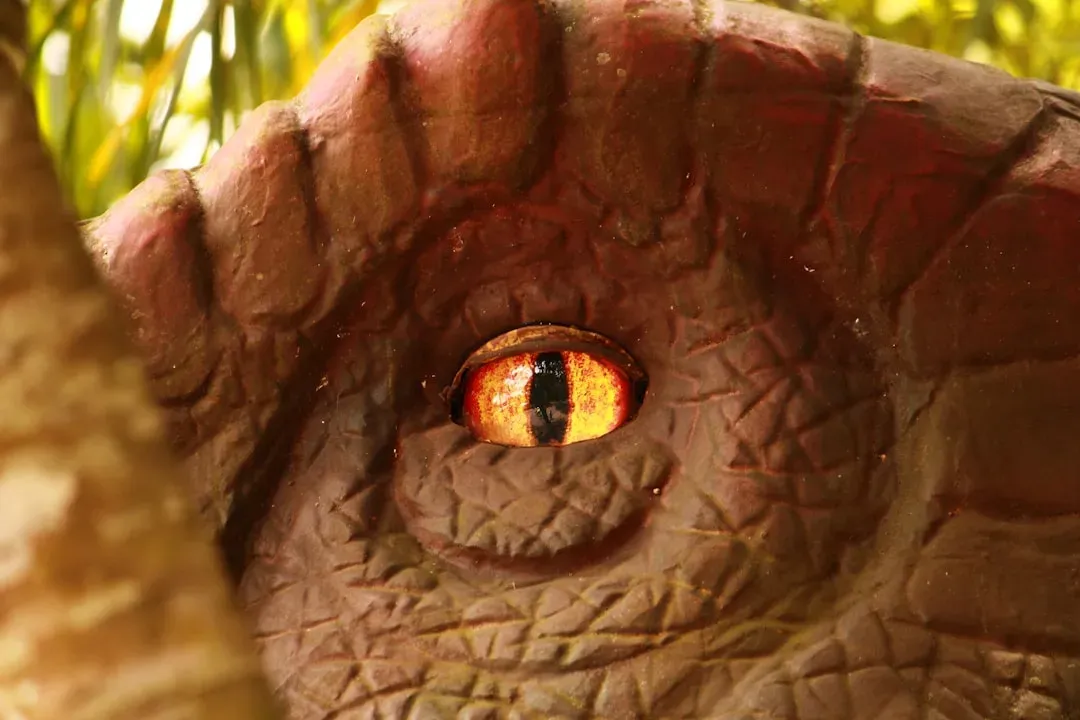
“It can’t see you if you don’t move.” That line from Jurassic Park became part of the cultural DNA, repeated in backyards and classrooms for thirty years. It has no basis in anatomy. T-Rex eye sockets were the size of grapefruits, and they faced forward – producing a binocular overlap of roughly 55 degrees. That forward-facing configuration is the hallmark of a precision predator, not a scavenger stumbling toward carcasses by smell alone.
Research published by paleontologist Kent Stevens showed T-Rex likely resolved fine detail up to six times better than a modern hawk and may have perceived a broader color spectrum, potentially including ultraviolet wavelengths. The bony structures surrounding those eye sockets also suggest large, well-developed eyeballs rather than the beady side-facing eyes of prey animals. Standing completely still in front of a T-Rex would not have saved you. If anything, it would have made you easier to track.
The eyes of T. rex were more like those of a modern hawk or eagle than those of other dinosaurs. It had extraordinary vision.
Kent Stevens, University of Oregon
#8 – The Bite Force Was So Strong It Crushed Bone Like Balsa Wood
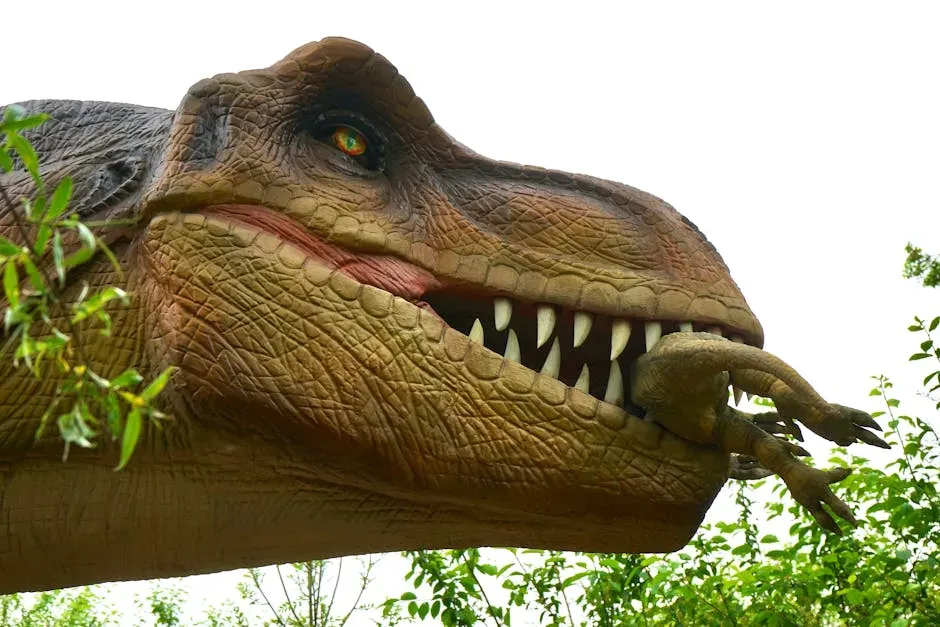
Movies show the bite as a dramatic snap – loud, fast, cinematic. The reality was something more like a hydraulic press closing around your skeleton. The force exerted at one of T-Rex’s back teeth would have been between 7,868 and 12,814 pounds-force – akin to having a medium-sized elephant sit on you. No other terrestrial predator in the fossil record comes close to that number.
The evidence isn’t just theoretical. North American tyrannosaurids, including T-Rex, stand out for habitually biting deeply into bones, pulverizing and digesting them. Healed bite marks on Triceratops and Edmontosaurus bones show that prey animals survived initial attacks, which means T-Rex was biting through armored skulls and thick hide and those animals were still walking away. “It was this bone-crunching acumen that helped T. rex to more fully exploit the carcasses of large horned dinosaurs and duck-billed hadrosaurids whose bones, rich in mineral salts and marrow, were unavailable to smaller, less equipped carnivorous dinosaurs,” according to paleontologist Paul Gignac. The skull’s architecture, with its wide posterior and interlocking struts, was essentially engineered to redirect massive compressive forces without shattering itself in the process.
Quick Compare
| Animal | Estimated Bite Force |
|---|---|
| T-Rex (adult) | ~8,000–12,800 lbs-force |
| Saltwater Crocodile | ~3,700 lbs-force |
| African Lion | ~650–1,000 lbs-force |
| Spotted Hyena | ~1,100 lbs-force |
| T-Rex Juvenile (age ~15) | ~1,000 lbs-force |
#7 – The Fully Feathered T-Rex Is Also Wrong
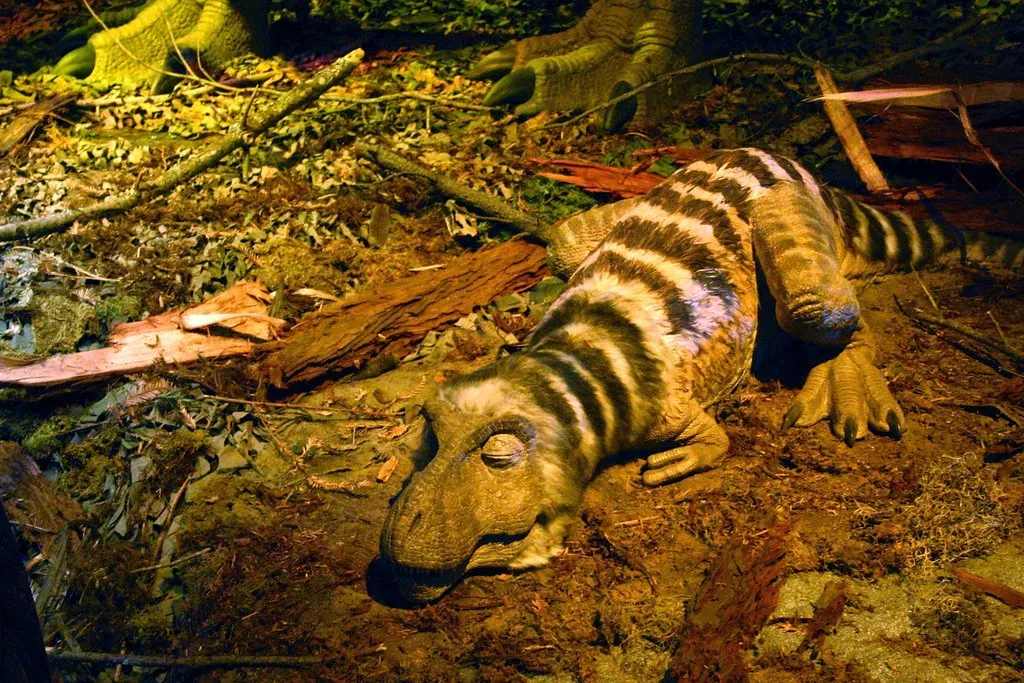
After decades of upright, scaly T-Rex imagery, the scientific pendulum swung hard the other way. Early tyrannosaurs like Dilong paradoxus were discovered with clear evidence of protofeathers, and suddenly popular science went all-in on a fluffy, feathered T-Rex. That overcorrection also missed the mark. Multiple skin impression fossils from actual T-Rex specimens – found on the neck, hips, and tail – show scales, not feathers.
The leading explanation is thermal biology. A juvenile T-Rex weighing a few hundred pounds might benefit from insulating fuzz. An eight-ton adult generates so much metabolic heat that covering it in feathers would risk overheating, much like an elephant doesn’t need fur. Any feathering in mature T-Rex specimens was likely limited to small patches, possibly on the back or head, rather than a full plumage coat. The fully feathered adult remains a popular image on science blogs and reconstructions, but it currently has zero direct fossil support from mature T-Rex specimens.
#6 – It Took Nearly 40 Years to Reach Full Size
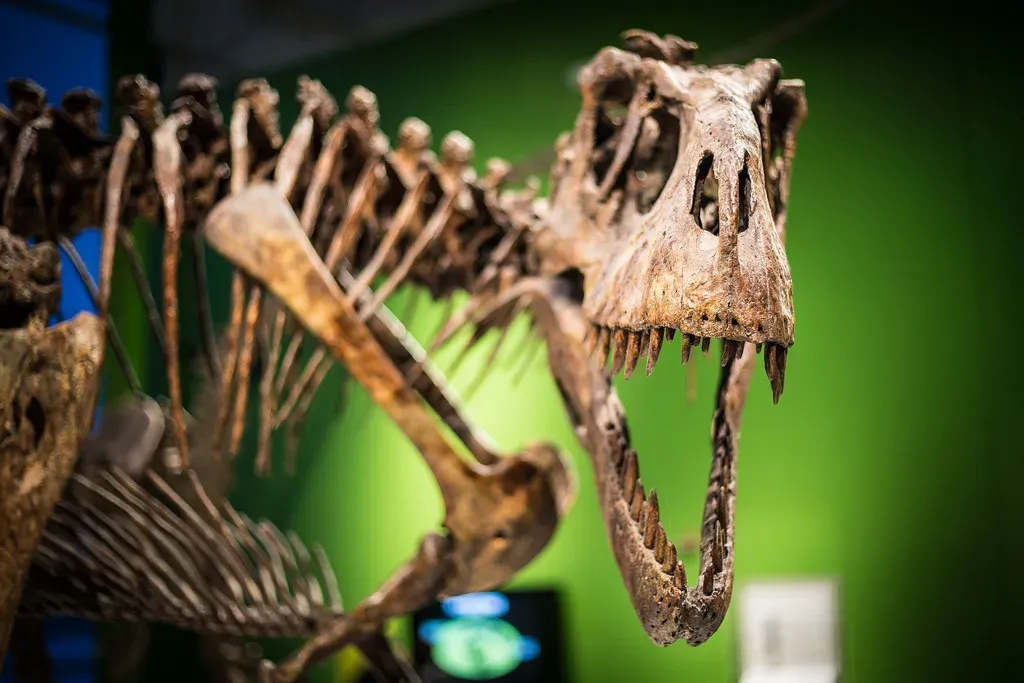
The old model painted T-Rex as a fast grower, hitting peak size around age 25 in a dramatic adolescent growth spurt. New research published in PeerJ rewrites that life cycle: bones from 17 specimens indicate that these hulking predators actually stopped growing sometime between 35 and 40 years old and typically reached at least 8.8 tons. The analysis – the most complete life history ever conducted on T-Rex – revealed hidden growth rings using advanced statistical algorithms and cross-polarized light.
That timeline reframes everything about how the species operated. “Juvenile Tyrannosaurus rex were fleet-footed with knife-like teeth, dominating the mid-carnivore niche before growing up to become the giant, bone-crushing apex predators we recognize today.” Two well-known specimens – nicknamed “Jane” and “Petey” – show growth patterns that differ significantly from those of the other specimens in the dataset, hinting at possible variation between populations or even distinct species lumped under the T-Rex umbrella. The slow burn to dominance makes this animal’s life history far more layered than any blockbuster ever suggested.
At a Glance: T-Rex Growth Timeline
- Previous estimate: Full size reached around age 25
- New research (PeerJ, 2026): Full size reached at 35–40 years
- Adult weight: Approximately 8–8.8 tons
- Method: Growth rings in leg bones examined under cross-polarized light
- Sample size: 17 tyrannosaur specimens, juveniles to massive adults
- Bonus finding: Some specimens may belong to separate but related species
#5 – It Almost Certainly Had Lips
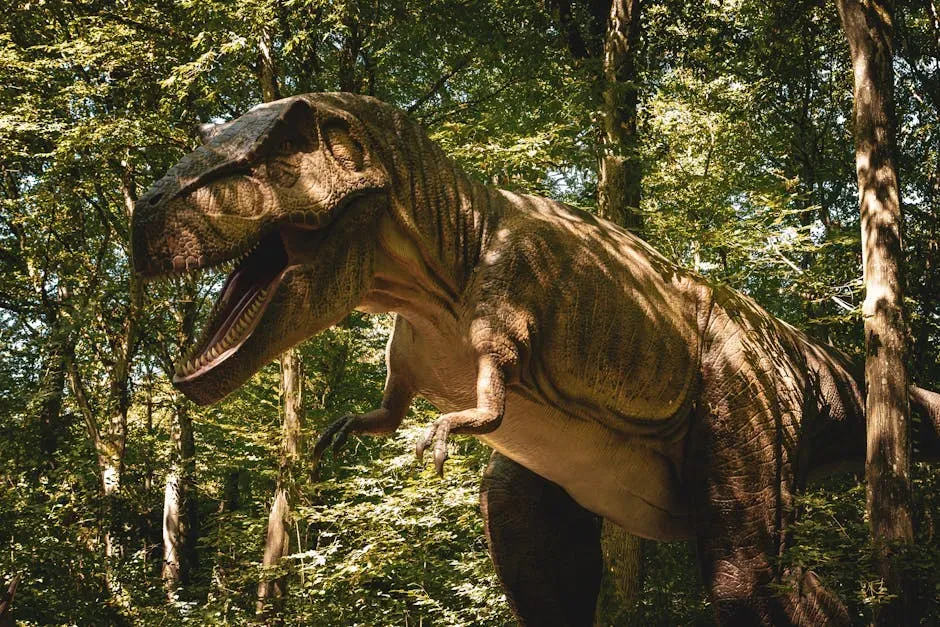
The perpetual snarl, the permanently exposed teeth the size of railroad spikes – that’s the defining visual of T-Rex in popular culture. But a landmark 2023 study published in the journal Science challenged that image head-on. Contrary to more than a century of scientific and popular depictions, the large teeth of Tyrannosaurus rex and other toothy theropod dinosaurs were likely completely covered by thin, scaly “lips” when the mouth was closed. “Teeth that are not covered by lips risk drying out and can be subject to more damage during feeding or fighting, as we see in crocodiles, but not in dinosaurs,” said co-author Kirstin Brink of the University of Manitoba.
Researchers found that no predatory dinosaurs – even the big-toothed T-Rex – had teeth larger than living lizards, meaning the teeth were not too big to be covered. Collectively, these studies point to the same conclusion: that theropod mouth anatomy and functionality seems more like that of lizards than crocodiles – suggesting that lizard-like lips covered their teeth. This changes the face of the animal entirely – from a permanent death-grin to something that looked, at rest, considerably more reptilian and composed. Among researchers working on theropod facial anatomy, the lipped reconstruction has become the working consensus, though some paleontologists remain unconvinced.
#4 – It Walked Very Fast, But Probably Couldn’t Sprint
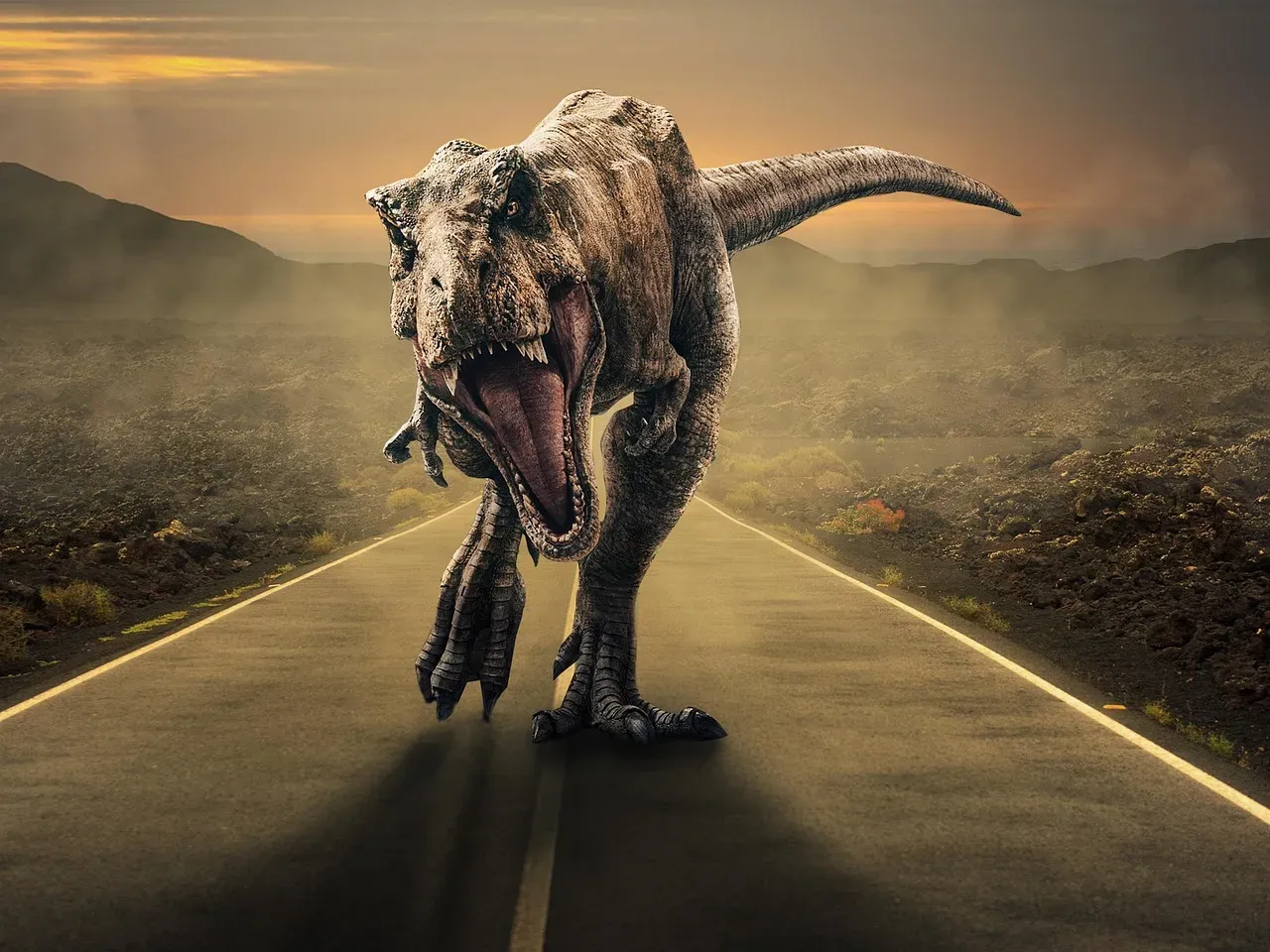
The Jurassic Park Jeep chase is one of cinema’s great sequences. It is also, according to biomechanical modeling, physically implausible. Most researchers conclude that a true run was biomechanically impossible for the adult animal. A run is defined as a gait that includes an “aerial phase” where both feet leave the ground – and for the multi-ton T-Rex, this gait would have introduced dangerous forces. Models consistently indicate that anything resembling a full sprint would have risked catastrophic leg fractures.
Instead of running, the creature utilized a rapid, powerful walk or a “power trot,” ensuring at least one foot remained in contact with the ground to support its immense mass. Maximum running speed for a T-Rex is thought to be in the range of 10 to 25 mph. This modest speed suggests that the T-Rex was not an agile, pursuit predator but rather an ambush hunter or an endurance specialist. The animals it hunted were similarly constrained by physics, so a genuine footrace was never part of the equation. Ambush, endurance, and overwhelming force were far more plausible hunting strategies than a straight-line dash.
Worth Knowing
- T-Rex’s preferred walking pace was roughly 2.9–4.6 mph – about a brisk human walk
- Top burst speed estimates range from 10–25 mph, not the 45 mph once proposed
- True sprinting (both feet airborne) was likely physically impossible at 8+ tons
- An elite human sprinter at ~28 mph could theoretically outrun a mature T-Rex in a short dash
- Trackway evidence shows only walking or slow-trotting gaits – no running footprints have been found
#3 – The Famous Roar Was Almost Certainly Fictional
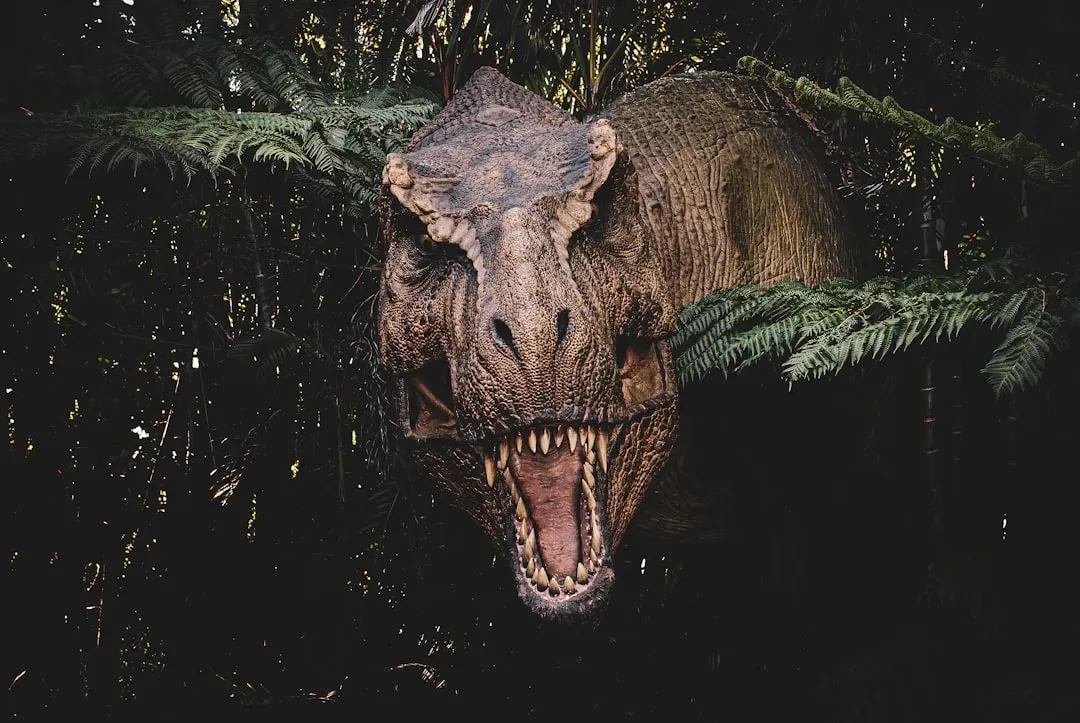
The T-Rex roar in Jurassic Park was created by blending a baby elephant, an alligator, and a tiger. It is an extraordinary piece of sound design. It is also almost certainly nothing like what the animal actually produced. The fossil record contains no preserved vocal anatomy, but we can draw strong inferences from T-Rex’s closest living relatives – birds and crocodilians. Neither group roars with an open mouth. Both produce closed-mouth vocalizations: the deep booming of a cassowary, the infrasonic rumble of a crocodile, the resonant hum of an ostrich in display.
Paleontologists studying air sac anatomy in related theropods suggest T-Rex likely produced low-frequency, closed-mouth sounds that traveled significant distances through the ground and air – felt as much as heard. This fits perfectly with a large, potentially territorial animal that needed to communicate over vast distances without wasting energy. The actual sound of a living T-Rex was probably somewhere between a crocodile’s territorial rumble and the chest-vibrating boom of a large ratite. Unsettling. Just not cinematic.
#2 – Its Most Important Sense Was Probably Smell, Not Sight
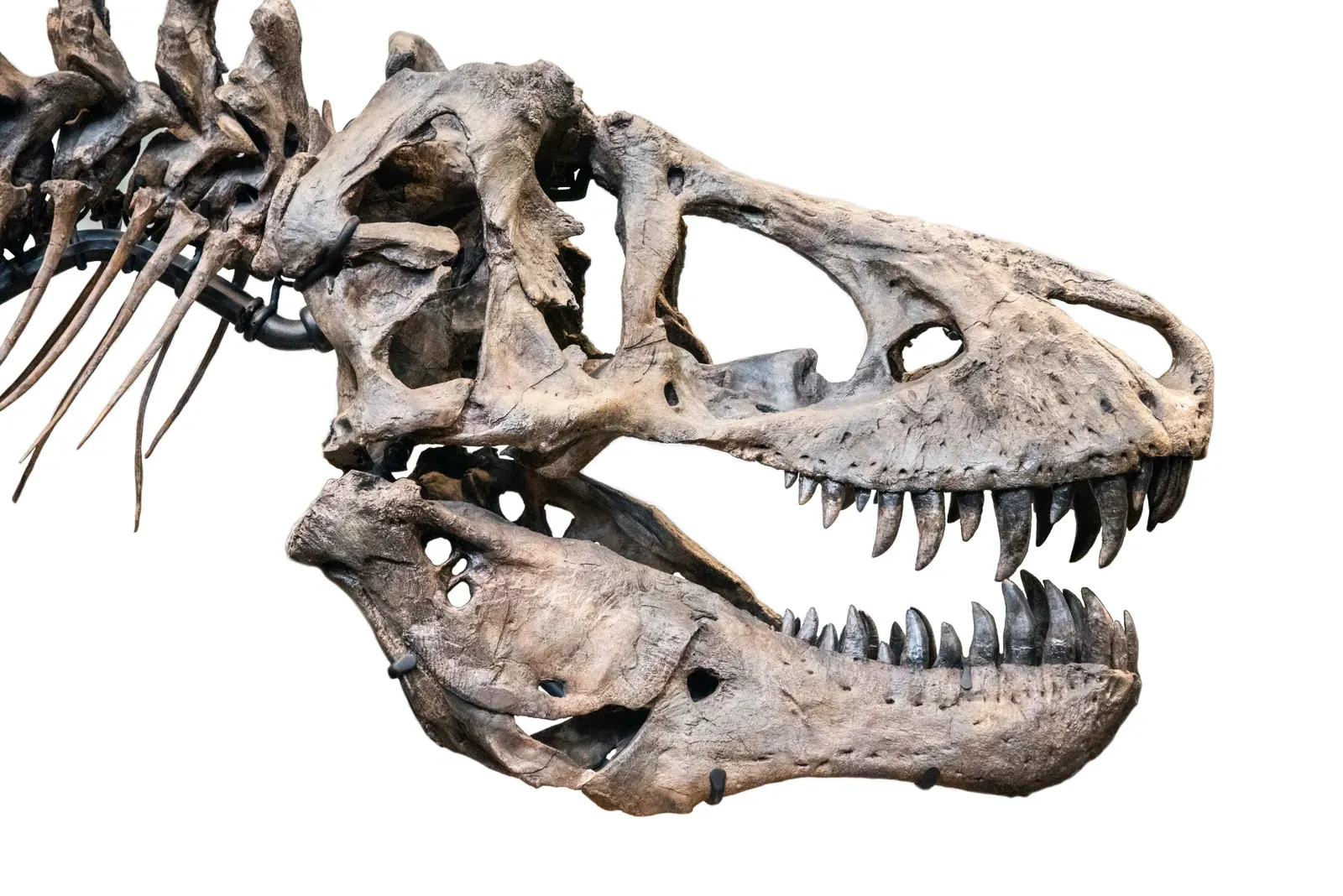
Vision gets most of the attention, but the T-Rex brain tells a more complicated story. Endocasts – fossil impressions of the brain cavity – reveal olfactory bulbs that were enormous relative to overall brain size, dwarfing those of nearly every other theropod. This suggests smell was not a secondary backup sense but a primary navigation and hunting tool. An animal with this kind of olfactory investment could detect chemical signals across enormous distances, locating carcasses, rivals, or prey long before any visual contact was possible.
This makes ecological sense. Large predators like T-Rex likely ranged across vast territories, and in dense Cretaceous forests or across open floodplains, scent trails would have been far more reliable than line-of-sight hunting. Modern analogues like turkey vultures, which can detect decay from miles away, and saltwater crocodiles, which use chemical cues for territorial mapping, support this model. T-Rex was probably doing something similar – building a detailed chemical map of its environment and using vision to close the distance once the nose had already done the navigation work.
#1 – The “Lone King of Everything” Narrative Doesn’t Hold Up
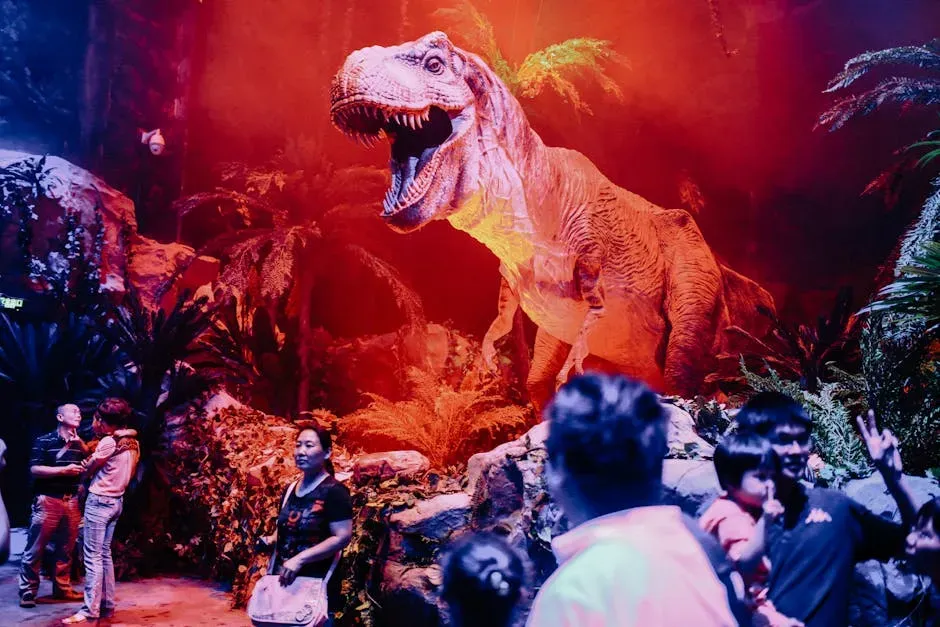
The most emotionally satisfying part of the T-Rex mythology is its absolute dominance – the unchallenged apex predator, ruling alone, afraid of nothing. The fossil record makes that narrative increasingly hard to defend. Trackways from related large tyrannosaurs show multiple individuals moving together, raising the possibility of loose social hunting or at minimum, tolerating proximity. Bite marks consistent with intraspecific combat appear on T-Rex bones, indicating these animals fought each other seriously and regularly.
The ecosystem T-Rex inhabited was not a stage built for one superstar. It shared the Hell Creek Formation with Triceratops capable of inflicting devastating injuries, with Ankylosaurus carrying a tail club that could shatter leg bones, and potentially with other large predators competing for the same resources. Some researchers have raised questions about the “Tyrannosaurus rex species complex,” acknowledging the possibility that the fossils may represent multiple related species or subspecies. The lone tyrant is a compelling story. The real animal lived in a world that pushed back hard, and the scars on its bones prove it.
Why It Stands Out
- Tyrannosaur trackways suggest multiple individuals moved together – possible pack tolerance
- T-Rex bones bear intraspecific bite scars – they fought each other, hard
- Hell Creek cohabitants included Triceratops, Ankylosaurus, and Edmontosaurus – none were easy prey
- Some specimens may belong to distinct but related species, not a single T-Rex lineage
- The “apex loner” myth ignores an ecosystem that pushed back at every level
The Verdict: The Real Animal Deserves Better
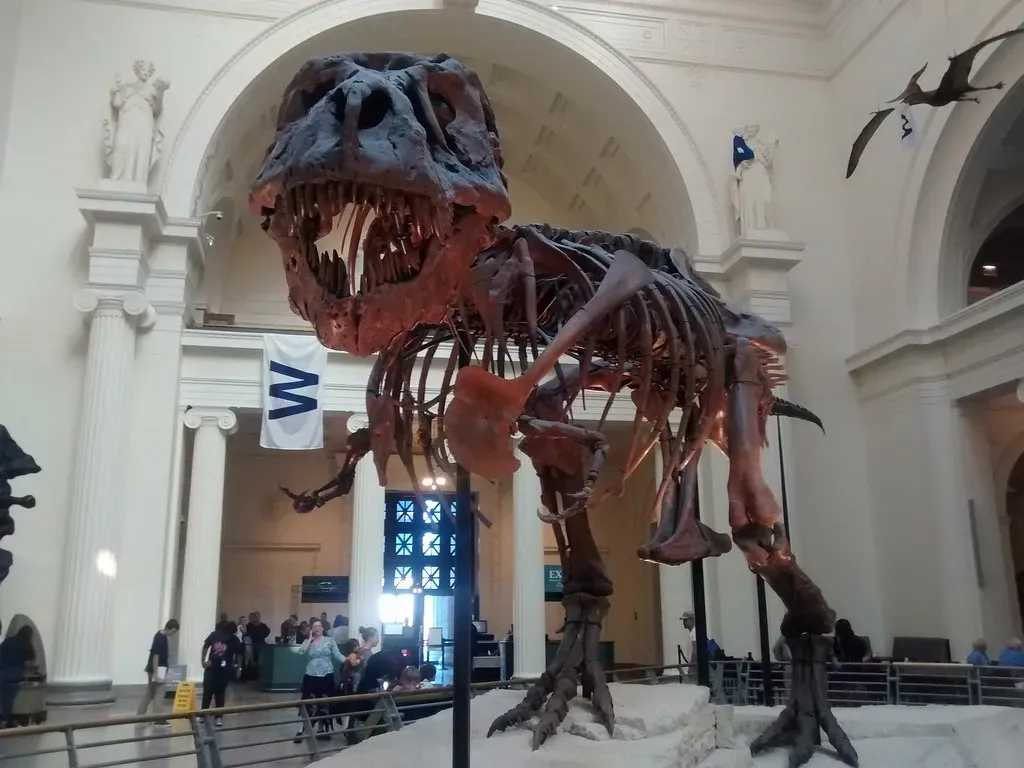
Here’s the honest takeaway: the Hollywood T-Rex is a lesser animal than the real one. The movie version is a running, roaring, tooth-baring prop for human drama. The actual T-Rex was a horizontally balanced, slow-growing, lip-covered, bone-crushing predator with the eyes of a hawk, the nose of a vulture, arms that could lift a motorcycle, and a bite that turned femurs into powder. It spent nearly four decades becoming that animal. It communicated in frequencies you would feel in your chest before you heard them. It almost certainly had competition, carried scars, and navigated a world that was genuinely dangerous even to it.
That version doesn’t need any embellishment from a director. Every correction science has made to the popular image has made T-Rex more impressive, not less. The myth sold us a monster. The fossils delivered something far more extraordinary: an animal so well-engineered for its environment that even 66 million years of extinction hasn’t managed to make it uninteresting. If anything, the more we find out, the stranger and more formidable it becomes. That’s worth updating your mental image for.