Everything you learned about dinosaurs in school was built on the best evidence available at the time. The problem is that the evidence kept getting better – and the classrooms never caught up. Decade after decade, fossil hunters pulled stranger and stranger things out of the ground: feathered giants, warm-blooded monsters, creatures that swam, brooded their eggs, and survived in Arctic darkness. The picture that emerged looked almost nothing like the scaly, cold-blooded, swamp-bound lizards of the old textbooks.
What follows isn’t a list of minor corrections. Some of these updates overturn things that were taught as settled fact for generations. A few of them are still quietly controversial inside the field itself. And at least one of them will make you look at a pigeon very differently for the rest of your life.
#13 – Dinosaurs Never Actually Went Extinct
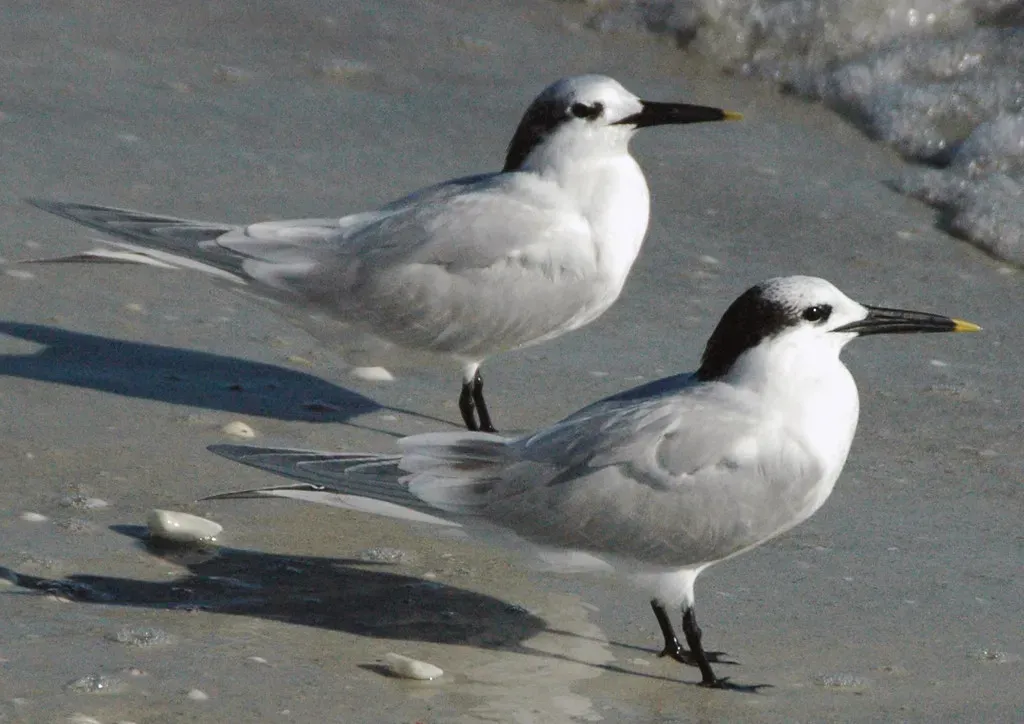
Most textbooks still frame the end-Cretaceous event as a total wipeout – asteroids hit, curtains fall, dinosaurs gone. But that story has a massive asterisk attached to it. Birds are living dinosaurs. Not distant cousins, not evolved-from-dinosaurs. They are dinosaurs, classified within the theropod lineage, backed by skeletal, genetic, and fossil evidence that is about as solid as paleontology gets. The split between birds and their non-avian relatives happened long before the asteroid arrived, meaning small feathered dinosaurs had already taken to the skies millions of years before the impact.
What makes this genuinely strange is that non-avian dinosaurs and early birds coexisted for millions of years without the birds getting outcompeted or wiped out. The extinction wasn’t a clean break – it was a selective cull. The lineage continued. It’s just that the surviving branch has wings and fits in your hand. That reframing changes everything about how we should talk about dinosaur “extinction” in the first place.
Fast Facts
- Birds belong to the theropod dinosaur lineage – the same branch that includes T. rex and Velociraptor.
- The avian dinosaur branch had already diverged tens of millions of years before the Chicxulub asteroid impact 66 million years ago.
- More than 10,000 living bird species make dinosaurs the most species-rich group of land vertebrates on Earth today.
- The end-Cretaceous event wiped out non-avian dinosaurs but left the avian lineage intact – making “extinction” technically the wrong word.
#12 – Feathers Came Long Before Flight
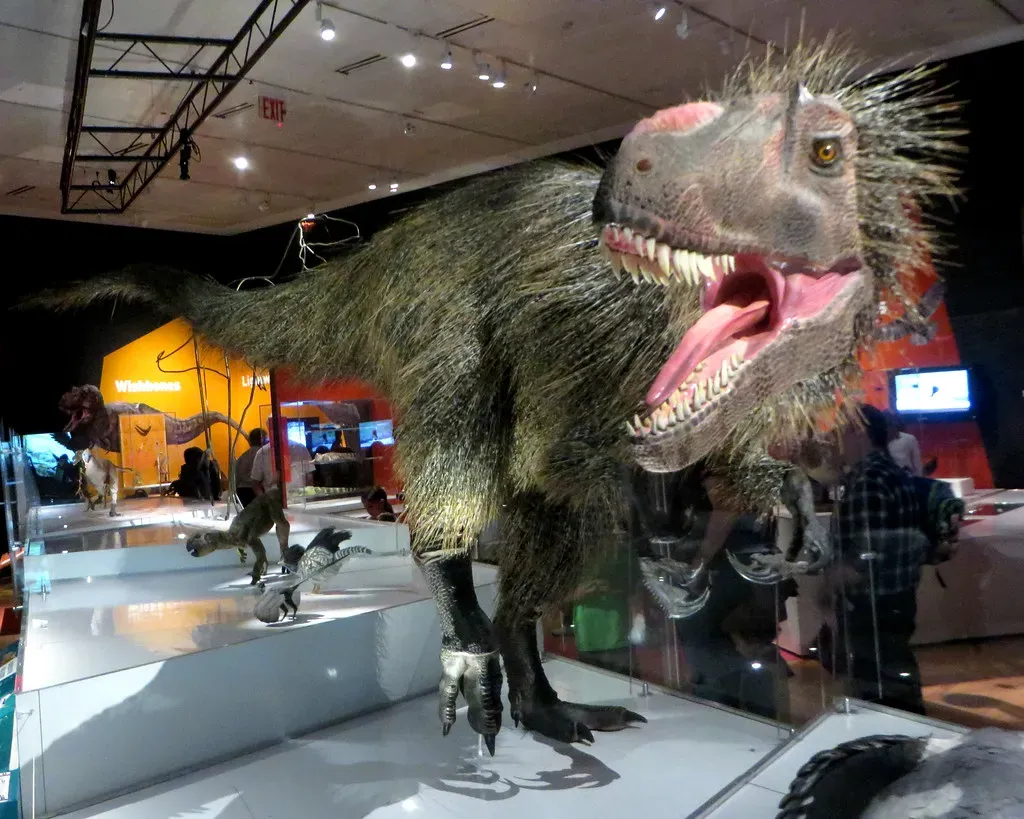
For most of the 20th century, museum reconstructions showed every dinosaur with smooth, leathery, reptilian skin. That picture is now shattered. Exceptional fossils from China preserve filament and feather impressions on creatures that were firmly ground-bound – animals that had no aerodynamic use for feathers whatsoever. These structures appeared first for insulation and visual display, not for flying. Feathers weren’t an invention of flight. They were something dinosaurs had already been using for millions of years before anything left the ground.
The detail that still catches people off guard: even some large tyrannosaurs appear to have carried fuzzy, downy coats at least during their juvenile stages. Yutyrannus, a tyrannosaur from Early Cretaceous China, preserves filamentous feather impressions and reached roughly 9 meters long. Paleontologists now treat feathers as an ancestral condition across many dinosaur groups rather than a rare specialization. The scaly lizard of every childhood dinosaur book was never quite real.
#11 – T. rex Was Not the Largest Predator
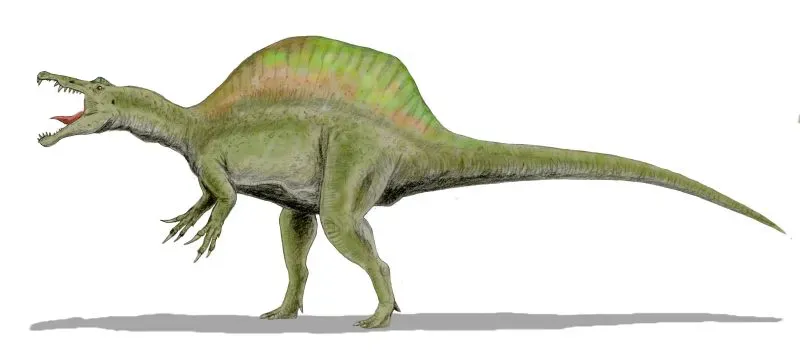
Popular culture has spent decades crowning Tyrannosaurus rex as the undisputed heavyweight champion of predatory dinosaurs. It’s a good story. It’s also incomplete. Spinosaurus exceeded T. rex in estimated length, potentially reaching 14 to 15 meters, and Giganotosaurus from Argentina edges it out in some mass estimates as well. These aren’t fringe claims – they’re mainstream paleontological assessments based on actual specimen comparisons. The size records in Africa and South America keep shifting with new finds, and T. rex keeps sliding down the rankings.
There’s an even thornier debate underneath the size question. Bite force and skeletal evidence suggest T. rex may have relied heavily on scavenging in certain ecosystems, supplementing active hunting rather than being the relentless apex killer of every film. This doesn’t make T. rex unimpressive – a six-ton animal with the most powerful bite force ever measured in a land animal is still extraordinary. But the lone-monster-king narrative taught in classrooms has always been more mythology than science.
Quick Compare
- T. rex: ~12–13 m long, ~8–9 tons, North America, most powerful bite force of any known land animal
- Spinosaurus: ~14–15 m long, ~7–20 tons (estimates vary), North Africa, semi-aquatic fish hunter
- Giganotosaurus: ~12–13 m long, ~6–8 tons, South America, pack-hunting behavior proposed
- Carcharodontosaurus: ~12–13 m long, Africa, rivaling T. rex in skull size
#10 – Spinosaurus Was Built for Water
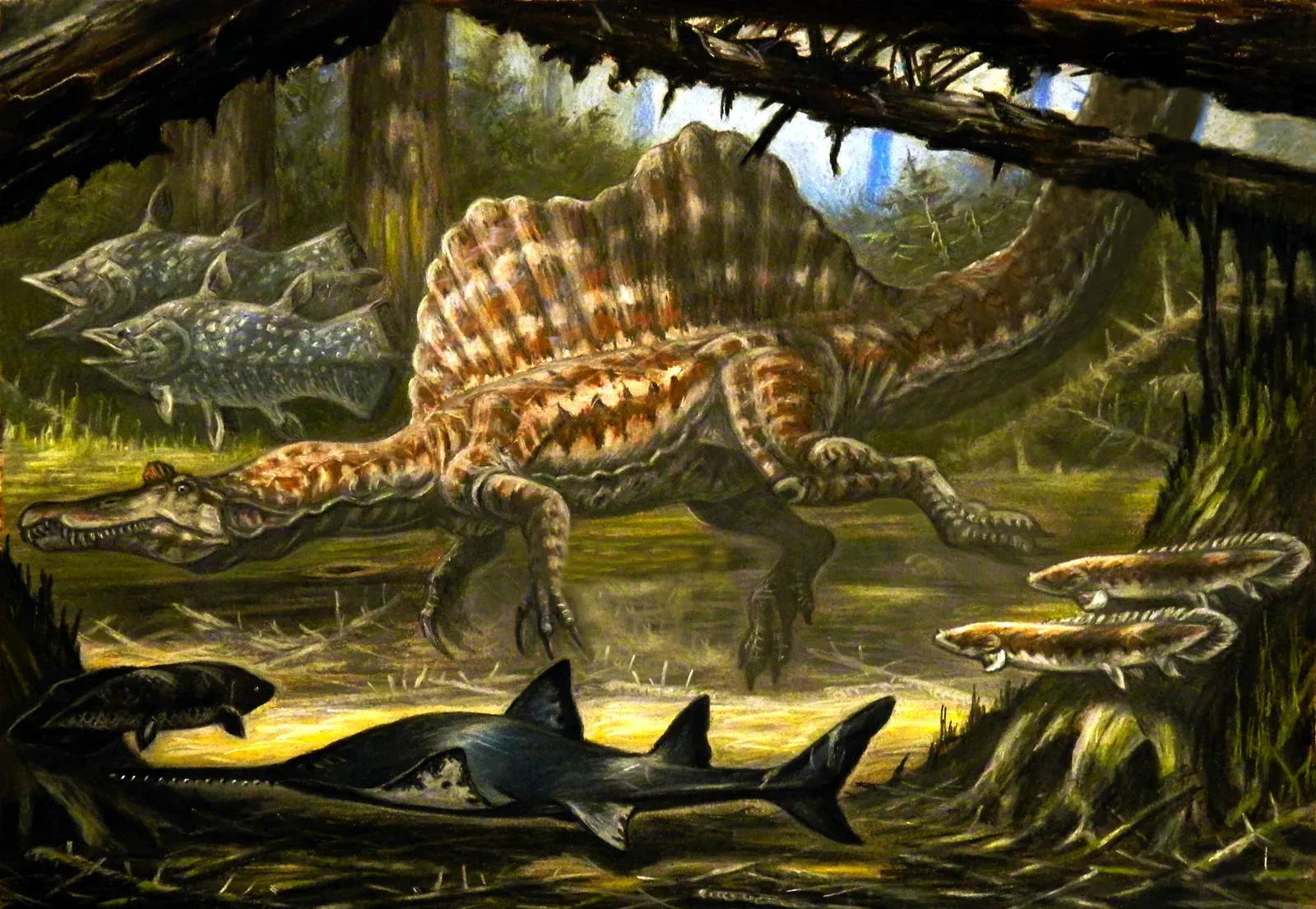
Earlier reconstructions placed Spinosaurus on riverbanks in the posture of a massive, upright terrestrial predator – essentially a bigger, weirder T. rex with a sail on its back. The bones told a different story. Spinosaurus had unusually dense, compact limb bones consistent with aquatic buoyancy control, a retracted nostril position that kept its snout functional while partially submerged, and a laterally flattened tail that a 2020 study described as paddle-like, generating thrust through water. This animal spent serious time swimming after fish, not ambushing prey on land.
The sail adds another layer. While its exact function is still debated, some researchers have proposed it may have served a stabilizing or hydrodynamic role underwater rather than pure thermoregulation on land. That overturns the assumption – baked into decades of textbooks – that all non-avian dinosaurs were fundamentally terrestrial. Spinosaurus was something closer to a giant, predatory otter crossed with a crocodile. The old reconstruction wasn’t just wrong in a detail. It was wrong about what kind of animal this was.
#9 – Polar Dinosaurs Endured Months of Total Darkness
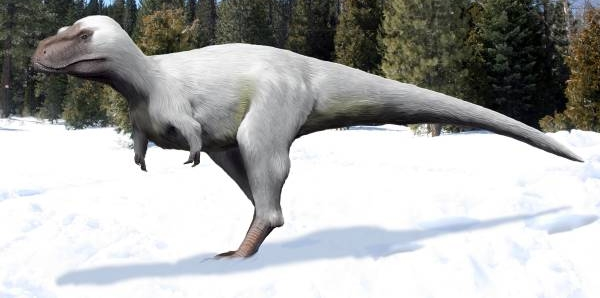
Alaska’s North Slope and sites in Antarctica have yielded hadrosaurs, theropods, and other dinosaurs that lived well above the Arctic Circle. These weren’t temporary visitors. Growth rings in their fossilized bones show multi-year residence without evidence of long-distance seasonal migration. The popular assumption that dinosaurs required lush, tropical warmth to survive collapses completely when you’re looking at animals that endured polar winters with months of near-total darkness and temperatures that regularly dropped below freezing.
How they managed it is where it gets interesting. Some researchers point to insulating feathers or fat stores as part of the answer. Others have proposed that certain high-latitude species may have entered a torpor-like state during the harshest winter months – a behavior previously assumed impossible for animals of their size and classification. Whatever the mechanism, polar dinosaurs didn’t just survive hostile conditions. They apparently thrived in them across millions of years. That forces a fundamental rethink of dinosaur physiology that the old cold-blooded model simply cannot accommodate.
Worth Knowing
- Dinosaur fossils have been recovered from both the North Slope of Alaska and Cretaceous deposits in Antarctica.
- Bone growth rings indicate year-round residency, not seasonal migration, in many polar species.
- Arctic winter conditions 70–80 million years ago included months of total darkness, despite a warmer global average temperature.
- Insulating feathers, elevated metabolisms, and possible seasonal torpor are all proposed survival strategies – none fully ruled out.
#8 – Brontosaurus Is a Real Dinosaur Again
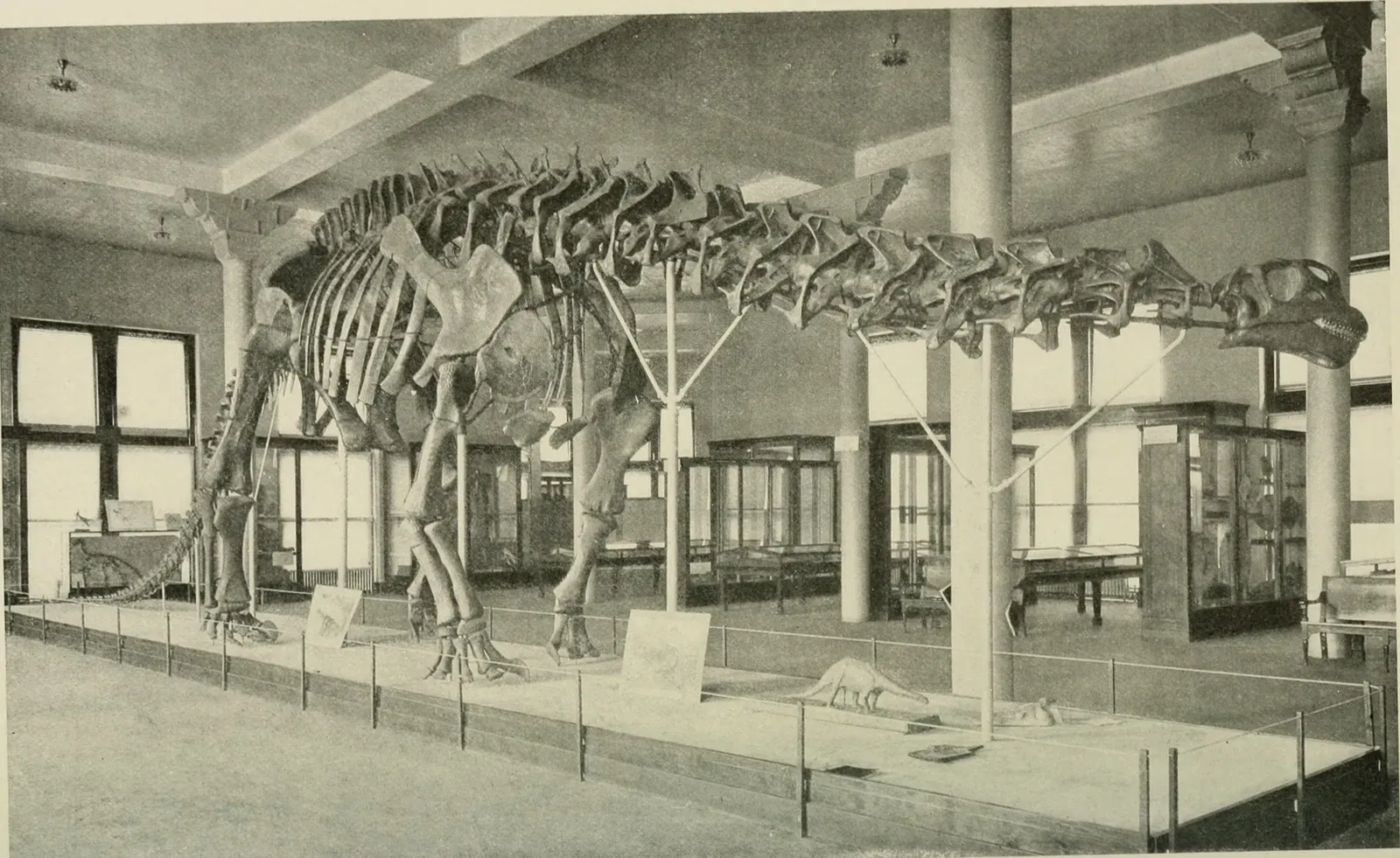
For roughly a century, students were told that Brontosaurus – the beloved “thunder lizard” of every dinosaur book from the 1900s onward – was a case of mistaken identity. Paleontologists in the late 19th century had supposedly just mislabeled an Apatosaurus specimen and given it a flashier name. The correction became standard curriculum. Brontosaurus was erased. Then, in 2015, a detailed reanalysis of sauropod specimens found genuine, consistent anatomical differences in vertebral and limb features that justified reinstating Brontosaurus as its own distinct genus.
The deeper embarrassment in this story involves the skull. For nearly a century, natural history museums mounted the wrong skull on Brontosaurus – and Apatosaurus – skeletons. The head displayed on those iconic mounts belonged to a different dinosaur entirely. When paleontologists figured this out in the 1970s, museums quietly swapped the skulls with minimal public announcement. Most visitors walking past those exhibits had no idea the correction had ever been made. It’s one of the more remarkable quiet fixes in the entire history of the science.
#7 – Velociraptor Was the Size of a Turkey
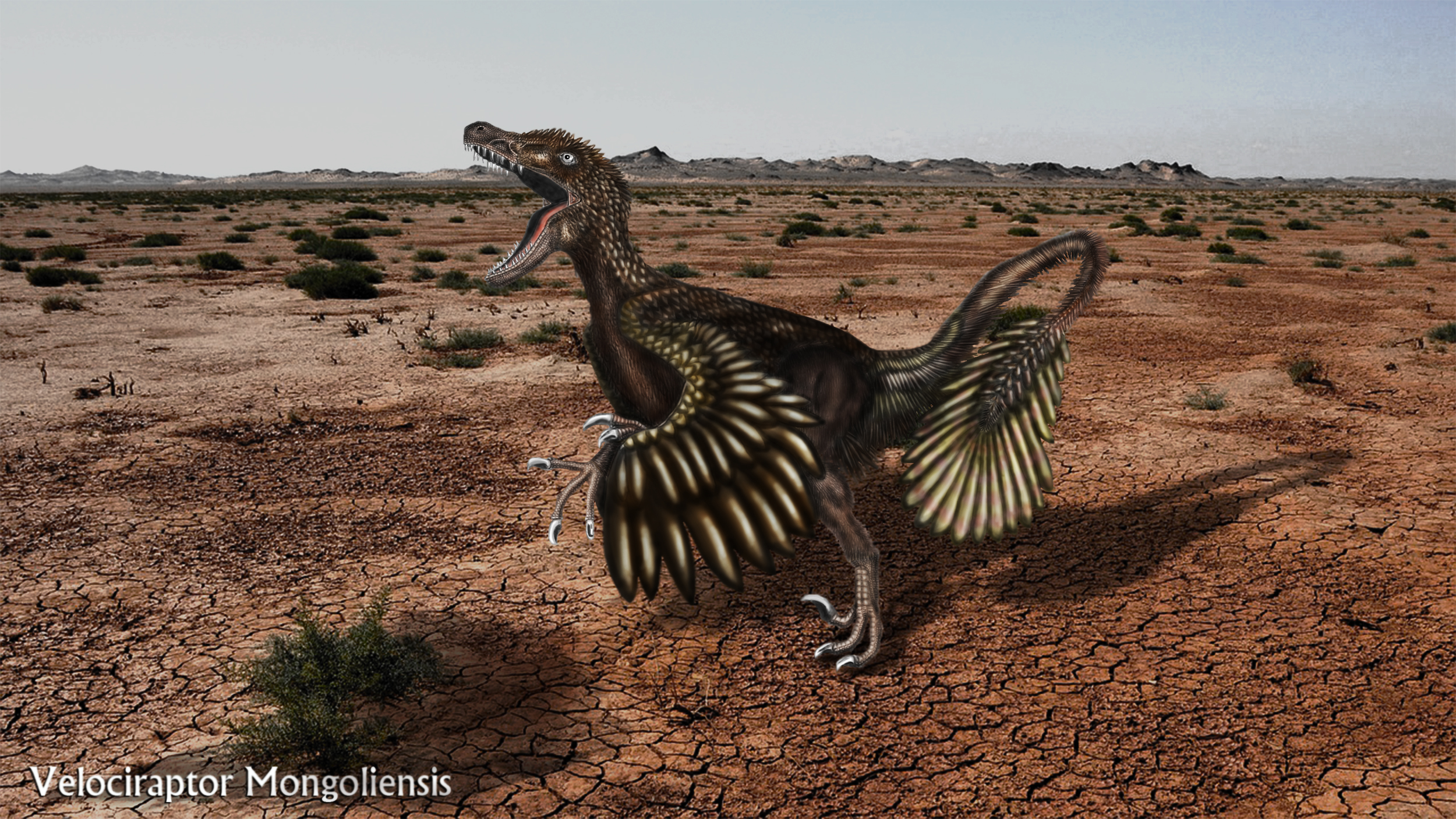
The Velociraptors in Jurassic Park are six feet tall, scaly, and fast enough to outrun a Jeep. Real Velociraptors stood about half a meter at the hip, were roughly two meters long, and weighed around 7 kilograms – closer to a large house cat than a human. That’s it. The animal that haunted an entire generation’s nightmares was a compact, feathered predator closer in size to a big chicken than to a human. Its sickle-shaped killing claw was genuinely lethal at close range – evidence suggests it was used to pin and hold prey rather than slash – but the animal itself was not the towering monster movies required.
The species Hollywood actually modeled its raptors on was Deinonychus, a larger North American relative, and even that animal only reached about a meter at the hip. Add feathers to the real Velociraptor – which we know it had, based on quill knobs preserved on a 2007 specimen – and you’re looking at something that resembles a fierce, aggressive ground bird more than a scaly reptilian nightmare. The film version is so culturally embedded that even paleontologists have largely given up correcting it. The truth is more interesting anyway.
At a Glance: Movie Raptor vs. Real Raptor
- Jurassic Park version: ~6 ft tall, scaly, hunts in coordinated packs, outpaces a Jeep
- Real Velociraptor: ~1.6 ft at the hip, fully feathered, ~15 lbs, likely a solitary ambush hunter
- Feather proof: Six quill knobs confirmed on a Mongolian forearm fossil discovered in 1998, reported in 2007
- The actual inspiration: Deinonychus antirrhopus – a larger North American relative – was the true model for the film creatures
- Closest living look-alike: A ferocious ground bird with a long bony tail and a toothy grin
#6 – Dinosaur Colors Were Often Shockingly Vivid
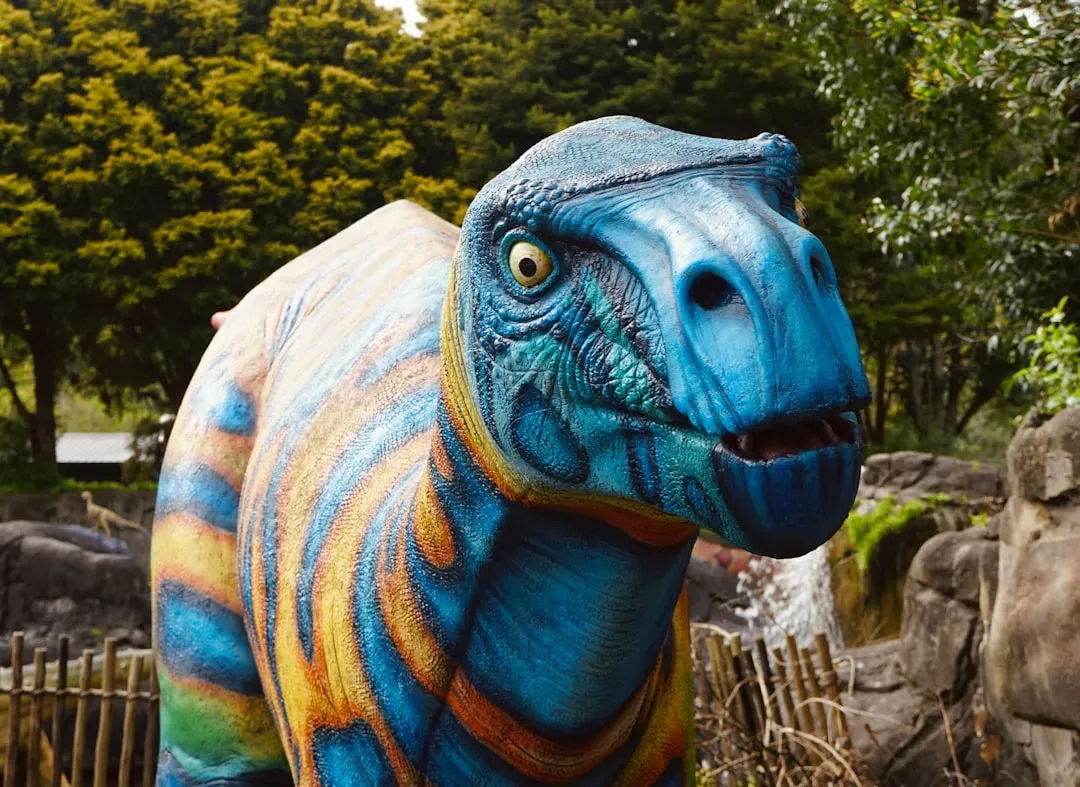
The default palette for decades was camouflage: greens, grays, muddy browns. That was never based on real evidence – it was artists filling in blanks with the logic of “large animals tend toward drab colors.” Then came melanosomes. Microscopic pigment structures preserved in some fossilized feathers can be analyzed to infer original color, and the results have been genuinely startling. Microraptor, a four-winged gliding dinosaur, shows evidence of iridescent black plumage similar to a modern crow. Caihong juji, a small feathered dinosaur from China, preserves structural coloration suggesting rainbow iridescence around the head and neck.
The functional implication is just as significant as the aesthetic one. These weren’t camouflage patterns. They were display patterns – signals aimed at other members of the same species, the same evolutionary logic that produces peacock tails and birds-of-paradise plumes. Some non-avian dinosaurs were almost certainly visually flamboyant animals, using color in social and reproductive contexts exactly as birds do today. The image of a drab, gray-green reptile lumbering through a Cretaceous forest was never accurate. It was just the most convenient assumption when nobody had better data.
#5 – Many Dinosaurs Ran Warm-Blooded
The cold-blooded dinosaur was a foundational assumption for most of the 20th century – they were reptiles, reptiles were ectothermic, end of discussion. Bone histology ended that discussion. When paleontologists examined the internal growth structure of dinosaur bones, they found rapid, sustained growth rates far closer to mammals and birds than to any modern reptile. Oxygen isotope studies reinforced this, suggesting that many dinosaurs maintained body temperatures well above ambient levels regardless of environmental conditions.
The debate inside the field now isn’t really about whether dinosaurs were warm-blooded – most researchers accept elevated metabolic rates as the baseline for many groups. The nuanced argument is about the exact mechanism: full endothermy like a bird or mammal, versus something called mesothermy, a middle-ground strategy seen in some large modern animals like leatherback turtles. Even the large sauropods, once imagined as sluggish, cold-blooded behemoths, show bone evidence consistent with maintaining elevated core temperatures. That explains both their explosive growth rates and their ability to thrive across a genuinely enormous range of global climates.
Why It Stands Out
- Bone histology reveals dinosaur growth rates rivaling those of modern mammals – impossible in a truly cold-blooded animal.
- Oxygen isotope analysis in teeth and bones points to stable, elevated internal body temperatures across many species.
- “Mesothermy” – a metabolic middle ground between cold- and warm-blooded – is now a serious working hypothesis for large dinosaur groups.
- Warm metabolisms also help explain how polar dinosaurs survived months of freezing darkness without migrating.
#4 – Soft Tissue Has Survived Inside Dinosaur Bones
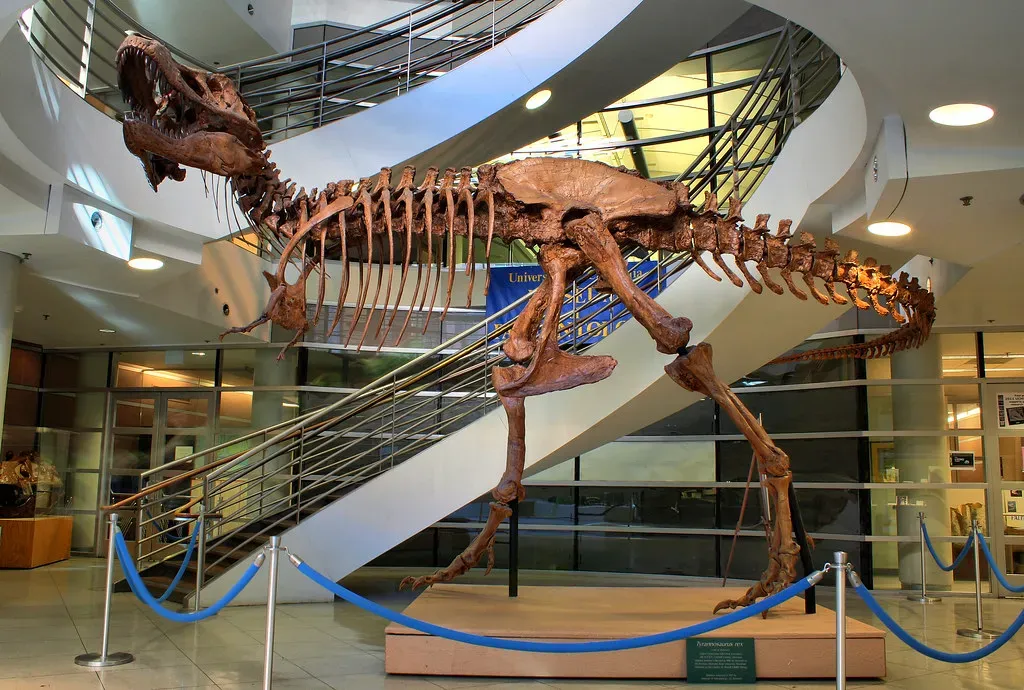
Standard geology held that soft biological material cannot survive more than a few million years – everything organic either decays or gets replaced by minerals during fossilization. Then Mary Schweitzer’s lab at North Carolina State University began reporting something that sent shockwaves through the field: flexible, transparent structures inside the femur of a T. rex specimen approximately 68 million years old. These appeared to be original blood vessels and cells. The findings were published, attacked, replicated by other labs, and are still debated, but they have not gone away.
The molecular data attached to these finds is arguably even more significant. Protein sequences – specifically collagen – recovered from T. rex specimens align more closely with birds, particularly chickens and ostriches, than with crocodilians. This isn’t skeletal inference or anatomical argument. It’s biochemical confirmation of the dinosaur-bird relationship written in the actual molecular fabric of a fossil. The mechanisms that allow soft tissue preservation under specific geochemical conditions are still being worked out, but the discovery fundamentally changed what paleontologists believe is possible from the fossil record.
“What we found was unusual, because it was still soft and still transparent and still flexible.”
Mary Schweitzer, molecular paleontologist, North Carolina State University
#3 – The Asteroid Had Help Killing the Dinosaurs
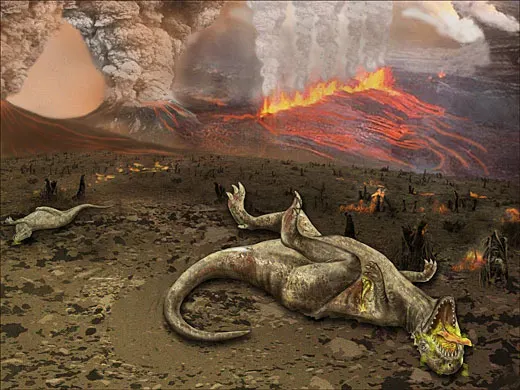
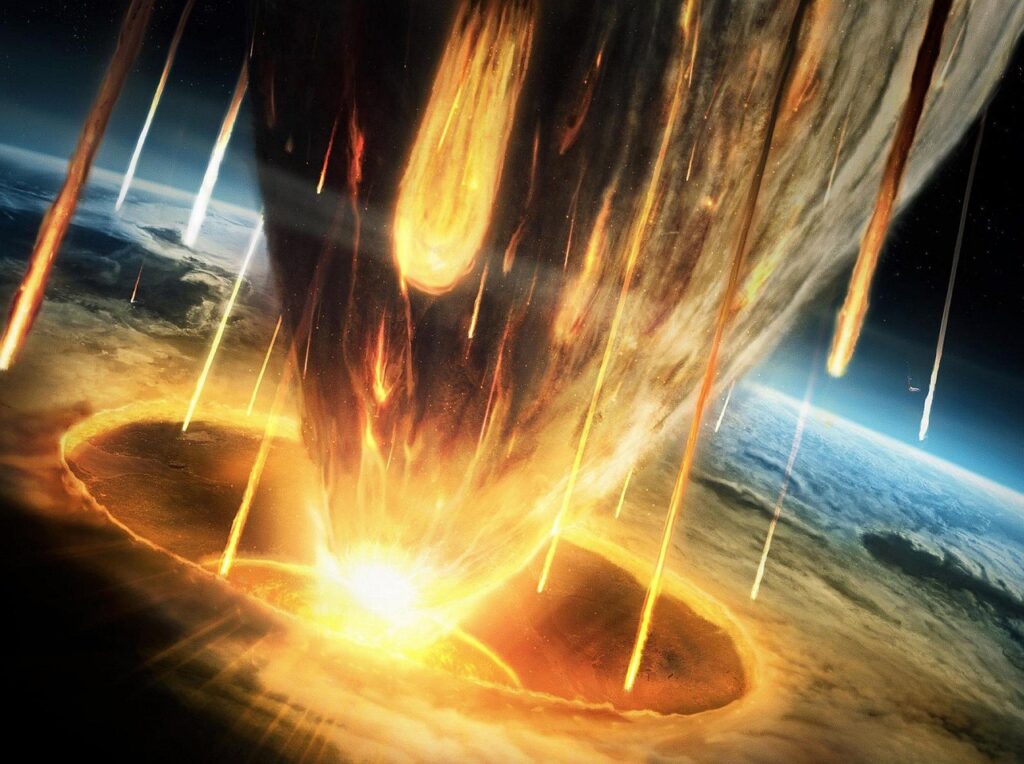
Chicxulub gets all the credit. The story is clean and dramatic: a six-mile-wide asteroid hits the Yucatán Peninsula 66 million years ago, triggers a global winter, and wipes out the non-avian dinosaurs in a geological blink. That impact absolutely happened, and it absolutely mattered. But the fossil and geological record shows that it didn’t do the job alone. The Deccan Traps – a massive volcanic region in what is now India – had been erupting for hundreds of thousands of years before the asteroid arrived, pumping sulfur dioxide and carbon dioxide into the atmosphere and steadily destabilizing ecosystems.
The biological record reflects this. Marine and terrestrial fossil assemblages show gradual ecosystem stress and declining diversity beginning well before the Chicxulub impact layer. Several dinosaur groups appear to have been in measurable long-term decline across multiple continents before the final blow landed. This doesn’t diminish the asteroid – it probably delivered the killing stroke. But the tidy catastrophe narrative, where everything was fine until one bad Tuesday, has been replaced by something messier and more accurate: a prolonged crisis that the asteroid finally finished.
At a Glance: The Double Catastrophe
- Chicxulub impact: ~66 million years ago, Yucatán Peninsula, triggered global winter and acid rain within weeks
- Deccan Traps volcanism: Active for ~300,000+ years before the impact, releasing massive CO₂ and SO₂ into the atmosphere
- Fossil signal: Declining dinosaur diversity on multiple continents predates the impact layer in the geological record
- Current consensus: A prolonged environmental crisis, delivered a finishing blow by the asteroid – not a single sudden event
#2 – The Fossil Record Is Deeply Biased and Everyone Knows It
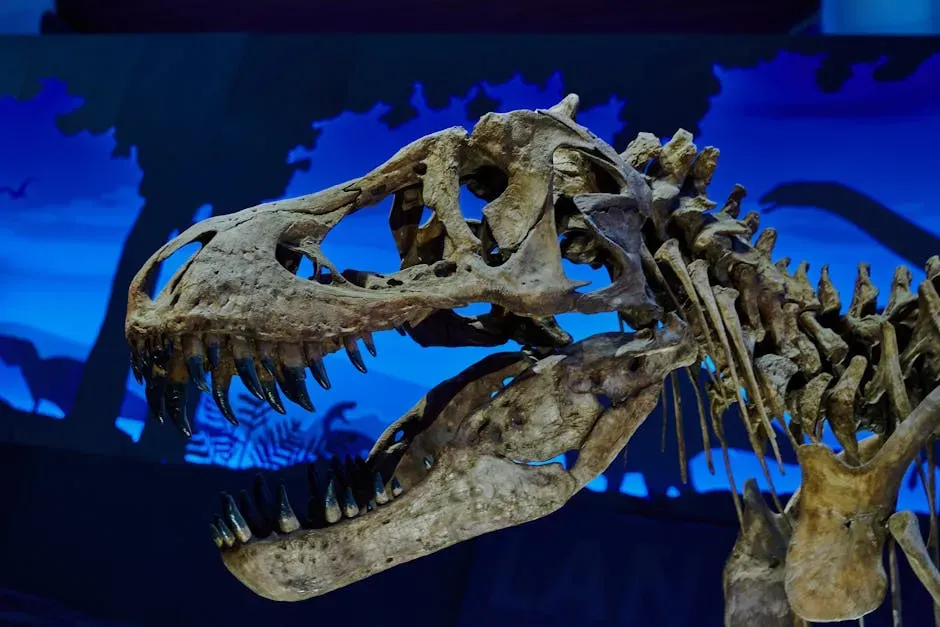
When paleontologists talk about what kinds of dinosaurs existed, they’re actually talking about what kinds of dinosaurs happened to die near bodies of water, get buried quickly, survive geological upheaval over tens of millions of years, and then get found by someone with a rock hammer. That is not a random sample of ancient life. The vast majority of known dinosaur fossils come from floodplain and river delta deposits, environments that favor large-bodied animals that lived and died in herds near water. Species that lived in upland forests, mountains, or arid interiors are chronically, severely underrepresented.
This bias shapes our entire picture of dinosaur diversity in ways that are hard to fully correct for. The iconic dinosaur assemblages – large herding hadrosaurs, ceratopsians, massive sauropods – are partly a reflection of what actually existed and partly a reflection of which environments happen to preserve bones well. How many small, forest-dwelling, insect-eating dinosaurs lived and died without leaving a single recoverable trace? Nobody knows. The honest answer from most working paleontologists is that we are reconstructing a lost world from an extremely incomplete and geographically skewed sample, and the gaps are far larger than most public presentations acknowledge.
#1 – Some Dinosaurs Were Surprisingly Complex Social Animals
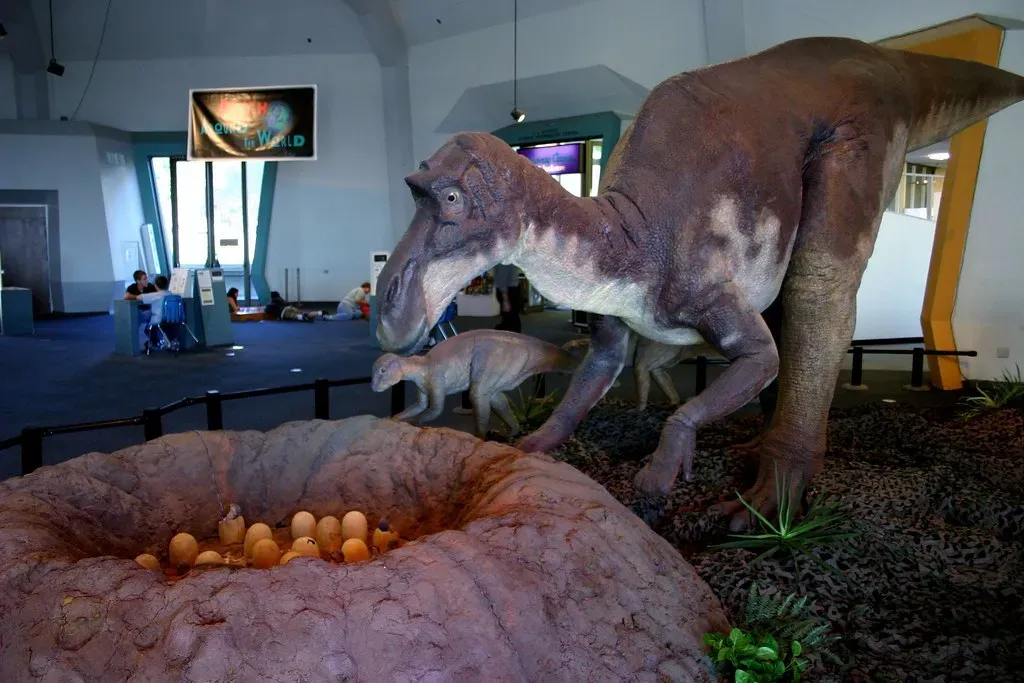
Older models treated most non-avian dinosaurs as solitary, instinct-driven animals – sophisticated enough to hunt or migrate, but not to form meaningful social structures. Trackway sites told a different story early on, with hadrosaur and ceratopsian tracks suggesting coordinated group movement across wide distances. But the more recent discoveries go further. Bone beds containing individuals of multiple age classes – juveniles, sub-adults, and adults – in the same deposit suggest not just herding but organized, mixed-age social groups, the kind of structure that implies active parental involvement and extended juvenile dependency.
The detail that shifts the paradigm most completely is the brooding evidence. Several theropod species – Oviraptor, Citipati, Troodon – have been found in direct association with egg clutches in postures that are anatomically identical to modern bird brooding behavior: arms spread, body lowered over the nest, weight distributed to avoid crushing the eggs. This behavior predates the origin of flight by a wide margin. These were not simple, instinct-driven reptiles doing something vaguely parental. They were performing a precise, physically demanding protective behavior that we still see in birds today. Whatever intelligence and social awareness that requires, some dinosaurs clearly had it.
The Strange Truth Nobody Put on the Poster
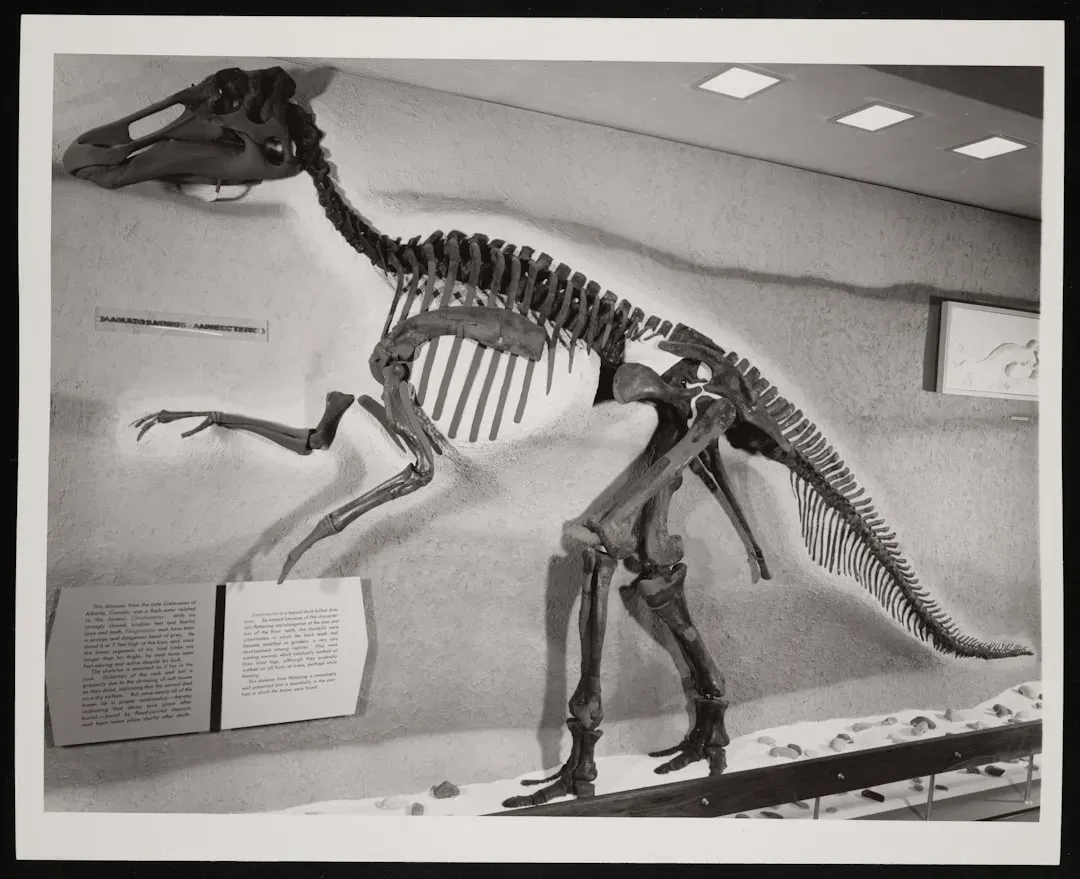
Here is the honest conclusion: the dinosaurs that existed were more interesting than the ones we invented. Warm-blooded, feathered, brooding their eggs, swimming through rivers, surviving Arctic winters, flashing iridescent plumage at each other – these animals were operating at a level of biological complexity that the old “giant scaly lizards” framework was never equipped to describe. The updates didn’t come all at once. They accumulated over decades, each one quietly replacing a lesson that had been taught as fact, with almost no fanfare and very little public correction.
And here’s where an opinion is warranted: the science education system has consistently failed the public on this topic, and it’s done so through inertia rather than intent. The revised story – dinosaurs as feathered, warm-blooded, socially complex, vivid creatures whose lineage never actually ended – is not only more accurate, it is dramatically more compelling than the one still haunting outdated textbooks. The museum reconstructions are catching up. The classrooms largely are not. Every child who walks away believing T. rex was a scaly lone predator and that all dinosaurs died 66 million years ago has been quietly shortchanged. The strangest part isn’t any single discovery. It’s that the true picture, assembled piece by piece, is so much more alive and strange and specific than the myths that replaced it in classrooms. Every time paleontology has gotten closer to what dinosaurs actually were, the answer has been weirder and more wonderful than anyone expected. That pattern shows no sign of stopping. Whatever gets dug up next will almost certainly make something on this list look quaint.