If you could drop a microphone into the Late Cretaceous, there’s a good chance one of the clearest sounds you’d pick up would be the haunting call of Parasaurolophus. This hadrosaur, with its sweeping, backward-curving head crest, looks dramatic enough in museum skeletons, but the weird truth is that the most extraordinary thing about it might not be how it looked, but how it sounded. Beneath that elegant arch of bone was likely a built‑in brass instrument, turning this plant‑eating dinosaur into something like a living trombone on legs.
I still remember standing in a small dinosaur exhibit as a kid, hearing a deep, eerie “hoooom” coming from a speaker beside a Parasaurolophus model and feeling slightly spooked, like I was eavesdropping on ghosts. Only much later did I learn that those sounds were based on actual scientific reconstructions of its skull, not just movie magic. The more researchers study this animal, the more it looks like Parasaurolophus was not just a dinosaur with a funky headgear – it was probably one of the loudest, most sonically impressive creatures to ever roam the planet.
The Bizarre Crest That Was Basically a Built‑In Musical Instrument
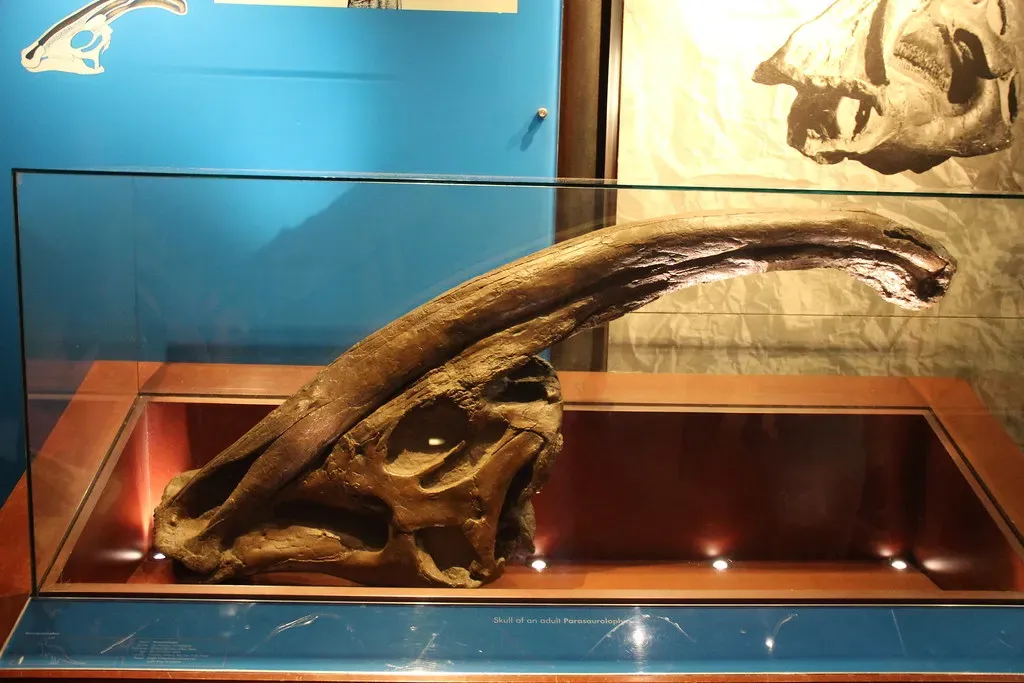
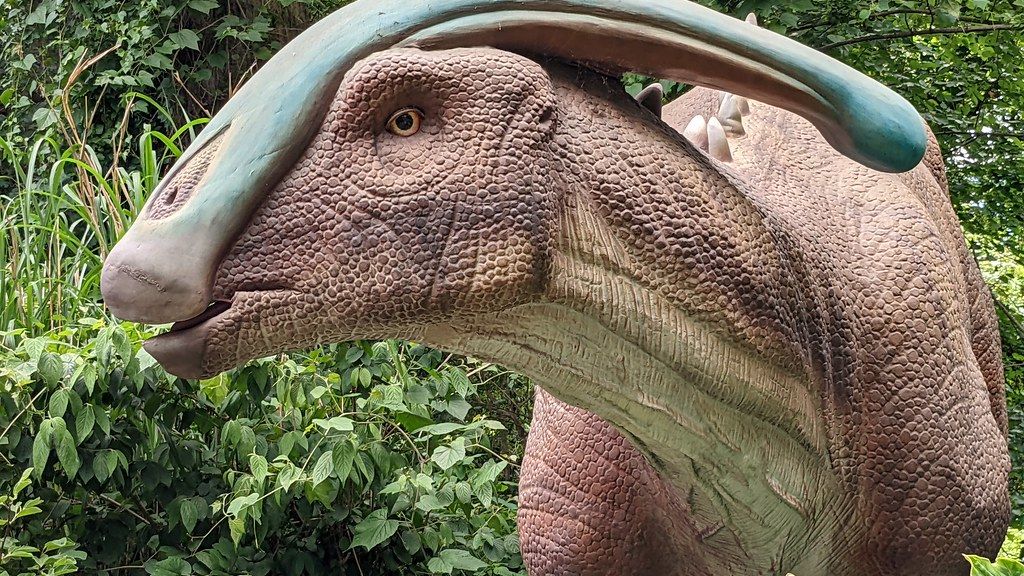
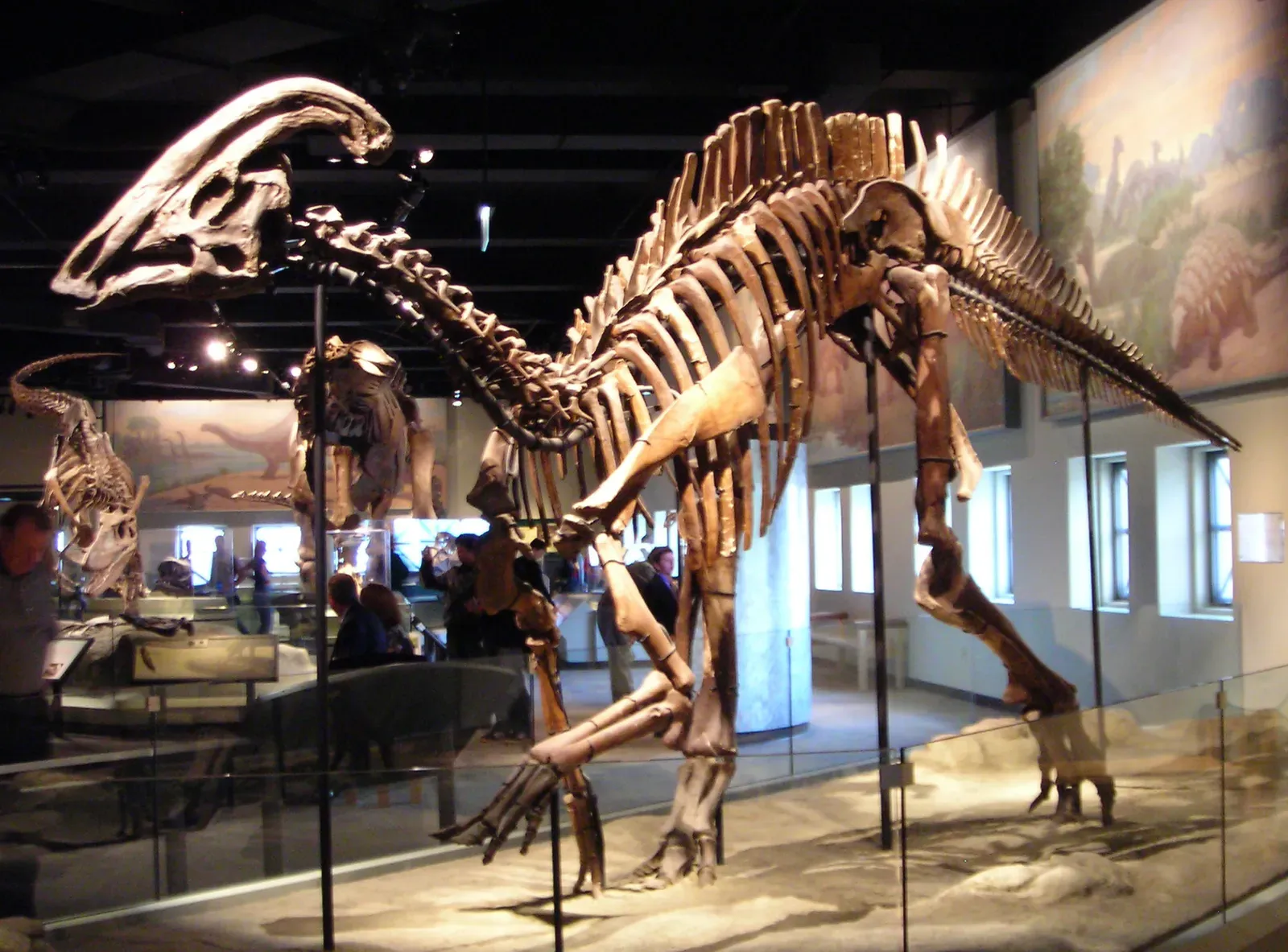
At first glance, the crest of Parasaurolophus looks like someone glued a giant curved tube to the back of its head as a prank. It sweeps up and backward, sometimes longer than the skull itself, and for a long time paleontologists argued about what it was even for. Ideas ranged from snorkels to air‑conditioning units, and people genuinely debated whether this dinosaur might have poked its crest above the water like a periscope. But once scientists began CT‑scanning the skulls and digitally tracing the internal spaces, a very different picture emerged.
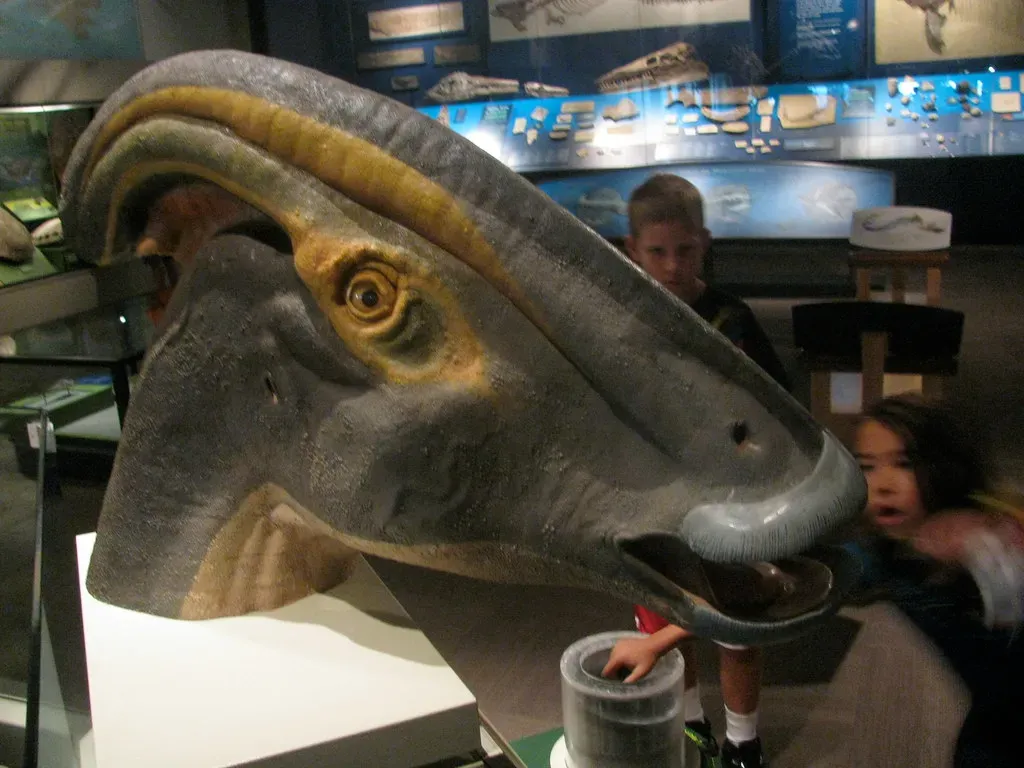
Inside that crest is a labyrinth of hollow tubes connected directly to the nasal passages, looping and folding like the interior of a giant wind instrument. When air moved through those tubes, the whole structure would have behaved a bit like a natural horn, amplifying and shaping sound. If you’ve ever blown across the top of a bottle and heard that low resonant note, you already understand the basic physics at play here. Parasaurolophus just happened to carry its resonance chamber around on its head, and that is a huge part of why scientists think it could be incredibly loud.
How CT Scans Turned a Fossil Into a Virtual Horn
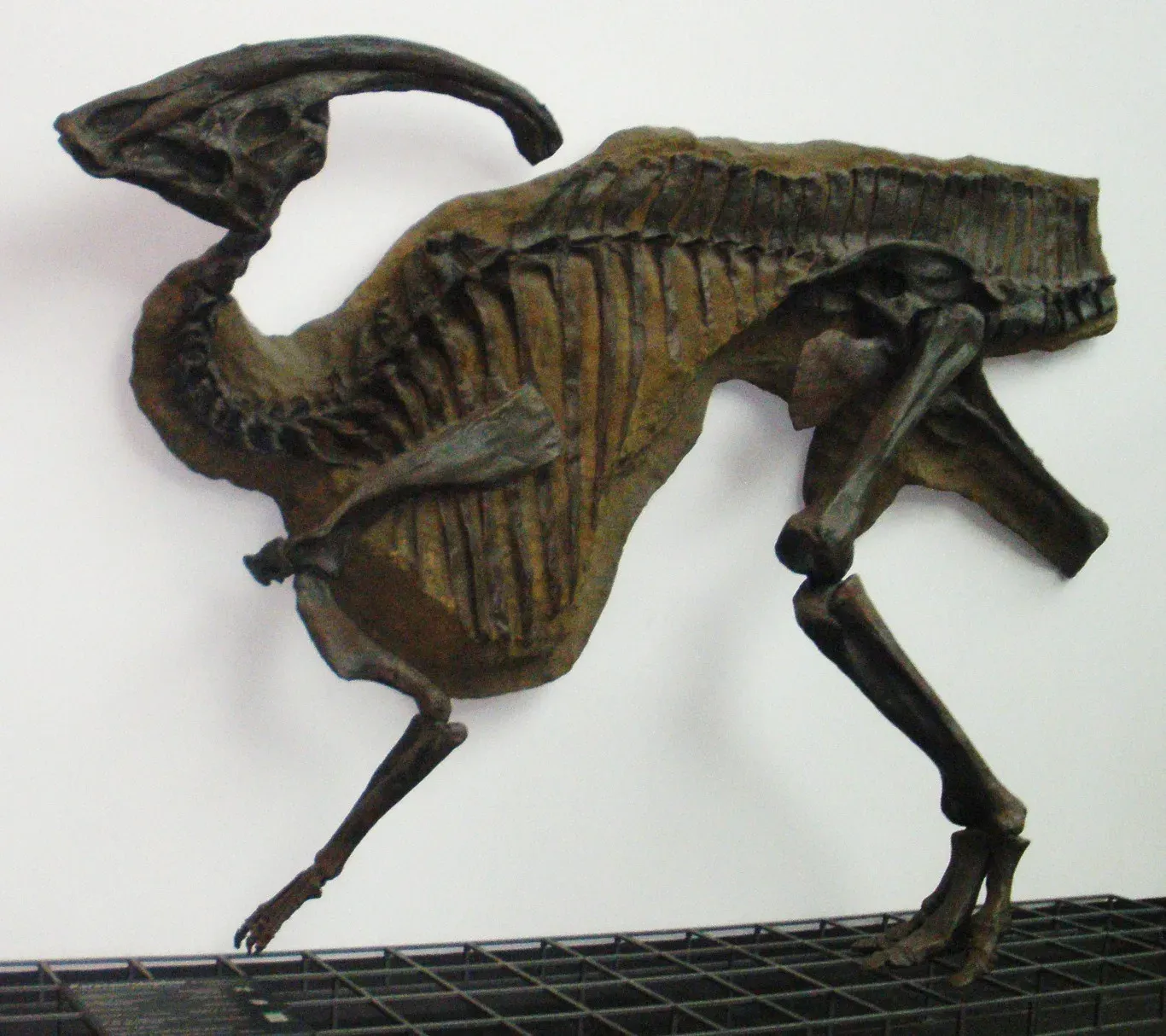
The case for a “loud” Parasaurolophus really took off once technology caught up with old bones. Using CT scans, researchers created digital 3D models of the crest and nasal passages, then simulated how air would flow through them. This is a bit like reverse‑engineering a broken instrument: you cannot play it, but you can model how air vibrates inside it and predict the pitch and volume. The results consistently point to low, booming sounds that could have traveled a long way, more like a foghorn than a bird tweet.
These computed sounds are not exact recordings of a living animal, of course, but they are grounded in hard physics: tube length, diameter, and shape determine what kinds of notes you get. Parasaurolophus had incredibly long air passages – several times longer than its skull – which naturally favor deep, powerful tones. When you imagine entire herds of these animals, each with their personal built‑in subwoofer, it suddenly becomes very plausible that they were among the loudest things in their ecosystem, at least in the low‑frequency range.
The Power of Low‑Frequency Calls: Why “Quiet” Can Reach Miles
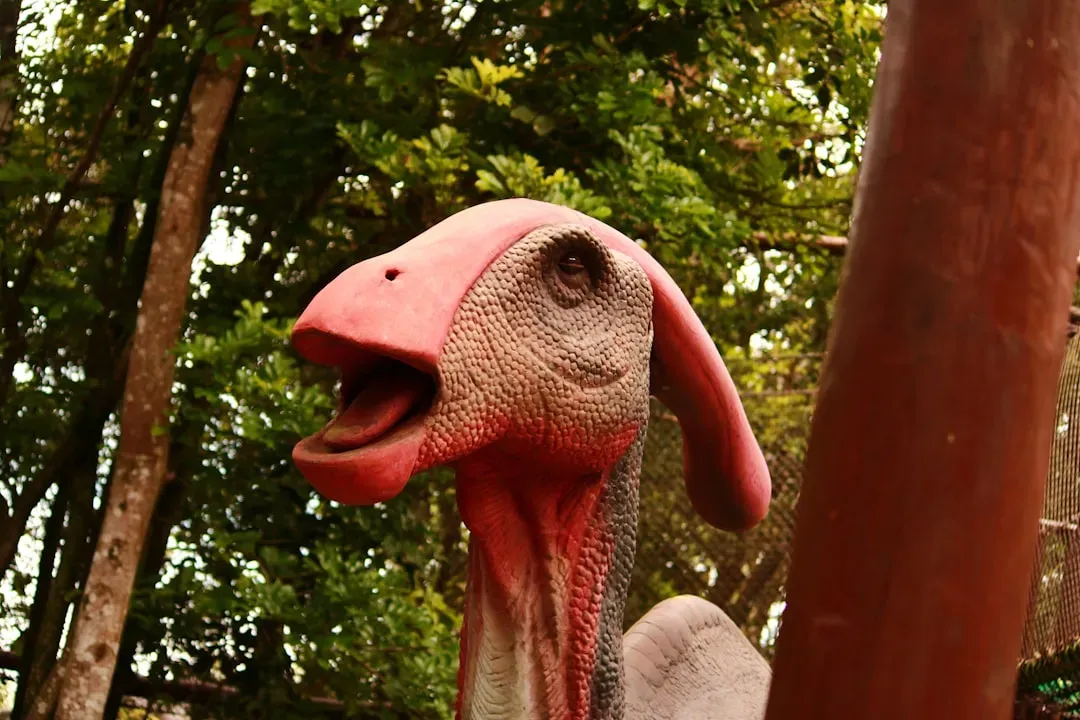
When people think “loud,” they usually imagine sharp, high sounds that make you cover your ears. But in nature, the calls that travel the farthest are often deep, low, and almost felt more than heard – like an elephant rumble or the distant roar of thunder. Low‑frequency sound waves lose energy more slowly as they move through air, which means they can travel over hills, through forests, and even around obstacles. Parasaurolophus seems perfectly tuned for this kind of long‑distance audio broadcasting.
That means this dinosaur may not have been shrieking in some movie‑style scream battle all day. Instead, it may have been producing powerful, low, resonant calls that rolled across the landscape, notifying other individuals of its presence, signaling danger, or coordinating movement. If you were standing near a calling Parasaurolophus, you might have felt the sound in your chest more than in your ears, like standing too close to a concert speaker. “Loudest” in this context is less about painful noise and more about reach and impact – and this animal appears to have been engineered, evolutionarily speaking, for exactly that.
From Mating Songs to Herd Warnings: What Were They Saying?
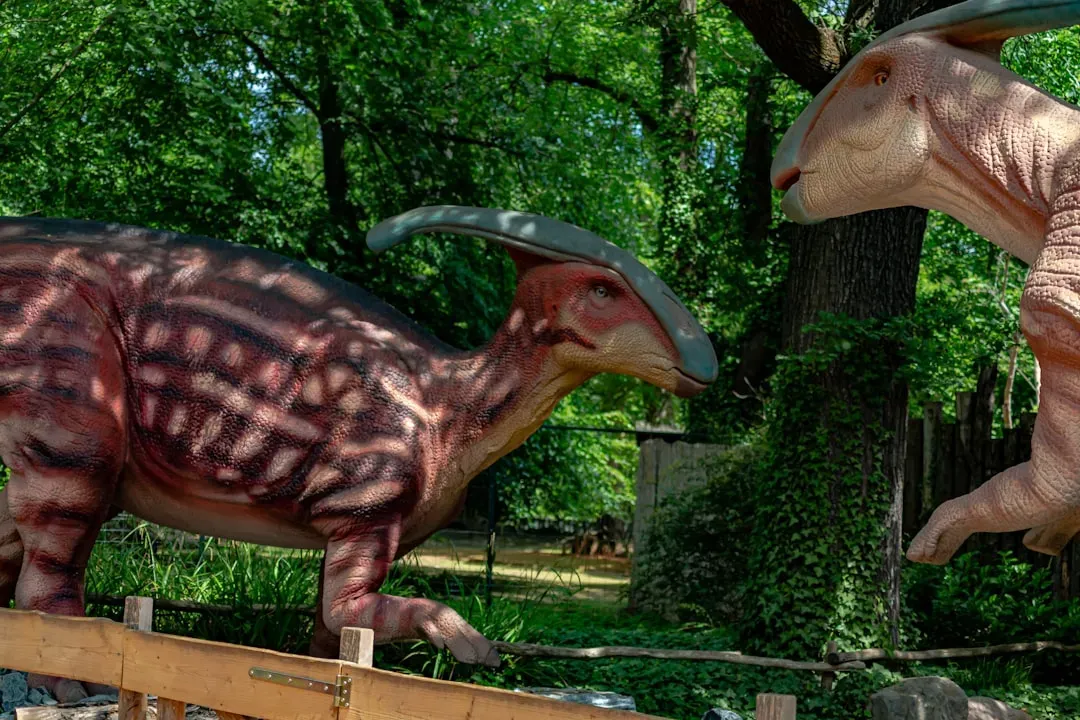
Of course, even if we can model the sounds Parasaurolophus could make, we still have to guess why it made them. One of the leading ideas is that these booming calls played a role in social and reproductive behavior, something like a mix of mating songs, identity badges, and long‑distance announcements. Slight differences in crest size and shape between individuals, or between males and females, might have created subtly different sound signatures, letting animals recognize partners, rivals, or family members by voice alone. In a noisy, predator‑filled world, being able to shout your identity across a valley is no small advantage.
There is also a strong possibility that these calls helped Parasaurolophus maintain group cohesion in large herds. Imagine a foggy morning in a dense forest, or a dust‑filled floodplain where visibility is terrible but hearing still works fine. A few long, deep blasts from a dominant individual could help align movement, warn of threats, or call juveniles back toward safety. It is tempting to think of these dinosaurs as oversized, plant‑eating “war drums” of the Cretaceous, beating out messages in sound long before any human culture ever tried something similar.
The Crest as a Visual Billboard and Social Status Symbol
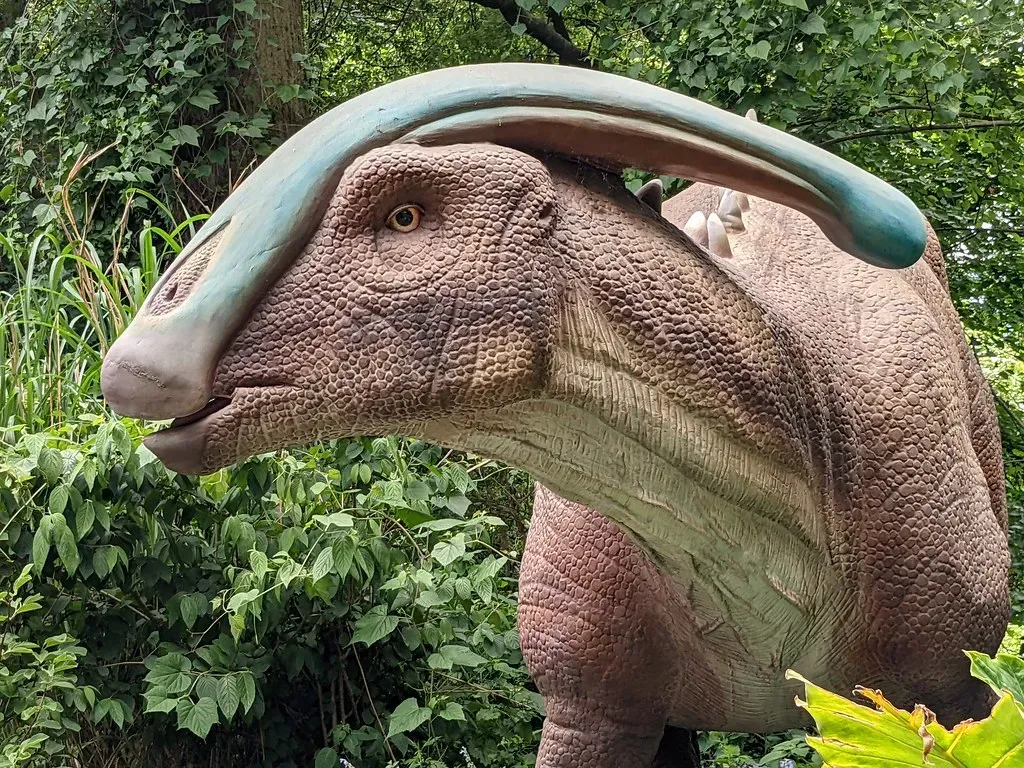
The crest of Parasaurolophus was not just an acoustic device; it was also a huge visual statement. Even if you ignore the sound side entirely, that sweeping, oversized headgear is exactly the sort of thing evolution tends to use for display: think of a peacock’s tail, a stag’s antlers, or the bright frills of some modern lizards. The fact that it’s so big and costly to grow suggests it was doing more than just quietly helping with breathing; it was almost certainly broadcasting something about strength, maturity, or desirability to other Parasaurolophus. That makes its probable loudness feel less like an accident and more like a feature.
In that sense, the crest may have worked as a combined billboard and speaker system. A visually impressive crest could signal status at close range, while its resonant properties could boost calls over long distances. This two‑for‑one package is exactly the sort of multitasking evolution loves: one structure, several benefits. My own hunch is that any animal willing to lug around that much headgear was not doing it just for a modest, private hum – it was using every decibel and every centimeter of that crest to stand out in a crowded, dangerous world.
Could Parasaurolophus Out‑Shout T. rex and Other Cretaceous Giants?
Whenever the idea of “loudest dinosaur” comes up, the spotlight usually swings straight to the big predators like Tyrannosaurus rex, as if size alone guarantees a more earth‑shaking roar. But vocal power is not only about lung volume; it is also about how effectively an animal can resonate and project the sound it produces. This is where Parasaurolophus might quietly, or rather not so quietly, dominate. Its specialized crest gives it a literal acoustic advantage that most theropods simply did not have, no matter how big their jaws were.
Could it out‑shout a tyrannosaur in every way? Probably not in terms of sheer, close‑range shock if a predator bellowed right in your face. But if we’re talking about who could be “heard” from the farthest distance with a consistent, energy‑efficient call, Parasaurolophus has a compelling claim. It is more like comparing a big drum to a lion’s roar: they are different, but in how far and cleanly the sound carries, the drum often wins. That is why many paleontologists are comfortable entertaining the idea that this herbivore, not the Hollywood predators, may well have been the real sound powerhouse of its time.
The Strange Legacy of a Dinosaur That Turned Its Face Into a Speaker
What makes Parasaurolophus so strange is not just that it might have been incredibly loud, but that it achieved that loudness by reshaping its skull into a kind of biological sound system. It did not grow bigger teeth or stronger claws; it invested in air and resonance, in messages carried on low vibrations across rivers and floodplains. To me, that says something about how evolution experiments with communication again and again, from whale songs in the ocean to birdsong in forests, and, long before either of those, to booming calls from a crested dinosaur under Cretaceous skies.
In my opinion, Parasaurolophus deserves far more cultural fame than it currently has, precisely because of this acoustic weirdness. We celebrate the teeth of the meat‑eaters and the armor of the tank‑like dinosaurs, but here’s an animal that may have weaponized sound instead of violence, advertising its presence rather than hiding it. That is a bold evolutionary move, and it likely made the Late Cretaceous soundscape richer, stranger, and far louder than we usually imagine. Next time you picture dinosaurs, maybe the first thing you should imagine is not the sight of a giant predator, but the echoing, chest‑thumping call of a crested herbivore announcing itself to the world – because honestly, wouldn’t you want to be heard if you could sound like that?